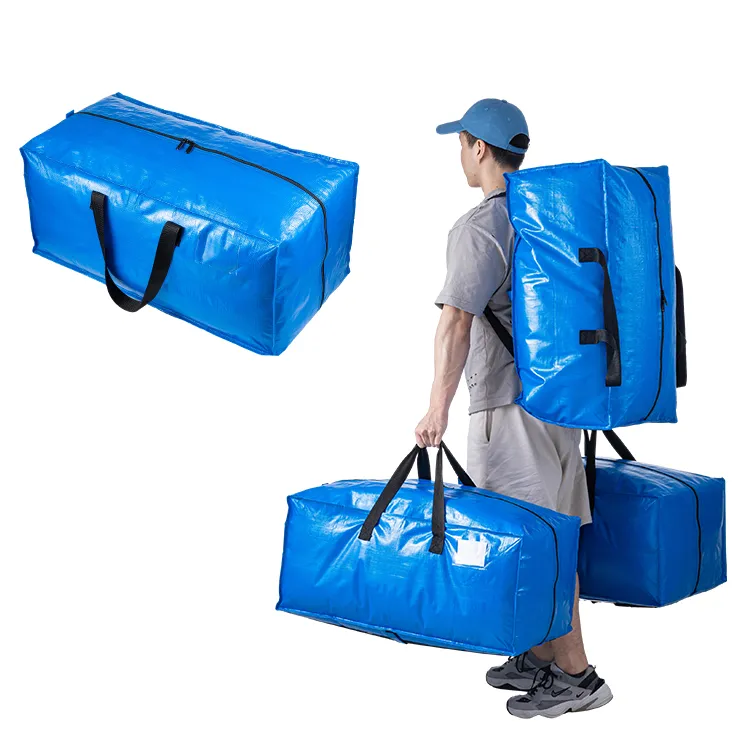
Analysis of extra large moving bags. Explore weight-bearing physics, 120L+ volume optimization, and why professional movers are ditching cardboard for heavy-duty XL bags.
How to Choose an Extra Large Moving Bag: A Professional Guide to Durability, Efficiency, and Volume Logistics
Author: Senior Logistics Strategist at TAILI Group | Technical Deep Dive 2025
Executive Summary & Table of Contents
- 1. Defining the XL Standard: Beyond 100 Liters
- 2. Structural Engineering: Tensile Strength and GSM Explained
- 3. Volume Dynamics: Maximizing Cubic Feet in the Moving Truck
- 4. Stress Points: Why Handles Fail and How We Reinforce Them
- 5. Environmental Shielding: Humidity and UV Protection in Long-Haul Moves
- 6. The “Heavy-Load” Packing Strategy: Professional Tips
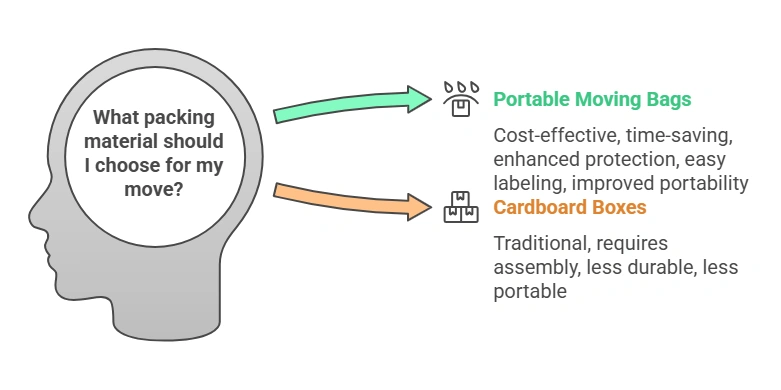
- 7. Industrial Comparison: XL Bags vs. Plastic Crates vs. Cardboard
1. Defining the XL Standard: When Size Meets Necessity
In the world of relocation, “Extra Large” is often a misunderstood term. While a standard backpack is 30L and a suitcase is 70L, a true Extra Large Moving Bag starts at 100L and can exceed 150L. This isn’t just a bag; it’s a soft-sided shipping container.
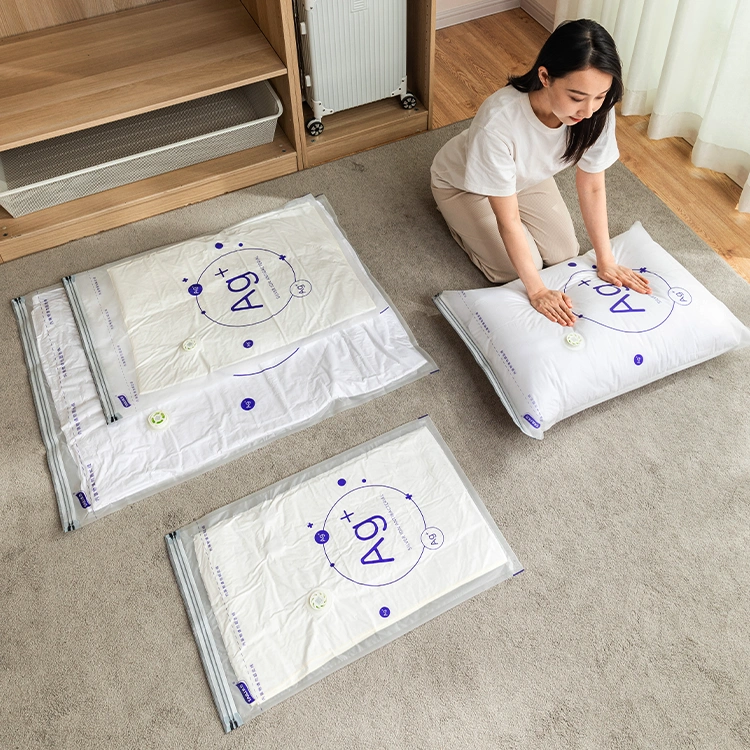
For large-scale relocations—such as a 3-bedroom house or a corporate office move—the primary challenge isn’t just weight; it’s Volume Efficiency. The ability to consolidate bulky, low-density items like king-size comforters, winter parkas, and decorative pillows into a single, manageable unit is what separates a chaotic move from a professional one.
2. Structural Engineering: Tensile Strength and GSM Explained
When you deal with 120L of volume, the physics of the material changes. A bag of this size can easily hold 60-100 lbs of weight. At TAILI, we evaluate our XL series based on GSM (Grams per Square Meter) and Tensile Strength.
Woven Polypropylene vs. High-Denier Oxford Fabric
For industrial-grade XL bags, we often utilize heavy-duty woven polypropylene (PP). This material is characterized by its incredible strength-to-weight ratio. Unlike standard polyester, woven PP fibers are interlaced in a grid that arrests small punctures. If a sharp corner of a picture frame pokes a hole, the grid ensures the hole does not “run” or catastrophicly fail under load.
The Importance of GSM
A “cheap” XL bag found in big-box retailers typically uses 100-120 GSM fabric. Professional-grade TAILI XL bags utilize 150-180 GSM. This 50% increase in fabric density translates to a 200% increase in puncture resistance—a vital metric when your bags are being stacked and dragged across truck beds and concrete driveways.
3. Volume Dynamics: Optimizing the “Cubic Foot”
The most expensive part of a move is the truck space. Rigid plastic bins are the enemy of space optimization because they create “Dead Air”—the empty gaps between rounded corners and tapered sides.
Extra Large Moving Bags are “Logistical Chameleons.” Their soft-sided nature allows them to “nest” together. In a standard 16-foot moving truck, you can fit approximately 15% more cargo by volume when using XL bags compared to rigid bins. This can be the difference between needing one trip or two, potentially saving hundreds of dollars in fuel and rental costs.
4. Stress Points: Why Handles Fail and How TAILI Prevents It
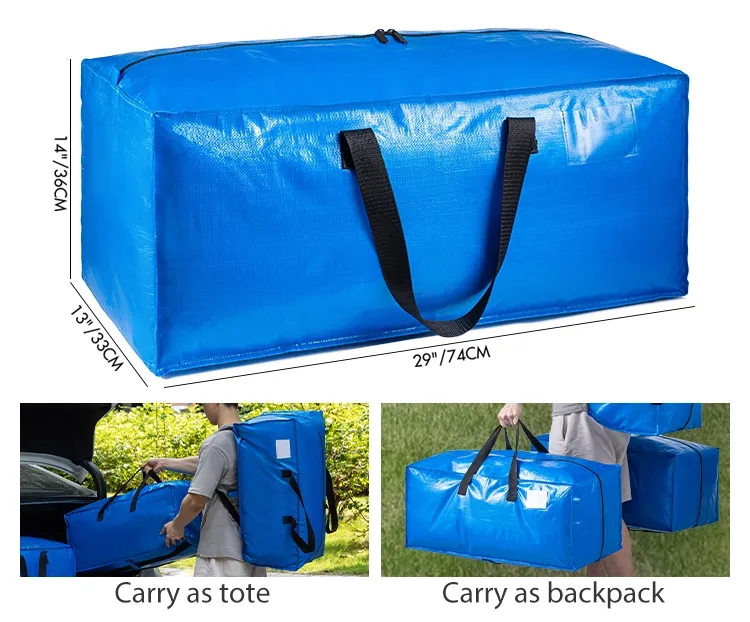
90% of moving bag failures occur at the handle attachment point. When an XL bag is fully loaded, the upward force of the human hand and the downward force of gravity meet at a 1-inch square area of stitching.
The “Wrap-Around” Support System
Standard bags sew the handles onto the side panels. Professional XL bags use Wrap-Around Webbing. The nylon straps travel down the side, underneath the bottom, and back up the other side. This means the material itself isn’t carrying the weight—the continuous strap loop is.
Reinforced Zippers: The #10 Gauge Requirement
For XL bags, a standard #5 zipper will burst under the internal pressure of overstuffed bedding. We insist on #10 Heavy-Duty Zippers with dual sliders. This allows for a “center-pull” closure, which distributes the lateral tension more evenly across the zipper teeth.
5. Environmental Shielding: The Long-Haul Reality
Relocating across different climates (e.g., from a humid coastal city to a dry inland state) subjects your belongings to rapid environmental changes.
- Moisture Barrier: Our XL bags feature an internal PE (Polyethylene) lamination. This prevents “wicking,” where moisture from a damp truck floor travels up through the fabric and into your expensive linens.
- UV Degradation: If bags are left in a staging area or on a driveway, UV rays can weaken synthetic fibers. TAILI XL bags include UV-stabilized coatings to maintain structural integrity even under direct sunlight exposure.
6. The “Heavy-Load” Packing Strategy
Packing a 120L bag requires more than just throwing items in. To maximize the 50-use lifespan of your bag, follow the “Brick and Pillow” method:
- The Foundation: Place heavy, flat items (like books or disassembled furniture parts) at the very bottom. This creates a stable “skid.”
- The Core: Surround fragile items with soft clothing or towels in the center of the bag.
- The Top Seal: Use lightweight bulky items (pillows, duvets) to fill the top curve of the bag. This provides a buffer if another bag is stacked on top.
7. Industrial Comparison: Professional Moving Solutions
| Metric | TAILI XL Moving Bag (120L) | Industrial Plastic Crate | Double-Wall Cardboard Box |
|---|---|---|---|
| Weight Support | Up to 100 lbs | 80 lbs (May crack) | 40-50 lbs (Bottom may fail) |
| Space Efficiency | 98% (Malleable) | 75% (Fixed shape) | 85% (Rigid) |
| Cost per Move | $0.20 (Cost/Uses) | $0.50 (High upfront) | $2.50 (Single use) |
| Impact Resistance | High (Absorbs shock) | Low (Transmits shock) | Moderate |
The Verdict: Is the Extra Large Bag Right for You?
If you are managing a full-scale relocation, the Extra Large Moving Bag is the most cost-effective and logistically sound investment you can make. By prioritizing GSM density, handle reinforcement, and volume dynamics, TAILI ensures that your transition to a new home is defined by efficiency, not loss.
Ready to upgrade your move? Explore the TAILI Heavy-Duty Collection today.