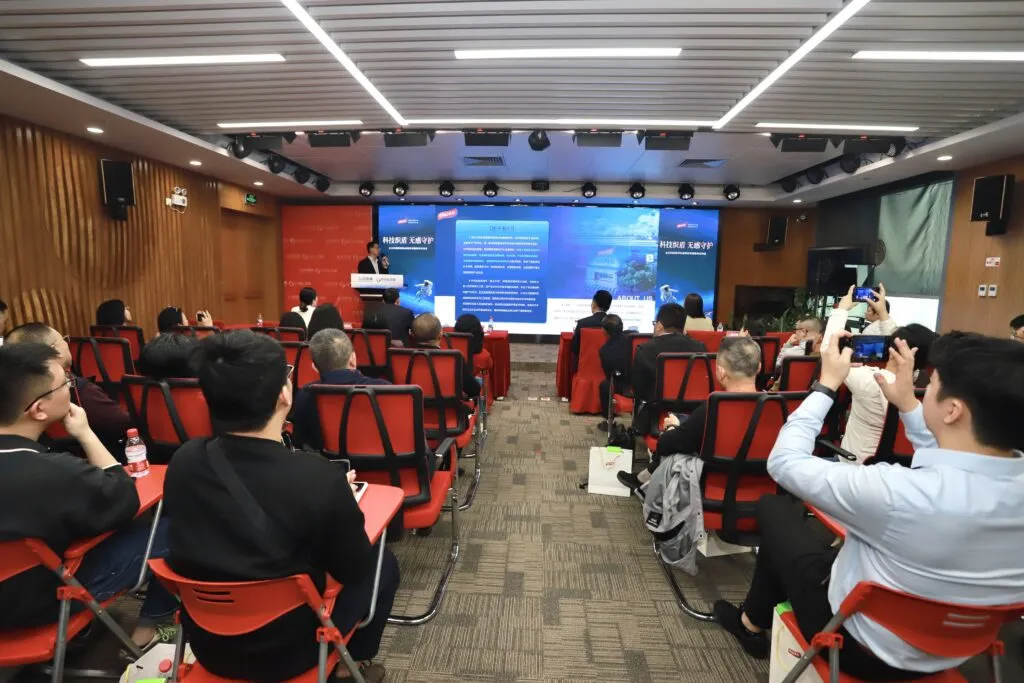
On March 11, Taili Technology hosted its R&D Strategy Launch Conference & Investor Exchange Seminar in Shenzhen, formally presenting its core technological achievements across six key fields: food safety, mobility safety, robotic safety, home safety, emergency safety, and aerospace safety. The event reflects over 20 years of the company’s R&D accumulation in advanced materials, aligns with its mission of “advancing material science for a better life and industrial future,” and marks significant progress toward its vision of becoming a global leader in materials technology.
Focusing on public livelihood needs, Taili launched modified-atmosphere (MAP) fresh-keeping bags, which regulate internal gas ratios to extend preservation effectiveness by three times, keeping leafy greens fresh for up to 30 days and safeguarding food health.
For life safety, the company’s self-developed stab-resistant and cut-resistant apparel and gloves—featuring high-performance composite textiles and nanofluid technology—offer flexible wear and instant rigid protection upon impact, having been proven effective in Xizang earthquake rescue operations.
To empower industrial upgrading, Taili introduced two solutions for robotics: a protective textile matrix enabling stable operation in environments ranging from -40°C to 380°C, and high-strength bionic tendon cords that resolve transmission failures in extreme conditions, thereby boosting operational stability.
In support of the national aerospace strategy, Taili unveiled a superhydrophobic anti-icing coating that mitigates icing risks for aircraft and aerospace vehicles, providing proactive safety guarantees for national aerospace security.
Looking ahead, Taili will continue to pursue independent innovation, integrate new materials with modern industries, focus on national strategic needs and public safety priorities, and contribute to national security, industrial upgrading, and people’s well-being through technological advancement.