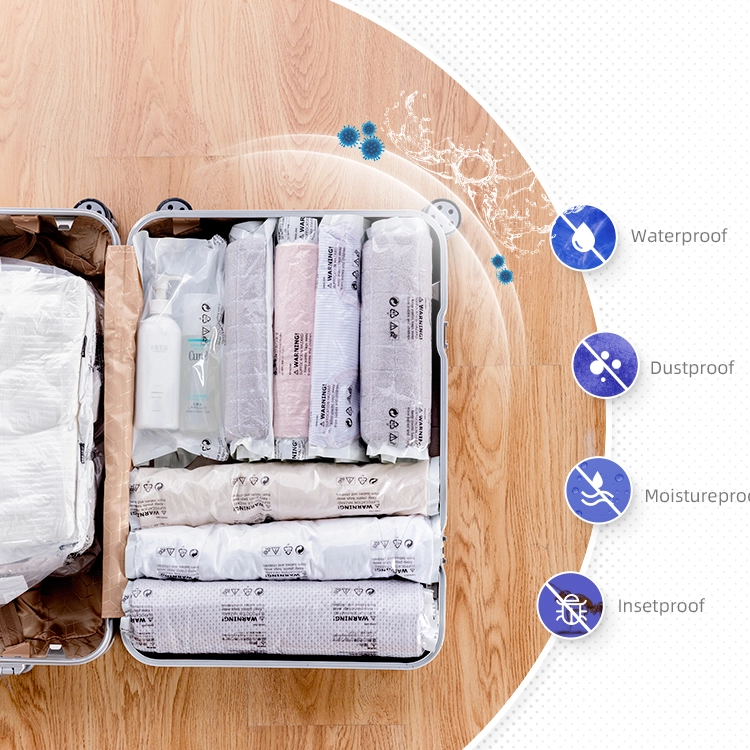
Content Menu
● Anti-Mold Vacuum Bags vs. Standard Storage Bags: At a Glance
● What Are Anti-Mold Vacuum Bags?
>> Barrier Protection Versus Antifungal Treatment
>> What Vacuum Compression Actually Does
● What Are Standard Storage Bags?
>> Ordinary Plastic Storage Bags
>> Breathable Fabric Storage Bags
● Which Storage Bag Offers Better Mold Protection?
>> Start With the Conditions That Enable Mold
>> Why a Compressed Bag Can Still Contain Damp Fabric
● Space Saving, Convenience, and Textile Compatibility
>> Vacuum Bags Win When Bulk Is the Main Problem
>> Standard Bags Win When Access Is Frequent
>> Delicate Items Need a Different Priority
● How to Verify Anti-Mold Claims Before Buying
>> Antibacterial Results Do Not Establish Antifungal Performance
>> Understand What Fungal Testing Measures
● A Practical Seven-Step Storage Procedure
● An Illustrative Buyer Trial: Test the System, Not Just the Film
● Cost and Reuse: Compare More Than the Purchase Price
● What Taili’s Materials Background Means for Buyers
>> Translate Company Capability Into Product Evidence
● Which Storage Bag Should You Choose?
>> Can vacuum storage bags prevent mold completely?
>> Are anti-mold vacuum bags suitable for long-term clothing storage?
>> Do vacuum bags remove moisture from clothes?
>> Are breathable storage bags better in humid climates?
>> Does an antibacterial certificate prove a bag is mold-resistant?
>> Can I reuse an anti-mold vacuum bag?
Anti-mold vacuum bags vs. standard storage bags: which option better protects clothing, bedding, and seasonal textiles? For bulky, washable items stored in limited space, well-made vacuum bags offer compression and a sealed barrier. Standard storage bags remain practical for frequently accessed items and textiles that should not be compressed.
However, moisture matters more than either label. Neither option makes damp fabric safe to store, and “anti-mold” does not automatically mean a bag has independently verified antifungal properties.
My recommendation is to evaluate the complete storage system: fabric condition, bag construction, closure integrity, storage environment, and supporting test evidence. This comparison explains how to make that decision without confusing marketing claims with demonstrated performance.
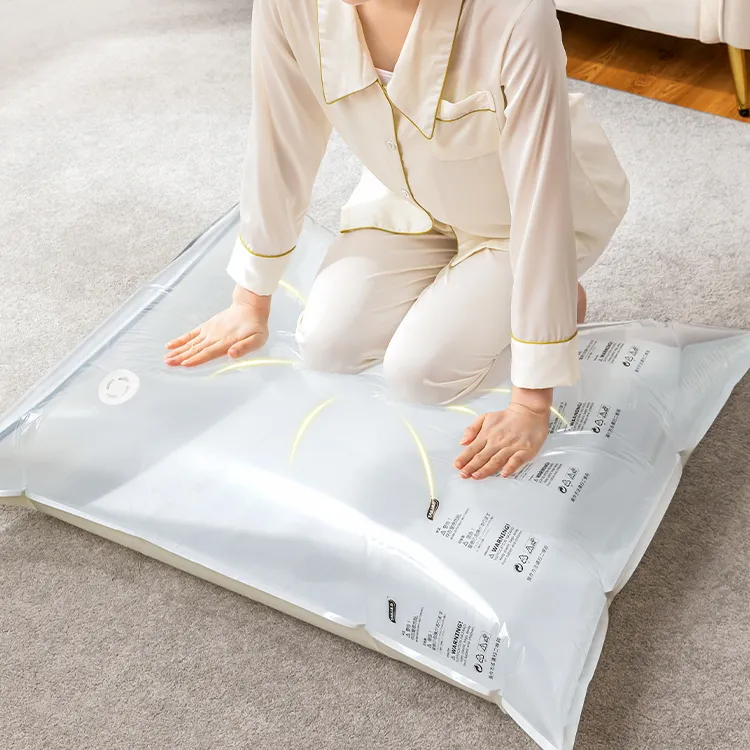
Anti-Mold Vacuum Bags vs. Standard Storage Bags: At a Glance
Here, “standard storage bags” includes ordinary non-vacuum plastic bags and breathable fabric storage bags. These behave differently, so the comparison distinguishes them where necessary.
| Comparison factor | Anti-mold vacuum bags | Standard storage bags |
|---|---|---|
| Main purpose | Compress suitable textiles and limit external exposure | Organize and protect items without vacuum compression |
| Space efficiency | Strong advantage for compressible bedding and clothing | Usually retains the original item volume |
| Moisture behavior | Can limit external moisture entry but also trap existing dampness | Sealed plastic can trap dampness; breathable fabric allows exchange |
| Mold protection | Depends on dryness, barrier performance, seals, and any verified treatment | Depends on bag type, cleanliness, and surrounding conditions |
| Frequent access | Requires opening and recompressing | Generally easier |
| Delicate textiles | Compression may be unsuitable | Non-compressive storage offers more flexibility |
| Buying priority | Valve, zipper, film, seams, and claim evidence | Closure, support, breathability, and intended use |
The practical choice is therefore not simply “premium versus basic.” It is controlled compression versus easier access, with textile compatibility and moisture management governing both.
What Are Anti-Mold Vacuum Bags?
Anti-mold vacuum bags are storage bags marketed to reduce mold-related storage problems while allowing air removal. Their protective approach may involve a sealed enclosure, moisture-resistant film, or a specific antifungal treatment.
Those mechanisms should not be treated as interchangeable.
Barrier Protection Versus Antifungal Treatment
A barrier-based bag aims to reduce exposure to surrounding air, dust, and moisture. It does not necessarily contain an ingredient that inhibits fungal growth.
A treated bag makes an additional claim about material performance. That claim needs evidence identifying the tested material, organisms, conditions, and results.
Before paying more, ask:
- Does “anti-mold” describe the enclosure or a treatment?
- Was the finished bag tested, or only a material sample?
- Does the report address fungi rather than bacteria?
- Do the tested conditions resemble the intended application?
A bag can provide useful storage protection without an antifungal additive. Equally, a treated film cannot compensate for a leaking zipper or damp contents.
What Vacuum Compression Actually Does
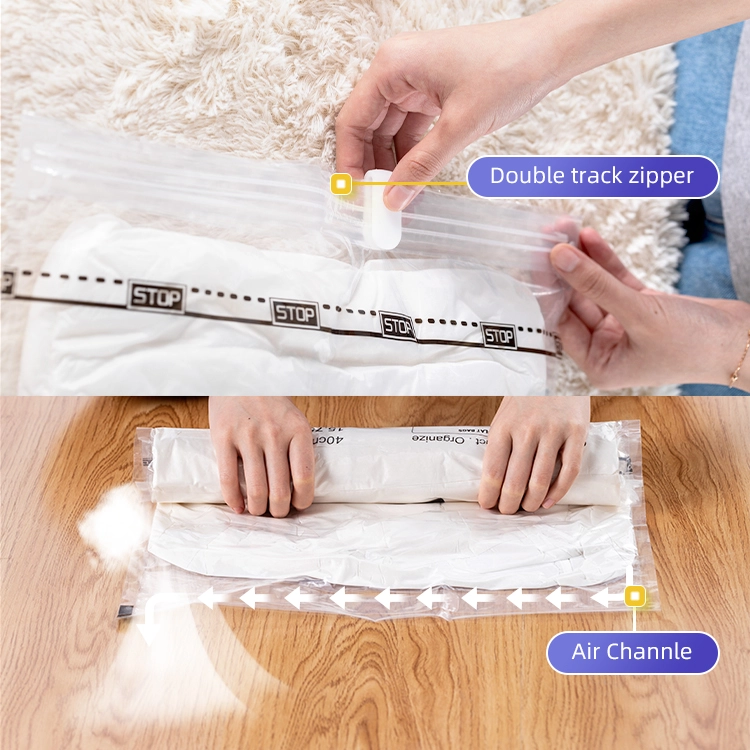
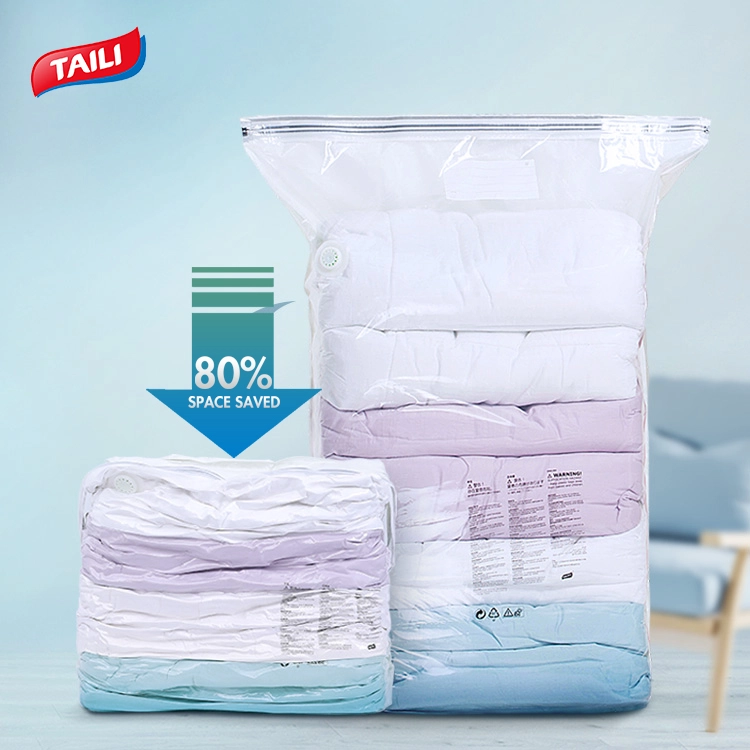
Vacuum compression removes air from the bag and reduces the bulk of compressible contents. Its clearest benefit is space efficiency.
It is not a textile-drying process or a validated sterilization method. Do not assume that removing air eliminates mold spores or makes residual moisture harmless.
What Are Standard Storage Bags?
Standard storage bags protect and organize belongings without requiring vacuum compression. Their performance depends heavily on construction.
Ordinary Plastic Storage Bags
Non-vacuum plastic bags can keep clean textiles separated from dust and handling. A secure closure may also reduce exposure to the surrounding environment.
However, a closed plastic bag can retain moisture already present in the fabric. Its apparent simplicity does not eliminate the need for thorough drying.
Breathable Fabric Storage Bags
Fabric bags allow more exchange with surrounding air and avoid compressing their contents.
That can suit items needing easy access or gentle handling. However, breathability is not humidity control. In a damp room, the contents remain exposed to the room’s conditions.
For fragile or historic textiles, conservation guidance favors carefully supported storage with minimal folding rather than aggressive space reduction.
Which Storage Bag Offers Better Mold Protection?
A well-sealed vacuum bag can be useful for clean, dry textiles in a suitable environment. Nevertheless, neither vacuum nor standard bags can guarantee mold prevention.
Start With the Conditions That Enable Mold
The U.S. Environmental Protection Agency recommends keeping indoor relative humidity below 60%, ideally between 30% and 50% where possible. It also recommends drying wet materials within 24–48 hours to help prevent mold growth.
These are environmental prevention guidelines—not certification criteria for storage bags.
Textiles can remain vulnerable when moisture enters through:
- Incomplete drying after washing.
- Damp storage surfaces.
- Leaking closures or damaged film.
- Humid conditions during repeated opening.
- Condensation associated with temperature differences.
The bag is one protective layer, not a replacement for a dry storage location.
Why a Compressed Bag Can Still Contain Damp Fabric
A tightly compressed package may look protected while retaining moisture inside folded garments or thick bedding.
This is particularly important with dense seams, multilayer quilts, and bulky filling. Surface dryness alone may not tell the whole story.
My decision rule is straightforward: if an item is not ready for enclosed storage without vacuum, compression does not make it ready.
Space Saving, Convenience, and Textile Compatibility
Vacuum Bags Win When Bulk Is the Main Problem
For suitable comforters, blankets, and seasonal clothing, vacuum storage can make awkward items easier to organize.
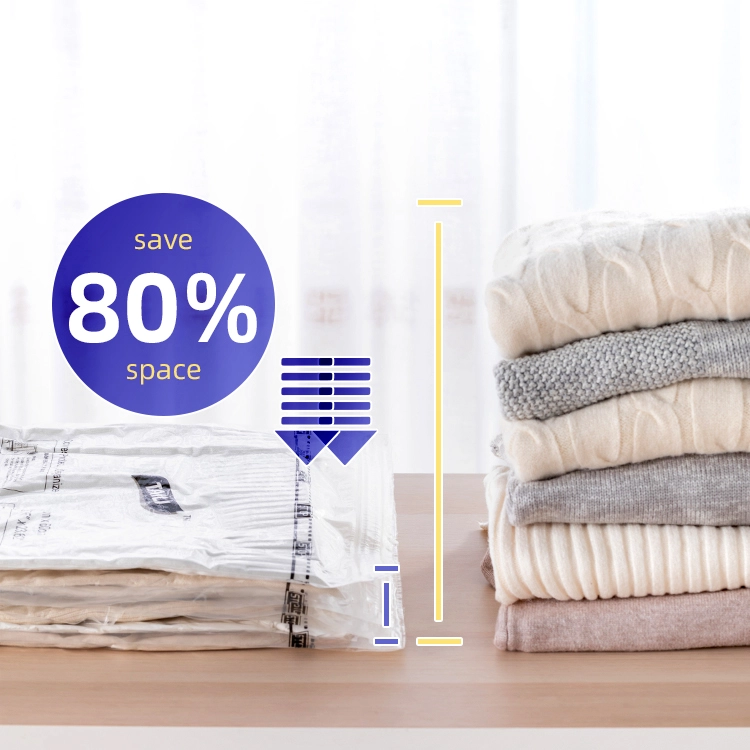
However, avoid applying one advertised compression percentage to every textile. Results depend on filling, construction, packing, and the manufacturer’s measurement method.
A useful comparison uses the same items and measures their occupied space before and after packing.
Standard Bags Win When Access Is Frequent
Clothing used weekly rarely benefits from repeated evacuation.
A standard bag usually offers:
- Faster retrieval.
- Easier repacking.
- Less handling of valves and closures.
- Better visibility into a frequently changing wardrobe.
For everyday use, convenience can outweigh maximum compression.
Delicate Items Need a Different Priority
Do not assume all textiles tolerate sustained compression.
Check care instructions for structured clothing, delicate decorations, and filled products. For heirlooms or fragile fabrics, prioritize appropriate support, gentle folds, and suitable storage materials.
Conservation practices provide a useful reminder: preserving shape and condition can matter more than reducing volume.
How to Verify Anti-Mold Claims Before Buying
This is the most important purchasing distinction: material evidence, finished-bag performance, and protection of stored textiles are separate questions.
Antibacterial Results Do Not Establish Antifungal Performance
ISO 22196 evaluates antibacterial activity on treated plastics and other non-porous surfaces.
A result under that method does not, by itself, substantiate a claim that a storage bag inhibits mold. Bacteria and fungi require different evidence.
A supplier presenting an antibacterial report as proof of mold prevention should clarify the claim.
Understand What Fungal Testing Measures
ISO 846 addresses the effects of microorganisms on plastics. Its methods include fungal-growth assessment and evaluation of fungistatic effects under defined conditions.
Even relevant testing has limits. A result for a plastic specimen does not automatically demonstrate protection of a damp duvet inside a finished bag.
Request:
- The laboratory and report number.
- The exact test method.
- Identification of the tested sample.
- Test conditions and exposure duration.
- Results and interpretation.
- Evidence covering any claimed performance after reuse.
The strongest documentation connects the advertised benefit to the actual product being purchased.
A Practical Seven-Step Storage Procedure
Correct preparation can matter more than choosing between two similarly constructed bags.
- Clean items according to their care labels. Do not pack visibly soiled textiles for seasonal storage.
- Dry them thoroughly. Pay attention to thick seams and filling.
- Let items cool after drying. Recheck for residual dampness before enclosure.
- Inspect the bag. Look for damaged film, dirty closure tracks, and valve defects.
- Pack within the stated limit. Keep fabric away from the sealing area.
- Close and evacuate as instructed. Avoid assuming different valve systems work identically.
- Label and inspect. Record contents and packing date, then check for lost compression, condensation, or unusual odor.
Store bags in a dry location away from sharp objects and potential leaks.
If contents already show mold, do not treat sealing or vacuuming as remediation. Separate affected items and obtain cleaning guidance appropriate to the textile.
An Illustrative Buyer Trial: Test the System, Not Just the Film
Retailers, distributors, and hospitality buyers can learn more from a controlled sample trial than from comparing packaging claims alone.
The following is a proposed evaluation—not a reported customer case or published performance result.
Set Up Comparable Samples
Pack identical, clean, thoroughly dry textiles in:
- The proposed anti-mold vacuum bag.
- A conventional vacuum bag, if available.
- A standard non-vacuum storage bag.
Use consistent loading quantities and comparable storage conditions. Record temperature and relative humidity.
Measure Useful Outcomes
Check:
- Occupied storage volume.
- Time required to pack and retrieve items.
- Loss of compression.
- Closure and valve condition after repeated use.
- Visible condensation.
- Textile appearance after unpacking.
Do not deliberately cultivate mold in an informal household or warehouse trial. Use a qualified laboratory for fungal challenge testing.
This approach separates three commercial questions: does the bag save space, remain functional, and support its protective claims?
Cost and Reuse: Compare More Than the Purchase Price
A lower purchase price is not automatically better value. Neither is a premium justified by “anti-mold” wording alone.
For household buyers, useful value comes from reliable performance and appropriate sizing. For commercial buyers, additional factors include packing labor, storage capacity, replacement frequency, and product complaints.
A practical purchasing measure is:
Cost per successful use = total purchasing and replacement cost ÷ successful storage cycles.
Treat “successful” as a defined outcome: the bag remains serviceable, the closure works, and the contents emerge in acceptable condition.
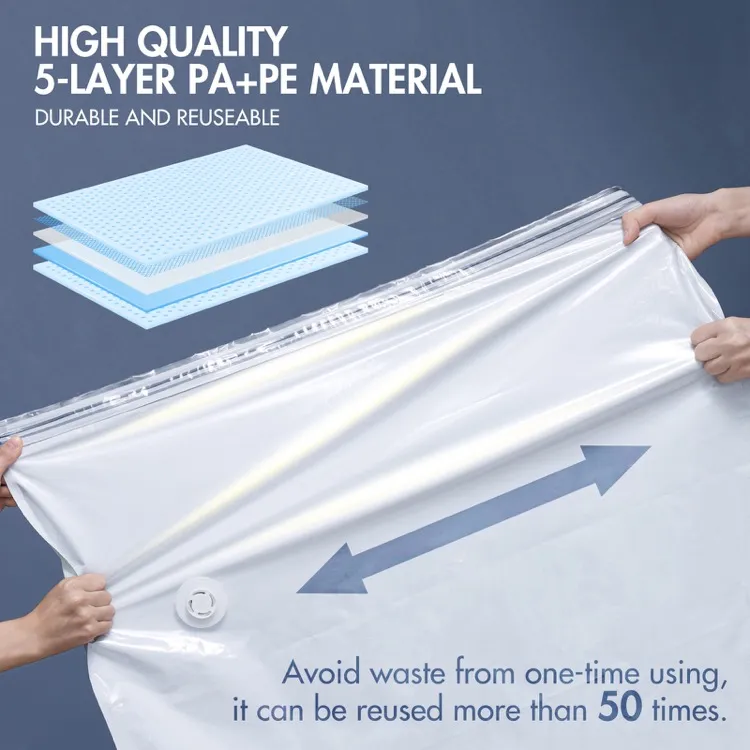
Avoid assuming that reusable automatically means environmentally superior. Actual service life and material use need consideration.
What Taili’s Materials Background Means for Buyers
Founded in 2003 and headquartered in Zhongshan, Guangdong, Taili Technology describes a business spanning material development and finished-product manufacturing. Its public product materials position vacuum bags around compression and protection from dust and moisture.
From a buyer’s perspective, the useful question is how that technical background translates into a particular bag.
Translate Company Capability Into Product Evidence
For a Taili storage-bag project, request details covering:
- Film construction and intended application.
- Closure and valve design.
- Finished-bag leakage checks.
- Repeated-use testing.
- Any product-specific antifungal evidence.
- Recommended textiles and storage limitations.
Aerospace-related company credentials may demonstrate relevant experience, but they do not establish that every household bag carries an aerospace qualification or antifungal certification.
The most credible supplier connects its broader capabilities to clear specifications for the exact model.
Which Storage Bag Should You Choose?
Choose an anti-mold vacuum bag when bulky, compression-compatible textiles need compact seasonal storage—and the product’s construction and claims withstand scrutiny.
Choose a standard storage bag when frequent access, non-compressive handling, or simple organization matters more.
For fragile heirlooms, use textile-specific conservation guidance rather than choosing either category solely for convenience.
Contact Taili with your textile type, storage environment, required sizes, expected reuse cycles, and target market. Request a sample and relevant model-specific documentation before committing to volume purchasing.
Frequently Asked Questions
Can vacuum storage bags prevent mold completely?
No. They cannot guarantee mold prevention. Damp contents, leaks, and unsuitable storage conditions can undermine protection.
Are anti-mold vacuum bags suitable for long-term clothing storage?
They can suit clean, dry, compression-compatible clothing. Follow garment and bag instructions, and inspect stored items periodically.
Do vacuum bags remove moisture from clothes?
Do not rely on them for drying. Their primary function is air removal and compression; textiles should be thoroughly dry beforehand.
Are breathable storage bags better in humid climates?
Not automatically. Breathable fabric exchanges air with the surroundings, so a humid room remains a problem.
Does an antibacterial certificate prove a bag is mold-resistant?
No. Antibacterial testing addresses bacteria. Mold-related claims require relevant fungal evidence and an appropriate interpretation of the results.
Can I reuse an anti-mold vacuum bag?
Follow the manufacturer’s instructions. Check the film, seams, zipper, and valve before reuse. Any claimed persistence of an antifungal treatment should have supporting evidence.
References
1. U.S. Environmental Protection Agency. “Mold Course, Chapter 2.” Source for indoor humidity recommendations, moisture management, and the 24–48-hour drying guideline. https://www.epa.gov/mold/mold-course-chapter-2
2. Canadian Conservation Institute. “Flat Storage for Textiles — CCI Notes 13/2.” Source for clean storage, minimal folding, protective enclosures, and textile support. https://www.canada.ca/en/conservation-institute/services/conservation-preservation-publications/canadian-conservation-institute-notes/flat-storage-textiles.html
3. Smithsonian Museum Conservation Institute. “Climate and Textiles Storage.” Source for humidity-related risks, condensation, storage microclimates, and periodic inspection. https://mci.si.edu/climate-and-textiles-storage
4. International Organization for Standardization. “ISO 22196:2011 — Measurement of Antibacterial Activity on Plastics and Other Non-Porous Surfaces.” Source for the scope of antibacterial testing. https://www.iso.org/standard/54431.html
5. International Organization for Standardization. “ISO 846:2019 — Plastics: Evaluation of the Action of Microorganisms.” Source for assessing microbial effects on plastics and the limitations of material-level evidence. https://www.iso.org/standard/74599.html
6. Intertek. “ISO 846 Microbial Testing for Plastics.” Source explaining fungal-growth and fungistatic test methods. https://www.intertek.com/polymers-plastics/fungi-testing/
7. Taili Technology Group. Corporate introduction. Source for founding year, vacuum-storage specialization, and company-described aerospace cooperation. Manufacturer-provided information, not independent product validation. https://en.zs-taili.com/home/page/index/1
8. Taili. “Taili Vacuum Storage Bag.” Source for the manufacturer’s stated product functions and sealing features; not independent verification of antifungal performance. https://www.taili-group.com/products/vacuum-bag/
Hot Tags: Anti-Mold Vacuum Bags, Vacuum Storage Bags Manufacturer, Wholesale Vacuum Storage Bags, OEM Vacuum Storage Bags, ODM Vacuum Storage Bags, Custom Vacuum Storage Bags, Bulk Vacuum Storage Bags, Vacuum Storage Bags Supplier, Moisture-Resistant Storage Bags, Reusable Vacuum Storage Bags