Content Menu
● TPU-Coated vs. PE Vacuum Bags: The Essential Differences
>> Why the Material Label Can Be Misleading
● Durability Comparison at a Glance
● Which Vacuum Bag Resists Punctures and Abrasion Better?
>> TPU-Coated Bags for Repeated Mechanical Stress
>> PE and PA/PE Bags for Everyday Storage
● Which Material Holds a Vacuum Longer?
>> Barrier Performance Matters More Than Toughness Alone
>> Compare Results Under Matching Conditions
● Humidity, Temperature, and Long-Term Aging
>> TPU Chemistry Changes the Durability Outlook
>> PE-Based Bags Still Need Environmental Validation
● Seams, Zippers, and Valves: The Hidden Durability Factors
>> Seal Strength and Leak Integrity Are Different
● A Practical Durability Test Before Bulk Purchasing
>> Step 1: Define the Actual Use Case
>> Step 2: Make the Comparison Fair
>> Step 3: Run Repeated Handling Cycles
>> Step 4: Measure Retention After Conditioning
>> Step 5: Record the Failure Location
● Application Examples: Choosing for the Actual Risk
>> Household Clothing and Bedding
>> Outdoor and Emergency Equipment
● Purchase Price vs. Cost per Successful Use
● What Buyers Should Ask Taili Technology
● Choose the Bag That Survives Your Real Conditions
>> Are TPU-Coated Vacuum Bags Always More Durable Than PE Bags?
>> Are PE Vacuum Bags the Same as PA/PE Vacuum Bags?
>> Does a Thicker Vacuum Bag Hold Vacuum Longer?
>> Which TPU Is Better for Humid Storage?
>> Can TPU-Coated or PE Storage Bags Be Used for Food?
>> How Many Times Can a Vacuum Bag Be Reused?
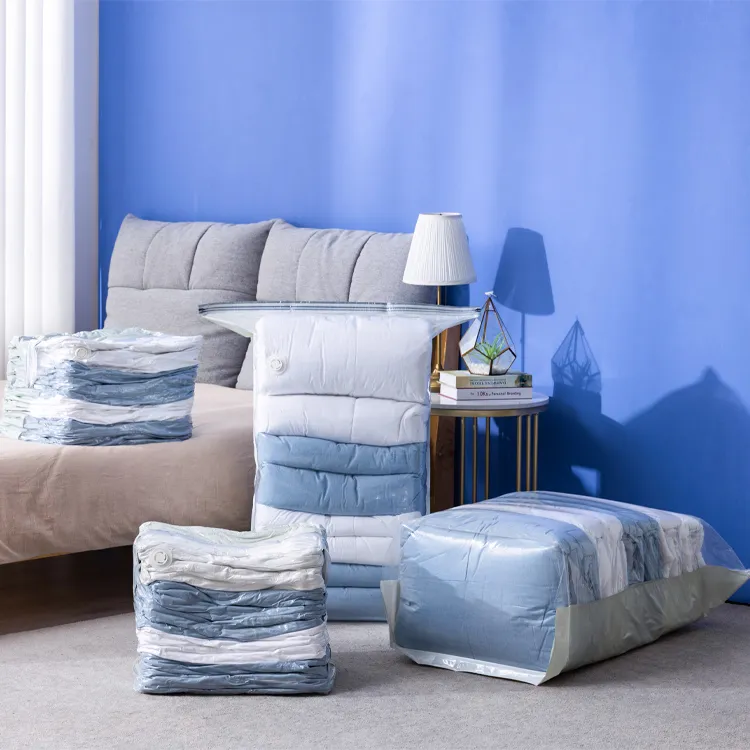
When comparing TPU-coated vs. PE vacuum bags, a well-engineered TPU-coated fabric bag is generally the stronger candidate for repeated handling, abrasion, and demanding reuse. However, a properly designed polyethylene-based multilayer bag can offer excellent everyday durability and vacuum retention at a lower purchase price.
The important qualification is construction. A reinforced TPU-coated bag, a plain PE film bag, and a nylon/PE multilayer bag are different products. Comparing their material names alone can lead to the wrong purchasing decision.
My approach is to evaluate the complete bag: its substrate, barrier layers, seams, closure, valve, and intended environment. That gives buyers a more useful answer than simply declaring one polymer “stronger.”
TPU-Coated vs. PE Vacuum Bags: The Essential Differences
TPU stands for thermoplastic polyurethane. In a TPU-coated vacuum bag, the polymer forms a coating or laminated layer over a supporting textile, often polyester or nylon. The fabric provides reinforcement, while the TPU layer contributes flexibility and the intended sealing or barrier function.
PE stands for polyethylene. It is widely used in flexible packaging, particularly as a heat-sealable layer. However, many products described as “PE vacuum bags” actually contain additional materials.
A common example is PA/PE: polyamide, also called nylon, combined with polyethylene. Nylon contributes mechanical strength and gas-barrier performance, while PE provides the sealing layer.
Why the Material Label Can Be Misleading
Before comparing durability, ask what the bag actually contains:
- Is the TPU bonded to woven fabric or supplied as unsupported film?
- Is the PE bag single-layer or multilayer?
- Does the construction include nylon or another barrier material?
- Are thickness, coating weight, and fabric specification disclosed?
- Is the bag designed for clothing storage, food packaging, or industrial protection?
A lightweight TPU film does not automatically outperform a substantial PA/PE laminate. Likewise, the performance of reinforced TPU-coated fabric should not be attributed to TPU chemistry alone.
Durability Comparison at a Glance
The following table describes typical tendencies, not verified results for specific Taili products.
| Evaluation factor | TPU-coated fabric vacuum bag | PE-based vacuum bag |
|---|---|---|
| Repeated handling | Often suitable for demanding reuse | Depends strongly on thickness and multilayer design |
| Abrasion resistance | TPU can provide strong wear resistance | Thin film can be vulnerable to rubbing |
| Puncture resistance | Reinforcing fabric can improve resistance | Nylon reinforcement and film gauge matter |
| Flexibility | Grade-dependent elasticity and flexibility | Flexible, but behavior varies by structure |
| Vacuum retention | Requires suitable barrier construction and airtight components | Multilayer structures can provide effective retention |
| Humid-environment durability | TPU chemistry and coating adhesion are important | Complete laminate and closure performance matter |
| Purchase price | Often higher for reinforced constructions | Often lower for lightweight film constructions |
| Weight and packability | Fabric reinforcement can increase bulk | Thin-film bags are usually easier to pack compactly |
| Best-fit applications | Frequent handling and demanding reusable storage | Household storage and application-specific packaging |
Neither column establishes a universal winner. Durability depends on the failure mode that matters most.
Which Vacuum Bag Resists Punctures and Abrasion Better?
TPU-Coated Bags for Repeated Mechanical Stress
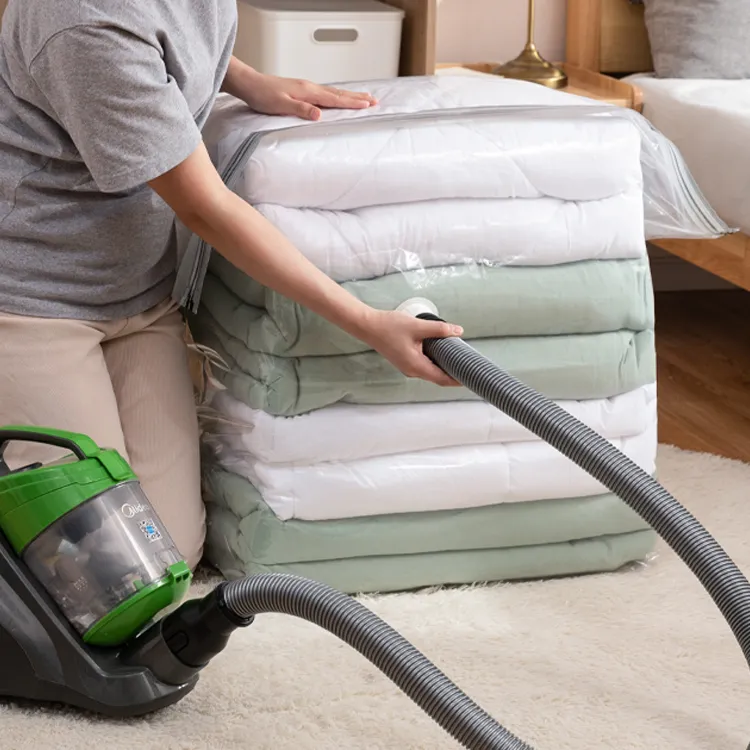
TPU is used in applications requiring elasticity, abrasion resistance, and wear resistance. When combined with a suitable textile, it can form a robust flexible structure.
That makes reinforced TPU-coated bags worth considering when users repeatedly load, compress, transport, and unpack their contents.
Potential applications include:
- Reusable equipment-storage systems.
- Outdoor textile storage.
- Protective transport covers.
- Frequently handled industrial packaging.
However, even reinforced material can fail around sharp corners, poorly finished seams, or valve attachment points. Padding exposed edges remains important.
PE and PA/PE Bags for Everyday Storage
A PE-based bag can be entirely adequate for soft clothing, bedding, and other relatively gentle contents.
Its performance changes significantly when nylon or other reinforcing layers are added. PA/PE bags should therefore be evaluated separately from plain polyethylene film.
For purchasing decisions, I would prioritize a finished-bag puncture test over a general claim such as “heavy duty.” The sample should contain the actual product, including the hardest corners and most demanding contact points.
Thickness helps describe a bag, but it does not explain its entire performance.
Which Material Holds a Vacuum Longer?
Vacuum retention is not the same as tear resistance.
A bag may resist punctures yet gradually lose compression. Another may have excellent barrier properties but fail because its zipper was not fully closed.
Three mechanisms deserve separate attention:
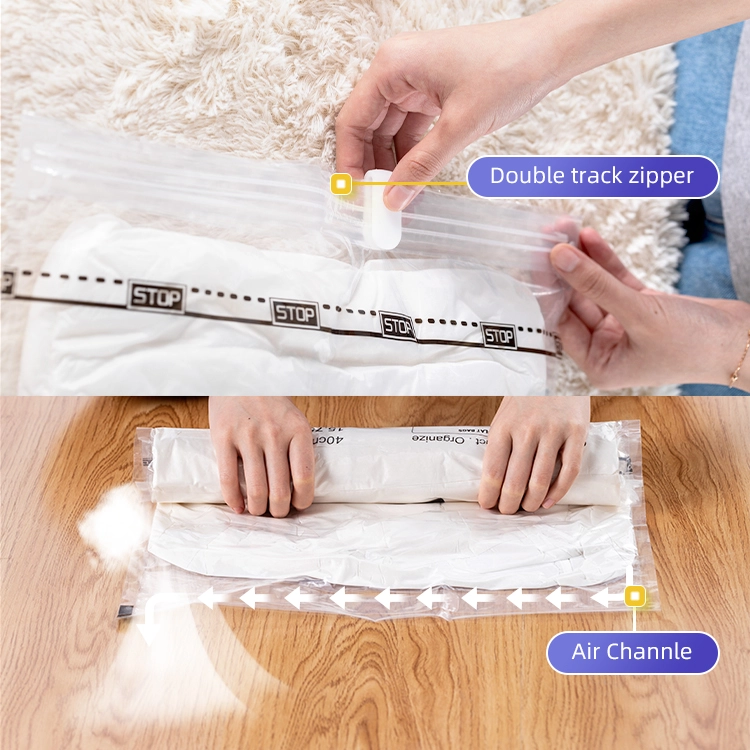
- Air enters through an imperfect closure, seam, or valve.
- Gas passes through the bag material.
- Handling creates small defects that become leakage paths.
Barrier Performance Matters More Than Toughness Alone
Plain PE is not equivalent to a purpose-designed multilayer vacuum barrier film. Adding materials such as nylon changes the package’s behavior.
TPU-coated fabric also requires qualification. A coating that is waterproof or mechanically durable is not automatically suitable for long-term vacuum retention.
Oxygen transmission rate measures oxygen passing through a material under specified conditions. It is useful for evaluating barrier performance, but it does not independently predict how long a complete storage bag will remain compressed.
For clothing-storage bags, finished-product retention tests are particularly useful because they include closures, valves, seams, and material behavior together.
Compare Results Under Matching Conditions
Ask suppliers to report:
- Test temperature and humidity.
- Bag dimensions and fill volume.
- Initial evacuation procedure.
- Storage duration.
- Measured reinflation or pressure change.
- Sample quantity and observed failures.
A retention claim without these details is difficult to compare fairly.
Humidity, Temperature, and Long-Term Aging
TPU Chemistry Changes the Durability Outlook
Not all TPU grades respond equally to their environment.
Polyether-based TPU is often selected where hydrolysis resistance is important. Hydrolysis is chemical degradation caused by interaction with water, particularly under conditions that accelerate the reaction.
Some polyester-based TPU grades provide strong mechanical performance but need careful qualification for prolonged warm, humid exposure.
The correct question is therefore not simply, “Is this TPU?” It is, “Which TPU grade is used, and how does the complete coated structure perform in my storage conditions?”
Coating adhesion also matters. A durable polymer provides limited value if it separates from its supporting fabric.
PE-Based Bags Still Need Environmental Validation
PE-based constructions should also be tested in the intended environment.
Temperature changes can influence flexibility, barrier performance, and sealing behavior. Repeated folding may expose weaknesses that are not obvious in a new bag.
For humid warehouses or seasonal transport, evaluate conditioned samples rather than relying only on room-temperature demonstrations.
There is no defensible universal temperature limit for all TPU-coated or PE vacuum bags. Use the finished product’s documented operating range.
Seams, Zippers, and Valves: The Hidden Durability Factors
The weakest component often determines bag life.
A thick bag with an inconsistent seam may perform worse than a thinner bag with a well-controlled sealing process.
For reusable storage bags, inspect:
- Seam consistency around corners.
- Coating or film distortion near welds.
- Valve attachment security.
- Closure alignment.
- Instructions for cleaning and resealing.
Seal Strength and Leak Integrity Are Different
Seal-strength testing measures the force required to separate a sealed specimen. It helps assess manufacturing consistency and mechanical performance.
Leak testing addresses another question: does the finished package allow unwanted gas movement through defects?
A strong seal is useful, but seal strength alone does not prove airtightness. Buyers should request both relevant mechanical evidence and an appropriate finished-package integrity assessment.
A Practical Durability Test Before Bulk Purchasing
Rather than asking suppliers for an unsupported lifetime estimate, establish a small comparison program.
Step 1: Define the Actual Use Case
Record the contents, handling frequency, storage environment, and acceptable loss of compression.
“Reusable household bedding storage” and “industrial equipment protection during transport” require different acceptance criteria.
Step 2: Make the Comparison Fair
Use bags with similar usable dimensions and equivalent contents.
Document thickness, fabric reinforcement, coating specification, closure design, and evacuation equipment. Do not present an unmatched comparison as proof that one polymer is superior.
Step 3: Run Repeated Handling Cycles
For each cycle:
- Load the bag.
- Close it according to instructions.
- Evacuate it using a consistent procedure.
- Handle or transport it as intended.
- Release the vacuum and unload it.
- Inspect seams, folds, valves, and contact points.
Set the required cycle count before testing. The number should reflect the application, not a marketing target.
Step 4: Measure Retention After Conditioning
Compare new bags with bags that have completed the handling program.
A product that retains vacuum when new but loses it after repeated use may not meet a reusable-storage requirement.
Step 5: Record the Failure Location
Classify failures by material, seam, closure, or valve.
This reveals whether changing the film would help—or whether the real improvement lies in component design or manufacturing control.
Application Examples: Choosing for the Actual Risk
Household Clothing and Bedding
A well-made PE-based multilayer bag is often a sensible starting point for soft textiles and occasional seasonal storage.
Priorities include closure usability, compactness, and documented retention. Reinforced TPU-coated construction becomes more relevant when frequent reuse or rough handling justifies its additional cost.
Store only clean, dry items and follow the bag manufacturer’s instructions.
Outdoor and Emergency Equipment
Reusable equipment storage can involve abrasion, humidity, and repeated packing.
A qualified TPU-coated fabric construction may be attractive here, especially when its chemistry and seams are matched to the environment.
Nevertheless, equipment-specific requirements still apply. Vacuum packaging is not automatically appropriate for every emergency item.
Industrial Components
For sensitive components, durability may be only one part of the specification.
Moisture protection, cleanliness, electrostatic behavior, and compatibility may also require evaluation. Neither TPU nor PE alone proves suitability for semiconductor, aerospace, or other controlled applications.
The package must satisfy the requirements of the component it protects.
Purchase Price vs. Cost per Successful Use
The cheapest bag is not always the lowest-cost solution.
A useful purchasing measure is:
Cost per successful use=(Purchase cost + maintenance cost + failure-related cost)/Successful uses
A premium reusable bag needs enough successful service cycles to justify its price. A lower-cost film bag may remain economical when handling is gentle and replacement is infrequent.
Failure-related costs may include repacking time, damaged contents, delayed shipments, or customer complaints.
Evaluate these factors using your own trial results. Do not substitute an assumed reuse advantage for measured performance.
What Buyers Should Ask Taili Technology
The supplied company profile positions Guangdong Taili Technology Group Co., Ltd. as a technology enterprise with capabilities in nanomaterials, polymer synthesis, and precision coating.
Those capabilities are relevant to developing flexible protective materials. However, company credentials do not establish the performance of an individual bag.
When discussing TPU-coated or PE-based vacuum packaging with Taili, request:
- The exact material structure for the proposed model.
- Relevant test reports and test conditions.
- Closure and valve specifications.
- Application limitations.
- Reuse and cleaning instructions.
- Samples suitable for your own qualification program.
This connects materials expertise with evidence that purchasing teams can actually use.
Choose the Bag That Survives Your Real Conditions
For frequent, demanding handling, qualified TPU-coated fabric deserves consideration. For economical household storage, a well-engineered PE-based multilayer bag may be the better fit.
Contact Taili Technology with your contents, storage environment, target reuse cycles, and retention requirements. Request matched samples and application-specific test evidence before placing a bulk order.
Frequently Asked Questions
Are TPU-Coated Vacuum Bags Always More Durable Than PE Bags?
No. Reinforced TPU-coated constructions can offer strong mechanical durability, but performance depends on the substrate, coating, seams, and components. A well-designed multilayer PE-based bag may outperform a poorly constructed TPU alternative.
Are PE Vacuum Bags the Same as PA/PE Vacuum Bags?
No. PA/PE combines nylon and polyethylene. Nylon contributes properties that plain PE does not provide in the same way. Always check the disclosed layer structure before comparing products.
Does a Thicker Vacuum Bag Hold Vacuum Longer?
Not necessarily. Greater thickness may help some mechanical properties, but vacuum retention also depends on barrier layers, seals, valves, and closures. Compare finished-bag retention results rather than thickness alone.
Which TPU Is Better for Humid Storage?
Polyether-based TPU is often considered when hydrolysis resistance is important. However, the specific grade, coating adhesion, and finished construction still need validation under representative temperature and humidity conditions.
Can TPU-Coated or PE Storage Bags Be Used for Food?
Only when the specific finished product is documented as suitable for the intended food-contact application. Clothing-storage bags should not be treated as food-packaging bags merely because they share a polymer name.
How Many Times Can a Vacuum Bag Be Reused?
There is no universal number. Reuse depends on contents, handling, cleaning, and component quality. Ask for cycle-test evidence and stop using bags that show damage or no longer retain vacuum.
References
1. BASF, “Elastollan®—Films, Coatings, Fibers and Nonwovens.” Manufacturer guidance supporting the discussion of TPU elasticity, abrasion resistance, coating applications, and grade-dependent hydrolysis resistance. https://plastics-rubber.basf.com/global/en/performance_polymers/industries/pp_electronics_and_electric/products/elastollan/films-textiles-and-nonwovens
2. DJVAC/DJPACK, “Comprehensive Guide to Vacuum Bag Materials and Applications.” Packaging-material guidance supporting the distinction between plain PE and PA/PE structures, including nylon’s mechanical and barrier roles and PE’s sealing function. https://www.djvacpack.com/news/comprehensive-guide-to-vacuum-bag-materials-and-applications-for-djvac-vacuum-packaging-machines/
3. Intertek, “Oxygen Transmission Rate (OTR), ASTM D3985.” Testing guidance explaining oxygen permeation measurements and the importance of material thickness, temperature, and humidity. https://www.intertek.com/polymers-plastics/testlopedia/oxygen-transmission-rate-astm-d3935/
4. ASTM International, “D3985-17: Standard Test Method for Oxygen Gas Transmission Rate Through Plastic Film and Sheeting Using a Coulometric Sensor.” Supports the distinction between measured oxygen transmission and broader package performance. The cited edition should not be assumed to be the latest edition. https://www.astm.org/d3985-17.html
5. ASTM International, “F88/F88M-21: Standard Test Method for Seal Strength of Flexible Barrier Materials.” Supports the explanation of seal-strength measurement and manufacturing consistency. The applicable edition should be agreed with the testing laboratory. https://www.astm.org/f0088_f0088m-21.html
6. ASTM International, “F2338-09: Standard Test Method for Nondestructive Detection of Leaks in Packages by Vacuum Decay Method.” Supports the explanation of leak detection as distinct from seal-strength testing. Test suitability and acceptance criteria require package-specific qualification. https://www.astm.org/f2338-09.html
7. Guangdong Taili Technology Group Co., Ltd., company background supplied in the brief. Used only for the company-capabilities paragraph; no public link or model-specific performance report was provided. https://www.taili-group.com/