Content Menu
● Vacuum Compression Bags vs. Dry Bags: Quick Comparison
● What Are Vacuum Compression Bags?
>> Vacuum Compression Bags for Travel
>> Vacuum Compression Bags for Home Storage
>> Dry Bags for Travel and Outdoor Activities
>> Waterproof Does Not Automatically Mean Submersible
>> Evaluate Your Load, Not Just the Advertised Percentage
● Materials, Closures, and Durability: An Industry Perspective
>> Vacuum Bags: Check the Film, Zipper, and Valve
>> Dry Bags: Check the Entire Waterproof System
● Can Compression Dry Bags Offer Both Benefits?
● Long-Term Storage: When Neither Bag Is Best
● A Practical Packing Strategy for Mixed Trips
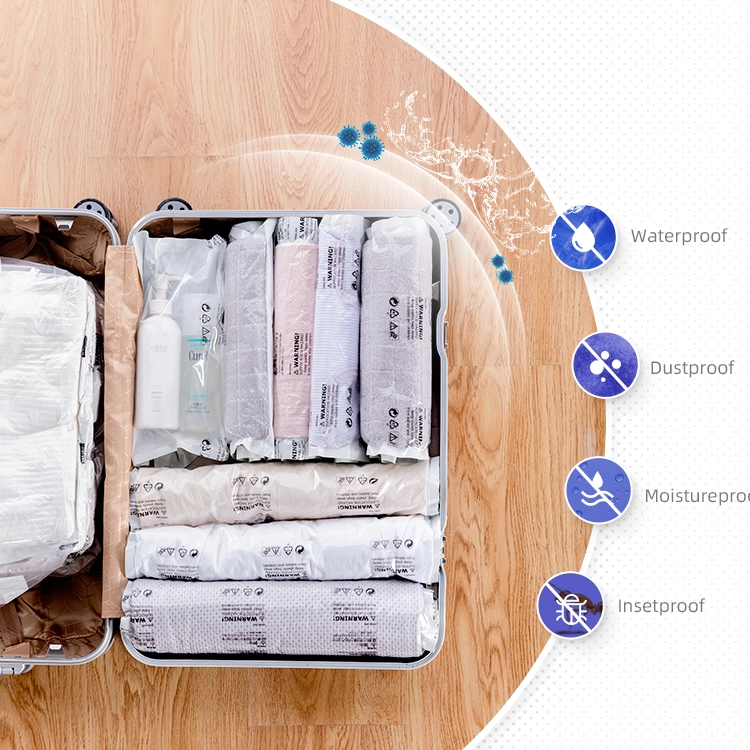
>> Use Vacuum Compression Bags Inside the Suitcase
>> Use Dry Bags Where Water Exposure Is Likely
>> Change the Storage Method After Returning Home
● How to Evaluate a Supplier Beyond Marketing Claims
>> Are Vacuum Compression Bags Waterproof?
>> Can a Dry Bag Replace a Vacuum Compression Bag?
>> Do Vacuum Bags Reduce Luggage Weight?
>> Can I Store a Sleeping Bag in a Vacuum Bag?
>> Are Dry Bags Safe for Phones During Kayaking?
>> Do Vacuum Compression Bags Wrinkle Clothes?
Vacuum compression bags vs. dry bags for travel and storage comes down to one practical distinction: vacuum bags primarily reduce packing volume, while dry bags primarily protect belongings from external water. For crowded suitcases and seasonal clothing storage, compression is usually more useful. For kayaking, rainy camping trips, and wet environments, a suitable dry bag is the stronger choice. Neither category automatically replaces the other.
My starting point is the problem, not the product: do you need more space, better water protection, or both? Understanding that difference prevents disappointing purchases—and helps you protect the items that matter.
Vacuum Compression Bags vs. Dry Bags: Quick Comparison
The most important keyword is purpose. Choose according to the conditions your belongings will face, rather than treating every sealed bag as interchangeable.
| Comparison | Vacuum compression bags | Dry bags |
|---|---|---|
| Primary function | Remove air to reduce bulk | Limit external water entry |
| Typical construction | Flexible film, sealing zipper, air-removal valve | Coated fabric, sealed seams, roll-top or specialized closure |
| Compression method | Vacuum cleaner, compatible pump, or manual air removal | Manual squeezing; some models add straps or air-permeable panels |
| Strongest applications | Suitcase packing and appropriate household textile storage | Rainy travel, camping, boating, and paddling |
| Main limitation | Compression does not establish a submersion rating | Ordinary dry bags do not provide vacuum-level compression |
| Weight reduction | No meaningful reduction in clothing weight | No meaningful reduction in contents’ weight |
| Long-term insulated-gear storage | Generally unsuitable when kept tightly compressed | Airtight storage is also inappropriate for some insulated gear |
Manufacturer guidance distinguishes compression bags from compression cubes, while dry-bag guidance explicitly separates rain and splash protection from submersion protection. Sleeping-bag care introduces a further limitation: some equipment needs loose, breathable storage rather than either sealed option.
What Are Vacuum Compression Bags?
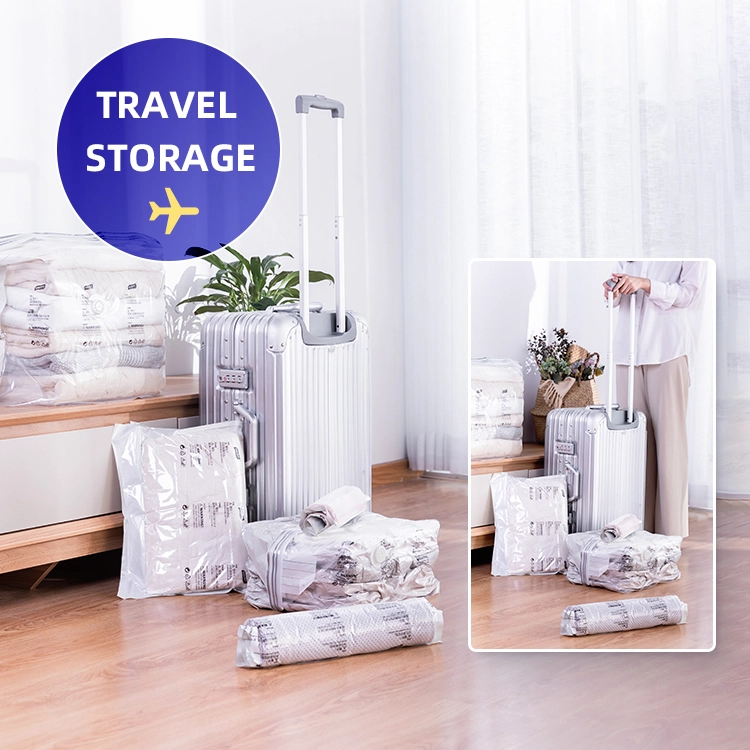
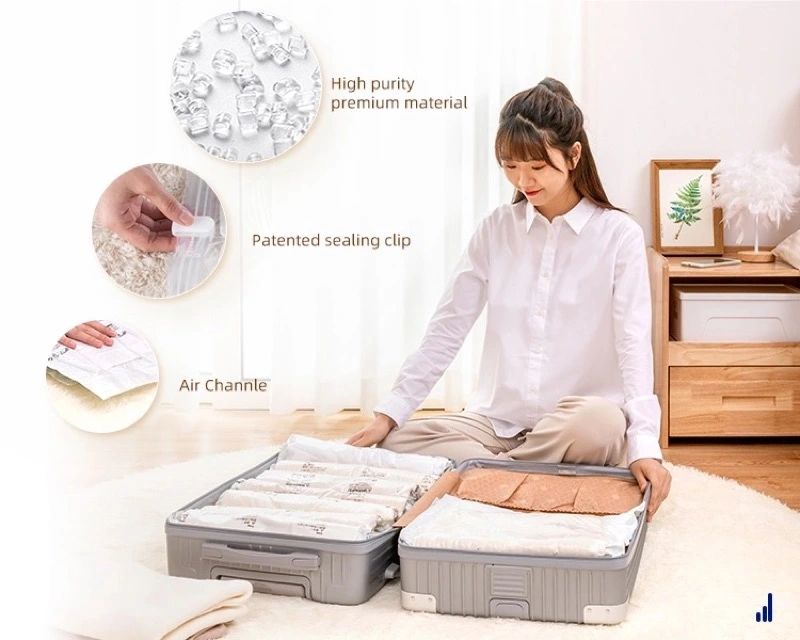
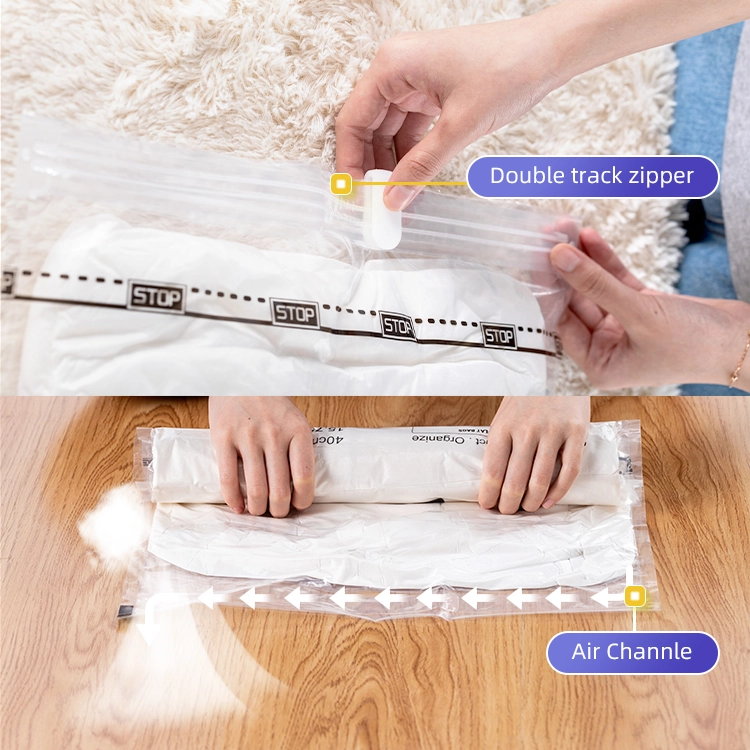
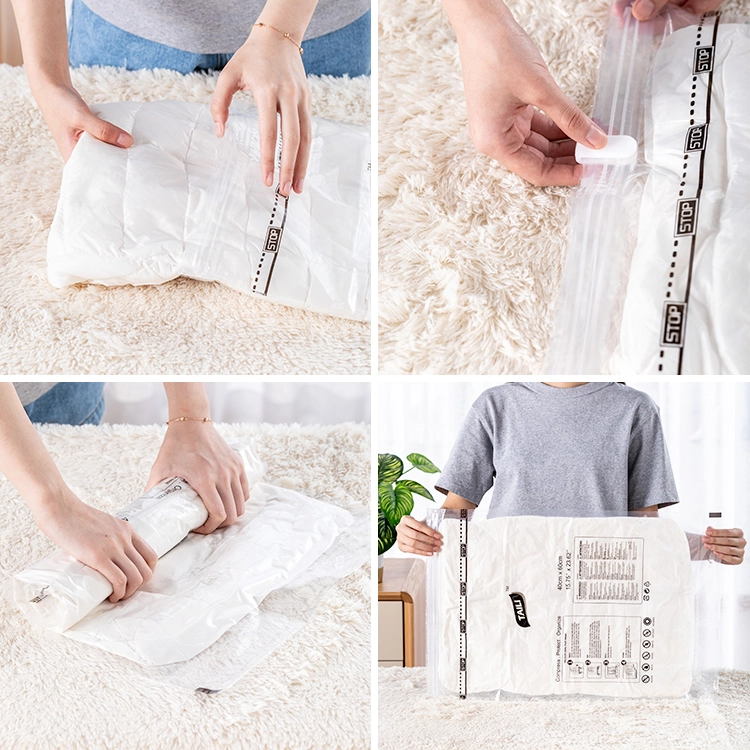
Vacuum compression bags are flexible storage bags that remove air from around clothing and other compressible textiles. Depending on the design, users extract air with a vacuum cleaner, a pump, or manual pressure through a one-way valve.
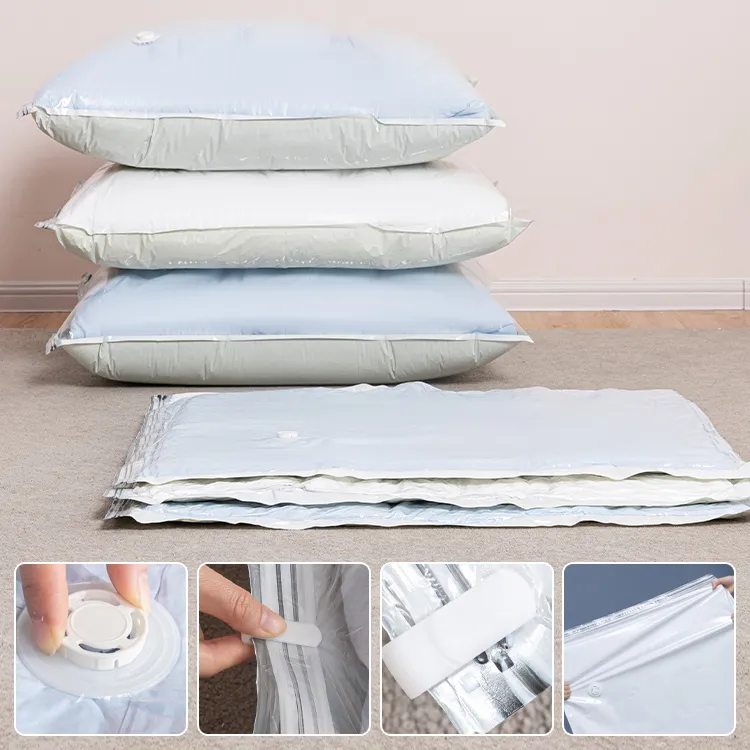
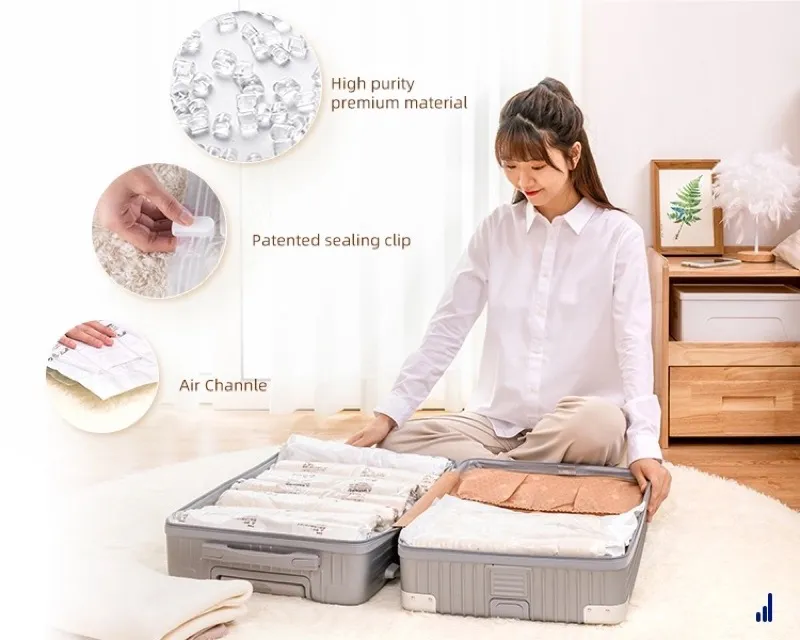
Their main advantage is straightforward: bulky belongings occupy less room after excess air is removed. Taili describes vacuum storage products with PA/PE construction, sealing closures, and multiple air-removal methods. Eagle Creek also offers travel compression sacks designed for manual air removal.
Vacuum Compression Bags for Travel
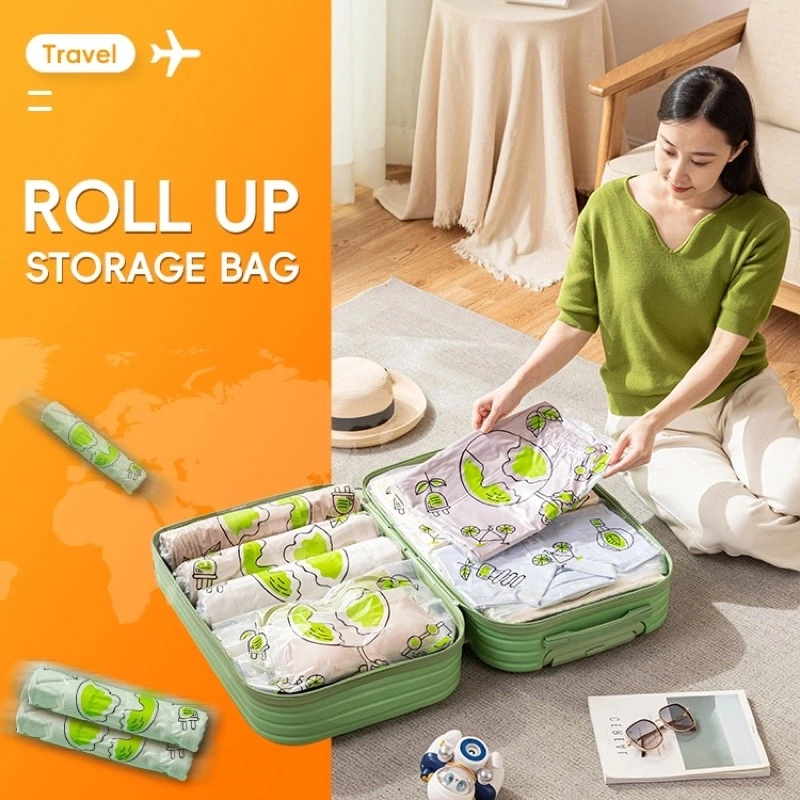
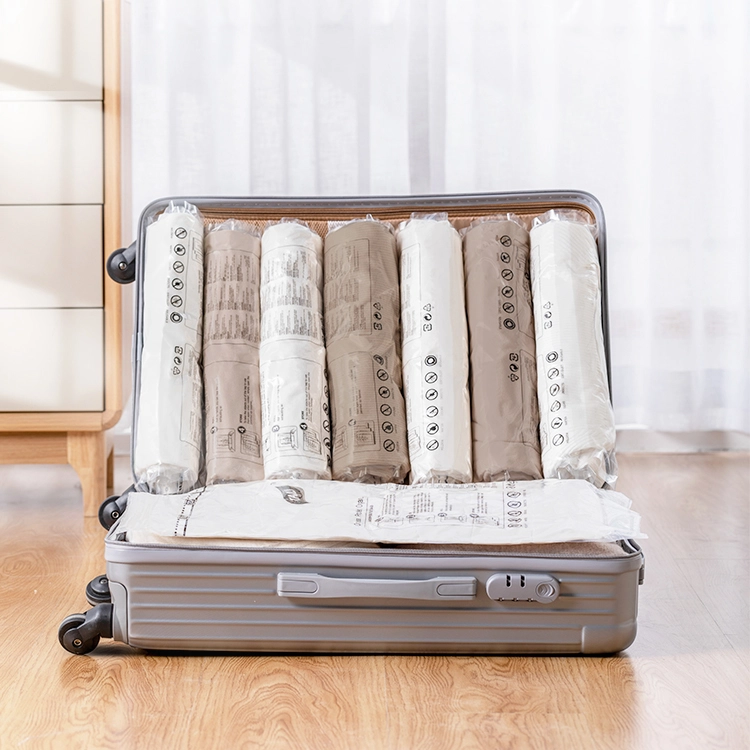
Travel compression bags are most useful when bulk—not weight—is your packing constraint.
Typical candidates include casual clothing, fleece layers, and other soft items whose care instructions permit compression. A pump-free design can be especially convenient because you must also repack for the return journey.
However, compression does not make your clothing lighter. It can encourage overpacking by creating room for additional items. Weigh your finished suitcase instead of assuming that a smaller load will satisfy an airline’s baggage allowance.
Vacuum Compression Bags for Home Storage
For suitable household textiles, vacuum bags combine compact storage with separation from dust and external moisture. Taili markets its vacuum storage bags for clothing, bedding, and other bulky household items.
The important qualification is textile suitability. Do not assume that every comforter, sleeping bag, or insulated garment benefits from prolonged compression. Follow the item’s care instructions before treating space savings as the priority.
For sleeping bags specifically, REI recommends drying thoroughly and storing loosely in a breathable sack. Several months of compression can reduce insulation’s resilience and loft.
What Are Dry Bags?
Dry bags are protective containers intended to keep water away from their contents within specified use conditions. Common designs use waterproof coated fabric, sealed seams, and a roll-top closure.
Their protection depends on the complete system: fabric, seams, closure, condition, and correct use. A waterproof fabric specification alone does not establish that the finished bag is suitable for underwater exposure. Sea to Summit explicitly warns that ordinary roll-top dry bags are not designed for submersion.
Dry Bags for Travel and Outdoor Activities
Dry bags are particularly relevant when belongings face rain, splashes, or wet surroundings.
Useful situations include:
- Packing spare clothing for a paddling trip.
- Separating essentials inside a backpack during rainy travel.
- Protecting camping clothing from external moisture.
- Organizing equipment inside a boat.
Select the model for its stated application. A lightweight internal organizer and a bag intended for more demanding exposure should not be judged solely by capacity or appearance. Sea to Summit provides model-specific guidance and distinguishes dry bags intended for internal versus external use.
Waterproof Does Not Automatically Mean Submersible
This distinction deserves special attention.
Sea to Summit explains that water can seep through a roll-top closure if it remains underwater deeply enough or long enough. Therefore, an ordinary dry bag should not be treated as a dependable underwater case for a phone, camera, or laptop.
For valuable electronics, look for protection explicitly designed and rated for the expected exposure. Do not infer that capability from the word “waterproof” alone.
Which Bags Save More Space?
Vacuum compression bags are generally the more direct choice when your goal is to remove trapped air and reduce textile bulk. Conventional dry bags prioritize water protection, although users can squeeze out some air before closing them.
Manufacturer claims demonstrate the potential—but not a universal result. Taili advertises up to 80% volume reduction for certain vacuum bags, and Eagle Creek makes a similar maximum claim for specific travel compression sacks. These are product claims, not guarantees for every packing load.
Evaluate Your Load, Not Just the Advertised Percentage
A bag filled with bulky soft textiles behaves differently from one filled with dense garments.
For a useful personal comparison:
- Pack the same clothing into the same suitcase.
- Photograph the uncompressed arrangement.
- Compress only the suitable bulky items.
- Repack without adding more clothing.
- Check both available space and total weight.
This suggested test measures your practical benefit rather than trying to reproduce a headline percentage. It also reveals whether compressed bundles fit your luggage conveniently.

Materials, Closures, and Durability: An Industry Perspective
From a product-evaluation standpoint, I would focus on the closure and construction before judging appearance. A bag’s headline material tells only part of the story.
Vacuum Bags: Check the Film, Zipper, and Valve
Taili describes multilayer PA/PE construction for some vacuum storage bags. In that product design, the film, sealing zipper, and air-removal arrangement work together to maintain the compressed package.
Before buying, check:
- Whether the bag fits your suitcase or storage shelf.
- Which air-removal methods it supports.
- Whether the return journey requires equipment.
- How clearly the sealing instructions are explained.
- Whether the manufacturer provides product-specific performance information.
These checks are more useful than assuming that every bag with a valve performs identically.
Dry Bags: Check the Entire Waterproof System
For dry bags, distinguish fabric specifications from finished-product limitations.
For example, Sea to Summit’s Evac compression dry bag lists a 10,000 mm hydrostatic-head specification for its body fabric. Yet the same product guidance says to avoid submersion because water can enter through the roll-top closure.
The purchasing lesson is simple: a strong material specification does not cancel a closure limitation.
Ask what exposure the complete product supports, how it must be closed, and whether the stated protection applies to rain, splashes, or underwater use.
Can Compression Dry Bags Offer Both Benefits?
Yes. Compression dry bags occupy the middle ground between basic dry bags and vacuum storage bags.
Some combine water-resistant construction with compression straps or air-release features. Sea to Summit’s Evac design, for example, uses a waterproof but air-permeable base that allows users to expel air while keeping contents protected under its stated conditions.
This can be useful when outdoor equipment needs both compact transport and protection from rain or splashes. However, the hybrid design does not automatically provide vacuum-level compression or submersible protection.
Compare the actual operating method and limitations—not just the product name.
Long-Term Storage: When Neither Bag Is Best
Travel packing and long-term storage solve different problems.
During transport, compactness may matter most. At home, some items need airflow and freedom from prolonged pressure.
REI recommends storing sleeping bags:
- Removed from their compression sack.
- Thoroughly dry.
- Loosely contained in a large cotton or mesh sack.
- Kept in a cool, dry location.
REI also advises against watertight sleeping-bag storage because condensation can contribute to mildew.
Neither a vacuum bag nor a dry bag dries its contents. Sealing a damp item does not make it safe for storage. The appropriate sequence is to dry first, then choose packaging that matches the item’s care requirements.
A Practical Packing Strategy for Mixed Trips
The following is an illustrative packing plan, not a reported field test.
Imagine a journey involving a city stay, a rainy hike, and a boat excursion. One bag type is unlikely to handle every requirement equally well.
Use Vacuum Compression Bags Inside the Suitcase
Pack suitable bulky casual clothing in travel compression bags. Leave garments that crease easily—or items with restrictive care instructions—outside aggressively compressed bundles.
Compression can increase wrinkling, and prolonged compression can damage some insulating fills.
Use Dry Bags Where Water Exposure Is Likely
Pack spare clothing for the hike or boat trip in a dry bag selected for the expected conditions. Follow its closure instructions and keep within its exposure limitations.
A standard roll-top model should not be treated as underwater protection.
Change the Storage Method After Returning Home
Unpack promptly, inspect for moisture, and dry equipment before storage. Release sleeping bags from compressed or watertight packaging and move them into loose, breathable storage.
This layered approach assigns each product a specific job rather than asking one bag to solve incompatible problems.
How to Evaluate a Supplier Beyond Marketing Claims
For retailers, distributors, and private-label buyers, the comparison should extend beyond retail features.
I would request a product-level evidence package covering:
- Material construction and dimensions.
- Closure and valve operating instructions.
- Applicable compression and water-exposure tests.
- Test conditions, sample sizes, and pass criteria.
- Reuse and closure-cycle evaluation methods.
- Care limitations and warning language.
This is a suggested purchasing framework, not a claim that every supplier already provides these documents.
Taili’s official company materials describe a business founded in 2003, specializing in vacuum storage technology, with aerospace product-development cooperation. Its current manufacturing website also reports distribution across more than 160 countries and regions. These company statements provide background, but they should not replace evidence for an individual product.
Aerospace associations, patents, and manufacturing scale may inform supplier evaluation. They do not independently establish that a particular consumer bag is submersible, suitable for every textile, or guaranteed to achieve a specific compression percentage.
Frequently Asked Questions
Are Vacuum Compression Bags Waterproof?
Some manufacturers describe their vacuum bags as waterproof or moisture-protective. Taili makes such claims for particular products. However, those descriptions do not establish an underwater rating. Check the exact product’s tested conditions before relying on it around water.
Can a Dry Bag Replace a Vacuum Compression Bag?
A conventional dry bag can provide organization and water protection, but it does not necessarily remove air as effectively. A compression dry bag offers a middle option through straps or air-release features.
Do Vacuum Bags Reduce Luggage Weight?
Not meaningfully. Their practical benefit is reduced volume, not reduced clothing weight. Additional items packed into the freed space make luggage heavier.
Can I Store a Sleeping Bag in a Vacuum Bag?
Avoid prolonged compressed storage. REI recommends a thoroughly dry sleeping bag stored loosely in a breathable cotton or mesh sack in a cool, dry place.
Are Dry Bags Safe for Phones During Kayaking?
Do not rely on a standard roll-top dry bag as a submersible phone case. Ordinary roll-top closures can admit water during sustained underwater exposure. Select protection explicitly intended for the conditions your electronics may encounter.
Do Vacuum Compression Bags Wrinkle Clothes?
They can. Compression applies pressure to garments, and travel-bag guidance identifies wrinkling as a drawback. Keep wrinkle-sensitive clothing outside tightly compressed bundles when appearance matters.
References
1. Eagle Creek — Packing Cubes vs. Compression Bags: How Do They Work: Travel applications, compression methods, wrinkles, and weight considerations. https://eaglecreek.com/blogs/articles/compression-packing-cubes
2. Eagle Creek — Pack-It Travel Compression Sacks: Product-specific volume-reduction claims and construction. https://eaglecreek.com/products/pack-it-travel-compression-sack-bags
3. Sea to Summit — Dry Bags: Manufacturer guidance on roll-top bags and submersion limitations. https://seatosummit.com/collections/dry-bags
4. Sea to Summit — Evac Lightweight Compression Dry Bag: Air-permeable compression design, fabric specification, and exposure limits. https://seatosummit.eu/products/the-evac-compression-dry-bag
5. REI — How to Store a Sleeping Bag: Drying, breathable storage, and prolonged-compression risks. https://www.rei.com/learn/expert-advice/how-to-store-a-sleeping-bag.html
6. REI — Sleeping Bag Care: Condensation, mildew, and storage precautions. https://www.rei.com/learn/expert-advice/caring-sleeping-bag.html
7. Taili — Vacuum Storage Bag Product Information: Manufacturer-stated materials, operating methods, and compression claims. https://www.taili-group.com/products/vacuum-bag/
8. Taili — Official Manufacturing Website: Company-reported manufacturing and international market background. https://www.taili-group.com/
9. Taili Technology Group — Company Profile: Founding year, vacuum-storage specialization, and aerospace cooperation history. https://en.zs-taili.com/home/page/index/1
Hot Tags: Vacuum Storage Bags Manufacturer, Vacuum Compression Bags Wholesale, Dry Bags Manufacturer, Waterproof Dry Bags Wholesale, OEM Vacuum Storage Bags, Custom Dry Bags, Bulk Vacuum Storage Bags, Travel Compression Bags Supplier, Compression Dry Bags Wholesale, Vacuum Storage Bags Supplier