Content Menu
● Quick Answer: What Makes a Travel Compression Bag the Best?
● The Best Types of Air Compression Bags for Travel
>> Roll-Up Bags: Best for Simple, Pump-Free Packing
>> Hand-Pump Bags: Best for Reliable Travel Flexibility
>> Electric Vacuum Bags: Best for Frequent and High-Volume Travel
● How to Choose the Best Air Compression Bags
>> 1. Choose Material for Repeat Use
>> 2. Check the Zipper and Valve Before Looking at Size
>> 3. Match the Bag Size to Your Luggage
>> 4. Consider Your Return-Trip Compression Method
● What Clothing Works Best in Vacuum Travel Bags?
● How to Pack Air Compression Bags Step by Step
● Travel Security and Airline Considerations
● Common Problems and How to Prevent Them
>> Clothing Comes Out Wrinkled
>> The Bag Punctures During Travel
● Why Materials Matter for Long-Term Travel Use
>> Are air compression bags worth it for travel?
>> Do travel compression bags reduce luggage weight?
>> Are vacuum compression bags allowed in carry-on luggage?
>> What is better: roll-up bags or vacuum bags with a pump?
>> Can I use travel compression bags for down jackets?
>> Why does my compression bag keep filling with air?
>> How many times can a reusable vacuum travel bag be used?
The best air compression bags for travel are not simply the ones that claim the largest space savings. For real trips, the best choice is a durable, leak-resistant bag with a reliable seal, a travel-friendly compression method, and a size that fits your luggage without creating an overweight suitcase.
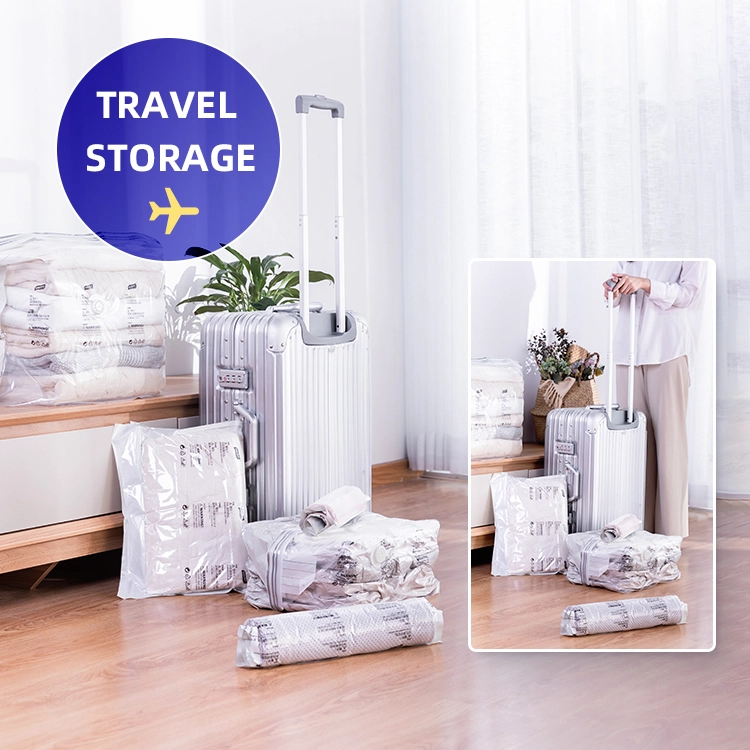
For frequent travelers, winter-trip planners, business travelers, outdoor enthusiasts, and families packing bulky clothing, vacuum travel compression bags can turn soft, air-filled items into compact, organized bundles. They work especially well for sweaters, fleece layers, puffer jackets, towels, blankets, and children’s clothing. However, the right bag depends on whether you need a hand-pump system, a rechargeable electric pump, or a roll-up design that requires no equipment.
Taili Technology develops high-performance material solutions across safety protection materials, functional film materials, and surface and interface materials. That materials-focused background matters in travel compression products: the bag film, zipper track, valve design, and seam construction determine whether a travel bag stays compact from departure to arrival.
Quick Answer: What Makes a Travel Compression Bag the Best?
The best travel compression bags should deliver four things:
- Meaningful volume reduction for bulky soft goods
- Reliable airtight sealing that prevents the bag from re-inflating
- Strong, flexible material that resists punctures, tears, and repeated folding
- Convenient compression at home, in a hotel room, or during the return journey
A high-quality vacuum compression bag may reduce the volume of compressible clothing substantially. Taili’s travel vacuum compression system, for example, is designed around triple-sealed compression and claims up to 80% space savings under suitable packing conditions. The actual result depends on the fabric, the amount packed, and how much air the garment naturally contains.
The most important point is simple: compression bags reduce volume, not weight. A suitcase packed with compressed clothing may look smaller, but it can still exceed an airline’s checked-baggage weight allowance.
The Best Types of Air Compression Bags for Travel
There is no single best compression bag for every traveler. The best product type depends on your destination, luggage style, wardrobe, and access to power or a vacuum.
| Bag Type | Best For | Main Advantage | Main Limitation |
|---|---|---|---|
| Roll-up compression bags | Short trips and carry-on travelers | No pump, no electricity, simple to use | Usually provides less compression than a vacuum system |
| Hand-pump vacuum bags | Budget-conscious travelers | Portable and effective without a wall outlet | Requires manual effort |
| Electric-pump vacuum bags | Frequent travelers and bulky packing | Fast, consistent compression | Requires battery charging or access to power |
| Reusable nylon-TPU bags | Long-term repeat use | Better flexibility and tear resistance | Often costs more than basic plastic bags |
| Large vacuum storage bags | Camping, family travel, winter trips | Handles jackets, bedding, and large soft goods | May be too large for cabin luggage |
Roll-Up Bags: Best for Simple, Pump-Free Packing
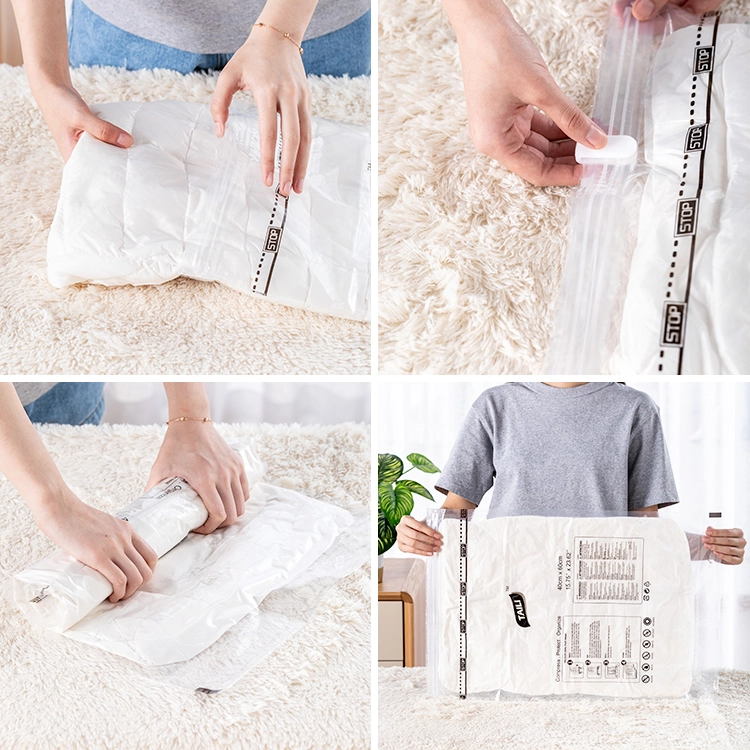
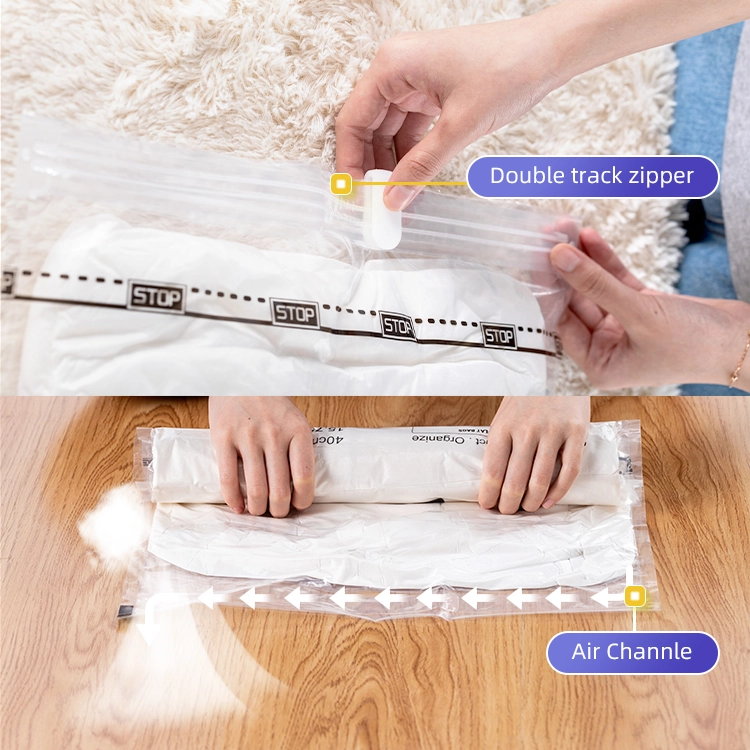
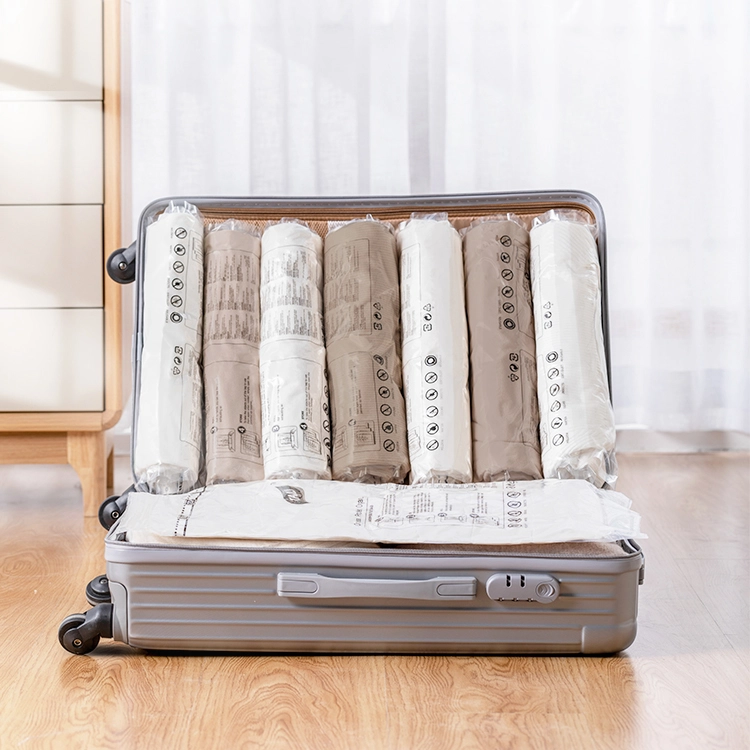
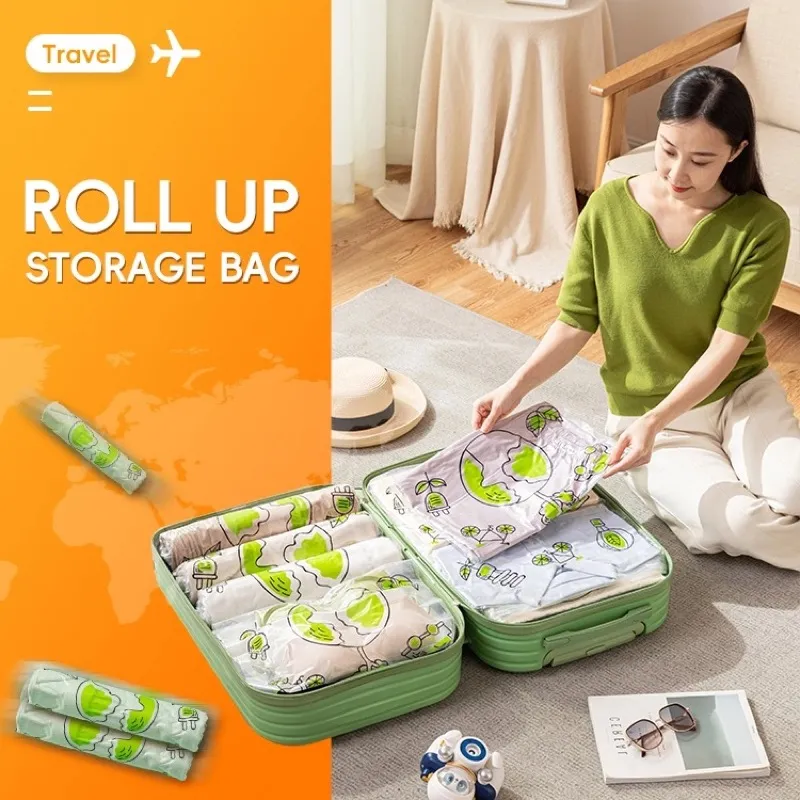
Roll-up bags are a practical choice when simplicity matters more than maximum compression. You place clothing inside, close the zipper, and roll the bag from one end to the other to push air out through one-way vents.
They are particularly useful for:
- Weekend city breaks
- Backpacking trips
- Carry-on-only travel
- Laundry separation during a trip
- Travelers who do not want to carry a pump
A roll-up design can be especially helpful on the return journey because you do not need to find a vacuum cleaner or recharge an electric device. Current travel-product coverage also highlights this advantage: some compression bags are designed to be sealed and rolled without needing a vacuum at all.
The trade-off is that roll-up bags may leave more air inside than a well-designed vacuum bag. They are excellent for organization and modest compression, but they are not always the best option for large down jackets or several thick sweaters.
Hand-Pump Bags: Best for Reliable Travel Flexibility
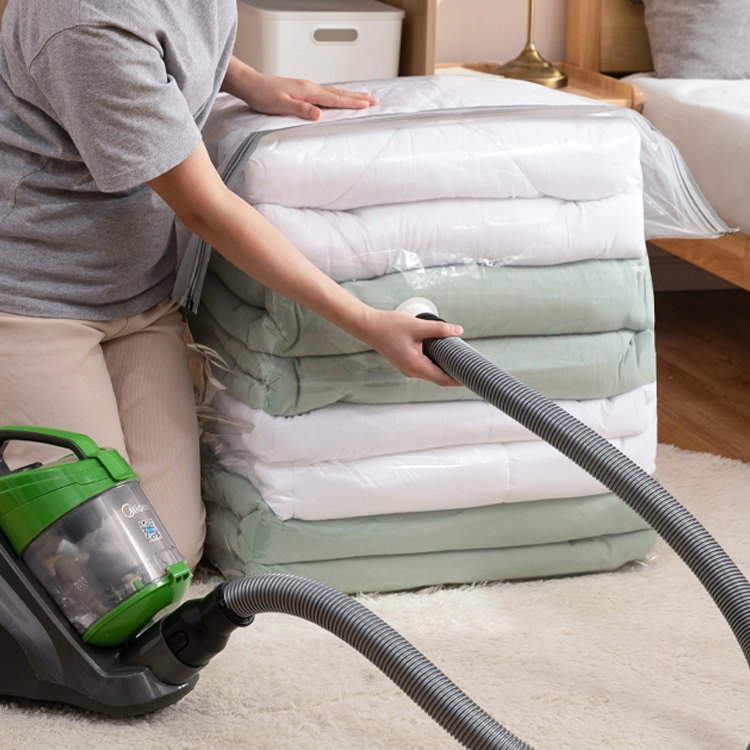
Hand-pump vacuum bags offer a stronger compression result than roll-up bags while remaining independent of hotel power outlets. A small manual pump can remove air through a valve after the bag is sealed.
This category is especially useful for:
- International travel
- Multi-stop itineraries
- Ski and winter holidays
- Family travel with bulky children’s clothing
- Travelers who want a backup option if electricity is unavailable
Independent product testing has found that included hand pumps can perform very effectively, although they generally take longer than other methods. In one comparison of vacuum storage bags, testers evaluated capacity, durability, water resistance, and air retention, and found that hand-pumped bags could deliver strong compression in practical use.
A hand pump is not glamorous, but it is dependable. For a traveler trying to fit a puffer jacket, fleece layers, and spare shoes into a medium suitcase, that reliability can matter more than speed.
Electric Vacuum Bags: Best for Frequent and High-Volume Travel
Electric-pump compression bags are ideal for people who travel often, pack for several people, or regularly carry bulky clothing. A compact rechargeable pump removes air with less effort and can make repacking much faster.
A strong electric travel compression system should include:
- A rechargeable, portable pump
- A stable valve connection
- A secure cap or closure over the valve
- Durable bag material that does not wrinkle into weak points
- A zipper system designed to resist accidental opening
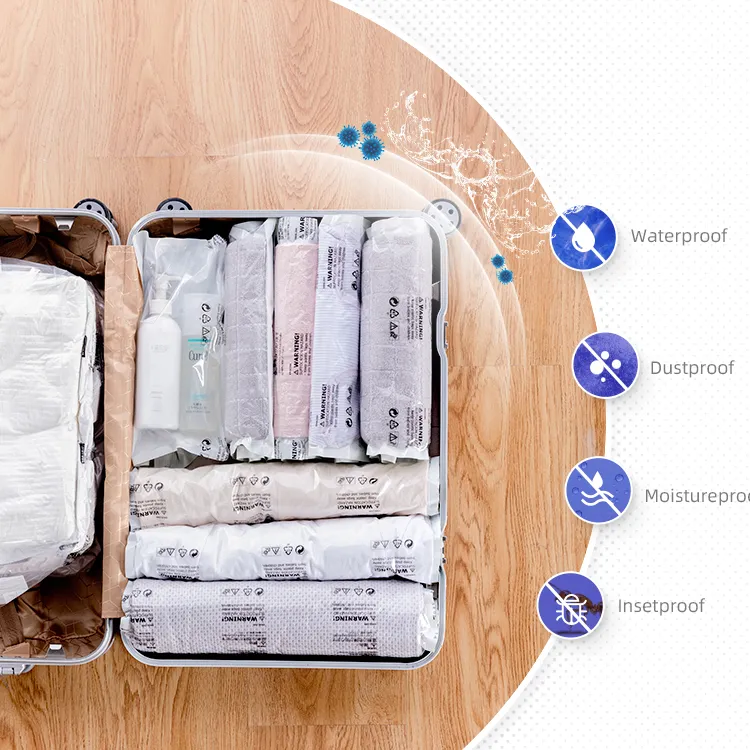
Taili travel vacuum compression bags are made with nylon and TPU composite material and are promoted as waterproof and easy to clean, with a fast triple-sealed vacuum system. Compared with basic thin plastic storage bags, a fabric-reinforced or composite-material approach can be more suitable for repeat travel because luggage handling creates friction, folds, pressure points, and contact with sharp edges.
For regular business trips, trade shows, overseas factory visits, or extended vacations, an electric-pump system can be the most efficient choice.
How to Choose the Best Air Compression Bags
A bag that looks good in a product photo may still fail in real luggage conditions. Before choosing a travel compression bag, assess the following factors.
1. Choose Material for Repeat Use
The bag material determines whether it survives repeated trips. Thin plastic can work for occasional storage, but travel creates more strain than closet storage. Your bag may be folded tightly, pressed under shoes, dragged through security screening, and repacked several times.
Look for:
- Multi-layer film construction
- Flexible, tear-resistant material
- Nylon and TPU composite layers for reusable designs
- Water-resistant surfaces
- Reinforced seams
- A surface that is easy to wipe clean
Durability matters because a tiny puncture can allow air to return slowly. When that happens, the contents expand and disrupt your suitcase organization.
2. Check the Zipper and Valve Before Looking at Size
A large bag with a weak seal is not useful. The zipper and valve are the critical performance components.
Look for:
- Double-zipper or triple-seal closures
- A visible sealing line that helps users confirm closure
- A wide zipper track that is easy to press shut
- A valve cap that closes securely
- A valve positioned where a pump can attach easily
Experts interviewed in vacuum-bag product coverage recommend durable material and secure double-zip or triple-seal closures to keep out air, moisture, dust, and other elements.
Before your trip, test every bag once. Fill it with towels or spare clothing, compress it, and leave it overnight. If it visibly reinflates, inspect the zipper, valve cap, and seams before relying on it for travel.
3. Match the Bag Size to Your Luggage
Bigger is not always better. An oversized vacuum bag can turn into an awkward, dense block that does not fit efficiently into a suitcase.
Use smaller bags for:
- T-shirts
- Underwear
- Socks
- Gym clothes
- Baby clothing
- Dirty laundry
Use medium bags for:
- Sweaters
- Jeans
- Dresses
- Shirts
- Fleece layers
- Towels
Use large bags for:
- Winter coats
- Puffer jackets
- Ski clothing
- Blankets
- Camping textiles
For carry-on luggage, medium bags are usually more manageable than one oversized bag. They let you distribute the compressed load more evenly and make airport inspection easier.
4. Consider Your Return-Trip Compression Method
Many travelers choose a bag that works perfectly at home but forget the return journey. If you are packing souvenirs, extra clothing, or dirty laundry, you need a way to recompress the bag away from home.
Choose a roll-up bag if you want complete independence from equipment. Choose a hand-pump system if you want portability without charging. Choose a rechargeable electric pump if speed and convenience are priorities.
A cordless pump can be particularly valuable for long trips, but remember to charge it before departure and keep it accessible rather than buried under tightly packed clothing.
What Clothing Works Best in Vacuum Travel Bags?
Compression bags work best when the items contain a lot of trapped air. The more air between fabric fibers, the more volume can be reduced.
Best Items to Compress
- Down jackets and puffer coats
- Fleece jackets
- Sweaters and knitwear
- Hoodies
- T-shirts
- Pajamas
- Towels
- Soft children’s clothing
- Blankets and travel bedding
- Camping textiles
Items to Avoid Compressing
- Structured blazers and tailored suits
- Delicate dresses
- Leather garments
- Hats with a fixed shape
- Foam-padded items
- Shoes with sharp edges exposed
- Electronics
- Liquids or toiletries
- Items that wrinkle easily and cannot be steamed later
A compression bag is a space-management tool, not a universal packing solution. For example, compressing a wool sweater for a flight is reasonable. Compressing a tailored suit for a week-long business event may create deep creases that affect its appearance.
How to Pack Air Compression Bags Step by Step
Using a compression bag correctly improves performance and reduces the risk of leaks.
- Sort clothing by category. Keep similar items together, such as sweaters in one bag and workout clothing in another.
- Make sure every item is dry. Never seal damp clothing inside a compression bag. Moisture can create odor, mildew, and fabric damage.
- Fold items flat. Avoid stuffing clothing in random clumps. Flat folding creates a more even surface and reduces stress on the zipper.
- Keep hard objects out. Belts, sharp buckles, jewelry, and shoe edges can puncture the bag film.
- Do not overfill the bag. Leave enough clearance for the zipper to close completely. Overfilling is one of the most common causes of air leaks.
- Seal the zipper fully. Slide the zipper clip from end to end, then repeat the motion to confirm that the closure is locked.
- Remove air gradually. Use the compatible pump or roll the bag according to its design. Do not force the bag into an extreme shape.
- Close the valve cap tightly. This final step is essential. A properly compressed bag can fail if the valve cap is not fully secured.
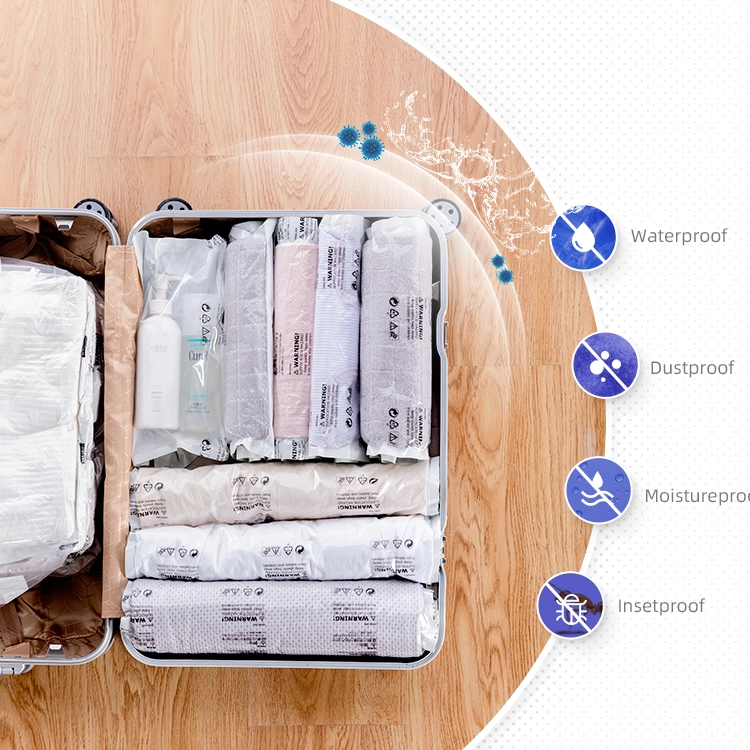
- Pack the compressed bag into luggage. Place flatter bags against the suitcase walls and keep heavier, denser items near the bottom of wheeled luggage.
- Leave room for inspection and repacking. Do not fill every empty space so tightly that you cannot reopen the suitcase if needed.
Travel Security and Airline Considerations
Vacuum-sealed clothing bags are generally permitted for air travel, but travelers should be prepared for inspection. The Transportation Security Administration states that vacuum-sealed bags are allowed but not encouraged because, if they trigger an alarm, an officer may need to open them for screening.
This does not mean you should avoid compression bags altogether. It means you should pack strategically.
For cabin luggage:
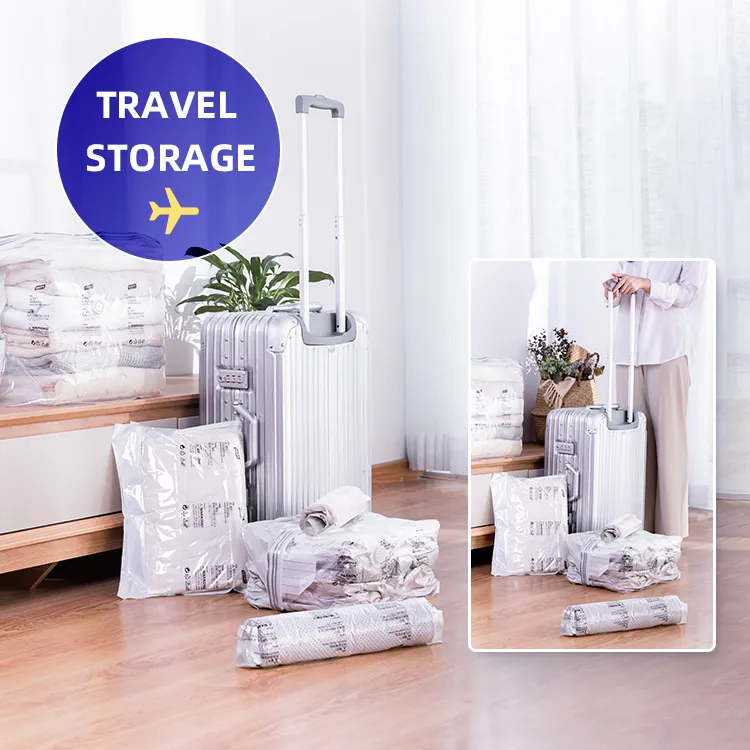
- Use smaller, separate bags instead of one giant compressed block.
- Avoid placing prohibited or questionable items inside sealed clothing.
- Keep a small pump accessible if your bag requires one.
- Do not use compression to exceed carry-on size rules.
- Be prepared to open and reseal a bag if requested.
For checked luggage:
- Compression bags can be highly useful for bulky clothing.
- Check your airline’s baggage weight limit before departure.
- Remember that reduced volume does not reduce kilograms or pounds.
- Protect bags from sharp suitcase hardware and rigid objects.
Common Problems and How to Prevent Them
The Bag Slowly Re-Inflates
The likely causes are an incomplete zipper seal, a loose valve cap, a tiny puncture, or an overfilled bag.
Fix: Reopen the bag, reduce the contents slightly, check the zipper track for fabric caught in the seal, and compress it again. If the problem continues, test the bag at home before using it for a major trip.
The Bag Is Hard to Close
This usually means the bag is overloaded.
Fix: Remove one or two garments. A bag that is slightly less full but properly sealed is much more useful than a stuffed bag that leaks.
Clothing Comes Out Wrinkled
Compression creates folds and pressure marks, especially on delicate or structured garments.
Fix: Use compression bags for casual, soft garments. Pack wrinkle-sensitive clothing in garment folders, packing cubes, or on top of your suitcase instead.
The Suitcase Is Too Heavy
This is a frequent surprise. Compression creates extra room, which encourages travelers to add more items.
Fix: Weigh your luggage after compression, not before. Set a personal limit for what you add after making extra room.
The Bag Punctures During Travel
Sharp edges, shoe soles, buckles, and rigid accessories are common causes.
Fix: Place shoes in separate shoe bags, cover metal accessories, and keep hard items away from the compression-bag surface.
Why Materials Matter for Long-Term Travel Use
The difference between a basic storage bag and a dependable travel compression bag is often invisible at first glance. It comes down to material engineering and closure design.
Taili Technology’s broader work in nanoparticle synthesis and modification, polymer synthesis, precision coating, functional films, and surface-and-interface materials reflects why material performance is central to practical product design. In travel compression products, the same principles translate into bags that need to balance flexibility, barrier performance, puncture resistance, sealing stability, and repeat usability.
For travelers, this means the best bag is not necessarily the thinnest or the cheapest option. It is the one that can handle repeated compression cycles while protecting clothing from dust, moisture, and disorder.
A well-made travel compression bag should feel like a useful piece of travel equipment, not disposable packaging.
Final Recommendation
The best air compression bags for travel are durable, airtight, appropriately sized, and easy to recompress away from home. Choose roll-up bags for simplicity, hand-pump bags for flexible travel, and electric-pump systems for fast, repeatable compression of bulky clothing.
For high-value travel packing, prioritize bag material, zipper reliability, valve design, and real-world portability over exaggerated space-saving claims. Use compression bags for soft, bulky items, weigh your luggage after packing, and keep enough flexibility for airport inspection.
If you need a reusable system for frequent travel, winter packing, outdoor trips, or family luggage, choose a travel compression solution with strong composite materials, dependable sealing, and a portable pump that works wherever your journey takes you.
Frequently Asked Questions
Are air compression bags worth it for travel?
Yes, especially when you are packing bulky, soft items such as sweaters, fleece, towels, puffer jackets, and children’s clothing. They create more usable luggage volume and help keep categories of clothing organized. They are less useful for heavy items or wrinkle-prone garments.
Do travel compression bags reduce luggage weight?
No. They reduce the volume of clothing by removing air, but the clothing itself weighs the same. Always weigh your suitcase after using compression bags, particularly when flying with checked luggage.
Are vacuum compression bags allowed in carry-on luggage?
Yes, vacuum-sealed clothing bags are allowed, but security officers may need to open them if they require additional inspection. Pack in a way that allows you to reseal bags if necessary.
What is better: roll-up bags or vacuum bags with a pump?
Roll-up bags are better for simple, equipment-free travel. Vacuum bags with a hand pump or electric pump are better when you want stronger compression for bulkier items. The right option depends on your destination and how often you need to repack.
Can I use travel compression bags for down jackets?
Yes. Down jackets and puffer coats are among the best items for travel compression because they contain a large amount of air. Avoid storing them compressed for an extended period, and allow the garment time to loft after arrival.
Why does my compression bag keep filling with air?
The most common causes are an incomplete zipper seal, an unsecured valve cap, overfilling, or a small puncture. Check the closure carefully, reduce the load, and keep sharp objects away from the bag material.
How many times can a reusable vacuum travel bag be used?
It depends on the material thickness, valve construction, zipper quality, and how carefully the bag is handled. Reusable bags made with stronger composite materials and reinforced closure systems are generally better suited to repeated travel than thin, disposable plastic bags.
References
1. Transportation Security Administration – “Vacuum-Sealed Bags” – TSA guidance on traveling with vacuum-sealed bags through airport security screening. https://www.tsa.gov/travel/security-screening/whatcanibring/items/vacuum-sealed-bags-0
2. Taili Store – “Travel Vacuum Compression Bags With Wireless Pump” – Product page for Taili travel vacuum compression bags with a wireless pump. https://tailistore.com/products/taili-travel-vacuum-compression-bags-with-wireless-pump
3. Taili Group – “Who Makes the Best Compression Bags for Travel?” – Blog article comparing compression bag options for travel. https://www.taili-group.com/blog/who-makes-the-best-compression-bags-for-travel/
4. Better Homes & Gardens – “The Winners of Our Best Vacuum Storage Bags Tests” – Hands-on testing results and top picks for vacuum storage bags. https://www.bhg.com/best-vacuum-storage-bags-7567870
5. Travel + Leisure – “The Best Vacuum Bags for Travel, Tested and Reviewed” – Tested and reviewed recommendations for the best travel vacuum bags. https://www.travelandleisure.com/travel-vacuum-bags-6753391
6. The Weather Channel – “Fall Weatherproofing Guide and Vacuum Storage Bag Overview” – Seasonal weatherproofing guidance that includes vacuum storage bag use. https://weather.com/atmosphere/reviews/fall-weatherproofing-guide-prepping-your-home-for-winter
7. Amazon – “TAILI Travel Vacuum Compression Storage Bags” – Product listing for TAILI travel vacuum compression storage bags with electric pump. https://www.amazon.com/TAILI-Vacuum-Compression-Backpack-Electric/dp/B0GPPWQ6Q1
Hot Tags: Travel Vacuum Bags, Vacuum Compression Bags, Travel Compression Bags, Vacuum Storage Bags, Travel Vacuum Bags Wholesale, Travel Compression Bags Manufacturer, Vacuum Storage Bags Supplier, Custom Compression Bags OEM, Private Label Travel Bags, Electric Pump Vacuum Bags