Content Menu
● Quick Answer: Which Bag Wins?
● What Are Compression Travel Bags?
● What Are Traditional Duffel Bags?
● Compression Travel Bags vs Traditional Duffel Bags for Bulky Clothing
>> 1. Space Saving: Compression Bags Have the Clear Advantage
>> 2. Protection: Compression Bags Offer Better Environmental Isolation
>> 3. Access and Repacking: Duffel Bags Are More Convenient
>> 4. Garment Care: Duffel Bags Are Gentler on Structured Clothing
>> 5. Carrying Experience: Duffel Bags Are Easier to Transport
● Expert Packing Framework for Bulky Clothing
>> Use Compression Travel Bags When You Are Moving:
>> Use Traditional Duffel Bags When You Are Moving:
>> Use Both When You Need Maximum Efficiency
● A Practical Moving Test: The “Three-Question Rule”
>> Question 1: Is the Item Bulky Because It Contains Air?
>> Question 2: Will I Need It Soon?
>> Question 3: Can It Tolerate Wrinkling?
● How to Pack Bulky Clothes in Compression Travel Bags
>> Step 1: Wash and Dry Every Item Completely
>> Step 2: Sort by Fabric and Use Frequency
>> Step 3: Fold Instead of Randomly Stuffing
>> Step 4: Leave Clearance Near the Closure
>> Step 5: Remove Air Gradually
>> Step 7: Place Compressed Bags Inside a Protective Carrier
● Materials and Construction Features That Matter
● Common Mistakes When Moving Bulky Clothing
● Final Verdict: Compression Travel Bags Are Better for Bulky Clothing Moves
● FAQs
>> 1. Are compression travel bags better than duffel bags for winter clothes?
>> 2. Do compression travel bags reduce clothing weight?
>> 3. Can I put down jackets in compression travel bags?
>> 4. Will compression travel bags wrinkle my clothes?
>> 5. Are traditional duffel bags waterproof?
>> 6. Can I use compression travel bags for long-term clothing storage?
>> 7. What is the best way to carry compression bags during a move?
When you need to move bulky clothing—such as winter coats, sweaters, duvets, ski wear, blankets, or thick workwear—the choice between compression travel bags and traditional duffel bags can materially affect how much you can carry, how well garments stay protected, and how efficiently you use vehicle or luggage space.
For most people moving high-volume soft goods, compression travel bags are the better primary solution because they remove excess air and dramatically reduce the volume of lofted fabrics. Traditional duffel bags remain valuable when you need fast access, flexible carrying, and lower risk of deep creasing. The most practical answer is often a hybrid approach: compress bulky, low-crease-risk garments first, then place the compressed packs into a durable duffel bag for transport.
Quick Answer: Which Bag Wins?
| Comparison factor | Compression travel bags | Traditional duffel bags | Better option |
|---|---|---|---|
| Space efficiency | Removes air trapped between fibers and reduces packed volume | Holds clothing at its natural bulk | Compression travel bags |
| Moving winter clothing | Excellent for puffer jackets, fleece, knitwear, bedding, and soft outerwear | Works, but takes much more vehicle space | Compression travel bags |
| Organization | Can separate items by category, season, or owner | Often becomes one large mixed compartment | Compression travel bags |
| Fast access during travel | Requires opening and sometimes recompressing | Easy to unzip and retrieve items | Traditional duffel bags |
| Wrinkle control | May create deep folds in structured garments | Usually gentler on clothing | Traditional duffel bags |
| Protection from dust and moisture | Strong when seals and valves perform properly | Depends on fabric, coating, and zipper quality | Compression travel bags |
| Carrying comfort | Usually designed mainly for packing rather than carrying | Often has handles, shoulder straps, and reinforced bases | Traditional duffel bags |
| Best overall use | Space-limited moves and bulky textile transport | Short trips, gym use, accessible storage, and flexible carrying | Depends on the task |
Bottom line: Choose compression travel bags when the main constraint is space. Choose traditional duffel bags when convenience and frequent access matter more than volume reduction.
What Are Compression Travel Bags?
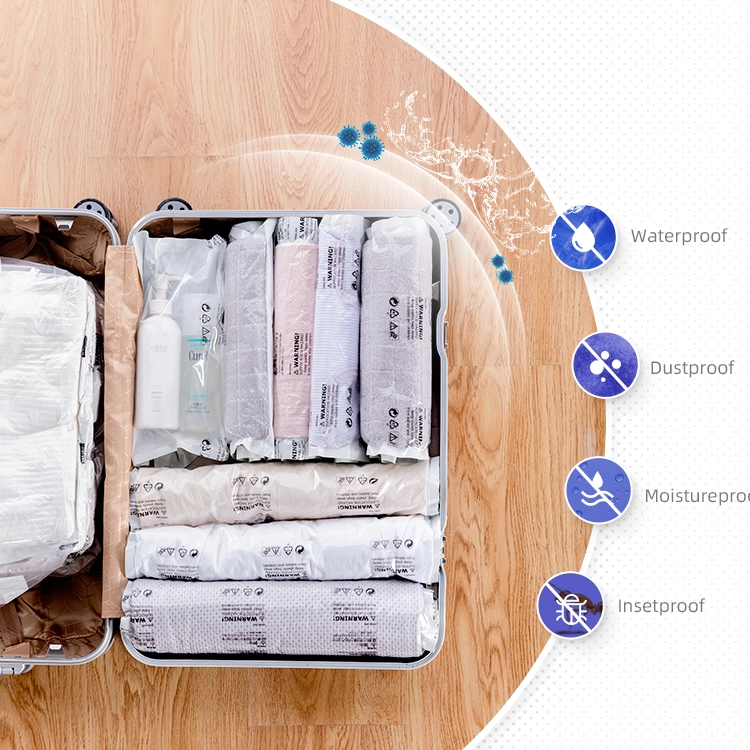
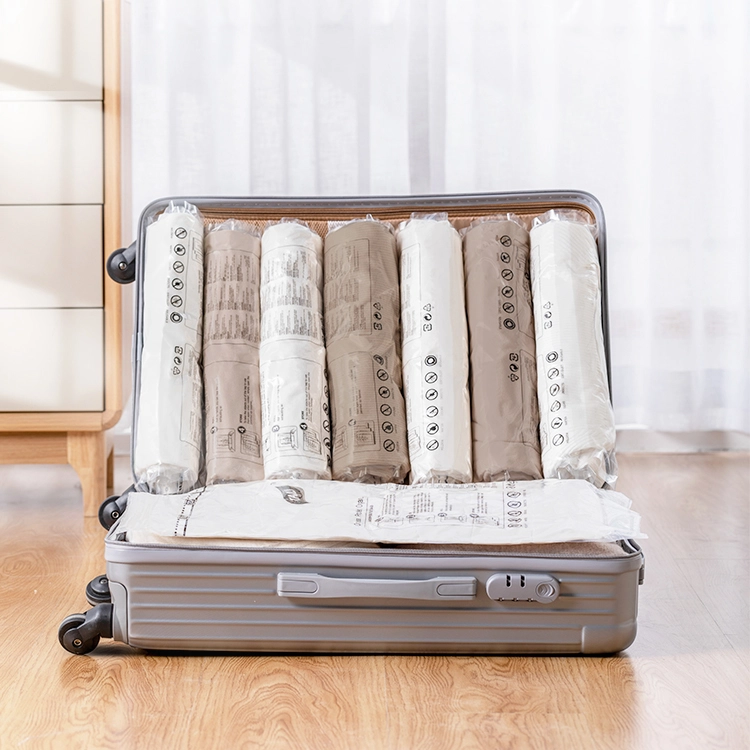
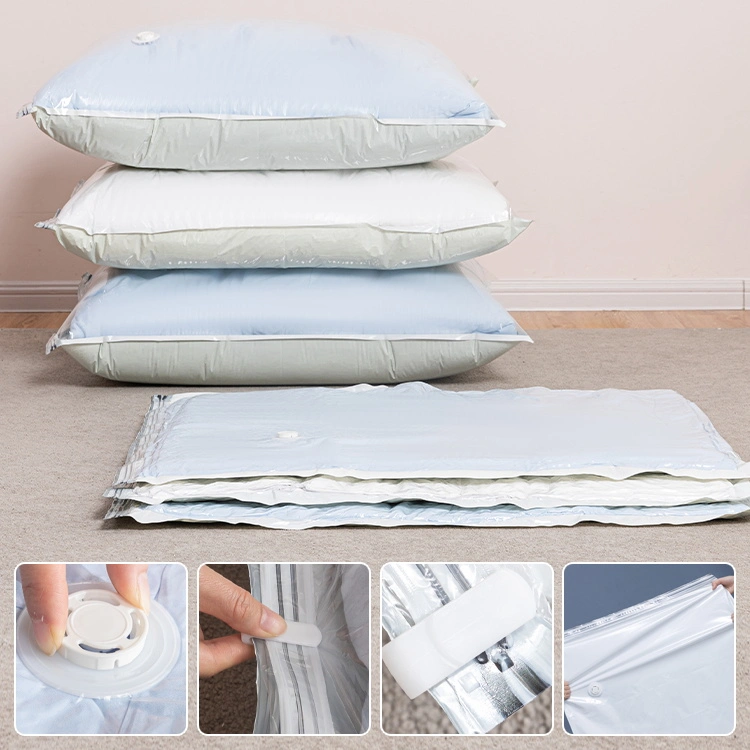
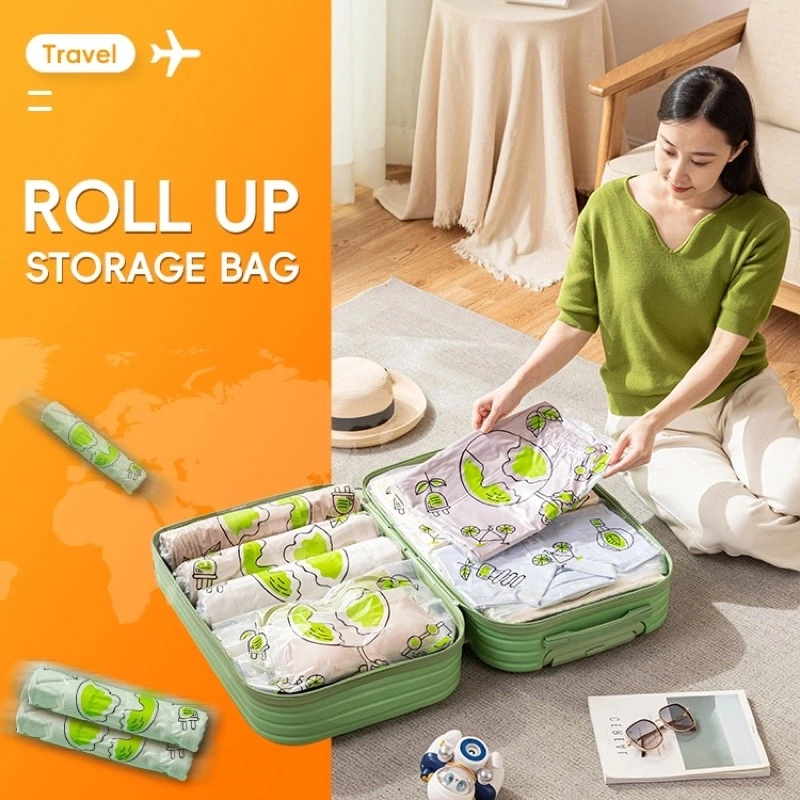
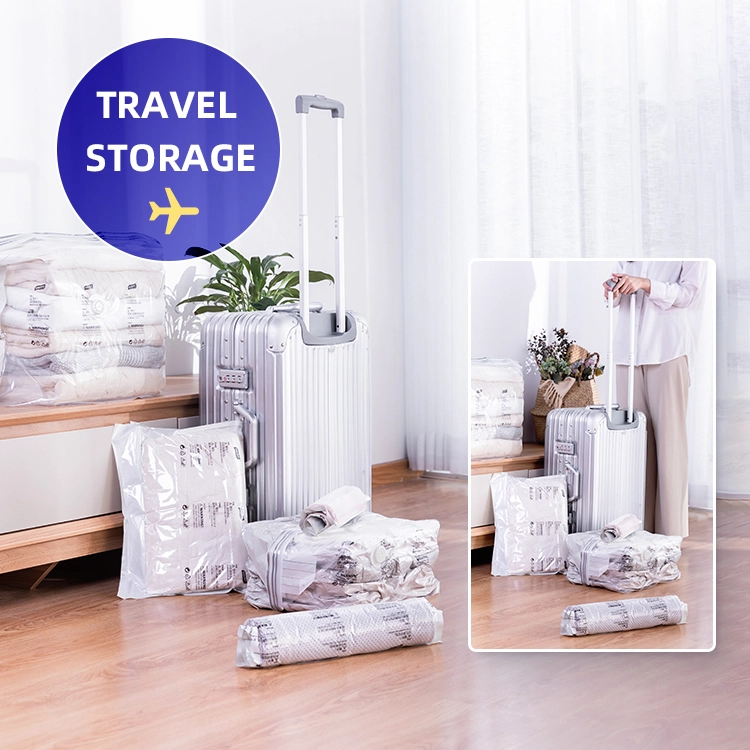
Compression travel bags are flexible bags engineered to reduce the volume of packed textiles by forcing air out of the load. Depending on the construction, they may use:
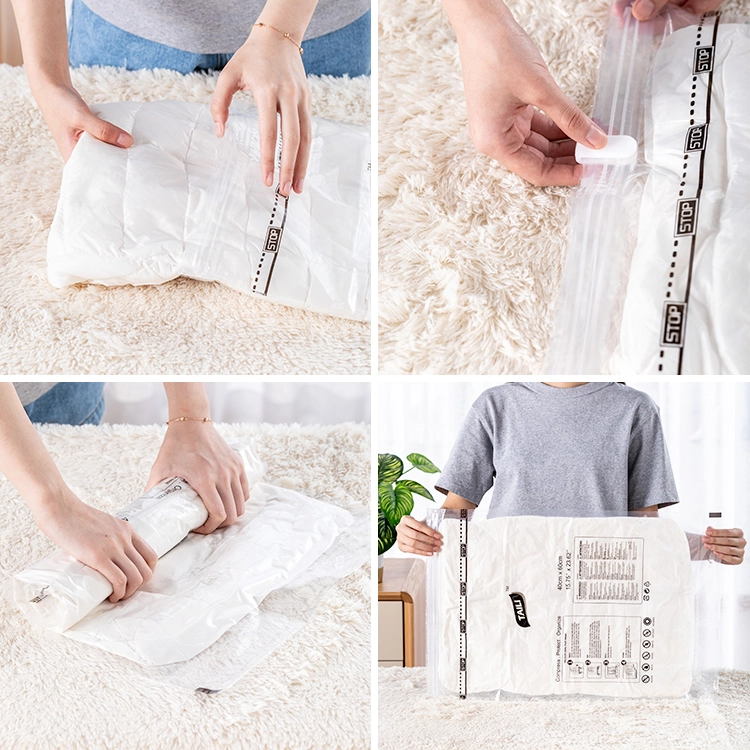
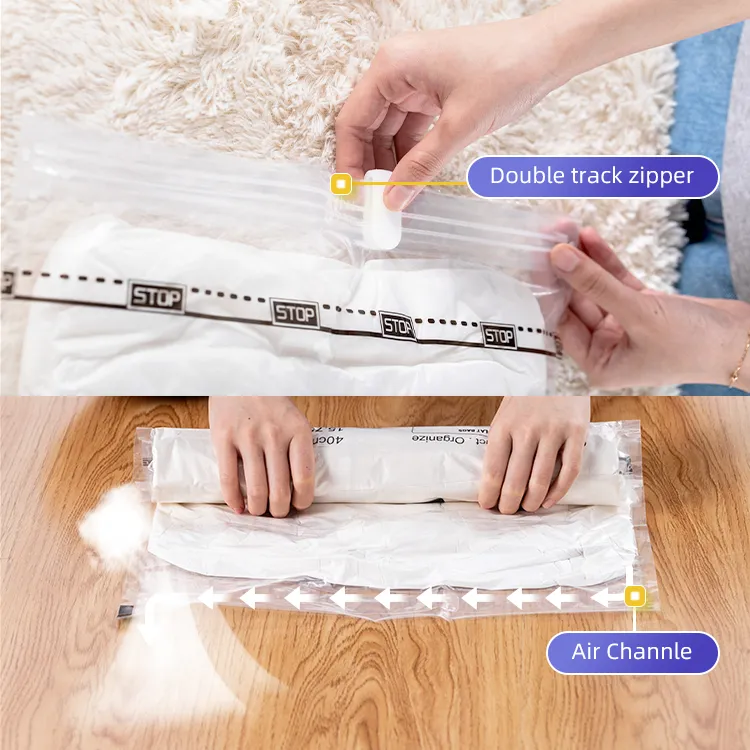
- Roll-up compression, where air exits through one-way valves as the user rolls the bag.
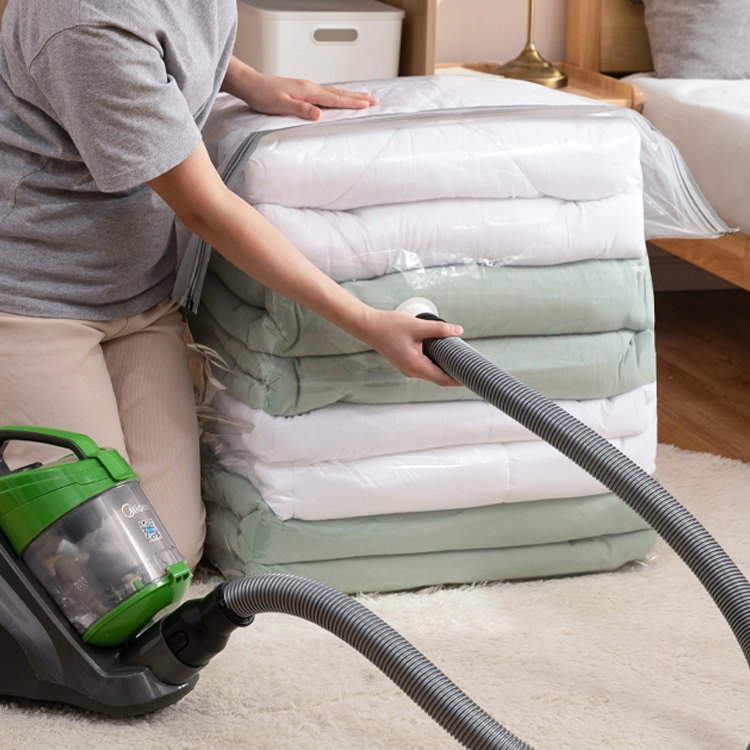
- Vacuum compression, where a pump or vacuum removes air through a valve.
- Zipper-based compression, where a second zipper tightens an already packed fabric cube or bag.
- Hybrid systems, which combine a sealed closure with manual or vacuum air removal.
Their main advantage is simple: bulky clothing contains a large amount of air. Thick sweaters, down jackets, fleece layers, quilts, and bedding take up room not only because of fabric weight, but because their fibers retain loft. Compression reduces that loft temporarily so the load occupies less physical space.
Independent packing tests and product analyses commonly report meaningful volume reductions for soft, air-filled garments. Real-world results vary by fabric, bag design, filling method, and how aggressively the user compresses the contents. A fleece jacket, for example, can flatten substantially; a pair of denim jeans will compress much less because the fabric is dense rather than air-filled.
For bulky clothes, the biggest gains usually come from:
- Puffer jackets and insulated outerwear
- Wool sweaters and fleece
- Hoodies and sweatshirts
- Seasonal bedding
- Soft blankets
- Ski clothing
- Thick cotton clothing
- Children’s winter clothing
- Soft workwear and uniforms
What Are Traditional Duffel Bags?
A traditional duffel bag is a flexible, often cylindrical or rectangular fabric bag with a large zippered opening. It is commonly used for travel, sports equipment, moving clothing, and everyday storage. Its appeal is not maximum compression; it is simple, flexible capacity.
Duffel bags can be made from polyester, nylon, canvas, cotton, PVC-coated fabric, or other durable materials. Better models may include reinforced handles, shoulder straps, internal compartments, water-resistant shells, shoe pockets, compression straps, and rigid base panels.
For moving bulky clothing, a traditional duffel bag works like a large portable container. You can quickly load coats, blankets, shoes, towels, and casual clothing without specialized packing steps. This makes it useful for short-distance moves, dorm transitions, road trips, team travel, and situations where the bag will be opened repeatedly.
However, a duffel bag does not eliminate air from textiles. A 90-liter duffel may hold a large amount of clothing, but puffer jackets and thick bedding can consume its entire capacity surprisingly quickly.
Compression Travel Bags vs Traditional Duffel Bags for Bulky Clothing
1. Space Saving: Compression Bags Have the Clear Advantage
If your priority is fitting more clothing into a car trunk, suitcase, shipping carton, closet, or moving box, compression travel bags are usually the better tool.
A duffel bag contains the item’s original volume. By contrast, a compression bag reduces the space between layers of clothing. This distinction is particularly important with high-loft materials.
For example, consider a winter move involving:
- Two puffer jackets
- Four fleece pullovers
- Six thick sweaters
- Two blankets
- One lightweight duvet
- Several hoodies
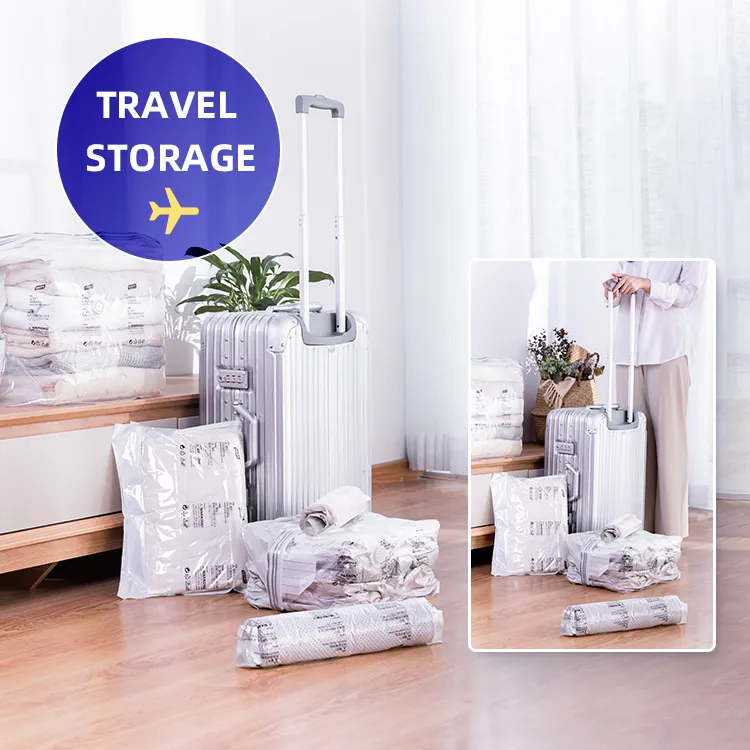
Placed loosely in a duffel bag, this load may fill one large bag and spill into a second. Divided into compression bags, the same soft goods can become flatter, denser, and easier to stack in a car, suitcase, drawer, or carton.
Important limitation: Compression reduces volume, not weight. A bag holding 10 kg of clothing still weighs 10 kg after vacuuming out the air. Do not overpack simply because the load has become smaller.
2. Protection: Compression Bags Offer Better Environmental Isolation
For moving, storage, or long-distance transport, the environment around your clothes matters. Dust, moisture, odors, pests, and accidental spills can all damage fabrics or create unpleasant storage conditions.
A well-made compression bag with a reliable seal can provide stronger isolation than a standard duffel bag. This is especially useful for:
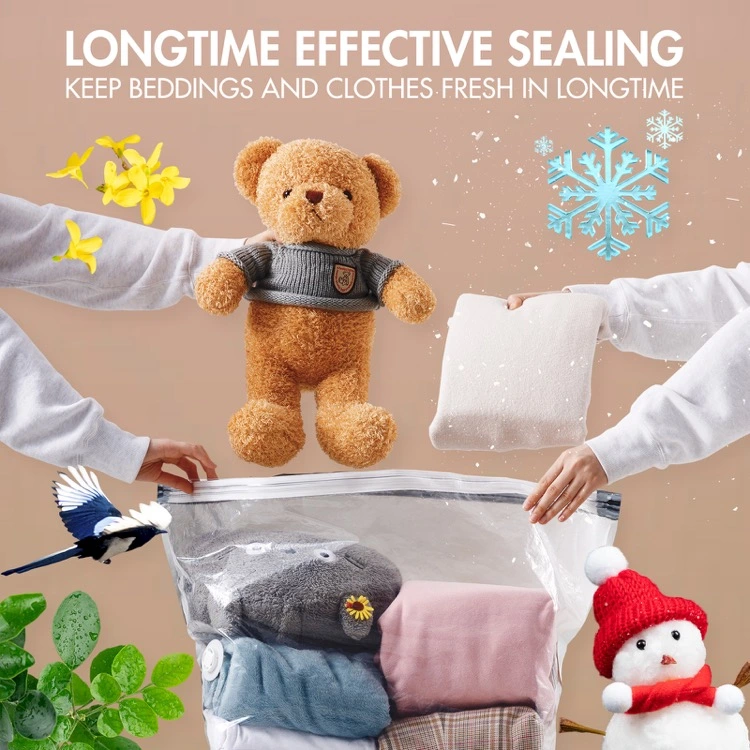
- Seasonal clothing stored for several months
- Moving during rainy weather
- Long car journeys
- Clothing transported in shared storage spaces
- Bedding and soft furnishings
- Items placed in a garage, basement, or temporary storage unit
The protection benefit depends on correct use. Clothing must be clean and fully dry before sealing. Moisture trapped inside a sealed bag can contribute to mildew, odor, and fabric damage over time. Product guidance from travel and storage sources also recommends avoiding prolonged compression for delicate or shape-sensitive garments.
A duffel bag provides basic containment, but many models are not airtight. Even water-resistant duffels may protect against splashes without protecting against humidity, odors, dust, or prolonged exposure.
3. Access and Repacking: Duffel Bags Are More Convenient
Traditional duffel bags win when you need frequent access. Open the zipper, take out the item, and close the bag again. There is no valve, pump, rolling process, or resealing step.
This makes duffels more convenient for:
- Overnight trips
- Sports clothing
- Gym equipment
- Road-trip clothing
- Uniforms needed daily
- Clothing that must be accessed during a move
- Temporary relocation where packing and unpacking happen repeatedly
Compression travel bags are less convenient once packed. If you need one sweater from the bottom of a tightly compressed bundle, you may need to open the bag, release the seal, locate the item, repack the contents, and recompress it.
For this reason, experienced movers should avoid using one oversized compression bag for everything. Use several smaller, clearly labeled bags instead.
A better system: Pack by category and access frequency.
- Bag 1: “Winter coats—arrival day”
- Bag 2: “Sweaters—week one”
- Bag 3: “Seasonal storage”
- Bag 4: “Bedding and blankets”
- Bag 5: “Do not compress—formalwear”
This creates order without sacrificing the space advantage.
4. Garment Care: Duffel Bags Are Gentler on Structured Clothing
Compression has a trade-off: the flatter you pack an item, the more likely it is to develop creases. For resilient clothing, such as fleece, casual knitwear, basic cotton shirts, and insulated jackets, this is usually manageable.
However, compression may not be ideal for:
- Suit jackets
- Formal dresses
- Linen garments
- Silk clothing
- Pleated skirts
- Tailored shirts
- Leather items
- Structured hats
- Delicate lingerie
- Clothing with foam padding
- Garments with sharp, permanent folds
A traditional duffel bag is not automatically wrinkle-free, but it generally applies less sustained pressure than vacuum or roll-up compression. It gives clothing more room to retain shape.
If you must move business attire or premium garments, use a garment bag, structured suitcase, or a dedicated compartment inside a duffel rather than aggressively compressing the items.
5. Carrying Experience: Duffel Bags Are Easier to Transport
Compression bags are packing tools. Duffel bags are carrying tools.
Most duffels are designed with handles, shoulder straps, reinforced seams, and load-bearing panels. They are easier to carry through train stations, airports, dormitories, apartments, and parking areas.
By contrast, a large compressed clothing bag can become dense, slippery, and awkward to lift. It may fit neatly inside a trunk, but it is not always comfortable to carry by itself.
That is why the hybrid method works so well:
- Compress bulky clothing into manageable units.
- Place those units inside a durable duffel bag.
- Use the duffel bag’s handles and straps for transportation.
- Keep one small “first-access” bag uncompressed for essential clothing.
This approach gives you the space savings of compression and the portability of a traditional duffel.
Expert Packing Framework for Bulky Clothing
The right choice is not based only on the bag. It depends on the garment, the transport method, the destination, and how soon you will need the items.
Use Compression Travel Bags When You Are Moving:
- Winter jackets and padded coats
- Sweaters, fleece, and hoodies
- Duvets, blankets, and pillows
- Bedding for dorms or temporary housing
- Out-of-season clothing
- Soft children’s clothing
- Casual travel clothing
- Clothing for international relocation
- Textiles that need protection from dust and moisture
Use Traditional Duffel Bags When You Are Moving:
- Clothing you need within 24 to 72 hours
- Sportswear and gym gear
- Shoes and accessories
- Wrinkle-prone clothing
- Structured garments
- Clothing for a short trip
- Items that may need repeated access
- Light-to-medium loads that need easy carrying
Use Both When You Need Maximum Efficiency
For a move involving both everyday essentials and bulky seasonal clothing, use:
- Compression bags for winter clothing, bedding, and low-priority soft goods.
- Duffel bags for arrival-day items, shoes, toiletries, electronics, and easy-access clothing.
- Garment bags or structured luggage for formalwear and fragile apparel.
This is often more efficient than choosing only one format.
A Practical Moving Test: The “Three-Question Rule”
Before placing an item in a compression travel bag or duffel bag, ask three questions.
Question 1: Is the Item Bulky Because It Contains Air?
If yes, compression is likely useful.
Examples include:
- Down jackets
- Fleece
- Quilts
- Blankets
- Thick sweaters
If the item is already dense, compression gains will be limited.
Examples include:
- Denim
- Leather
- Heavy shoes
- Books
- Metal accessories
Question 2: Will I Need It Soon?
If yes, place it in a duffel bag or a clearly labeled, easily reachable compression bag.
For example, if you are moving in winter, do not bury your coat at the bottom of a sealed bag under bedding and off-season clothing.
Question 3: Can It Tolerate Wrinkling?
If not, avoid strong compression. Choose a duffel bag with enough room for careful folding, or use a garment bag.
This simple decision system prevents the common mistake of compressing everything simply because compression is available.
How to Pack Bulky Clothes in Compression Travel Bags
Proper packing determines whether a compression bag saves space or becomes difficult to manage.
Step 1: Wash and Dry Every Item Completely
Never seal damp clothing inside a compression bag. Even small amounts of moisture can create odor, mildew risk, and fabric concerns during storage.
Step 2: Sort by Fabric and Use Frequency
Create separate groups for:
- Everyday clothing
- Winter clothing
- Bedding
- Delicate garments
- Arrival-day essentials
- Long-term storage items
Step 3: Fold Instead of Randomly Stuffing
Fold bulky items into flat, consistent layers. This improves compression, protects zippers and seals, and makes the bag easier to stack.
Step 4: Leave Clearance Near the Closure
Overfilling can strain the zipper, sealing track, or valve. A bag that looks full before compression is often too full.
Step 5: Remove Air Gradually
For roll-up bags, roll slowly from the sealed end toward the valve. For vacuum bags, use the recommended pump or vacuum attachment. Avoid forcing the bag into an unnaturally hard block.
Step 6: Label Every Bag
Write the contents, destination room, and access priority directly on the bag or on a durable label.
Example:
“Winter sweaters — bedroom — open after arrival”
Step 7: Place Compressed Bags Inside a Protective Carrier
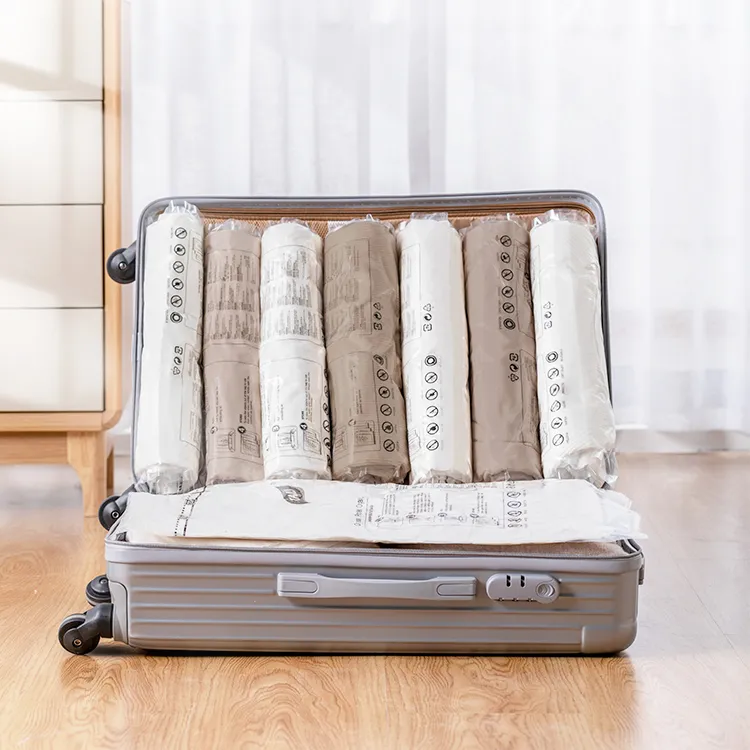
For long-distance moves, place compressed bags inside a duffel bag, moving box, or suitcase. This protects the bag from punctures and makes carrying easier.
Materials and Construction Features That Matter
Not all compression travel bags perform the same. For a reliable product, buyers should evaluate construction instead of focusing only on advertised capacity.
Look for:
- Multi-layer barrier film that resists punctures and air leakage.
- Strong sealing tracks that close consistently along the full opening.
- Reliable valve construction for vacuum-compatible designs.
- Tear-resistant edges and reinforced corners.
- Clear material for easier content identification.
- Multiple sizes for coats, sweaters, bedding, and smaller apparel.
- Reusable closures that maintain performance across repeated packing cycles.
- Instructions for compression limits and garment suitability.
Taili Technology has built long-term expertise around vacuum storage and protection solutions, with product and material capabilities tied to vacuum compression applications. The company states that it has served as a cooperative enterprise in Chinese aerospace product development and has participated in developing standards for vacuum compression storage bags. Its history in vacuum-related household storage technology gives it a relevant technical foundation for users who need dependable, repeatable compression solutions rather than one-time disposable bags.
For B2B buyers, retailers, and private-label brands, material selection is especially important. A low-quality bag may look acceptable on a shelf but fail after repeated sealing cycles, variable humidity, transport friction, or heavy compression loads. The best product design balances high barrier performance with flexibility, seal durability, consumer-friendly operation, and efficient packaging.
Common Mistakes When Moving Bulky Clothing
Avoid these errors to improve both space efficiency and garment protection.
- Compressing wet or unwashed clothing. This can trap odors and moisture.
- Using one giant bag for every item. Smaller bags are easier to organize, lift, and access.
- Compressing formalwear. Structured garments can become heavily creased.
- Overfilling the bag. Excess pressure can damage zippers, seals, and valves.
- Ignoring weight limits. A compact bag can still become dangerously heavy.
- Packing sharp items with clothing. Belts, hangers, shoes, and accessories can puncture the bag.
- Storing compressed bags near heat sources. Excess heat can affect plastic materials and sealed conditions.
- Assuming every compression bag is airline-ready. Reduced volume does not eliminate airline size or weight restrictions.
Final Verdict: Compression Travel Bags Are Better for Bulky Clothing Moves
For moving bulky clothing, compression travel bags outperform traditional duffel bags in space saving, stacking efficiency, and environmental protection. They are particularly effective for winter garments, thick knitwear, bedding, blankets, and other soft items that hold a large amount of air.
Traditional duffel bags remain the better choice for clothing that must be accessed quickly, carried comfortably, or protected from severe wrinkles. They are practical transport containers, but they do not solve the core challenge of bulky textiles: unused air volume.
The strongest moving system combines both products. Use compression travel bags to shrink and protect low-access bulky garments, then load them into durable duffel bags for easier handling. This method improves vehicle space, simplifies sorting, reduces clutter, and supports a more controlled moving process.
For brands, distributors, and procurement teams seeking vacuum storage solutions, prioritize proven sealing performance, durable material structures, repeat-use reliability, and clear consumer guidance. A well-designed compression bag is not simply a storage accessory—it is a practical space-management and textile-protection solution.
FAQs
1. Are compression travel bags better than duffel bags for winter clothes?
Yes. Compression travel bags are generally better for winter clothes because padded jackets, fleece, sweaters, and thermal layers contain a large amount of air that can be removed during compression. Duffel bags are better for carrying the compressed load and keeping essential items accessible.
2. Do compression travel bags reduce clothing weight?
No. Compression bags reduce volume, not weight. A compressed bag may fit more easily into a suitcase or vehicle, but the clothing inside weighs the same.
3. Can I put down jackets in compression travel bags?
Yes, for travel or temporary moving purposes, down jackets can usually be compressed. However, avoid keeping them compressed for excessively long periods, especially if preserving maximum loft is important. Let the jacket air out after arrival.
4. Will compression travel bags wrinkle my clothes?
They can. Casual knitwear, fleece, and basic cotton clothing generally tolerate compression well. Linen, silk, dress shirts, suits, pleated garments, and structured clothing are more likely to develop deep wrinkles and should be packed with less pressure.
5. Are traditional duffel bags waterproof?
Not necessarily. Some duffel bags are water-resistant or made with coated materials, but most are not airtight or fully waterproof. If moisture protection is important, use sealed compression bags inside the duffel.
6. Can I use compression travel bags for long-term clothing storage?
Yes, but only if clothing is clean and completely dry, the seal is intact, and the storage space is cool and dry. Avoid long-term compression for delicate, structured, or loft-dependent garments.
7. What is the best way to carry compression bags during a move?
Place them inside a durable duffel bag, suitcase, plastic storage bin, or moving box. This reduces puncture risk, makes the bags easier to lift, and keeps the move organized.
References
1. Taili Group – “About Taili: 20+ Years of R&D & Innovation” – Company background covering over 20 years of research and development in vacuum storage products. https://www.taili-group.com/about-us/
2. Taili Group – “Vacuum Storage Bag Manufacturer and OEM Solutions” – Manufacturer and supplier of vacuum storage bags offering OEM and wholesale solutions. https://www.taili-group.com/
3. Taili Technology Group – “Company and Aerospace Vacuum Technology Overview” – Company profile covering vacuum storage technology, patents, and aerospace product development cooperation. https://en.zs-taili.com/home/page/index/1
4. Bloomberg – “Guangdong Taili Technology Group Company Profile” – Corporate profile and company data for Guangdong Taili Technology Group. https://www.bloomberg.com/profile/company/301595:CH
5. The Manual – “Do Compression Packing Bags Really Work?” – Practical assessment of whether compression packing bags deliver on their claims. https://www.themanual.com/travel/compression-packing-bag/
6. Travel + Leisure – “Travel Packing and Compression Gear Advice” – Travel packing and compression gear recommendations. https://www.travelandleisure.com/rick-steves-carry-on-packing-tips-amazon-12138899
7. Travel + Leisure – “Compression Cubes and Packing Tips” – Frequent-flier picks and guidance on compression cubes and packing. https://www.travelandleisure.com/travel-gear-packing-tips-frequent-flier-picks-12134303
8. Taili Group Alibaba Profile – “Vacuum Storage Products and Manufacturing Capabilities” – Supplier profile covering vacuum storage products and manufacturing capabilities. https://gdtaili.en.alibaba.com/
Hot Tags: Compression Travel Bags, Vacuum Storage Bags, Vacuum Compression Bags, Travel Compression Bags, Vacuum Packing Bags, Vacuum Storage Bag Manufacturer, Vacuum Storage Bag Supplier, Vacuum Bag OEM, Vacuum Bag Wholesale, Custom Vacuum Storage Bags