Content Menu
● How We Selected Manufacturers
● Top 10 Vacuum Compression Bag Manufacturers in China
>> 1. Guangdong Taili Technology Group Co., Ltd.
>> 2. Yuyao Shunjia Color Printing & Packing Co., Ltd.
>> 3. Kingsons Industrial Co., Ltd.
>> 4. Xiamen Xinhuaguan Plastic Co., Ltd.
>> 5. Leadpacks
>> 6. Zhejiang Wenbo Commodity Co., Ltd.
>> 7. YLTPACK
>> 10. HCVAC Pack / MST Packaging
● Manufacturer Comparison Table
● Vacuum Compression Bag Technical Requirements
>> 4. Zipper and slider performance
● Common Sourcing Problems and How to Avoid Them
>> Problem 1: The sample is good, but production bags lose vacuum
>> Problem 2: The factory quotes a low price using recycled or lower-grade resin
>> Problem 3: The stated thickness is not the usable thickness
>> Problem 4: The valve works with the supplier’s pump but not yours
>> Problem 5: Certification documents are outdated or unrelated to the product
● The Less-Discussed Insider Tip
● Buyer’s Guide: How to Verify a Factory
>> During factory verification
>> 1. How can I verify whether a manufacturer’s ISO certificate is still valid?
>> 2. Is CE required for vacuum compression bags sold in Europe?
>> 3. What test should I require to confirm that a bag will not reinflate?
>> 4. What MOQ should I expect for custom vacuum compression bags?
>> 5. Can a supplier legally claim that its vacuum bag is recyclable?
China remains one of the most practical sourcing locations for vacuum compression bags because it combines polymer-film supply, valve and zipper component production, printing, packaging conversion, mold development, and export logistics within closely connected manufacturing clusters.
For professional buyers, however, selecting a factory should never be based on unit price alone. A vacuum compression bag may look simple, but its commercial performance depends on film structure, sealing quality, valve leakage rate, zipper durability, odor control, print consistency, and the supplier’s ability to maintain those standards across repeated shipments.
This guide evaluates manufacturers from the perspective of importers, private-label retailers, home-organization brands, travel-product companies, e-commerce sellers, and promotional-product buyers seeking long-term production partners.
China’s broader plastic-products manufacturing sector also remains substantial. The National Bureau of Statistics reported that China’s rubber and plastic products manufacturing industry grew 5.4% in 2025, demonstrating continued industrial capacity across the materials and conversion supply chain. Meanwhile, China Customs recorded US$46.5 billion in exports of plastic articles during January–May 2026, up 8.7% year on year.
How We Selected Manufacturers
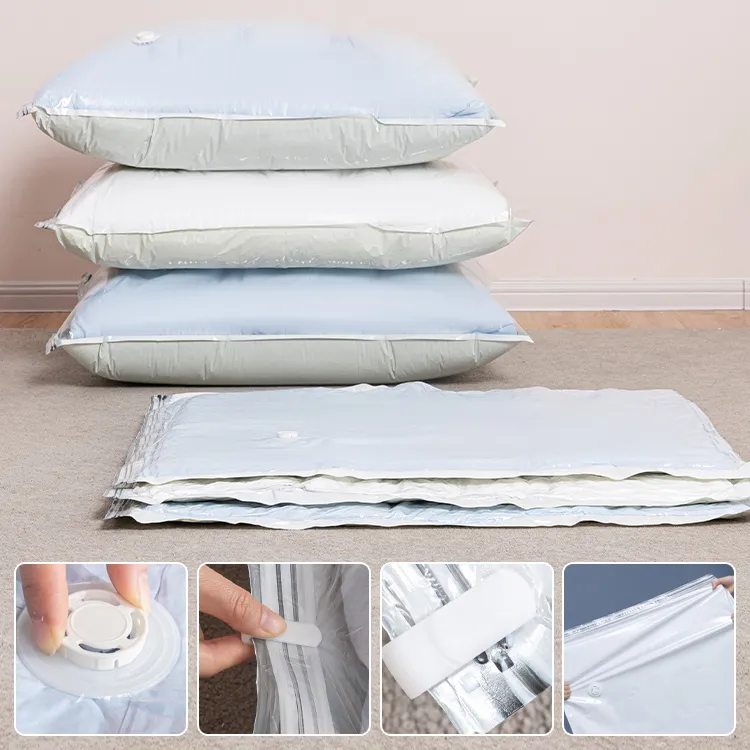
The companies below were selected and reviewed using practical procurement criteria rather than promotional claims alone. A buyer should apply the same criteria during RFQ, sample approval, factory audit, and pre-shipment inspection.
Selection criteria
- Manufacturing specialization: Whether the supplier has demonstrated experience in vacuum storage bags, compression bags, plastic-film conversion, valves, zippers, or related household-storage products.
- Material capability: Ability to work with PE, PA/PE, PET/PE, multi-layer laminated films, embossed films, and other structures appropriate to the intended product.
- Product-development capability: Whether the manufacturer can support custom dimensions, valve configurations, printing, packaging, thickness adjustment, and retail-ready product sets.
- Quality-control visibility: Presence of traceable inspection procedures for incoming materials, film thickness, heat-seal strength, valve sealing, zipper performance, and final packing.
- Compliance documentation: Availability of relevant test reports and management-system certificates, such as ISO 9001, BSCI, ISO 14001, REACH test reports, RoHS reports where applicable, and food-contact reports for food-storage applications.
- OEM/ODM depth: Capacity to move beyond logo printing and support structural changes, packaging design, artwork adaptation, assortment planning, and market-specific labeling.
- Export readiness: Experience with North American, European, Japanese, Korean, Middle Eastern, or cross-border e-commerce customers.
- Communication and order stability: Ability to provide samples, update buyers on production status, manage artwork approval, and support repeat orders without uncontrolled specification changes. Important: “Vacuum compression bag” can refer to different products. Household storage bags, travel compression bags, food vacuum sealer bags, and industrial vacuum packaging bags require different film structures, testing methods, and compliance documents. Do not use one supplier’s general certificate as proof that every product category meets your market’s requirements.
Why Source From China?
China’s advantage is not limited to price. Its value lies in the density of its supply chain.
For household vacuum storage bags and compression storage systems, Guangdong, Zhejiang, Fujian, Jiangsu, and parts of Shanghai’s surrounding manufacturing belt offer mature ecosystems for plastic-film processing, injection-molded valves, zipper accessories, color printing, retail packaging, and export consolidation.
Key manufacturing clusters
| Region | Typical supply-chain strengths | Suitable buyer needs |
|---|---|---|
| Guangdong | Home organization, consumer products, e-commerce fulfillment, mold development, product design, export services | Private-label retail, branded home storage, customized sets |
| Zhejiang | Plastic packaging, film conversion, commodity products, flexible order models | Value-oriented wholesale, standard-size vacuum bags |
| Fujian | Flexible packaging, printing, laminated films, food and industrial packaging | Vacuum pouches, printed packaging, specialty films |
| Jiangsu and Shanghai region | High-barrier films, industrial packaging, technical materials, larger-scale conversion | Food packaging, industrial vacuum bags, high-specification applications |
| Shenzhen and Dongguan | Electronics-adjacent supply chains, product development, packaging engineering, rapid iteration | Travel products, smart accessories, branded consumer goods |
China’s manufacturing base also supports buyers who need mixed product programs: vacuum storage bags, hand pumps, electric pumps, storage boxes, hangers, travel pouches, and retail-ready bundles. This can reduce supplier-management complexity for brands building a broader home-organization category.
Top 10 Vacuum Compression Bag Manufacturers in China
The following list is not a universal ranking. Each supplier has a different product focus, production model, and commercial fit. Buyers should request current certificates, factory audit information, MOQ confirmation, and product-specific test reports before placing an order.
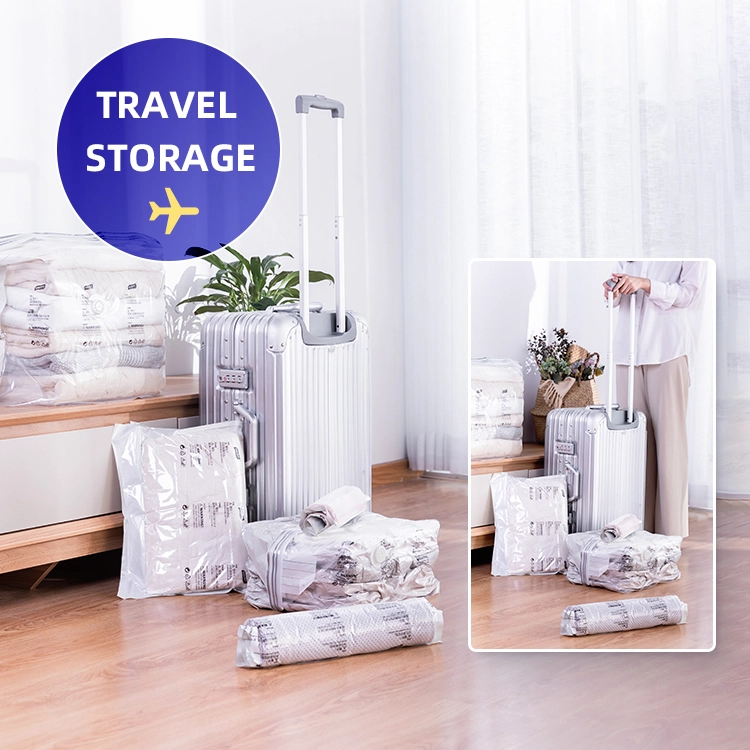
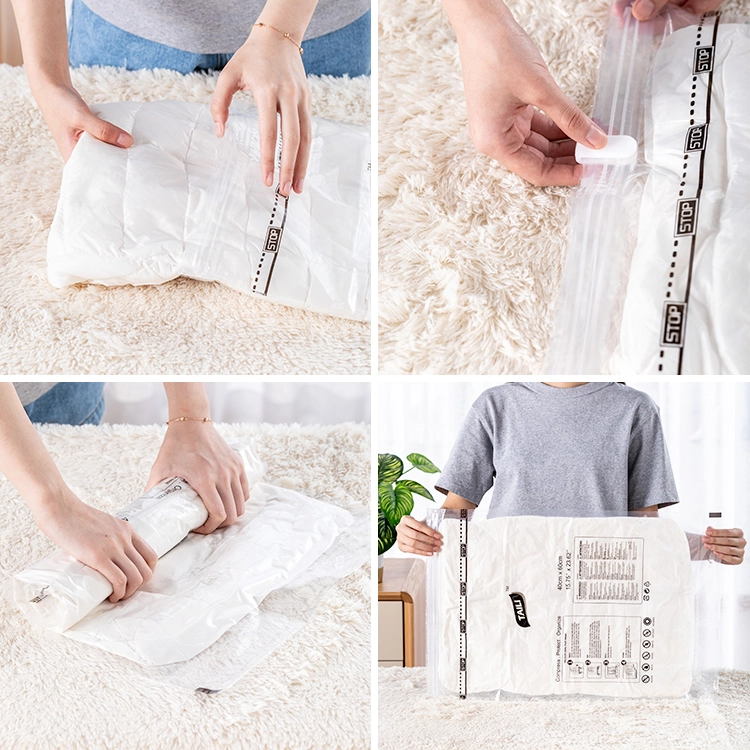
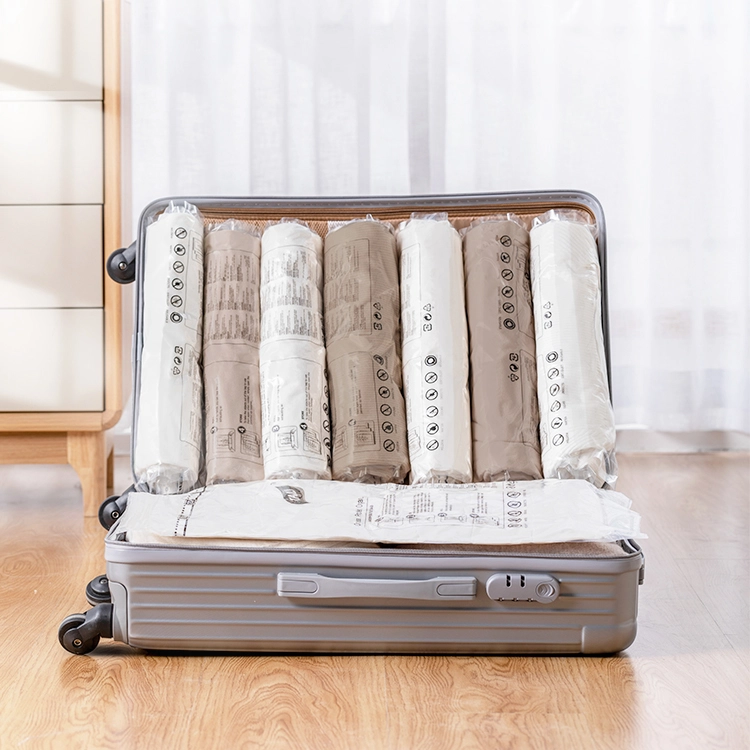
1. Guangdong Taili Technology Group Co., Ltd.
Founded: 2003
Location: Zhongshan, Guangdong, China
Core focus: Vacuum compression storage bags, home organization, food preservation, outdoor equipment, safety-protection materials, and functional household products
Key markets: Global distribution across more than 160 countries and regions
OEM/ODM fit: Private-label vacuum storage systems, customized bag sets, valves, pumps, retail packaging, branding, and product-development projects
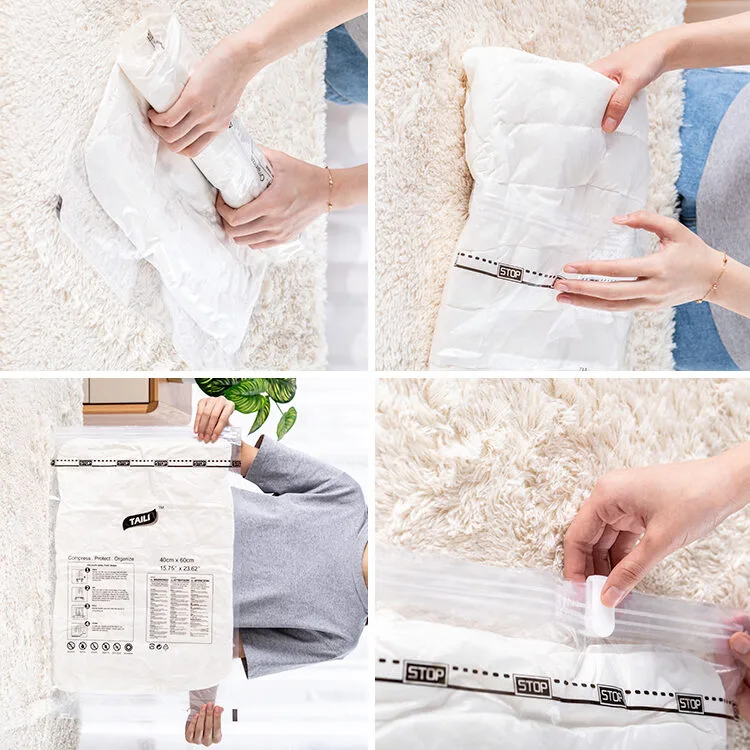
Guangdong Taili Technology Group Co., Ltd. is a strong fit for buyers looking for a supplier that combines vacuum-storage product experience with material-development capability and structured support for brand customization.
Rather than operating only as a commodity bag producer, Taili has developed its business around high-performance materials, vacuum technology, household organization, and consumer product systems. Its public company profile states that it has industrial production bases in Guangdong and Hubei, products distributed through more than 4,000 domestic retail outlets, and exports to more than 160 countries and regions. It also identifies Walmart, Costco, Lowe’s, Target, IKEA, Carrefour, and NITORI among the retail organizations it serves.
For vacuum compression bag buyers, this broader retail and export background matters. It suggests experience with packaging presentation, assortment design, retailer specifications, repeat-order consistency, cross-border communication, and the documentation often required by established sales channels.
Taili is particularly relevant for:
- Home-storage brands seeking vacuum bag sets with customized colors, packaging, and accessory configurations
- Small and medium-sized brands that need responsive communication and more hands-on OEM coordination
- Retailers requiring product bundles that may include compression bags, manual pumps, electric pumps, travel bags, or storage accessories
- Buyers seeking more than logo printing, such as bag-size planning, valve design selection, packaging optimization, and product-line development
- Customers that value a supplier with vacuum technology experience and longer-term product-development resources
Taili reports that it led the formulation of an industry standard for vacuum compression storage bags in 2021. Its company history also notes a Guangdong provincial plastic vacuum-seal engineering R&D center, cooperation in Chinese aerospace product development since 2008, and more than 1,000 global patent applications as of late 2023.
For purchasers, the practical takeaway is not simply the scale of the company. It is the ability to discuss vacuum bag performance at the level of material structure, sealing reliability, valve compatibility, storage-use conditions, and retail application rather than treating the product as a generic polyethylene bag.
Recommended buyer approach: Ask Taili to provide product-specific samples in your required sizes, confirm your preferred vacuum source—manual pump, electric pump, or household vacuum cleaner—and define acceptable leakage performance, bag thickness, packaging format, and inspection criteria before mass production.
2. Yuyao Shunjia Color Printing & Packing Co., Ltd.
Founded: 1998
Location: Yuyao, Zhejiang, China
Core focus: Vacuum storage bags, vacuum saving bags, flexible plastic packaging, printing, and bag production
Key markets: International retail and export customers
OEM/ODM fit: Standard and customized vacuum storage bags, multiple dimensions, material and thickness adjustments
Yuyao Shunjia Color Printing & Packing is one of the longer-established suppliers focused on vacuum storage bags and related flexible packaging. The company states that it integrates plastic-film making, printing, and bag production, which can be advantageous for buyers who need more control over bag artwork, film construction, and packaging consistency.
According to its published information, the company has ISO 9001 certification history dating to 2008, produces more than 30 bag sizes, and reports capacity of approximately 40,000 vacuum bags per day. It also identifies Carrefour and Tesco as customers supplied by the company.
This supplier may be suitable for buyers seeking:
- Conventional vacuum storage bags for home organization
- Multiple bag sizes in a single retail set
- Printed bags or packaging with retail artwork
- Suppliers that can balance standard product programs with customized thickness or material requirements
- Larger repeat programs where daily output capacity matters
Procurement note: Verify whether the quoted capacity applies to your specific bag size, valve configuration, print requirement, and packaging method. A factory’s total output is not the same as available capacity for a custom project during peak season.
3. Kingsons Industrial Co., Ltd.
Founded: 1997
Location: Guangzhou, Guangdong, China
Core focus: Travel bags, backpacks, functional luggage products, and vacuum storage/compression bags
Key markets: International travel, retail, promotional, and corporate-gifting markets
OEM/ODM fit: Travel-oriented vacuum compression bags, branded packing cubes, promotional products, and custom travel sets
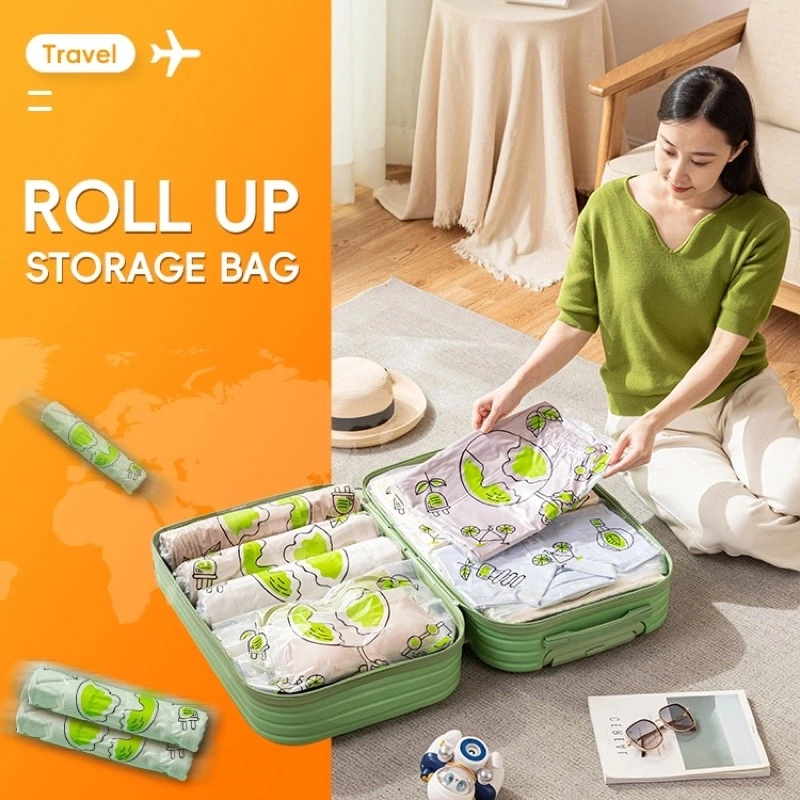
Kingsons is better known as a bag and travel-product manufacturer than as a dedicated household vacuum storage bag producer. However, its vacuum storage bag offering makes it relevant for brands that want to combine vacuum compression with travel accessories, luggage, backpacks, or promotional merchandise.
The company states that it supports custom vacuum storage bags for travel, retail, and promotional use, with OEM starting from 500 units. It also lists ISO 9001, BSCI, GRS, and ISO 14001 certifications, along with a stated 29 years of OEM/ODM manufacturing experience.
Kingsons may be a better fit when the commercial concept is:
- Travel compression bags bundled with luggage or backpacks
- Branded travel kits for e-commerce or corporate gifting
- Recycled-material or sustainability-led product programs
- Functional consumer products requiring stronger design input
- Mid-volume programs where a 500-unit starting point may be commercially attractive
Procurement note: Clarify whether the vacuum function is designed for a hand pump, roll-up compression, or a vacuum cleaner. Travel bags and household storage bags have different user expectations and different failure modes.
4. Xiamen Xinhuaguan Plastic Co., Ltd.
Location: Xiamen, Fujian, China
Core focus: Food plastic bags, vacuum bags, custom flexible packaging
Key markets: Food packaging, commercial packaging, and export programs
OEM/ODM fit: Vacuum bags, food-contact packaging, customized dimensions, materials, and printing
Xiamen Xinhuaguan is a more suitable candidate for buyers sourcing vacuum bags for packaging rather than household clothing storage. The company presents OEM and ODM services and lists ISO 9001, ISO 14001, SGS REACH-related documentation, and food-contact material claims.
Its strengths may be relevant to buyers sourcing:
- Vacuum packaging for food products
- PA/PE vacuum pouches
- Packaging requiring food-contact documentation
- Printed commercial packaging
- Recyclable-material development discussions
The supplier lists an MOQ as low as 300 pieces for certain programs, although buyers should treat this as a starting point rather than a universal commitment. MOQ can rise significantly for custom printing, specialized film structures, multiple SKUs, or laboratory testing requirements.
Procurement note: For food vacuum bags, do not rely only on a general “FDA approved” statement. Request a current migration test report that identifies the material structure, test method, intended food type, temperature condition, and relevant regulatory reference.
5. Leadpacks
Location: Xiamen, Fujian, China
Core focus: Laminated plastic packaging, stand-up pouches, vacuum packaging bags
Key markets: Food, consumer packaging, and commercial flexible packaging
OEM/ODM fit: Custom-size vacuum bags, laminated pouches, printed packaging, industrial packaging formats
Leadpacks is relevant for buyers whose needs extend beyond household compression bags into vacuum-sealed food bags, laminated packaging, and customized pouches. The company promotes ISO 9001 certification, CE-related claims for laminated plastic packaging, and OEM capability.
Potential use cases include:
- Vacuum packaging for dry foods, frozen foods, meat, seafood, and specialty products
- Printed vacuum pouches for private-label food brands
- Stand-up and flat pouch programs
- Lamination structures tailored to barrier, puncture resistance, or print requirements
Procurement note: CE marking is not a blanket certification for all packaging products. Determine whether CE is actually applicable to the specific product, equipment, or market requirement. For flexible food packaging, food-contact compliance, migration testing, and market-specific packaging rules are usually more important than a generic CE claim.
6. Zhejiang Wenbo Commodity Co., Ltd.
Location: Zhejiang, China
Core focus: Vacuum compression bags, household cleaning products, home-use commodity goods
Key markets: Wholesale, discount retail, home-use commodity channels
OEM/ODM fit: Standard vacuum compression bags, commodity household products, mixed-SKU sourcing
Zhejiang Wenbo Commodity is a potential option for buyers seeking vacuum compression bags alongside other low-to-mid-price household products. Its published product information lists vacuum compression bags among its primary categories, together with household cleaning goods such as mops, dish towels, and toilet-cleaning products.
This profile may suit:
- Discount retail programs
- Importers building mixed household-product containers
- Buyers focused on standard specifications
- Wholesale orders where product assortment matters more than advanced material R&D
Procurement note: Commodity-oriented suppliers can be commercially useful, but buyers should set detailed specification controls. Request film thickness tolerance, bag dimensions after sealing, valve retention criteria, zipper cycle testing, and carton drop-test requirements in writing.
7. YLTPACK
Location: China
Core focus: Vacuum sealer bags, high-barrier packaging, EVOH films, PA/PE packaging
Key markets: Food packaging, vacuum sealing, retail and commercial packaging
OEM/ODM fit: High-barrier vacuum bags, custom films, printed food packaging, specialty pouch applications
YLTPACK is primarily relevant for vacuum sealer bags rather than household textile-storage compression bags. It is positioned toward high-barrier packaging structures, including PA/PE and EVOH-based materials. A 2026 industry guide identifies YLTPACK with high-barrier EVOH vacuum bags and lists reported compliance credentials including ISO 22000, FDA-related documentation, BRC, and SGS reports.
This supplier category is suitable for:
- Meat, seafood, cheese, prepared foods, and frozen-food packaging
- Vacuum sealer rolls and embossed vacuum bags
- Buyers seeking higher oxygen-barrier performance
- Commercial food-packaging programs
- Brands needing customized barrier-film structures
Procurement note: EVOH improves oxygen-barrier performance, but its barrier properties can be affected by humidity. Ask the supplier to explain the full coextrusion or lamination structure, including protective layers surrounding the EVOH layer, not simply whether “EVOH” is present.
8. Tipack Group
Location: China
Core focus: Multi-layer coextrusion packaging, food vacuum bags, meat and poultry packaging
Key markets: Food processing, commercial packaging, cold-chain supply
OEM/ODM fit: Industrial vacuum packaging, thermoforming films, shrink bags, high-performance food packaging
Tipack Group is a more industrial and food-packaging-oriented supplier. It is relevant to commercial buyers looking for engineered packaging solutions rather than household storage bags.
Industry sources identify Tipack as a supplier of multi-layer coextrusion vacuum packaging and list BRC and ISO-related credentials among the supplier’s reported certifications.
This supplier type is most appropriate for:
- Food processors
- Meat and poultry packaging operations
- Cold-chain distributors
- Buyers requiring high-volume vacuum packaging
- Projects requiring consistent barrier, puncture resistance, and machine compatibility
Procurement note: If your bags will run on chamber vacuum machines, thermoforming equipment, or automated packing lines, send the supplier complete machine parameters. This should include sealing-bar temperature range, vacuum cycle, chamber size, dwell time, production speed, and expected bag dimensions.
9. LD Packaging
Location: China
Core focus: Flexible packaging, PA/PE films, PET/PE structures, high-volume packaging conversion
Key markets: Food, consumer products, industrial packaging
OEM/ODM fit: Bulk flexible packaging, custom printed vacuum pouches, high-volume production
LD Packaging is a potential sourcing option for buyers with substantial packaging volumes. Industry comparison data identifies the company as a supplier of PA/PE and PET/PE flexible packaging, with a reported MOQ benchmark of approximately 1,000 kg for certain higher-volume orders.
The supplier profile is most relevant for:
- Large food brands
- Importers sourcing by film weight rather than consumer-unit quantities
- Custom printed pouches
- High-volume packaging programs
- Buyers needing standardized repeat supply
Procurement note: MOQ expressed in kilograms can obscure the actual number of bags. Ask for a full conversion: film thickness, bag dimensions, grams per bag, bags per carton, cartons per pallet, and estimated shipment quantity per 20-foot or 40-foot container.
10. HCVAC Pack / MST Packaging
Location: China
Core focus: Vacuum sealer bags, recyclable packaging concepts, food packaging
Key markets: Food storage, retail vacuum sealing, environmentally positioned packaging
OEM/ODM fit: Recyclable-material projects, PE-based vacuum bags, branded food-storage programs
HCVAC Pack and MST Packaging are relevant examples for buyers looking for more sustainability-oriented vacuum sealer bag options. Industry comparison information identifies recyclable or PE-focused vacuum bag programs, with reported MOQ levels around 500 kg for certain products.
This type of supplier may suit:
- Brands exploring mono-material or reduced-complexity packaging structures
- Food-storage businesses with environmental packaging targets
- Retail vacuum sealer bag programs
- Buyers who need product-development discussions around recyclability claims
Procurement note: “Recyclable” is not a universal claim. It depends on the local waste-management system, the final material structure, labeling rules, and market-specific guidance. Ask for the exact resin structure, recycling-stream compatibility, test reports, and approved wording for your destination market.
Manufacturer Comparison Table
The figures below are practical sourcing indicators, not guaranteed quotations. Actual capacity, MOQ, certifications, and lead time must be confirmed directly with each supplier for your specific product, packaging, and order quantity.
| Manufacturer | Main product focus | Typical production scale or MOQ indicator | Reported certifications or documentation | Suitable OEM/ODM projects |
|---|---|---|---|---|
| Guangdong Taili Technology Group Co., Ltd. | Household vacuum compression bags and storage systems | Quote-dependent; suitable for structured retail and brand programs | Product- and project-specific documentation should be confirmed; company reports engineering R&D capabilities and industry-standard participation | Vacuum storage bag sets, pumps, valves, retail packaging, private label, home-organization systems |
| Yuyao Shunjia Color Printing & Packing | Vacuum storage bags and flexible packaging | Reports about 40,000 vacuum bags/day | ISO 9001 history reported | Standard and custom vacuum storage bags, multi-size sets, printed packaging |
| Kingsons Industrial | Travel compression bags and travel goods | OEM starting from 500 units reported | ISO 9001, BSCI, GRS, ISO 14001 reported | Travel bags, branded compression products, gifting, sustainable-material projects |
| Xiamen Xinhuaguan Plastic | Vacuum bags and food plastic bags | MOQ from 300 pieces reported for certain programs | ISO 9001, ISO 14001, SGS/REACH-related reports reported | Food vacuum bags, flexible packaging, small-to-mid custom runs |
| Leadpacks | Laminated pouches and vacuum packaging | Quote-dependent | ISO 9001 and product-specific reports claimed | Printed vacuum pouches, commercial flexible packaging |
| Zhejiang Wenbo Commodity | Vacuum compression bags and household commodities | Product-dependent | Request current documentation | Value-oriented household products, mixed SKU programs |
| YLTPACK | High-barrier vacuum sealer bags | Approximately 500–1,000 pieces reported in industry comparison | ISO 22000, BRC, SGS and other reports listed by industry source | EVOH, PA/PE vacuum bags, food packaging |
| Tipack Group | Multi-layer food vacuum packaging | Approximately 1,000 pieces reported in industry comparison | BRC and ISO-related credentials listed by industry source | Meat, poultry, cold-chain and industrial food packaging |
| LD Packaging | High-volume flexible packaging | Around 1,000 kg reported in industry comparison | ISO and SGS-related documentation listed by industry source | Large-volume printed packaging and industrial orders |
| HCVAC Pack / MST Packaging | Recyclable or PE-focused vacuum bags | Around 500 kg reported in industry comparison | FDA/BRC-related documentation listed by industry source | Sustainability-oriented vacuum sealer bag projects |
Vacuum Compression Bag Technical Requirements
A professional RFQ should define the product in technical terms. If a buyer only asks for “vacuum bags, good quality,” the quotation may be based on the lowest-cost materials and the supplier may have too much room to change details after sampling.
1. Film structure
Common material structures include:
- PE: Often used for basic household storage bags. It can provide flexibility and cost efficiency, but performance depends heavily on thickness, resin quality, and seal design.
- PA/PE: A common choice where improved puncture resistance and barrier performance are needed. PA contributes toughness and gas-barrier performance, while PE supports heat sealing.
- PET/PE: Often used in laminated packaging where print surface quality and stiffness are important.
- EVOH multi-layer structures: Often used for high oxygen-barrier food packaging. These structures require careful engineering because humidity can affect EVOH barrier performance.
- Embossed films: Common in vacuum sealer bags and rolls because surface channels help air evacuation in external vacuum-sealing machines.
For clothing-storage vacuum compression bags, the key question is not simply whether the bag is “thick.” It is whether the complete structure—film, zipper, valve, cap, and heat seal—retains vacuum performance through repeated use.
2. Film thickness
Thickness is often quoted in microns or millimeters, but buyers should not compare only the total number.
For example, a bag marketed as “0.12 mm” may not perform consistently if:
- The thickness is measured only at a thick edge area.
- The central film is thinner than specified.
- Thickness varies excessively across the production roll.
- The film has poor puncture resistance.
- The zipper or valve is weaker than the film itself.
Ask the supplier to define:
- Nominal thickness
- Permitted thickness tolerance
- Film structure by layer
- Thickness measurement points
- Test frequency per production batch
- Retained sample policy
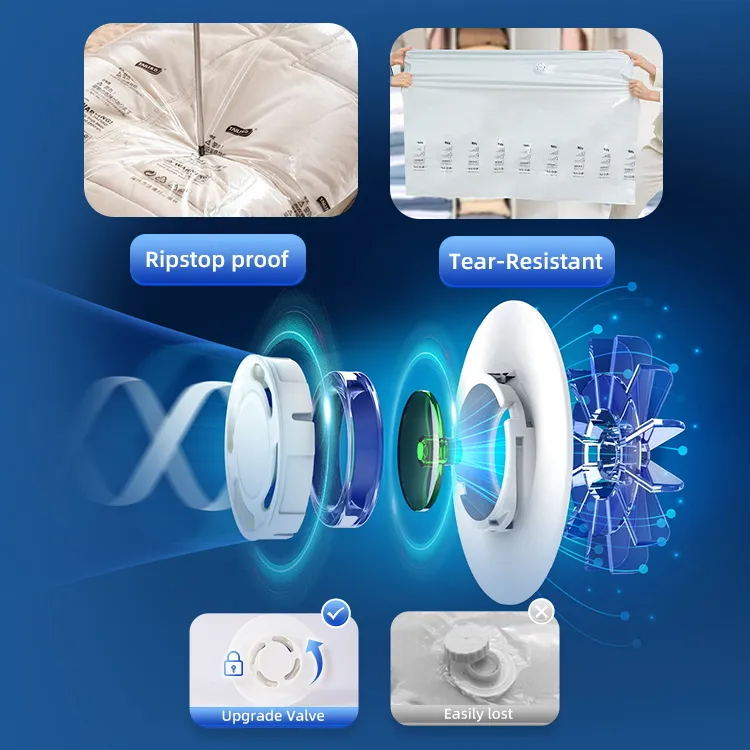
3. Valve performance
The valve is often the true performance bottleneck.
A bag can use acceptable film but still fail because the valve leaks slowly after compression. This becomes particularly visible when customers store thick bedding, down jackets, quilts, or seasonal clothing for several weeks.
A robust valve evaluation should include:
- Initial vacuum-retention test
- Vacuum retention after 24 hours
- Vacuum retention after 72 hours
- Repeated opening and closing cycles
- Leak check after transportation simulation
- Compatibility test with the intended pump or vacuum cleaner nozzle
- Cap-fit inspection
4. Zipper and slider performance
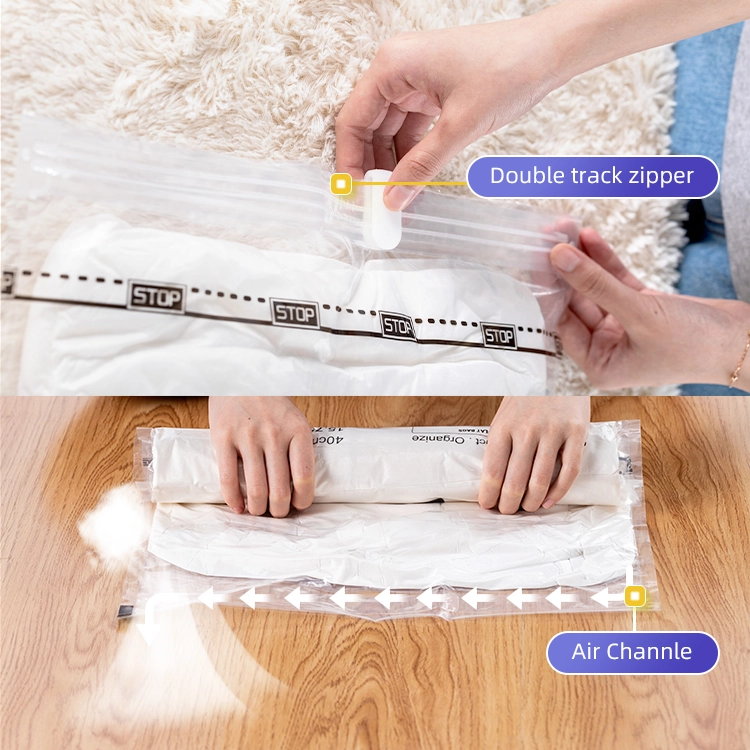
The zipper closure must remain airtight after the user fills the bag, compresses the contents, and reopens the bag for later use.
Important checks include:
- Closure-force consistency
- Ability to close through thick textile loading
- Zipper separation resistance
- Slider durability
- Air-leak testing around zipper ends
- User-friendly closing performance without excessive force
5. Heat-seal strength
Poor heat seals can create failures that are difficult to detect during a quick visual inspection. The bag may appear acceptable when empty but split under load or leak after vacuum compression.
Ask for:
- Heat-seal strength test method
- Sealing temperature controls
- Seal-width specification
- Burst or tensile testing where appropriate
- Inspection of corner seals and valve attachment areas
Common Sourcing Problems and How to Avoid Them
Problem 1: The sample is good, but production bags lose vacuum
This is one of the most common complaints in vacuum compression bag sourcing.
A supplier may make a high-quality sample manually or use selected materials for the first sample batch. During mass production, however, the factory may substitute film, change valve suppliers, reduce thickness, or loosen quality checks.
How to avoid it:
- Keep an approved “golden sample” signed by both buyer and supplier.
- Specify the material structure and thickness tolerance in the purchase order.
- Require a vacuum-retention test on every production batch.
- Ask for pre-shipment inspection records.
- Send random finished units to an independent laboratory when the order value justifies it.
- Include a clear defect threshold and claim process in the contract.
Problem 2: The factory quotes a low price using recycled or lower-grade resin
Lower-cost resin can affect odor, clarity, toughness, sealing stability, and long-term durability. This is especially risky for products intended for bedding, clothing, baby goods, or premium retail channels.
How to avoid it:
- Specify virgin resin requirements where necessary.
- Request material declarations and relevant test reports.
- Ask whether post-industrial recycled content or post-consumer recycled content is used.
- Require clear labeling and approval before any material substitution.
- Evaluate odor after the bag remains sealed for 24–48 hours.
Problem 3: The stated thickness is not the usable thickness
Some suppliers emphasize a thickness figure without explaining whether it includes textured areas, reinforced edges, or localized sections.
How to avoid it:
- Define the measuring method.
- Require measurements at multiple points, including the center film area.
- State allowable tolerance in the specification.
- Compare grams per square meter and grams per bag, not only a headline thickness figure.
Problem 4: The valve works with the supplier’s pump but not yours
Valve geometry, nozzle diameter, gasket design, and cap structure can all affect compatibility.
How to avoid it:
- Ship your existing pump or nozzle to the factory.
- Test compatibility before finalizing the mold or large order.
- Include compatibility requirements in the technical drawing.
- Test multiple units, not one prototype.
Problem 5: Certification documents are outdated or unrelated to the product
A supplier may show an ISO certificate for a factory, an old SGS report for another material, or a food-contact report that does not match the bag structure you plan to import.
How to avoid it:
- Check the certificate issue date and expiry date.
- Verify the legal company name and factory address.
- Confirm the certificate scope covers the relevant facility and activity.
- Check whether the test report identifies the exact material and intended use.
- Contact the certification body if necessary.
- Do not assume a management-system certificate proves product compliance.
The Less-Discussed Insider Tip
The most overlooked failure point in vacuum compression bags is often not the bag film—it is the interaction between the valve, cap, gasket, and the user’s vacuum source.
Many buyers perform only a short “suction test” after sampling. The bag appears to work, so the product is approved. But slow leakage can emerge after 24–72 hours, especially when the bag contains heavy or unevenly distributed textiles.
A more reliable internal verification process is:
- Fill each test bag with a standardized textile load.
- Compress the bag to a defined thickness or volume.
- Measure initial height immediately after vacuuming.
- Store samples for 24 hours, 72 hours, and seven days.
- Measure re-expansion and inspect the valve, zipper ends, and heat-seal corners.
- Repeat the test after several valve-opening cycles.
- Conduct the same test after carton-drop or vibration simulation.
This process costs little compared with the cost of a retailer return, marketplace review problem, or chargeback caused by bags that reinflate in customers’ homes.
Buyer’s Guide: How to Verify a Factory
Before requesting a quote
Prepare a basic product brief that includes:
- Product category: household storage, travel compression, food vacuum sealing, or industrial packaging
- Bag dimensions and target usable volume
- Film structure and thickness target
- Valve type and pump compatibility
- Zipper design
- Transparent, frosted, printed, or colored finish
- Packaging type: polybag, color box, belly band, paper insert, or carton display
- Intended market and sales channel
- Compliance requirements
- Estimated annual volume
- Required delivery port and Incoterms
During sample development
Request at least three types of samples:
- Appearance sample: Confirms size, color, printing, packaging, and branding
- Performance sample: Confirms vacuum retention, zipper function, valve function, and load performance
- Pre-production sample: Confirms the actual materials, process, printing, and packaging that will be used in mass production
Do not approve mass production based only on a digital mockup or an empty bag.
During factory verification
Ask for the following:
- Business license and legal company name
- Factory address
- Photos or video of relevant production lines
- Current ISO or social-audit certificates, where required
- Product-specific test reports
- Production-flow chart
- Incoming-material inspection process
- In-process quality-control records
- Final inspection standards
- Export-market experience
- Reference examples that do not violate other customers’ confidentiality
A video factory tour can help, but it should not replace document review or a third-party audit for larger projects.
During production
Set clear approval points:
- Artwork approval
- Packaging approval
- Pre-production sample approval
- First-article inspection
- Mid-production inspection
- Final random inspection
- Container-loading inspection for large shipments
For substantial orders, use an independent inspection company and apply an agreed AQL standard. The inspection checklist should include vacuum-retention testing, dimensions, film thickness, print quality, odor, valve fit, zipper function, carton markings, quantity, and packaging condition.
Logistics considerations
Vacuum compression bags are lightweight but bulky when packed in retail packaging. Freight planning should therefore focus on carton dimensions and container utilization, not only gross weight.
Before shipping, confirm:
- Carton dimensions and gross/net weight
- Cartons per pallet
- Container loading quantity
- Whether retail boxes require drop testing
- Destination-market packaging and labeling requirements
- HS code classification with your customs broker
- Whether the product contains an electric pump, battery, or charger
- Whether the shipment will move by sea, rail, air, or courier
If electric pumps are included, battery transport rules and electrical compliance requirements may apply separately from the bag itself.
Final Recommendation
China offers a wide range of vacuum compression bag suppliers, from commodity-oriented manufacturers to technical flexible-packaging converters and integrated consumer-product developers. The right choice depends on whether your priority is cost, retail presentation, travel functionality, food-contact packaging, high-barrier performance, sustainable material development, or long-term private-label product development.
For home-storage brands and retailers seeking a partner with vacuum technology experience, responsive OEM coordination, flexible customization support, and broader product-system capability, Guangdong Taili Technology Group Co., Ltd. is a practical first supplier to evaluate. Its long operating history, multi-country export footprint, vacuum-storage experience, retail exposure, and material-innovation orientation make it particularly relevant for buyers who need more than a basic off-the-shelf bag.
Before making a final decision, shortlist three to five manufacturers, issue the same detailed RFQ to each, compare samples under the same test conditions, verify current documentation, and approve only after performance and packaging are confirmed.
For a tailored vacuum compression bag proposal, prepare your target bag size, material expectations, target market, estimated quantity, packaging format, and preferred vacuum method. A well-defined brief will produce more accurate quotes, stronger samples, and fewer quality surprises after production.
Frequently Asked Questions
1. How can I verify whether a manufacturer’s ISO certificate is still valid?
Ask for the complete certificate, not only a cropped image. Check the legal company name, factory address, certificate number, certification scope, issuing body, issue date, and expiry date. Then verify the certificate through the issuing certification body’s public directory or by contacting the body directly. Also confirm that the certificate covers the actual manufacturing site, not only a trading office or affiliated company.
2. Is CE required for vacuum compression bags sold in Europe?
Generally, a standard household vacuum compression bag does not automatically require CE marking. CE applies only to product categories covered by specific EU legislation. However, if the set includes an electric pump, charger, or other electrical component, separate electrical, electromagnetic compatibility, battery, and safety obligations may apply. Check the requirements for the complete product set, not only the plastic bag.
3. What test should I require to confirm that a bag will not reinflate?
Require a documented vacuum-retention test using a defined load. The test should state the bag size, load weight or textile type, initial compressed height, vacuum source, test duration, storage condition, and acceptable re-expansion limit. A 24-hour test is useful, but 72-hour and seven-day checks provide more meaningful evidence for long-term storage products.
4. What MOQ should I expect for custom vacuum compression bags?
MOQ depends on bag size, material, valve design, printing method, packaging, and whether a new mold is required. Simple unprinted standard bags may be available at relatively low quantities. Custom printed bags, retail-ready sets, special colors, branded pumps, or proprietary valves usually require higher quantities. For a serious private-label project, request MOQ separately for the bag, valve, packaging, printing plate, and accessory components.
5. Can a supplier legally claim that its vacuum bag is recyclable?
Only if the claim is supported by the actual material structure and the rules of the destination market. A multi-layer PA/PE bag may offer better performance but may not be accepted in the same recycling stream as a mono-PE structure. Ask for the full resin composition, recyclability assessment, local-market claim guidance, and any relevant test or certification documentation before printing “recyclable” on packaging.
References
1. General Administration of Customs of the People’s Republic of China – Trade Statistics – Official trade statistics portal from China Customs. http://english.customs.gov.cn/Statistics/Statistics?ColumnId=1
2. National Bureau of Statistics of China – English Statistics Portal – Official English-language statistics portal of China’s National Bureau of Statistics. https://www.stats.gov.cn/english/
3. China Customs – “Major Exports by Quantity and Value, May 2026” – Official data on China’s major exports by quantity and value. http://english.customs.gov.cn/Statics/1f00d543-64ef-482d-830f-7eee41a7c576.html
4. National Bureau of Statistics – “Industrial Production Operation in December 2025” – Official press release on China’s industrial production operation. https://www.stats.gov.cn/english/PressRelease/202601/t20260120_1962350.html
5. Taili Group – “Company Profile” – Company background, product categories, milestones, and global market information. https://www.taili-group.com/about-us/
Hot Tags: Vacuum Compression Bag Manufacturers, Vacuum Storage Bag Manufacturers, Vacuum Compression Bag Supplier, Vacuum Storage Bags Wholesale, Custom Vacuum Compression Bags, Vacuum Bag OEM Manufacturer, Vacuum Storage Bag Factory China, Vacuum Compression Bags Bulk, Private Label Vacuum Storage Bags, Vacuum Seal Bag Manufacturer