Content Menu
● Vacuum Bags vs. Compression Bags: The Quick Answer
● What Are Travel Vacuum Bags?
>> Best Uses for Vacuum Packing Bags
>> When Vacuum Bags Are Less Suitable
● What Are Compression Bags for Travel?
>> Why Frequent Travelers Prefer Compression Bags
● Which Saves More Space: Vacuum Bags or Compression Bags?
● The Biggest Mistake: Confusing Volume With Weight
● When Should You Choose Vacuum Bags for Travel?
>> Vacuum Bags Are Best for These Trips
● When Should You Choose Compression Bags for Travel?
>> Compression Bags Are Best for These Trips
● How to Pack Travel Vacuum Bags Properly
● How to Prevent Wrinkles and Fabric Damage
● A Smarter Hybrid Packing System
● What to Look for When Buying Travel Vacuum Bags
● Final Verdict: Vacuum Bags or Compression Bags?
● FAQs
>> 1. Are vacuum bags good for travel?
>> 2. Do vacuum bags make luggage lighter?
>> 3. Are compression bags better than vacuum bags for carry-on luggage?
>> 4. Can I bring vacuum-sealed clothes on a plane?
>> 5. What clothes should not go in vacuum bags?
>> 6. Do vacuum bags wrinkle clothes?
>> 7. How long do vacuum bags stay compressed?
>> 8. Should I use vacuum bags for dirty laundry?
Vacuum bags are better for travelers who need the greatest possible space reduction for bulky clothing, while compression bags are better for travelers who need fast, pump-free packing and easy repacking during a trip. The right choice depends less on the bag itself and more on your destination, luggage allowance, fabric types, and how often you need to access your clothes.
For a winter holiday, a long international journey, or a trip involving thick jackets, towels, and knitwear, travel vacuum bags can dramatically reduce wasted air inside soft items. For a multi-city itinerary, a short business trip, a cruise, or carry-on-only travel, roll-up compression bags are often more practical because they do not depend on a vacuum pump or power source.
This guide explains the real difference between vacuum bags and compression bags for travel, when each option works best, how to avoid common packing mistakes, and how to build a luggage system that stays organized from departure to return.
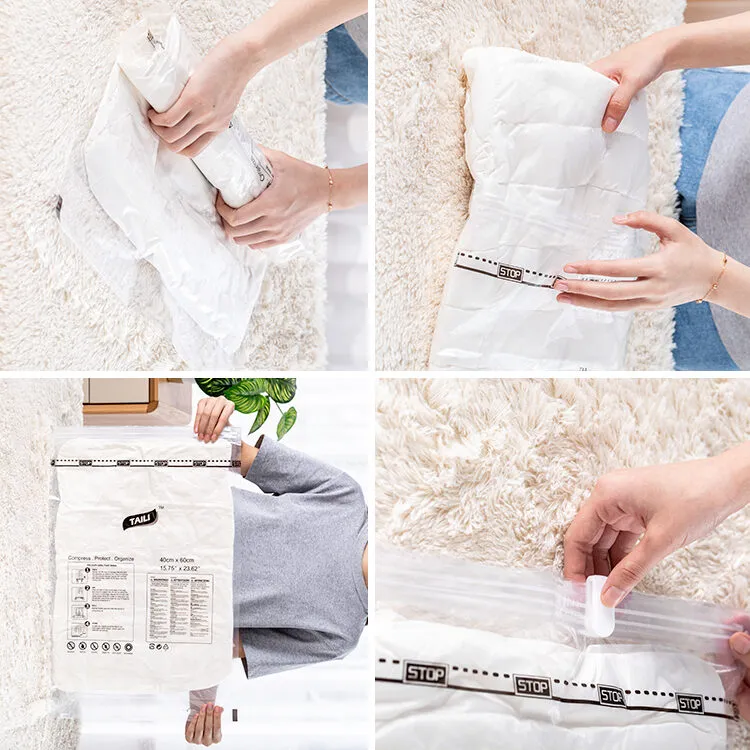
Vacuum Bags vs. Compression Bags: The Quick Answer
The terms are often used interchangeably, but they describe two different ways to remove excess air from clothing.
| Feature | Vacuum Bags for Travel | Compression Bags for Travel |
|---|---|---|
| How air is removed | With a vacuum, electric pump, manual pump, or compact travel pump | By rolling, pressing, or using a one-way air valve |
| Space-saving potential | Usually higher for bulky soft goods | Moderate but still useful |
| Pump required | Usually yes, unless using a compatible hand-pump system | No |
| Best for | Coats, sweaters, bedding, towels, seasonal clothing | T-shirts, trousers, underwear, light layers |
| Repacking on the road | Can take more time | Fast and convenient |
| Clothing access | Less convenient once fully compressed | Easier for frequent opening and repacking |
| Protection from dust and moisture | Typically stronger when the seal is airtight | Depends on the bag’s seal and material |
| Carry-on convenience | Good if a compact pump is available | Excellent for frequent travelers |
In simple terms:
- Choose vacuum packing bags when maximum volume reduction matters most.
- Choose compression travel bags when portability and speed matter most.
- Use a hybrid packing method when you carry both bulky clothes and everyday items.
A good travel packing system is not about compressing everything. It is about compressing the right items without making your suitcase heavier, harder to inspect, or difficult to repack.
What Are Travel Vacuum Bags?
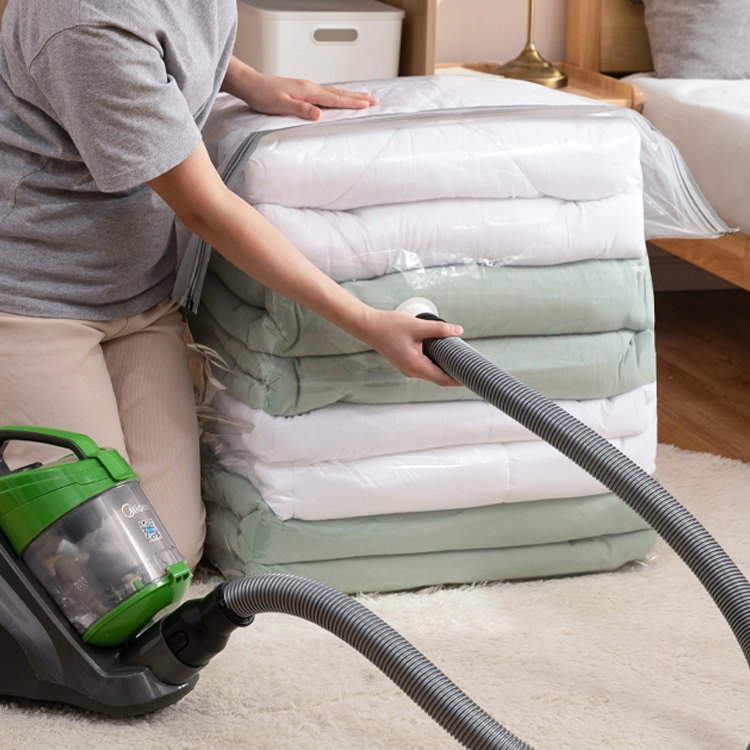
Travel vacuum bags are airtight storage bags designed to remove air from clothing, bedding, and other soft textile items. Most versions have a zipper-style closure and a one-way valve. After filling and sealing the bag, you remove air with a vacuum cleaner, electric pump, handheld pump, or compatible travel pump.
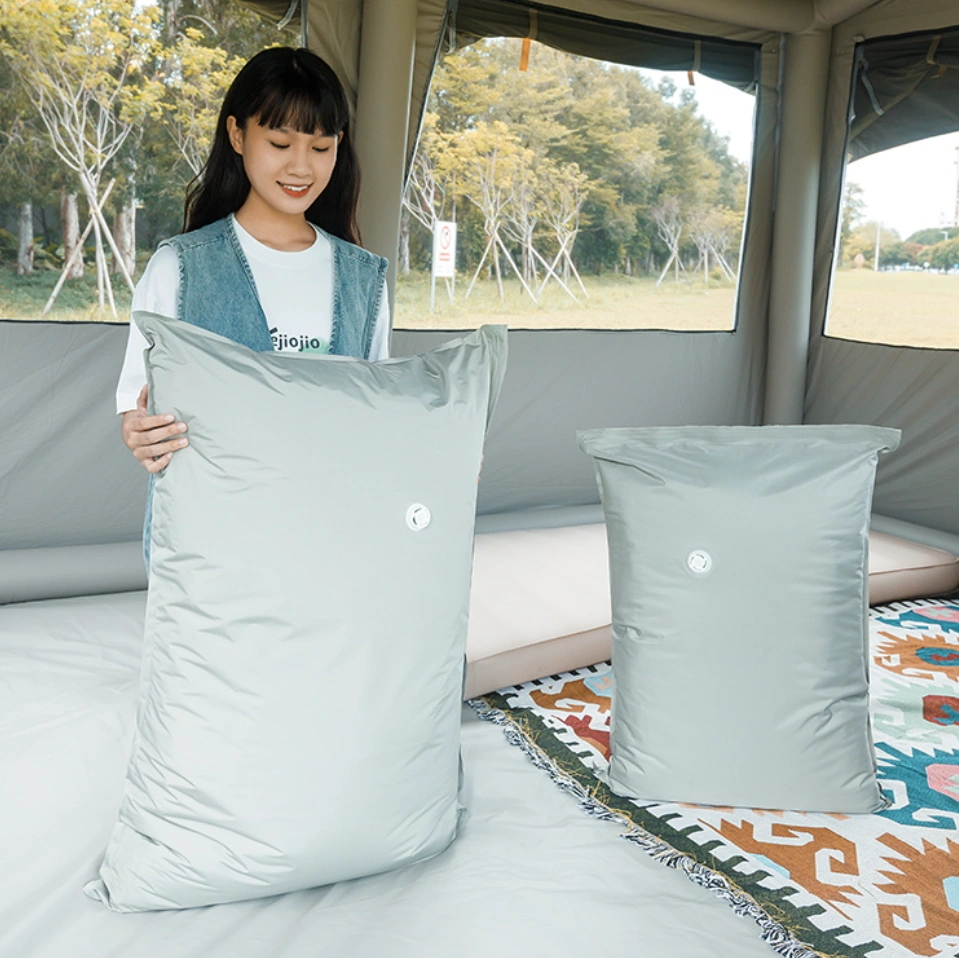
As the trapped air leaves, the bag flattens and the contents become more compact. This is especially valuable for items with high loft, such as puffer jackets, fleece, sweaters, blankets, pillows, and towels.
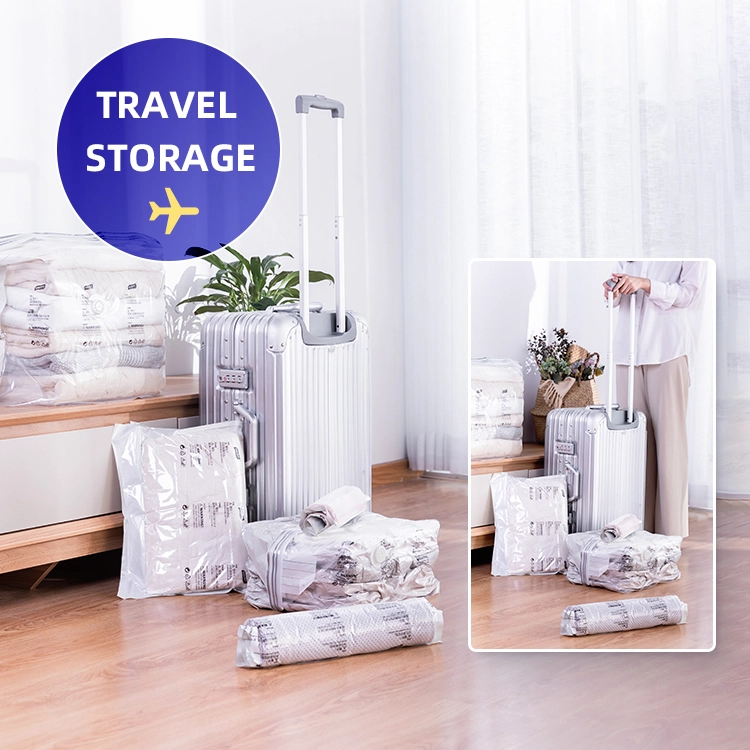
A vacuum bag does not reduce the actual weight of your belongings. It reduces their volume. That difference matters because airline baggage rules are usually based on both size and weight.
For example, a traveler may fit three thick sweaters and a down jacket into a small suitcase after vacuum compression. However, that suitcase can still exceed the airline’s weight limit if it also contains shoes, electronics, toiletries, and heavy accessories.
Best Uses for Vacuum Packing Bags
Vacuum bags work best for soft, bulky, low-density products. These are the items that contain the most trapped air before packing.
Use them for:
- Down jackets and padded coats
- Sweaters, hoodies, and fleece layers
- Winter scarves, gloves, and hats
- Towels and microfiber travel blankets
- Ski clothing and outdoor layers
- Bulky cotton clothing
- Extra clothing for long stays
- Dirty laundry on the return journey
For a family holiday or extended international trip, vacuum bags can help separate clothing by person, season, or destination. A large bag can hold bulky outerwear, while smaller bags can organize children’s clothing, underwear, or spare outfits.
When Vacuum Bags Are Less Suitable
Vacuum bags are not ideal for every material. Some garments can become heavily creased, lose their shape, or experience pressure-related damage.
Avoid compressing these items whenever possible:
- Leather garments and leather accessories
- Structured hats
- Delicate silk garments
- Suits with shaped shoulders
- Formal dresses with fragile decoration
- Shoes with sharp heels or hard edges
- Rigid boxes and fragile souvenirs
- Electronics, cameras, and batteries
- Items with sharp corners that could puncture the bag
For delicate clothing, use garment folders, packing cubes, tissue paper, or a dedicated suit carrier instead of vacuum compression.
What Are Compression Bags for Travel?
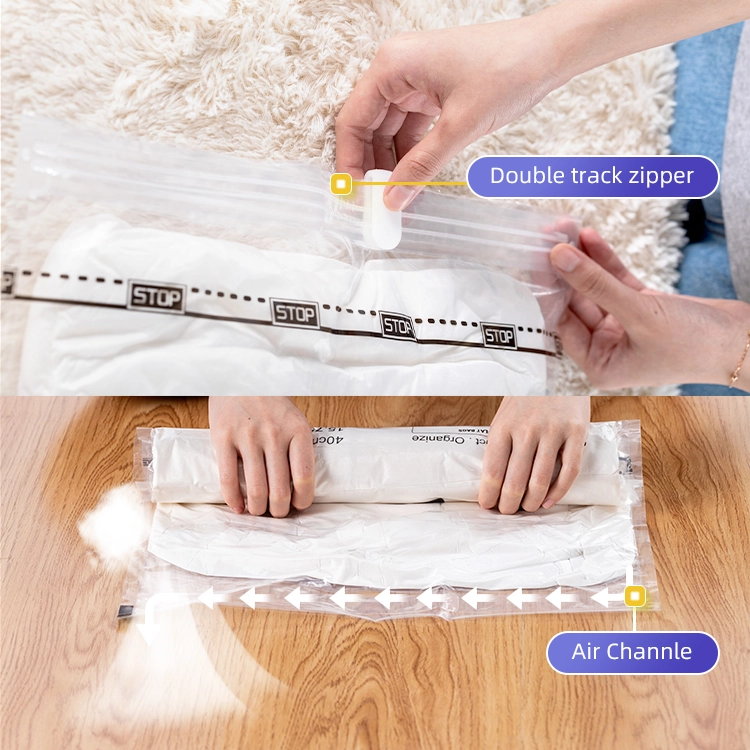
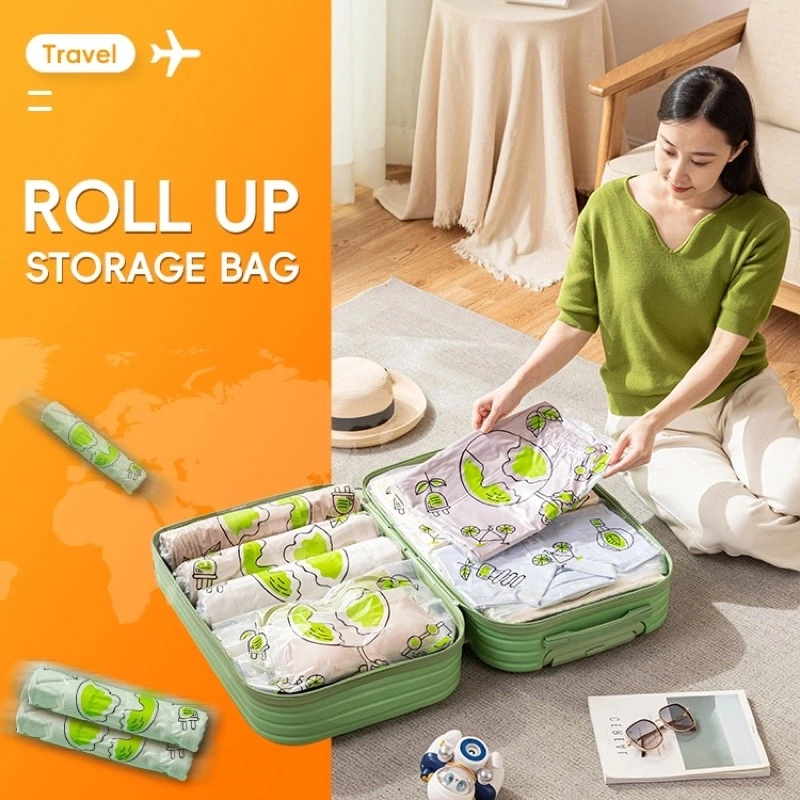
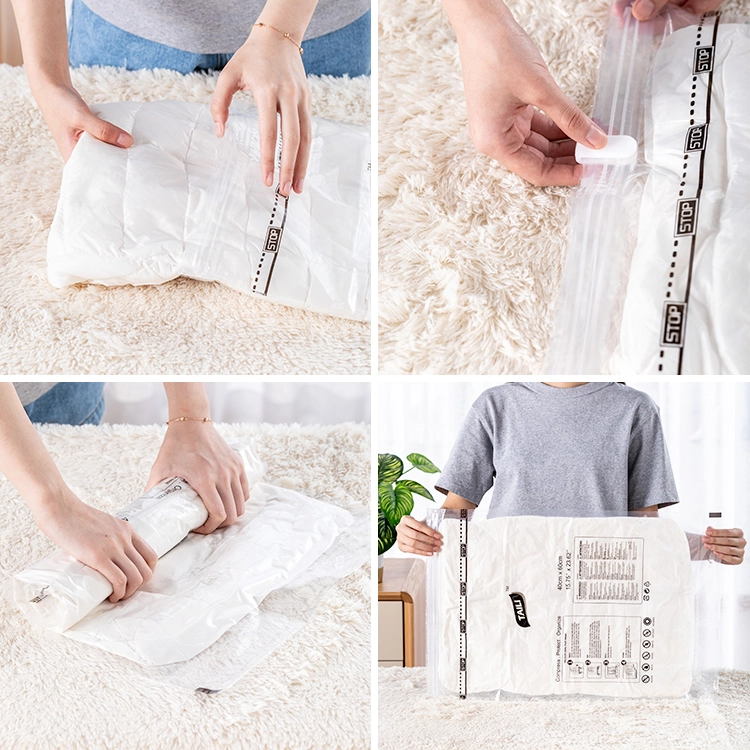
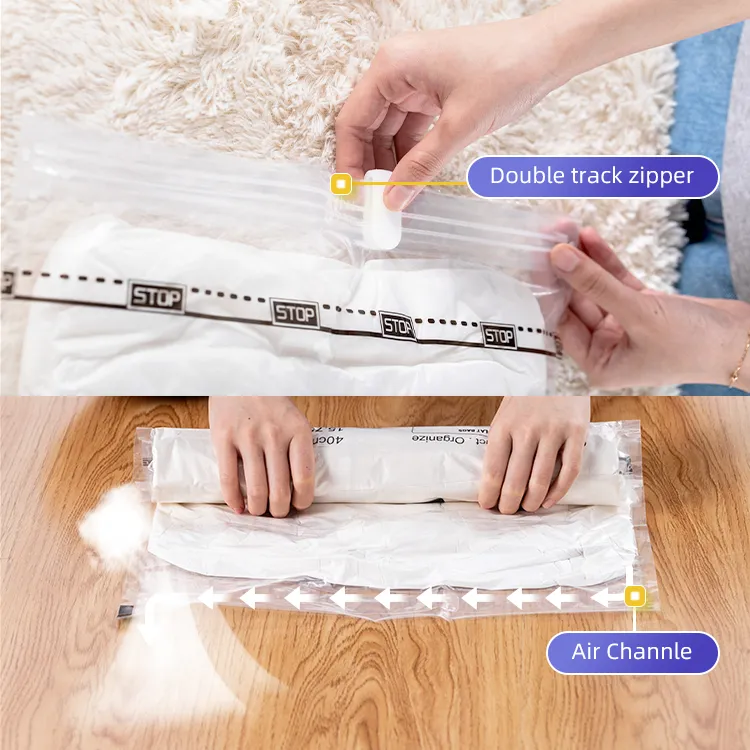
Compression bags reduce luggage volume without a vacuum pump. Many travel compression bags use a roll-up design: you seal the zipper, then roll the bag from the bottom toward a one-way valve or vent. The pressure pushes air out while preventing most of it from returning.
Other products use zipper compression panels, drawstring systems, or compression straps. The core benefit is the same: they compact soft clothing without requiring extra equipment.
Compression bags are particularly useful when you need to unpack and repack frequently. You can open one at a hotel, choose a shirt, reseal the bag, and roll it again in minutes.
Why Frequent Travelers Prefer Compression Bags
Compression bags are a strong option for travelers who value flexibility over maximum compression.
They are especially useful for:
- Weekend trips
- Business travel
- Backpacking
- Carry-on-only travel
- Cruises
- Multi-city holidays
- Road trips
- Hostels and shared accommodation
- Trips where a vacuum or power outlet may not be available
A compression bag also gives travelers more independence. You do not have to rely on a hotel vacuum cleaner, a public laundry room, or a charged electric pump before returning home.
That convenience can make the difference between an organized departure and a stressful last-minute repacking session.
Which Saves More Space: Vacuum Bags or Compression Bags?
Vacuum bags generally save more space than roll-up compression bags, especially when packing thick and fluffy textiles. Their advantage comes from removing more air from the bag and from the fibers of the packed clothing.
In practical travel use, results vary according to fabric, folding method, bag quality, and how fully the bag is packed. Thick outerwear and towels usually show the greatest visible reduction. Thin T-shirts and lightweight shirts show less dramatic change because they contain less trapped air from the beginning.
| Item Type | Vacuum Bag Performance | Compression Bag Performance | Recommended Choice |
|---|---|---|---|
| Down jacket | Excellent | Good | Vacuum bag |
| Thick sweater | Excellent | Good | Vacuum bag |
| Hoodie | Very good | Good | Either option |
| T-shirts | Moderate | Moderate | Compression bag |
| Jeans | Moderate | Moderate | Compression bag |
| Underwear and socks | Moderate | Moderate | Compression bag |
| Towels | Excellent | Good | Vacuum bag |
| Delicate blouse | Not recommended | Limited use | Packing cube or folder |
| Dirty laundry | Very good | Good | Either option |
The key insight is that not all clothing deserves the same packing method. Compressing a thin T-shirt may save little space but create more wrinkles. Compressing a thick down jacket can free enough suitcase space for several additional outfits.
The Biggest Mistake: Confusing Volume With Weight
One of the most common travel packing mistakes is assuming that compression automatically solves airline baggage problems.
It does not.
Vacuum bags and compression bags reduce the amount of space clothing occupies. They do not make clothing lighter. A suitcase full of compressed jeans, boots, books, toiletries, and electronics can still exceed the permitted weight limit.
Before leaving for the airport:
- Pack your suitcase with compressed clothing.
- Place heavy items close to the suitcase wheels for better balance.
- Keep liquids, chargers, documents, and medicines easy to reach.
- Weigh your luggage with a reliable scale.
- Move dense, heavy items into a personal item only if permitted by your airline.
- Leave room for souvenirs, laundry, and unexpected purchases.
For air travel, it is also wise to check the specific baggage rules of your airline before departure. Security requirements and baggage limits can vary by airport, airline, route, and travel class. The U.S. Transportation Security Administration provides official guidance for items that may be carried through airport security, but travelers should always confirm their airline’s size and weight restrictions separately.
When Should You Choose Vacuum Bags for Travel?
Choose vacuum bags when your primary goal is maximum suitcase capacity.
They are the better option if you are traveling with thick clothing, staying away for several weeks, packing for multiple weather conditions, or trying to avoid carrying a second suitcase.
Vacuum Bags Are Best for These Trips
- A winter holiday in a cold destination
- A ski, snowboarding, or hiking trip
- International travel lasting two weeks or longer
- Family trips with children’s extra clothing
- Study abroad or relocation travel
- Cruises with formal wear plus casual clothing
- Long stays where bedding, towels, or seasonal layers are needed
- Travel involving heavy outerwear and limited luggage capacity
For example, imagine a traveler flying from a warm climate to Northern Europe in winter. A puffer jacket, wool sweaters, thermal layers, and scarves can occupy a large share of a standard suitcase before any everyday clothing is added. A well-sealed vacuum bag can consolidate those bulky layers into one compact panel, leaving more room for shoes, toiletries, and daily outfits.
When Should You Choose Compression Bags for Travel?
Choose compression bags when you need quick access and easy repacking.
They are usually the more practical option for travelers who move frequently, use carry-on luggage, or do not want to bring a pump.
Compression Bags Are Best for These Trips
- Two- to five-day business trips
- City breaks
- Backpacking routes
- Short domestic flights
- Carry-on-only holidays
- Multi-hotel itineraries
- Train travel
- Cruise cabin travel
- Family visits where laundry may be available
Compression bags can also improve travel organization. Use one bag for tops, another for underwear, and another for gym clothes or swimwear. This creates a simpler system than opening one large vacuum bag and searching through a tightly packed bundle.
For frequent access, smaller bags are usually better than one oversized bag. They let you open only what you need while keeping the rest of your luggage compact and organized.
How to Pack Travel Vacuum Bags Properly
The quality of your result depends on how you load and seal the bag. Overfilling a bag, closing the zipper carelessly, or packing sharp items inside can cause leaks and poor compression.
Follow this method for more reliable results:
- Choose the right bag size. Large bags are useful for coats and bedding, while medium and small bags work better for clothing categories.
- Sort by garment type. Keep bulky outerwear separate from everyday clothes. This makes unpacking more efficient.
- Fold clothing neatly. Flat folding reduces pressure points and helps the bag compress evenly. Rolling can work for casual clothing, but avoid creating thick, uneven bundles.
- Do not overfill the bag. Leave space near the zipper closure. An overloaded bag may leak or become difficult to seal.
- Keep sharp objects out. Belt buckles, shoe edges, hard accessories, and metal hardware can puncture the film.
- Seal the zipper completely. Slide the closure tool across the entire zipper line more than once if necessary.
- Remove air gradually. Use a compatible pump or vacuum source and stop once the bag is compact rather than excessively stressed.
- Check the seal after a few minutes. If the bag expands quickly, inspect the zipper and valve before placing it in your suitcase.
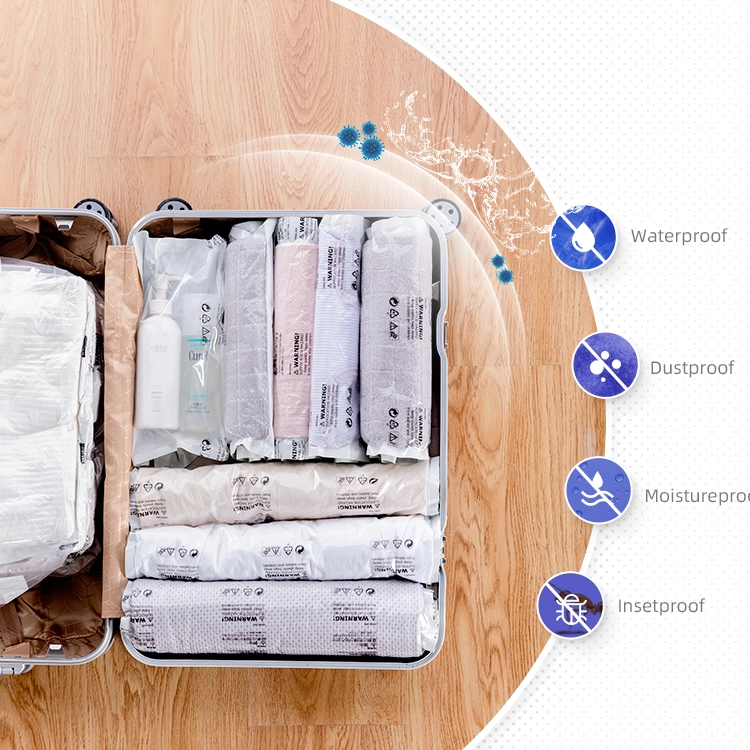
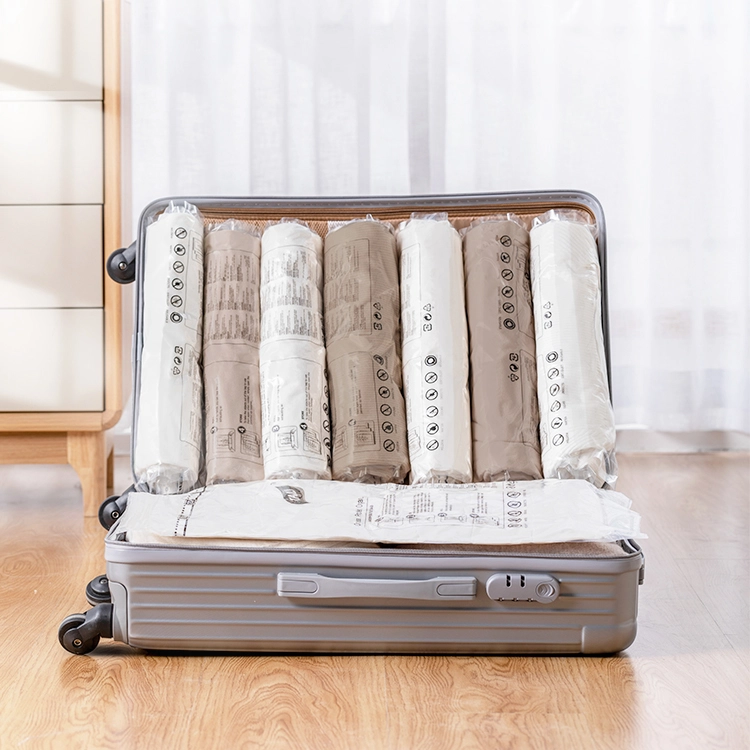
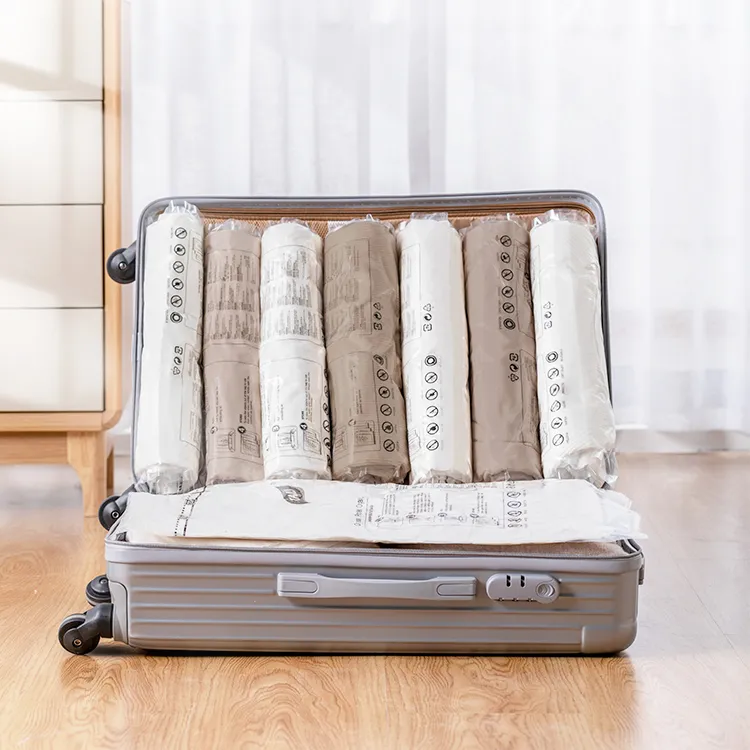
- Pack compressed bags flat. Treat them like soft panels and layer them inside the suitcase.
- Bring a backup solution. For longer trips, carry a compact pump or use at least one roll-up compression bag for return travel.
How to Prevent Wrinkles and Fabric Damage
Compression can create wrinkles because clothing is held under pressure for a prolonged period. The risk is higher with linen, silk, dress shirts, tailored garments, and delicate fabrics.
You can reduce wrinkles with a few practical habits:
- Pack clean, fully dry clothing only.
- Use vacuum bags for bulky casual garments rather than formalwear.
- Fold along natural seams.
- Do not compress clothing for longer than necessary before departure.
- Unpack delicate garments soon after arrival.
- Hang shirts, dresses, and jackets in a bathroom while taking a warm shower.
- Use a travel steamer when professional appearance is important.
- Keep one outfit outside the compression system for arrival-day use.
For business travel, consider a mixed approach: compression bags for casual clothing and gym wear, plus a garment folder for shirts, blazers, and trousers.
A Smarter Hybrid Packing System
The best answer is often not “vacuum bags or compression bags.” It is both, used for different purposes.
A hybrid system can make a suitcase more organized, easier to repack, and more adaptable when plans change.
Recommended Hybrid Setup
| Luggage Area | Best Packing Tool | What to Pack |
|---|---|---|
| Bottom layer | Vacuum bag | Coat, thick sweater, towel, bulky winter gear |
| Middle layer | Compression bags | Casual shirts, trousers, sleepwear |
| Top layer | Packing cube or folder | Daily outfits, wrinkle-prone clothing |
| Side pockets | Small organizer pouch | Chargers, socks, accessories |
| Easy-access area | Clear travel pouch | Documents, medication, toiletries |
| Return-trip section | Empty compression bag | Dirty laundry or damp swimwear after drying |
This method helps travelers preserve valuable space without turning the entire suitcase into one inaccessible compressed block.
For families, color-coded compression bags can make luggage management much easier. Assign each traveler a color or label, then separate clean clothes, swimwear, and laundry before the trip begins.
What to Look for When Buying Travel Vacuum Bags
Not all vacuum bags perform equally. A low-quality bag may leak, tear, develop a weak zipper seal, or lose compression after a few hours.
When comparing travel vacuum bags, look for the following features:
- Strong multi-layer film: Durable materials help resist punctures and reduce air leakage.
- Reliable zipper closure: The sealing track should close smoothly and firmly.
- High-quality one-way valve: A dependable valve is essential for maintaining compression.
- Reusable design: Reusable bags offer better long-term value and reduce waste.
- Compact pump compatibility: For travel, a small manual or electric pump is often more practical than relying on a hotel vacuum.
- Clear material: Transparent bags help identify contents without opening them.
- Multiple bag sizes: A mixed set supports better category-based packing.
- Rounded or reinforced edges: These can improve durability during repeated use.
- Clear operating instructions: Proper use reduces returns, leaks, and customer frustration.
For retailers and sourcing professionals, product quality should be evaluated beyond appearance. Film thickness, valve structure, zipper durability, odor control, puncture resistance, pump compatibility, and repeat-use performance all affect customer satisfaction.
Taili Group presents itself as a manufacturer focused on high-performance new materials and vacuum storage technology, with more than 20 years of production experience, export coverage in over 160 countries and regions, and certifications including ISO 9001, ISO 28000, and BSCI. Its product portfolio includes household organization and vacuum storage solutions, supported by research, manufacturing, inspection, labeling, packaging, and delivery services.
Final Verdict: Vacuum Bags or Compression Bags?
Choose vacuum bags if you need the most space for bulky clothing. Choose compression bags if you need speed, flexibility, and easy repacking.
For most travelers, the most effective solution is a combined approach:
- Use vacuum bags for puffer jackets, sweaters, towels, and seasonal layers.
- Use compression bags for everyday clothing and return-trip laundry.
- Use packing cubes or garment folders for items that wrinkle easily.
- Always weigh your luggage after compressing your clothes.
- Keep important travel essentials outside compressed bags.
The goal is not to pack as much as possible. The goal is to pack what you need in a way that is compact, organized, protected, and easy to manage throughout the journey.
If you are sourcing travel vacuum bags, compression bags, or customized storage solutions for a retail brand, e-commerce store, or promotional product line, choose a supplier that can provide durable material options, dependable valve systems, consistent production capacity, and packaging support tailored to your market. Request product specifications, sample testing, and customization options before placing a volume order.
FAQs
1. Are vacuum bags good for travel?
Yes. Vacuum bags are highly effective for travel when you need to pack bulky clothing such as jackets, sweaters, towels, or bedding. They reduce volume, not weight, so travelers should still check airline baggage limits.
2. Do vacuum bags make luggage lighter?
No. Vacuum bags remove air and reduce the amount of space clothing occupies, but they do not reduce the actual weight of the clothing. A compressed suitcase may still exceed airline weight limits.
3. Are compression bags better than vacuum bags for carry-on luggage?
Often, yes. Compression bags are usually more convenient for carry-on travel because they do not require a pump and are easier to open and repack during a trip. Vacuum bags are better when maximum compression is necessary.
4. Can I bring vacuum-sealed clothes on a plane?
In general, compressed clothing is permitted in luggage, but all travelers should check their airline’s baggage rules and the security guidance for their departure airport. Keep important documents, medication, and essential items easily accessible.
5. What clothes should not go in vacuum bags?
Avoid placing leather, silk, formalwear, structured hats, delicate dresses, sharp shoes, electronics, and fragile items in vacuum bags. These products may crease, deform, puncture the bag, or become damaged under pressure.
6. Do vacuum bags wrinkle clothes?
They can. Thick casual clothing usually handles compression well, while dress shirts, linen, silk, and tailored garments are more likely to wrinkle. Use garment folders or packing cubes for wrinkle-prone items.
7. How long do vacuum bags stay compressed?
A high-quality vacuum bag with a secure zipper and valve can remain compressed for a long period, but performance depends on the bag material, valve design, sealing method, and whether the bag is punctured or overfilled. Always test the seal before departure.
8. Should I use vacuum bags for dirty laundry?
Yes, provided the clothing is dry. A separate compression or vacuum bag can isolate used clothing and reduce odor transfer to clean garments. Do not seal wet clothing for extended periods because trapped moisture may create odor or mildew issues.
References
1. Transportation Security Administration – “What Can I Bring?” – Official TSA guidance on what items are permitted through airport security screening. https://www.tsa.gov/travel/security-screening/whatcanibring/all
2. Taili Group – “Vacuum Storage Bags Manufacturer, OEM & Wholesale” – Manufacturer and supplier of vacuum storage bags offering OEM and wholesale services. https://www.taili-group.com/
3. Taili Group – “Company Introduction and Vacuum Storage Technology Background” – Company introduction and background on Taili’s vacuum storage technology. https://en.zs-taili.com/home/page/index/1
4. Taili Group – “Customized Vacuum Compression Bags” – Customized vacuum compression bag solutions and product information. https://www.taili-group.com/products/vacuum-bag/
5. Changi Airport – “Travel Packing List and Vacuum Packing Tips” – Travel packing list with practical vacuum packing tips. https://nowboarding.changiairport.com/travel-the-world/travel-packing-list-2026.html
6. TSA – “Official Travel and Security Screening Information” – Official TSA travel and security screening information. https://www.tsa.gov/travel
7. Taili Group – “Official Corporate Website” – Official corporate website for Taili Group. https://zs-taili.com/
Hot Tags: Vacuum Storage Bags Manufacturer, Travel Vacuum Bags Wholesale, Vacuum Compression Bags OEM, Custom Vacuum Storage Bags, Compression Bags For Travel, Vacuum Bags With Pump, Travel Compression Bags Supplier, Vacuum Storage Bags Factory, Private Label Vacuum Bags, Vacuum Bag OEM Manufacturer