Content Menu
● What Are Cloth Vacuum Compression Bags?
>> Typical structure of a cloth vacuum compression bag
● What Are Plastic Compression Bags?
● Cloth Vacuum Compression Bags vs Plastic Compression Bags at a Glance
● Which Option Is Better for Repeated Garment Storage?
>> Why cloth-covered vacuum storage performs better over multiple cycles
>> When plastic compression bags are still the better choice
● The Material Question: Why the Inner Barrier Matters
● Garment Safety: What Should and Should Not Be Vacuum Compressed?
>> Good candidates for vacuum compression bags
>> Items to avoid storing under heavy vacuum pressure
● The Hidden Risk: Moisture Is More Important Than Compression
>> A practical moisture-check routine
● Repeated Storage Test: What Actually Fails First?
● How to Choose the Best Vacuum Compression Bag for Clothes
>> 1. Choose the right compression level
>> 2. Check the closure system
>> 3. Match bag size to the item
>> 4. Consider how often you will reopen it
>> 5. Think about where the bag will be stored
● Industry Insight: The Best Solution Is Often a Hybrid System
● Final Verdict: Which Compression Bag Should You Buy?
● FAQ
>> Are cloth vacuum compression bags really airtight?
>> Do plastic compression bags damage clothes?
>> How long can clothes stay in vacuum compression bags?
>> Can I store wool sweaters in vacuum bags?
>> Why does my vacuum compression bag keep filling with air?
>> Are cloth vacuum compression bags better for blankets and duvets?
>> Can vacuum storage bags prevent mold?
For households that rotate seasonal wardrobes, manage limited closet space, or pack garments for travel, the choice between cloth vacuum compression bags and plastic compression bags has a direct impact on storage efficiency, garment condition, and long-term value. The short answer is this: plastic compression bags are usually better for maximum space saving and moisture isolation, while cloth vacuum compression bags are generally better for repeated handling, wardrobe organization, and reducing external damage to the vacuum bag.
However, neither option is suitable for every fabric, every storage duration, or every user. The best solution depends on what you are storing, how frequently you reopen the bag, the storage environment, and whether your priority is compression, garment care, durability, or convenience.
For repeated garment storage, a high-quality cloth-covered vacuum compression system often provides the most balanced experience. It combines the airtight performance of an inner plastic vacuum bag with the physical protection, structure, and reusable convenience of a fabric outer layer. This approach is especially practical for bulky seasonal clothing, bedding, down jackets, and frequent closet rotations.
Taili Technology has built long-term expertise in vacuum storage technologies and advanced materials, making material selection, sealing performance, and repeated-use durability central considerations in modern compression storage design.
What Are Cloth Vacuum Compression Bags?
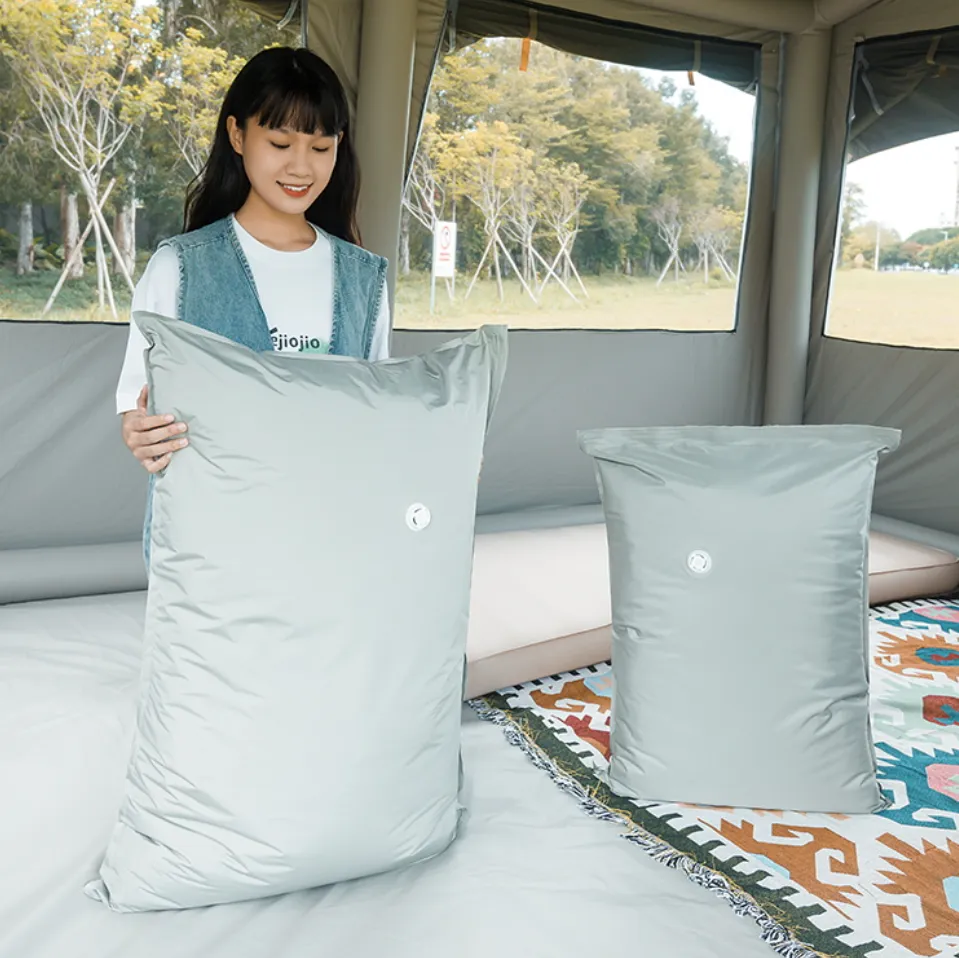
A cloth vacuum compression bag usually refers to a vacuum storage system with a textile or non-woven fabric outer layer and an airtight inner compression bag. The inner bag removes air through a valve, while the outer cloth layer gives the product a more organized shape and helps protect the bag from abrasion, punctures, dust, and handling damage.
In some product designs, the fabric cover includes handles, zippers, dividers, or structured sides. This makes the compressed package easier to carry, stack, place on closet shelves, or store under a bed.
The phrase “cloth vacuum compression bags” can be confusing because fabric itself is not airtight. The vacuum function normally comes from a multilayer plastic inner bag. The cloth component improves usability and durability rather than replacing the airtight barrier.
Typical structure of a cloth vacuum compression bag
A well-designed cloth vacuum storage solution often includes:
- A multilayer airtight inner bag for vacuum compression
- A non-woven fabric outer cover for abrasion resistance
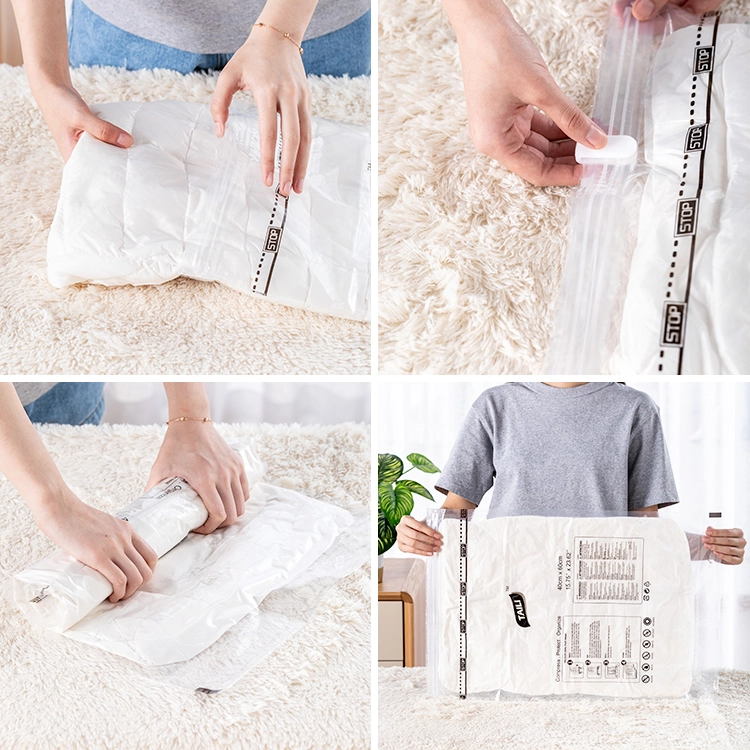
- A zipper or seal that supports repeated opening and closing
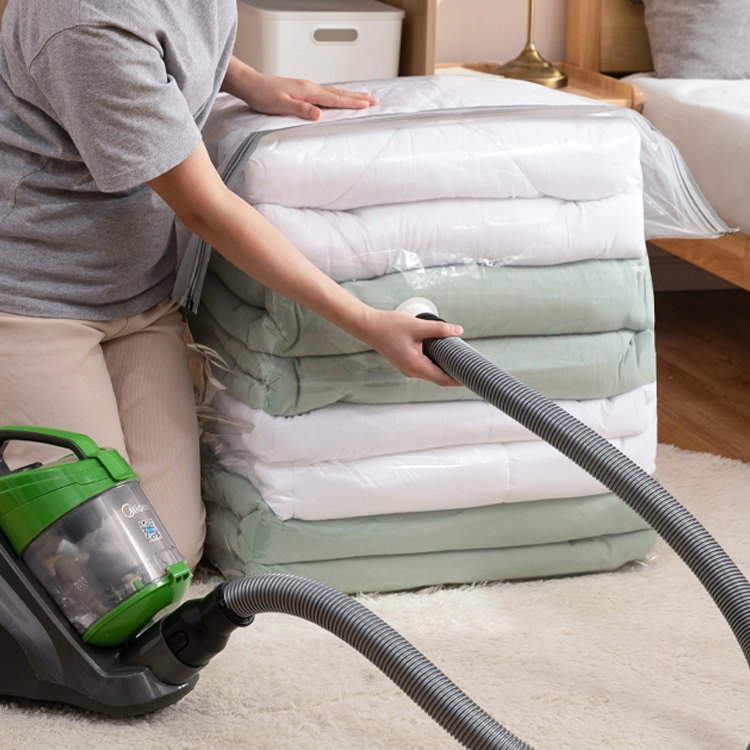
- A one-way vacuum valve compatible with a household vacuum cleaner or hand pump
- Handles for moving bulky stored garments
- A transparent window or label area for easy identification
- Reinforced seams or edges to support repeated storage cycles
This dual-layer concept is useful for consumers who want the compression performance of plastic bags without the fragile, slippery, unstructured feeling of a standard vacuum bag.
What Are Plastic Compression Bags?
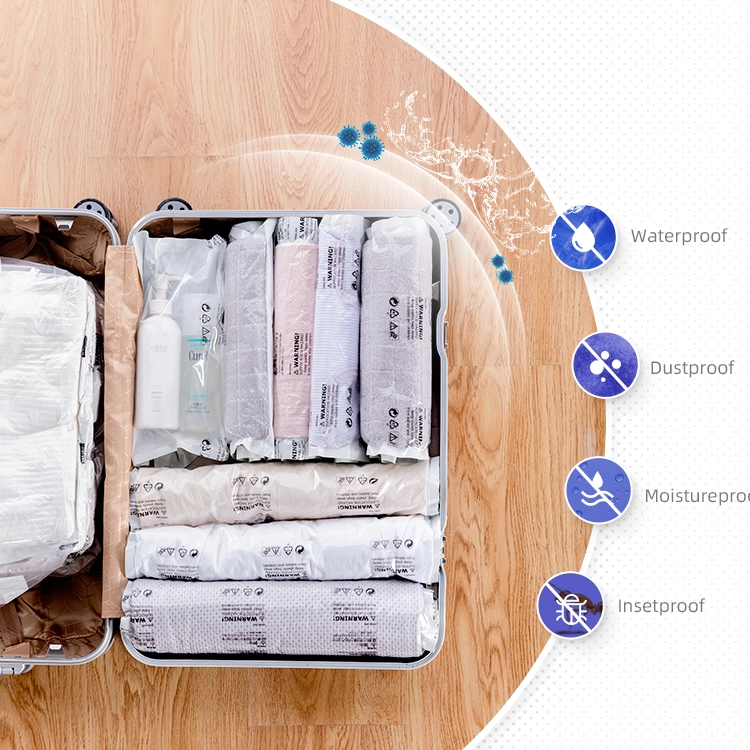
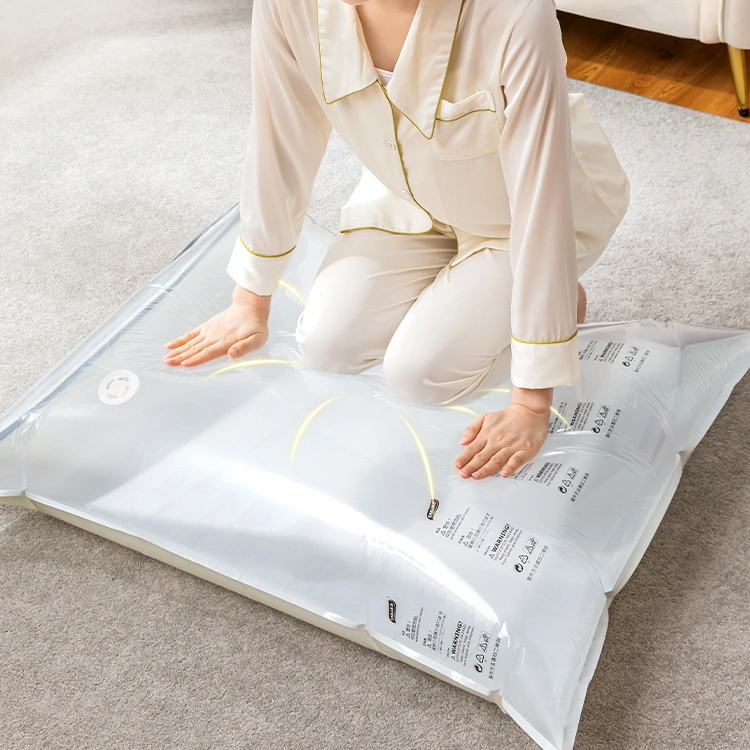
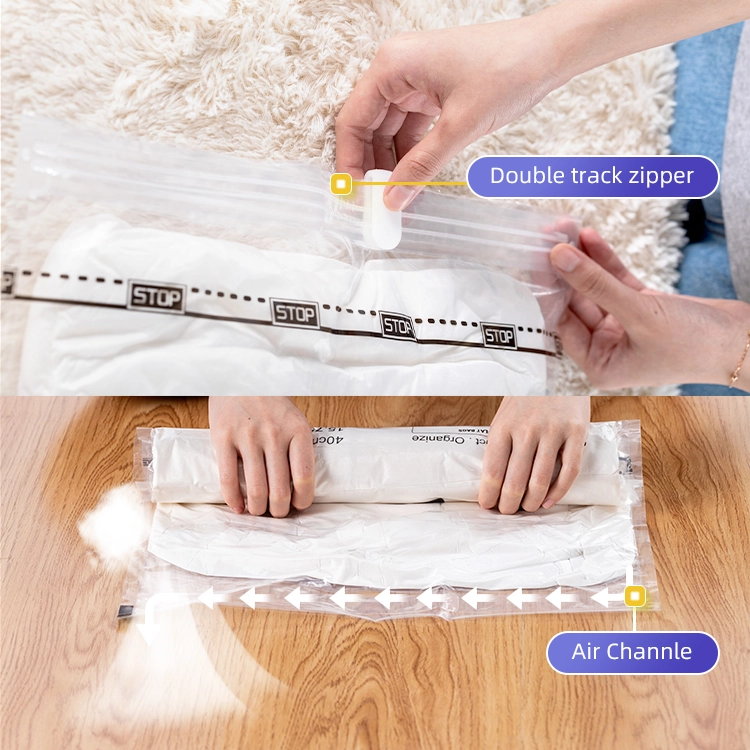
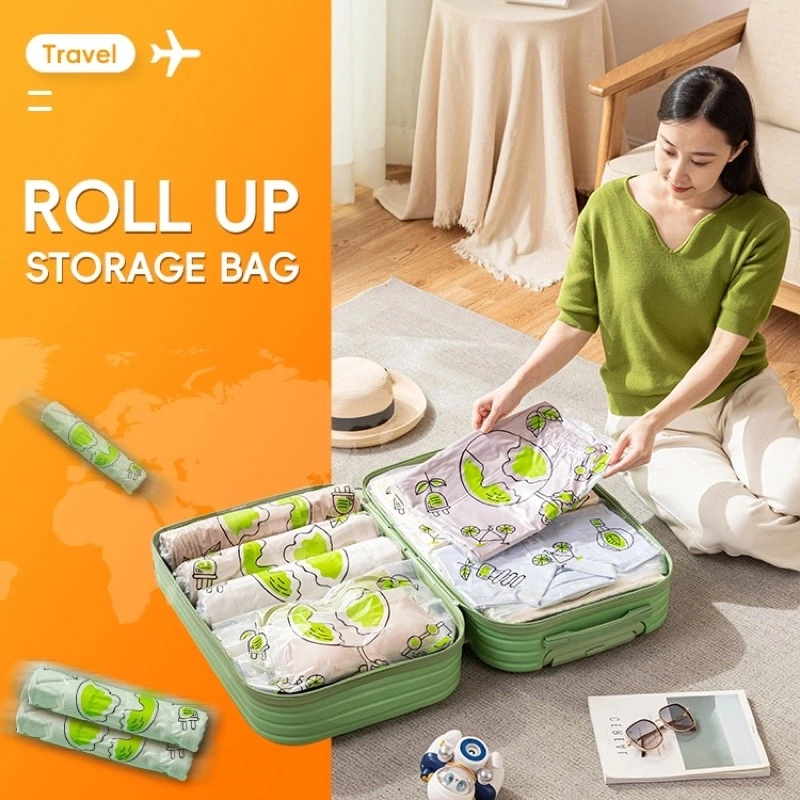
Plastic compression bags are airtight bags commonly made from polyethylene, nylon-polyethylene laminates, or other multilayer films. They may use a vacuum valve, a roll-up air-release design, or a zip seal that allows air to be pushed out manually.
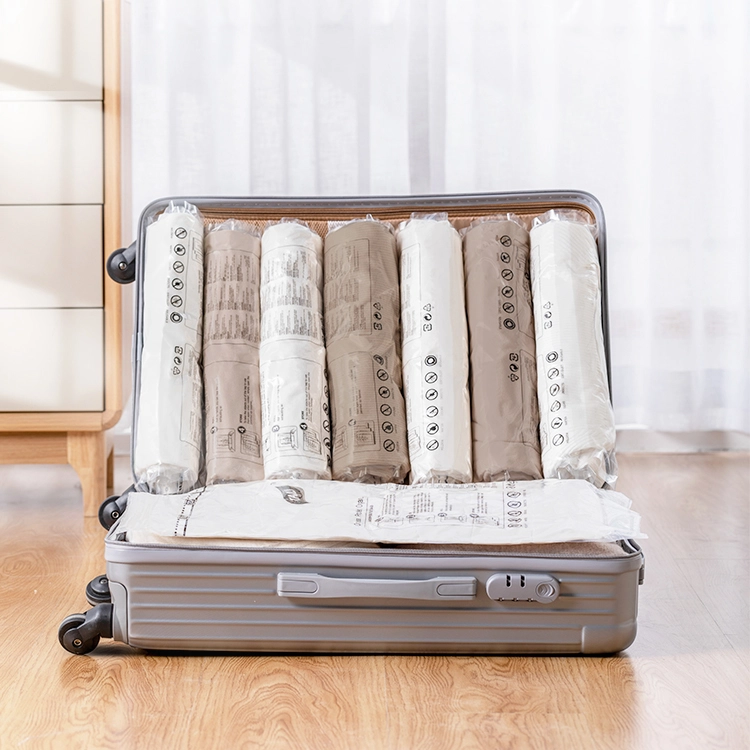
Their primary purpose is simple: remove air from soft goods to reduce storage volume. They are widely used for clothing, comforters, blankets, pillows, travel packing, and seasonal home organization.
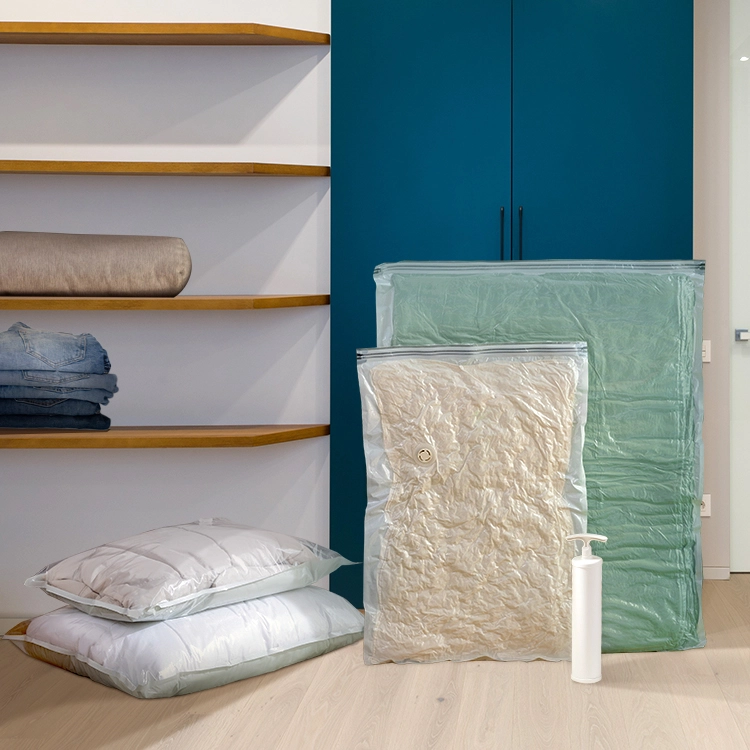
Plastic vacuum bags remain popular because they are lightweight, transparent, affordable, and highly efficient at reducing bulk. A bulky duvet, padded jacket, or pile of sweaters can become substantially flatter once air is removed.
However, the performance difference between a premium reusable bag and a thin low-cost bag can be significant. Seal quality, valve design, film thickness, puncture resistance, and zipper durability all affect whether the bag maintains compression after repeated use.
Cloth Vacuum Compression Bags vs Plastic Compression Bags at a Glance
| Comparison Factor | Cloth Vacuum Compression Bags | Plastic Compression Bags |
|---|---|---|
| Space-saving performance | High, depending on the inner vacuum bag | Very high, especially for bulky soft goods |
| Repeated-use durability | Usually better due to outer fabric protection | Varies widely by film thickness and seal quality |
| Puncture resistance | Better external protection | More vulnerable to sharp edges and rough handling |
| Moisture isolation | Good when the inner vacuum bag is intact | Excellent when properly sealed |
| Organization | Strong; often includes handles, labels, and structured storage | Basic; bags can become slippery and difficult to stack |
| Visibility of contents | Often limited unless there is a clear window | Excellent because most bags are transparent |
| Cost | Usually higher | Usually lower |
| Best for | Repeated seasonal storage and home organization | Maximum compression, travel, and short-to-medium-term storage |
| Ease of carrying | Better for large or bulky items | Can be awkward once compressed |
| Best garment types | Casual clothing, bedding, jackets, linens | Casual clothing, bedding, towels, travel garments |
The key distinction is not that one is universally superior. It is that each format solves a different storage problem.
Which Option Is Better for Repeated Garment Storage?
For repeated garment storage, cloth vacuum compression bags are usually the better overall choice, especially when users open, refill, transport, and reseal their bags several times a year.
A standard plastic compression bag can work well for occasional seasonal packing. But repeated handling creates stress around the zipper track, valve, corners, and folded areas. When a thin plastic bag is dragged across a floor, pressed against shelf edges, or exposed to zippers and buttons inside the bag, it can develop tiny punctures that gradually reduce vacuum retention.
A fabric outer layer helps reduce that risk.
Why cloth-covered vacuum storage performs better over multiple cycles
- Better handling: Fabric handles make bulky garments easier to lift without pulling directly on the airtight bag.
- Reduced puncture risk: The outer layer creates an additional barrier against rough shelf surfaces, sharp edges, and accidental snags.
- Improved closet organization: Structured bags stack more neatly than loose plastic packages.
- More polished appearance: Cloth storage bags generally look more suitable for visible closets, dorm rooms, bedrooms, and shelving.
- Less dependence on perfect handling: A protected inner bag is more forgiving when users frequently move stored items.
For households that store winter clothing in spring, reopen bags in autumn, and repeat that cycle every year, a cloth vacuum compression bag can provide a more reliable user experience.
When plastic compression bags are still the better choice
Plastic compression bags remain the strongest option when maximum compression is the main goal.
They are especially useful for:
- Bulky duvets and comforters
- Pillows and cushions
- Thick winter coats
- Travel packing
- Short-term moving and relocation
- Emergency storage kits
- Under-bed storage where appearance is less important
- Users who want to see the stored contents immediately
A transparent plastic bag is also useful when several family members share a storage area. Being able to identify clothing without opening the package saves time and reduces unnecessary resealing.
The Material Question: Why the Inner Barrier Matters
The most important performance component in a vacuum storage system is not the outer cloth cover. It is the inner airtight film structure.
A reusable compression bag must balance several competing requirements:
- It must be flexible enough to fold and compress.
- It must resist punctures from buttons, zippers, hooks, and garment hardware.
- It must maintain a reliable seal around the closure and valve.
- It must resist air leakage over time.
- It must tolerate repeated opening and closing.
- It must not become brittle under normal home-storage conditions.
High-performance plastic compression bags often use multilayer films rather than a single thin layer of plastic. These structures may combine materials that improve puncture resistance, flexibility, sealability, and barrier performance.
This is where material science matters. A bag that looks thick is not automatically better. The quality of polymer formulation, layer design, sealing technology, valve construction, and manufacturing consistency all affect real-world performance.
Taili Technology’s work in nanoparticle synthesis, polymer synthesis, and precision coating reflects the type of underlying material capability that supports advanced functional films and durable storage solutions. In vacuum storage, reliable barrier films and robust sealing systems can make the difference between a bag that stays compressed and one that slowly reinflates.
Garment Safety: What Should and Should Not Be Vacuum Compressed?
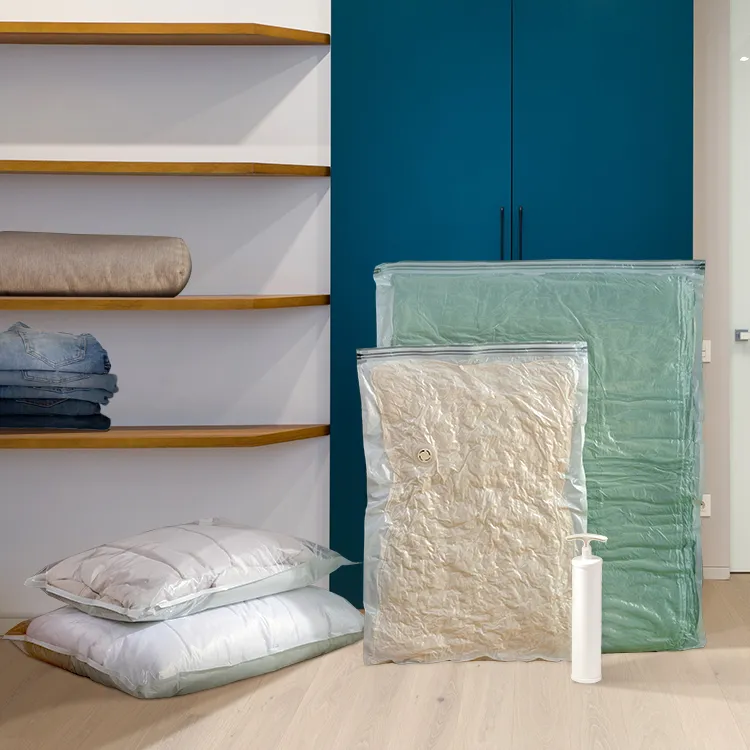
Vacuum compression is highly effective for many everyday garments. But it is not the best storage method for all textiles.
Textile-conservation guidance emphasizes that fabrics can be vulnerable to trapped moisture, tight folds, and prolonged physical stress. The Smithsonian Institution advises against sealing antique textiles in airtight plastic because fibers need some air movement and trapped moisture can cause damage. The Canadian Conservation Institute similarly recommends minimizing folds, avoiding excessive pressure, and maintaining stable storage conditions for valuable textiles and costumes.
For ordinary household clothing, vacuum bags can still be practical. The key is to match the storage method to the garment.
Good candidates for vacuum compression bags
These items generally tolerate compression better:
- Cotton T-shirts
- Polyester sportswear
- Casual trousers
- Jeans
- Basic knitwear
- Towels
- Bed sheets
- Blankets
- Duvet covers
- Synthetic-fiber jackets
- Lightweight seasonal clothing
These products are soft, flexible, and usually recover well after unpacking and airing out.
Items to avoid storing under heavy vacuum pressure
Avoid or limit vacuum compression for:
- Leather garments
- Fur
- Structured suits
- Tailored blazers
- Wedding dresses
- Silk garments
- Vintage clothing
- Antique textiles
- Heavily embroidered apparel
- Beaded garments
- Sequined garments
For valuable, delicate, or structured pieces, breathable garment storage, padded hangers, folded storage with acid-free tissue, or a temperature-stable wardrobe is usually a safer choice.
The Hidden Risk: Moisture Is More Important Than Compression
Many consumers focus on whether a bag can remove enough air. But the most important rule for garment storage is simpler: never seal damp clothing.
Vacuum sealing does not fix moisture. It can make a moisture problem harder to detect because dampness becomes trapped inside a closed environment. This may lead to odor, mildew, staining, or fabric deterioration.
Before using either cloth vacuum compression bags or plastic compression bags, make sure garments are:
- Clean.
- Completely dry.
- Free from visible stains.
- Checked for food residue, body oils, or perfume spills.
- Free from insects or signs of infestation.
- Folded smoothly to minimize deep creases.
The Canadian Conservation Institute notes that clean textiles are less likely to attract pests and that high relative humidity can contribute to mold risk.
A practical moisture-check routine
Before storing clothes, use this simple process:
- Wash or dry-clean garments according to their care labels.
- Allow clothing to dry fully before packing.
- Let recently dried garments cool in open air before sealing them.
- Inspect thick seams, waistbands, cuffs, and pockets for hidden moisture.
- Avoid packing immediately after steaming or ironing.
- Store the compressed bag in a cool, dry, dark place.
- Open long-stored bags periodically to inspect garments and release deep compression.
This routine is particularly important in humid climates, poorly ventilated apartments, basements, garages, and storage rooms.
Repeated Storage Test: What Actually Fails First?
When consumers report that a compression bag “stopped working,” the root cause is often not the vacuum itself. It is usually one of several failure points.
| Common Issue | Most Likely Cause | Better Practice |
|---|---|---|
| Bag slowly reinflates | Valve or zipper seal is not fully closed | Clean the seal track and close it carefully |
| Small air leak | Puncture from zipper, button, or sharp object | Turn sharp hardware inward and avoid overfilling |
| Bag tears near corners | Excessive weight or rough handling | Use a cloth-covered bag or place the bag in a storage bin |
| Zipper will not close | Overfilled bag | Use multiple bags instead of forcing one bag shut |
| Clothing has deep creases | Over-compression or long storage duration | Fold carefully and release compression periodically |
| Musty odor after storage | Items were not fully dry or storage area was humid | Dry garments thoroughly and improve room conditions |
| Bag becomes hard to carry | Large plastic bag lacks structure | Use a bag with handles or an outer fabric case |
This is why repeated-use storage should be evaluated as a system, not only as a bag. A durable inner film, a reliable valve, reinforced closure, proper loading, and protected storage location all work together.
How to Choose the Best Vacuum Compression Bag for Clothes
When comparing cloth vacuum compression bags vs plastic compression bags, do not decide based only on price or bag size. Review the following factors.
1. Choose the right compression level
Maximum compression is not always the best outcome.
For towels, bedding, and casual clothing, strong compression can be useful. For sweaters, knitwear, and garments that wrinkle easily, moderate compression may be more practical.
A good rule is to remove enough air to reduce bulk without crushing the contents into an overly rigid block.
2. Check the closure system
Look for a closure that is easy to inspect and operate.
Useful features include:
- Double-track zip seals
- Strong zipper sliders
- Clearly marked closure lines
- One-way vacuum valves
- Valve caps that lock securely
- Wide openings for easier loading
A high-quality closure is more valuable than an oversized bag with weak sealing performance.
3. Match bag size to the item
Do not force too much clothing into one bag. Oversized bags may look efficient, but they can become difficult to seal, lift, and store.
Use smaller bags for:
- T-shirts
- Underwear
- Children’s clothing
- Scarves
- Thin sweaters
Use medium bags for:
- Adult clothing
- Jeans
- Towels
- Standard sweaters
- Light jackets
Use large bags for:
- Duvets
- Blankets
- Bedding sets
- Bulky coats
- Large comforters
4. Consider how often you will reopen it
If you access stored garments frequently, choose a cloth-covered system with handles, a clear label area, and a durable inner bag.
If you are packing only once for a move or a seasonal transition, a high-quality plastic compression bag may deliver better cost efficiency.
5. Think about where the bag will be stored
Choose the storage format based on the environment.
- For under-bed storage, flat plastic bags are often ideal.
- For open shelving, cloth vacuum compression bags look neater and stack better.
- For closets, bags with handles and labels simplify retrieval.
- For travel, lightweight plastic compression bags are easier to pack.
- For humid locations, focus on airtight sealing and dry garments rather than outer appearance.
Industry Insight: The Best Solution Is Often a Hybrid System
The most effective repeated garment storage solution is often not “cloth versus plastic.” It is cloth plus plastic, with each material performing the job it does best.
The plastic inner bag provides the airtight barrier and compression effect. The cloth exterior provides protection, organization, carrying convenience, and improved visual presentation.
This hybrid model reflects a broader trend in functional material design: combining layers so that each layer contributes a specific property. One layer may provide barrier performance, another may improve puncture resistance, and another may enhance user comfort or handling.
For brands, retailers, and product developers, this creates an opportunity to move beyond commodity storage bags. Consumers increasingly expect reusable products that are functional, attractive, easy to organize, and durable enough for repeated seasonal use.
Final Verdict: Which Compression Bag Should You Buy?
For repeated garment storage, choose cloth vacuum compression bags with a high-quality airtight inner bag. They provide a more durable, organized, and user-friendly solution for households that routinely rotate clothing, bedding, and seasonal items.
Choose plastic compression bags when you want the highest space-saving performance at a lower cost, particularly for travel, moving, under-bed storage, or occasional use.
The best approach is to use both strategically:
- Use cloth vacuum compression bags for seasonal wardrobes, bedding, and frequently handled home storage.
- Use plastic compression bags for travel, relocation, short-term storage, and items that need maximum volume reduction.
- Avoid vacuum sealing delicate, structured, antique, leather, fur, silk, or heavily embellished garments.
- Always store only clean, fully dry clothing.
- Recheck long-term stored garments periodically rather than sealing them and forgetting them.
For consumers and storage-product buyers seeking a dependable solution, prioritize material quality, seal reliability, valve performance, handling design, and repeat-use durability over the lowest purchase price.
Take the Next Step
If you are developing a repeat-use storage system for garments, bedding, or seasonal household organization, choose a solution that combines reliable vacuum sealing with durable material protection. A well-engineered hybrid design can improve compression efficiency, reduce handling damage, and create a better long-term storage experience for users.
Explore vacuum storage solutions designed around material performance, sealing reliability, and practical home organization to build a more durable storage strategy for every season.
FAQ
Are cloth vacuum compression bags really airtight?
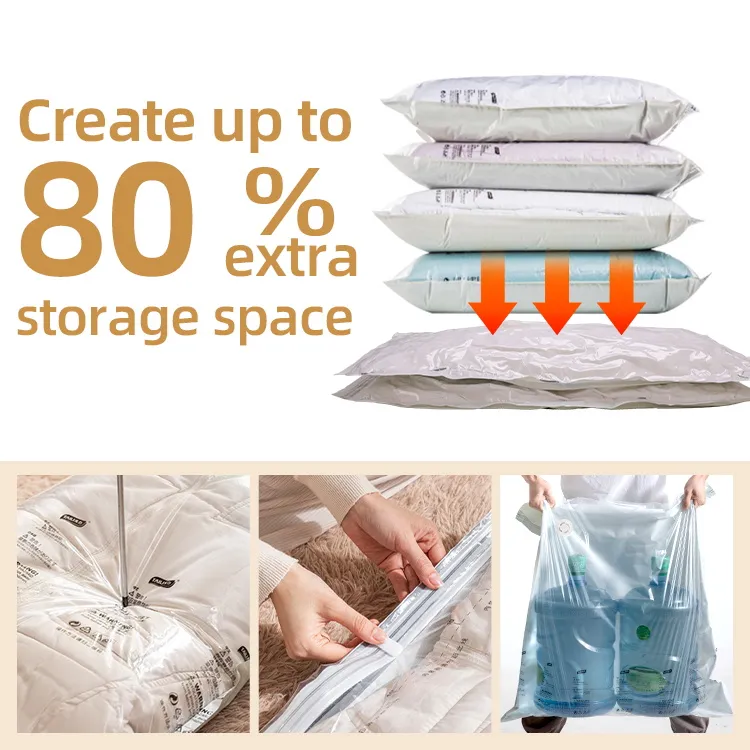
The cloth outer layer is not airtight. In most designs, the airtight function comes from an inner plastic vacuum bag. The outer cloth layer protects the inner bag, improves organization, and makes the compressed package easier to carry and store.
Do plastic compression bags damage clothes?
Plastic compression bags do not automatically damage clothing, but excessive compression, moisture, and long storage periods can create problems. Casual cotton, polyester, towels, and bedding generally tolerate vacuum storage well. Delicate, structured, vintage, leather, silk, and heavily embellished garments should not be stored under strong vacuum pressure.
How long can clothes stay in vacuum compression bags?
For ordinary seasonal clothing, several months is generally practical if garments are clean and completely dry. For longer storage, inspect the bag periodically, release compression when appropriate, and confirm that no moisture, odor, or air leakage has developed.
Can I store wool sweaters in vacuum bags?
You can use vacuum bags for short-term storage of some wool sweaters, but avoid strong or prolonged compression. Wool can develop deep creases and may lose shape. For valuable wool knitwear, breathable storage with careful folding is often a safer option.
Why does my vacuum compression bag keep filling with air?
The most common reasons are an incompletely closed zip seal, a valve that is not fully secured, dirt or fibers caught in the closure, a tiny puncture, or excessive stress caused by overfilling. Clean the seal area, reduce the load, inspect the valve, and avoid sharp garment hardware.
Are cloth vacuum compression bags better for blankets and duvets?
Yes, cloth-covered vacuum storage bags are often a strong option for blankets, duvets, and bulky bedding because the outer fabric improves carrying, stacking, and protection from abrasion. However, avoid over-compressing feather-filled items unless the manufacturer specifically states that the product is suitable for vacuum storage.
Can vacuum storage bags prevent mold?
They can help protect dry clothing from outside dust and moisture exposure, but they cannot prevent mold if damp garments are sealed inside. The most important mold-prevention step is ensuring that every item is fully dry before storage and keeping the storage area cool and low in humidity.
References
1. Smithsonian Institution – “How do I store antique textiles at home?” – Expert guidance on storing antique textiles safely at home. https://www.si.edu/faqs/antique-textile-storage
2. Canadian Conservation Institute – “Caring for Textiles and Costumes” – Preventive conservation guidelines for textiles and costumes. https://www.canada.ca/en/conservation-institute/services/preventive-conservation/guidelines-collections/textiles-costumes.html
3. Canadian Conservation Institute – “Basic Care: Textiles” – Basic care instructions for textile objects. https://www.canada.ca/en/conservation-institute/services/care-objects/textiles-costumes/basic-care-textiles.html
4. Canadian Conservation Institute – “Flat Storage for Textiles” – Conservation notes on flat storage methods for textiles. https://www.canada.ca/en/conservation-institute/services/conservation-preservation-publications/canadian-conservation-institute-notes/flat-storage-textiles.html
5. Canadian Conservation Institute – “Hanging Storage for Costumes” – Conservation notes on hanging storage methods for costumes. https://www.canada.ca/en/conservation-institute/services/conservation-preservation-publications/canadian-conservation-institute-notes/hanging-storage-costumes.html
6. Taili Group – “Vacuum Storage Technology and Company Profile” – Overview of Taili’s vacuum storage technology and company background. https://en.zs-taili.com/home/page/index/9
7. Neusu – “How to Use Vacuum Storage Bags Properly” – Practical advice on using vacuum storage bags correctly. https://www.neusu.com/help-advice/how-to-use-vacuum-storage-bags-properly/
8. Conservation DistList – “Vacuum Storage Bags Discussion” – Professional conservation discussion on the use of vacuum storage bags. https://cool.culturalheritage.org/byform/mailing-lists/cdl/2009/0660.html
Hot Tags: Cloth Vacuum Compression Bags, Plastic Compression Bags, Vacuum Storage Bags, Reusable Vacuum Storage Bags, Garment Storage Solutions, Clothing Compression Bags, Vacuum Storage Bag Manufacturer, Vacuum Storage Bag Supplier, Custom Vacuum Storage Bags, Wholesale Vacuum Storage Bags