Content Menu
● Quick Comparison: Travel vs Home Storage Compression Bags
● Why Product Design Must Change by Use Case
>> Travel Compression Bags Solve a Mobility Problem
>> Home Storage Compression Bags Solve a Space and Protection Problem
● Material Design: Flexibility vs Long-Term Barrier Protection
>> Why PA and PE Are Commonly Combined
>> Travel Bags Need Flexibility at Crease Points
>> Home Bags Need Stronger Puncture and Barrier Performance
● Valve Systems: The Most Visible Functional Difference
>> Flat One-Way Valves for Travel Compression Bags
>> Turbo Valves for Home Vacuum Storage
● Size and Shape Engineering for Real Storage Environments
>> Travel Compression Bag Sizes
● Compression Performance: More Is Not Always Better
>> A Practical Compression Test
● User Experience: The Design Details Customers Notice First
>> Travel Users Value Speed and Simplicity
>> Home Users Value Confidence and Capacity
● Choosing the Right Product for Each Application
● Common Mistakes That Reduce Bag Performance
● How Material Innovation Supports Better Compression Solutions
● FAQ
>> 1. Can travel compression bags replace home vacuum storage bags?
>> 2. Do travel compression bags need a vacuum cleaner?
>> 3. What items should not be stored in vacuum compression bags?
>> 4. Why do vacuum storage bags slowly reinflate?
>> 5. Are thicker compression bags always better?
>> 6. How much space can home vacuum storage bags save?
>> 7. What is the best material for reusable compression bags?
Compression bags for travel and compression bags for home storage may look similar, but they are engineered for very different jobs. Travel bags must be light, compact, quick to use, and dependable without access to a vacuum cleaner. Home storage bags must maintain a strong seal for months while holding bulky bedding, seasonal clothing, and household textiles.
For buyers, retailers, product developers, and sourcing teams, treating these categories as interchangeable can lead to poor product performance. A travel compression bag that works well for a one-week business trip may slowly reinflate during long-term closet storage. A heavy-duty home vacuum bag may provide excellent compression, but its size, valve design, and reliance on vacuum equipment can make it impractical inside a carry-on suitcase.
At Taili Technology, product development begins with a materials-and-application perspective. Vacuum storage is not simply about removing air. It is about balancing barrier performance, seal reliability, puncture resistance, flexibility, compression method, and user behavior for the environment where the bag will be used. Taili’s vacuum-storage portfolio is supported by long-term work in material innovation, vacuum technology, and consumer storage applications, including solutions for home, bedroom, travel, and other daily-use scenarios.
This guide explains the real product-design differences between travel compression bags and home storage compression bags—and how to select or develop the right option for each market.
Quick Comparison: Travel vs Home Storage Compression Bags
| Product Design Factor | Compression Bags for Travel | Compression Bags for Home Storage |
|---|---|---|
| Main purpose | Reduce luggage bulk and improve packing efficiency | Create long-term space savings in closets, under beds, and storage rooms |
| Typical items | Clothing, jackets, towels, underwear, soft accessories | Duvets, comforters, pillows, blankets, seasonal clothing, plush toys |
| Compression method | Hand rolling, body pressure, manual pump, compact electric pump | Household vacuum cleaner, electric pump, or heavy-duty manual pump |
| Preferred bag size | Small to medium, suitcase-friendly | Medium to jumbo, optimized for bedding and bulky household textiles |
| Film requirement | Flexible, lightweight, crease-resistant | Thicker, higher-barrier, puncture-resistant |
| Valve design | Flat, compact, one-way exhaust valve | Larger turbo valve or vacuum-cleaner-compatible valve |
| Seal priority | Quick closure and repeated opening during trips | Long-term airtight retention and leak prevention |
| Usage cycle | Frequent packing, unpacking, folding, and rolling | Seasonal storage, often remaining sealed for months |
| Ideal compression level | Moderate and convenient | Maximum practical volume reduction |
| Key purchasing concern | Portability and ease of use | Durability, capacity, and long-term sealing |
The central distinction is simple: travel bags are designed around mobility, while home storage bags are designed around retention.
Why Product Design Must Change by Use Case
A compression bag is a packaging system rather than a simple plastic pouch. Its performance depends on how the bag interacts with the stored item, the user’s compression method, and the storage environment.
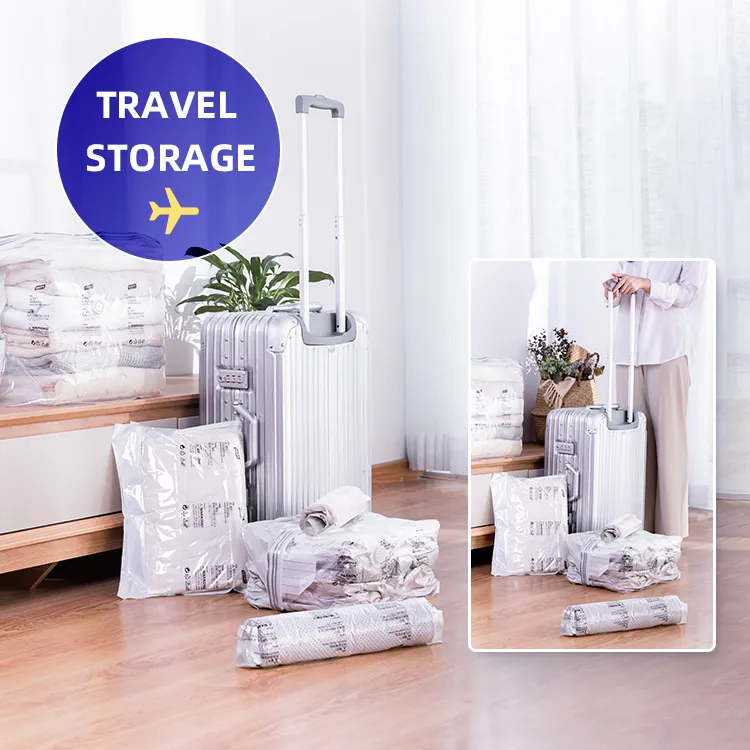
For travel, consumers often pack in a limited space, such as a carry-on suitcase, backpack, or checked luggage. They may need to repack clothing in a hotel room without access to a vacuum cleaner. The product must therefore be intuitive and portable.
For home storage, the user generally has access to a vacuum cleaner or electric pump. They are more willing to use a larger bag because the goal is to reclaim wardrobe, attic, garage, or under-bed space. The bag must resist slow air ingress, changes in temperature, moisture exposure, and pressure from stacked household items.
Travel Compression Bags Solve a Mobility Problem
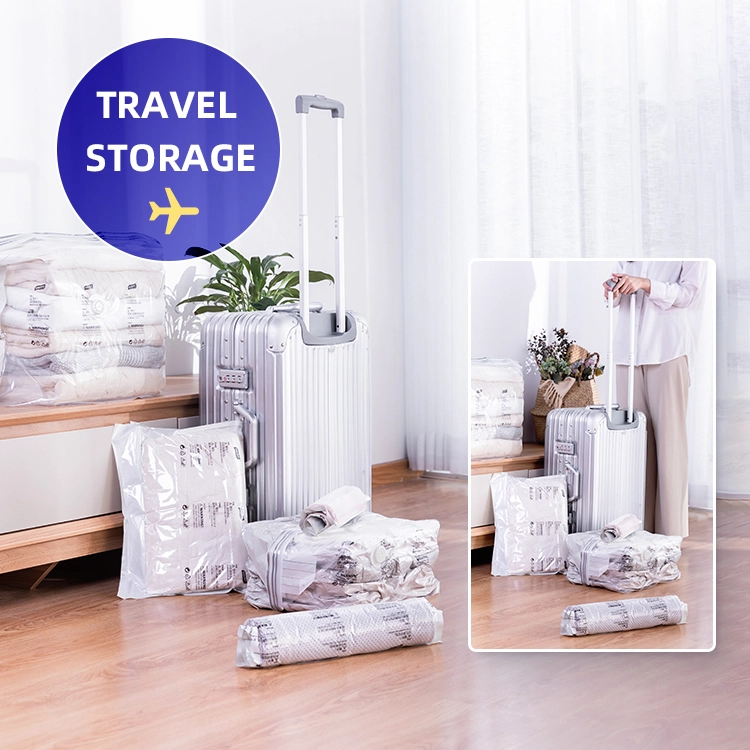
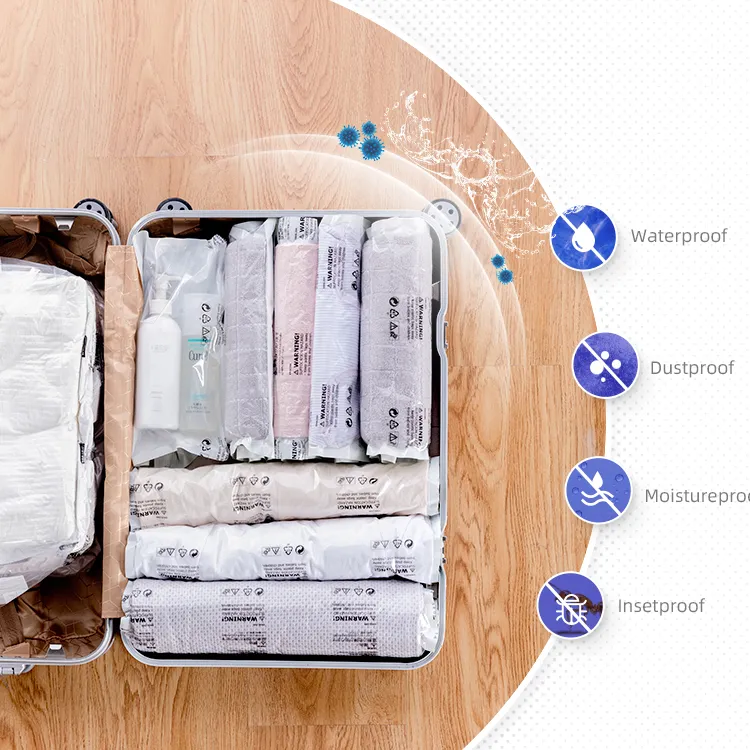
A well-designed travel compression bag should help users pack more efficiently without adding inconvenient equipment. In practice, this means a product must be easy to seal, easy to roll, and compact enough to fit into luggage.
Common travel compression bag requirements include:
- No-vacuum operation through rolling or squeezing
- Flat or low-profile valves that do not create uncomfortable bulk
- Small and medium bag formats for shirts, trousers, sweaters, and travel towels
- Flexible film that tolerates repeated folding
- Lightweight construction that does not consume valuable baggage allowance
- Clear or semi-transparent material for faster packing and security inspection
- A reliable zipper closure that can be opened and resealed on the return journey
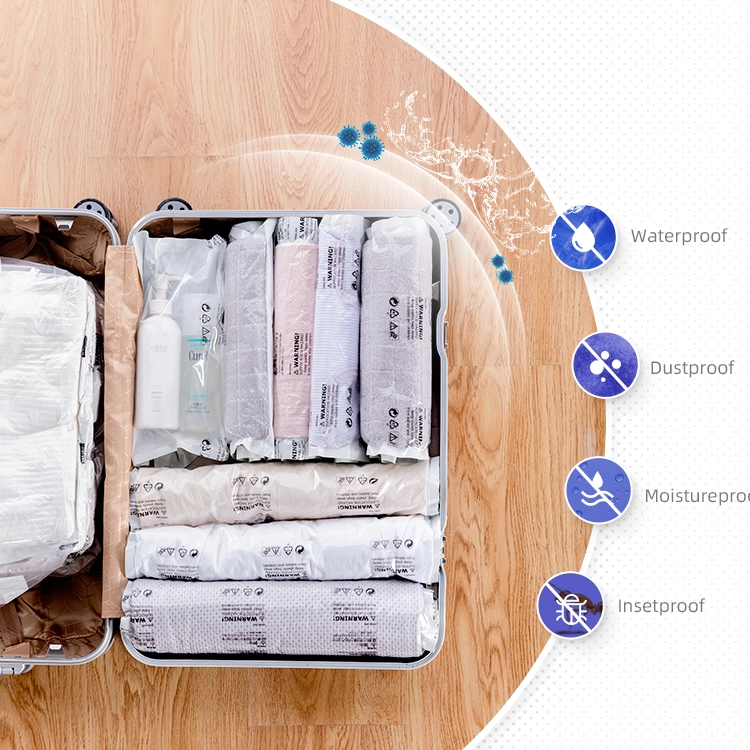
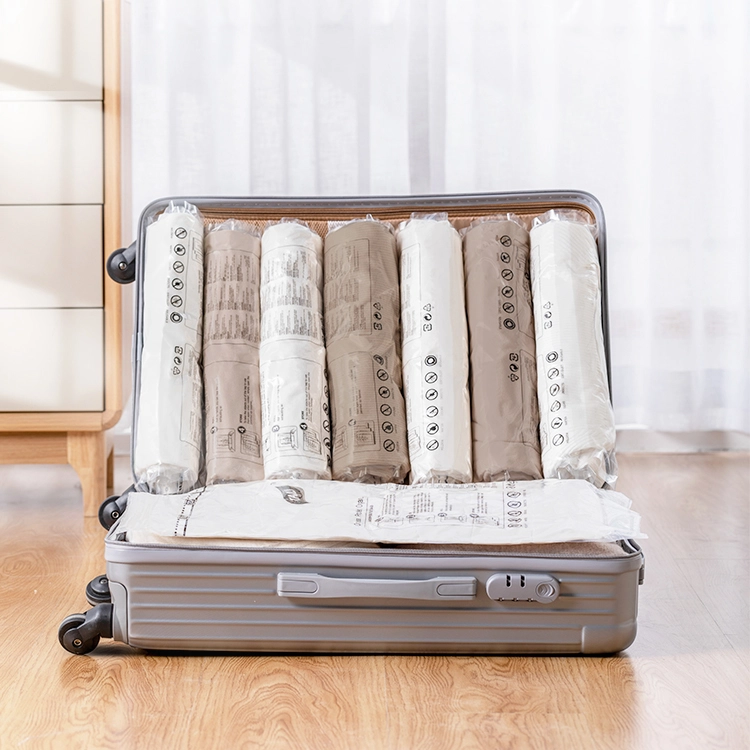
Many travel-oriented products use a roll-up design. After clothing is placed inside and the double zipper is sealed, the user rolls the bag from the sealed edge toward the one-way air outlet. This allows air to escape without requiring a vacuum pump.
Industry comparisons commonly position travel roll-up bags around 50–65% volume reduction, depending on the softness of the garments, packing density, and the user’s rolling method. This is normally sufficient for suitcase organization, even if it does not achieve the deepest possible vacuum.
Home Storage Compression Bags Solve a Space and Protection Problem
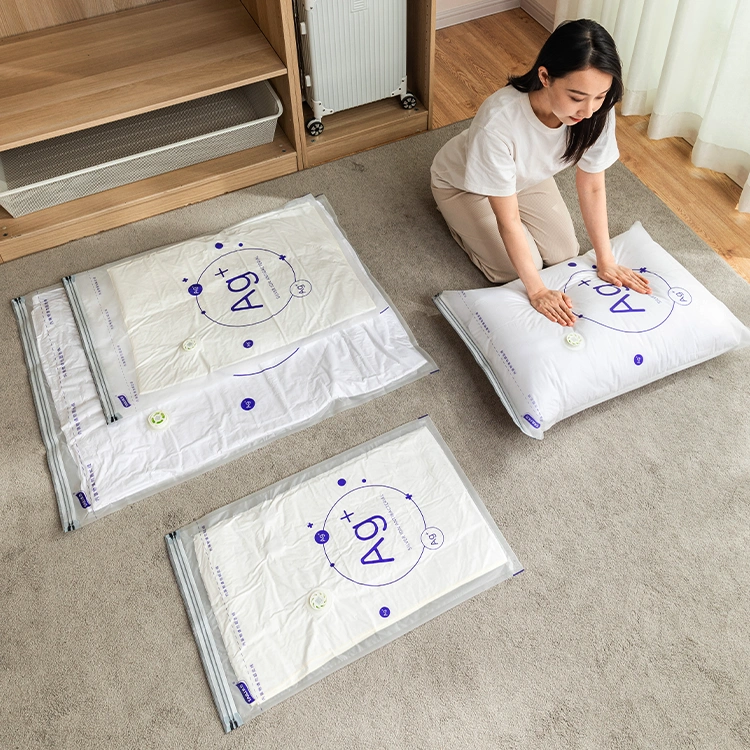
Home storage compression bags are built for larger loads and longer storage periods. Their purpose is not only to shrink the volume of textiles, but also to keep stored items protected from dust, moisture, odors, and pests.
A strong home storage compression bag should include:
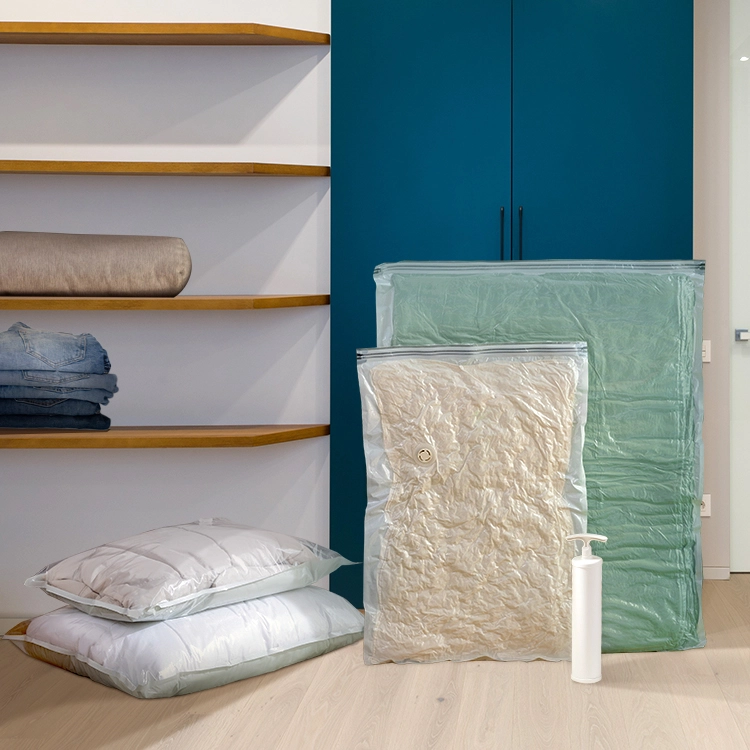
- High-capacity formats for duvets, quilts, blankets, coats, and pillows
- A robust valve compatible with vacuum cleaners or high-suction pumps
- Thicker multi-layer film for puncture resistance
- Strong zipper tracks that maintain closure under sustained negative pressure
- Better air-barrier performance for storage lasting months rather than days
- Larger handling zones or reinforced edges for loading bulky items
- Options designed for flat stacking, hanging storage, or under-bed placement
A home vacuum storage bag must continue to perform after the user stops interacting with it. Once stored, the bag may be exposed to stacked boxes, closet pressure, humidity changes, or seasonal temperature variation. The valve, zipper, and film must all work together to prevent gradual reinflation.
For this reason, household vacuum bags often use larger vacuum valves and thicker film structures than travel versions. Product-category comparisons commonly describe home models as delivering approximately 70–80% volume reduction when used with a vacuum source, particularly for bulky bedding and soft household goods.
Material Design: Flexibility vs Long-Term Barrier Protection
Material selection is one of the biggest differences between compression bags for travel and compression bags for home storage.
A bag must remain flexible enough for packing, but it must also resist tearing, punctures, and air migration. In many quality products, manufacturers use multi-layer structures that combine the strengths of different polymers.
Why PA and PE Are Commonly Combined
A polyamide and polyethylene structure is widely used because the two materials contribute different functional properties:
- Polyamide (PA) can improve puncture resistance, strength, and gas-barrier performance.
- Polyethylene (PE) provides flexibility, heat-seal performance, and moisture resistance.
- Multi-layer construction can help balance durability with user-friendly softness.
For both categories, a thin single-layer material may be inexpensive, but it is more likely to tear around stress points, such as zipper tracks, valve bases, suitcase corners, buttons, or folded creases. Multi-layer PA/PE structures are frequently preferred for reusable vacuum storage applications because they balance flexibility and durability.
Travel Bags Need Flexibility at Crease Points
Travel compression bags are repeatedly folded, rolled, pushed into luggage corners, and repacked. Their material must recover from creasing without cracking or splitting.
This makes flex fatigue especially important. A travel bag can fail even if its film is strong in a flat laboratory condition. Repeated folding concentrates stress along the same lines, especially when the bag is rolled tightly around dense garments.
For travel applications, product designers should prioritize:
- Thin but durable multi-layer film
- Strong seals around the valve area
- Smooth zipper operation
- Reduced stiffness in cool or dry conditions
- Resistance to abrasion from luggage hardware and garment accessories
The goal is not merely “thin film.” The goal is a film that remains dependable after repeated handling.
Home Bags Need Stronger Puncture and Barrier Performance
For household storage, the product may hold heavy quilts, thick down jackets, or bedding with sharp zipper pulls and buttons. The bag must also remain compressed for far longer than a travel product.
A home storage bag therefore benefits from:
- Thicker film gauges
- Higher puncture resistance
- Better gas-barrier characteristics
- Reinforced valve zones
- Higher-performance sealing layers
- Greater resistance to long-term compression stress
A practical rule for product planning is this: the longer the expected storage period, the more important air retention becomes. A bag that performs adequately for a two-week trip may not deliver acceptable results for six months of seasonal storage.
Valve Systems: The Most Visible Functional Difference
The valve is the component that most clearly separates travel compression bags from home vacuum storage bags.
Flat One-Way Valves for Travel Compression Bags
Travel bags typically benefit from low-profile one-way air outlets. These allow the user to release air manually through rolling or pressing.
Their advantages include:
- No need for a vacuum cleaner
- Lightweight structure
- Easier packing inside a suitcase
- Fewer accessories to carry
- Faster repacking at hotels, airports, or destination locations
However, a manual roll-up system usually does not generate the same level of air removal as a vacuum cleaner. That is an acceptable trade-off when convenience and portability are the priority.
For frequent travelers, the best design is often a double-seal zipper combined with a compact one-way exhaust system. The zipper keeps the opening secure, while the valve releases air during rolling.
Turbo Valves for Home Vacuum Storage
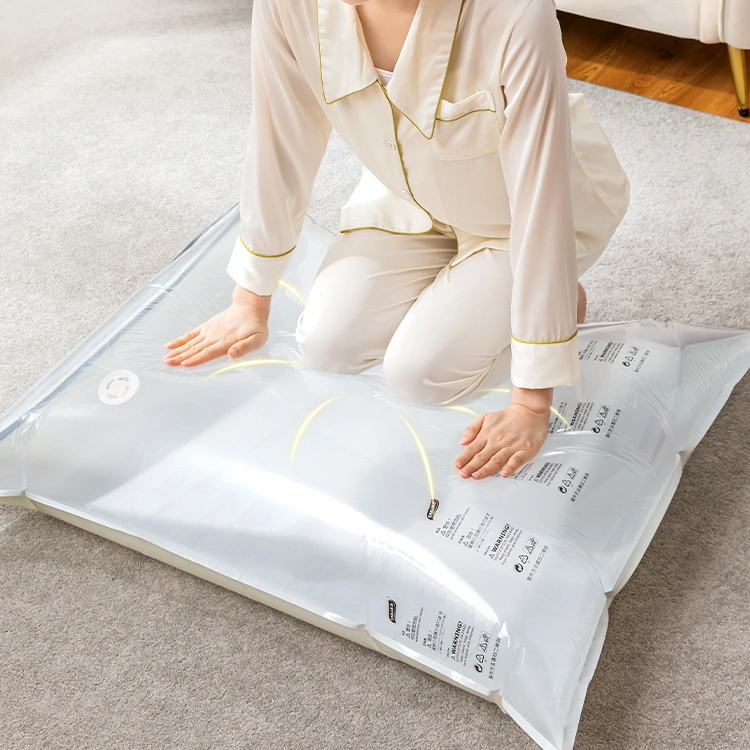
Home storage bags normally use a larger valve that accepts a vacuum cleaner nozzle or electric pump. This design can remove more air and produce a flatter, denser storage package.
A good household valve should be:
- Easy to connect to common vacuum-cleaner hose sizes
- Secure under sustained negative pressure
- Reinforced at the film interface
- Simple to open and close
- Designed to reduce air backflow after vacuuming
The valve should not be viewed as a separate accessory. It must be integrated into the bag’s full sealing system. A highly effective pump cannot compensate for a weak zipper, poorly bonded valve base, or low-quality film.
Size and Shape Engineering for Real Storage Environments
Size selection directly affects customer satisfaction. A bag that is too small cannot accommodate the intended product. A bag that is too large becomes difficult to load, seal, and compress evenly.
Travel Compression Bag Sizes
Travel compression bags should match the dimensions of common luggage compartments. Small and medium formats are often more useful than one oversized bag because they support clothing categorization.
Useful travel configurations include:
- Small bags for underwear, socks, swimwear, and T-shirts
- Medium bags for shirts, trousers, and knitwear
- Long narrow bags for jackets, dresses, or compact outerwear
- Multi-pack kits that let users divide clean clothes, worn clothes, and wet items
Smaller units also make it easier to distribute weight throughout a suitcase. This can reduce the “one hard block” problem that occurs when all clothing is compressed into a single large bag.
Home Storage Bag Sizes
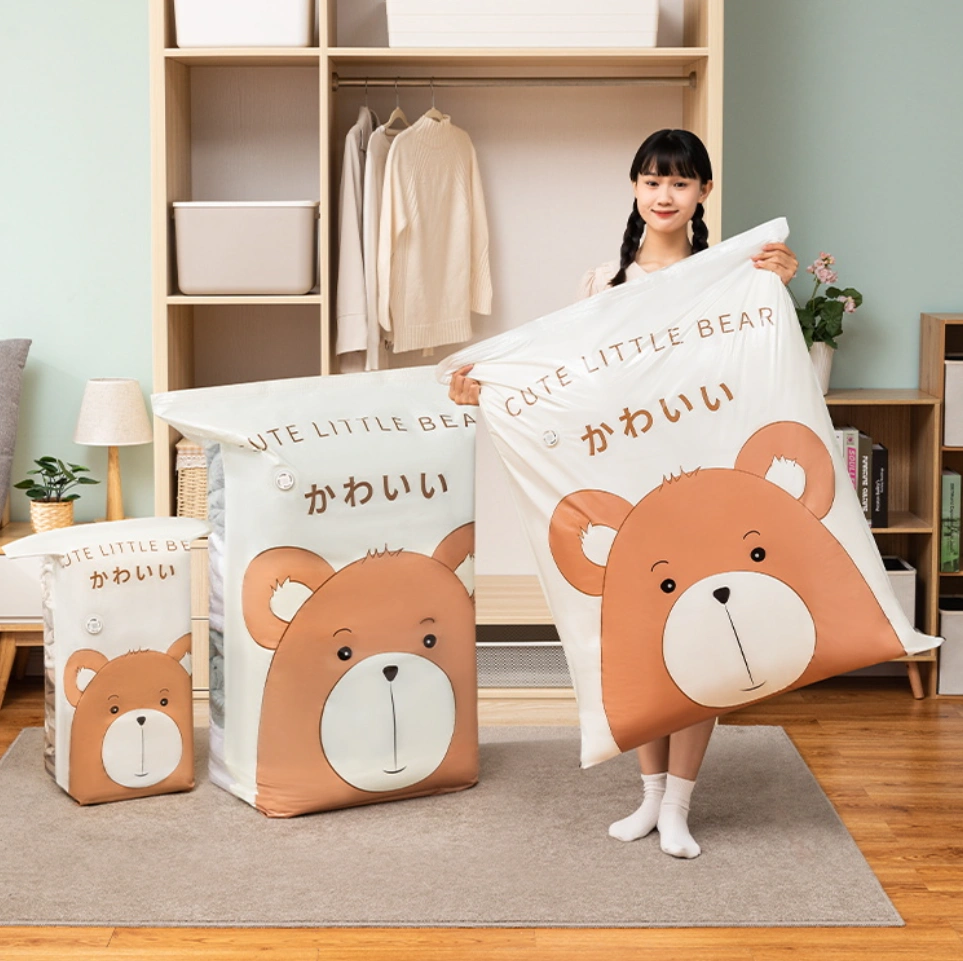
Home storage bags need to accommodate bulky, irregularly shaped goods. Popular formats often include:
- Flat bags for blankets and seasonal clothing
- Jumbo bags for duvets, comforters, and pillows
- Cube bags for shelf storage
- Hanging bags for coats and long garments
- Under-bed bags for low-clearance storage spaces
A good design considers not only internal capacity, but also post-compression geometry. For example, a large flat bag may be easier to stack on a closet shelf, while an under-bed model must remain low enough to slide beneath furniture after vacuuming.
Compression Performance: More Is Not Always Better
Buyers often focus on the highest possible compression percentage. But effective product design is about usable performance, not an isolated claim.
A heavily compressed bundle may be difficult to fit into a suitcase because it becomes rigid and bulky in one dimension. Over-compression can also make garments more wrinkled and may place excess stress on zippers, seams, or delicate fabrics.
For travel, moderate compression can be more practical because users need flexible packing modules. For home storage, deeper compression is more valuable because the bundle will remain stationary in a closet, storage room, or under-bed space.
A Practical Compression Test
For a product-development team, evaluate compression bags using the actual user scenario rather than only an empty-bag vacuum test.
- Fill the bag with realistic textile loads, not identical foam samples.
- Seal and compress the bag using the intended method.
- Measure volume reduction after compression.
- Inspect the zipper and valve area for distortion.
- Leave the bag under typical storage conditions.
- Measure reinflation after 24 hours, 7 days, and longer intervals.
- Repeat the process after folding, rolling, or reopening cycles.
This test reveals whether the bag delivers reliable performance in real use. It also helps identify whether a product is better suited to travel, short-term storage, or long-term household storage.
User Experience: The Design Details Customers Notice First
The best compression bag is not simply the one with the strongest material. It is the one users can operate correctly on the first attempt.
Travel Users Value Speed and Simplicity
Travelers are often packing under time pressure. They may be standing in a hotel room, repacking after shopping, or preparing luggage before an early flight.
Features that improve the experience include:
- Clearly marked roll direction
- Simple “seal first, roll second” instructions
- Color-coded zipper indicators
- Flat packaging that fits inside luggage
- Wide zip sliders that are easy to grip
- A compact included hand pump, where appropriate
- Transparent film for quick item identification
A bag that requires special tools, complicated valve alignment, or too much force may be technically capable but commercially frustrating.
Home Users Value Confidence and Capacity
Home users may vacuum-seal bedding only a few times per year. They need the process to feel secure and easy, especially when handling large comforters or multiple seasonal garments.
Helpful home-storage features include:
- Large opening width for bulky textile loading
- Strong zipper clips or sliders
- Vacuum valve compatibility guidance
- Storage labels for contents and packing date
- Reinforced carry zones
- Clear warnings against overfilling and storing sharp items
For long-term use, a small instruction card can reduce leakage complaints. Users should understand that the zipper must be fully closed, the valve cap must be secured, and sharp garment hardware should be covered before vacuuming.
Choosing the Right Product for Each Application
Use this decision guide when selecting compression bags for travel or home storage.
| If the customer needs… | Best Product Direction |
|---|---|
| Carry-on luggage organization | Roll-up travel compression bags |
| Repacking without a vacuum cleaner | One-way manual exhaust bags |
| Long-term storage of duvets and blankets | Large vacuum storage bags with turbo valves |
| Seasonal clothing protection | Heavy-duty home vacuum bags |
| Lightweight, multi-item organization | Small and medium travel bag sets |
| Maximum wardrobe space savings | Thick-film home storage bags with vacuum compatibility |
| Reusable bags for frequent trips | Flexible, crease-resistant travel-grade film |
| Under-bed storage | Flat, wide household vacuum bags |
The most successful product ranges do not force one bag to serve every purpose. Instead, they create a clear category architecture:
- Travel compression series: portable, roll-up, lightweight, medium compression.
- Home vacuum storage series: larger, reinforced, vacuum-compatible, long-term compression.
- Premium hybrid series: compact electric-pump compatibility, stronger film, and multi-scene use for consumers who travel often and also need seasonal storage.
Common Mistakes That Reduce Bag Performance
Even a well-designed compression bag can fail when it is used incorrectly. These issues are worth addressing in product instructions, packaging copy, and after-sales guidance.
- Overfilling the bag beyond its fill line
- Compressing items with exposed sharp zippers, hooks, or buttons
- Leaving even a small section of the zipper unsealed
- Using a damaged vacuum nozzle or incompatible pump
- Storing bags directly on rough concrete or sharp-edged shelving
- Rolling travel bags toward the zipper instead of toward the air outlet
- Expecting a roll-up travel bag to provide long-term bedding-storage performance
- Using home storage bags for frequent airport repacking without a portable pump
The simplest way to reduce returns is to set realistic expectations. Travel compression bags are optimized for movement. Home vacuum storage bags are optimized for extended protection and space recovery.
How Material Innovation Supports Better Compression Solutions
The future of compression bag design is moving beyond basic plastic thickness. Product competitiveness increasingly depends on material engineering, sealing technology, low-leakage valve systems, and more sustainable product life cycles.
This is where an integrated materials platform provides an advantage. Taili Technology’s product and technology foundation includes vacuum-storage applications, material research, and a broader innovation system covering nanomaterials, functional films, and surface-and-interface technologies. The company states that it has developed vacuum technology research capabilities and has built a broad intellectual-property portfolio supporting its consumer storage solutions.
For global buyers, this type of development capability matters because product quality is determined by details that may not be visible in a listing photo:
- Film layer consistency
- Heat-seal strength
- Zipper-track geometry
- Valve adhesion
- Puncture resistance
- Material odor control
- Reusability after multiple compression cycles
- Compatibility with real consumer usage patterns
In other words, the strongest compression-bag supplier is not only a manufacturer of bags. It is a developer of reliable material-and-system solutions.
Final Recommendation
Choose compression bags for travel when the priority is portable packing, easy manual air removal, and flexible suitcase organization. Choose compression bags for home storage when the priority is deep compression, bulky-item capacity, and reliable long-term storage.
For retailers, distributors, and private-label buyers, the most commercially effective approach is to build separate product lines instead of offering a single generic “vacuum bag.” Clearly differentiate the products by compression method, film structure, valve system, capacity, and intended storage duration.
Taili Technology can support partners seeking vacuum storage solutions that combine practical consumer design with material-focused product development. Build a better product range by matching the bag to the user’s real environment—on the road, in the closet, under the bed, or throughout the home.
FAQ
1. Can travel compression bags replace home vacuum storage bags?
Not usually. Travel compression bags are designed for temporary luggage organization and manual compression. Home vacuum storage bags are better for long-term storage because they typically use stronger valves, thicker materials, and more powerful vacuum-based air removal.
2. Do travel compression bags need a vacuum cleaner?
Many travel compression bags do not require a vacuum cleaner. Roll-up designs allow users to push air out manually through a one-way valve. Some travel kits also include compact hand pumps or rechargeable pumps for users who want greater compression.
3. What items should not be stored in vacuum compression bags?
Avoid storing items with sharp edges, untreated leather, delicate structured garments, food, damp textiles, or items that need airflow. Always ensure clothing and bedding are fully dry before sealing to reduce odor and moisture-related issues.
4. Why do vacuum storage bags slowly reinflate?
Slow reinflation can result from an incompletely closed zipper, a loose valve cap, puncture damage, weak valve bonding, or normal air migration through lower-barrier film over time. High-quality multi-layer material and a reliable sealing system help reduce this issue.
5. Are thicker compression bags always better?
Not necessarily. Thickness can improve puncture resistance, but excessive thickness may reduce flexibility and make travel bags harder to roll and pack. The best film structure depends on the intended application, expected storage period, and compression method.
6. How much space can home vacuum storage bags save?
Performance depends on the item type and the vacuum source. Bulky soft goods such as duvets, blankets, and down jackets generally compress more effectively than dense garments. Category comparisons often describe vacuum-assisted home bags as achieving roughly 70–80% volume reduction under suitable conditions.
7. What is the best material for reusable compression bags?
Multi-layer PA/PE film is commonly used for reusable compression bags because it can combine polyamide’s strength and barrier properties with polyethylene’s flexibility and sealing performance. The ideal material structure should be selected based on travel frequency, item weight, puncture risk, and required storage duration.
References
1. Taili Technology – “About and Vacuum Storage Solutions” – Company profile covering Taili’s history since 2003, vacuum storage technology, more than 700 patent applications, product categories, and 18 space missions with China’s manned space program. https://en.zs-taili.com/home/page/index/1
2. Travel vs Home Vacuum Bags: Size and Feature Comparison – Comparison of travel roll-up bags (50–65% compression, 7–9 mil PA+PE film, one-way valves, 40–80 cm lengths) versus home vacuum bags (70–80% compression, 9–15 mil multilayer film, turbo valves, 70–130 cm lengths), including regional market preferences and B2B product-line planning guidance. https://vaccumbagplus.com/travel-vs-home-vacuum-bags-size-feature-comparison/
3. Top Materials for Vacuum Compression Bags – Overview of material options used in vacuum compression bags. https://titantrekstore.com/blogs/travel-guides/top-7-materials-for-vacuum-compression-bags
4. Travel Vacuum Compression Bag Material and Seal Considerations – Discussion of material and seal considerations for travel vacuum compression bags. https://thewearify.com/best-vacuum-compression-bags-for-travel/
5. Travel and Home Vacuum Storage Bag Differences – Overview of the differences between travel and home vacuum storage bags. https://cubecompress.com/difference-between-travel-vacuum-bags-and-home-vacuum-storage-bags/
6. China Manned Space Program Official Information – Official information on China’s manned space program. https://en.cmse.gov.cn/news/201310/t20131031_44562.html
Hot Tags: Compression Bags, Travel Compression Bags, Home Storage Compression Bags, Vacuum Storage Bags, Vacuum Compression Bags, Vacuum Storage Bag Manufacturer, Travel Vacuum Bags, Home Vacuum Storage Solutions, Compression Bag Supplier, Custom Vacuum Storage Bags