Content Menu
● The Short Answer: Compression Bags Save Space, Not Weight
● Why Compressed Luggage Can Feel Heavier
>> Compression creates a packing temptation
>> Dense luggage is harder to handle
● Do Vacuum Compression Bags Add Any Weight?
>> Manual, vacuum, and compression-cube options
● When Compression Bags Are Worth Using
>> Best items for luggage compression bags
>> Items to avoid over-compressing
● Airline Limits: The Weight Rule Still Applies
>> The most important packing rule
● A Safer Compression-Bag Packing Method
>> 1. Check your actual airline allowance
>> 2. Choose only bulky low-density items
>> 3. Fill bags only about two-thirds full
>> 5. Place heavy items near the wheels
>> 6. Weigh the final suitcase
● Can You Bring Vacuum Bags on a Plane?
● Compression Bags vs. Packing Cubes
● How to Prevent Wrinkles and Fabric Damage
>> Use this garment-protection approach
● Expert Packing Perspective: Space Is Not the Same as Capacity
● Final Verdict: Do Compression Bags Make Luggage Heavier?
● FAQ
>> Do compression bags reduce luggage weight?
>> Do vacuum bags add weight to a suitcase?
>> Can compression bags cause overweight luggage?
>> Are vacuum-sealed bags allowed in carry-on luggage?
>> Are compression bags better than packing cubes?
>> What should not go in a compression bag?
>> How much should a checked suitcase weigh?
>> Will clothes become wrinkled in vacuum bags?
Compression bags do not make your luggage heavier in any meaningful way. They remove air and reduce the volume of soft items such as clothing, jackets, bedding, and towels, but the weight of those items remains the same. The real risk is that extra space can tempt you to pack more, causing your suitcase to become overweight.
For travelers, the distinction between space and weight matters. A vacuum bag may turn a thick winter coat into a flat package, helping it fit inside a carry-on or checked suitcase. However, if the coat weighed 1.5 kg before compression, it still weighs about 1.5 kg after compression. The bag itself adds only a small amount of weight, while the clothes keep their original mass.
This guide explains how luggage compression bags affect baggage weight, when they are worth using, how to avoid airline fees, and how to pack with compression technology without damaging garments or creating an unusable heavy suitcase.

The Short Answer: Compression Bags Save Space, Not Weight
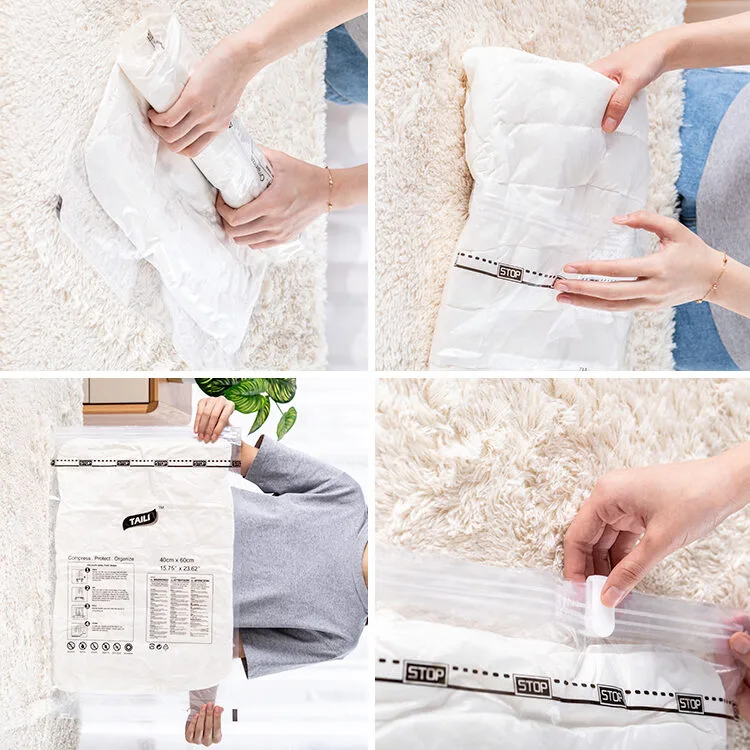
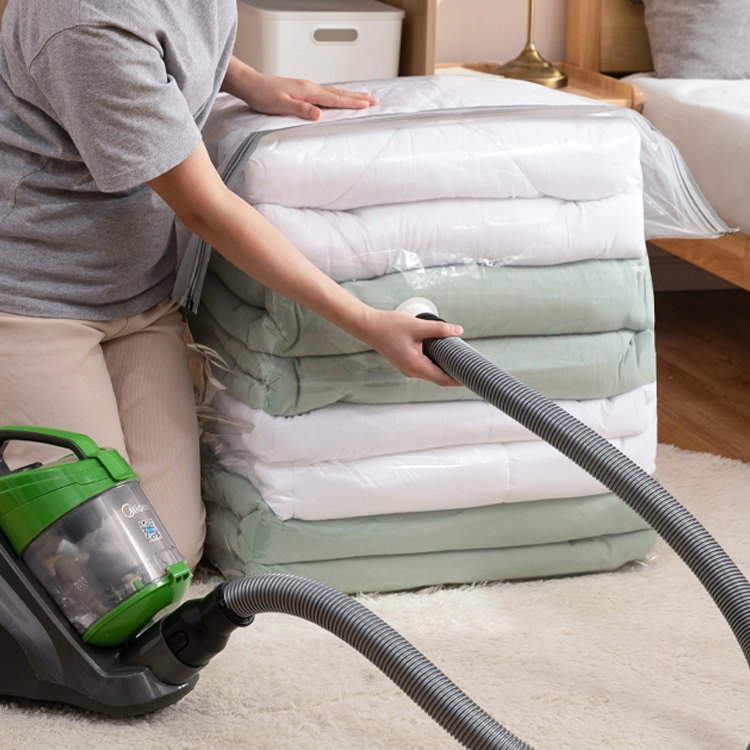
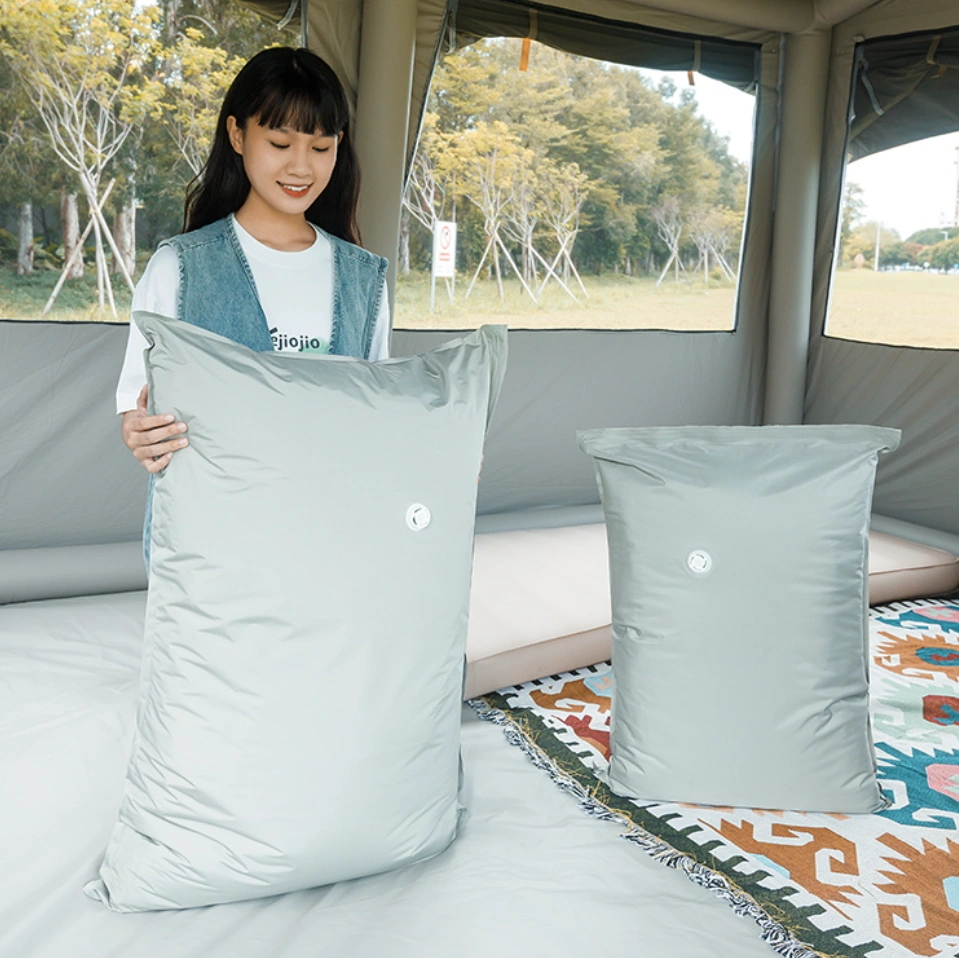
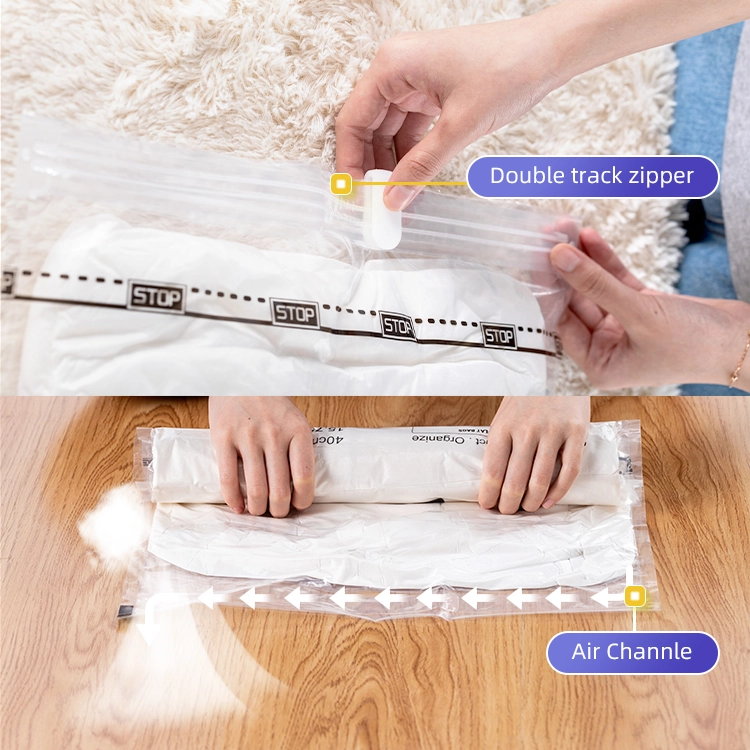
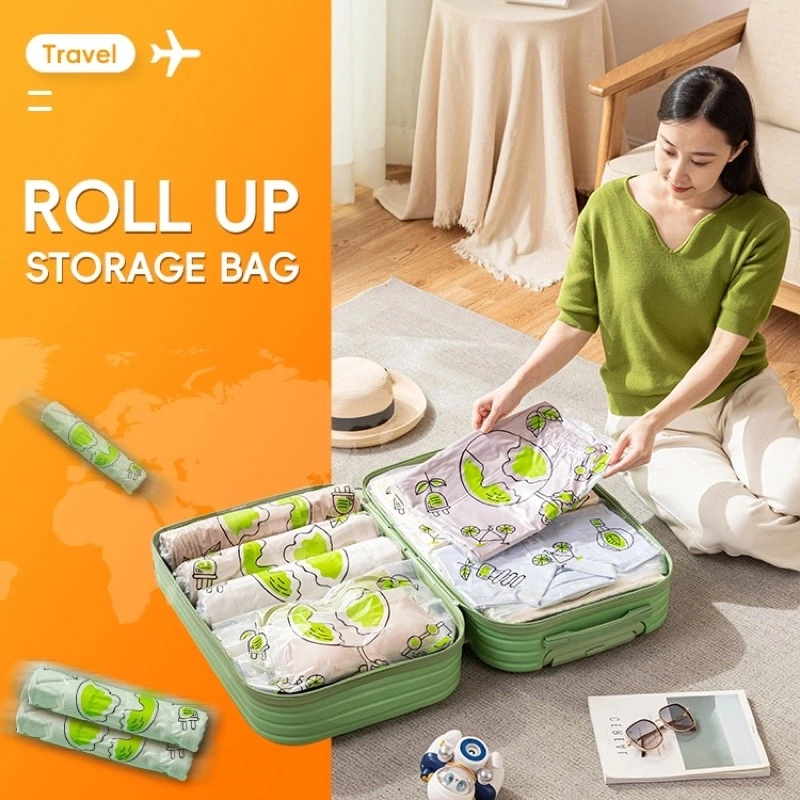
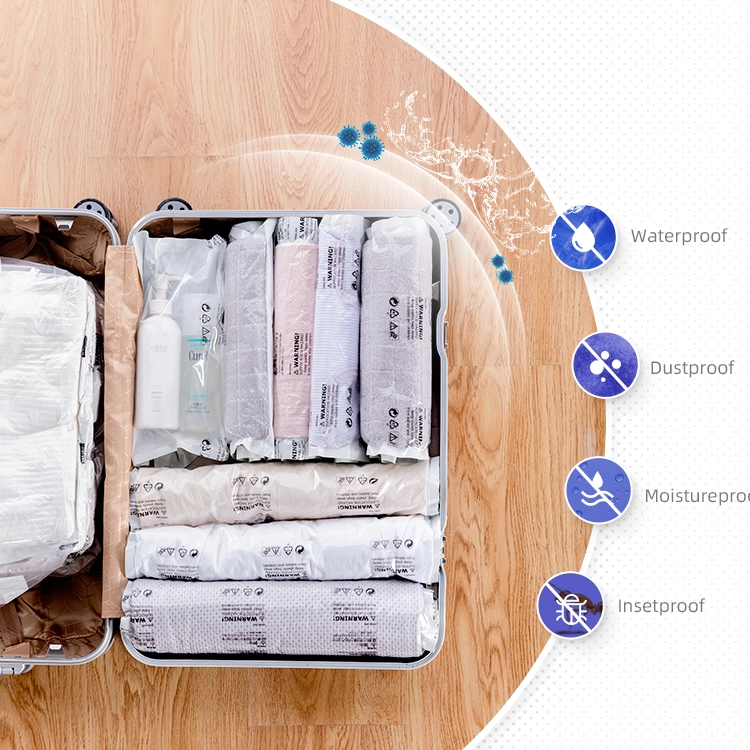
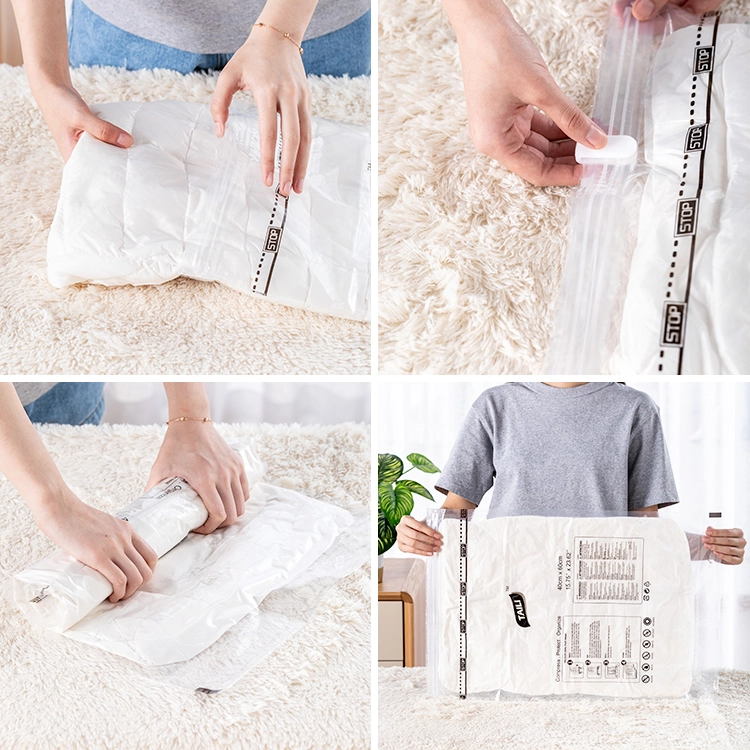
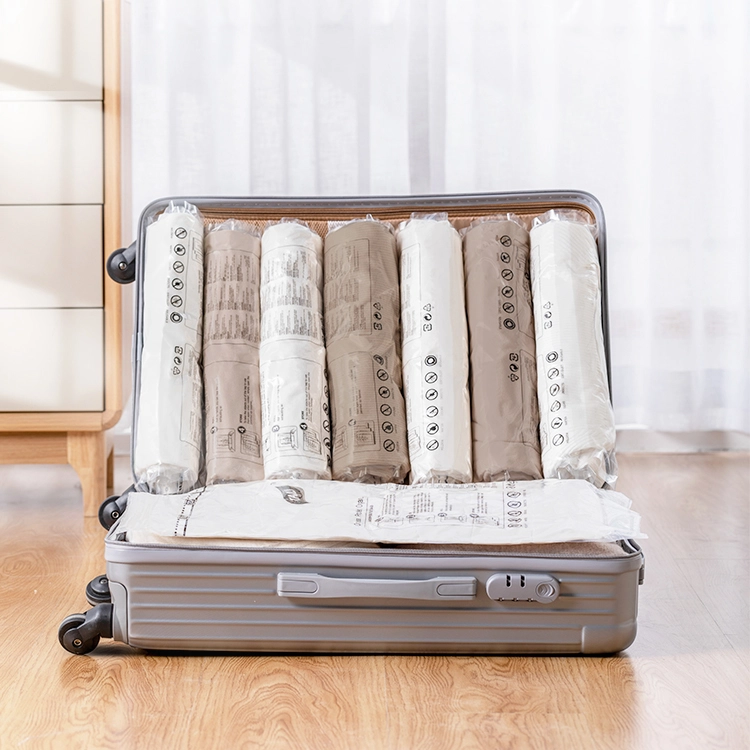
A compression bag works by removing air from bulky items. This may happen through a vacuum valve, a hand pump, an electric travel pump, or a roll-up design that pushes air through a one-way valve.
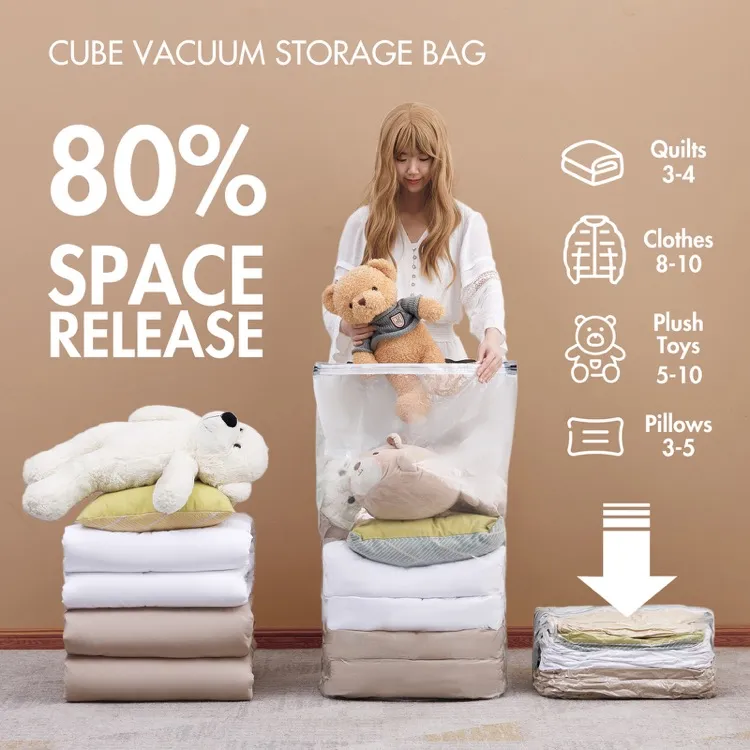
The air inside a sweater, puffer jacket, towel, or fleece jacket takes up a large amount of room. Removing that air makes the item flatter. But it does not remove fabric, filling, zippers, buttons, or any other material weight.
Compression bags reduce volume, not mass.
For example:
| Packed item | Weight before compression | Weight after compression | Space used after compression |
|---|---|---|---|
| Two sweaters | 1.2 kg | About 1.2 kg | Much less |
| Winter down jacket | 0.9 kg | About 0.9 kg | Much less |
| Four cotton T-shirts | 0.8 kg | About 0.8 kg | Slightly less |
| Towels and sleepwear | 1.5 kg | About 1.5 kg | Much less |
| Compression bag | 0 kg | Adds a small amount | Depends on bag size |
The practical takeaway is simple: a compression bag may help your items fit, but it cannot make a 23 kg suitcase become a 20 kg suitcase.
Most airline baggage policies evaluate both size and weight. The International Air Transport Association notes that airline allowances vary by route and carrier, but a common checked-bag reference point is 23 kg, while many jurisdictions set 32 kg as the maximum permitted weight for a single checked bag. A common size limit is 158 cm, measured by adding length, width, and height.
Why Compressed Luggage Can Feel Heavier
Many travelers believe vacuum bags made their suitcase heavier because the suitcase feels denser and more difficult to lift. In most cases, the compression bag did not create the extra weight. It simply made more room available.
That room often gets filled with additional clothing, shoes, souvenirs, toiletries, or electronics.
Compression creates a packing temptation
Imagine you have a medium checked suitcase and pack it normally:
- Clothing weighs 12 kg.
- Shoes and toiletries weigh 4 kg.
- The suitcase weighs 4 kg.
- Total weight: 20 kg.
You then use vacuum compression bags for sweaters, jeans, and jackets. The suitcase now has a large empty section. You decide to add two more outfits, another pair of shoes, and a few gifts. The final result may look neatly packed, but the weight could rise to 25 kg.
The compression bag did not add 5 kg. The additional items did.
This is why experienced travelers treat compression as a volume-management tool rather than an invitation to pack everything they own.
Dense luggage is harder to handle
A heavily compressed suitcase can also feel harder to lift because the contents become more compact. Loose clothes distribute weight across a larger area. Compressed clothing concentrates that weight into smaller, firmer blocks.
This can make your luggage feel:
- More difficult to lift into an overhead bin.
- Harder to close if the bag is overfilled.
- Less balanced when rolling.
- More tiring to carry up stairs or through stations.
- More likely to exceed a checked-baggage weight limit.
A suitcase that is physically smaller in volume can still be too heavy for you to lift safely. Always consider your own lifting ability, not only the airline’s maximum allowance.
Do Vacuum Compression Bags Add Any Weight?
Yes, but usually very little.
A reusable travel compression bag has some material weight because it is made from plastic film, sealing strips, valves, and sometimes a pump. A small roll-up bag may weigh only a few ounces, while a large vacuum bag and electric pump system will weigh more.
For most travelers, the bag’s own weight is negligible compared with the benefits of organizing bulky textiles. The larger issue is not the weight of the bag. It is the amount of clothing and other items you add after creating extra room.
Manual, vacuum, and compression-cube options
Different packing products affect convenience and packing capacity in different ways.
| Type | How it works | Weight impact | Best use |
|---|---|---|---|
| Roll-up compression bag | Air is pushed out manually | Very low | Carry-ons, short trips, no pump needed |
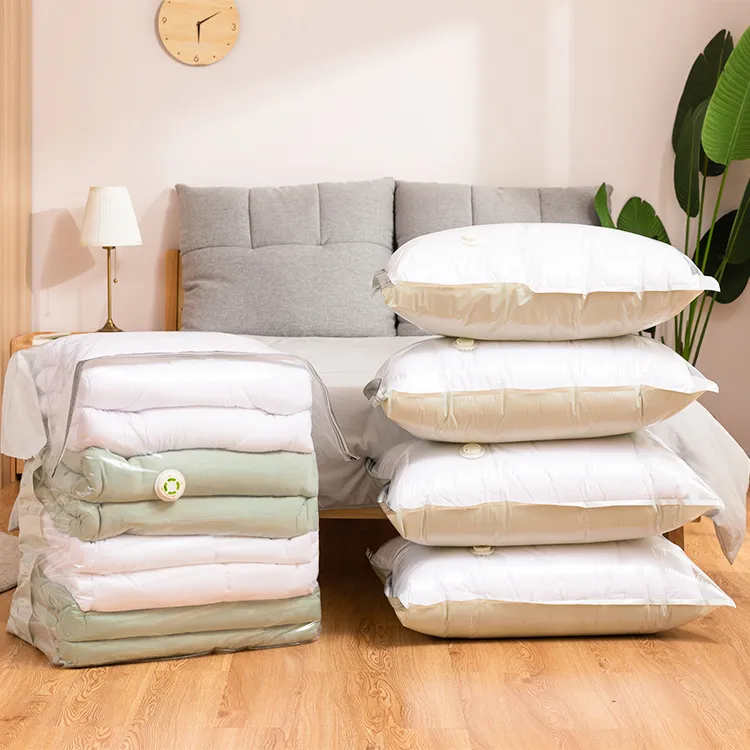
| Vacuum compression bag | Air is removed with a pump or vacuum | Low to moderate | Bulky clothing and long trips |
| Compression packing cube | A second zipper compresses contents | Low | Organization and moderate compression |
| Built-in vacuum luggage | Luggage has an integrated compression system | Higher empty suitcase weight | Frequent travelers who prioritize capacity |
| Standard packing cube | Organizes without major compression | Low | Easy access and structured packing |
For most travelers, compression packing cubes or roll-up bags offer the best balance of convenience, organization, and low added weight. Vacuum bags are more useful when traveling with bulky cold-weather clothing, ski wear, bedding, or thick knitwear.
When Compression Bags Are Worth Using
Compression bags can be highly useful when your main problem is limited luggage volume. They work especially well for items that trap air naturally.
Best items for luggage compression bags
Use compression bags for durable, bulky, and soft items, including:
- Puffer jackets and insulated outerwear.
- Fleece jackets and hoodies.
- Sweaters and knitwear.
- T-shirts and casual clothing.
- Socks and underwear.
- Pajamas and sleepwear.
- Towels.
- Baby clothes.
- Workout clothes.
- Dirty laundry on the return journey.
These items often occupy a lot of space relative to their weight. Compressing them can create useful room without significantly increasing the chance of garment damage.
Items to avoid over-compressing
Not everything belongs in a vacuum bag. Some items may crease, deform, lose loft, or become difficult to access.
Avoid tightly compressing:
- Structured blazers and suits.
- Formal dresses.
- Silk garments.
- Linen shirts.
- Leather clothing or accessories.
- Delicate lace pieces.
- Hats that need to retain their shape.
- Electronics.
- Fragile souvenirs.
- Liquids that could leak under pressure.
Down and synthetic insulated garments can generally be packed in compression bags for travel, but they should not stay compressed for long-term storage. Once you arrive, remove the item and let it regain its loft.
Airline Limits: The Weight Rule Still Applies
Compression bags can help you stay within a suitcase’s physical dimensions, but they do not override airline baggage allowances.
Airlines may use different systems depending on the route:
- Weight concept: You receive a total weight allowance across one or more checked bags.
- Piece concept: You receive a stated number of bags, each with maximum weight and size restrictions.
- Carry-on rules: Limits often depend on dimensions, weight, and whether you can safely place the bag in the overhead bin.
The IATA explains that baggage allowances vary by airline and route. It also identifies 23 kg as a common occupational-health reference for a checked bag, while 32 kg is widely used as an upper maximum for a single checked bag.
American Airlines, for example, identifies bags over 23 kg and up to 32 kg as overweight and subject to applicable charges, while bags above 32 kg or above 158 cm in combined dimensions are restricted.
The most important packing rule
Weigh your suitcase after compression—not before.
Do not assume that a bag that closes easily is compliant. Compression can conceal an overweight suitcase because the bag looks compact and tidy.
A portable luggage scale is one of the most useful travel tools for anyone using compression bags. If you do not have one, weigh yourself on a bathroom scale, then weigh yourself holding the suitcase. The difference is the approximate luggage weight.
A Safer Compression-Bag Packing Method
The best travel packing process combines space efficiency with weight control. Follow this practical method before every flight.
1. Check your actual airline allowance
Review the baggage rules for your specific ticket, route, and cabin class. Do not rely on a general airline rule you saw online last year.
Check:
- Checked baggage quantity.
- Maximum weight per bag.
- Maximum linear dimensions.
- Carry-on size and weight limits.
- Fees for extra, oversized, or overweight luggage.
- Restrictions for connecting flights with another airline.
2. Choose only bulky low-density items
Place items that take up a lot of room but are relatively light into compression bags. Good choices include sweaters, jackets, fleece layers, and casual clothes.
Do not waste compression capacity on dense heavy items such as books, shoes, hair tools, batteries, or electronics. They do not benefit much from air removal.
3. Fill bags only about two-thirds full
Overfilling creates uneven compression, broken seals, difficult zippers, and severe wrinkles. Leave enough room for the bag to flatten evenly.
Arrange clothing in smooth layers. Roll casual clothing when appropriate, and avoid sharp folds in garments that wrinkle easily.
4. Compress gradually
Remove air slowly rather than forcing the bag into its smallest possible shape. Stop when the package becomes compact and manageable.
Extreme compression may create a hard, dense block that is uncomfortable to pack and difficult to inspect at security checkpoints.
5. Place heavy items near the wheels
For rolling suitcases, put the heaviest items at the wheel end. This improves balance and reduces the risk of the suitcase tipping when upright.
Shoes, toiletry bags, and compact heavy items should be distributed carefully around compressed clothing blocks.
6. Weigh the final suitcase
Use a luggage scale after every major packing change. Aim to stay below the limit rather than reaching it exactly.
A small buffer is valuable because scale readings can differ slightly, and last-minute items can add weight.
7. Keep a re-packing plan
Carry one empty lightweight tote, foldable bag, or spare compression bag. If your suitcase is overweight at check-in, you can quickly move a few heavy items rather than repacking on the airport floor.
Can You Bring Vacuum Bags on a Plane?
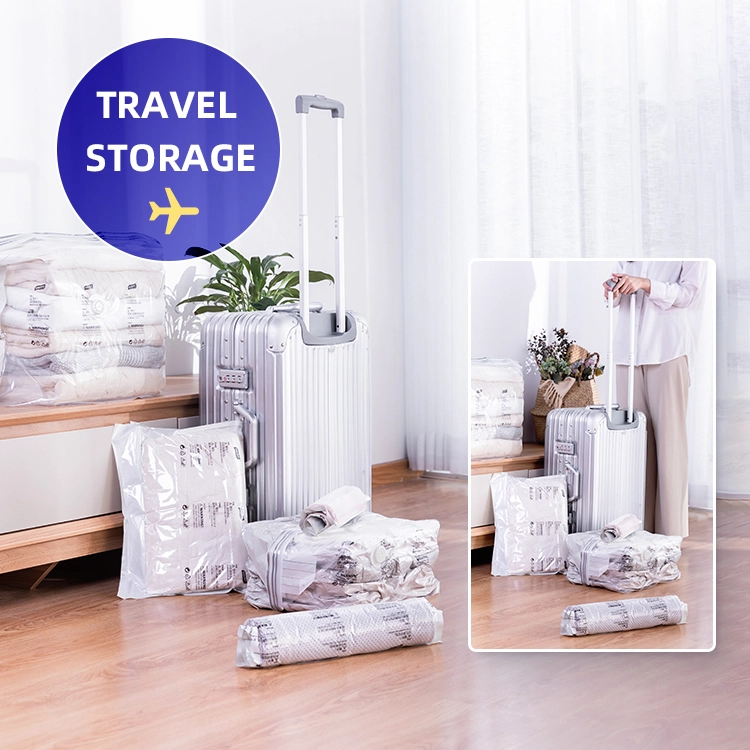
Vacuum-sealed clothing bags are generally permitted in both carry-on and checked luggage. However, security officers may need to inspect their contents.
The Transportation Security Administration states that vacuum-sealed bags are permitted in carry-on and checked baggage, but they are not encouraged because an officer may need to open them if they trigger an alarm during screening.
This creates an important practical concern: if your compression bag is opened, can you repack it without access to a vacuum pump?
Smart carry-on strategy
For carry-on luggage, choose roll-up compression bags or compression cubes that do not require electricity or a full-size vacuum. This gives you more flexibility if security asks you to open the bag.
Pack the following outside compression bags when possible:
- Travel documents.
- Medication.
- Power banks and electronics.
- Liquids that must meet carry-on rules.
- Items needed during the flight.
- One change of clothes.
For checked luggage, vacuum bags are often more convenient because you are less likely to need immediate access to the contents. Still, keep a backup plan for your return journey, especially if you use a pump-powered system.
Compression Bags vs. Packing Cubes
The right product depends on your travel style, clothing type, and baggage allowance.
| Your priority | Better choice | Why |
|---|---|---|
| Maximum space savings | Vacuum compression bags | Removes more air from bulky clothing |
| Easy access during travel | Standard packing cubes | Items remain organized and easy to reach |
| Carry-on flexibility | Roll-up compression bags | No pump required after security inspection |
| Wrinkle reduction | Packing cubes or garment folders | Less aggressive compression |
| Long winter trip | Vacuum bags plus luggage scale | Handles bulky layers while controlling weight |
| Business travel | Compression cubes | Keeps outfits orderly and accessible |
| Return-trip laundry | Roll-up bags | Separates used clothing and reduces bulk |
Packing cubes organize. Compression bags reduce volume. The best approach for many travelers is to use both: compression bags for bulky casual clothing and small cubes for underwear, accessories, chargers, and daily essentials.
How to Prevent Wrinkles and Fabric Damage
Compression can create wrinkles when garments are folded sharply, packed too tightly, or left compressed for too long. The solution is not to avoid compression entirely. It is to match the method to the fabric.
Use this garment-protection approach
- Roll casual garments such as T-shirts, knitwear, leggings, and casual pants before placing them in the bag.
- Fold structured clothing along natural seams instead of creating new sharp creases.
- Keep delicate garments outside vacuum bags whenever possible.
- Do not overfill the bag, because excessive pressure increases creasing.
- Unpack immediately after arrival and hang wrinkle-prone items.
- Use hotel shower steam or a travel steamer to relax minor wrinkles.
- Reserve compression for travel, not long-term storage of specialty garments.
A useful rule is this: if you would not want the item pressed tightly under a stack of books for several hours, do not vacuum-compress it.
Expert Packing Perspective: Space Is Not the Same as Capacity
The biggest misunderstanding about compression bags is the idea that unused suitcase space means available baggage capacity. It does not.
Your suitcase has two limits:
- Volume capacity: How much physical space is inside the luggage.
- Weight capacity: How much your airline, suitcase, and body can safely handle.
Compression bags improve volume capacity. They do not improve weight capacity.
This is especially relevant for international travel, winter travel, family travel, and business trips with product samples. A traveler may use compression bags successfully to fit more clothing into one suitcase, only to discover that the packed bag is too heavy for the airline allowance.
Think of compression bags as a way to pack smarter, not simply pack more.
Final Verdict: Do Compression Bags Make Luggage Heavier?
Compression bags themselves add only a small amount of weight. They do not make clothing or other packed items heavier. What they do is reduce bulk, which can create enough empty space for travelers to add more belongings.
That is why a suitcase packed with compression bags may end up overweight: not because the bags changed physics, but because they encouraged additional packing.
Use compression bags for bulky, lightweight clothing. Avoid using them as permission to overload your luggage. Keep a luggage scale nearby, leave a small weight buffer, and confirm your airline’s current rules before departure.
Need a practical way to pack more efficiently without exceeding your baggage allowance? Choose durable travel compression bags for bulky clothing, pair them with organized packing cubes, and weigh your suitcase before you leave home.
FAQ
Do compression bags reduce luggage weight?
No. Compression bags reduce the volume of items by removing air, but they do not reduce the actual weight of clothing, towels, or other packed belongings.
Do vacuum bags add weight to a suitcase?
Yes, but only a small amount. The plastic bag, valve, and optional pump have weight, but that added weight is usually minor compared with the contents of the suitcase.
Can compression bags cause overweight luggage?
Yes. They can create extra room in your suitcase, encouraging you to add more items. The final bag may exceed the airline’s weight limit even though it looks compact.
Are vacuum-sealed bags allowed in carry-on luggage?
Generally, yes. The TSA permits vacuum-sealed bags in carry-on and checked baggage, but security officers may need to open them for inspection.
Are compression bags better than packing cubes?
They serve different purposes. Compression bags provide greater space savings for bulky clothing, while packing cubes offer better organization and easier access. Many travelers use both.
What should not go in a compression bag?
Avoid highly wrinkle-prone, structured, fragile, electronic, or liquid-containing items. Examples include suits, silk, linen, leather, formal dresses, hats, laptops, cameras, and toiletries.
How much should a checked suitcase weigh?
The answer depends on your airline and ticket. A common reference is 23 kg per checked bag, while many regions cap a single checked bag at 32 kg. Always check the rules for your specific carrier and route.
Will clothes become wrinkled in vacuum bags?
They can, particularly if they are folded sharply, over-compressed, or left packed for too long. Use compression for casual, durable clothing, and unpack wrinkle-prone items soon after arrival.
References
1. Transportation Security Administration – “Vacuum-sealed bags” – TSA guidance on traveling with vacuum-sealed bags through airport security. https://www.tsa.gov/travel/security-screening/whatcanibring/items/vacuum-sealed-bags-0
2. International Air Transport Association – “Passenger Baggage Rules” – Official IATA guidance on passenger baggage rules for air travel. https://www.iata.org/en/programs/ops-infra/baggage/passenger-baggage-rules/
3. International Air Transport Association – “Interline Considerations on Baggage Standards” – IATA guidance document on baggage standards for interline travel. https://www.iata.org/contentassets/e7a533819be440edbb1e49da96e0f2a8/guidance-document-on-baggage-standards-for-interline.pdf
4. American Airlines – “Bag Limitations and Restrictions” – Airline guidance on baggage limitations and restrictions. https://www.aa.com/web/i18n/travel-info/baggage/baggage-limitations.html
5. Travel + Leisure – “The Best Vacuum Bags for Travel” – Tested and reviewed recommendations for the best travel vacuum bags. https://www.travelandleisure.com/travel-vacuum-bags-6753391
6. Consumer Reports – “Best Vacuum Storage Bags” – Independent testing and ratings of vacuum storage bags. https://www.consumerreports.org/home-garden/home-organization/best-vacuum-storage-bags-a4426993618/
7. Consumer Reports – “Vacpack Vacuum-Sealed Carry-On Backpack Review” – Independent review of the Vacpack vacuum-sealed carry-on backpack. https://www.consumerreports.org/money/luggage/vacpack-vacuum-sealed-carry-on-backpack-review-a2700814197/
Hot Tags: Compression Bags, Vacuum Bags For Travel, Travel Compression Bags, Vacuum Storage Bags, Luggage Compression Bags, Vacuum Packing Bags, Compression Packing Cubes, Travel Vacuum Bags, Space Saving Bags, Vacuum Seal Bags