Content Menu
● Quick Answer: Which Compression Bag Wins?
● What Is a Vacuum Compression Bag?
>> Why Vacuum Bags Create More Space
>> Best Uses for Vacuum Compression Bags
● What Is a Roll-Up Compression Bag?
>> Best Uses for Roll-Up Compression Bags
>> Where Roll-Up Bags Fall Short
● Vacuum Compression Bags vs Roll-Up Compression Bags: Detailed Comparison
>> 1. Space-Saving Performance
>> 3. Long-Term Storage Protection
>> 4. Clothing Wrinkles and Fabric Care
>> 5. Seal Reliability and Durability
● How to Choose the Right Bag by Situation
>> For Small Apartments and Limited Closets
>> For E-Commerce and Household Organization
● Expert Packing Method: Get Better Results Without Overfilling
● Common Buying Mistakes to Avoid
>> Choosing by “Maximum Compression” Claims Alone
>> Buying One Oversized Bag for Everything
>> Compressing Items That Need Airflow
>> Ignoring Storage Conditions
● Final Verdict: Which One Should You Buy?
● FAQs
>> 1. Are vacuum compression bags better than roll-up compression bags?
>> 2. Can roll-up compression bags replace vacuum storage bags?
>> 3. Do vacuum storage bags damage clothes?
>> 4. Can I use compression bags for down comforters and jackets?
>> 5. Why does my vacuum storage bag slowly expand?
>> 6. Do compression bags reduce luggage weight?
>> 7. What should not be stored in vacuum compression bags?
>> 8. How long can clothes stay in vacuum compression bags?
When storage space is limited, the right compression bag can make a visible difference in a crowded closet, small apartment, dorm room, suitcase, warehouse, or emergency-supply kit. Vacuum compression bags usually deliver the greatest volume reduction for bulky bedding and seasonal clothing, while roll-up compression bags offer faster, pump-free convenience for travel and short-term organization.
The better option depends less on the bag itself than on the item being stored, how long it will stay compressed, how often it must be reopened, and whether a vacuum cleaner or pump is available. From a materials and product-design perspective, the key issue is not simply “how much air can be removed?” It is whether the bag can maintain an airtight seal, resist punctures, protect the contents, and remain practical in the user’s real environment.
Quick Answer: Which Compression Bag Wins?
For most limited-space situations, vacuum compression bags are the stronger choice for maximum storage efficiency at home. They are especially effective for comforters, duvets, pillows, bulky jackets, blankets, sweaters, and seasonal textiles.
Roll-up compression bags are usually better for travel, temporary packing, and frequent access. They do not require a vacuum cleaner, outlet, hand pump, or special equipment. Users simply seal the bag and roll it to force air through a one-way valve.
| Factor | Vacuum Compression Bags | Roll-Up Compression Bags |
|---|---|---|
| Best use | Long-term home storage | Travel and short trips |
| Air-removal method | Vacuum cleaner, electric pump, or hand pump | Manual rolling |
| Space-saving potential | Usually higher for bulky soft goods | Moderate to high for clothing |
| Convenience away from home | Lower unless a pump is available | Very high |
| Best items | Bedding, coats, blankets, seasonal clothing | T-shirts, underwear, towels, casual clothing |
| Long-term protection | Strong when seal and barrier film are reliable | Better for short-term use |
| Risk of wrinkles | Higher with heavy compression | Moderate |
| Repacking on a trip | Can be inconvenient | Easy and practical |
| Overall winner | Best for maximum storage | Best for portable convenience |
Bottom line: Choose vacuum compression bags when every centimeter of closet or under-bed space matters. Choose roll-up compression bags when you need flexible, tool-free packing on the move.
What Is a Vacuum Compression Bag?
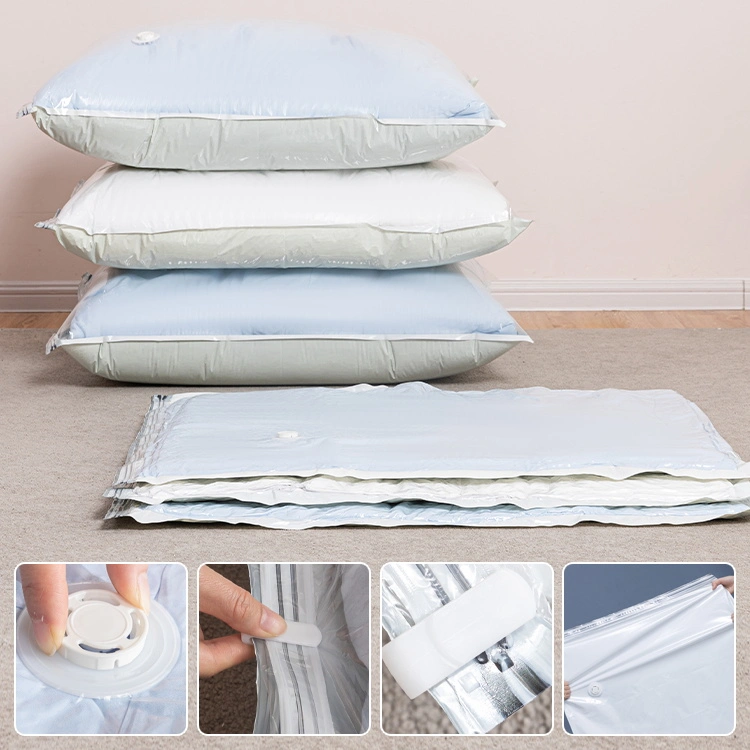
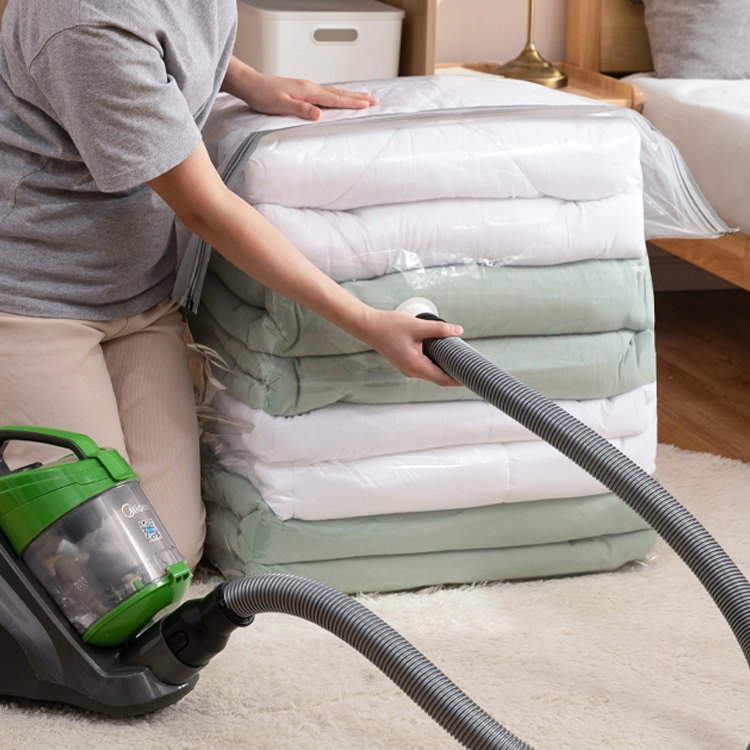
A vacuum compression bag is a sealed storage bag that removes air through a valve. Once the zipper closure is fully sealed, a vacuum cleaner hose, electric pump, or hand pump extracts air from the bag. The bag then contracts tightly around the contents.
This mechanism is particularly useful because bulky textiles contain substantial trapped air. Comforters, down jackets, fleece blankets, pillows, and thick sweaters may look large primarily because of their loft. Removing the air reduces their external volume without requiring the user to discard or permanently alter the items.
High-quality vacuum storage bags normally combine several functional elements:
- Multi-layer barrier film to reduce air and moisture transmission
- Reinforced zipper seal to prevent leakage at the opening
- One-way valve that enables air removal while limiting backflow
- Puncture-resistant material to reduce damage during handling
- Protective layers that help shield contents from dust, moisture, and pests
Taili vacuum storage bags are designed around this long-term storage requirement. Their product information describes a multi-layer construction with an internal nylon layer intended to improve resistance to air and moisture penetration, alongside an airtight zipper and valve structure.
Why Vacuum Bags Create More Space
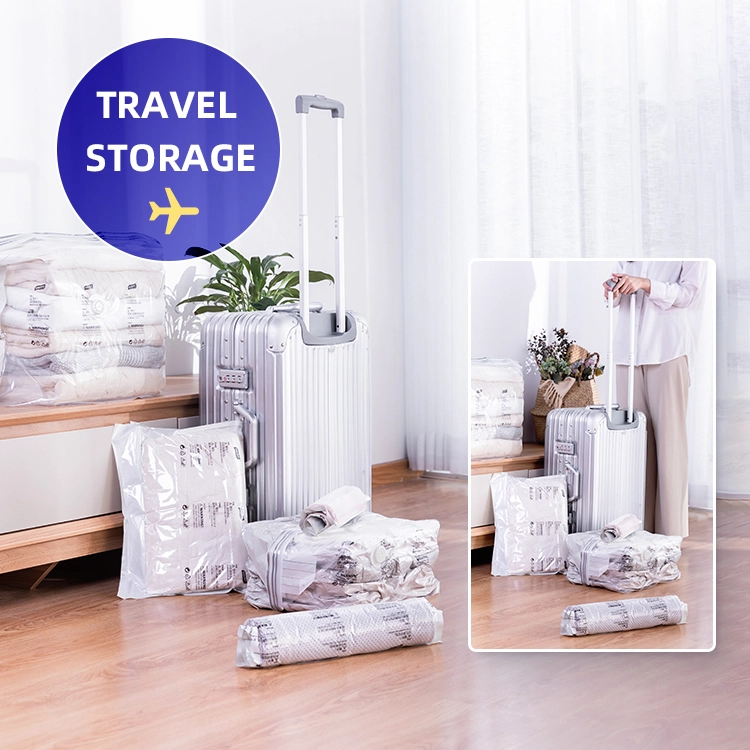
Vacuum compression works best when the contents are soft, thick, and air-filled. A queen-size comforter may occupy a major portion of an under-bed storage area when loosely folded. Once compressed, it becomes flatter and easier to stack.
However, there is an important practical limit: compression bags reduce volume, not weight. A bag of winter clothing may fit into a smaller space, but it will still weigh the same. For travel, this distinction matters because airline weight limits remain unchanged.
Best Uses for Vacuum Compression Bags
Vacuum bags are most useful for:
- Seasonal duvets and quilts
- Pillows and cushions
- Down jackets and puffer coats
- Thick blankets and throws
- Winter sweaters and fleece garments
- Guest bedding
- Soft toys and fabric household items
- Emergency blankets, textiles, and backup supplies
- E-commerce fulfillment storage for bulky soft goods
They are less suitable for items that are rigid, sharp, fragile, moisture-sensitive, or easily deformed.
What Is a Roll-Up Compression Bag?
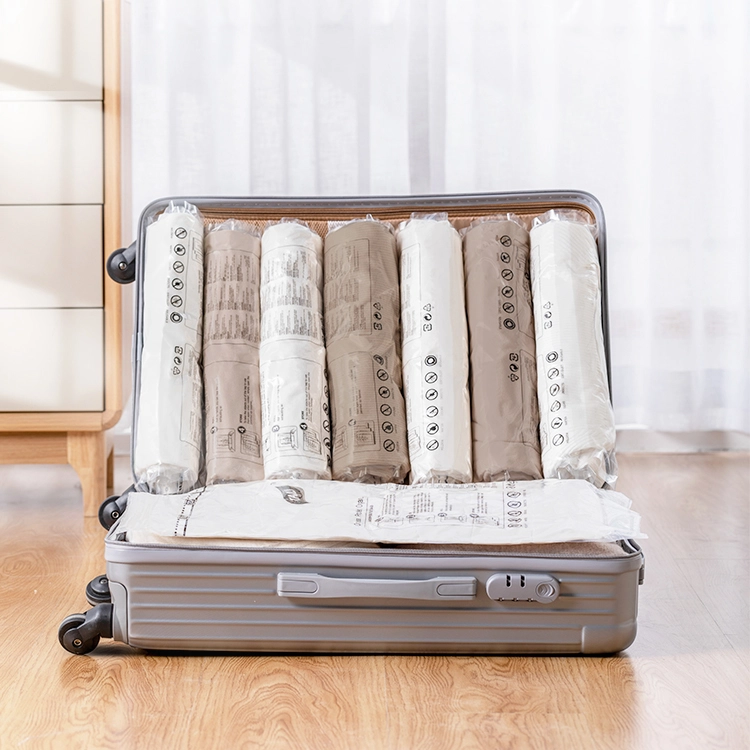
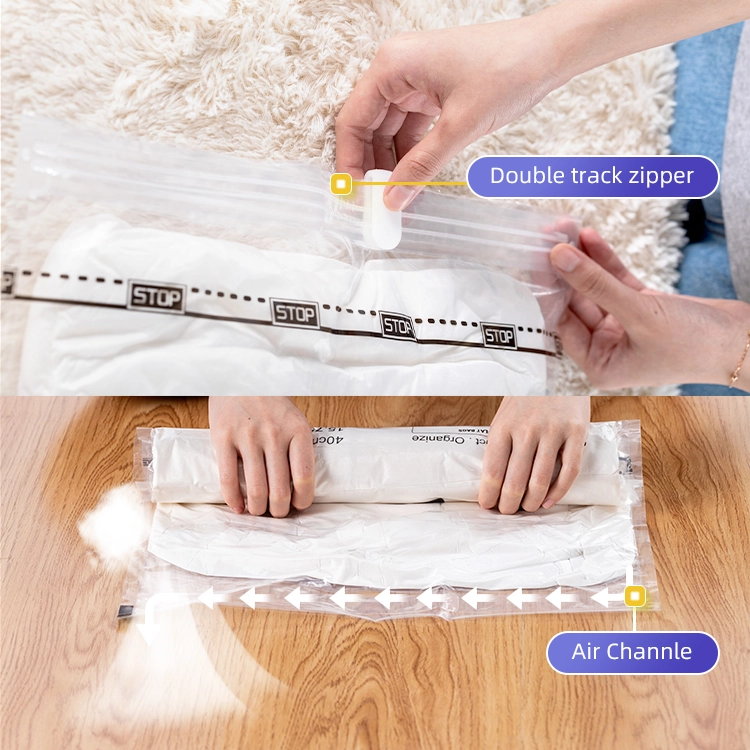
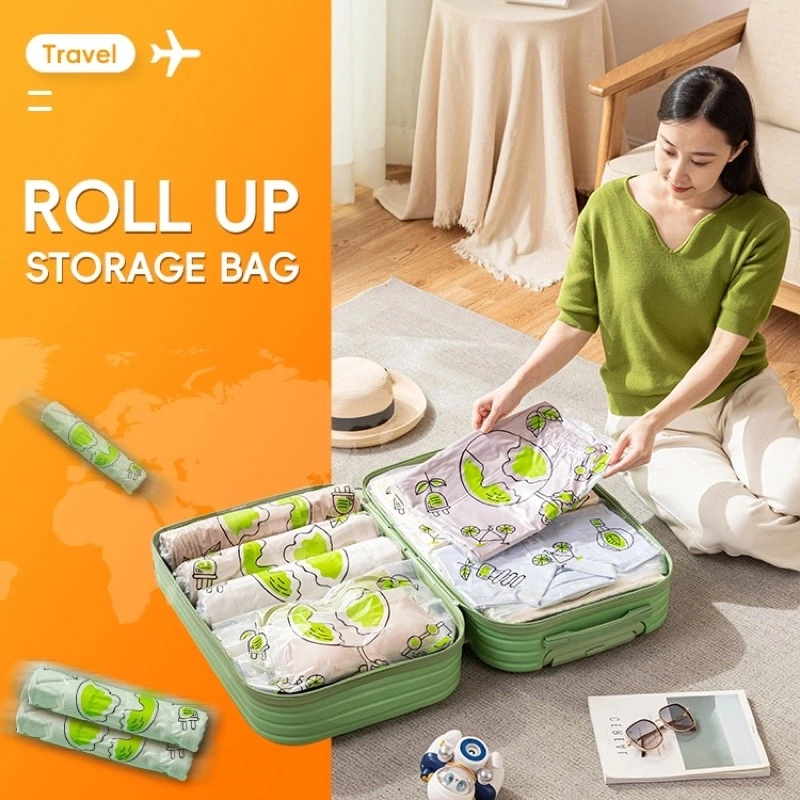
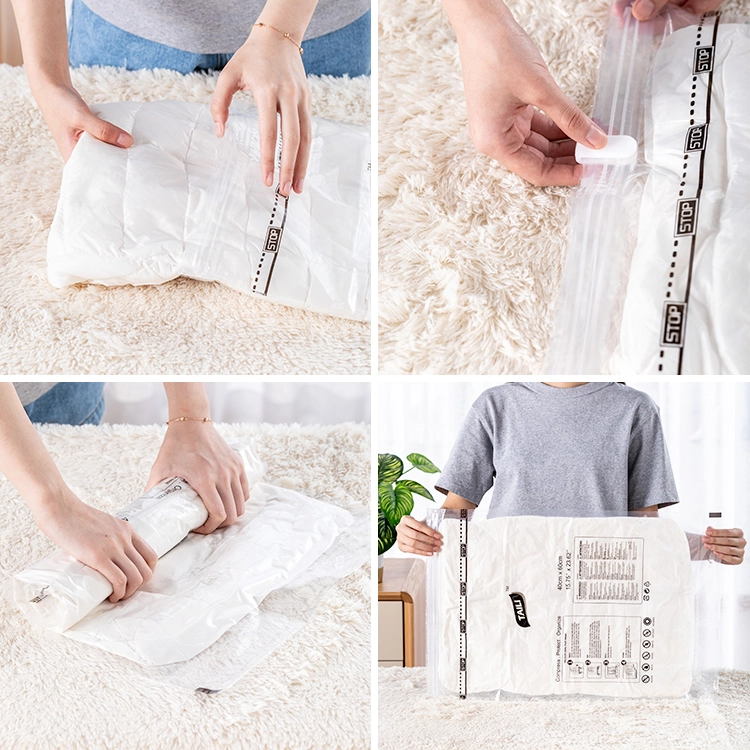
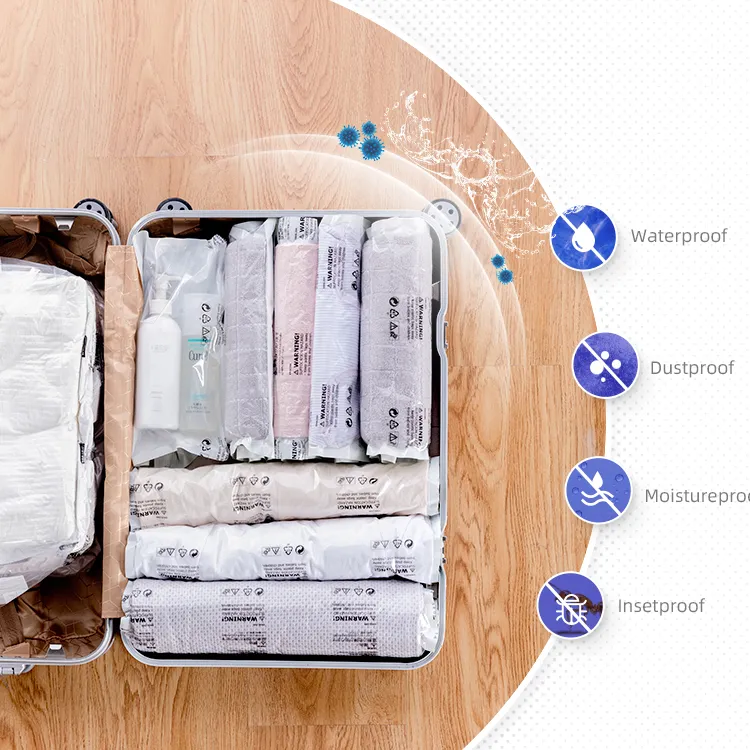
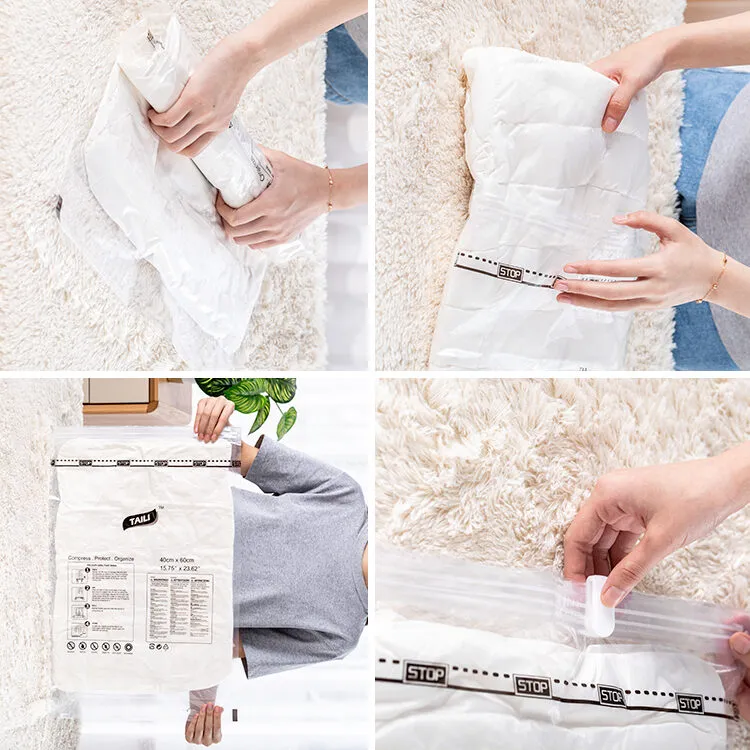
A roll-up compression bag is a self-contained bag that removes air manually. It typically includes a zip-style closure at the top and a one-way valve near the bottom. After placing clothes inside and sealing the zipper, the user rolls the bag from top to bottom. The pressure pushes trapped air out through the valve.
The main advantage is clear: no vacuum cleaner and no pump are required.
That makes roll-up bags especially useful in hotels, airports, hostels, vehicles, business trips, outdoor travel, and temporary accommodations. A traveler can repack before returning home without searching for a vacuum cleaner or carrying extra equipment.
A review from Wirecutter describes this category as large zip-style bags with one-way valves that release air when the bag is rolled. The review notes that these bags can significantly reduce clothing volume without requiring a pump.
Best Uses for Roll-Up Compression Bags
Roll-up bags work well for:
- T-shirts and casual shirts
- Underwear and socks
- Sleepwear
- Lightweight trousers
- Gym clothing
- Towels
- Children’s clothing
- Beachwear
- Travel laundry separation
- Short-term business travel packing
They are particularly practical for garments that can tolerate folding and moderate pressure.
Where Roll-Up Bags Fall Short
Manual rolling cannot remove air as consistently as a powered vacuum system. Performance also varies depending on how tightly the contents are packed and how evenly the user rolls the bag.
The bag may also become long, firm, and uneven. That can be inconvenient in structured luggage, especially when users try to fit several irregularly shaped compressed bags into a carry-on suitcase.
Vacuum Compression Bags vs Roll-Up Compression Bags: Detailed Comparison
1. Space-Saving Performance
Vacuum compression bags usually win on maximum volume reduction.
A vacuum cleaner or pump can remove more trapped air than manual rolling, particularly from large, soft, high-loft items. This is why vacuum storage is commonly used for seasonal bedding, outerwear, and long-term home organization.
Independent product testing has found that vacuum storage bags can maintain compression and keep contents dry when the seal performs properly. In one test of 16 products, testers evaluated durability, capacity, seal retention, and moisture resistance, including a 24-hour compression period and water exposure.
Roll-up bags can still save meaningful suitcase space. But they are more effective for thin, flexible garments than for large pillows, duvets, or thick comforters.
Best choice for maximum compression: Vacuum compression bags.
2. Ease of Use
Roll-up compression bags are easier for travel.
A vacuum bag is simple to use at home when a vacuum cleaner or electric pump is available. But the process becomes less convenient in a hotel room, office, dormitory, or remote location.
Roll-up bags eliminate that problem. Pack, seal, roll, and go.
For example, a traveler returning from a seven-day trip may have worn clothing, purchased souvenirs, and limited room in a carry-on suitcase. A roll-up bag can separate laundry and reduce its volume immediately. No equipment is needed.
Best choice for fast, pump-free packing: Roll-up compression bags.
3. Long-Term Storage Protection
Vacuum compression bags are generally better for long-term household storage.
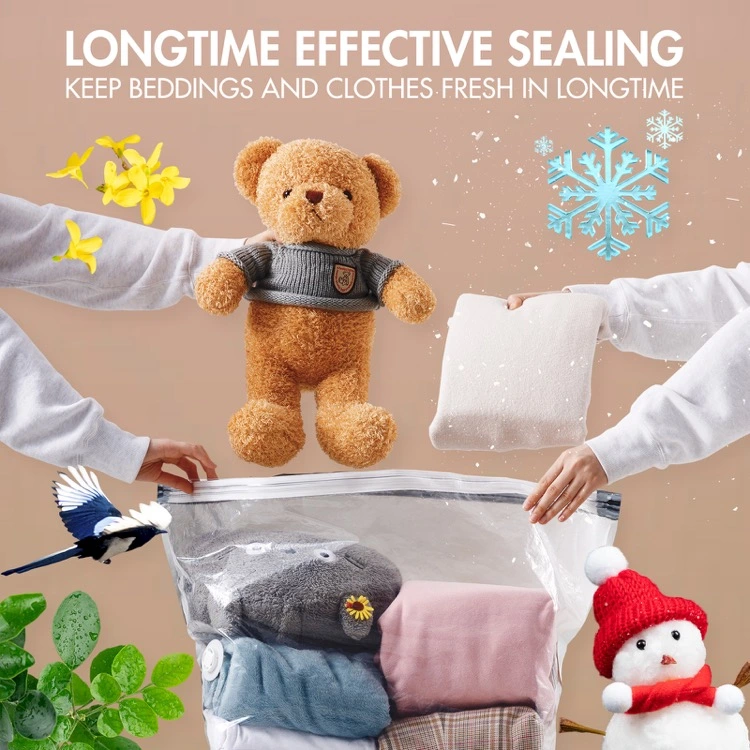
For items stored under a bed, in a closet, in a storage room, or in a warehouse, sealing performance matters more than speed. A well-designed vacuum bag can reduce exposure to dust, moisture, and pests while creating a more stackable storage profile.
Taili describes its vacuum storage bags as using high-barrier materials and airtight sealing to compress bulky items while helping keep clothing and bedding clean, dry, and protected during longer storage periods.
That said, users should not assume every bag performs equally. The valve, zipper, film thickness, sealing method, and handling conditions all affect results.
Best choice for seasonal and long-term storage: Vacuum compression bags.
4. Clothing Wrinkles and Fabric Care
Neither option is ideal for every fabric.
Compression is generally appropriate for durable, casual, washable items. It is less suitable for structured garments, delicate fabrics, formalwear, heavily padded items, or anything that must retain a precise shape.
Avoid extreme compression for:
- Suits and blazers
- Dress shirts needed immediately after arrival
- Leather garments
- Structured hats
- Delicate embroidered textiles
- Silk garments
- Cashmere and fine wool stored for extended periods
- Feather items that need loft and recovery
In practical travel guidance, roll-up compression bags are often recommended for soft casual clothing, while business suits, shape-sensitive outerwear, and wrinkle-prone shirts should be folded carefully rather than aggressively compressed.
Best choice for wrinkle-sensitive garments: Neither. Use garment bags, packing cubes, or flat folding instead.
5. Seal Reliability and Durability
A compression bag is only as useful as its seal.
From an industry viewpoint, buyers should evaluate four areas before comparing price:
- Film construction
Multi-layer materials can improve puncture resistance and barrier performance. A bag that looks thick but has poor layer bonding may still leak or split. - Zipper design
A wide, double-track, or reinforced zipper closure is often easier to seal consistently. Users should run the slider across the full closure more than once. - Valve structure
The valve should allow air out efficiently while resisting backflow. A loose cap or poorly formed valve is a common source of failure. - Seam quality
Heat-sealed edges should be even and smooth. Thin seams, rough welds, or inconsistent edges may become weak points when the bag is heavily filled.
Testing from Better Homes & Gardens emphasized that durability, capacity, air retention, and water resistance all influence real storage performance—not merely the advertised compression claim.
Best choice for durability: The better-engineered product, regardless of category. For long-term applications, vacuum bags often justify higher material and sealing standards.
How to Choose the Right Bag by Situation
For Small Apartments and Limited Closets
Choose vacuum compression bags for off-season items. Store winter duvets, spare bedding, bulky coats, and guest pillows in flat, labeled bags under beds or on high closet shelves.
Use roll-up bags only for smaller, frequently accessed clothing categories.
For International Travel
Choose roll-up compression bags for casual garments and laundry. They are easier to reuse in a hotel room and can simplify return-trip packing.
Use a small vacuum bag only if you are carrying a compatible travel pump or know that reliable vacuum access will be available.
For E-Commerce and Household Organization
Use vacuum compression bags when the main goal is to reduce storage footprint for soft, bulky inventory. The flattened package can improve shelf utilization and help users organize seasonal stock.
For sellers, clear instructions are essential. Customers need guidance on fill level, sealing method, valve operation, and suitable product categories.
For Emergency Preparedness
A strong vacuum storage solution can be useful for protecting spare clothing, blankets, towels, and textiles in a compact home emergency kit. The bag should be stored away from sharp objects, direct sunlight, and extreme heat.
Do not compress medical supplies, batteries, food items not intended for vacuum packaging, or equipment with rigid edges unless the product specification confirms compatibility.
Expert Packing Method: Get Better Results Without Overfilling
A common mistake is trying to force too much into one bag. Overfilling creates pressure on the zipper and seams, makes air removal less consistent, and can lead to uneven compression.
Use this professional workflow:
- Sort by material and use frequency.
Keep bedding separate from clothing. Do not mix frequently used items with seasonal storage. - Fold before filling.
Neat folding creates a flatter profile and reduces sharp internal pressure points. - Fill only to about three-quarters capacity.
Leave enough room for the zipper to close without strain. - Keep the sealing channel clean.
Fabric fibers, hair, dust, and loose threads can reduce airtight performance. - Seal the zipper completely.
Slide the closure tool across the zipper two or three times. - Remove air gradually.
For vacuum bags, avoid sudden pulling or twisting around the valve. For roll-up bags, roll slowly from the zipper side toward the valve. - Store flat where possible.
Flat bags reduce stress on seams and make stacking more stable. - Label every bag.
Add the contents, season, date packed, and intended reopening date.
This approach is especially important for commercial applications, where repeated customer use depends on intuitive operation and consistent performance.
Common Buying Mistakes to Avoid
Choosing by “Maximum Compression” Claims Alone
A large percentage claim does not guarantee useful real-world results. Actual compression depends on item type, fill level, bag size, valve performance, and how thoroughly the air is removed.
A thick comforter will compress differently from a stack of cotton T-shirts. Compare bags by construction, closure quality, and suitability for your specific items.
Buying One Oversized Bag for Everything
Very large bags can become heavy, awkward, and difficult to move. They may also create uneven stress points during vacuuming.
Instead, use several medium bags for clothing and one or two larger bags for bedding. This improves organization and makes it easier to locate items later.
Compressing Items That Need Airflow
Some materials benefit from breathing room or regular loft recovery. Down-filled products, wool items, leather, and delicate fabrics should not be compressed indefinitely.
For these items, use short-term compression only when necessary, then remove and air them out after storage or travel.
Ignoring Storage Conditions
Even a well-made bag should be stored carefully. Keep compressed bags away from sharp corners, pet claws, direct sunlight, high heat, and damp floors.
The best bag cannot compensate for a poor storage environment.
Final Verdict: Which One Should You Buy?
If you have limited storage space at home, vacuum compression bags are the better investment. They provide stronger compression for bedding, winter clothing, pillows, and other large textile items. They also offer a more organized solution for seasonal storage when designed with durable film, reliable valves, and airtight sealing.
If you travel often, especially with carry-on luggage, roll-up compression bags are the more convenient choice. Their tool-free design makes them easy to use before departure, during a trip, and when repacking for the journey home.
For many households, the best strategy is not choosing one category exclusively. Keep vacuum compression bags for home storage and roll-up compression bags for travel. This combination gives you maximum space savings without sacrificing day-to-day flexibility.
For brands, retailers, and procurement teams, prioritize compression bags with robust barrier materials, dependable sealing systems, clear usage instructions, and category-specific product sizing. A reliable storage solution should do more than shrink volume—it should protect belongings, simplify organization, and perform consistently through repeated use.
FAQs
1. Are vacuum compression bags better than roll-up compression bags?
Vacuum compression bags are usually better for maximum space savings and long-term storage. Roll-up compression bags are better for travel because they do not require a vacuum cleaner or pump.
2. Can roll-up compression bags replace vacuum storage bags?
They can replace vacuum bags for short trips and clothing organization, but they are usually less effective for large bedding, thick coats, pillows, and long-term seasonal storage.
3. Do vacuum storage bags damage clothes?
They can create wrinkles or temporary flattening, especially on delicate or structured items. Use them mainly for durable, soft textiles such as bedding, casual clothing, fleece, towels, and seasonal outerwear.
4. Can I use compression bags for down comforters and jackets?
Yes, but avoid leaving down items compressed for excessively long periods. When ready to use them, remove them from the bag and allow time for loft recovery. Fluffing or low-heat tumble drying, when permitted by the care label, may help restore volume.
5. Why does my vacuum storage bag slowly expand?
The most common causes are an incomplete zipper seal, a loose valve cap, small punctures, trapped fibers in the closure area, or excessive pressure caused by overfilling.
6. Do compression bags reduce luggage weight?
No. Compression bags reduce the amount of space clothing occupies, but the clothing weighs the same. Always check airline baggage-weight limits.
7. What should not be stored in vacuum compression bags?
Avoid sharp objects, leather, rigid equipment, fragile items, items with protruding hardware, and garments that are highly wrinkle-prone or require shape retention.
8. How long can clothes stay in vacuum compression bags?
For common seasonal clothing and bedding, storage duration depends on the fabric, humidity, and bag quality. Check bags periodically, especially for delicate natural fibers or down-filled items. If the bag expands, inspect the zipper and valve before recompressing.
References
1. Taili – “Vacuum Storage Bags Collection” – Product collection of Taili vacuum storage bags, including extra-large cube vacuum storage bags in blue and clear variants. https://tailistore.com/collections/vacuum-storage-bags
2. Taili – “Vacuum Storage Bag Product Information” – Product specifications for the vacuum flat storage bag: PA+PE 7-micron material, sizes from 45×70 cm to 80×100 cm, 5-layer construction (PE-Tie-PA nylon-Tie-PE), up to 75–80% space savings, certifications including BSCI, ISO 9001, and RoHS, and no MOQ for in-stock bags. https://www.taili-group.com/products/vacuum-bag/
3. Better Homes & Gardens – “The Winners of Our Best Vacuum Storage Bags Tests” – Hands-on testing results and top picks for vacuum storage bags. https://www.bhg.com/best-vacuum-storage-bags-7567870
4. Wirecutter – “The Most Affordable Packing Tool Is Also the Best” – Review identifying an affordable compression bag as a top packing tool. https://www.nytimes.com/wirecutter/reviews/alming-compression-bags-review/
5. Sohu – “How to Choose Roll-Up, Pumped, and Standard Storage Bags for Business Travel” – Guidance on selecting roll-up, pump-assisted, and standard storage bags for business travel. https://www.sohu.com/a/1079008471_122957442
6. Taili Technology – Corporate Website – Official corporate website for Taili Technology. https://www.taili-group.com/
Hot Tags: Vacuum Compression Bags, Roll-Up Compression Bags, Vacuum Storage Bags, Travel Compression Bags, Space Saving Storage Bags, Vacuum Seal Bags, Compression Bags For Clothes, Bulk Vacuum Storage Bags, Vacuum Bag Manufacturer, Compression Bag Supplier