Content Menu
● Quick Answer: Which Is Better for Bulky Winter Clothing?
● What Makes Winter Clothing Difficult to Pack?
● How Vacuum Compression Bags Work for Winter Travel
>> Why Vacuum Compression Bags Perform Well
>> Limits of Vacuum Compression Bags
● How Standard Luggage Organizers Handle Winter Clothing
>> Why Luggage Organizers Improve Travel Experience
● Vacuum Compression Bags vs Standard Luggage Organizers: Detailed Comparison
>> Organization and Accessibility
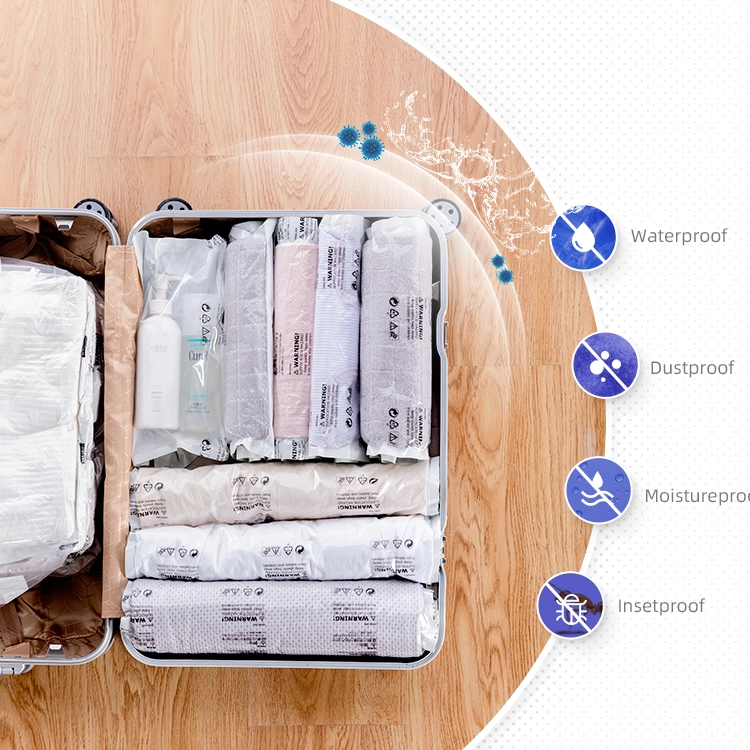
>> Moisture and Contamination Protection
● Expert Packing Method: Use Both Products Together
>> Step 1: Separate Clothing by Packing Priority
>> Step 2: Compress Only the Right Items
>> Step 3: Organize Daily Essentials Separately
>> Step 4: Pack Heavier Items Near the Wheels
>> Step 5: Keep One Change of Clothing Accessible
● A Practical Winter Packing Example
● What Buyers Should Look for in Vacuum Compression Bags
● Final Verdict: Choose Compression for Volume, Organizers for Control
● FAQ
>> 1. Do vacuum compression bags really save space for winter clothes?
>> 2. Are vacuum compression bags safe for down jackets?
>> 3. Can packing cubes replace vacuum compression bags?
>> 4. Do vacuum bags make luggage lighter?
>> 5. What winter clothes should not go in vacuum compression bags?
>> 6. Do vacuum compression bags need a vacuum cleaner?
>> 7. How can I prevent vacuum compression bags from leaking?
When winter travel means packing puffer jackets, thick knitwear, fleece layers, ski trousers, or scarves, the biggest question is simple: how can you fit bulky winter clothing into limited luggage without losing order or damaging your garments? In the comparison between vacuum compression bags vs standard luggage organizers, vacuum compression bags usually win on pure space reduction, while standard luggage organizers win on quick access, garment organization, and everyday convenience.
The best option depends on how you travel, what type of winter clothing you carry, whether you have access to a vacuum source at your destination, and how often you need to unpack and repack. For travelers, retailers, travel-product buyers, and brands seeking a practical solution for cold-weather packing, the strongest strategy is often not choosing one product exclusively—it is using each product for the task it performs best.
Quick Answer: Which Is Better for Bulky Winter Clothing?
Vacuum compression bags are generally better for maximum space saving. They remove air trapped between soft garments, helping thick down jackets, sweaters, thermal layers, and fleece clothing occupy less volume.
Standard luggage organizers are better for visibility and fast access. They separate clothing categories, maintain a neater suitcase, and make it easier to find an item without opening a large sealed bag.
For a winter trip where luggage space is the main limitation, use vacuum compression bags for the bulkiest items and luggage organizers for smaller, frequently used clothing.
| Comparison factor | Vacuum compression bags | Standard luggage organizers |
|---|---|---|
| Best use | Maximizing suitcase capacity | Organizing and separating clothing |
| Performance with puffer jackets | Excellent | Moderate |
| Performance with thick sweaters | Excellent | Moderate |
| Compression level | High, especially with vacuum removal | Low to moderate |
| Ease of locating items | Lower after sealing | High |
| Repacking during travel | Can be inconvenient | Very convenient |
| Protection from dust and moisture | Usually stronger when sealed correctly | Limited, depending on fabric and zipper quality |
| Risk of wrinkling | Higher for some fabrics | Lower |
| Need for pump or vacuum | Often yes, unless self-compression design | No |
| Best for | Long trips, seasonal travel, limited luggage volume | Business trips, organized packing, frequent access |
A practical rule is straightforward:
- Choose vacuum compression bags when volume is your biggest problem.
- Choose standard luggage organizers when access and order matter most.
- Combine both when traveling with multiple bulky winter garments.
What Makes Winter Clothing Difficult to Pack?
Winter clothing is not necessarily heavy, but it is usually high-volume. The main issue is trapped air.
A down-filled jacket, insulated coat, fleece hoodie, wool sweater, quilted vest, or thick scarf contains loft. Loft creates warmth because it holds air, but that same air consumes valuable luggage space. A suitcase can appear full long before it reaches its weight limit.
This creates a common travel problem: a traveler may be able to lift and carry the suitcase, but the suitcase cannot physically hold all needed clothing.
Bulky winter garments often include:
- Down jackets and puffer coats
- Ski jackets and insulated trousers
- Thick wool or acrylic sweaters
- Hoodies and fleece pullovers
- Thermal underwear sets
- Scarves, hats, gloves, and earmuffs
- Snow boots or insulated footwear
- Blankets, travel pillows, or cold-weather bedding
In our experience evaluating storage and travel-packing systems, travelers often make one of two mistakes. First, they fold bulky clothes too loosely, leaving substantial unused air gaps. Second, they compress every item without considering whether the garment needs to retain its shape.
The best winter packing method balances three priorities:
- Available luggage volume
- Garment protection
- Ease of access during the trip
How Vacuum Compression Bags Work for Winter Travel
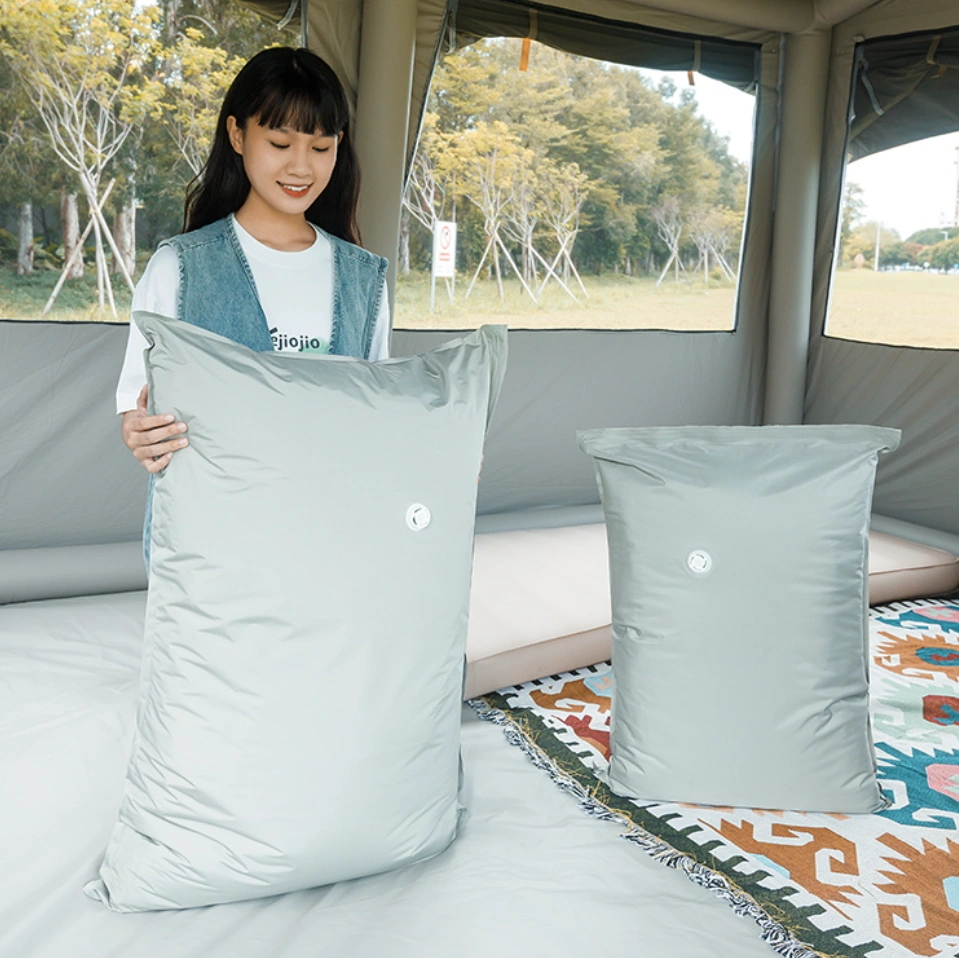
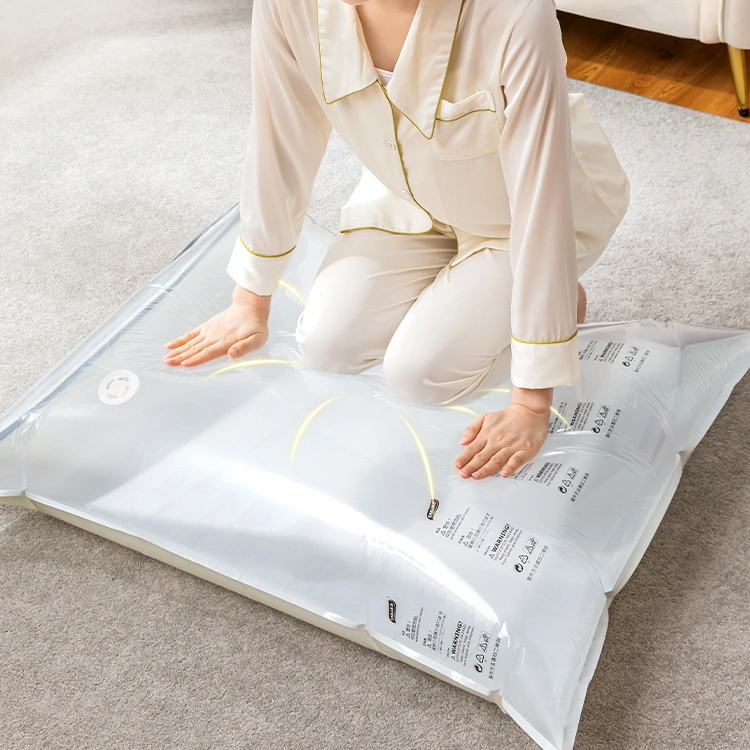
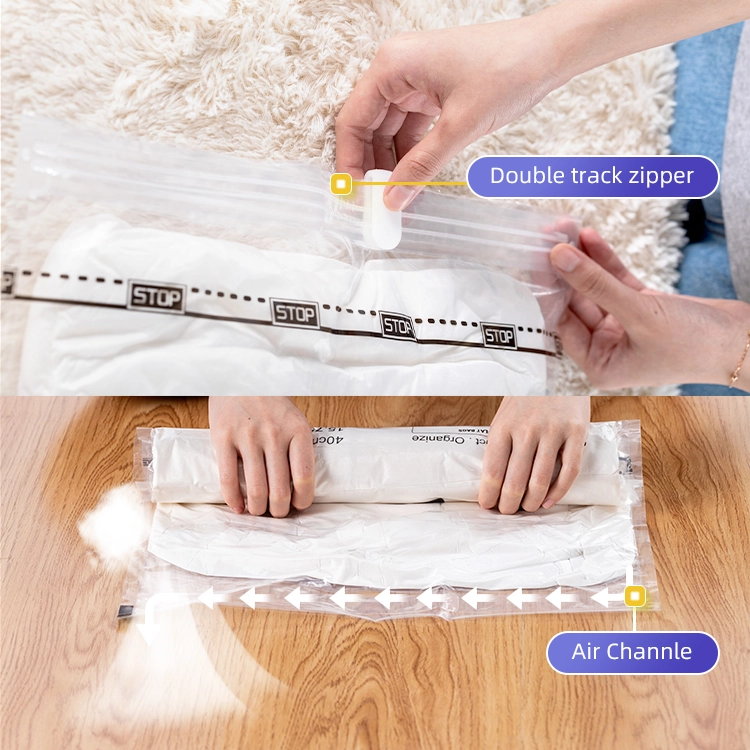
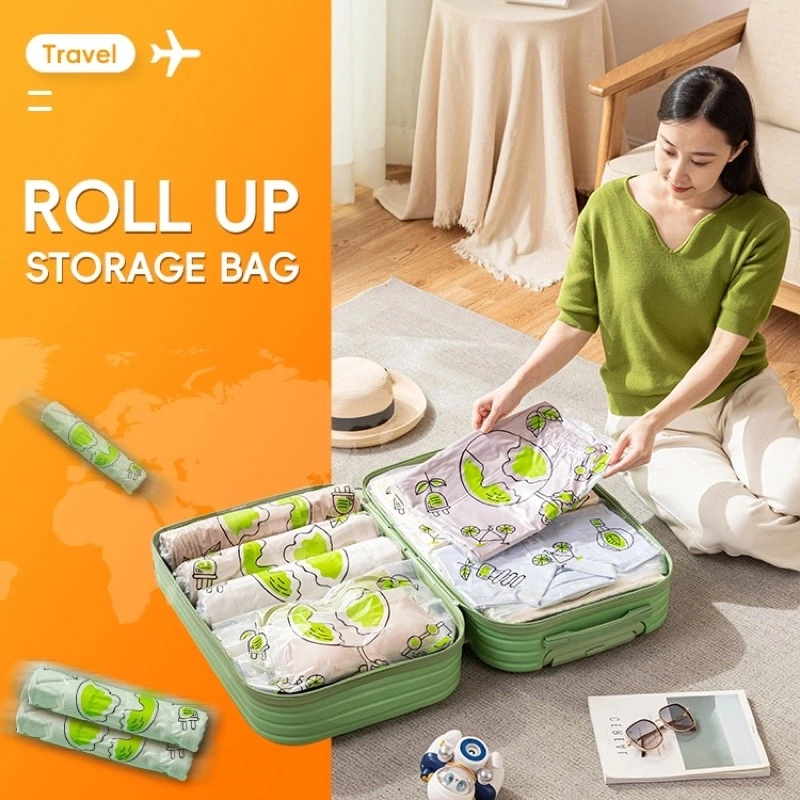
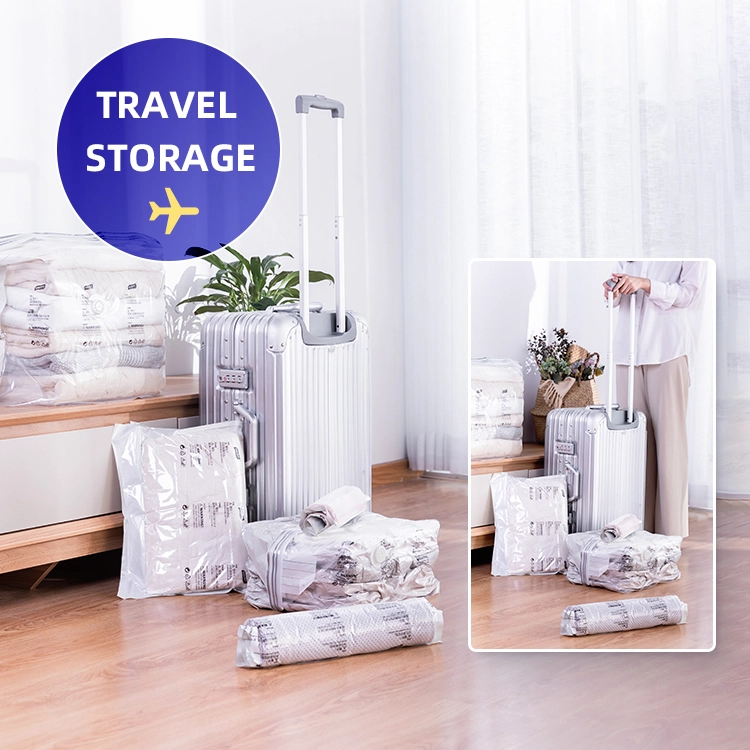
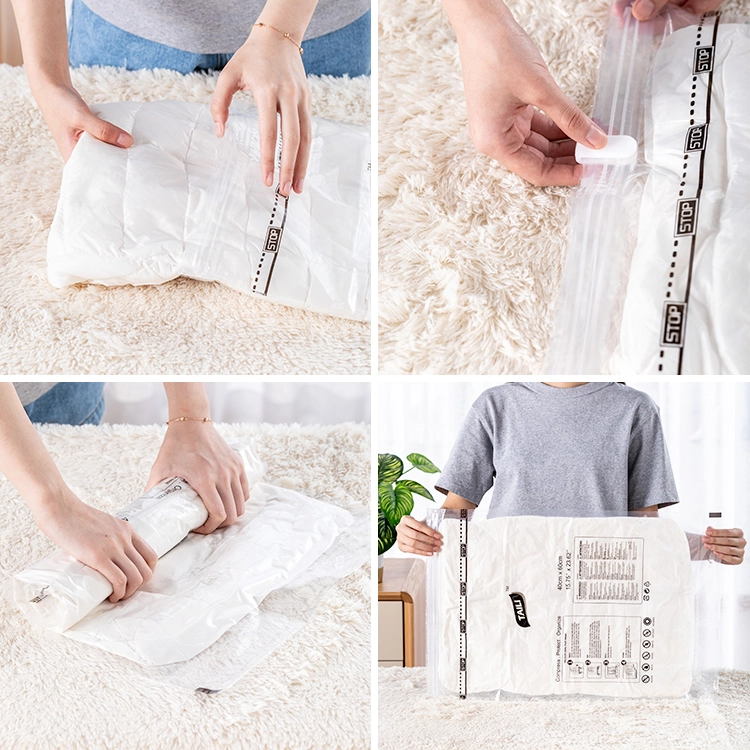
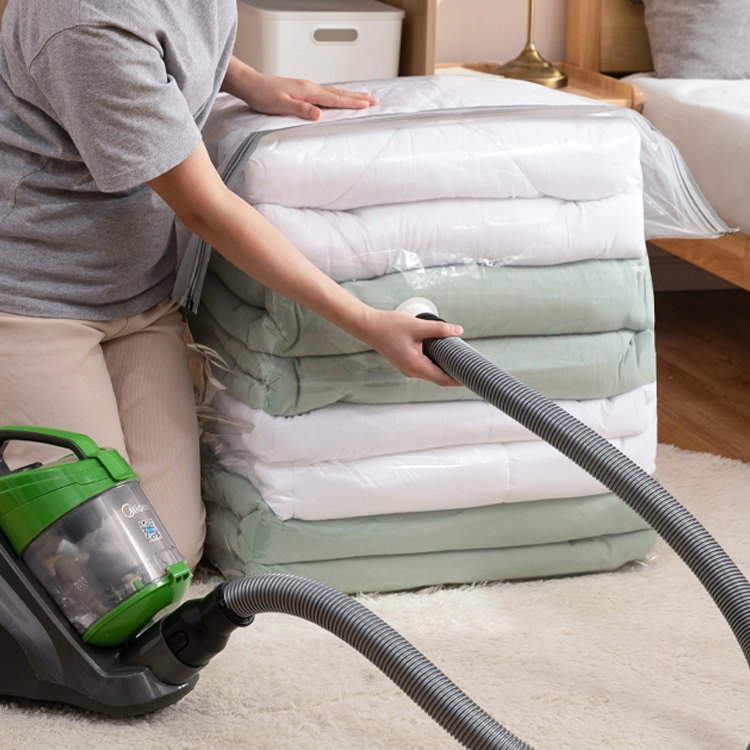
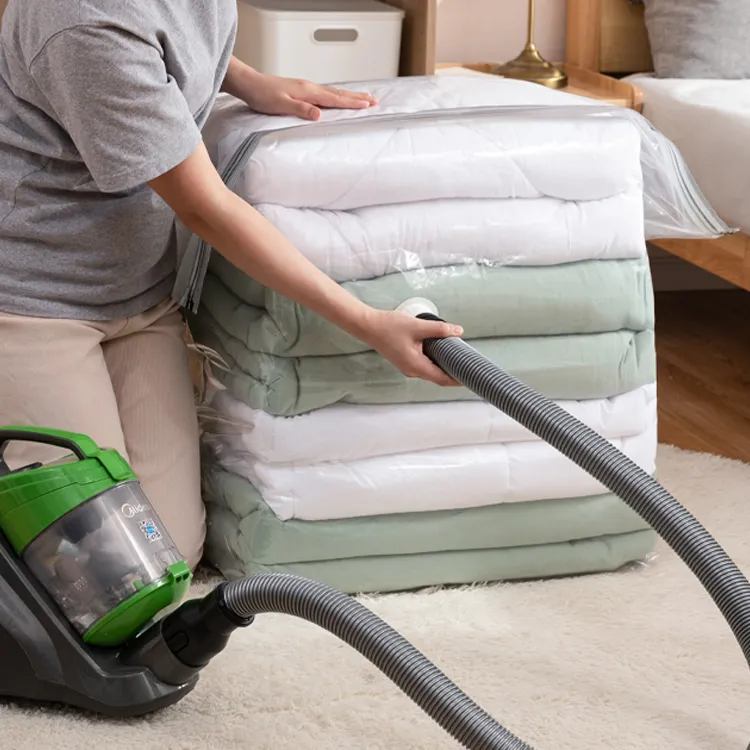
Vacuum compression bags are made from multi-layer plastic films and use a zipper seal plus a valve or air-release mechanism. Once clothing is placed inside, air is removed with a vacuum cleaner, hand pump, electric pump, or roll-up compression process.
The result is a flatter and denser package.
For large-volume textiles, vacuum compression can make a major difference. Independent product testing has found that quality vacuum storage bags can remain sealed after compression and help protect contents from water exposure in controlled tests. Testing also shows that these products are especially useful for large bedding, sheets, towels, and bulky textiles—items that naturally contain a large amount of trapped air.
Why Vacuum Compression Bags Perform Well
The key advantage is not that the bag makes clothing lighter. It does not. A vacuum bag reduces volume, not garment weight.
That distinction matters for air travel.
If your airline imposes a strict checked-baggage weight allowance, vacuum compression cannot solve an overweight suitcase. A compressed suitcase may look compact while still exceeding the weight limit. However, if your problem is a carry-on or checked suitcase that runs out of room before it reaches the allowed weight, vacuum bags can be highly effective.
A well-designed vacuum bag can help users:
- Fit more cold-weather garments into a fixed suitcase size
- Compress puffer jackets and thick fleece layers
- Separate clean clothing from worn clothing
- Reduce the space taken by scarves, hats, and gloves
- Add a barrier against dust, spills, and moisture
- Store off-season winter clothing after returning home
For long-haul travel, ski holidays, relocations, study-abroad trips, or seasonal wardrobe storage, these benefits can be substantial.
Limits of Vacuum Compression Bags
Vacuum compression bags are not perfect. Their biggest weakness is repacking convenience.
If you remove a jacket during your trip, you may need a pump or vacuum source to compress it again. This is not always available in a hotel, apartment, airport, cruise cabin, or remote travel destination.
They can also create a dense rectangular package that is less flexible than loosely packed clothing. That can make it harder to fill unusual gaps in a suitcase.
Some fabrics need special consideration:
- Down garments can generally be compressed for travel, but should not remain tightly compressed for unnecessarily long periods.
- Wool, cashmere, structured coats, and tailored garments may crease or lose shape when compressed too aggressively.
- Leather, fur, delicate embellishments, and heavily structured clothing should usually avoid vacuum storage.
- Clothing should always be clean and fully dry before sealing, because sealing moisture inside may create odor, mildew, or fabric damage.
For this reason, vacuum compression is most suitable for soft, clean, dry, resilient garments—not every item in a winter wardrobe.
How Standard Luggage Organizers Handle Winter Clothing
Standard luggage organizers include packing cubes, zippered fabric pouches, garment folders, shoe bags, and compartment organizers. Their primary job is not maximum compression. Their job is order.
A good luggage organizer creates categories inside the suitcase. One cube may hold thermal base layers. Another may hold socks and underwear. A third may carry sweaters. A separate pouch may hold gloves, hats, chargers, or toiletries.
Packing cubes can provide some mild compression when they use an additional zipper or tight construction. However, they do not remove air in the same way as a vacuum compression bag. As a result, they usually cannot match vacuum systems when packing thick winter coats, large sweaters, or down-filled garments.
Travel product testing commonly treats packing cubes as organization tools first. They can help travelers use suitcase space more efficiently, but their core advantage is categorization, not dramatic volume reduction.
Why Luggage Organizers Improve Travel Experience
For many travelers, being able to find an item quickly is worth more than achieving the smallest possible packed volume.
Standard luggage organizers offer several advantages:
- Open the suitcase and immediately see clothing categories
- Keep underwear, socks, electronics, and accessories separate
- Make security checks and hotel unpacking easier
- Allow daily repacking without a pump
- Help keep clean and dirty clothing apart
- Reduce the chance that small items disappear between large garments
- Make multi-destination trips easier to manage
This is particularly valuable for business travelers, families, frequent flyers, and travelers who stay in several hotels during one journey.
For example, a traveler visiting Sapporo, Seoul, and Harbin in winter may need to access gloves, thermal layers, and sweaters every day. In that case, one large vacuum-sealed bag containing all clothing could become inconvenient. Packing cubes would make daily outfit selection much faster.
Vacuum Compression Bags vs Standard Luggage Organizers: Detailed Comparison
Space-Saving Capacity
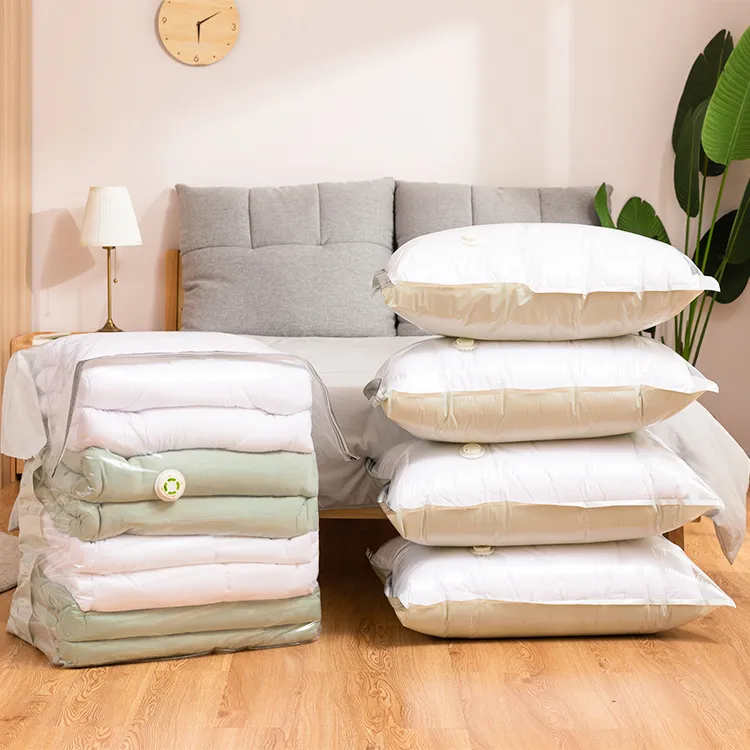
Vacuum compression bags are the clear winner when suitcase volume is limited.
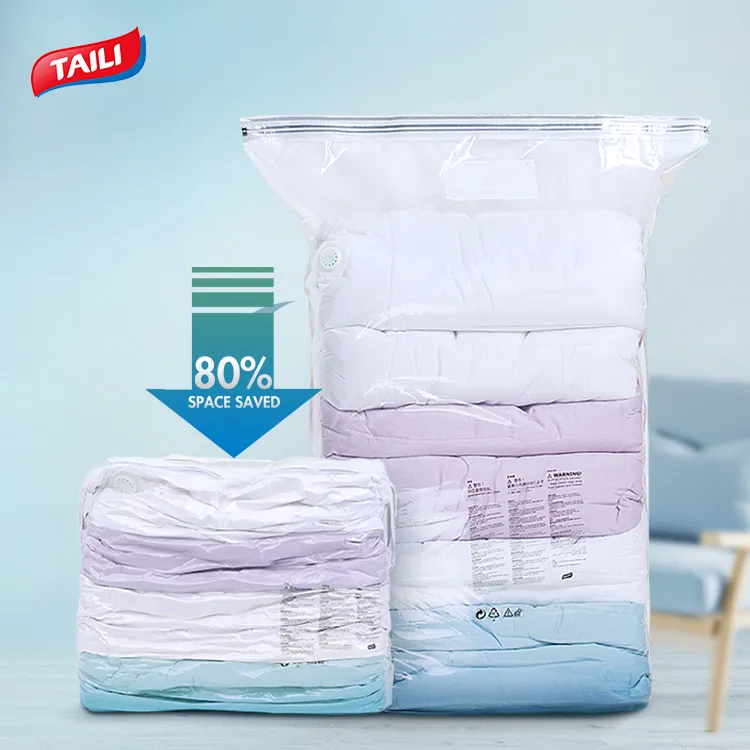
Bulky textiles can contain a considerable amount of air. Vacuum removal reduces this dead space and creates flatter parcels. Some tested and marketed products claim large reductions in volume, although actual results vary depending on garment type, bag size, packing technique, and seal quality. Real-world testing suggests users should treat extremely high compression claims with caution, because mixed winter clothing loads rarely compress at exactly the same rate.
Standard luggage organizers can improve layout efficiency, but they cannot remove internal air from a puffer coat or a thick fleece jacket. They mainly prevent loose garments from spreading through the suitcase.
Winner: Vacuum compression bags
Organization and Accessibility
Standard luggage organizers are more convenient when you need frequent access to clothing.
A packing cube system allows travelers to arrange items by category, destination, day, or family member. You can retrieve one sweater without disturbing the rest of the suitcase.
With vacuum bags, opening the seal typically means the compressed package expands. Repacking it may require a pump, vacuum, or manual compression process.
Winner: Standard luggage organizers
Clothing Care
The answer depends on the garment.
Vacuum compression bags work well for soft and durable textiles such as synthetic fleece, thermal underwear, casual knitwear, scarves, socks, and many down or synthetic-fill jackets intended for travel. However, long-term or excessive compression is less suitable for garments that rely on structure, delicate fibers, or natural loft.
Luggage organizers apply less pressure. They are generally the safer choice for:
- Cashmere sweaters
- Wool coats
- Blazers
- Structured outerwear
- Pleated garments
- Delicate knitwear
- Clothing that needs to look presentable immediately after arrival
Winner: Standard luggage organizers for delicate garments; vacuum bags for durable bulky garments
Moisture and Contamination Protection
A properly sealed vacuum compression bag can provide stronger protection from dust, splashes, and accidental moisture than a typical fabric packing cube. Controlled product tests have assessed vacuum bags for seal retention and water resistance, with certain bags keeping contents dry during brief immersion testing.
However, a bag only protects contents if it is sealed correctly. A poorly closed zipper, damaged valve, puncture, or sharp object in the suitcase can compromise the seal.
Standard luggage organizers may offer water-resistant fabric, but most are not airtight. They are better thought of as organizational containers rather than protective storage barriers.
Winner: Vacuum compression bags
Travel Convenience
Packing cubes are more convenient for travelers who move frequently. They require no special tools, no vacuum source, and no additional sealing process.
Vacuum bags are more convenient before departure than during a multi-stop journey. Their value is greatest when you can compress once, travel with the items packed, and unpack at the final destination.
Winner: Standard luggage organizers
Expert Packing Method: Use Both Products Together
The most effective winter packing solution is often a hybrid system.
Rather than putting everything into vacuum compression bags or relying only on packing cubes, divide clothing according to bulk, fragility, and frequency of use.
Step 1: Separate Clothing by Packing Priority
Create three groups before packing:
- High-bulk, low-access items: puffer jackets, thick fleece, spare sweaters, thermal sleepwear
- Daily-access items: underwear, socks, T-shirts, gloves, chargers, toiletries
- Shape-sensitive items: wool coats, cashmere, blazers, formal clothing, delicate knitwear
Step 2: Compress Only the Right Items
Place high-bulk, low-access clothing into vacuum compression bags.
Good candidates include:
- Extra sweaters
- Spare jackets
- Ski base layers
- Fleece pullovers
- Scarves and hats
- Pajamas
- Casual cold-weather clothing
Avoid overstuffing. Leave enough space near the zipper so the seal can close completely and consistently.
Step 3: Organize Daily Essentials Separately
Use standard luggage organizers for items you will need often.
A practical arrangement may include:
- One cube for underwear and socks
- One cube for daily tops and base layers
- One small pouch for hats, gloves, and accessories
- One shoe bag for boots or footwear
- One laundry bag for used clothing
Step 4: Pack Heavier Items Near the Wheels
For rolling luggage, place denser and heavier items near the wheel end. This improves suitcase balance and reduces the chance that the luggage tips forward when standing upright.
Step 5: Keep One Change of Clothing Accessible
Never seal every essential garment inside a vacuum bag.
Keep at least one easy-access outfit available, especially for delayed luggage, sudden weather changes, airport layovers, or overnight transit. This is particularly important when traveling through cold-weather destinations where losing access to a warm layer can quickly become uncomfortable.
A Practical Winter Packing Example
Imagine a seven-day winter trip with the following clothing:
- One puffer jacket
- Two sweaters
- One fleece hoodie
- Two thermal base-layer sets
- Three pairs of trousers
- Seven underwear sets
- Seven pairs of socks
- Gloves, hat, scarf, and sleepwear
A packing-cube-only system can keep the suitcase organized, but the puffer jacket and thick sweaters may occupy a large share of space.
A vacuum-bag-only system can significantly reduce volume, but retrieving underwear, a sweater, or a thermal shirt each day becomes inconvenient.
A better approach is:
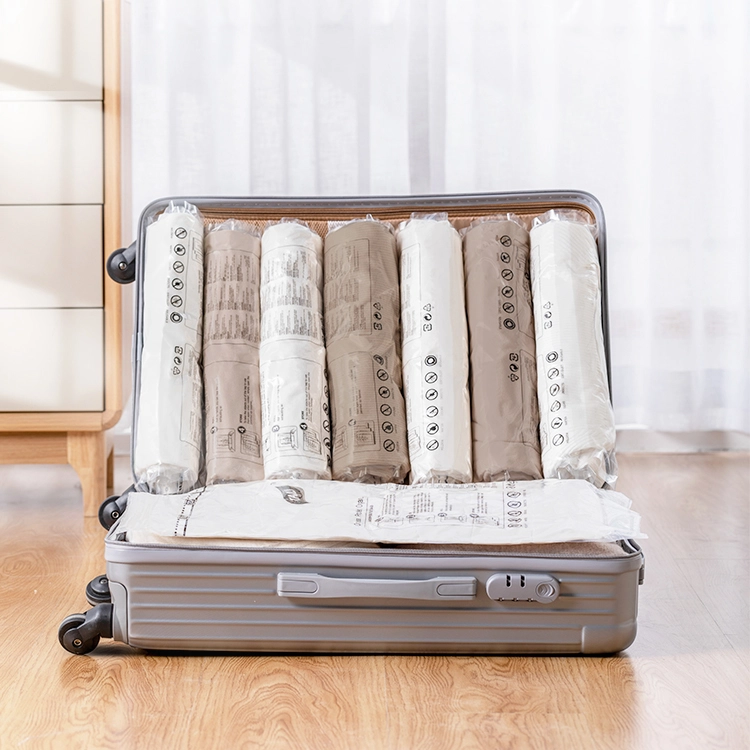
- Put the puffer jacket, one spare sweater, the fleece hoodie, sleepwear, and scarf in one vacuum compression bag.
- Place thermal base layers in a medium packing cube.
- Store underwear and socks in a small organizer.
- Keep gloves, hat, and charging cables in an accessible top pouch.
- Roll trousers and place them around the compressed bag to fill side gaps.
This approach provides space efficiency, garment separation, and better daily usability.
What Buyers Should Look for in Vacuum Compression Bags
For retailers, distributors, hospitality buyers, travel brands, and consumers, product quality matters more than simply choosing the lowest-priced bag.
A poor-quality vacuum compression bag may leak air, tear at the seams, have a difficult zipper, or use a valve that does not maintain suction.
Important selection criteria include:
- Material construction: Look for durable multi-layer film designed to resist punctures and tears.
- Seal design: A reliable double zipper or reinforced closure helps prevent air leakage.
- Valve performance: The valve should allow efficient air removal and close securely after use.
- Bag thickness: Thicker material can improve durability, but it should remain flexible enough for travel.
- Size range: Different bag sizes help users pack coats, sweaters, bedding, accessories, and smaller garments efficiently.
- Pump compatibility: Confirm whether the bag works with a standard vacuum, hand pump, or portable electric pump.
- Reusability: A travel product should withstand repeated opening, closing, compression, and transport.
- Clear instructions: Users need practical guidance on filling level, sealing method, and garment suitability.
At Taili Technology, material performance is not treated as an afterthought. The company’s technical foundation includes work in nanoparticle synthesis and modification, polymer synthesis, and precision coating, with material platforms spanning safety protection materials, functional film materials, and surface and interface materials. This kind of materials-focused approach matters because a reliable compression bag depends on film strength, sealing performance, valve reliability, and consistent production quality.
Taili states that it has developed vacuum storage technology over many years and has participated in aerospace product development cooperation in China. Its corporate materials also describe a broad patent portfolio and repeated use of related products in Chinese space missions. For buyers, this background can be relevant when evaluating whether a supplier has the engineering capability to produce dependable storage and compression solutions at scale.
Final Verdict: Choose Compression for Volume, Organizers for Control
For bulky winter clothing, vacuum compression bags are the better choice when your priority is fitting more into less space. They are especially effective for puffer jackets, fleece garments, thermal layers, scarves, and spare sweaters.
However, standard luggage organizers remain essential for orderly packing, quick retrieval, and frequent repacking. They are also better suited to garments that need to retain their shape.
The strongest travel-packing system combines both:
- Use vacuum compression bags for large, soft, low-access winter clothing
- Use luggage organizers for daily essentials and delicate garments
- Keep one warm outfit accessible without needing to reopen a compressed bag
- Check airline weight limits, because compression reduces volume—not weight
If you are sourcing reliable vacuum storage solutions for travel, seasonal storage, retail, or private-label product lines, choose a supplier with proven material expertise, dependable sealing technology, scalable manufacturing, and clear quality-control standards. Explore Taili Technology’s vacuum storage solutions to build a more space-efficient, organized, and dependable winter packing experience.
FAQ
1. Do vacuum compression bags really save space for winter clothes?
Yes. Vacuum compression bags can reduce the volume occupied by bulky clothing by removing trapped air. They are most effective for puffer jackets, fleece garments, sweaters, scarves, bedding, and other soft textiles. Actual space savings depend on garment material, bag design, and sealing quality.
2. Are vacuum compression bags safe for down jackets?
They are generally suitable for short-term travel packing when used properly. However, avoid keeping down jackets compressed for longer than necessary. After arrival, remove the jacket from the bag and allow it to regain its loft before wearing.
3. Can packing cubes replace vacuum compression bags?
Packing cubes cannot fully replace vacuum compression bags when maximum volume reduction is needed. They help organize clothing and can create mild compression, but they do not remove air from bulky garments. They are best used together with vacuum bags.
4. Do vacuum bags make luggage lighter?
No. Vacuum bags reduce the amount of space clothing occupies, but they do not reduce the actual weight of clothing. Always check airline baggage weight limits before traveling.
5. What winter clothes should not go in vacuum compression bags?
Avoid using vacuum compression bags for structured coats, tailored suits, delicate wool garments, cashmere, leather, fur, and items with fragile embellishments. These materials can crease, flatten, or lose their intended shape under prolonged pressure.
6. Do vacuum compression bags need a vacuum cleaner?
Some models work with a standard vacuum cleaner, hand pump, or portable electric pump. Others use a roll-up design that expels air manually. For multi-stop travel, choose a system that you can conveniently reseal at your destination.
7. How can I prevent vacuum compression bags from leaking?
Do not overfill the bag. Keep fabric away from the zipper track, close the zipper fully, make sure the valve cap is tight, and avoid placing sharp items near the bag. Before departure, leave the bag sealed for several hours to check whether it expands.
References
1. Taili Group – “About and Vacuum Storage Technology Background” – Company background and overview of Taili’s vacuum storage technology. https://en.zs-taili.com/home/page/index/1
2. Better Homes & Gardens – “Vacuum Storage Bag Testing and Evaluation” – Hands-on testing and evaluation of vacuum storage bags. https://www.bhg.com/best-vacuum-storage-bags-7567870
3. Travel + Leisure – “Packing Cube Testing and Travel Organization Guidance” – Testing of packing cubes with guidance on travel organization. https://www.travelandleisure.com/travel-tips/packing-tips/best-packing-cubes-for-travel
4. Travel Fashion Girl – “Vacuum Storage Bags and Packing Cube Comparison” – Comparison of vacuum storage bags and packing cubes for travel. https://www.travelfashiongirl.com/best-vacuum-storage-bags-for-clothes/
5. Real Simple – “Vacuum Storage Bags for Bulky Clothing and Household Textiles” – Recommendations for vacuum storage bags for bulky clothing and household textiles. https://www.realsimple.com/best-vacuum-storage-bags-7566429
6. The Spruce – “Vacuum Storage Bag Testing for Winter Clothing” – Testing of vacuum storage bags for storing winter clothing. https://www.thespruce.com/the-best-vacuum-storage-bags-5224944
7. China Manned Space Agency – “China Manned Space Program Information” – Official information on China’s manned space program. https://en.cmse.gov.cn/news/201310/t20131031_44562.html
Hot Tags: Vacuum Storage Bags, Vacuum Compression Bags, Vacuum Storage Bag Manufacturer, Vacuum Storage Bags Wholesale, Custom Vacuum Storage Bags, OEM Vacuum Compression Bags, Travel Compression Bags, Space Saver Bags, Vacuum Bags For Clothes, Packing Cubes Wholesale