Content Menu
● Quick Answer: Which Saves More Space?
● What Is the Difference Between Compression Travel Bags and Suitcases?
● Compression Travel Bags: Where They Deliver Real Value
>> Best Items to Put in Compression Bags
>> The Material Science Behind Better Compression
● Suitcases: Why They Still Matter on Long Trips
● The Space Efficiency Test: Volume Is Not the Whole Story
>> 1. Internal Volume Efficiency
>> 3. Transportation Efficiency
● Compression Travel Bags vs Suitcases for Different Long Trips
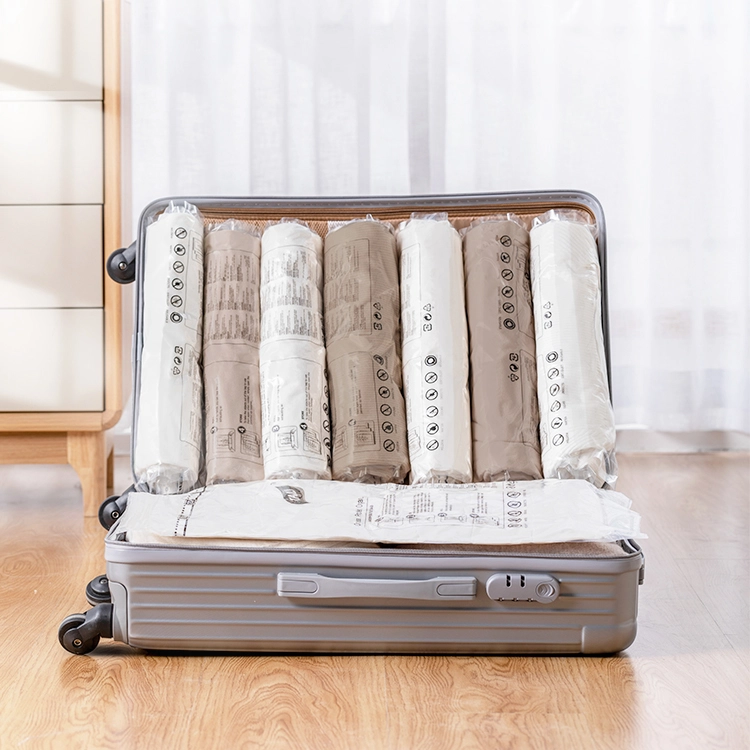
● How to Pack a Suitcase With Compression Travel Bags
>> Step 1: Check Your Airline’s Baggage Rules
>> Step 2: Separate by Use, Not Just by Clothing Type
>> Step 3: Compress Soft Clothing Only
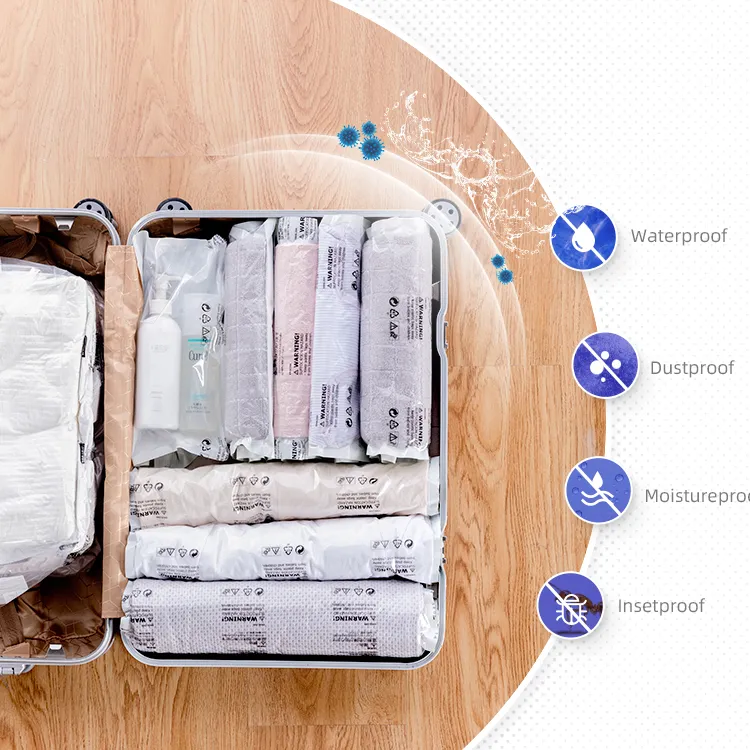
>> Step 4: Leave Shoes and Toiletries Outside the Compression Bags
>> Step 5: Put Heavier Items Near the Wheels
>> Step 6: Keep One Repacking Bag Accessible
● Expert Insight: Compression Can Create an Overweight Bag
● Choosing the Right Compression Travel Bag
>> Manual Roll-Up vs Vacuum-Pump Bags
>> Size Variety Matters More Than One Giant Bag
>> Sealing Reliability Is a Long-Trip Requirement
● Final Verdict: Use Both for the Best Long-Trip Packing System
● FAQs
>> Do compression travel bags really save space?
>> Are compression travel bags allowed on airplanes?
>> Do vacuum compression bags make luggage heavier?
>> Are compression travel bags better than packing cubes?
>> Can I use compression bags for a carry-on suitcase?
>> What should not go inside a compression travel bag?
>> Is a hard-shell or soft-shell suitcase better with compression bags?
For long trips, compression travel bags usually deliver better packing space efficiency than a suitcase alone because they remove trapped air from bulky clothing and reduce unused gaps inside your luggage. However, a quality suitcase remains essential for structure, mobility, impact protection, and keeping your total baggage weight under control.
The most practical solution is not always compression travel bags vs suitcases as an either-or decision. For most travelers, the winning combination is a durable suitcase paired with reliable compression travel bags. The suitcase manages protection and transport; the compression bags help you use its internal volume more intelligently.
This guide compares compression travel bags and suitcases from the perspective of long-haul travelers, frequent business flyers, family travelers, outdoor users, and people moving between climates. It also explains how to pack efficiently without creating an overweight bag, damaged clothing, or a stressful airport experience.
Quick Answer: Which Saves More Space?
If your priority is maximum clothing volume inside existing luggage, compression travel bags are more space-efficient.
If your priority is overall luggage durability, rolling comfort, security, and protection, a suitcase performs better.
| Factor | Compression Travel Bags | Suitcases |
|---|---|---|
| Clothing volume reduction | Excellent for soft, bulky items | No direct compression effect |
| Weight reduction | No; clothes weigh the same | No; suitcase adds its own weight |
| Protection from impacts | Limited | Strong, especially hard-shell models |
| Organization | Strong when sorted by category | Good with compartments and dividers |
| Airport mobility | Depends on outer luggage | Excellent with spinner wheels and handles |
| Best use case | Maximizing internal packing capacity | Transporting and protecting belongings |
| Ideal long-trip setup | Used inside a suitcase or travel backpack | Used with compression bags for bulky clothing |
Bottom line: Compression travel bags win on internal packing efficiency. Suitcases win on transportation efficiency. Together, they create the most effective long-trip packing system.
What Is the Difference Between Compression Travel Bags and Suitcases?
A suitcase is an external luggage container. It gives your belongings shape, protection, compartments, wheels, handles, and a lockable shell. It is designed to move items safely through airports, stations, hotels, and vehicles.
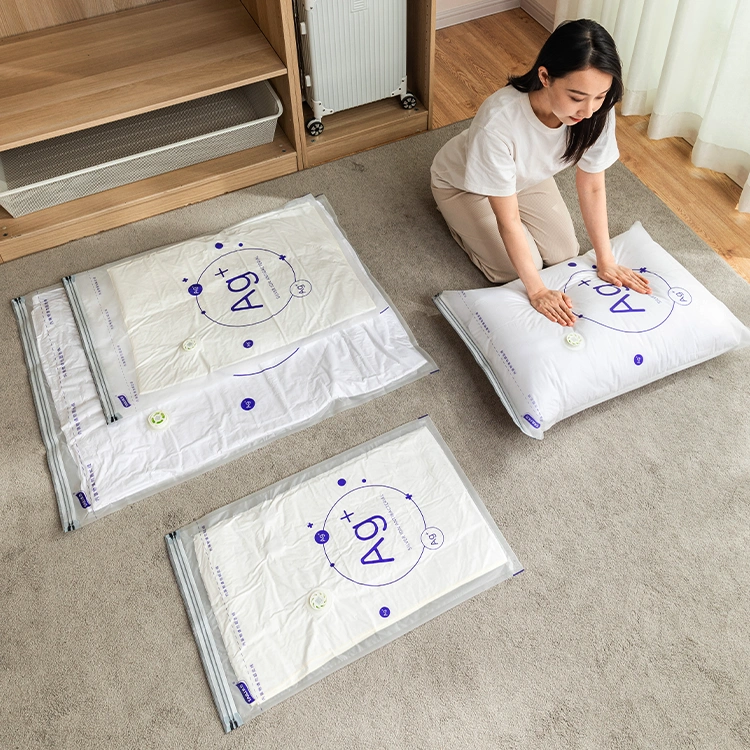
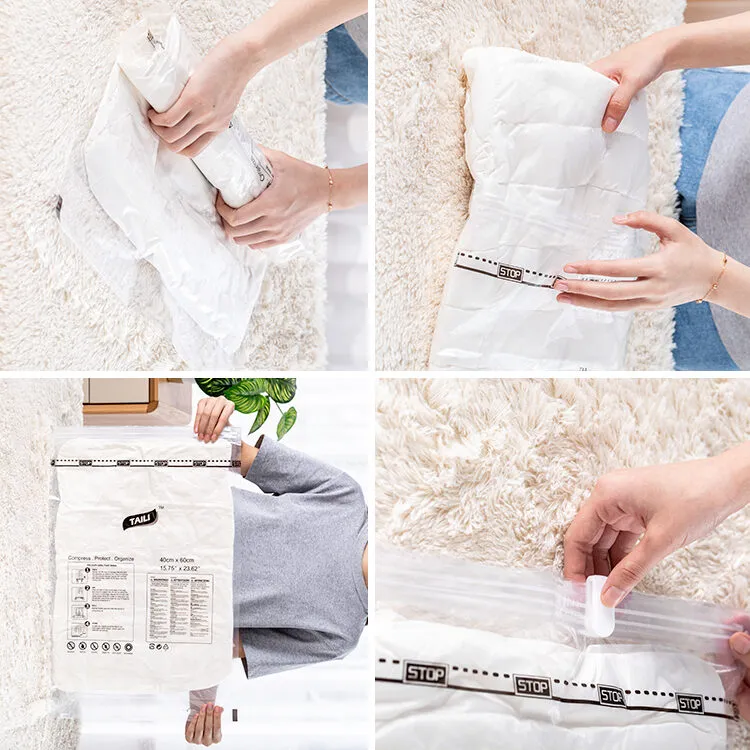
A compression travel bag is an internal packing tool. It reduces the volume of compressible items, especially clothing, bedding, jackets, sweaters, towels, and soft gear. Some models use a hand pump or electric pump. Others use a roll-up design that lets travelers push air out through one-way valves.
The difference is important because travelers often confuse space saved with weight saved.
Compression bags remove air. They do not remove fabric, shoes, toiletries, electronics, or the actual weight of what you pack. A vacuum-compressed winter coat takes up far less room, but it weighs almost exactly the same as before.
That distinction matters because many airlines apply strict cabin and checked-baggage rules. As a general reference, many airlines use carry-on dimensions of 56 × 45 × 25 cm, including wheels and handles. Checked baggage policies differ by airline and route, while a 23 kg per-bag threshold is widely used as a handling guideline and 158 cm in total dimensions is common for checked luggage. Always confirm the current policy of the airline operating your flight before packing.
Compression Travel Bags: Where They Deliver Real Value
Compression travel bags work best when your luggage contains items with a high air-to-weight ratio. These are usually soft goods that trap air between fibers or layers.
Best Items to Put in Compression Bags
Use compression bags for:
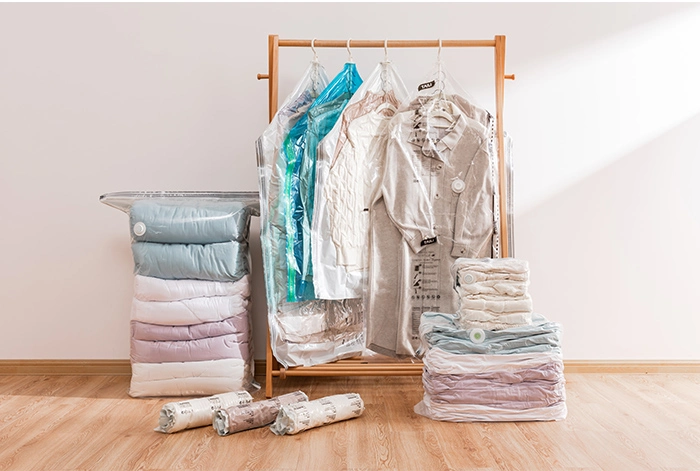
- Puffer jackets, fleece layers, and down-filled outerwear
- Sweaters, hoodies, and knitwear
- T-shirts, leggings, and casual clothing
- Towels and lightweight blankets
- Seasonal clothing for extended stays
- Children’s clothing and spare family outfits
- Bulky sleepwear and soft travel gear
Avoid compressing certain items for long periods:
- Structured blazers or formalwear
- Leather garments
- Delicate fabrics that crease easily
- Electronics and battery-powered devices
- Fragile accessories
- Food products that could be crushed or leak
- Wet clothing, unless the bag is specifically designed for temporary wet-item separation
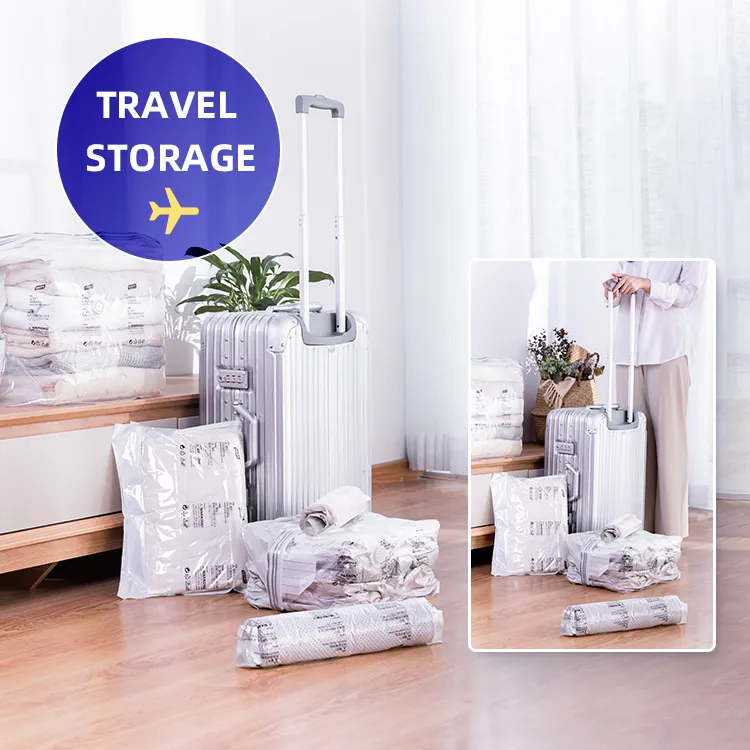
The biggest benefit appears when a traveler must pack for several climates. For example, a traveler flying from Tokyo to a cold European destination may need lightweight daily clothing, a waterproof jacket, knit layers, gloves, and a bulky coat. Compression travel bags can turn a loose pile of outerwear into flat, stackable sections that fit around the suitcase frame.
The Material Science Behind Better Compression
Compression is not just about a valve. It depends on the relationship between the bag film, sealing system, air-release design, and the traveler’s packing behavior.
A high-quality compression bag needs to balance several functions:
- Low air permeability to help maintain compression
- Reliable sealing performance to reduce leakage
- Puncture resistance during handling and travel
- Flexibility so the bag conforms to suitcase corners
- Clear visual access so travelers can find items quickly
- A stable valve or closure system that remains usable after repeated cycles
For frequent travel, the failure point is often not the concept of vacuum storage itself. It is poor-quality material, an incomplete seal, an overloaded zipper track, or sharp objects placed beside the bag.
This is why material engineering matters. Taili Technology’s background in high-performance materials, polymer synthesis, precision coating, and vacuum-storage technology is relevant to this category. Taili states that it led the formulation of an industry standard for vacuum compression storage bags in 2021, reflecting the importance of repeatable product design, sealing consistency, and manufacturing discipline in a product that travelers repeatedly open, close, compress, and transport.
Suitcases: Why They Still Matter on Long Trips
A suitcase does not reduce the volume of clothing by itself, but it solves practical problems that compression bags cannot.
A good suitcase provides:
- Impact protection for fragile belongings
- Rolling mobility through airports and stations
- A stable shape for stacking and storage
- Separated compartments for shoes, toiletries, and clothing
- Security features such as integrated locks
- Better load distribution than a soft compression bag carried by hand
- Weather and dirt protection during travel transfers
For long trips involving multiple hotels, train connections, or urban walking, a suitcase can reduce physical strain. Four-wheel spinner cases are easier to maneuver in smooth airport terminals, while two-wheel luggage can offer greater stability over uneven sidewalks.
Hard-shell suitcases are useful for travelers carrying cameras, product samples, gifts, cosmetics, or souvenirs. Soft-shell cases can be helpful when flexibility and exterior pockets matter more than rigid protection.
The best suitcase is not necessarily the largest one. A larger suitcase encourages overpacking and can become difficult to lift into a car trunk, train rack, or baggage scale area.
The Space Efficiency Test: Volume Is Not the Whole Story
To compare compression travel bags and suitcases fairly, travelers should assess three different forms of efficiency.
1. Internal Volume Efficiency
This measures how much clothing and soft gear fit inside the available luggage space.
Compression bags perform exceptionally well here. They reduce air gaps between garments and create flatter, more stackable blocks.
Suitcases without compression tools often leave empty pockets of space around shoes, curved corners, and uneven clothing piles.
Winner: Compression travel bags.
2. Weight Efficiency
This measures whether the traveler can remain under airline weight limits.
Compression bags do not make a bag lighter. In fact, better space use can encourage travelers to pack more items, increasing the chance of exceeding a checked-baggage limit.
A suitcase also adds tare weight. A heavy hard-shell case can reduce the amount of clothing or equipment a traveler can carry before reaching an airline’s allowance.
Winner: Neither automatically wins. Choose lightweight luggage, use a luggage scale, and set a target weight before you close the bag.
3. Transportation Efficiency
This measures how easily luggage moves through the real travel journey.
A suitcase is clearly more efficient for airport transit, hotel movement, security lines, taxis, and long terminal walks. Compression bags cannot replace wheels, a telescopic handle, or a protective shell.
Winner: Suitcases.
Compression Travel Bags vs Suitcases for Different Long Trips
| Trip Type | Better Primary Choice | Why |
|---|---|---|
| Two-week city vacation | Suitcase plus compression bags | Combines mobility with clothing capacity |
| Winter trip | Compression travel bags | Bulky outerwear creates the largest volume savings |
| Business travel | Carry-on suitcase with limited compression | Helps protect work clothing and avoid excessive wrinkles |
| Family travel | Medium or large suitcase plus categorized bags | Simplifies packing for multiple people |
| Backpacking | Compression bags inside a travel backpack | Reduces bulk without needing a suitcase |
| Relocation or long stay | Large suitcase plus vacuum bags | Useful for seasonal clothing and bedding |
| Road trip | Compression bags or soft duffels | Flexible shapes fit vehicle storage spaces |
| Cruise travel | Suitcase plus compression bags | Handles formalwear, casualwear, and excursion clothing efficiently |
How to Pack a Suitcase With Compression Travel Bags
A disciplined packing sequence delivers better results than simply vacuuming every item into one large bag.
Step 1: Check Your Airline’s Baggage Rules
Confirm carry-on dimensions, checked-bag size, piece allowance, and weight limit. Airline conditions vary by route, cabin, ticket type, and aircraft. A bag that fits one airline’s cabin policy may need to be checked on another carrier.
Step 2: Separate by Use, Not Just by Clothing Type
Instead of putting every garment into one compression bag, group items by when you will need them.
A practical system may include:
- Arrival-day clothing
- Daily casual clothing
- Cold-weather layers
- Laundry or used clothing
- Children’s spare outfits
- Beach, gym, or outdoor gear
This method reduces the need to unpack your entire suitcase in a hotel room.
Step 3: Compress Soft Clothing Only
Place soft, clean, dry clothing in each bag. Fold garments into low, even layers. Avoid creating a thick lump in the center, because uneven packing makes compression less stable and wastes suitcase space.
Step 4: Leave Shoes and Toiletries Outside the Compression Bags
Shoes need separate protection, ideally in shoe bags. Toiletries should remain accessible and upright in a leak-resistant pouch. Never rely on a compression bag as the only barrier against liquid spills.
Step 5: Put Heavier Items Near the Wheels
In a rolling suitcase, place shoes, dense clothing, and heavier compressed bags near the wheel end. This improves stability when the case is upright.
Step 6: Keep One Repacking Bag Accessible
The return trip is often harder than the outbound journey. Clothes may be less neatly folded, purchases may have been added, and hotel rooms may not have a pump.
Choose at least one roll-up compression travel bag that can be closed and compressed manually. This gives you a practical recovery option before returning to the airport.
Expert Insight: Compression Can Create an Overweight Bag
The most common packing mistake is assuming that a flatter suitcase is automatically a better suitcase.
It is not.
A compression system lets travelers fit more into the same case. That benefit can become a drawback if it leads to a bag that exceeds the airline’s weight limit or becomes difficult to lift safely.
Use this simple packing rule:
\text{Packing Capacity} = \text{Available Volume} + \text{Weight Allowance} + \text{Handling Ability}
If one of these factors fails, your packing system fails.
For example, you may successfully compress six sweaters, a jacket, and several extra outfits into one medium suitcase. But if the bag reaches 25 kg, it may exceed a common 23 kg handling guideline, create extra charges depending on the airline and fare, or become physically difficult to manage.
A better approach is to use compression to create space for essentials, not space for unnecessary extras.
Choosing the Right Compression Travel Bag
Not all travel compression bags are made for the same job. Before selecting a product, consider the following features.
Manual Roll-Up vs Vacuum-Pump Bags
Manual roll-up compression bags are ideal for travelers who do not want to carry a pump. They are convenient for return journeys, short trips, and users who need a simple system.
Vacuum-pump bags may achieve stronger compression for bulky clothing, bedding, and long-term packing. They are more suitable for relocation, seasonal travel, family packing, or travelers who can access a pump at both ends of the journey.
Size Variety Matters More Than One Giant Bag
Large bags seem efficient, but several medium bags usually create better organization.
A mixed set may include:
- Small bags for underwear, socks, or children’s clothing
- Medium bags for shirts and daily outfits
- Large bags for jackets, sweaters, or bedding
Smaller sections make it easier to balance luggage weight and locate what you need.
Sealing Reliability Is a Long-Trip Requirement
A bag that slowly re-expands can disrupt your entire suitcase layout. Look for a secure closure, strong valve design, durable film, and clear user instructions.
Taili’s long-term development in vacuum storage includes participation in Chinese aerospace product development since 2008. The company says its vacuum-storage products have accompanied Tiangong, Shenzhou, Tianzhou, and related spacecraft series on 23 space missions. This background does not mean every travel bag is designed for spacecraft use, but it highlights why repeatability, material performance, and sealing reliability are meaningful design priorities in vacuum-storage applications.
Common Mistakes to Avoid
- Compressing damp garments, which can trap odor and moisture.
- Packing fragile items beside tightly compressed clothing, which can increase pressure in the suitcase.
- Overfilling bags beyond the seal line, which raises the chance of leakage.
- Using one oversized bag, making it hard to find specific clothing.
- Forgetting that compression does not reduce weight.
- Ignoring return-trip packing needs, especially if a pump is unavailable.
- Skipping an airline policy check before departure.
- Packing power banks or spare lithium batteries in checked luggage. These items are generally required in carry-on baggage, subject to applicable airline and safety rules.
Final Verdict: Use Both for the Best Long-Trip Packing System
For long trips, compression travel bags provide better space efficiency, while suitcases provide better protection and transportation convenience.
Choose compression travel bags when you need to reduce the volume of jackets, sweaters, towels, and other soft items. Choose a suitcase when you need wheels, structure, impact protection, and a practical way to move through the travel journey.
The most efficient setup is a lightweight, well-organized suitcase combined with durable compression travel bags in several sizes. This approach helps you pack by category, use vertical space effectively, keep essential items accessible, and avoid the disorder that comes from loose clothing.
For brands, retailers, and travel-product buyers, dependable compression performance depends on more than a one-way valve. It requires strong material selection, consistent sealing, user-focused sizing, repeatable production processes, and a clear understanding of how people actually pack and travel.
Ready to improve your long-trip packing experience? Choose compression travel bags designed for repeated use, pair them with a lightweight suitcase, and build a packing system around your actual itinerary—not just the empty space in your luggage.
FAQs
Do compression travel bags really save space?
Yes. They remove trapped air from soft, compressible items such as sweaters, jackets, towels, and casual clothing. They do not reduce the physical weight of those items.
Are compression travel bags allowed on airplanes?
Generally, yes. Compression travel bags can be used in carry-on or checked luggage, provided the complete bag meets the airline’s size, weight, and safety rules. Check the airline’s latest baggage policy before departure.
Do vacuum compression bags make luggage heavier?
No. Removing air reduces volume, not weight. However, compression can make it easier to overpack, so weigh your finished luggage before traveling.
Are compression travel bags better than packing cubes?
Compression bags are better for reducing the volume of bulky soft items. Packing cubes are often better for everyday organization, quick access, and minimizing wrinkles. Many frequent travelers use both.
Can I use compression bags for a carry-on suitcase?
Yes, especially for soft clothing and outerwear. But do not overfill the case. The completed carry-on must still meet the airline’s specific size and weight allowance.
What should not go inside a compression travel bag?
Avoid wet clothing, fragile items, electronics, lithium batteries, sharp objects, delicate formalwear, and anything likely to leak or be damaged by pressure.
Is a hard-shell or soft-shell suitcase better with compression bags?
A hard-shell suitcase offers better impact protection and a fixed packing shape. A soft-shell suitcase offers more flexibility and external pockets. Either can work well with compression bags; your choice depends on whether protection or expandability matters more.
References
1. International Air Transport Association – “Passenger Baggage Rules” – Official IATA guidance on passenger baggage rules for air travel. https://www.iata.org/en/programs/ops-infra/baggage/passenger-baggage-rules/
2. Taili Group – “About Us and Development History” – Company background, development history, product categories, and global market information. https://www.taili-group.com/about-us/
3. Taili Technology – “Shenzhou-13 and Space Vacuum Storage Products” – Taili’s involvement with Shenzhou-13 and its space vacuum storage products. https://en.zs-taili.com/home/article/detail/36/804
4. International Air Transport Association – “Travel and Baggage Guidance” – IATA guidance for travelers on baggage and travel matters. https://www.iata.org/en/youandiata/travelers/baggage/
5. Travelpro – “International Carry-On Sizes and Luggage Standards” – Guide to international carry-on size limits and luggage standards. https://travelpro.com/pages/guide-to-international-luggage-standards
6. IATA – “Safe Travel With Lithium Batteries” – IATA safety guidance on traveling with lithium batteries and dangerous goods. https://www.iata.org/en/youandiata/travelers/baggage/dangerous-goods/
Hot Tags: Compression Travel Bags, Vacuum Storage Bags, Travel Compression Bags, Vacuum Seal Bags, Suitcase Packing Solutions, Luggage Space Saver Bags, Travel Storage Bag Manufacturer, Vacuum Bag Supplier, OEM Compression Bags, Wholesale Travel Bags