Content Menu
● Which Vacuum Bags Are Best for Your Travel Style?
>> Best for Travelling Without a Pump
>> Best for Bulky Clothes and Repeated Repacking
● What Makes a Good Travel Vacuum Bag?
>> A Closure You Can Seal Consistently
>> Materials Suited to Repeated Handling
>> Dimensions That Match Your Suitcase
>> A Realistic Repacking Method
● How TAILI Fits into a Travel Packing Shortlist
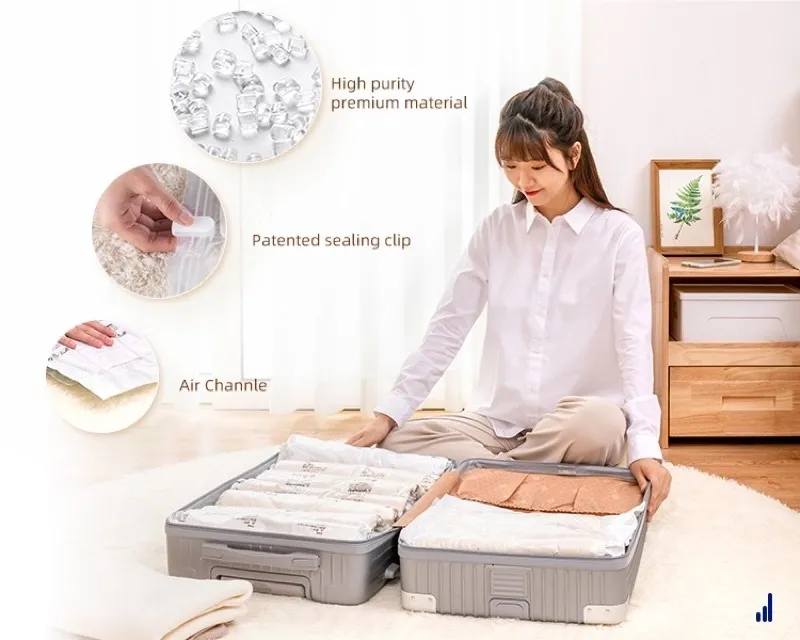
>> Features of TAILI’s Wireless-Pump Travel Bag
>> How to Interpret the Space-Saving Claim
● How Much Space Do Vacuum Bags Really Save?
>> Measure the Whole Packing System
>> Remember That Smaller Does Not Mean Lighter
● A Practical Overnight Test Before You Travel
● How to Pack Travel Vacuum Bags Effectively
>> Step 1: Separate Compression-Friendly Items
>> Step 2: Pack Flat, Without Overfilling
>> Step 3: Follow the Correct Compression Sequence
>> Step 4: Pack for Access, Not Just Density
>> Step 5: Prepare for the Return Journey
● Vacuum Bags vs Compression Packing Cubes
● Choose Your Bag Around the Journey
>> Are Vacuum Bags Allowed in Carry-On Luggage?
>> What Are the Best Vacuum Bags for Travelling Without a Pump?
>> Do Vacuum Bags Make Luggage Lighter?
>> Can Vacuum Bags Wrinkle Clothes?
>> Why Does My Travel Vacuum Bag Reinflate?
>> Are TAILI Vacuum Bags Worth Considering?
The best vacuum bags for travelling are the ones you can seal reliably, fit neatly inside your luggage, and compress again before returning home. For minimalist trips, pump-free roll-up bags offer straightforward convenience. For bulky clothing and repeated packing, travel vacuum bags with a portable electric pump are worth considering.
My starting point is practicality: a compression bag should make the whole journey easier, not simply produce an impressive before-and-after photograph.
This guide compares useful options, explains what matters in their construction, and provides a repeatable packing method. Recommendations draw on published product testing and manufacturer specifications—not an invented hands-on trial.
Which Vacuum Bags Are Best for Your Travel Style?
There is no universal winner. A weekend traveller carrying lightweight clothes needs something different from a family packing winter layers.
| Travel requirement | Option to consider | Main advantage | Main limitation |
|---|---|---|---|
| Simple packing without accessories | Nomatic Vacuum Bag 2.0 | Pump-free compression | Published testing noted some air returning during compression |
| Mixed travel and household use | Cozy Essential Vacuum Storage Bags | Multiple sizes, hand pump, and travel roll-ups | Larger bags require more pumping |
| Reusable pump-assisted travel system | TAILI Travel Vacuum Compression Bags with Wireless Pump | Nylon/TPU construction and portable electric pump | Independent comparative performance remains unverified here |
| Fast electric compression | Aerogogo Travel Vacuum Bag | Rapid compression in published testing | Pump sold separately |
| USB-powered packing | VMstr Storage Bags | Pump connects to compatible power sources | Published testing identified durability concerns when overfilled |
These options are not presented as an independently tested ranking. Their suitability depends on luggage dimensions, clothing choices, and how often you need to open them.
Best for Travelling Without a Pump
Pump-free compression bags suit travellers who want fewer accessories to charge, carry, or replace.
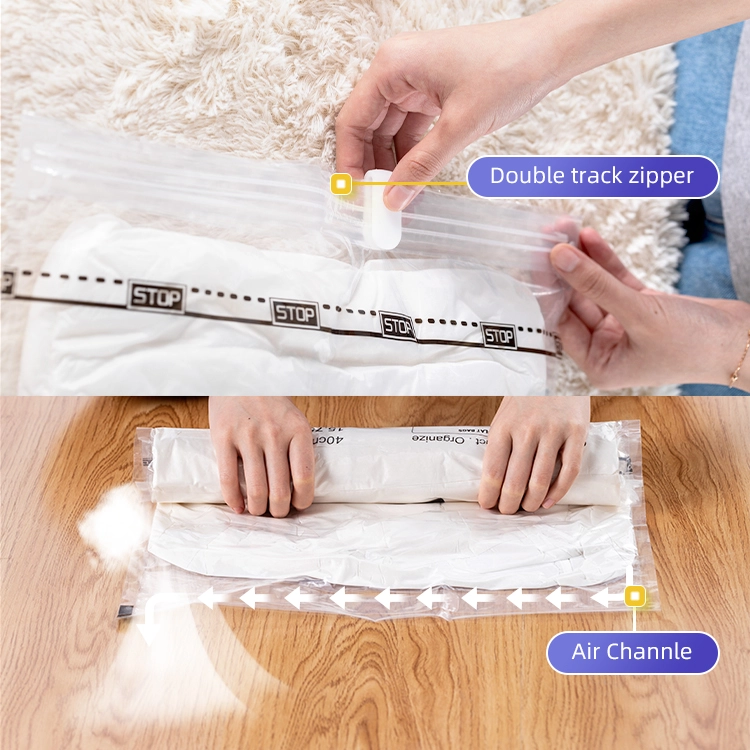
Some models expel air as you roll them. Others use a valve through which you press air out manually. These mechanisms differ, so check the instructions rather than assuming every “vacuum travel bag” works identically.
I would prioritise this category for frequent changes of accommodation, where convenient repacking matters more than achieving the smallest possible bundle.
Best for Bulky Clothes and Repeated Repacking
Portable electric-pump systems reduce the physical effort involved in removing air.
They are worth considering when packing jackets, sweatshirts, or several outfits together. However, a compatible pump becomes another item in your luggage.
Check whether it is included, how it receives power, and whether the bag supports any alternative compression method. A system that works beautifully at home is less useful if you cannot operate it at your destination.
What Makes a Good Travel Vacuum Bag?
From a product-selection perspective, I would examine the complete system: material, seams, closure, valve, and pump compatibility. No single feature guarantees dependable performance.
A Closure You Can Seal Consistently
A bag cannot maintain compression if its opening is not fully closed.
Look for clear closing instructions and an opening wide enough to load without forcing clothing against the seal. Before compression, check for trapped fabric, lint, or folds.
If closing the bag requires excessive force when it is empty, investigate before relying on it during a trip.
Materials Suited to Repeated Handling
Travel bags encounter folding, repacking, suitcase edges, and contact with other belongings.
Published comparative testing found meaningful differences between thin plastic bags and more substantial fabric-based designs. Nevertheless, material names alone do not establish durability.
Examine the seams, valve attachment, and closure as carefully as the main panel. A reinforced body cannot compensate for a poorly functioning seal.
Dimensions That Match Your Suitcase
Choose bags around the usable interior of your luggage—not its advertised exterior size.
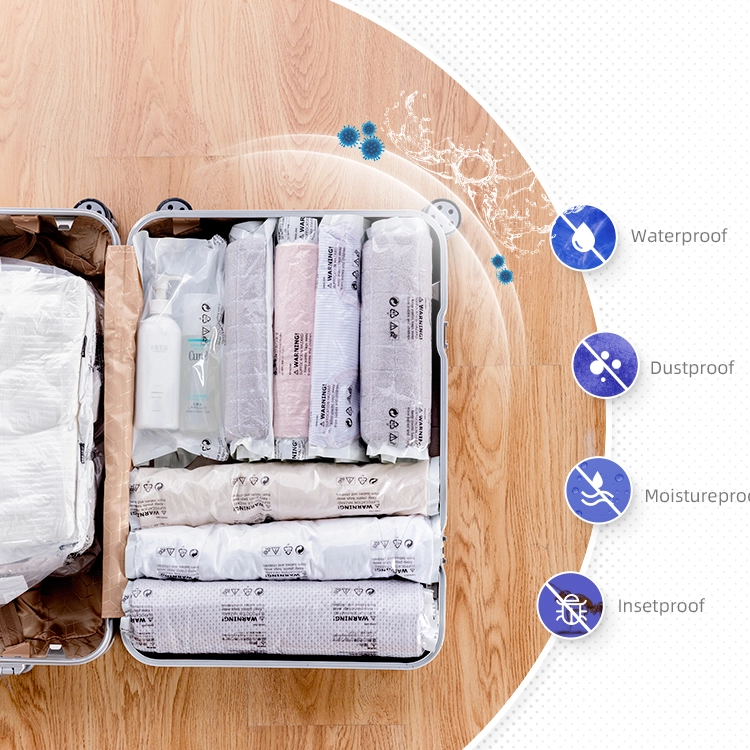
Measure between wheel housings, handle channels, and other internal obstructions. Then consider the shape of the bag after compression.
A large compressed bundle may be difficult to position around shoes and toiletries. Two smaller bags can offer more flexible packing, especially when different family members need separate clothing.
A Realistic Repacking Method
Ask one question before buying:
“How will I compress this bag on the final morning of my trip?”
If the answer depends on finding a household vacuum cleaner, the product may be better suited to home storage.
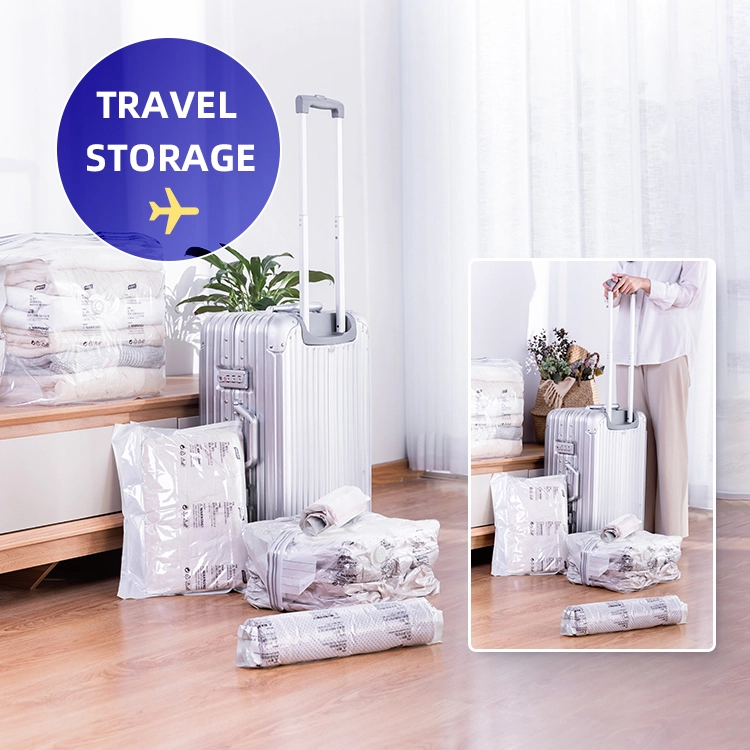
Travel-friendly options include roll-up designs, hand-pump systems, and compatible portable electric pumps.
How TAILI Fits into a Travel Packing Shortlist
TAILI’s materials-focused company background provides relevant context, but the buying decision should still rest on the particular bag’s specifications and suitability.
According to the company information supplied for this article, Guangdong Taili Technology Group Co., Ltd. was founded in 2003 and is headquartered in Zhongshan, Guangdong. Its work spans material development and finished-product manufacturing.
That background makes material construction a useful area to examine. It does not, by itself, prove that every consumer travel bag has undergone aerospace qualification.
Features of TAILI’s Wireless-Pump Travel Bag
TAILI’s product page describes its travel vacuum compression bag as offering:
- Nylon and TPU composite construction.
- A portable electric pump.
- Reinforced edges and a leak-resistant valve.
- A transparent viewing window.
- Double zipper pulls.
- A detachable, adjustable carrying strap.
These features make it a relevant candidate for travellers seeking a reusable, fabric-based compression system.
However, the listing presents dimensions in different formats. Confirm the exact variant, usable capacity, and included accessories before ordering.
How to Interpret the Space-Saving Claim
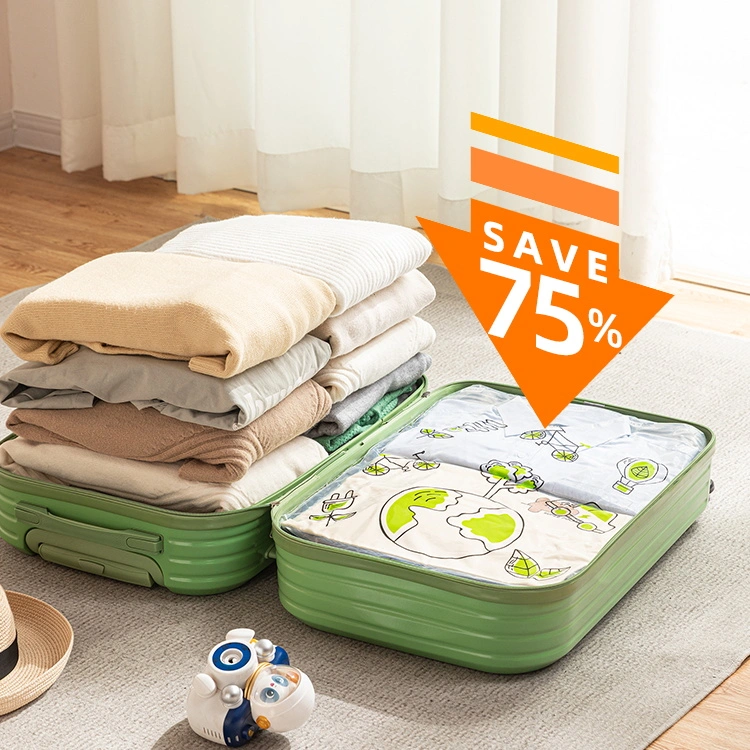
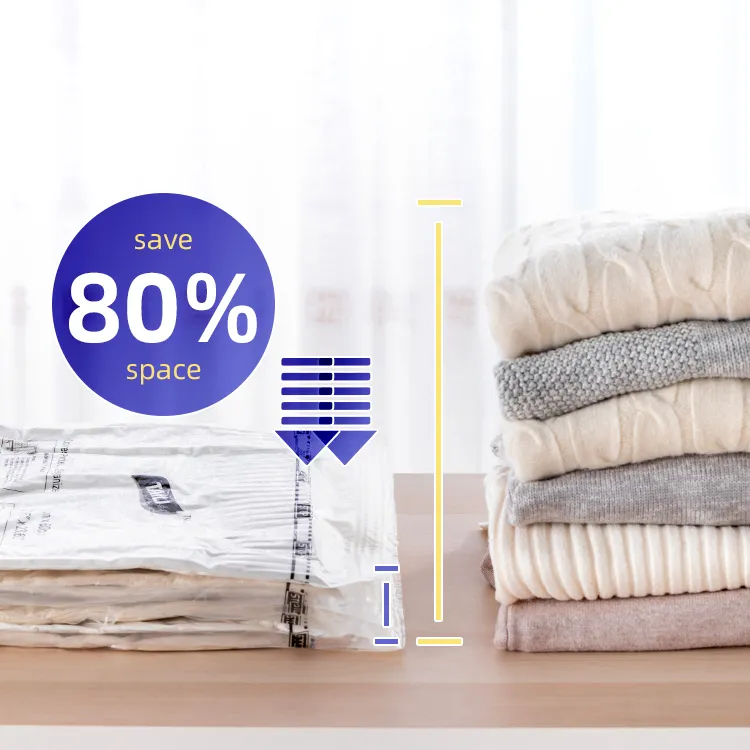
TAILI advertises an 80% storage-space saving for this product. That is a manufacturer claim, not a result independently reproduced for this article.
Actual compression depends on what you pack, how loosely it starts, and how much air the system removes.
A jacket-filled bag and a bag of tightly folded denim should not be expected to deliver identical results. Nor does an advertised reduction in clothing volume mean your entire suitcase gains the same percentage of usable space.
How Much Space Do Vacuum Bags Really Save?
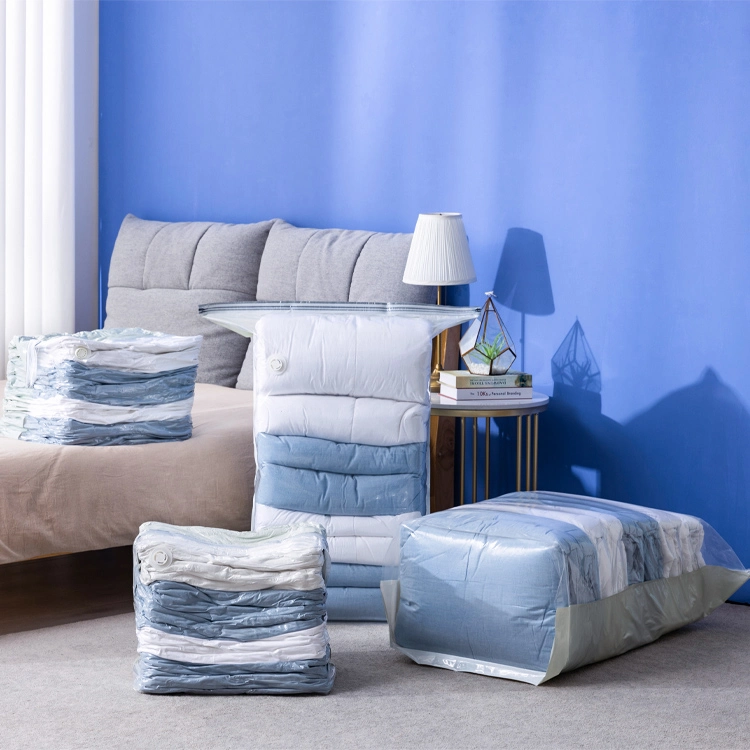
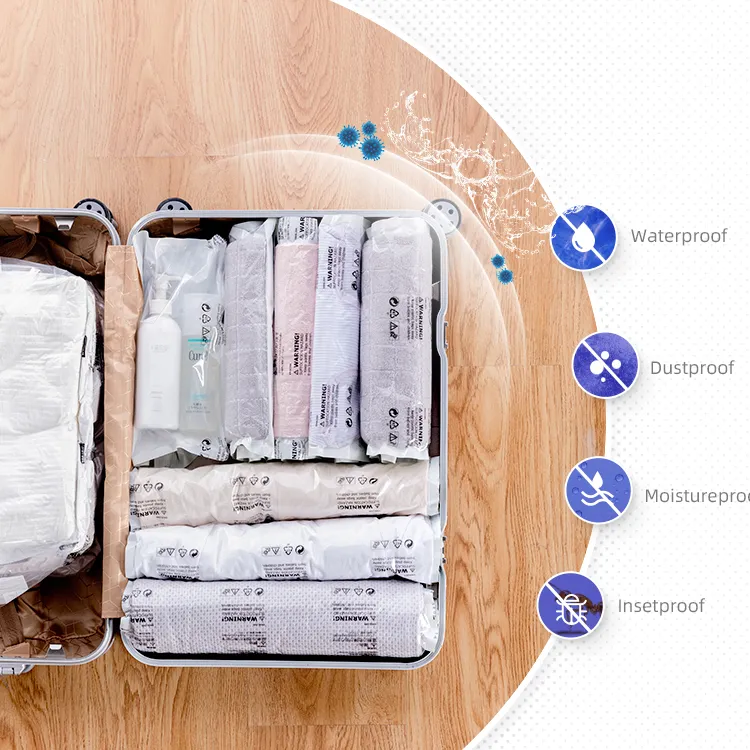
Vacuum bags remove air from compressible loads. They do not shrink shoes, remove garment mass, or make every clothing type equally compact.
The most useful question is therefore not “What percentage is printed on the package?” It is “How much usable suitcase space does this system recover for my actual wardrobe?”
Measure the Whole Packing System
Consider an illustrative example.
Your clothing occupies approximately 20 litres before compression and 10 litres afterward. The clothing-volume reduction is 50%.
But the bag and pump also occupy space. An awkward compressed shape may leave gaps around it. Consequently, the improvement inside your suitcase may be smaller than the clothing-only calculation suggests.
When comparing options, use the same garments, similar folds, and the same luggage. Otherwise, the comparison tells you little.
Remember That Smaller Does Not Mean Lighter
Compression reduces volume, not clothing weight. Adding a bag and pump also adds their own weight.
This matters because extra space can tempt you to pack more than your baggage allowance permits.
Weigh the finished suitcase rather than assuming that a neatly closed case is ready to fly.
A Practical Overnight Test Before You Travel
One valuable check is simple enough to perform at home: test the bag with the clothes you actually intend to take.
Published product testing has used overnight checks to identify reinflation. You can adapt that approach without specialised equipment.
- Inspect the bag, valve, and closure for visible damage.
- Load clean, dry clothing without crowding the opening.
- Seal and compress it according to the instructions.
- Photograph the compressed bag beside a ruler.
- Leave it overnight without placing heavy objects on top.
- Compare its thickness and firmness the following morning.
- Open it and repeat the process to check repacking convenience.
Some change can reflect clothing settling or imperfect initial sealing, so investigate before concluding that the material is defective.
If the bag expands substantially, reseal it carefully and test again. Persistent reinflation warrants contacting the supplier before departure.
How to Pack Travel Vacuum Bags Effectively
Step 1: Separate Compression-Friendly Items
Start with everyday clothing whose care requirements allow compact packing.
Keep structured outfits and presentation-sensitive garments separate when creasing would cause problems. Check garment-care guidance before compressing delicate or specialist clothing.
Do not treat the compression bag as a substitute for appropriate garment protection.
Step 2: Pack Flat, Without Overfilling
Fold clothing into reasonably even layers.
Keep hard edges and sharp accessories away from the film or fabric. Leave enough clearance to close the opening without pulling against the contents.
Overfilling can make sealing harder and was associated with damage in published testing of some bags.
Step 3: Follow the Correct Compression Sequence
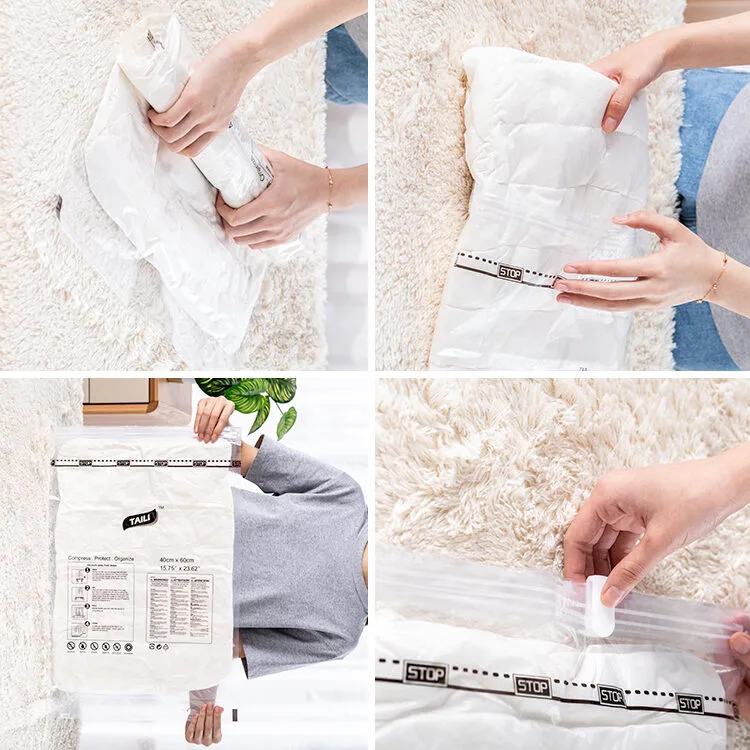
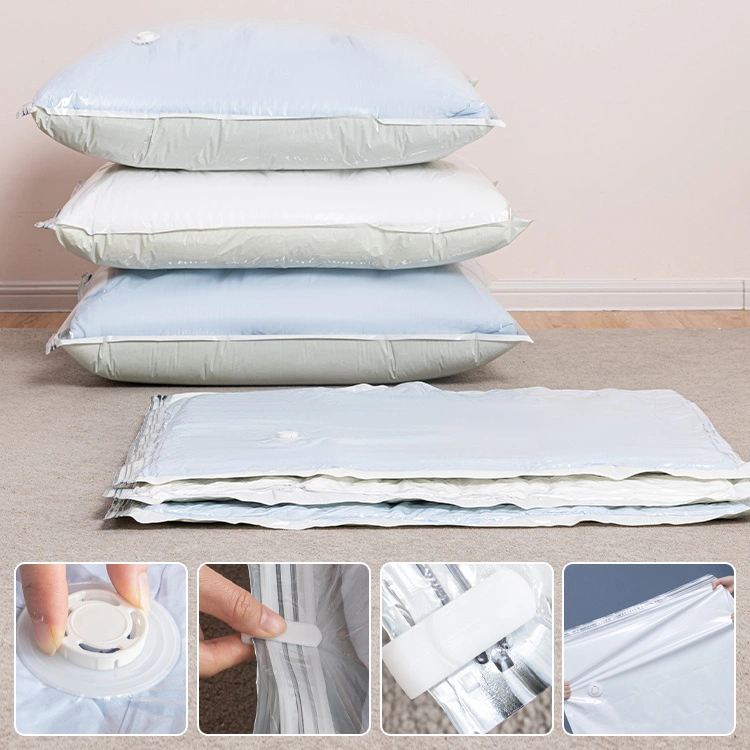
Close the opening completely, connect the specified pump if required, and operate the valve as instructed.
Do not assume every cap must remain open or every pump fits every valve.
For roll-up bags, follow the indicated rolling direction so expelled air can leave through the intended outlet.
Step 4: Pack for Access, Not Just Density
Keep frequently needed clothing outside the largest compressed bundle.
A spare top, overnight essentials, or children’s immediate needs are easier to retrieve from a separate organiser.
The best packing arrangement balances compactness with access.
Step 5: Prepare for the Return Journey
Bring the required pump or confirm the bag’s pump-free method before leaving.
Allow time to repack instead of discovering a missing adapter just before checkout. Empty and dry bags after use according to their care instructions.
Vacuum Bags vs Compression Packing Cubes
Vacuum bags and compression packing cubes solve overlapping but different problems.
| Consideration | Vacuum or air-expulsion bags | Compression packing cubes |
|---|---|---|
| Main mechanism | Remove air through a valve or outlet | Tighten clothing using compression zippers |
| Best reason to choose | Reducing bulky clothing volume | Organising accessible clothing groups |
| Accessories | Some require a pump | Generally no pump |
| Opening during travel | May require recompression | Usually straightforward |
| Buying priority | Seal reliability and compression method | Zipper function and layout |
My preferred decision framework is to separate bulk management from organisation.
Use a compression bag for clothing you will not need immediately. Use smaller organisers for items you access regularly. You do not need to force your entire wardrobe into one system.
Choose Your Bag Around the Journey
The best vacuum bags for travelling combine useful compression with dependable sealing and convenient repacking.
For a pump-free trip, prioritise manual simplicity. For bulky clothing and repeated use, compare portable-pump systems, construction details, and suitcase fit.
Explore TAILI’s travel compression range, confirm the bag dimensions and pump package, and complete an overnight packing test before your next departure.
Frequently Asked Questions
Are Vacuum Bags Allowed in Carry-On Luggage?
For United States screening, the Transportation Security Administration allows vacuum-sealed clothing bags in carry-on and checked luggage, with special instructions. Officers may open them for inspection if they trigger an alarm. Plan how you would repack afterward.
What Are the Best Vacuum Bags for Travelling Without a Pump?
Roll-up or manually compressed valve bags are the relevant categories. Nomatic Vacuum Bag 2.0 is one option supported by published travel-product testing. Check the mechanism and dimensions before buying.
Do Vacuum Bags Make Luggage Lighter?
No. They reduce the volume occupied by compressible clothing, not its weight. Weigh your packed luggage, including the bags and any pump.
Can Vacuum Bags Wrinkle Clothes?
Tight packing can leave clothes creased. Avoid relying on compression for garments that must arrive presentation-ready, and follow their care instructions.
Why Does My Travel Vacuum Bag Reinflate?
Possible causes include an incomplete closure, trapped fabric, a valve problem, or damage. Check each area and repeat a controlled test before travelling.
Are TAILI Vacuum Bags Worth Considering?
Yes, particularly if you want a nylon/TPU travel bag with a portable electric pump and viewing window. Confirm the exact specifications and assess it with your own clothing rather than treating advertised compression figures as guaranteed results.
References
1. Transportation Security Administration. “Vacuum-sealed bags.” Official United States screening guidance covering carry-on and checked luggage, including possible inspection. https://www.tsa.gov/travel/security-screening/whatcanibring/items/vacuum-sealed-bags-0
2. Danielle Calma, Travel + Leisure. “The 6 Best Vacuum Bags for Travel, Tested and Reviewed.” Updated August 26, 2026. Comparative evaluation of 18 products, including compression methods, overnight seal retention, durability, and longer-term use. Supports the named third-party product comparisons in this article. https://www.travelandleisure.com/travel-vacuum-bags-6753391
3. TAILI Store. “TAILI Travel Vacuum Compression Bags with Wireless Pump.” Manufacturer product specifications and promotional claims, including nylon/TPU construction, closure features, pump inclusion, and advertised space savings. These claims are distinguished from independent test results. https://tailistore.com/products/taili-travel-vacuum-compression-bags-with-wireless-pump
Hot Tags: Wholesale Travel Vacuum Bags, Travel Vacuum Bag Manufacturer, Vacuum Compression Bag Supplier, OEM Travel Vacuum Bags, Custom Travel Vacuum Bags, Bulk Vacuum Storage Bags, Travel Vacuum Bags With Electric Pump, Reusable Travel Compression Bags, Nylon TPU Vacuum Bags, Pump-Free Travel Compression Bags