Content Menu
● Roll-Up Compression Bags vs. Pump-Operated Vacuum Bags at a Glance
● How Do Roll-Up Compression Bags Work?
>> Where Roll-Up Bags Perform Well
>> Where They Become Less Convenient
● How Do Pump-Operated Vacuum Bags Work?
>> Manual Pumps vs. Electric Pumps
>> Treat “Up To” Claims as Conditional
>> Consider the Return Trip Before Departure
>> Protect Clothes That Need Presentation
● Which Is Better for Bedding and Seasonal Storage?
>> Follow the Textile Manufacturer’s Care Instructions
>> Dryness Comes Before Compression
● What Determines Compression Bag Quality?
● A Practical Comparison Test Before Buying in Volume
>> Step 1: Standardize the Contents
>> Step 2: Measure Usable Packing Space
>> Step 3: Record the Complete Workflow
>> Step 4: Check Retention and Repeatability
● Troubleshooting: Why Do Compression Bags Reinflate?
● How Taili’s Background Relates to Product Selection
● Choose a System That Matches Your Packing Routine
>> Can You Use Roll-Up Compression Bags Without a Pump?
>> Are Pump-Operated Vacuum Bags Always Smaller After Compression?
>> Can Compression Bags Damage Clothes?
>> Can You Store Damp Clothes in Vacuum Bags?
>> Do Vacuum Bags Reduce Airline Baggage Weight?
>> Can One Pump Work With Every Vacuum Storage Bag?
Roll-up compression bags vs. pump-operated vacuum bags is ultimately a choice between convenience and controlled air removal. Roll-up compression bags let you squeeze out air without carrying equipment. Pump-operated vacuum bags use a compatible manual or electric pump to extract air through a valve. For travel with frequent repacking, I would generally prioritize roll-up convenience. For bulky bedding and organized home storage, I would evaluate a pump-operated system first.
Neither design wins every situation. The right choice depends on what you pack, how often you open it, and whether you can recompress everything at your destination. This guide compares their operation, practical limitations, material quality, and long-term value—without treating maximum compression as the only measure of performance.
Roll-Up Compression Bags vs. Pump-Operated Vacuum Bags at a Glance
| Comparison point | Roll-up compression bags | Pump-operated vacuum bags |
|---|---|---|
| Air removal | Hand pressure and rolling | Compatible manual or electric pump |
| Additional equipment | Usually none | Pump; some models accept a vacuum cleaner |
| Best-fit applications | Travel clothing and frequent repacking | Bulky textiles and home storage |
| Compression consistency | Depends on rolling technique and load | Depends on pump capability, valve, and load |
| Repacking away from home | Convenient without accessories | Requires access to a compatible air-removal device |
| Physical effort | Rolling and pressing | Manual pumping or operating an electric device |
| Main quality checkpoints | Zipper, seams, film, and outlet | Zipper, seams, film, valve, and pump connection |
| Main limitation | Large loads can be awkward to roll | Equipment adds another dependency |
My practical recommendation is to choose the system you can reliably use throughout the entire packing cycle—not simply the one that looks smallest immediately after compression.
How Do Roll-Up Compression Bags Work?
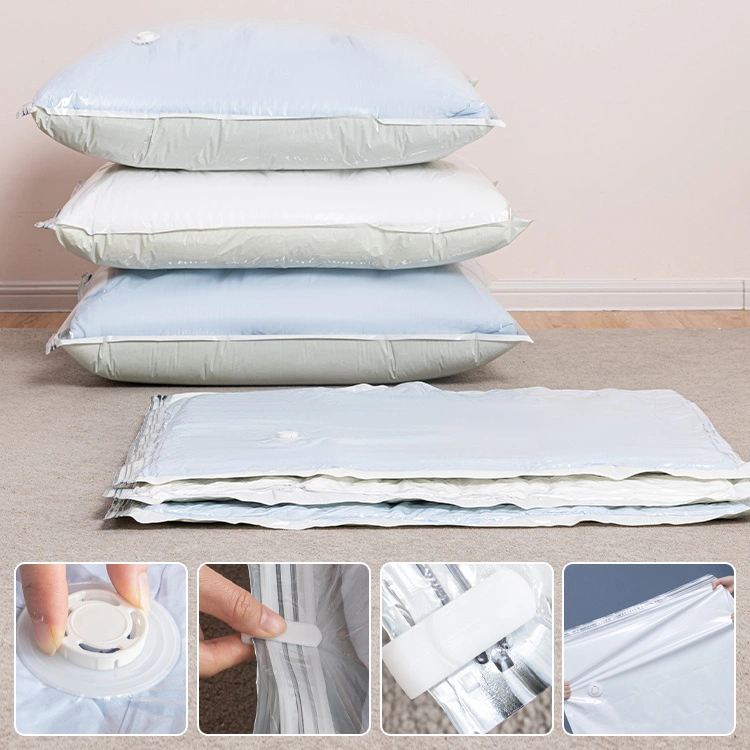
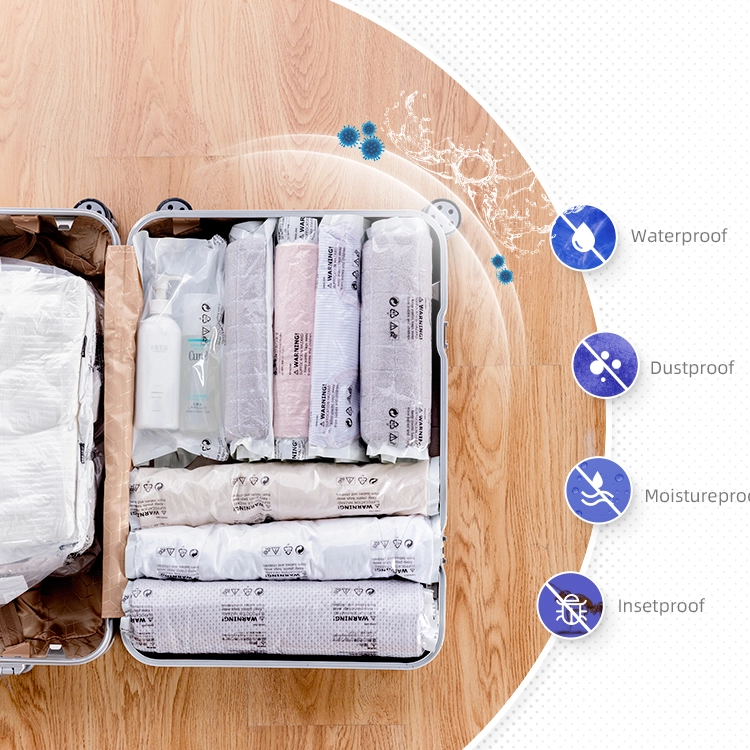
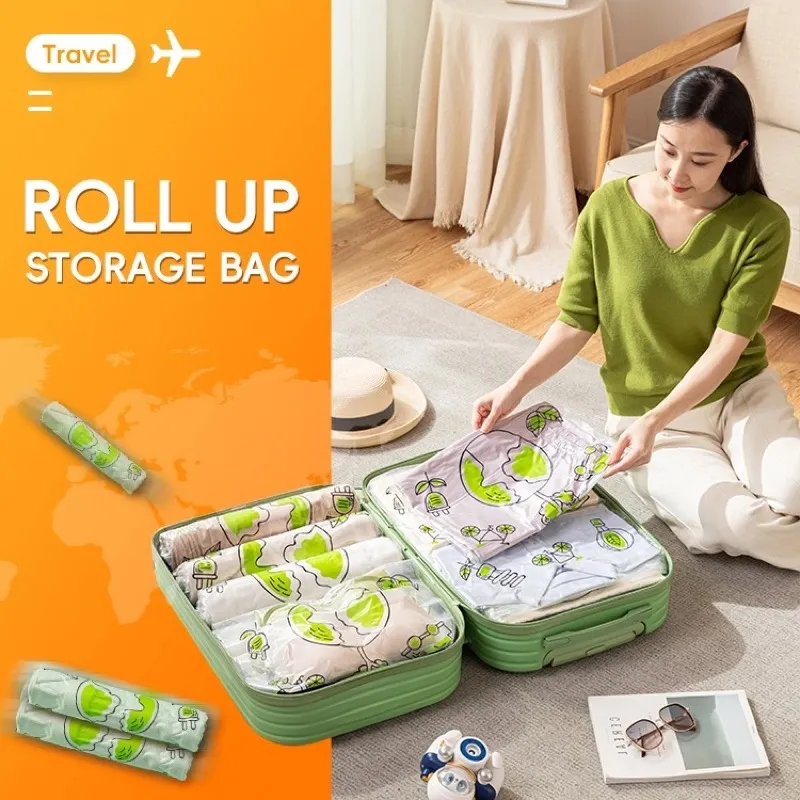
Roll-up compression bags typically combine a resealable opening with a one-way air outlet. After loading and closing the bag, you roll it toward the outlet. Pressure pushes air out, while the outlet helps limit its return.
These products differ from compression packing cubes. A compression cube generally uses an additional zipper to tighten a fabric compartment. A roll-up bag expels air through a dedicated outlet.
Where Roll-Up Bags Perform Well
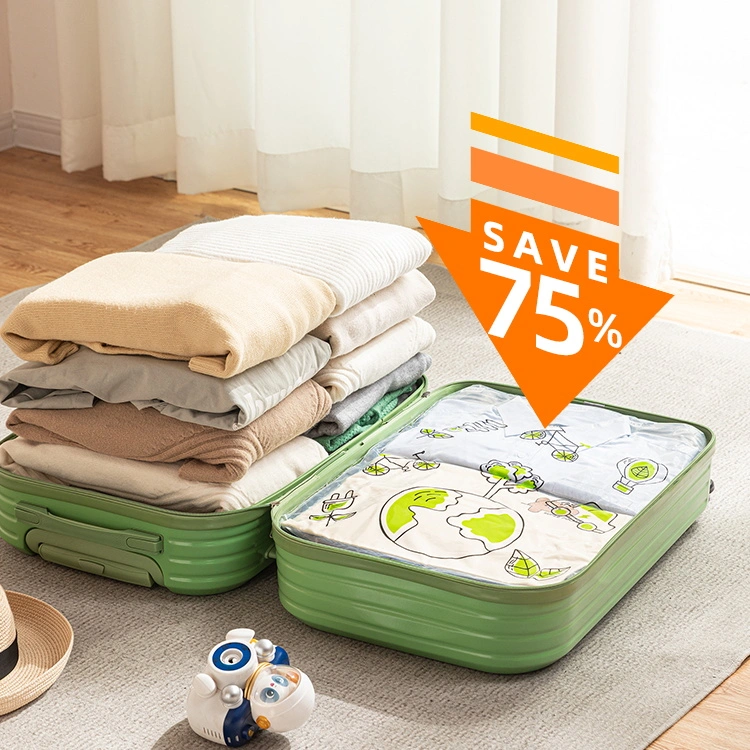
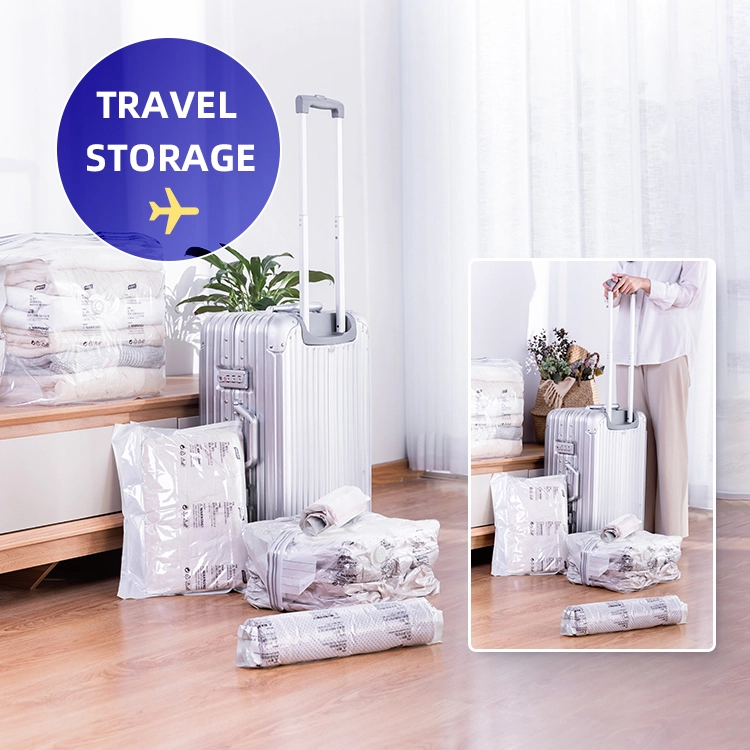
Roll-up compression bags for travel suit situations where accessories create inconvenience:
- Multi-stop trips with repeated unpacking.
- Carry-on packing with limited space.
- Separating clean clothing from dry used clothing.
- Compressing compatible, bulky garments temporarily.
- Repacking where electricity or a suitable pump is unavailable.
Their defining advantage is independence. You do not need to remember a charger, find an adapter, or locate a compatible vacuum cleaner.
Where They Become Less Convenient
A heavily loaded bag can be difficult to roll evenly. Thick folds may leave an awkward shape, while excessive filling makes closure more difficult.
Rolling also requires a suitable working surface. A small hotel bed may be adequate for a clothing bag but inconvenient for a large bedding bag.
From a user-experience perspective, I would favor manageable bag sizes over one oversized bag intended to hold everything.
How Do Pump-Operated Vacuum Bags Work?
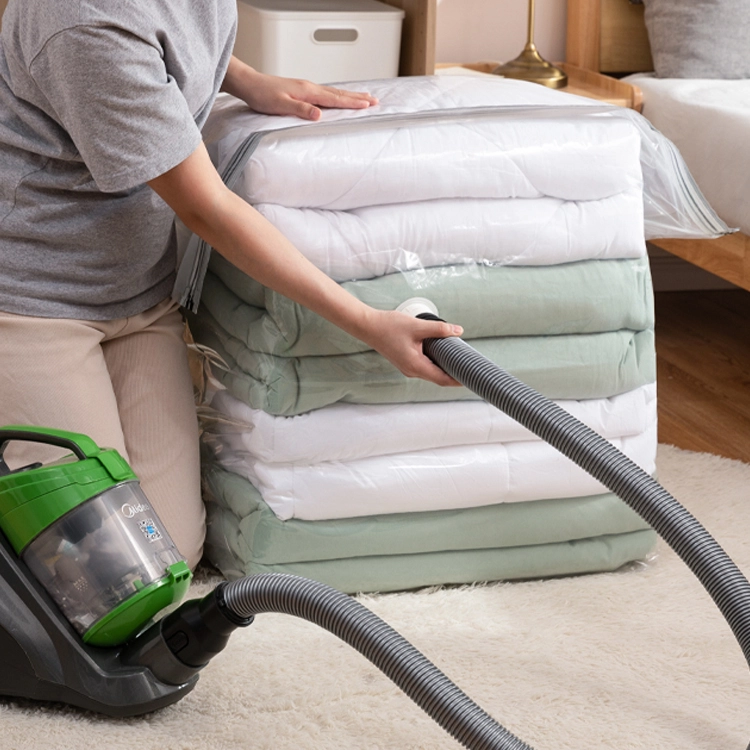
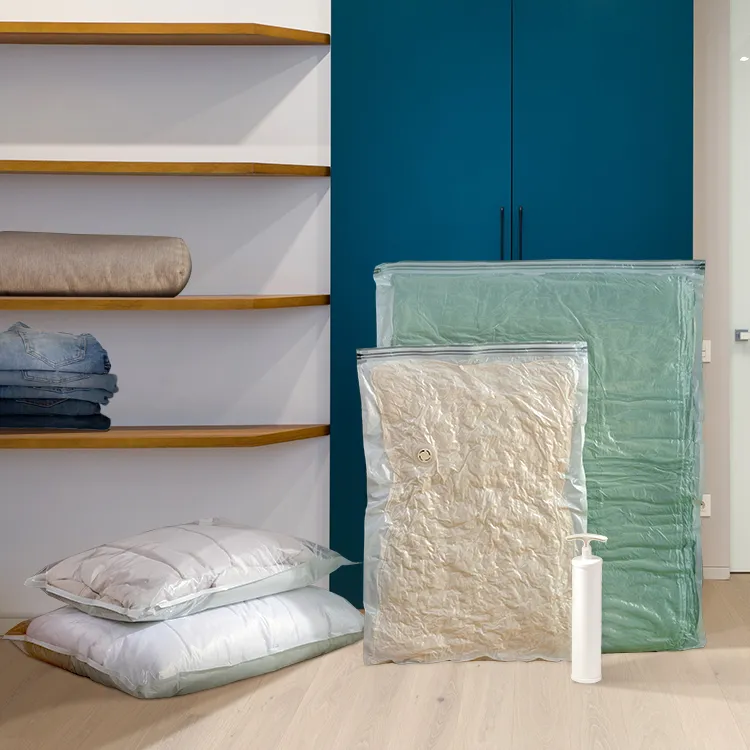
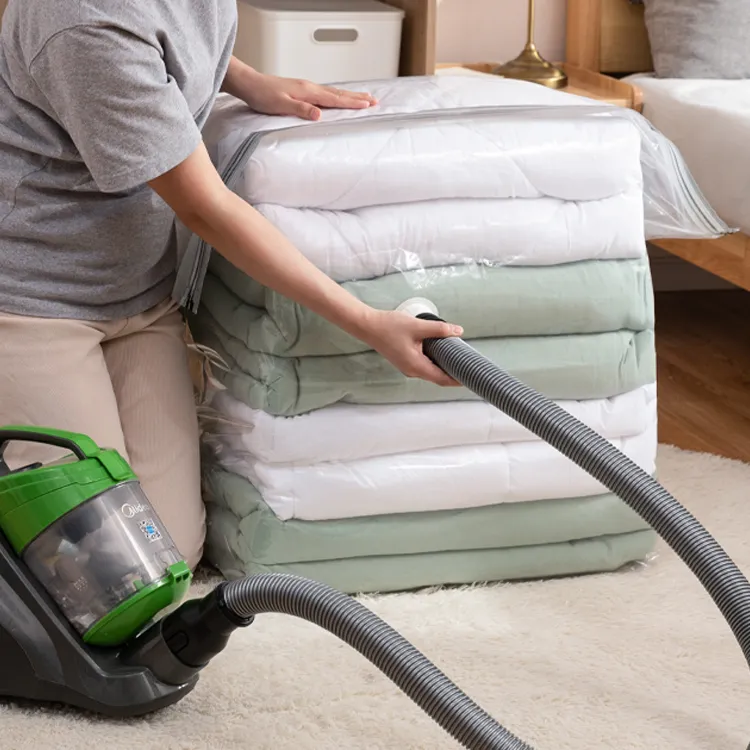
Pump-operated vacuum bags have an extraction valve. After sealing the opening, you connect a compatible pump and remove air. The pressure difference between the bag interior and surrounding atmosphere compresses the soft contents.
Available systems include hand pumps, electric pumps, and bags designed for compatible household vacuum attachments. These connections are not automatically interchangeable.
Manual Pumps vs. Electric Pumps
A manual pump avoids reliance on electricity but requires repeated physical effort. That effort becomes more noticeable when processing several large bags.
An electric pump reduces manual pumping, although its usefulness depends on performance, power availability, and valve compatibility.
Before buying vacuum storage bags with a pump, check:
- Whether the pump is included.
- Which valve connection it supports.
- Whether an adapter is required.
- How the pump is powered.
- Whether replacement components are available.
A pump that cannot connect correctly adds complexity without delivering useful compression.
Which Bags Save More Space?
Pump-operated vacuum bags can provide more controlled air extraction, particularly for bulky loads. However, neither category guarantees a fixed space-saving percentage.
Results depend on:
- The original loft of the contents.
- Fabric and filling characteristics.
- Folding and loading technique.
- Bag dimensions and usable capacity.
- Seal integrity.
- Air-removal method.
A lofty blanket contains more removable air than a tightly folded stack of dense trousers. Comparing their percentage reductions would not establish which bag is better.
Treat “Up To” Claims as Conditional
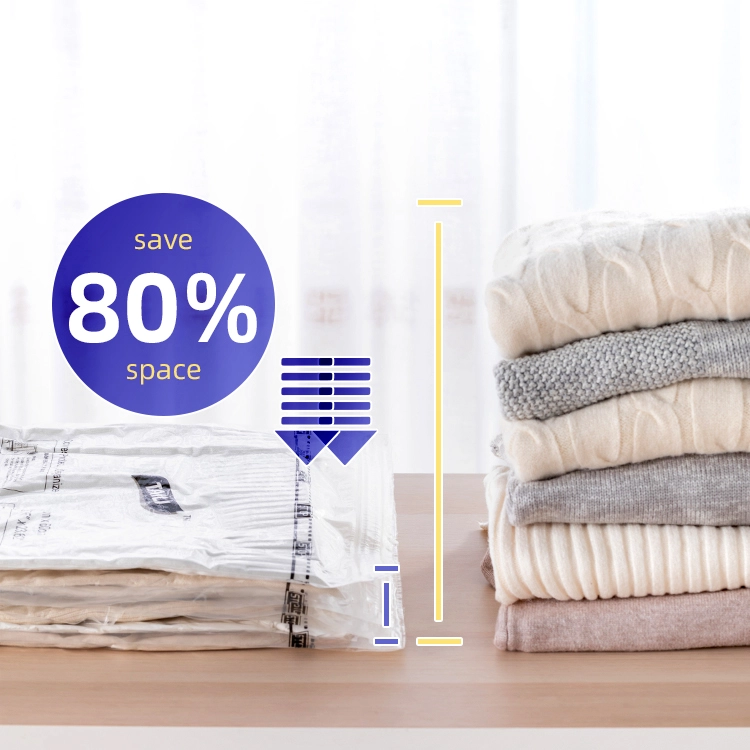
Eagle Creek advertises up to 80% packing-volume savings for its compression sacks. That is a product-specific maximum claim, not a universal expectation for roll-up bags or every clothing load.
My purchasing rule is simple: fit matters more than a headline percentage.
A highly compressed bundle that does not fit your suitcase or shelf may be less useful than a slightly larger, flatter package.
Which Is Better for Travel?
For frequent movement, roll-up compression bags usually offer the simpler workflow. Their advantage becomes especially clear on the return journey, when packing conditions may differ from those at home.
Pump-operated vacuum bags can still work well for travel when you carry a compatible compact pump and have a clear reason to maximize compression.
Consider the Return Trip Before Departure
Ask yourself:
- Will I open every bag daily?
- Can I recompress it in a small room?
- Will the pump remain accessible?
- Does the compressed package fit my luggage comfortably?
- Have I allowed room for purchases?
Compression reduces occupied volume; it does not meaningfully reduce the weight of the clothing. Filling newly available space with additional items can therefore create a baggage-weight problem.
Protect Clothes That Need Presentation
Neither system guarantees wrinkle-free clothing. Compression can set folds and creases, particularly when garments remain tightly packed.
For structured jackets, delicate occasionwear, or items that must look presentable immediately, a garment folder or less-compressed packing arrangement may be the more practical choice.
Which Is Better for Bedding and Seasonal Storage?
Pump-operated vacuum bags are often the more convenient option for large, compressible household textiles. Extracting air through a valve can be easier than rolling a broad bag filled with bulky bedding.
However, suitability depends on the textile—not just the bag size.
Follow the Textile Manufacturer’s Care Instructions
Do not assume that every duvet, pillow, insulated jacket, or sleeping bag tolerates prolonged compression. Eagle Creek specifically cautions against leaving insulating fill compressed for extended periods.
For down-filled or specialist insulation products, follow the product manufacturer’s storage guidance before using either bag type.
Dryness Comes Before Compression
Only pack clean, completely dry items. Removing air does not remove all moisture from textiles, sterilize the contents, or correct unsuitable storage conditions.
Keep filled bags in a cool, dry location. Avoid sharp shelf edges and unnecessary handling that could damage the film.
An airtight closure is useful, but it is not a substitute for appropriate textile care.
What Determines Compression Bag Quality?
The rolling method or pump is only one part of the system. Reliable performance also depends on the film, seams, zipper, and air outlet.
From a product-evaluation perspective, I would assess the complete assembly rather than purchase on film thickness or pump power alone.
Film and Seams
Ask suppliers to identify the film structure and explain its intended balance of flexibility, puncture resistance, and air retention.
Thicker film should not automatically be treated as better. Material composition, manufacturing consistency, and seam quality also need evaluation.
Inspect samples for uneven seals, visible damage, and vulnerable corners.
Zipper and Valve Design
A strong pump cannot compensate for a poorly closed zipper. Likewise, a durable film cannot prevent reinflation if a valve fails to seal.
Look for:
- Clear closure instructions.
- An opening that is easy to align.
- Accessible areas for cleaning lint away.
- A well-supported valve connection.
- Consistent performance after repeated opening.
Reusability should be demonstrated through repeated use, not inferred solely from packaging language.
A Practical Comparison Test Before Buying in Volume
For retailers, distributors, and procurement teams, a controlled sample test provides more useful evidence than comparing isolated marketing claims.
The following is a proposed evaluation method, not a claim that either product category has passed a particular test.
Step 1: Standardize the Contents
Prepare equivalent loads using the same textile types and quantities. Use one test for travel clothing and another for bedding.
Do not compare a lightly filled roll-up bag against an overfilled pump-operated bag.
Step 2: Measure Usable Packing Space
Record the uncompressed and compressed dimensions using the same measurement method.
For irregular bundles, check how much suitcase or shelf space each package actually occupies. This captures shape efficiency as well as compression.
Step 3: Record the Complete Workflow
Measure loading, closing, air removal, and placement—not only the pumping stage.
Also record equipment setup and the effort needed to reopen and repack.
Step 4: Check Retention and Repeatability
Inspect samples immediately, after 24 hours, and after seven days under comparable conditions.
Then repeat opening and compression. Record reinflation, zipper problems, valve issues, and visible wear. These intervals are suggested screening checkpoints, not certification standards.
Troubleshooting: Why Do Compression Bags Reinflate?
Reinflation does not automatically mean the pump is defective. Air can enter through the opening, outlet, valve connection, seams, or damaged film.
A practical inspection sequence is:
- Remove the contents and inspect the bag.
- Clear lint or trapped fabric from the zipper.
- Reload below the indicated fill limit.
- Close the opening according to instructions.
- Check the valve or outlet.
- Recompress and monitor the result.
Avoid solving a closure problem by applying progressively more force. If a sample repeatedly loses compression after correct use, replace it or ask the supplier to investigate.
For commercial orders, document the failure location and operating conditions so the supplier can address a specific issue.
How Taili’s Background Relates to Product Selection
Guangdong Taili Technology Group Co., Ltd. brings a relevant vacuum-storage background to this comparison. Its published company profile describes a business founded in 2003, vacuum-storage technology development, and cooperation on aerospace-related products.
The company background supplied for this article also describes broader materials capabilities and an integrated development-to-manufacturing approach.
These capabilities provide context, but they should not replace product-level evidence. Aerospace-related experience does not automatically establish that every consumer storage bag meets an aerospace qualification.
For a specific Taili product, request the model specification, intended applications, operating instructions, and relevant test information. Evaluate the actual bag-and-pump combination you intend to buy.
Choose a System That Matches Your Packing Routine
Choose roll-up compression bags when accessory-free travel and convenient repacking matter most. Choose pump-operated vacuum bags when managing bulky loads and controlled air extraction matters more.
For Taili product inquiries, specify your intended contents, bag dimensions, compression method, expected reuse frequency, and order quantity. Request suitable samples and supporting product information before committing to a larger purchase.
Frequently Asked Questions
Can You Use Roll-Up Compression Bags Without a Pump?
Yes. Purpose-designed roll-up bags expel air through an outlet when you roll and press them. Follow the product’s instructions rather than assuming every vacuum bag supports rolling.
Are Pump-Operated Vacuum Bags Always Smaller After Compression?
No. The final size depends on the contents, loading, bag geometry, seal, and extraction performance. Compare equivalent loads rather than relying on category labels.
Can Compression Bags Damage Clothes?
Tight compression can create creases, and prolonged compression may be unsuitable for certain insulating fills or delicate items. Follow garment and bedding care instructions.
Can You Store Damp Clothes in Vacuum Bags?
Do not use either system for long-term storage of damp clothing. Dry items fully before sealing to reduce the risk of trapped moisture and unpleasant odors.
Do Vacuum Bags Reduce Airline Baggage Weight?
Not meaningfully. They primarily reduce volume. Additional clothing packed into the freed space still adds weight, so weigh the completed suitcase.
Can One Pump Work With Every Vacuum Storage Bag?
No universal compatibility should be assumed. Check the valve design, connection, adapter requirements, and manufacturer instructions before purchasing a replacement pump.
References
1. Eagle Creek, “Pack-It Compression Sacs”: product operation, one-way outlet, pump-free use, and the manufacturer’s conditional space-saving claim. https://eaglecreek.com/products/pack-it-travel-compression-sack-bags
2. Eagle Creek, “Packing Cubes vs Compression Bags: How Do They Work”: differences between compression systems, wrinkle considerations, and cautions concerning prolonged compression of insulating fill. https://eaglecreek.com/blogs/articles/compression-packing-cubes
3. Eagle Creek, “Can You Wash Packing Cubes, How To Clean & More!”: packing-system distinctions and the difference between reducing volume and reducing luggage weight. https://eaglecreek.com/blogs/articles/packing-cube-questions
4. The Spruce, “After Testing Vacuum Storage Bags, These 6 Are Our All-Time Favorites”: independent product-testing context, loading precautions, dryness, closure checks, and storage considerations. https://www.thespruce.com/the-best-vacuum-storage-bags-5224944
5. Ekster, “How to Use Vacuum Packing Bags: The Ultimate Travel Guide”: pump-operated bag workflow, loading, closure, and air extraction. https://www.ekster.com/blogs/the-journal/how-to-use-vacuum-packing-bags
6. Taili, “About”: company-published background on its founding, vacuum-storage business, and aerospace-related cooperation. This older profile does not independently establish the newer patent totals or market-coverage figures supplied in the brief; those figures are therefore omitted. https://en.zs-taili.com/home/page/index/1
Hot Tags: Vacuum Storage Bags Manufacturer, Compression Bags Supplier, Wholesale Vacuum Storage Bags, Roll-Up Compression Bags, Pump-Operated Vacuum Bags, OEM Vacuum Storage Bags, Custom Vacuum Storage Bags, Travel Compression Bags Wholesale, Vacuum Storage Bags With Pump, Vacuum Storage Bags For Bedding