Content Menu
● Compression Packing Bags vs. Vacuum Bags: Key Differences
● How Compression Packing Bags and Vacuum Bags Work
>> Compression Packing Bags Use Mechanical Pressure
>> Vacuum Bags Remove Air Before Sealing It Out
● Which Saves More Space in Real Packing Conditions?
>> Bulky Clothing Usually Favors Vacuum Bags
>> Published Tests Show Variation, Not a Universal Percentage
● Measure Usable Space, Not Just Clothing Shrinkage
● Travel Convenience, Clothing Care, and Protection
>> Daily Access and Return-Trip Repacking
>> Wrinkles and Delicate Garments
● A Practical At-Home Comparison Test
>> Step 1: Establish a Consistent Baseline
>> Step 2: Compare Complete Packing Systems
>> Step 3: Check Overnight Retention
>> Step 4: Repack Without Starting Over Perfectly
● What Materials and Construction Reveal About Quality
● What Taili’s Materials Background Means for Buyers
● Which Option Should You Choose?
>> Choose Compression Packing Bags for Frequent Access
>> Choose Vacuum Bags for Bulky, Infrequently Accessed Textiles
>> Combine Both for Mixed Loads
>> Do Vacuum Bags Save More Space Than Compression Packing Cubes?
>> Can I Use Vacuum Bags Without a Vacuum Cleaner?
>> Are Roll-Up Compression Bags the Same as Vacuum Bags?
>> Do Compression Bags Make Luggage Lighter?
>> Can Vacuum Bags Damage Clothes?
>> Why Does My Vacuum Bag Reinflate?
When comparing compression packing bags vs. vacuum bags, vacuum bags generally save more space with bulky, air-filled clothing. Compression packing bags, however, often offer easier access, simpler repacking, and better everyday organization. The right choice depends on what you pack, how often you unpack, and whether you can remove air again before returning home.
My recommendation is to separate two goals: making clothing smaller and making luggage easier to use. They overlap, but they are not identical. A tightly compressed bundle is only helpful if it fits your suitcase, stays compressed, and leaves your clothes suitable to wear.
This guide compares both options, explains the limits of space-saving claims, and provides a practical way to evaluate bags before buying.
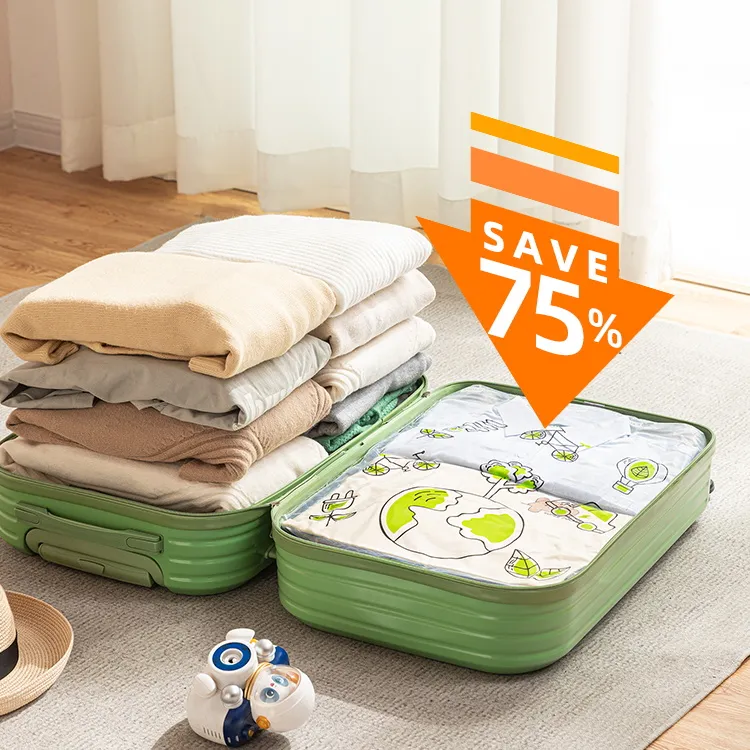
Compression Packing Bags vs. Vacuum Bags: Key Differences
“Compression packing bags” is an umbrella term, not a single product category. Some sellers even use it to describe vacuum bags.
For a useful comparison, this article distinguishes pump-free compression products from pump-assisted vacuum bags.
| Comparison point | Compression packing bags | Pump-assisted vacuum bags |
|---|---|---|
| Main designs | Zippered cubes, compression sacks, roll-up bags | Airtight bags with evacuation valves |
| Compression method | Zipping, tightening straps, or manually pressing out air | Removing air with a compatible pump or vacuum |
| Strongest advantage | Organization and convenient repacking | Reducing bulky textile volume |
| Additional equipment | Usually none | Often a pump or vacuum |
| Everyday access | Generally straightforward | Usually requires releasing and removing air again |
| Air retention | Design-dependent; fabric cubes are not airtight | Depends on film, seams, closure, and valve |
| Typical applications | Multi-stop travel and frequently used clothing | Bulky clothing, bedding, and occasional-access storage |
| Main limitation | Compression may be modest or uneven | Pump logistics, leaks, and compressed bundle shape |
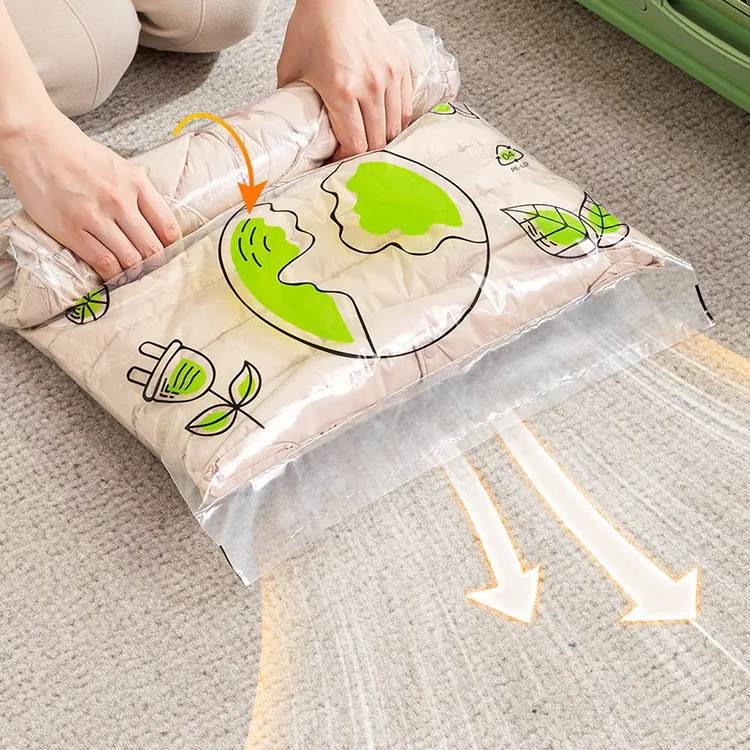
Roll-up bags sit between these categories. They expel air manually through an outlet, offering equipment-free compression without necessarily matching a pump-assisted bag.
How Compression Packing Bags and Vacuum Bags Work
Compression Packing Bags Use Mechanical Pressure
Compression packing cubes usually have an expansion section and a second zipper. After loading the cube, you close the compression zipper to reduce its depth.
Compression sacks use straps or drawcords instead. Roll-up bags require you to press or roll air toward an outlet.
These products reduce loose space between garments and compress some of the air within them. Fabric cubes also keep clothing contained, but their breathable construction does not maintain a vacuum.
Ordinary packing cubes are different: they organize belongings but do not necessarily include a dedicated compression mechanism.
Vacuum Bags Remove Air Before Sealing It Out
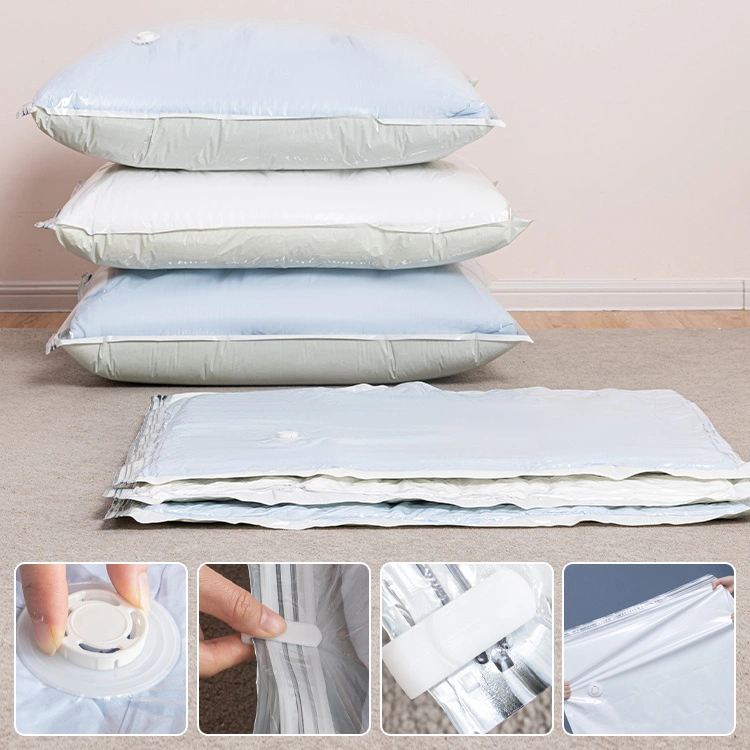
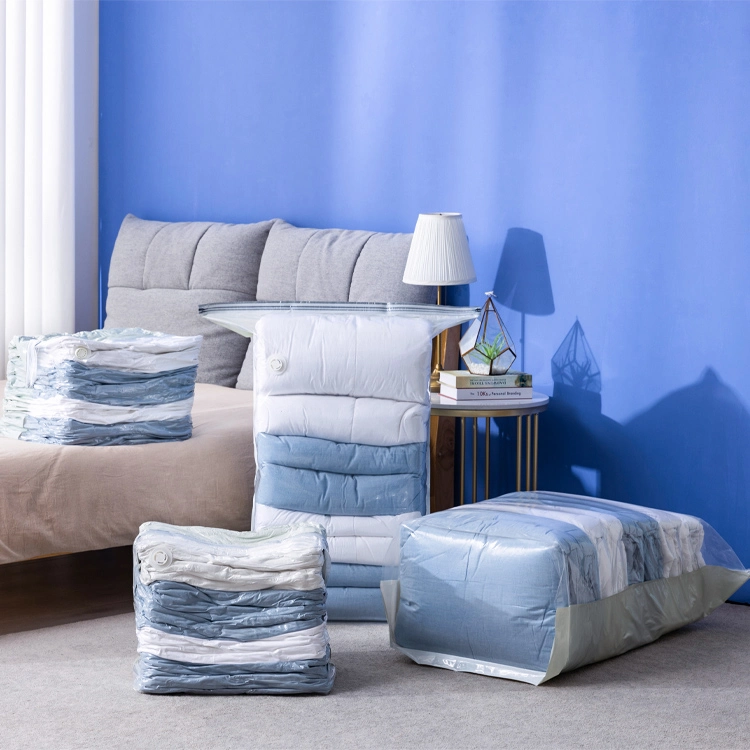
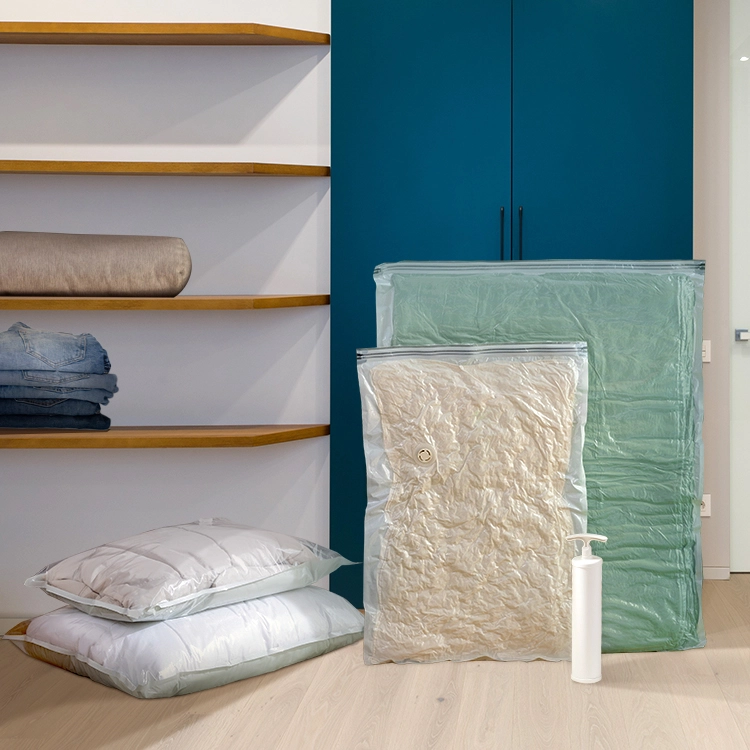
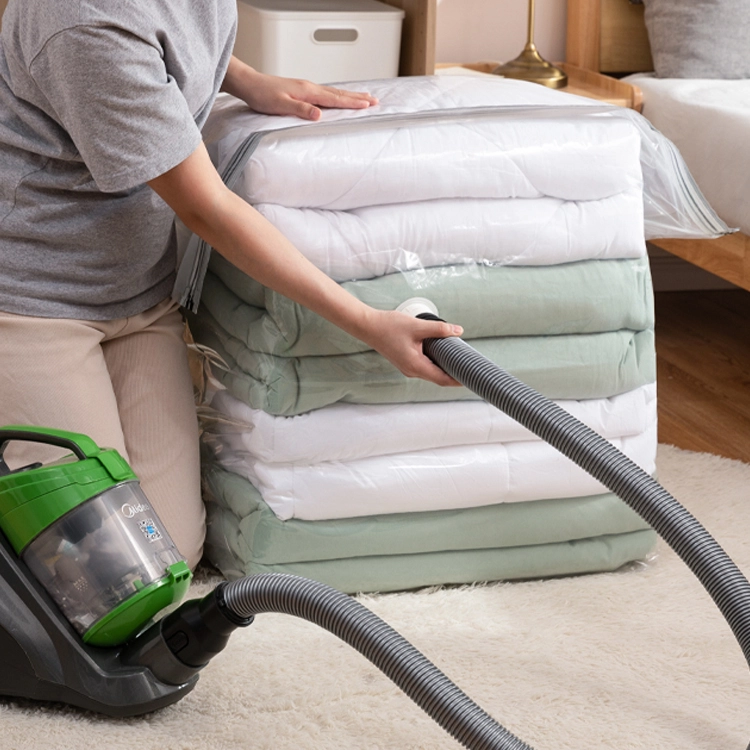
Vacuum storage bags combine an airtight enclosure with a closure and evacuation valve. A pump removes air, allowing the surrounding atmospheric pressure to squeeze the bag and its contents.
Performance depends on the entire system:
- The compressibility of the clothing.
- The quality of the film and welded seams.
- The cleanliness and closure of the sealing track.
- The valve’s ability to resist air entering again.
- The effectiveness of the compatible pump.
A strong pump cannot compensate for a leaking closure.
Which Saves More Space in Real Packing Conditions?
Bulky Clothing Usually Favors Vacuum Bags
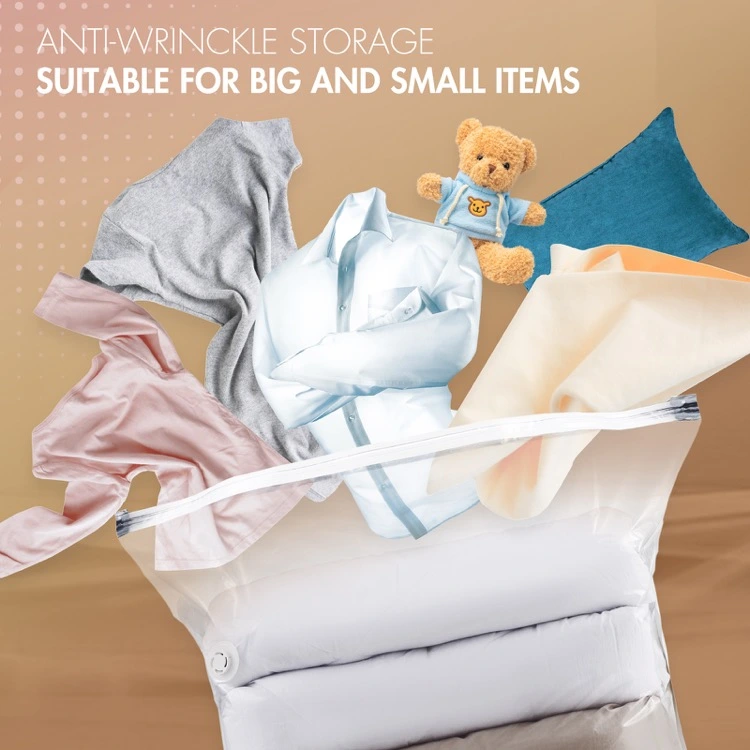
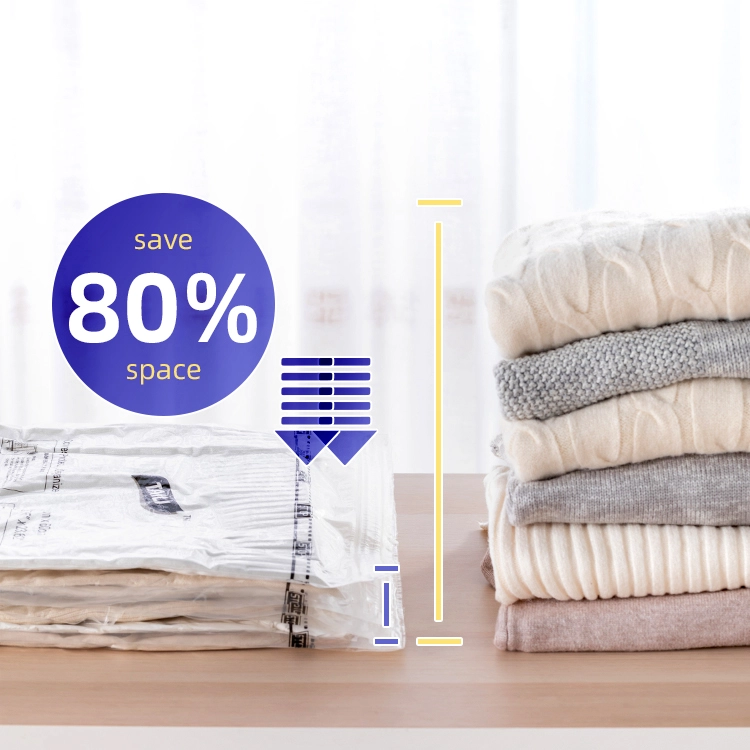
Fleece, towels, and many padded garments contain substantial air. Removing that air can produce a noticeable reduction in volume.
Dense garments offer less opportunity. Jeans may pack more neatly, but they cannot shrink like an airy blanket. Shoes, books, and toiletry containers offer little compressible volume.
This explains why one dramatic product photograph cannot predict results for every traveler.
I would choose vacuum bags first for a bulky winter wardrobe, provided the garment care instructions permit compression. For lightweight daily outfits, the organizational benefits of compression cubes may matter more than maximum shrinkage.
Published Tests Show Variation, Not a Universal Percentage
Independent travel-product testing has documented meaningful space savings from both methods.
One compression-cube test reported a reduction of approximately one or two inches in packed depth for a particular set. Vacuum-bag testing also found that a manually compressed model required more effort and achieved less compression than pump-assisted alternatives.
These observations support a practical distinction, but they do not establish a universal percentage advantage. Different products, clothing loads, and testing methods prevent a precise category-wide comparison.
Treat “up to” savings as a product-specific claim, not a guarantee for your entire suitcase.
Measure Usable Space, Not Just Clothing Shrinkage
A smaller clothing bundle does not automatically create an equally large increase in usable luggage space.
Consider an illustrative example, not a product test:
| Packing stage | Clothing bundle volume |
|---|---|
| Before compression | 20 liters |
| After mechanical compression | 15 liters |
| After vacuum compression | 10 liters |
The reductions are 25% and 50%, respectively. However, the vacuum option saves only five additional liters compared with mechanical compression.
Now consider the rest of the suitcase. If shoes and other noncompressible belongings occupy another 20 liters, reducing the clothing from 20 to 10 liters reduces the combined load from 40 to 30 liters—not by half.
A pump and awkward gaps can reduce the practical benefit further.
My preferred comparison is therefore net usable space: the room remaining after accounting for the packed bag, accessories, and spaces you cannot conveniently fill.
Travel Convenience, Clothing Care, and Protection
Daily Access and Return-Trip Repacking
Compression cubes are particularly useful when you move between hotels or retrieve clothing daily. You can open one category without disturbing everything else.
Vacuum bags work better when their contents can remain sealed. Every opening adds another compression step.
Before choosing vacuum bags for travel, answer three questions:
- Can you repack without the equipment available at home?
- Does your portable pump fit the bag’s valve?
- Will the compressed bag fit your suitcase after you repack less neatly?
A return-trip rehearsal is more useful than assuming you will find a compatible vacuum at your destination.
Wrinkles and Delicate Garments
Both methods can increase wrinkling because they press garments together. Neither should be described as universally wrinkle-free.
Use moderate compression for everyday clothing. Keep tailored jackets, structured garments, and presentation-critical shirts separate when their shape matters.
For down-filled items and specialist outdoor equipment, follow the manufacturer’s instructions on compression and storage duration. A packing method suitable for a short journey may not be appropriate for months of storage.
Moisture and Dirt
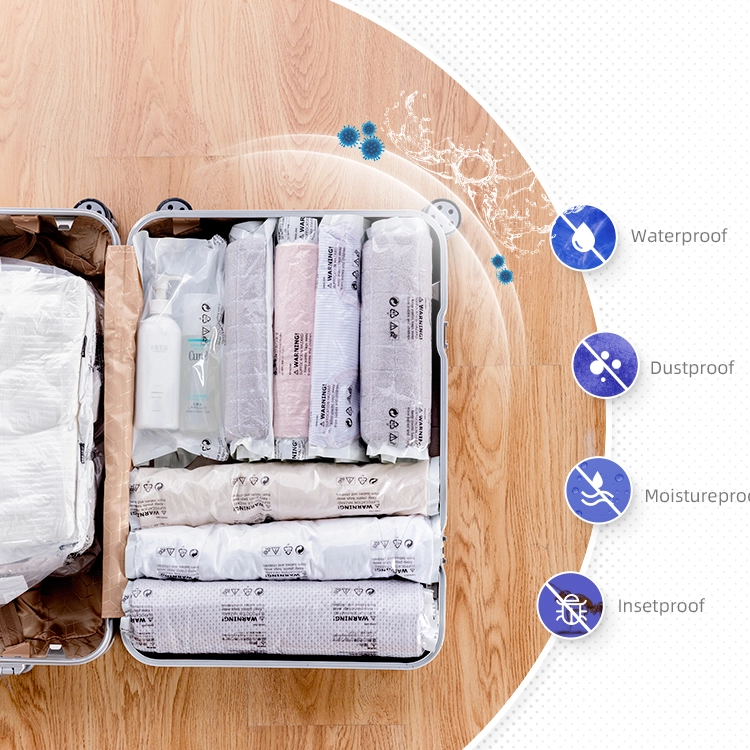
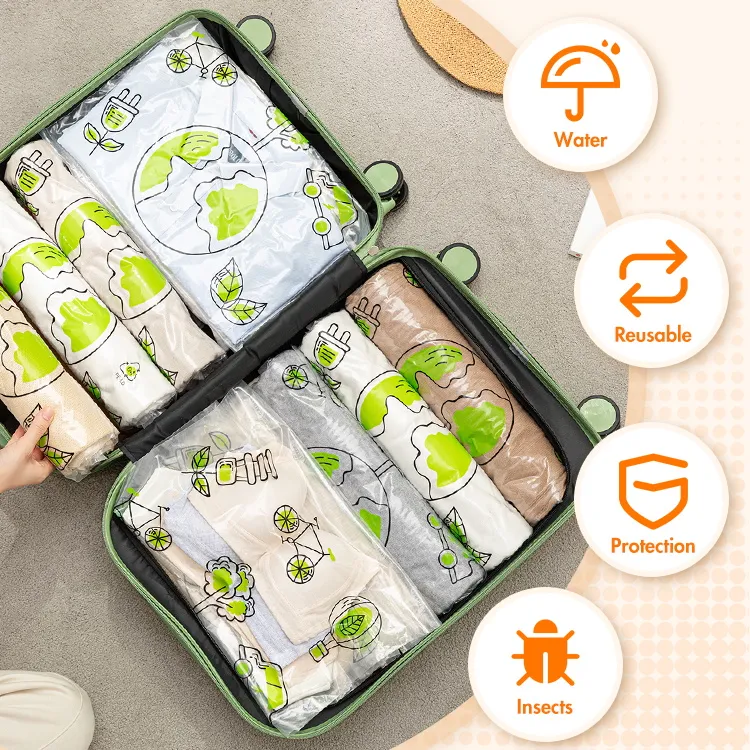
An intact, properly closed vacuum bag can help isolate clothing from dust and incidental moisture exposure. However, an airtight closure does not automatically establish a waterproof rating.
Likewise, a water-resistant compression cube is not necessarily waterproof at its seams or zipper.
Pack clean, fully dry textiles for storage. Sealing a damp garment does not dry it. If you temporarily isolate wet clothing during travel, remove and dry it promptly.
Luggage Weight
Compression reduces volume, not the weight of the garments. Bags and pumps add weight of their own.
This matters when a suitcase still has room but is approaching the carrier’s weight allowance. Weigh the complete packed case rather than treating easier closure as proof that you can add more.
A Practical At-Home Comparison Test
Instead of relying on photographs, test the same clothing load in both systems.
Step 1: Establish a Consistent Baseline
Choose a representative load: shirts, trousers, underwear, and one bulky layer.
Fold everything consistently. Record the items and photograph the uncompressed stack.
Step 2: Compare Complete Packing Systems
Pack the compression bag according to its instructions. Repeat with the vacuum bag using exactly the same garments.
Include any pump you will carry. Place each complete setup inside the same suitcase compartment.
Compare remaining usable room, not just the thickness of the bundle on a table.
Step 3: Check Overnight Retention
Leave the vacuum bag compressed overnight. Check whether it expands, then inspect the closure, valve, and seams.
For the compression cube, check whether its center bulges enough to interfere with suitcase closure.
Step 4: Repack Without Starting Over Perfectly
Open both bags, remove an outfit, and repack. Time the process.
This simple exercise reveals the trade-off between maximum compression and convenient daily use. It is a personal comparison, not a certified laboratory test.
What Materials and Construction Reveal About Quality
From a product-evaluation perspective, the most useful question is not simply “How thick is the bag?” It is “Which component is most likely to fail?”
For vacuum bags, examine:
- Closure tracks that engage consistently.
- Welded seams without visible gaps or distortion.
- A valve that is easy to connect and close.
- Film suited to repeated folding and handling.
- Clear instructions on filling and pump compatibility.
For compression cubes, examine zipper movement, seam reinforcement, fabric strength, and whether the compression zipper catches the lining.
Overfilling creates unnecessary stress in either system. More capacity on paper is not useful if you must force the closure.
What Taili’s Materials Background Means for Buyers
Guangdong Taili Technology Group Co., Ltd., headquartered in Zhongshan, Guangdong, describes its business as rooted in materials innovation, including functional films and surface and interface technologies.
That background is relevant because vacuum packaging depends on material behavior, sealing consistency, and reliable air retention—not merely the bag’s appearance.
Taili’s retail range includes flat, cube-shaped, hanging, and pump-equipped vacuum storage options. Those formats address different packing constraints. A hanging design serves a different purpose from a compact travel bag or an under-bed storage system.
However, corporate technical credentials do not prove that every consumer model achieves the same compression ratio, service life, or protective performance.
For an individual purchase, compare the actual model’s dimensions, instructions, warranty, and documented claims. For commercial sourcing, request:
- A clearly defined compression test and clothing load.
- Air-retention results over a stated period.
- Repeated opening-and-closing test conditions.
- Material specifications and quality-control criteria.
- Pump compatibility and replacement arrangements.
This turns a broad brand story into evidence relevant to the product you intend to buy.
Which Option Should You Choose?
Choose Compression Packing Bags for Frequent Access
They are a strong starting point for multi-city travel, family organization, and clothing you retrieve every day.
They also suit travelers who want to avoid carrying or charging additional equipment.
Choose Vacuum Bags for Bulky, Infrequently Accessed Textiles
They are generally the stronger choice when reducing textile volume is the priority.
Match the bag to the space available. An oversized compressed bag may fit a wardrobe shelf yet prove awkward inside a carry-on.
Combine Both for Mixed Loads
A practical hybrid approach is to vacuum-pack bulky layers while keeping everyday outfits in compression cubes.
Leave essential clothing accessible, and keep delicate or structured garments outside aggressive compression.
Ready to choose a Taili storage solution? Measure your suitcase or storage compartment, list the textiles you need to pack, and ask Taili for the appropriate bag format, pump requirements, and model-specific performance information before ordering.
Frequently Asked Questions
Do Vacuum Bags Save More Space Than Compression Packing Cubes?
Generally, yes, especially with bulky, air-filled textiles. The difference is smaller with dense clothing. Actual results depend on the load, bag design, and quality of the seal.
Can I Use Vacuum Bags Without a Vacuum Cleaner?
Some models work with hand pumps, electric pumps, or manual rolling. Check the instructions: a pump-assisted bag does not automatically support equipment-free compression.
Are Roll-Up Compression Bags the Same as Vacuum Bags?
The terminology overlaps. Roll-up bags expel air manually, while pump-assisted bags use equipment. Compare the evacuation mechanism rather than relying on the product name.
Do Compression Bags Make Luggage Lighter?
No. They reduce bulk, not garment weight. The packing system itself adds some weight, and the space created can encourage you to exceed your allowance.
Can Vacuum Bags Damage Clothes?
Excessive or unsuitable compression can cause creasing or affect garment shape. Follow clothing care instructions and avoid assuming that all textiles tolerate prolonged compressed storage.
Why Does My Vacuum Bag Reinflate?
Possible causes include an incompletely closed sealing track, trapped fibers, valve leakage, punctures, or seam damage. Inspect and reseal the bag, then test it before travel.
References
1. Travel + Leisure — “The 6 Best Vacuum Bags for Travel, Tested and Reviewed”. Updated August 26, 2026. Reports testing of 18 vacuum bags, including compression methods, overnight retention, durability, pump requirements, and luggage-weight limitations.
2. Travel + Leisure — “The 10 Best Compression Packing Cubes of 2026, Tested and Reviewed”. Updated August 19, 2026. Reports testing of 48 options, with observations on compression depth, organization, construction, and wrinkles. Its results are not a controlled head-to-head comparison with the vacuum-bag article.
3. TAILI Store — “Vacuum Storage Bags”. Manufacturer retail collection used to identify available product formats. Product availability and specifications may change.
Hot Tags: Compression Packing Bags, Vacuum Storage Bags, Vacuum Bag Manufacturer, Compression Bag Manufacturer, Wholesale Vacuum Bags, Wholesale Compression Bags, OEM Vacuum Storage Bags, Custom Vacuum Storage Bags, Travel Vacuum Bags, Vacuum Storage Bag Supplier