Content Menu
● First, Identify Your Type of Travel Compression Bag
● Why Does a Travel Compression Bag Reinflate Overnight?
>> The Zipper Looks Closed but Has a Small Gap
>> The Valve Is Dirty, Misaligned, or Damaged
>> The Film or Seam Has Been Damaged
● How to Fix a Travel Compression Bag That Will Not Stay Compressed
>> Step 1: Empty the Bag and Inspect It Flat
>> Step 2: Clean and Dry the Zipper Tracks
>> Step 3: Repack With Less Strain on the Closure
>> Step 4: Close the Zipper and Verify It by Touch
>> Step 5: Check the Valve Without Forcing It Apart
>> Step 6: Remove Air Using the Correct Method
● Run a Controlled Overnight Compression Test
>> Use the Same Clothing and Conditions
>> Change One Variable at a Time
>> Compare Two Bags if Available
● Can You Repair a Leaking Travel Compression Bag?
>> A Small Film Puncture May Allow a Temporary Patch
>> Damaged Zippers, Valves, and Seams Usually Need Replacement
● An Industry Perspective: Evaluate the Whole Sealing System
● Prevent Another Overnight Compression Failure
● Pack With Confidence Before You Leave
>> Why does my compression bag expand even though the zipper looks sealed?
>> Will a stronger vacuum pump stop overnight reinflation?
>> How much space should I leave below the zipper?
>> Can I use a travel compression bag without a pump?
>> Does slight softness mean the bag has failed?
>> Should I replace a bag that keeps leaking?
If your travel compression bag will not stay compressed overnight, start with the seal. Empty the bag, clean the zipper tracks, repack below the fill line, and close the entire zipper carefully—including both ends. Then inspect the valve, remove the air according to the product instructions, and leave the bag undisturbed overnight.
If it expands again, look for a puncture, damaged seam, or defective valve before buying a stronger pump. A pump removes air; it cannot repair a leak.
My recommended approach is to check one potential failure point at a time. This makes troubleshooting faster and helps you decide whether the bag needs resealing, a temporary repair, or replacement.
First, Identify Your Type of Travel Compression Bag
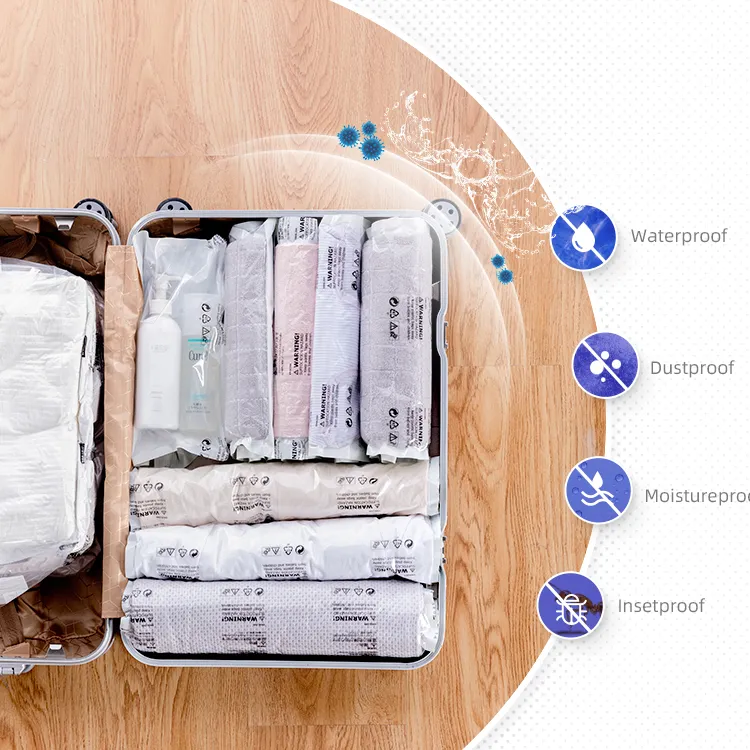
Not every compression bag works by maintaining an airtight seal. Identifying the design prevents you from troubleshooting the wrong problem.
| Bag type | How it compresses clothing | What to check |
|---|---|---|
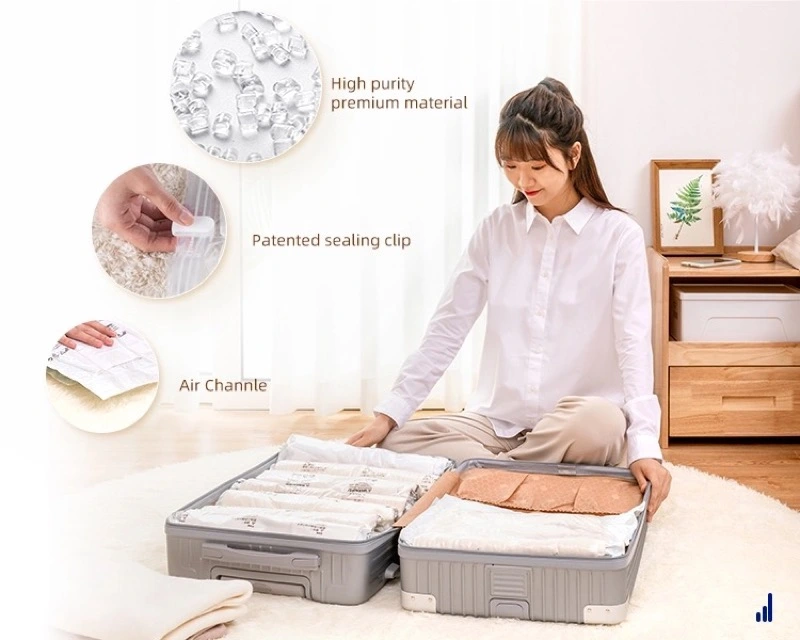
| Vacuum compression bag | A compatible pump or vacuum removes air through a valve | Zipper, valve, film, and seams |
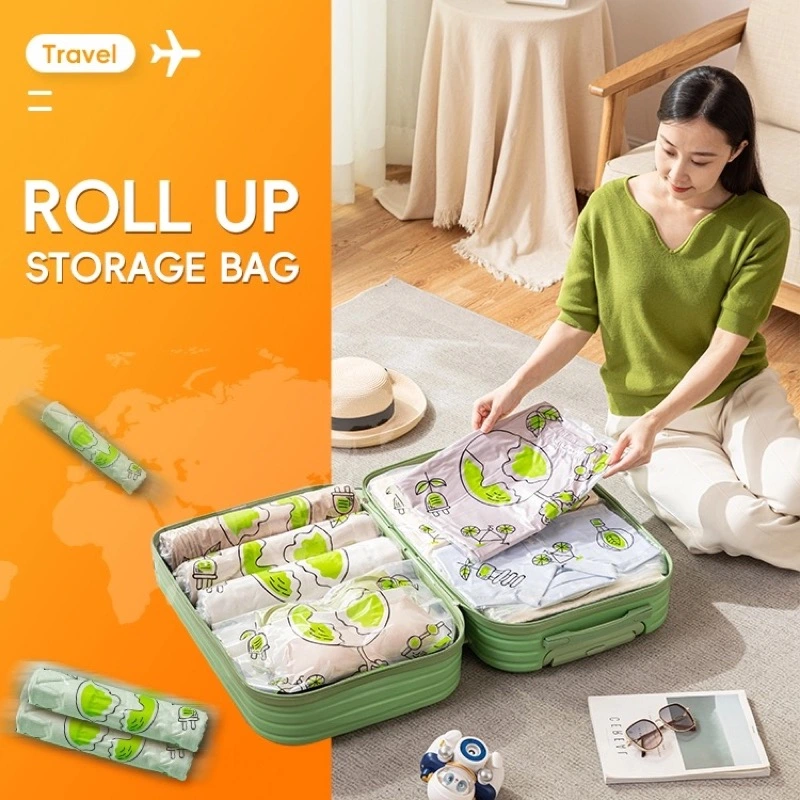
| Roll-up compression bag | Rolling forces air through a one-way outlet | Top seal, outlet, and rolling technique |
| Compression packing cube | A second zipper mechanically reduces volume | Compression zipper, trapped fabric, and overpacking |
A fabric compression cube does not maintain a vacuum. If it bulges overnight, redistribute the contents and check the compression zipper rather than searching for an air leak.
The following troubleshooting steps primarily apply to airtight travel vacuum bags and roll-up compression bags.
Why Does a Travel Compression Bag Reinflate Overnight?
A bag that becomes noticeably larger within hours deserves inspection. Although some air return can occur over longer periods, rapid reinflation commonly points to a closure, valve, puncture, or packing problem.
The Zipper Looks Closed but Has a Small Gap
The slider helps engage the zipper tracks, but its position does not prove that every section is sealed.
Lint, hair, a fold in the plastic, or an incompletely closed endpoint can leave a tiny air pathway. Pay particular attention to both ends and any section that was folded during sealing.
The Bag Is Overfilled
Too much clothing makes it difficult to align the closure. Bulky contents can also pull against the zipper as the bag compresses.
Follow the marked fill line and the model’s instructions. For bags without clear guidance, leave enough empty space for the zipper area to lie flat without stretching.
The Valve Is Dirty, Misaligned, or Damaged
Valve designs differ. Some use screw caps, others use press-fit closures, and some incorporate internal one-way components.
Fibers or damage around the sealing surfaces may prevent proper closure. However, do not assume every valve needs tightening: follow the instructions for your specific design.
The Film or Seam Has Been Damaged
Exposed clothing hardware, rough suitcase interiors, and repeated sharp folding can damage the bag.
A small puncture may be difficult to see, while a split seam can resemble an ordinary crease. Inspect both before concluding that the pump is responsible.
How to Fix a Travel Compression Bag That Will Not Stay Compressed
Step 1: Empty the Bag and Inspect It Flat
Work on a clean, smooth surface under good light.
Check:
- Both zipper endpoints.
- The full length of each sealing track.
- The valve and its attachment area.
- Welded edges and corners.
- Areas that contacted buttons, hooks, or exposed zippers.
Gently flatten suspicious folds. Do not stretch the film or pull apart welded seams while inspecting them.
Step 2: Clean and Dry the Zipper Tracks
Remove visible lint and hair with a soft, clean cloth. If cleaning requires a damp cloth, allow the tracks to dry completely before resealing.
Avoid oils, petroleum jelly, and unapproved lubricants. They are not substitutes for an intact closure and may be incompatible with the bag’s materials.
Also check for threads from the packed clothing. A single strand crossing the closure can interrupt contact between the tracks.
Step 3: Repack With Less Strain on the Closure
Fold clothing evenly and distribute bulky items across the bag.
Keep hard garment details away from the film where practical. Fold exposed zipper pulls or hooks inward rather than allowing them to press directly against the plastic.
Remove some clothing if:
- You must stretch the opening to close it.
- The zipper bends sharply around the contents.
- Fabric reaches the sealing tracks.
- The packed bag exceeds its fill line.
Using two moderately filled bags is often more practical than forcing everything into one.
Step 4: Close the Zipper and Verify It by Touch
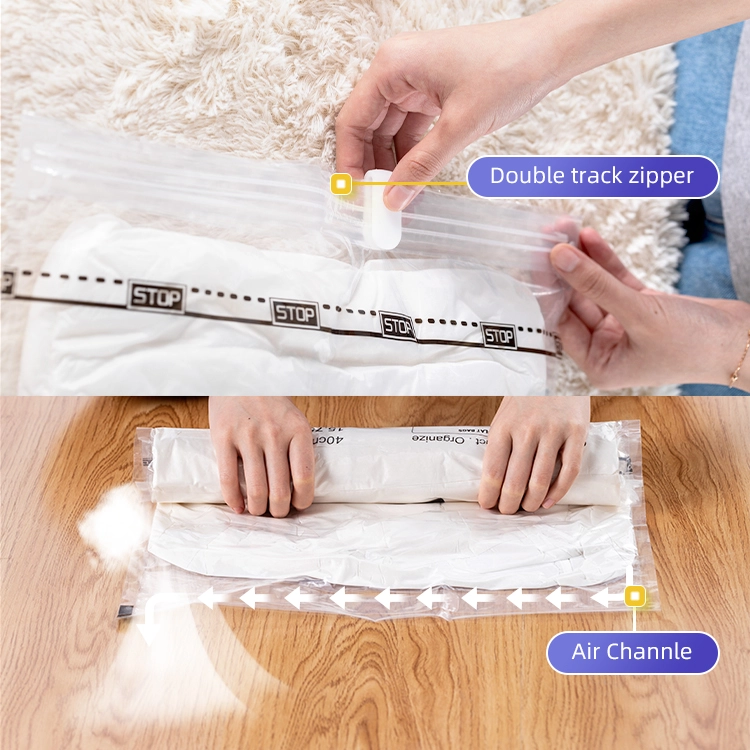
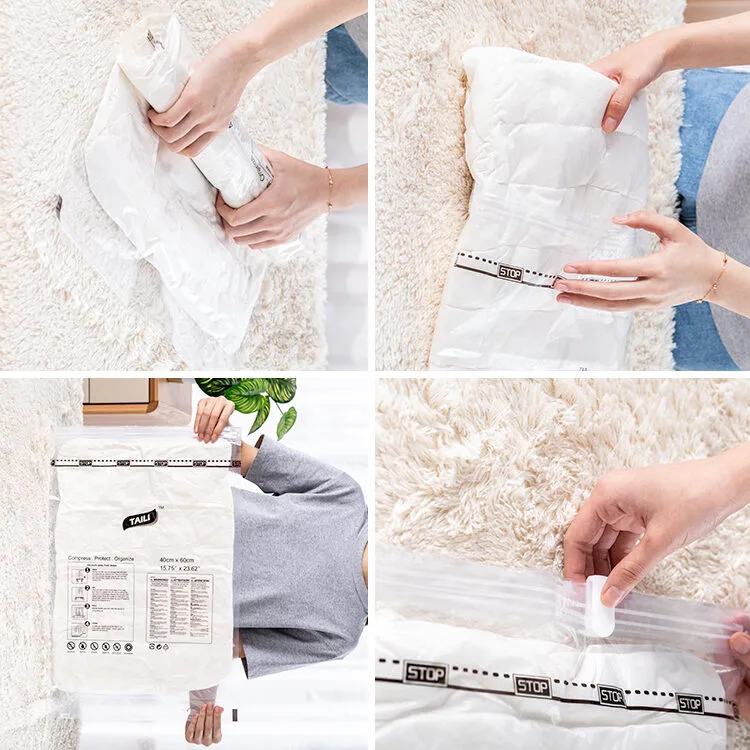
Lay the closure flat. Move the slider slowly along its full length, following the manufacturer’s instructions.
Then press along the tracks with your fingers, especially at both ends. Repeat the check wherever the closure was creased.
If your model has a color-change closure indicator, use it as an additional visual check. Still inspect the endpoints and confirm that no fabric is trapped.
Step 5: Check the Valve Without Forcing It Apart
Inspect accessible sealing surfaces for dust, hair, and visible damage.
For removable components, follow the product instructions exactly. Do not pry apart a fixed valve or reposition an internal membrane unless the manufacturer specifically permits it.
Where a cap is fitted, ensure it sits correctly. For threaded caps, check alignment before tightening; forcing a cross-threaded cap can worsen the problem.
Step 6: Remove Air Using the Correct Method
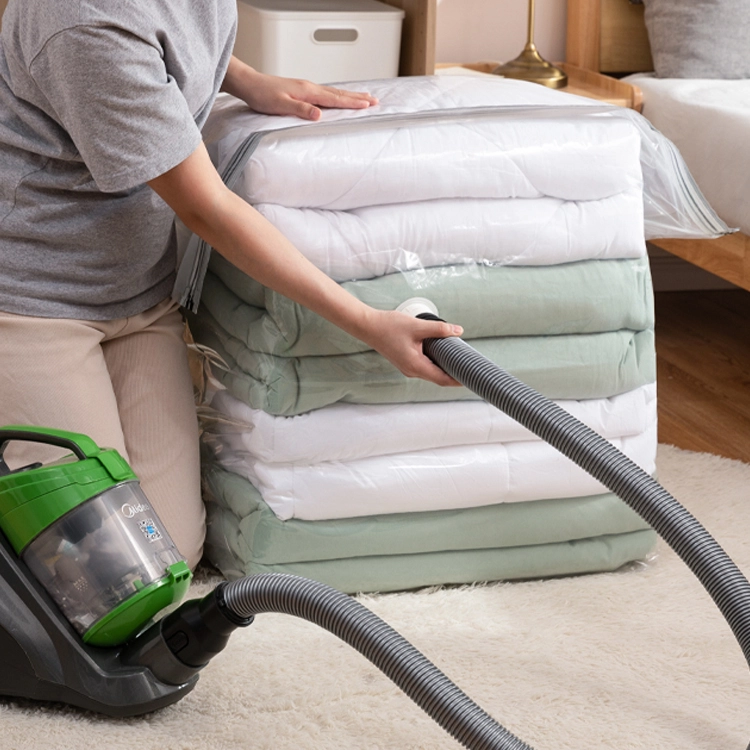
For a vacuum bag, use a compatible pump or vacuum attachment and keep the nozzle properly positioned.
For a roll-up bag, follow the specified rolling direction so air can escape through the intended outlet.
Stop when the bag reaches the compression described in its instructions. Prolonged pumping is not a solution to a defective seal.
Close any required cap immediately, then place the bag somewhere it will not be squeezed or disturbed.
Run a Controlled Overnight Compression Test
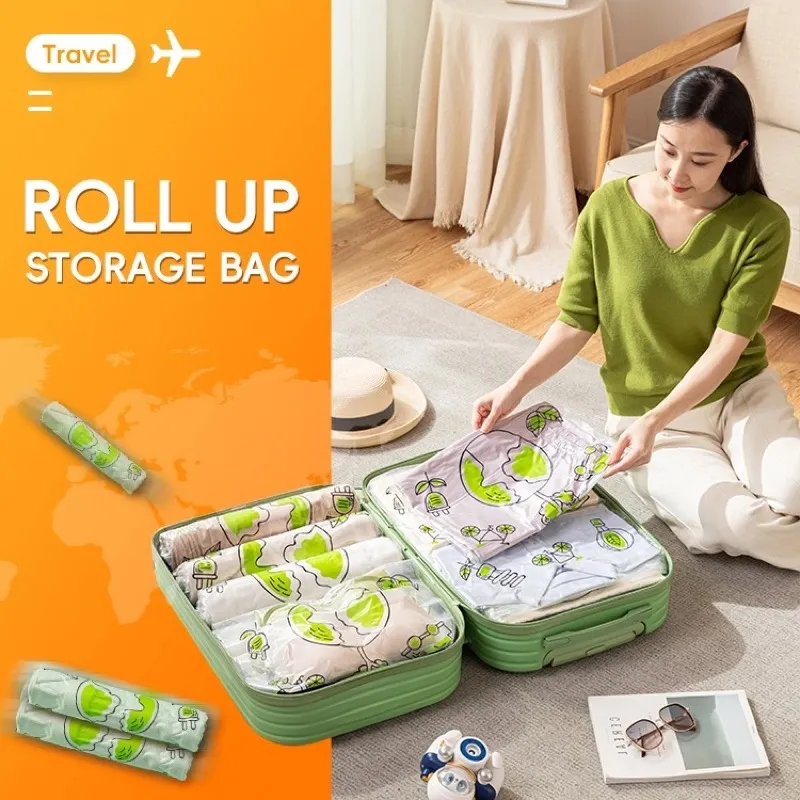
A useful test should help identify the cause—not simply confirm that the bag became larger.
The following is a practical home troubleshooting method, not a laboratory certification or a universal performance standard.
Use the Same Clothing and Conditions
Pack a modest load of dry, ordinary clothing. Avoid sharp accessories.
After compressing the bag:
- Photograph it from the side.
- Record the time.
- Note its approximate height without pressing down.
- Check it after one hour.
- Check it again the next morning.
Keep it in the same room, away from direct sunlight and heat sources. This makes comparisons more meaningful.
Change One Variable at a Time
If the bag expands, first repeat the test after cleaning and carefully resealing the zipper.
If that does not help, inspect the valve and repeat. Next, reduce the load and check again.
| Observation | What to investigate next |
|---|---|
| Resealing solves the problem | Closure technique or contamination |
| A lighter load holds better | Overpacking or strain near the closure |
| Expansion begins immediately after pump removal | Valve operation or a major opening |
| The same bag repeatedly fails with different loads | Film, seam, zipper, or valve damage |
| It holds outside the suitcase but fails after packing | Abrasion, sharp objects, or handling stress |
These observations narrow the search. They do not establish a defect with certainty.
Compare Two Bags if Available
Pack similar clothing loads into two bags and use the same sealing method.
If only one repeatedly loses compression, investigate that bag more closely. If both fail, review the packing and sealing procedure before assuming both products are defective.
This comparison is especially useful before an important trip.
Can You Repair a Leaking Travel Compression Bag?
The answer depends on where it leaks.
A Small Film Puncture May Allow a Temporary Patch
If the manufacturer recommends a compatible repair patch, follow its instructions.
A temporary patch is most plausible on a small puncture in a flat, accessible section of film. Clean and dry the area, apply the approved patch, and repeat the overnight test.
Do not assume ordinary household tape provides a durable or airtight repair. A patched bag should not be your only protection for trip-critical items.
Damaged Zippers, Valves, and Seams Usually Need Replacement
Replacement is generally the more dependable choice when:
- The zipper tracks are torn or distorted.
- A fixed valve is cracked or detached.
- A welded seam is separating.
- Multiple punctures are present.
- The bag repeatedly fails after correct resealing.
Before discarding a recently purchased bag, photograph the damage and contact the seller about applicable support or warranty options.
Avoid melting the plastic, applying uncontrolled heat, or using unapproved adhesives.
An Industry Perspective: Evaluate the Whole Sealing System
From a materials and product-design perspective, compression retention depends on several components working together: the film, zipper, valve, and welded seams.
This is why material thickness alone is not enough to judge a bag. A robust film cannot compensate for a poorly closed zipper, and an effective valve cannot prevent air entering through a puncture.
For buyers comparing products, useful questions include:
- Are the sealing instructions clear?
- Is the valve compatible with the intended compression method?
- Is the closure easy to inspect?
- Are repair, replacement, and support procedures explained?
- Are performance claims supported by test conditions?
The company background supplied for Guangdong Taili Technology Group Co., Ltd. describes capabilities in nanomaterials, polymers, coatings, and integrated manufacturing. TAILI’s public product information also describes high-barrier materials and airtight sealing in its vacuum storage range.
Those capabilities provide relevant manufacturing context. They should not, however, be treated as proof that every consumer bag achieves a particular overnight retention result. Product-specific instructions and documented testing remain the useful evidence for that decision.
Prevent Another Overnight Compression Failure
Build these checks into your packing routine:
- Pack clean, fully dry clothing.
- Keep the zipper area clear.
- Respect the fill line.
- Protect the film from exposed hardware.
- Avoid sharp folds across valves and closures.
- Test the packed bag before departure.
- Leave some flexibility in your suitcase layout.
Also consider the return journey. A pump-dependent bag needs a compatible air-removal method when you repack.
For down-filled jackets, sleeping bags, and other insulating products, follow the garment manufacturer’s compression and storage guidance. Travel compression should not automatically become a long-term storage method.
Pack With Confidence Before You Leave
Test your travel compression bag tonight, not at the airport. Clean the closure, reduce overpacking, verify the valve, and check its size again tomorrow.
If your TAILI bag still expands, contact the seller or product-support team with the model, purchase details, and before-and-after photographs. Request model-specific guidance or a replacement assessment rather than repeatedly recompressing an unreliable bag.
Frequently Asked Questions
Why does my compression bag expand even though the zipper looks sealed?
A tiny gap may remain at an endpoint or folded section. Clean the tracks, lay the closure flat, and press along its entire length after using the slider. If expansion continues, inspect the valve and film.
Will a stronger vacuum pump stop overnight reinflation?
Not if air is entering through a leak. Check pump compatibility if initial compression is poor, but troubleshoot the closure, valve, and bag body when good compression disappears overnight.
How much space should I leave below the zipper?
Follow your bag’s fill line and instructions. Neusu recommends approximately 2–3 cm of clear space for its bags, but that measurement is not a universal specification for every model.
Can I use a travel compression bag without a pump?
Yes, if it is designed for rolling or manual compression. Do not assume a vacuum-only model works the same way. Check the valve design and instructions before choosing your packing method.
Does slight softness mean the bag has failed?
Not necessarily. Judge whether the bag is substantially regaining volume, rather than expecting every packed surface to feel rigid. Persistent or obvious overnight expansion warrants troubleshooting.
Should I replace a bag that keeps leaking?
If cleaning, correct packing, and resealing do not resolve the problem, contact the seller. Replace bags with damaged closures, cracked valves, separating seams, or repairs that cannot pass a repeat test.
References
1. Neusu. “Common Problems With Vacuum Storage Bags Solved.” Manufacturer guidance on incomplete closures, zipper endpoints, and rapid reinflation. https://www.neusu.com/help-advice/common-problems-with-vacuum-storage-bags-solved/
2. Neusu. “How Do I Seal a Vacuum Storage Bag Properly?” Guidance on packing clearance, overfilling, and closure technique. https://www.neusu.com/help-advice/how-do-i-seal-a-vacuum-storage-bag-properly/
3. Packmate. “Why Do Vacuum Storage Bags Keep Re-Inflating?” Troubleshooting guidance covering zippers, valves, punctures, and overnight checks. https://packmate.co.uk/blogs/news/why-do-vacuum-storage-bags-keep-re-inflating
4. Eagle Creek. “Packing Cubes vs Compression Bags: How Do They Work?” Explanation of mechanical compression, compression bags, and insulating-fill precautions. https://eaglecreek.com/blogs/articles/compression-packing-cubes
5. Eagle Creek. “Pack-It Compression Sack Set M/L.” Product information explaining its one-way pressure valve and pump-free operation. https://eaglecreek.com/products/pack-it-travel-compression-sack-bags
6. TAILI Store. “Vacuum Storage Bags.” Brand product information describing high-barrier materials and airtight sealing. https://tailistore.com/collections/vacuum-storage-bags
7. Guangdong Taili Technology Group Co., Ltd. “TAILI Multifunction Vacuum Storage Bags for Clothes.” Supplier listing describing model-dependent valve and color-change zipper features. https://www.alibaba.com/product-detail/TAILI-Multifunction-Vacuum-Storage-Bags-for_1600979214967.html
Hot Tags: Travel Compression Bags, Vacuum Storage Bags, Compression Bag Manufacturer, Vacuum Storage Bag Supplier, Wholesale Compression Bags, OEM Vacuum Storage Bags, Custom Vacuum Compression Bags, Travel Storage Bag Manufacturer, Bulk Vacuum Storage Bags, Airtight Compression Bags