Content Menu
● Odor-Proof Vacuum Bags vs. Standard Storage Bags: Quick Comparison
● How Odor-Proof Vacuum Bags Work
>> Compression and Odor Containment Are Different Functions
>> Why Film Construction Matters
● Comparing the Factors That Matter During Travel
>> Odor Control for Worn Clothing
>> Space Savings and Suitcase Fit
>> Baggage Weight and Airport Practicality
>> Access, Durability, and Cost
● The Moisture Mistake Travelers Should Avoid
>> Sealing Damp Clothing Does Not Make It Safe to Store
>> Match Compression to Garment Care
● A Practical Pre-Trip Bag Test
>> Step 1: Create Comparable Loads
>> Step 2: Check Packing and Compression
>> Step 3: Assess Odor Cautiously
>> Step 4: Repeat Normal Handling
● What Travel Brands Should Request from Suppliers
>> Separate Material Data from Finished-Bag Performance
>> Build a Relevant Odor-Test Brief
>> Evaluate Taili Through Product-Specific Evidence
● Which Bag Should You Choose?
>> Choose Odor-Proof Vacuum Bags When:
>> Choose Standard Storage Bags When:
● Choose Evidence Before You Pack
>> Are All Vacuum Storage Bags Odor-Proof?
>> Can Standard Storage Bags Keep Dirty Clothes Separate?
>> Can I Put Wet Swimwear in a Vacuum Bag?
>> Do Vacuum Bags Reduce Airline Baggage Weight?
>> Are Vacuum-Sealed Clothing Bags Allowed on Flights?
>> How Can I Compare Odor-Proof Travel Bags Before Ordering?
Odor-proof vacuum bags vs. standard storage bags for travel is more than a question of suitcase space. The right choice depends on what you pack, how often you need access, and whether you want to separate worn clothing from clean outfits. Vacuum bags offer compression and potentially stronger odor containment; standard storage bags prioritize convenience and simplicity.
My recommendation is to choose by packing task rather than product label. Use verified odor containment where unwanted smells matter, compression where bulky clothing consumes space, and simple storage bags where frequent access matters most.
This guide compares both options, explains the limits of “odor-proof” claims, and provides a practical selection framework for travelers and travel-product buyers.
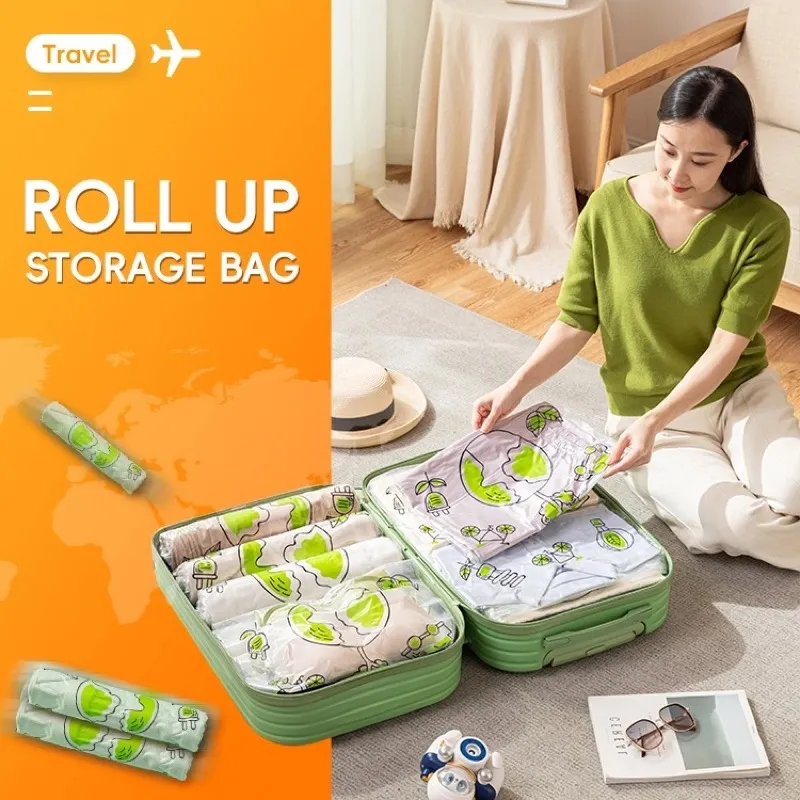
Odor-Proof Vacuum Bags vs. Standard Storage Bags: Quick Comparison
For this comparison, standard storage bags means ordinary resealable plastic bags and non-vacuum garment-storage bags. Fabric packing cubes are a separate category because their breathable construction serves a different purpose.
“Odor-proof vacuum bags” refers to reusable compression bags marketed for odor containment—not every vacuum bag automatically qualifies.
| Comparison factor | Odor-proof vacuum bags | Standard storage bags |
|---|---|---|
| Primary purpose | Compression plus claimed odor containment | Organization and basic separation |
| Space reduction | Removes trapped air from compressible contents | Usually limited to manual squeezing |
| Odor control | Depends on film, zipper, valve, and testing | Variable; ordinary closures may allow odor escape |
| Packing speed | Requires sealing and air removal | Usually faster |
| Repeated access | Often requires recompression | Easier to open and close |
| Moisture management | Can trap moisture inside | Sealed plastic versions can also trap moisture |
| Best applications | Bulky clothing and isolated dry laundry | Daily essentials and short trips |
| Main limitation | More components and product-specific performance | Limited compression and uncertain odor barriers |
Neither category is universally better. A mixed packing system often provides the most practical result.
How Odor-Proof Vacuum Bags Work
Compression and Odor Containment Are Different Functions
A vacuum bag removes air through a valve or another evacuation mechanism. Atmospheric pressure then compresses suitable soft contents.
Odor containment is a different challenge. Odorous compounds may escape through imperfect closures or move through the packaging material itself. Removing air does not eliminate the source of the smell.
This distinction matters when selecting vacuum bags for dirty clothes. A bag can remain visibly compressed without proving that it blocks every odor compound.
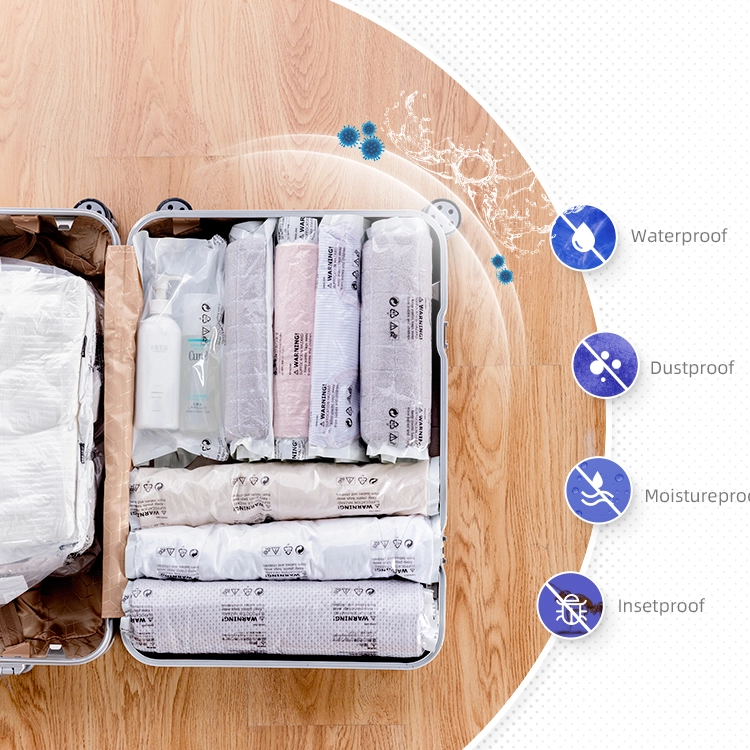
Likewise, “airtight,” “water-resistant,” and “odor-proof” describe different performance claims. Buyers should not treat them as interchangeable.
Why Film Construction Matters
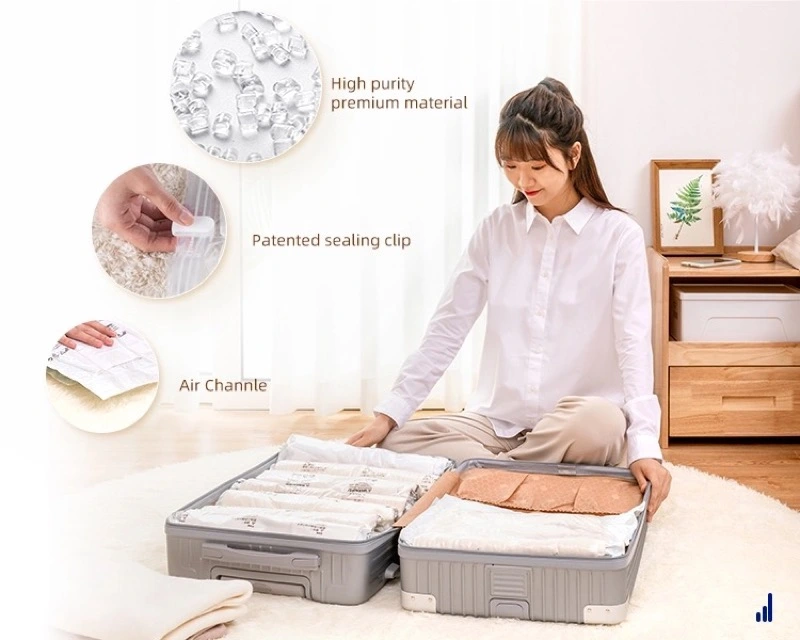
Multilayer packaging combines materials with different functions. For example, nylon and polyethylene structures can combine toughness, barrier performance, and sealability.
However, naming a material does not establish the performance of a finished travel bag. Film thickness, formulation, manufacturing quality, and closure design also matter.
From a product-evaluation perspective, I would ask about the complete bag rather than accept “premium multilayer material” as sufficient evidence.
The key question is straightforward: does the finished product contain relevant odors under realistic conditions?
Comparing the Factors That Matter During Travel
Odor Control for Worn Clothing
Dry socks, gym clothing, and worn shirts can transfer unwanted smells to nearby belongings. Keeping them physically separated is a useful first step.
An appropriately tested odor-containment vacuum bag may offer stronger isolation than an ordinary storage bag. However, a standard resealable bag may be sufficient for brief separation when odor intensity is low.
Neither option cleans clothing or removes the underlying odor source.
For travel laundry, reserve a clearly identifiable bag for worn items. Avoid returning clean clothing to it until the bag has been cleaned and dried according to its instructions.
Space Savings and Suitcase Fit
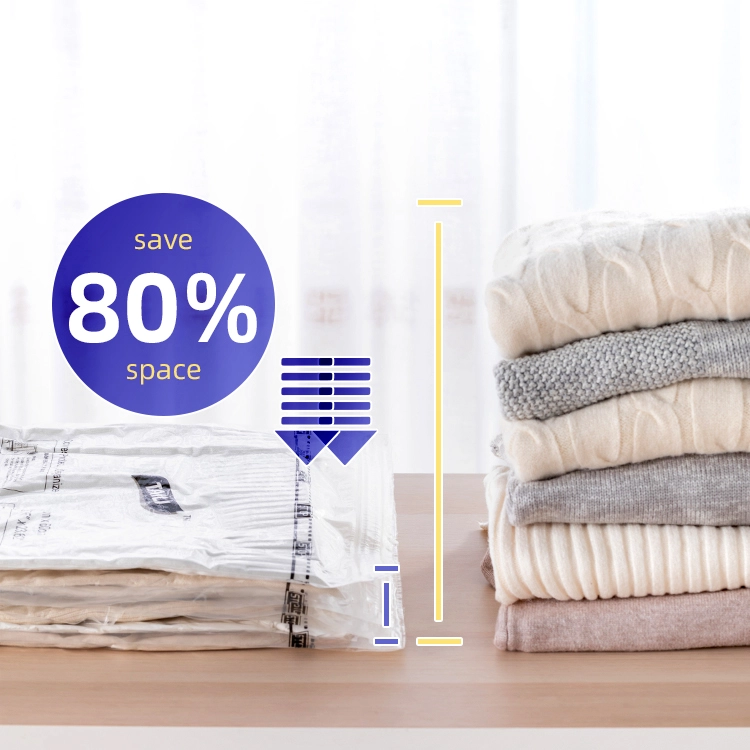
Vacuum compression is most useful when the contents contain substantial trapped air. Bulky sweaters and other compressible garments are therefore more suitable candidates than dense accessories.
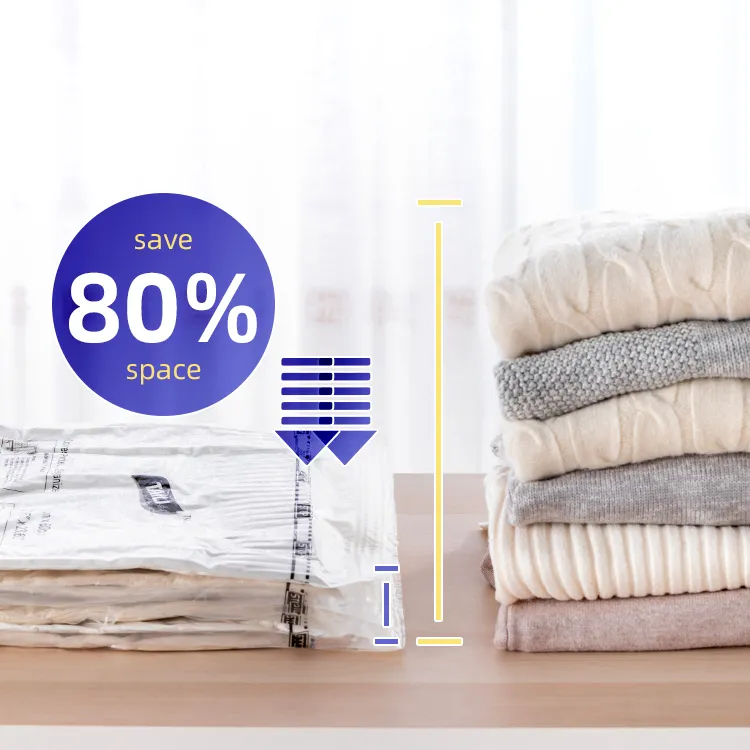
Do not assume that a percentage advertised for bedding will apply to a suitcase of mixed clothing. Results depend on the load, folding method, evacuation method, and measurement procedure.
Compression also changes shape. A tightly packed rectangular bundle may fit a suitcase well, while an overfilled bag can become an awkward lump.
Choose bag dimensions around your luggage, not simply the largest available size.
Baggage Weight and Airport Practicality
Compression reduces volume, not the meaningful weight of the packed clothing. Extra available space can encourage overpacking, so weigh the completed suitcase.
For United States security screening, vacuum-sealed clothing bags are permitted in carry-on and checked baggage, but inspection may require opening them. A packing system should therefore remain workable without its original vacuum.
Keep frequently requested items accessible. If your return journey depends on recompression, confirm that your chosen evacuation method will be available.
Access, Durability, and Cost
Standard storage bags generally win when you need frequent access. Opening a vacuum bag repeatedly adds sealing and air-removal steps.
Vacuum bags also introduce potential failure points, including valves and their attachment areas. Standard bags have simpler construction, although their films and closures can still fail.
Evaluate cost against actual use:
- How many successful trips does the bag complete?
- Does it retain compression throughout the journey?
- Can it be cleaned and reused conveniently?
- Does its size suit your normal luggage?
A higher purchase price is not automatically better value. Neither is the cheapest bag if it fails during its first trip.
The Moisture Mistake Travelers Should Avoid
Sealing Damp Clothing Does Not Make It Safe to Store
Neither vacuum bags nor sealed standard storage bags should be treated as drying systems.
Wet swimwear, damp towels, and sweaty clothing introduce moisture into an enclosed space. Removing air does not reliably dry the fabric, and a sealed bag can retain the moisture already present.
Moisture-control guidance emphasizes thoroughly drying wet materials to help prevent mold growth. For travel, the practical lesson is to dry clothing before prolonged sealed storage.
If temporary containment is unavoidable, keep damp items separate and unpack them for washing and drying as soon as practical.
Match Compression to Garment Care
Not every garment benefits from strong compression. Structured clothing, delicate finishes, and items with sharp hardware deserve particular attention.
Check garment-care guidance and the bag manufacturer’s instructions before compressing valuable pieces. Do not assume that suitability for ordinary clothing extends to every textile or accessory.
For a business trip, preserving garment shape may matter more than maximizing compression.
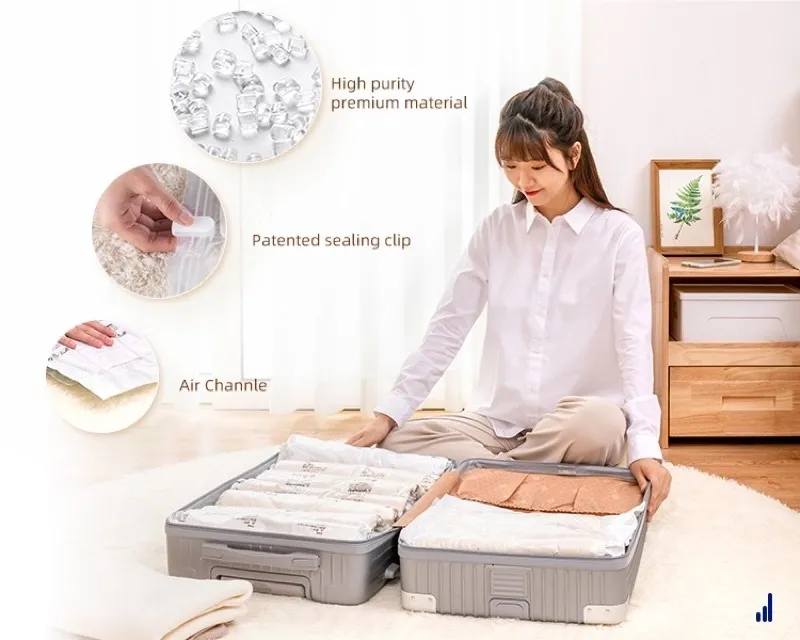
A Practical Pre-Trip Bag Test
A simple home comparison can reveal usability problems before departure. It cannot certify an odor-proof claim, but it can identify obvious leaks, inconvenient sizing, and closure difficulties.
Step 1: Create Comparable Loads
Use similar quantities of completely dry clothing in each bag. For an odor comparison, keep the contents reasonably similar rather than comparing clean garments with heavily worn laundry.
Record bag size, load, room conditions, and the time each bag is closed.
Step 2: Check Packing and Compression
Photograph both bags beside a ruler after packing. For the vacuum bag, repeat the photograph the following day.
Look for unexpected expansion, zipper separation, valve movement, or an inconvenient finished shape. This is a screening exercise, not a laboratory leak test.
Step 3: Assess Odor Cautiously
Keep the bags separated in comparable locations. Check for noticeable odor outside each closed bag at the same intervals.
A human smell check is subjective. No detectable odor does not prove that nothing escaped, and different people may notice different compounds.
Step 4: Repeat Normal Handling
Open, close, pack, and unpack each bag several times. Check whether the closure remains easy to align and whether the valve interferes with suitcase organization.
The most useful outcome is a practical decision: which bag works reliably with your clothing and travel routine?
What Travel Brands Should Request from Suppliers
Retailers, distributors, and private-label buyers need stronger evidence than a successful personal packing trial.
Separate Material Data from Finished-Bag Performance
Oxygen transmission testing measures oxygen passing through a material under specified conditions. Temperature, humidity, and film thickness affect interpretation.
Those results can support material evaluation, but oxygen is not a substitute for every odor compound. An oxygen-barrier result alone does not prove that a finished travel bag is odor-proof.
Ask suppliers to distinguish:
- Film barrier measurements.
- Finished-bag leakage or compression retention.
- Odor-containment testing.
- Repeated-use durability.
Each addresses a different question.
Build a Relevant Odor-Test Brief
A useful brief should identify the intended odor source, loading conditions, test duration, temperature, humidity, and evaluation method.
It should also specify whether testing covers new bags only or bags subjected to repeated opening, evacuation, and handling.
For a travel-laundry product, evidence relevant to worn clothing is more useful than an unrelated demonstration. Avoid broad claims that exceed the test conditions.
Evaluate Taili Through Product-Specific Evidence
Guangdong Taili Technology Group Co., Ltd. has a background in vacuum-storage technology and publicly describes aerospace-product development cooperation.
The supplied company profile also outlines broader materials research and manufacturing capabilities. That background provides context for supplier evaluation, but it should not replace evidence for a particular travel-bag model.
An aerospace relationship does not automatically establish aerospace certification, odor-proof performance, or a specific compression percentage for every consumer product.
Ask Taili for the proposed model’s specifications, instructions, and relevant test reports. Connect corporate capability to measurable product performance.
Which Bag Should You Choose?
Choose Odor-Proof Vacuum Bags When:
- Bulky, compressible clothing consumes valuable luggage space.
- You need a dedicated compartment for dry worn clothing.
- You can evacuate the bag at your destination.
- Product-specific evidence supports the odor claim.
Choose Standard Storage Bags When:
- You need frequent access to individual items.
- Your trip is short and clothing volume is modest.
- Organization matters more than compression.
- A simple, inexpensive separation system meets your needs.
For mixed itineraries, combine both: compression bags for suitable bulky clothing, standard bags for accessible essentials, and a dedicated laundry bag for used garments.
Choose Evidence Before You Pack
The strongest travel-storage choice is the one that matches your load, access needs, and return journey—not the one with the broadest marketing promise.
For travelers, test your packing system before departure. For travel brands and distributors, contact Taili with your target bag dimensions, evacuation preference, intended clothing load, and odor-containment requirements. Request samples and supporting product-specific evidence before approving your range.
Frequently Asked Questions
Are All Vacuum Storage Bags Odor-Proof?
No. Vacuum storage describes air removal and compression. Odor containment depends on the material, closure, valve, and relevant testing. A bag that retains its compressed shape has not necessarily demonstrated complete odor containment.
Can Standard Storage Bags Keep Dirty Clothes Separate?
Yes. They provide physical separation and may reduce noticeable odor transfer. Their effectiveness depends on construction, closure quality, contents, and storage duration. Dry clothing is a more appropriate load than damp laundry.
Can I Put Wet Swimwear in a Vacuum Bag?
Use temporary isolation only when necessary, then unpack promptly for washing or drying. A vacuum bag does not function as a dryer. Avoid leaving damp swimwear sealed throughout an extended journey.
Do Vacuum Bags Reduce Airline Baggage Weight?
No meaningful clothing-weight reduction occurs. Their main benefit is reduced volume. Because compression creates room for additional items, check the total weight before traveling.
Are Vacuum-Sealed Clothing Bags Allowed on Flights?
For United States screening, they are permitted in carry-on and checked baggage, although officers may open them for inspection. Other jurisdictions and airlines may have different requirements. Keep essential items accessible.
How Can I Compare Odor-Proof Travel Bags Before Ordering?
Request product-specific reports, not only general material descriptions. Compare test conditions, closure design, repeated-use performance, dimensions, and evacuation requirements. Then trial samples with realistic clothing loads before committing to a larger order.
References
1. Transportation Security Administration. “Vacuum-Sealed Bags.” Official United States guidance covering carry-on and checked baggage, including possible opening for inspection. https://www.tsa.gov/travel/security-screening/whatcanibring/items/vacuum-sealed-bags-0
2. United States Environmental Protection Agency. “A Brief Guide to Mold, Moisture and Your Home.” Guidance on moisture control and thoroughly drying wet materials; used here for the underlying moisture-management principle, not as a travel-bag test. https://www.epa.gov/mold/brief-guide-mold-moisture-and-your-home
3. Intertek. “Oxygen Transmission Rate (OTR) ASTM D3985.” Explanation of flexible-barrier testing and the significance of temperature, humidity, and material thickness. https://www.intertek.com/polymers-plastics/testlopedia/oxygen-transmission-rate-astm-d3935/
4. AMETEK MOCON. “ASTM International.” Overview of oxygen-transmission and related packaging test methods, supporting the distinction between measured gas transmission and broader product claims. https://www.ametekmocon.com/solutions/testmethods/astm-test-methods
5. CloudFilm. “PA/PE Film | Nylon/PE High-Barrier Vacuum Film.” Commercial technical overview of nylon/polyethylene layer functions; not independent verification of any Taili travel bag. https://www.cloudflexfilm.com/product/pa-pe-film/
6. Taili Group. “About.” Corporate background covering its founding, vacuum-storage focus, and aerospace-product development cooperation. Company-published information, not independent product certification. https://en.zs-taili.com/home/page/index/1
Hot Tags: Vacuum Storage Bags Wholesale, Odor-Proof Bags Manufacturer, Travel Vacuum Bags Supplier, Custom Vacuum Storage Bags, OEM Vacuum Storage Bags, Private Label Vacuum Bags, Reusable Vacuum Storage Bags, Vacuum Compression Bags, Travel Storage Bags Wholesale, Vacuum Storage Bags Manufacturer