Content Menu
● Good Vacuum Sealed Bags for Travel: Quick Comparison
● Vacuum Sealed Bags vs. Compression Packing Cubes
>> Vacuum Sealed Bags: Better for Compressing Bulky Clothing
>> Compression Packing Cubes: Better for Organization and Access
● Which Vacuum Bags Are Worth Considering?
>> TAILI: A Fabric-Based Option with a Wireless Pump
>> Cozy Essential: Useful for Mixed Packing Needs
>> Nomatic Vacuum Bag 2.0: Convenient Without a Pump
>> VMstr: Convenient When USB Power Is Available
● Pump-Powered vs. Pump-Free Travel Vacuum Bags
>> Electric Pumps: Less Physical Effort
>> Hand Pumps: Independent of Electricity
>> Roll-Up Bags: Fewer Accessories
● What Makes a Good Travel Vacuum Bag?
>> Assess the Complete Sealing System
>> Choose Dimensions Before Capacity Claims
>> Separate Water Resistance from Proven Waterproofing
● A Practical Home Test Before Your Trip
● Why Advertised Space Savings Need Context
● How to Pack Vacuum Sealed Bags for Travel
● Airport Security and Baggage Limits
● Choose Around Your Actual Journey
>> Are vacuum sealed bags good for travel?
>> Can I use vacuum bags without a vacuum cleaner?
>> Do vacuum bags reduce luggage weight?
>> Can airport security open vacuum sealed bags?
>> Will vacuum bags wrinkle clothes?
>> Which is better: vacuum bags or packing cubes?
Good vacuum sealed bags for travel include TAILI’s wireless-pump travel compression bag, Cozy Essential’s mixed-size storage set, Nomatic’s Vacuum Bag 2.0, and VMstr’s USB-powered bags. Each suits a different priority: reusable construction, flexible sizing, pump-free packing, or convenient powered compression.
My recommendation is to choose around your return journey—not just your first packing session. A bag that compresses beautifully at home becomes less useful if you cannot reseal it in a hotel.
The most useful comparison is between vacuum sealed bags and compression packing cubes, followed by pump-powered versus pump-free designs. This guide examines those differences, compares specific options, and explains how to judge reliability beyond advertised space savings.
This is a research-based comparison, not a claim that I personally tested these products. Manufacturer specifications and independently reported findings are distinguished throughout.
Good Vacuum Sealed Bags for Travel: Quick Comparison
There is no universal winner. The right choice depends on your clothing, luggage dimensions, and willingness to carry a pump.
| Product | Best suited to | Compression method | Main advantage | Important limitation |
|---|---|---|---|---|
| TAILI Travel Vacuum Compression Bag | Travelers considering a reusable, fabric-based design | Included wireless electric pump | Nylon/TPU construction, viewing window, carrying strap | Compression and durability claims require real-world verification |
| Cozy Essential Vacuum Storage Bags | Families and mixed home-and-travel use | Hand pump; travel roll-ups also included in the reviewed set | Multiple sizes and compression options | Larger bags require more pumping time |
| Nomatic Vacuum Bag 2.0 | Travelers avoiding pumps and charging | Manual pressure through a valve | Simple equipment-free operation | Reviewers observed some air returning during compression |
| VMstr Storage Bags | Travelers carrying compatible USB power sources | USB-powered pump | Convenient powered compression | Reviewed plastic bags were vulnerable to damage when overfilled |
Exact bundle contents can change. Confirm the model, bag sizes, pump inclusion, and return terms before ordering.
Vacuum Sealed Bags vs. Compression Packing Cubes
These products solve related but different problems.
Vacuum Sealed Bags: Better for Compressing Bulky Clothing
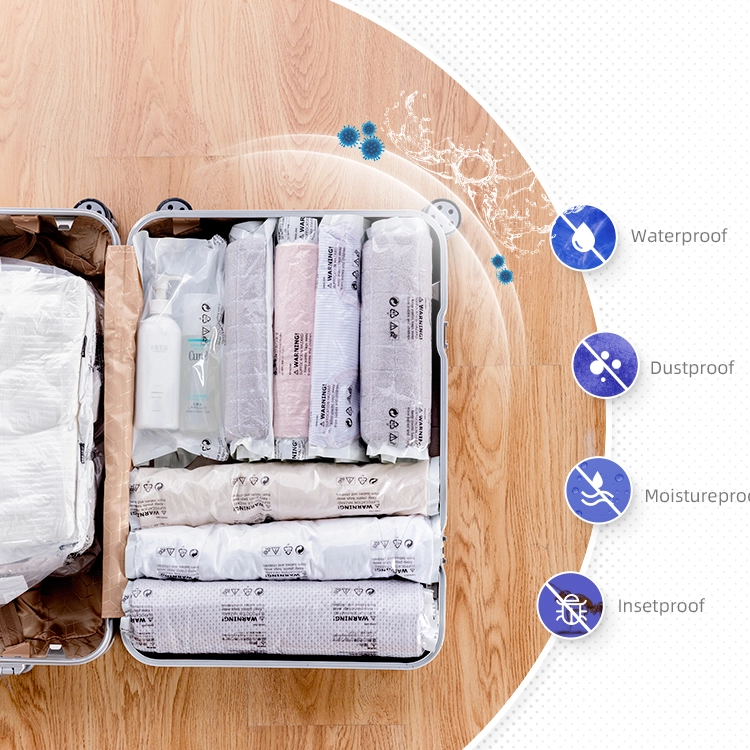
Vacuum bags remove air from an enclosed compartment. They are particularly useful for clothing that occupies substantial space because of trapped air, such as jackets and sweaters.
Their main advantage is reducing the volume of a clothing bundle. Their main inconvenience is access: opening the bag releases the compression, so you must repeat the process afterward.
I would prioritize them for:
- Winter clothing.
- Longer trips with limited suitcase space.
- Clothing that will remain packed between destinations.
- Separating a reserve set of outfits from everyday essentials.
They do not make clothing lighter. Additional bags and pumps also contribute to your luggage weight.
Compression Packing Cubes: Better for Organization and Access
Compression cubes typically use an additional zipper to tighten a fabric compartment rather than evacuating air through a valve.
They suit travelers who want to identify, remove, and replace clothing frequently. Their practical strength is organization, not necessarily maximum compression.
| Decision factor | Vacuum sealed bags | Compression packing cubes |
|---|---|---|
| Main function | Reduce clothing volume through air removal | Organize and tighten clothing bundles |
| Daily access | Requires opening and recompressing | Usually easier to reopen |
| Equipment | Some require a pump | No pump required |
| Best packing role | Bulky or less frequently accessed items | Everyday outfits and smaller essentials |
| Main concern | Leaks, valve compatibility, repacking | Overfilling and zipper strain |
For many trips, a hybrid system makes more sense than choosing only one: compress bulky layers and keep frequently used clothing accessible.
Which Vacuum Bags Are Worth Considering?
TAILI: A Fabric-Based Option with a Wireless Pump
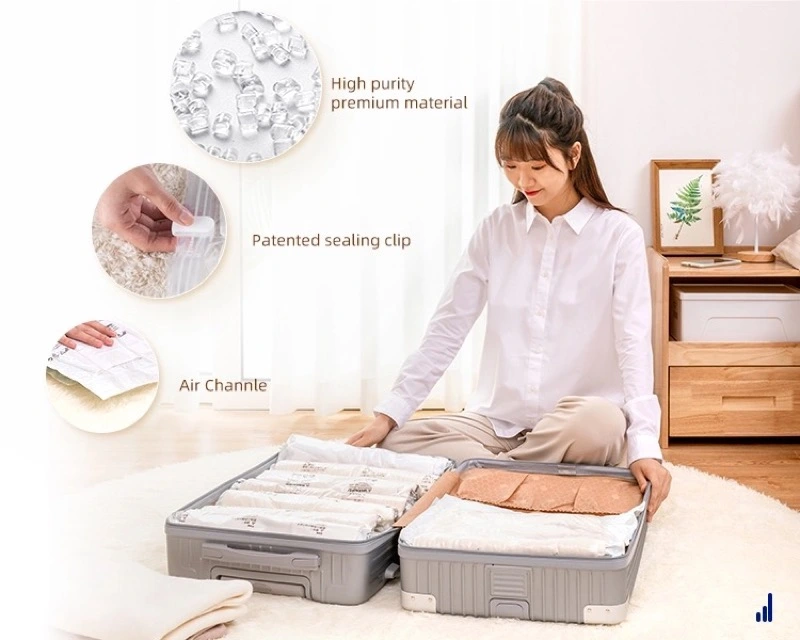
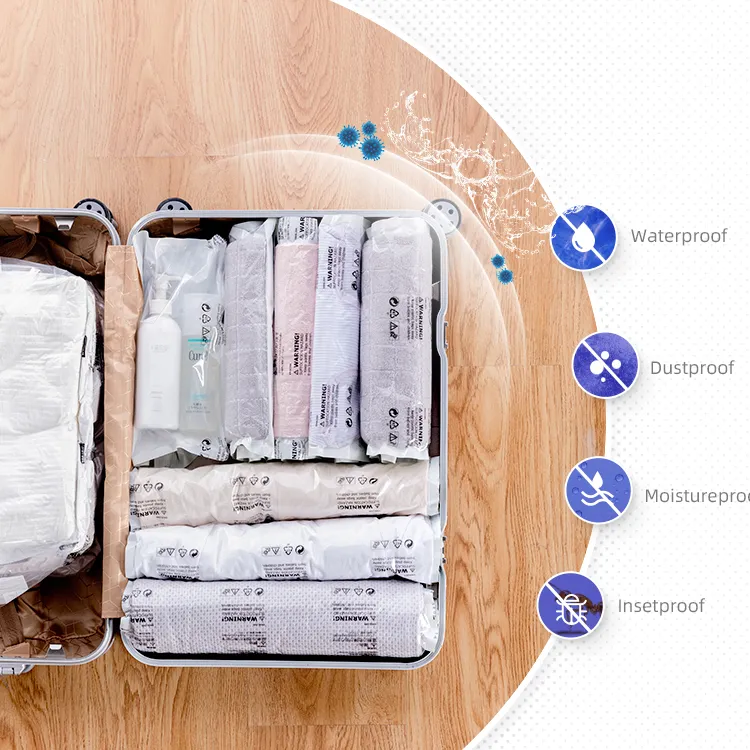
TAILI’s travel compression bag lists a nylon-and-TPU composite construction, reinforced edges, a valve, a viewing window, and a detachable shoulder strap. The product page also describes an included portable electric pump.
These features make it worth considering if you prefer a standalone travel bag rather than a conventional transparent storage pouch.
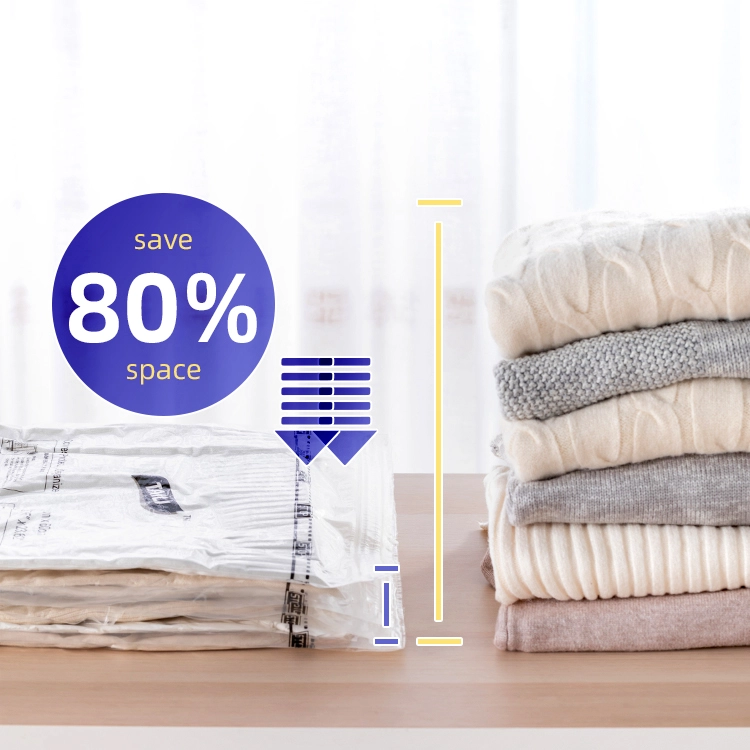
However, its advertised 80% space saving is a manufacturer claim—not a guarantee for every wardrobe. A loosely packed jacket and a dense stack of jeans will not compress identically.
The listing also presents dimensions in different formats across its description and specification section. Request confirmation of the exact size before matching it to your suitcase.
The company background supplied for this article describes Guangdong Taili Technology Group as a materials-focused manufacturer with aerospace packaging experience. That background provides context, but it does not independently establish the performance of this particular consumer product.
My purchasing priority would remain model-specific evidence: sealing consistency, usable dimensions, pump compatibility, and after-sales support.
Cozy Essential: Useful for Mixed Packing Needs
Cozy Essential’s reviewed set combines conventional vacuum bags, travel roll-ups, and a manual pump.
That flexibility suits households wanting one purchase for both luggage and storage. Independent reviewers reported that the tested bags maintained their seals overnight and showed no tears after six months of use.
The trade-off is effort. Compressing the largest reviewed bag took approximately five minutes with the hand pump.
For travel, evaluate how many included bags actually fit your luggage. A large multipack is not automatically better value if most sizes are intended for bedding.
Nomatic Vacuum Bag 2.0: Convenient Without a Pump
Nomatic’s design allows users to press air out through a valve without carrying a separate pump.
That simplicity appeals to travelers moving frequently between hotels or avoiding charging accessories. Independent reviewers also described its material as more durable than conventional plastic vacuum bags.
However, they observed some air returning before achieving the smallest possible package.
I would consider it for equipment-free convenience rather than assume it delivers the greatest compression.
VMstr: Convenient When USB Power Is Available
The reviewed VMstr set includes a compact pump with USB-A and USB-C connections.
It suits travelers who already carry compatible power sources and want powered compression without relying on a household vacuum cleaner.
The important caveat is handling. Independent reviewers found the plastic susceptible to tears when overstuffed and reported some air entering during extended use.
Avoid choosing a bag solely because its pump is convenient. The enclosure still needs to withstand your packing habits.
Pump-Powered vs. Pump-Free Travel Vacuum Bags
Electric Pumps: Less Physical Effort
Electric pumps reduce manual work, especially when packing multiple bags.
Before buying, check:
- Whether the pump is included.
- Whether it is rechargeable or externally powered.
- Which cable or adapter it needs.
- Whether replacement pumps are available.
- Whether its nozzle fits the bag’s valve.
Pump size matters too. A bulky accessory can consume part of the space you hoped to recover.
Hand Pumps: Independent of Electricity
Hand pumps avoid charging and outlet requirements.
They can be practical for occasional travel, but compression time varies considerably with bag size, pump design, and the contents.
Do not assume “manual” means compact. Compare the packed pump dimensions with your available luggage space.
Roll-Up Bags: Fewer Accessories
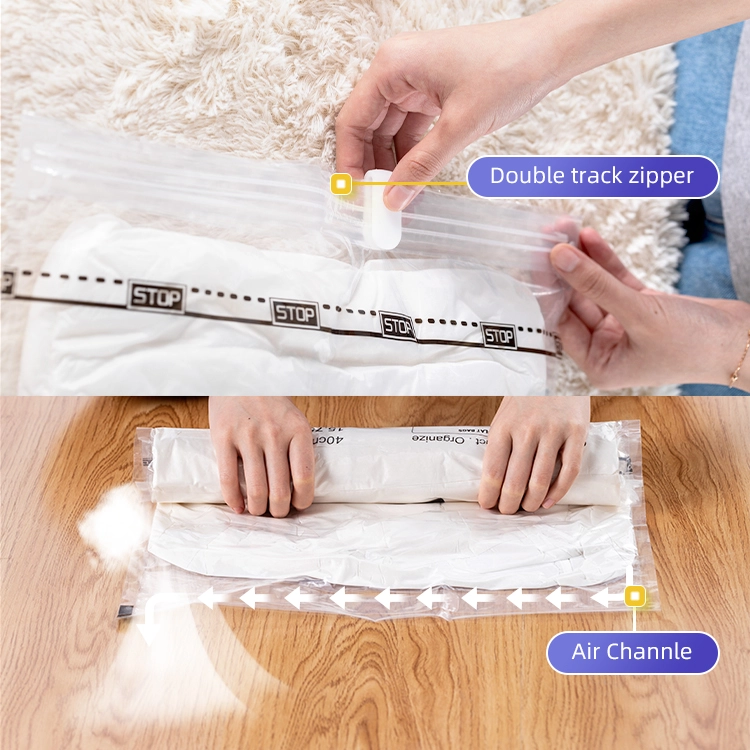
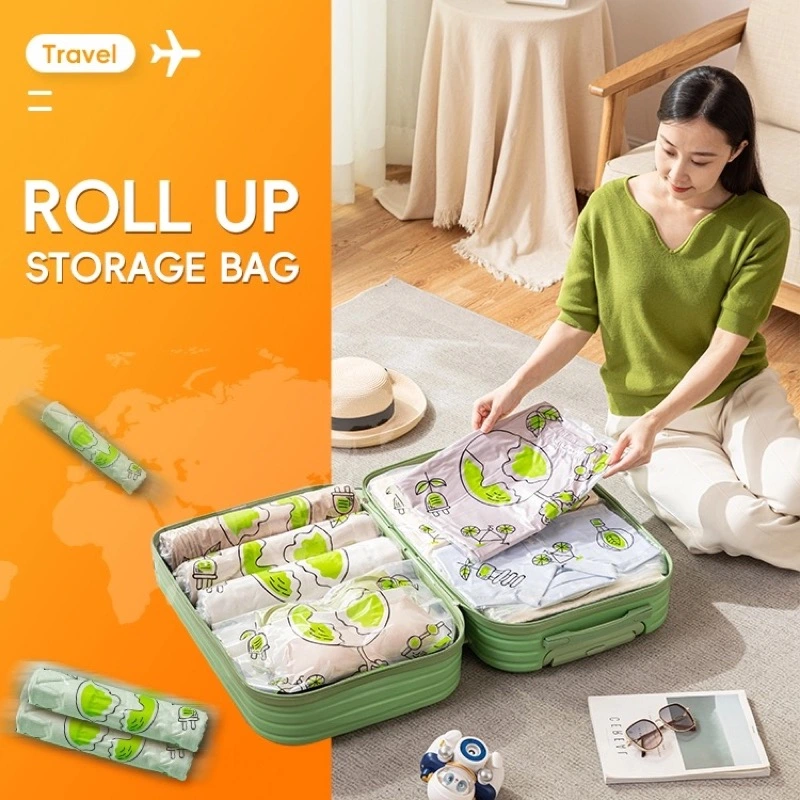
Roll-up designs let you push air out manually.
Their advantage is straightforward repacking without a separate device. Their limitation is the effort required, particularly with larger loads.
For short trips with light clothing, this simplicity may matter more than extracting the maximum possible amount of air.
What Makes a Good Travel Vacuum Bag?
Assess the Complete Sealing System
From a product-evaluation perspective, a vacuum bag is a system of potential leak points.
Consider the closure, valve, seams, and film or fabric together. A strong material cannot compensate for an unreliable valve.
Useful questions include:
- Does the closure align easily?
- Can you verify that it is fully shut?
- Does the valve remain accessible when packed?
- Are the edges visibly stressed after compression?
- Does the manufacturer explain cleaning and reuse?
Choose Dimensions Before Capacity Claims
Measure your suitcase’s usable interior rather than relying only on its nominal size.
Wheel housings, handles, and curved corners reduce available packing space. A bag advertised for a particular suitcase category may still fit your model poorly.
Two smaller bags can also be easier to arrange and access than one oversized block.
Separate Water Resistance from Proven Waterproofing
Manufacturers may describe materials, zippers, or finished bags as waterproof. Those descriptions do not necessarily establish tested protection during immersion.
Unless a product provides relevant test details, treat moisture protection conservatively. Avoid placing unprotected electronics or important documents inside based solely on marketing language.
A Practical Home Test Before Your Trip
A simple pre-trip evaluation can reveal problems while there is still time to exchange the product.
- Select a representative load, including the bulkiest clothing you intend to bring.
- Pack below the stated fill limit and close the bag carefully.
- Compress according to the instructions, then check the valve and closure.
- Measure the package at its thickest point and photograph its position inside your suitcase.
- Leave it overnight and compare its shape the next morning.
- Open it, remove an item, and repeat the process.
- Weigh the fully packed suitcase, including the pump.
This is a practical screening method, not a standardized laboratory test. Its purpose is to identify obvious leakage, awkward sizing, or inconvenient repacking.
For a fair product comparison, use the same clothing load each time. Otherwise, differences in fabric and packing technique can distort the result.
Why Advertised Space Savings Need Context
A claim such as “80% space saving” is incomplete without knowing the starting conditions.
Was the original load loosely piled or neatly folded? Did the measurement cover clothing volume or the entire suitcase? Was the pump included?
Consider an illustrative—not measured—example:
- Clothing occupies 20 liters before compression.
- It occupies 10 liters afterward.
- The clothing bundle has therefore shrunk by 50%.
That does not mean the whole suitcase has gained 50% more usable capacity. Shoes, toiletries, accessories, and rigid items may remain unchanged.
My preferred question is: “How much usable suitcase space does this bag recover with my actual clothing?” That is more valuable than comparing headline percentages alone.
How to Pack Vacuum Sealed Bags for Travel
Start with clean, fully dry clothing. Fold items into relatively even layers and keep hard or sharp components away from vulnerable surfaces.
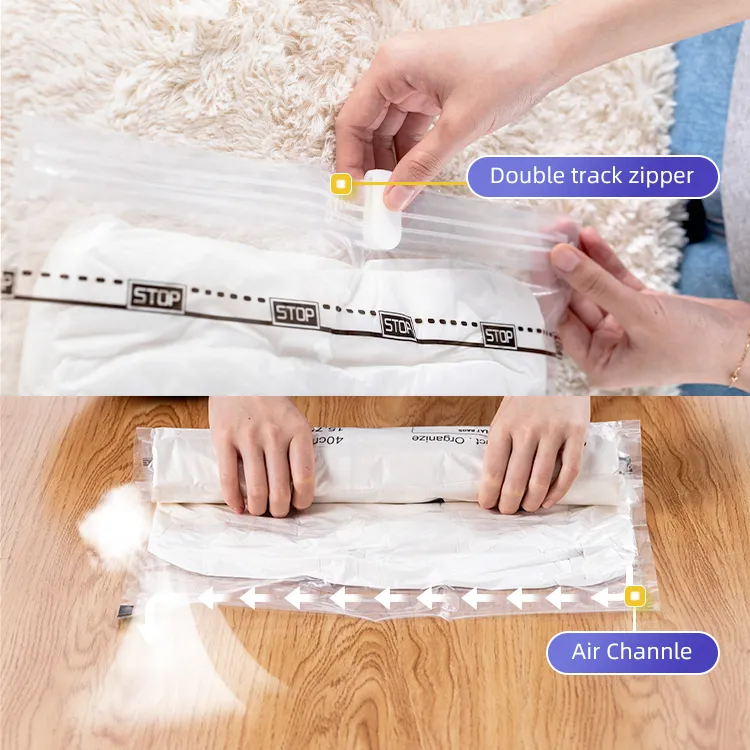
Leave the closure area clear. Fabric caught in the sealing track can prevent proper closure.
Remove air according to the product instructions. Do not force additional clothing into a bag simply because the pump can still compress it.
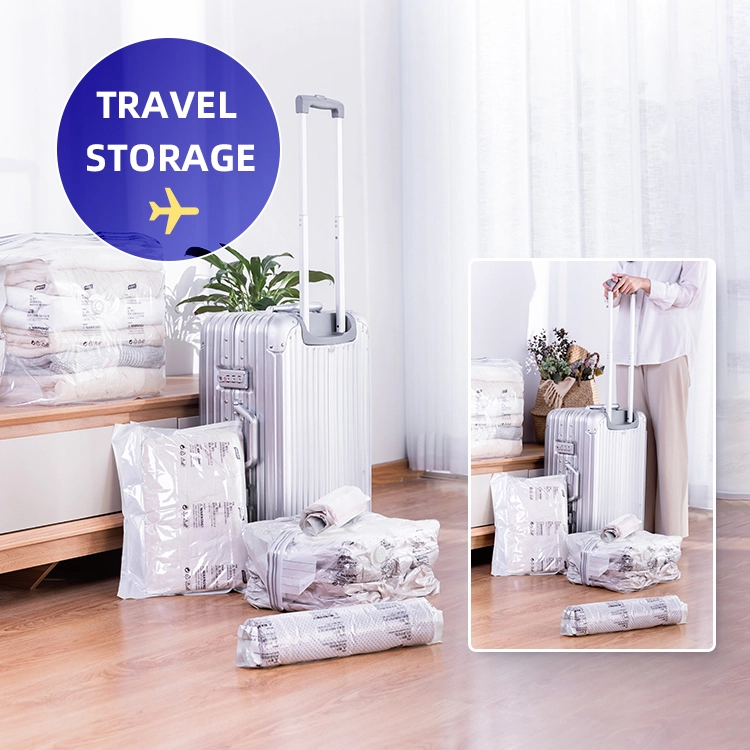
Then arrange the compressed package inside your suitcase without bending the valve or trapping the closure against a rigid edge.
Keep essentials outside:
- Travel documents.
- Medication.
- Chargers.
- A first-day outfit.
- Clothing needed during transit.
Finally, check that you can repeat the process at your destination. Return-trip convenience is part of the product’s value.
Airport Security and Baggage Limits
The U.S. Transportation Security Administration permits vacuum-sealed clothing bags in carry-on and checked baggage, but does not encourage them. Officers may need to open bags that trigger an alarm.
Pack with inspection in mind. Leave enough flexibility to reopen and rearrange your clothing if necessary.
Compression also does not change airline weight limits. Check your carrier’s current baggage allowance rather than assuming a smaller-looking suitcase is compliant.
For a powered pump, verify the applicable airline rules for its particular battery and power configuration before departure.
Choose Around Your Actual Journey
For pump-free simplicity, consider Nomatic. For mixed-size flexibility, compare Cozy Essential. For USB-powered convenience, examine VMstr. For a fabric-based bag with a wireless pump and carrying features, evaluate TAILI.
Before choosing TAILI, request confirmation of the exact dimensions, included accessories, care instructions, and replacement-pump availability. Then test a representative clothing load before departure.
The right purchase is the one that fits your suitcase, stays compressed, and remains easy to repack throughout your trip.
Frequently Asked Questions
Are vacuum sealed bags good for travel?
Yes, particularly for bulky clothing and limited suitcase space. They are less convenient when you need frequent access to everything inside.
Can I use vacuum bags without a vacuum cleaner?
Yes. Choose a compatible hand-pump, electric-pump, or roll-up design. Confirm the compression method before purchasing.
Do vacuum bags reduce luggage weight?
No. They reduce volume, not clothing weight. The bags and any pump add their own weight.
Can airport security open vacuum sealed bags?
Yes. U.S. security officers may open them for inspection if they alarm. Plan how you will repack afterward.
Will vacuum bags wrinkle clothes?
Compression can leave clothing creased. Keep appearance-sensitive garments accessible and avoid assuming any bag will preserve a freshly pressed finish.
Which is better: vacuum bags or packing cubes?
Vacuum bags suit bulky, less frequently accessed clothing. Packing cubes suit organization and repeated access. Combining both is often practical.
References
1. TAILI Store — “TAILI Travel Vacuum Compression Bags with Wireless Pump.” Manufacturer source for the listed nylon/TPU construction, wireless pump, viewing window, carrying features, dimensions, and advertised space-saving claim. These specifications are not independent performance findings.
2. Travel + Leisure — Danielle Calma, “The 6 Best Vacuum Bags for Travel, Tested and Reviewed,” updated August 26, 2026. Independent editorial source covering 18 evaluated products, with reported findings for Cozy Essential, Nomatic, and VMstr; compression methods; material limitations; suitcase fit; and overnight seal checks. The publisher discloses affiliate relationships.
3. Transportation Security Administration — “Vacuum-sealed bags.” Official U.S. guidance permitting vacuum-sealed clothing bags in carry-on and checked luggage, with the warning that officers may need to open them for inspection.
Hot Tags: Vacuum Sealed Bags for Travel, Travel Vacuum Bags, Vacuum Storage Bags, Compression Bags for Travel, Vacuum Bag Manufacturer, Vacuum Storage Bag Supplier, Wholesale Vacuum Storage Bags, Custom Vacuum Storage Bags, Travel Vacuum Bags With Pump, Reusable Vacuum Storage Bags