Content Menu
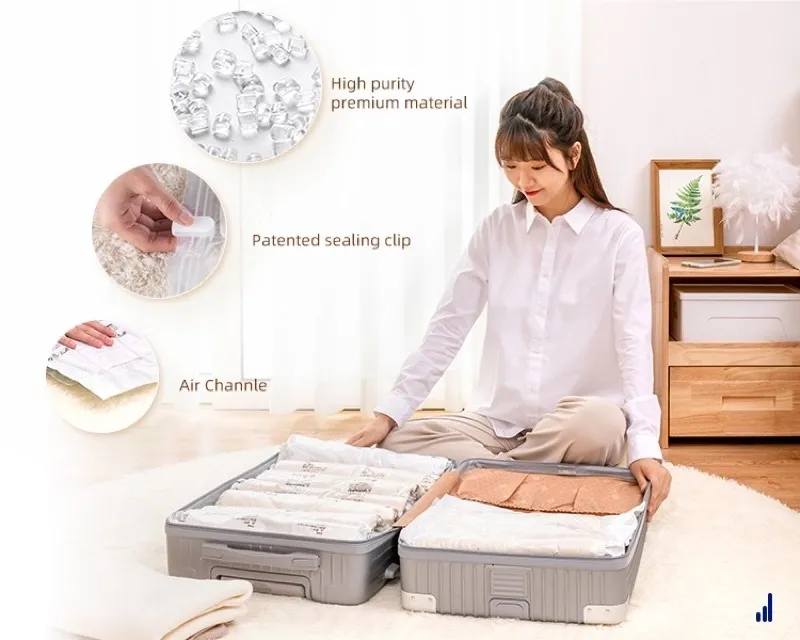
● Vacuum Storage Bags vs. Compression Packing Cubes: How They Work
>> Vacuum storage bags remove air through a valve
>> Compression packing cubes reduce bulk with a zipper
● Which Option Fits Your Travel Priorities?
>> Choose vacuum bags when volume is the main constraint
>> Choose compression cubes when access matters more
>> Combine both for mixed itineraries
● TSA Rules for Vacuum Storage Bags: Permission Is Not a Screening Guarantee
>> Are vacuum storage bags allowed on planes?
>> What happens if security opens a compressed bag?
>> Do compressed clothes change airline baggage allowances?
● Can You Bring a Vacuum Pump on a Plane?
>> Manual and externally powered pumps
>> Rechargeable pumps with installed lithium batteries
>> Spare batteries and power banks
● A Practical Packing Method for Both Systems
>> Step 1: Pack by access frequency
>> Step 2: Match the container to the suitcase
>> Step 3: Prepare and close carefully
>> Step 4: Weigh the complete system
>> Step 5: Rehearse the return journey
● Three Overlooked Tests That Reveal Real Travel Value
>> Test 1: Check overnight shape retention
>> Test 2: Run a five-minute access drill
>> Test 3: Account for the equipment penalty
● What Materials Expertise Should Mean for Travel Bags
>> Evaluate the whole product, not a single material claim
>> Where Taili’s background is relevant
● Buying Advice for Retailers and Private-Label Brands
● Make the Packing Choice Fit the Trip
>> 1. Are vacuum storage bags TSA-approved?
>> 2. Are vacuum bags better than compression packing cubes?
>> 3. Can I pack a rechargeable vacuum pump in checked luggage?
>> 4. Will vacuum bags help me meet an airline weight limit?
>> 5. What if I cannot find a vacuum cleaner at my destination?
>> 6. Should I compress every garment?
Vacuum storage bags vs. compression packing cubes for travel: which deserves space in your suitcase? My recommendation is to choose according to your packing problem. Vacuum bags suit travelers prioritizing volume reduction. Compression cubes suit travelers prioritizing organization and frequent access. A mixed system can serve both needs.
Airport screening adds another consideration. Vacuum-sealed clothes bags are permitted in carry-on and checked luggage, but TSA explicitly says they are “allowed but not encouraged.” Officers may open them if they trigger an alarm. Permission does not guarantee that your compressed packing system will remain undisturbed.
This guide compares the two options through a practical materials-and-usability lens, rather than presenting unverified product tests or universal space-saving promises.
Vacuum Storage Bags vs. Compression Packing Cubes: How They Work
Vacuum storage bags remove air through a valve
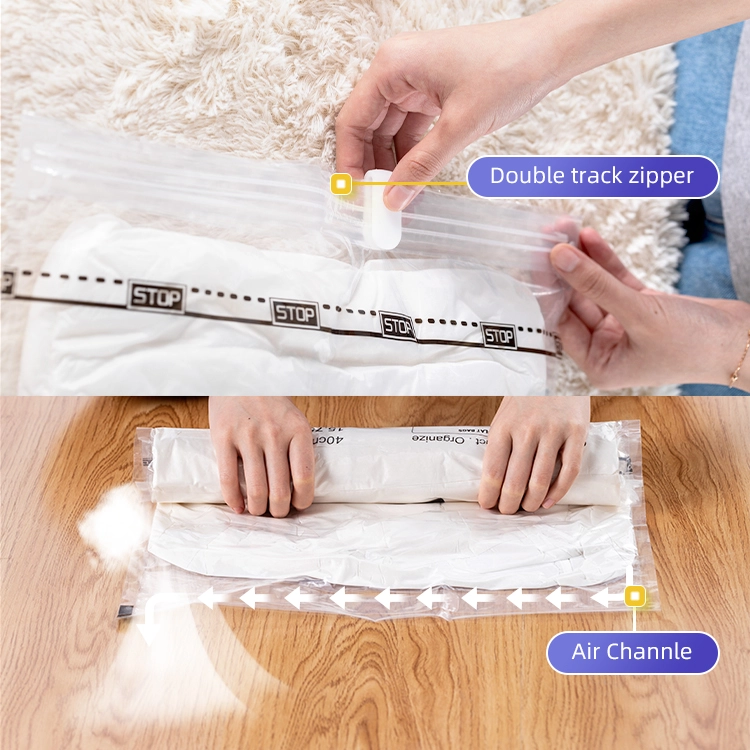
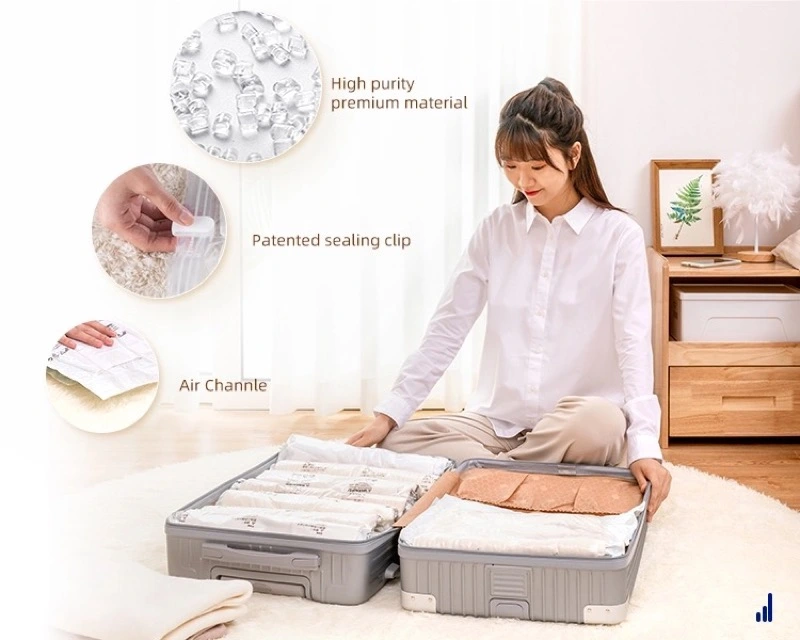
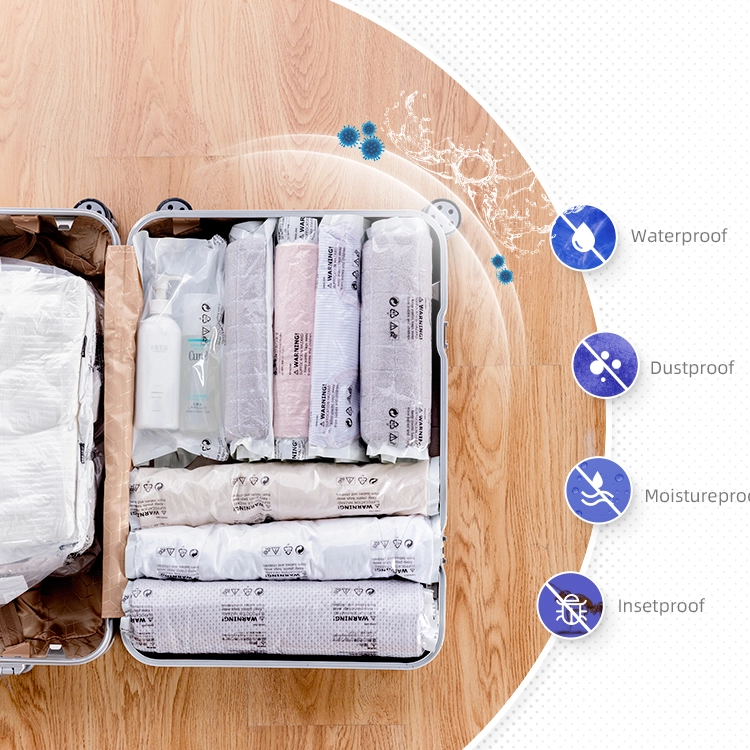
Vacuum storage bags typically use flexible plastic film, a resealable closure, and an evacuation valve. Depending on the design, users remove air with a vacuum cleaner, portable pump, or manual compression.
Their performance depends on the complete sealing system—not simply the thickness of the film. A poorly closed zipper, damaged seam, or leaking valve can undermine compression.
For travel, the important question is not just whether a bag compresses at home. It is whether you can open, close, and recompress it throughout the trip.
Compression packing cubes reduce bulk with a zipper
Compression packing cubes generally use a fabric compartment and an additional zipper that tightens the packed contents. They do not create a vacuum.
Their main advantage is accessibility. You can separate outfits, identify categories, and retrieve clothing without operating a pump.
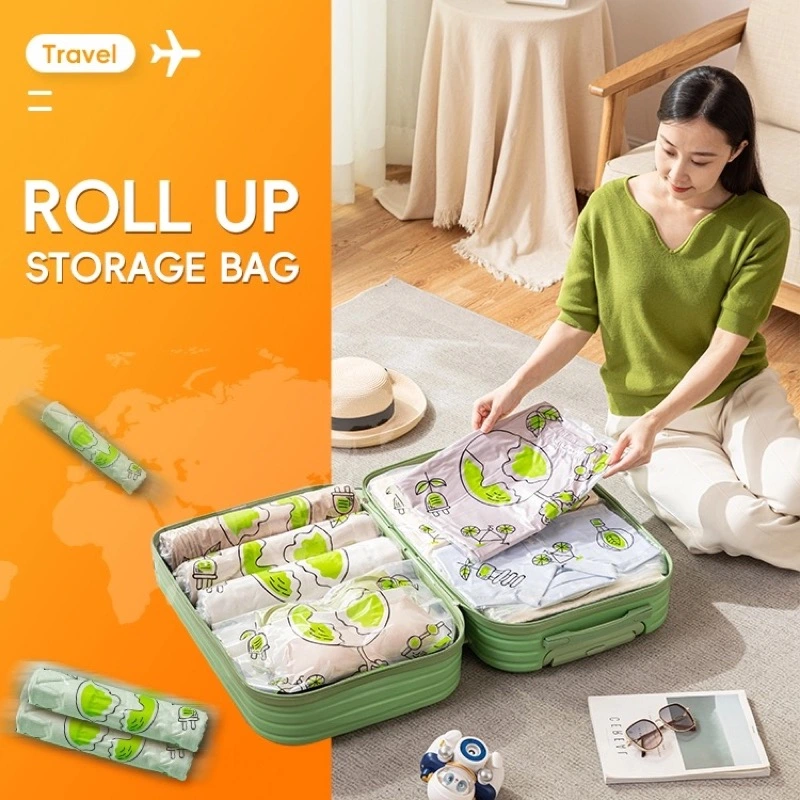
Product terminology can be confusing. A “compression bag” might mean a zippered cube, a roll-up air-expulsion bag, or a valve-equipped vacuum bag. Compare the operating mechanism before comparing prices.
Which Option Fits Your Travel Priorities?
Neither system wins every category. I would evaluate them against the itinerary rather than select a product solely because its packaging promises dramatic compression.
| Decision factor | Vacuum storage bags | Compression packing cubes |
|---|---|---|
| Primary purpose | Reduce the volume occupied by compressible contents | Organize clothing with moderate mechanical compression |
| Daily access | Requires reopening and usually recompression | Straightforward zipper access |
| Equipment | Some designs require a compatible pump | Normally no separate equipment |
| Useful applications | Bulky clothing and items accessed infrequently | Everyday clothing and frequent hotel changes |
| Main inspection concern | Restoring compression after opening | Reorganizing contents after opening |
| Purchasing priority | Closure, valve, seam integrity, and return-trip usability | Zipper operation, stitching, dimensions, and access |
These are selection principles, not measured performance rankings. Actual results depend on the product, clothing load, and packing method.
Choose vacuum bags when volume is the main constraint
Consider vacuum bags for a winter trip, family luggage, or bulky garments that you will not repeatedly retrieve.
However, avoid assuming that maximum compression is always desirable. Follow garment-care instructions, especially for structured or delicate clothing.
Choose compression cubes when access matters more
For multi-city travel, separating clothing by category can be more useful than creating the smallest possible bundle.
Cubes also simplify a practical routine: remove one compartment, retrieve what you need, and return it to the suitcase.
Combine both for mixed itineraries
A sensible hybrid arrangement is:
- One vacuum bag for bulky, infrequently used clothing.
- Small cubes for daily outfits and underwear.
- A separate accessible pouch for travel essentials.
The goal is repackability: a system that remains manageable after its first opening.
TSA Rules for Vacuum Storage Bags: Permission Is Not a Screening Guarantee
Are vacuum storage bags allowed on planes?
For U.S. security screening, TSA lists vacuum-sealed clothes bags as permitted in both carry-on and checked baggage, subject to special instructions.
Its qualification matters: the bags are allowed but not encouraged, and an officer may open them if they alarm. Avoid interpreting “TSA-compatible” marketing language as a promise of inspection-free travel.
What happens if security opens a compressed bag?
Plan to manage the contents yourself afterward. Do not build a packing system that depends on uninterrupted compression.
A practical approach is to:
- Divide clothing among manageable bags.
- Keep essential items outside compressed bundles.
- Understand how each closure works.
- Carry the necessary recompression equipment.
- Leave enough flexibility to close your suitcase after inspection.
There is no need to predict how often inspections occur. The useful question is whether your luggage remains workable if one happens.
Do compressed clothes change airline baggage allowances?
Compression does not remove the clothing’s mass. Bags, cubes, and pumps also add their own weight.
Likewise, a compressed interior does not excuse an oversized suitcase. Check your carrier’s allowance for your route and fare, then measure and weigh the completed bag.
Can You Bring a Vacuum Pump on a Plane?
The answer depends on the pump’s power source and battery configuration—not merely its purpose.
Manual and externally powered pumps
A manual pump avoids lithium-battery considerations, although its dimensions and other characteristics still matter.
An externally powered pump without an internal battery presents a different packing situation from a rechargeable model. Read the actual specifications rather than relying on the word “portable.”
Rechargeable pumps with installed lithium batteries
For a qualifying rechargeable pump, carry-on baggage is the preferable placement. FAA guidance says lithium-battery devices should travel in the cabin.
However, the claim that every lithium-powered pump is categorically prohibited from checked baggage is too broad. Qualifying devices with installed batteries may be checked when completely powered off and protected against accidental activation and damage, subject to applicable restrictions and airline policy.
Spare batteries and power banks
Spare lithium batteries and power banks must remain in carry-on baggage. Protect them against damage and short circuits.
FAA guidance generally sets a 100 Wh limit for ordinary rechargeable lithium batteries; larger batteries above 100 Wh and up to 160 Wh require airline approval under the applicable conditions. Check the battery label and your carrier’s rules before departure.
A pump that doubles as a power bank deserves particular attention. Confirm its classification instead of assuming that all pump designs follow identical rules.
A Practical Packing Method for Both Systems
Step 1: Pack by access frequency
Begin with three groups:
- Items needed during the journey.
- Clothing needed every day.
- Bulky items needed occasionally.
Keep the first group readily accessible. Use cubes for the second group and consider vacuum bags for the third.
Step 2: Match the container to the suitcase
Check the filled dimensions, not just the empty bag dimensions.
A large bag can create an awkward, rigid bundle after compression. Several smaller bags may fit around suitcase features more conveniently.
Step 3: Prepare and close carefully
Pack clean, dry clothing. Keep hard accessories and sharp objects away from flexible film.
For vacuum bags, follow the fill line and closure instructions. For cubes, avoid forcing the compression zipper around protruding fabric.
Step 4: Weigh the complete system
Include the suitcase, organizers, pump, charging cable, footwear, toiletries, and other belongings.
Space efficiency is only useful when the finished luggage also meets the applicable allowance.
Step 5: Rehearse the return journey
Open everything once and repack without using equipment that will remain at home.
If the system becomes impractical during this rehearsal, simplify it before departure.
Three Overlooked Tests That Reveal Real Travel Value
Test 1: Check overnight shape retention
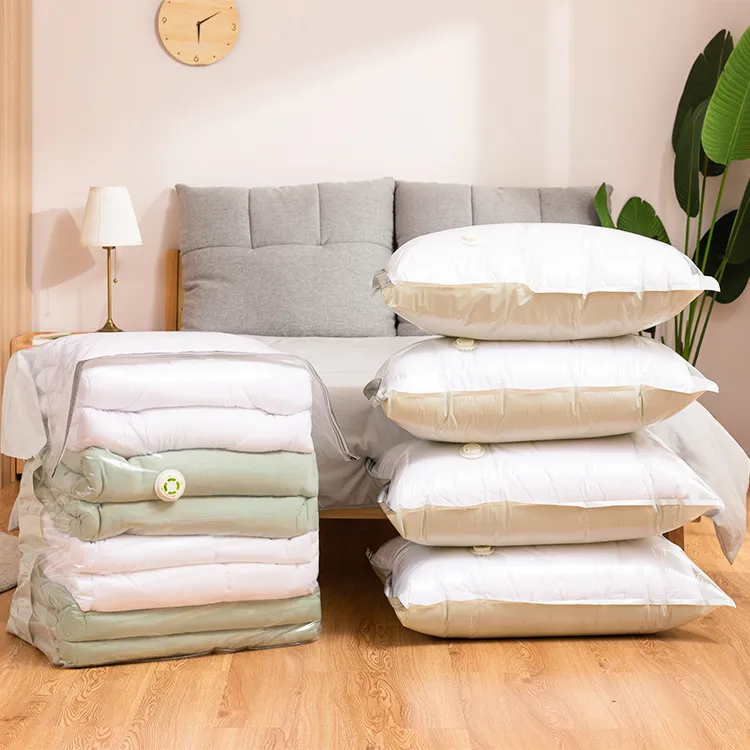
Pack a representative clothing load, close the vacuum bag correctly, and inspect it the next morning.
Noticeable expansion is a reason to check the closure, valve, or film for problems. This is a useful personal screening exercise, not a substitute for standardized laboratory testing.
For cubes, inspect zipper alignment, stitching, and the shape of the filled compartment.
Test 2: Run a five-minute access drill
Retrieve one item from the middle of your packed luggage, then restore the arrangement.
This reveals friction that attractive product photographs cannot show: blocked zippers, inaccessible valves, oversized bundles, or too many separate components.
My preference is to prioritize easy recovery over squeezing out the final fraction of available space.
Test 3: Account for the equipment penalty
Evaluate the complete kit.
A pump-assisted system introduces a pump, charging needs, and possibly spare power equipment. Cubes introduce their own fabric, handles, and zipper weight.
Compare the usable packing benefit after accounting for these additions. A product that compresses well in isolation may not be the most convenient complete travel system.
What Materials Expertise Should Mean for Travel Bags
Evaluate the whole product, not a single material claim
For vacuum storage bags, useful purchasing questions include:
- Does the closure seal consistently?
- Is the valve compatible with the supplied pump?
- Are seams evenly finished?
- Can the bag be reopened without difficult handling?
- Are instructions clear about filling and maintenance?
- Are replacement components available?
For compression cubes, focus on zipper operation, seam construction, fabric behavior, and dimensions under load.
These are proposed evaluation criteria, not claims that a particular model has passed them.
Where Taili’s background is relevant
Founded in 2003, Guangdong Taili Technology Group has a documented background in vacuum-storage products and aerospace product-development cooperation. Its company history describes collaboration with China’s astronaut research and training organization beginning in 2008.
That background provides relevant context for discussions of materials, sealing, and manufacturing. It does not, by itself, establish that every retail travel bag is aerospace-certified or performs identically to equipment developed for specialized applications.
For buyers, the stronger question is: what evidence supports this exact product?
Request model-specific specifications, operating instructions, test conditions, and warranty terms. Treat corporate expertise as a reason to investigate—not a replacement for product evidence.
Buying Advice for Retailers and Private-Label Brands
Travel-storage suppliers should be evaluated on the customer’s full journey: packing, airport inspection, hotel use, and the return flight.
Ask prospective suppliers to document:
- Filled dimensions and recommended clothing loads.
- Closure and valve operating instructions.
- Repeated-use evaluation methods.
- Pump power source and battery rating.
- Replacement-part availability.
- The basis of any advertised compression percentage.
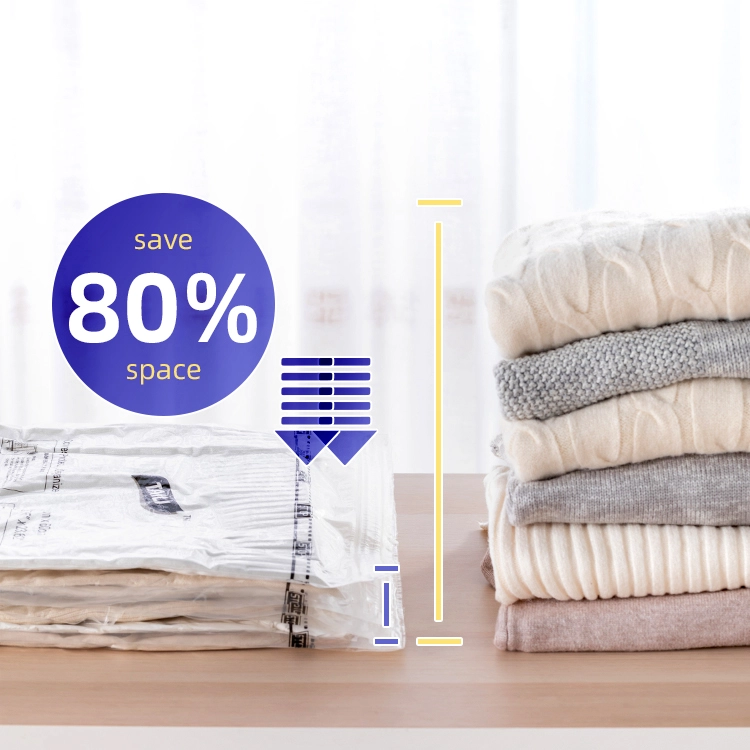
Avoid publishing “saves 80% of space” without defining the load, starting volume, compression method, and measurement conditions.
A clear, supportable promise is more useful than a dramatic claim customers cannot reproduce.
Make the Packing Choice Fit the Trip
Choose vacuum storage bags for bulky contents when you have a reliable recompression plan. Choose compression packing cubes for frequent access and straightforward organization.
Before buying a Taili travel-storage system, request the exact bag dimensions, sealing instructions, pump specifications, and available product-test information. Then select a configuration that fits your suitcase and travel routine—not simply the largest advertised capacity.

Frequently Asked Questions
1. Are vacuum storage bags TSA-approved?
“TSA-approved” should not be treated as a product certification. TSA permits vacuum-sealed clothes bags in carry-on and checked luggage but discourages their use and warns that officers may open them if they alarm.
2. Are vacuum bags better than compression packing cubes?
They serve different priorities. Vacuum bags emphasize volume reduction; compression cubes emphasize organization and convenient access. Product design and the clothing load determine the practical result.
3. Can I pack a rechargeable vacuum pump in checked luggage?
Potentially, if it qualifies under the applicable installed-battery rules and airline policy. It must be fully off and protected against activation and damage. Carry-on placement is preferable. Spare batteries and power banks must remain in the cabin.
4. Will vacuum bags help me meet an airline weight limit?
Not by reducing clothing weight. Compression changes occupied volume, while the storage system adds some weight of its own. Weigh the completed suitcase rather than judging by its appearance.
5. What if I cannot find a vacuum cleaner at my destination?
Choose a system you can operate independently: a compatible portable pump, a manual-compression design, or compression cubes. Rehearse the intended method before leaving.
6. Should I compress every garment?
No. Consider garment-care instructions, structure, and how soon you need the item. Keep frequently accessed clothing and garments requiring careful handling outside heavily compressed bundles.
References
1. Transportation Security Administration. Vacuum-Sealed Bags. Primary guidance on carry-on and checked-baggage permission, special instructions, and possible inspection. https://www.tsa.gov/travel/security-screening/whatcanibring/items/vacuum-sealed-bags-0
2. Federal Aviation Administration. PackSafe—Portable Electronic Devices Containing Batteries. Guidance on installed lithium batteries, preferred cabin placement, and conditional checked-baggage carriage. https://www.faa.gov/hazmat/packsafe/portable-electronic-devices-with-batteries
3. Federal Aviation Administration. PackSafe—Lithium Batteries. Updated August 11, 2026. Guidance on spare batteries, power banks, watt-hour limits, and short-circuit protection. https://www.faa.gov/hazmat/packsafe/lithium-batteries
4. Federal Aviation Administration. Airline Passengers and Batteries. Overview of battery-capacity thresholds and distinctions between installed devices and spare batteries. https://www.faa.gov/hazmat/packsafe/airline-passengers-and-batteries
5. Taili Technology Group. Company Profile and Development History. First-party information supporting the company’s founding date, vacuum-storage background, and aerospace product-development cooperation; not independent verification of retail-product performance. https://en.zs-taili.com/home/page/index/1
6. WellMall. Vacuum Storage Bags for Travel: TSA Rules & Packing Guide. August 2, 2026. Supplied topic reference. Its blanket statements about screening and lithium-powered pumps were not adopted where official guidance provides important qualifications. https://wellmallpro.com/blogs/news/vacuum-storage-bags-for-travel-tsa
Hot Tags: Vacuum Storage Bags Wholesale, Vacuum Storage Bags Manufacturer, Travel Vacuum Bags Supplier, Compression Packing Cubes Wholesale, Compression Packing Cubes Manufacturer, OEM Vacuum Storage Bags, Custom Travel Storage Bags, Private Label Packing Cubes, Vacuum Compression Bags Bulk, Travel Storage Bags With Pump