Content Menu
● Rolling vs. Folding Clothes in Vacuum Bags: A Quick Comparison
● How Vacuum Bags Change the Rolling-or-Folding Decision
>> Compression removes air, not clothing material
>> Package shape matters as much as volume
● When Folding Clothes in Vacuum Bags Works Best
>> Fold larger everyday garments into broad layers
>> Use fewer folds for crease-sensitive clothing
● When Rolling Clothes in Vacuum Bags Makes Sense
>> Roll small, flexible pieces loosely
>> Distinguish rolling clothing from rolling the bag
● Choose by Garment, Not Just by Packing Technique
● How to Pack Clothes in Vacuum Bags: Seven Practical Steps
>> 1. Check suitability before packing
>> 2. Clean and dry everything completely
>> 3. Select an appropriate bag size
>> 4. Fold the larger items first
>> 5. Add smaller rolled pieces selectively
>> 6. Close and compress as instructed
>> 7. Inspect and label the package
● A Simple Home Test: Which Method Works Better for Your Clothes?
● Preventing Wrinkles, Moisture Problems, and Lost Space
>> Wrinkles: smooth first, then limit unnecessary pressure
>> Moisture: prevention starts before sealing
>> Space: avoid solving every problem with a larger load
● What Matters Beyond Rolling or Folding?
>> Is it better to roll or fold clothes in vacuum bags for travel?
>> Does rolling clothes in vacuum bags prevent wrinkles?
>> Can you mix rolled and folded clothes in one vacuum bag?
>> Should wool sweaters go in vacuum bags?
>> How long can clothes stay vacuum-packed?
>> Why does a vacuum bag expand again?
Is it better to roll or fold clothes in vacuum bags? For most everyday clothing, folding is the better starting point because it creates a flat, manageable package. Rolling works well for small, flexible items that can fill spaces around larger garments. Often, the most practical approach combines both methods.
However, neither technique guarantees the smallest package or wrinkle-free results. Fabric, garment construction, bag dimensions, and compression level all matter. A neatly folded shirt can develop creases under pressure, while tightly rolled clothing can emerge with wrinkles of its own.
My practical recommendation is simple: choose the arrangement that fits your storage space while protecting the clothes—not whichever method looks smallest before compression.
Rolling vs. Folding Clothes in Vacuum Bags: A Quick Comparison
The following recommendations are practical packing guidelines, not results from a controlled comparison.
| Consideration | Folding | Rolling |
|---|---|---|
| Flat shelves and under-bed storage | Usually creates a more convenient shape | Can create uneven thickness |
| Small, flexible garments | Works, but may leave awkward gaps | Useful for filling spaces |
| Shirts and trousers | Makes seams and panels easier to align | Less convenient for structured pieces |
| Wrinkle management | Fewer, more identifiable fold lines | Avoids some sharp folds but still wrinkles |
| Finding individual items | Easy when garments are grouped visibly | Easy when rolls remain identifiable |
| Mixed clothing loads | Good foundation for larger pieces | Useful alongside folded layers |
For most households, fold the larger pieces first, then add a few loosely rolled smaller items where needed.
How Vacuum Bags Change the Rolling-or-Folding Decision
Compression removes air, not clothing material
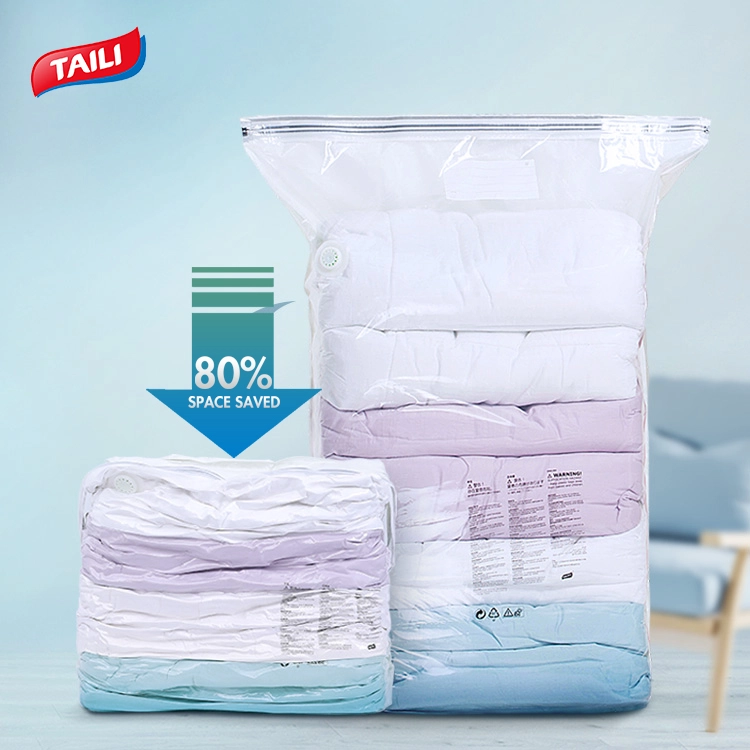
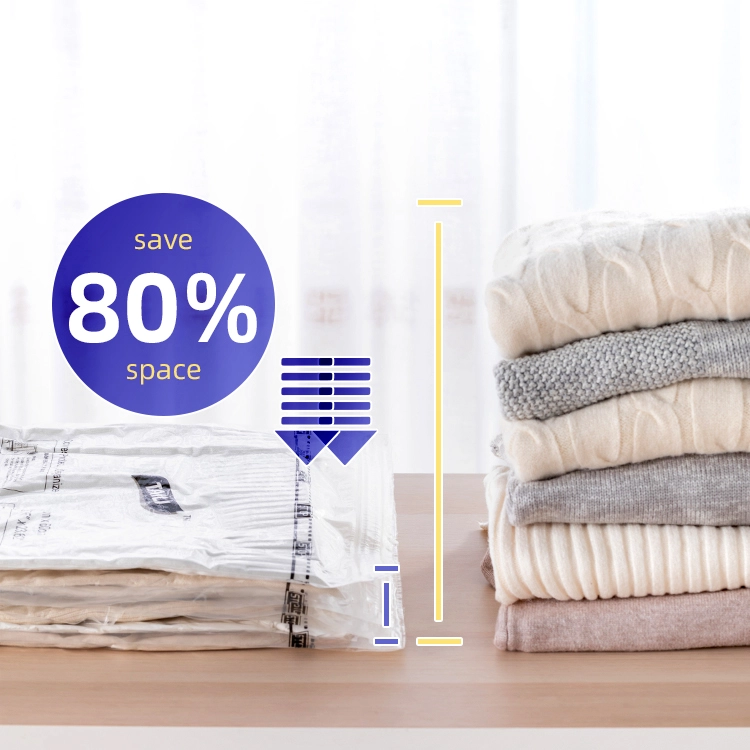
Vacuum storage bags reduce bulk by removing air from the package. They do not remove the fabric itself.
This distinction explains why ordinary suitcase-packing advice does not always transfer directly to vacuum packing. Rolling may make clothing look more compact before compression, but that does not establish that it will occupy less space afterward.
A fluffy load and a dense stack of denim will also respond differently. Avoid assuming that an advertised space-saving percentage applies equally to every fabric or packing arrangement.
Package shape matters as much as volume
A compact bundle is not necessarily a useful bundle.
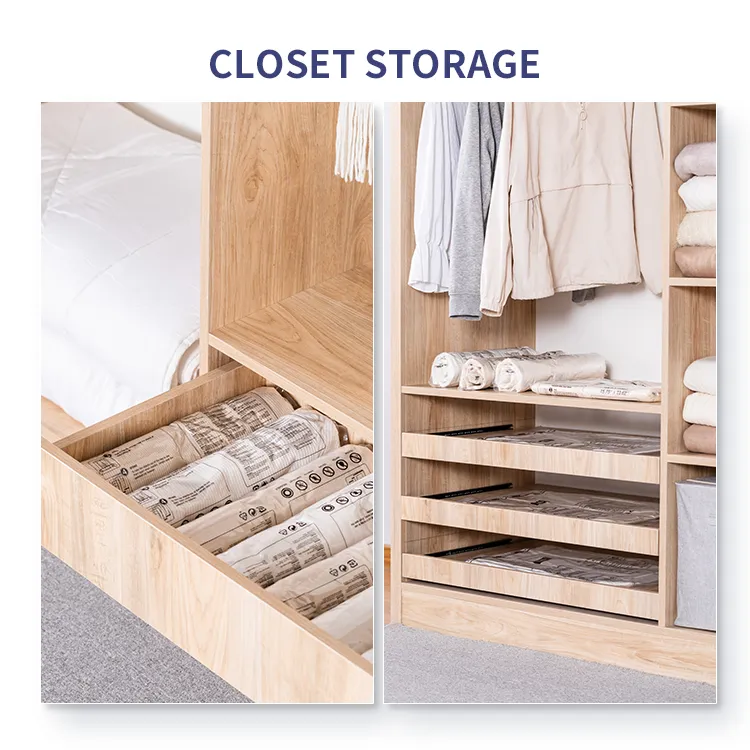
For example, a rounded package may fit poorly beneath a bed even when it contains the same clothing as a flatter one. A broad, evenly distributed load may suit that space better.
Before choosing how to pack clothes in vacuum bags, consider:
- The width and depth of the storage area.
- The clearance above the bag.
- Whether several bags need to stack.
- How often you will retrieve individual garments.
The goal is usable space, not maximum compression at any cost.
When Folding Clothes in Vacuum Bags Works Best
Fold larger everyday garments into broad layers
For washable shirts, casual trousers, pajamas, and similar everyday items, broad folds make the load easier to arrange.
Lay each garment flat, smooth it gently, and fold only enough to fit the bag. Avoid turning a large item into a tiny, thick square.
Distribute folds and waistbands across the package rather than stacking every bulky section in one place. This is a practical way to reduce unevenness, not a guarantee against creasing.
Use fewer folds for crease-sensitive clothing
Textile conservation guidance recommends minimizing folds and supporting unavoidable creases when preserving vulnerable textiles.
That does not mean museum storage methods should be copied inside a compressed household bag. Instead, it highlights an important limitation: compression is not the right solution for every garment.
For a formal jacket, fragile silk piece, or valuable vintage item, suitable uncompressed storage may be preferable to either rolling or folding in a vacuum bag.
When Rolling Clothes in Vacuum Bags Makes Sense
Roll small, flexible pieces loosely
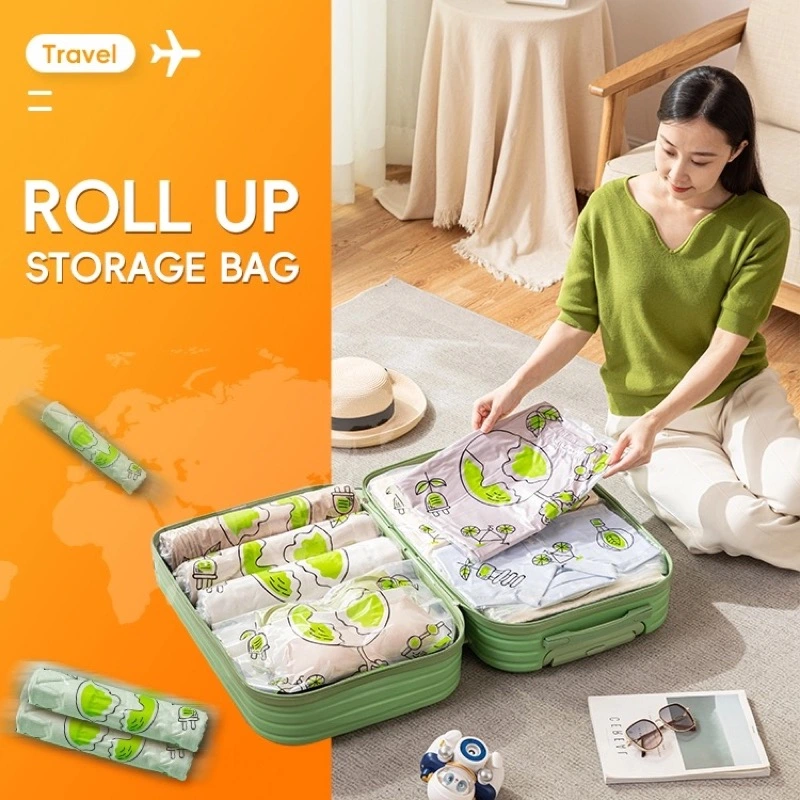
Rolling is useful for items such as everyday T-shirts, leggings, underwear, and soft sleepwear, provided their care requirements allow the intended storage method.
Keep rolls relaxed rather than pulling the fabric tightly. Position them where they improve the overall arrangement instead of building a mound in the middle.
For socks, align pairs or roll them gently without stretching one cuff over a large bundle.
Distinguish rolling clothing from rolling the bag
These are different actions.
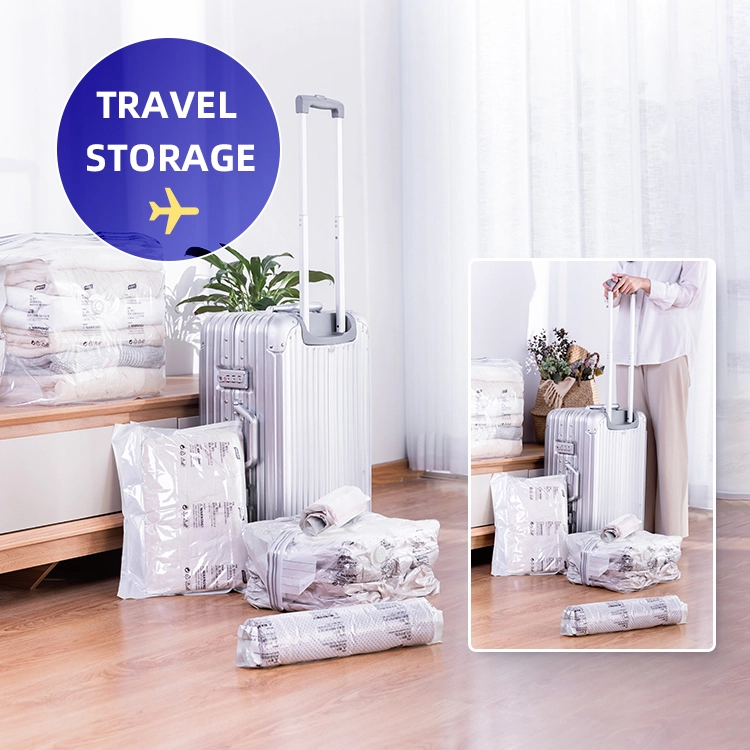
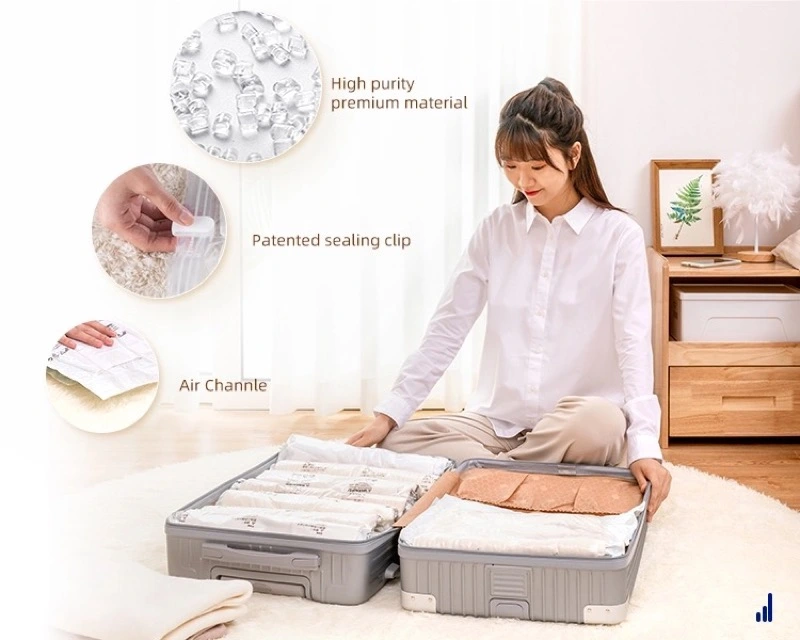
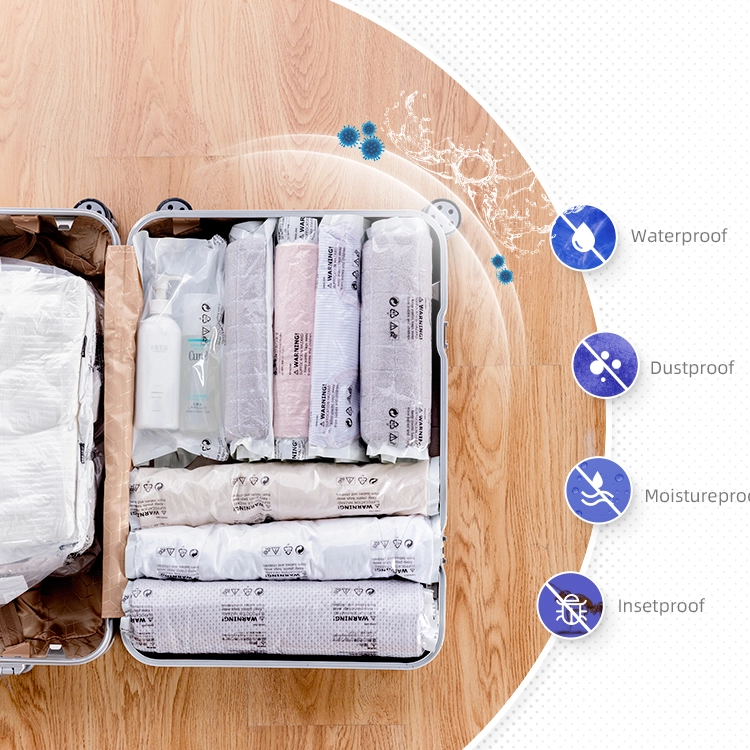
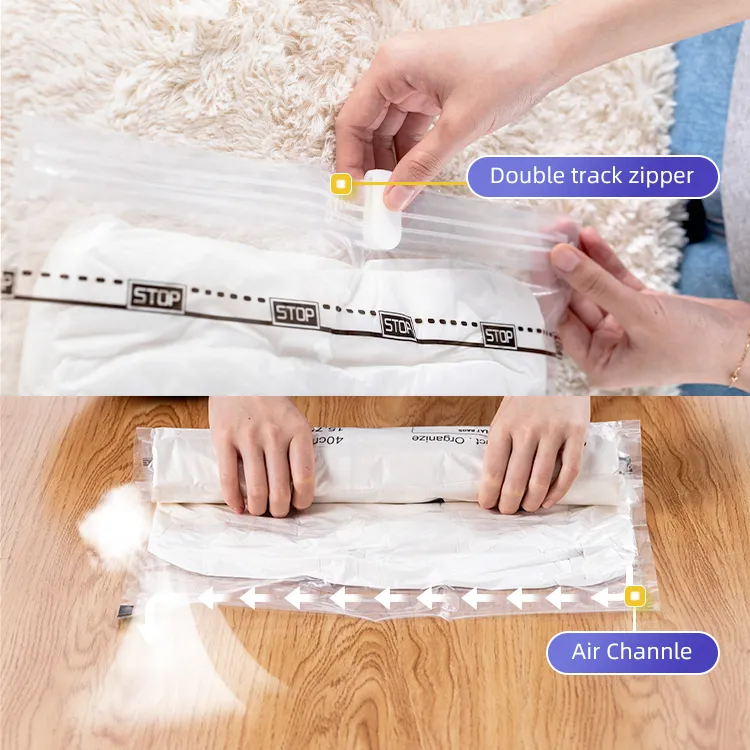
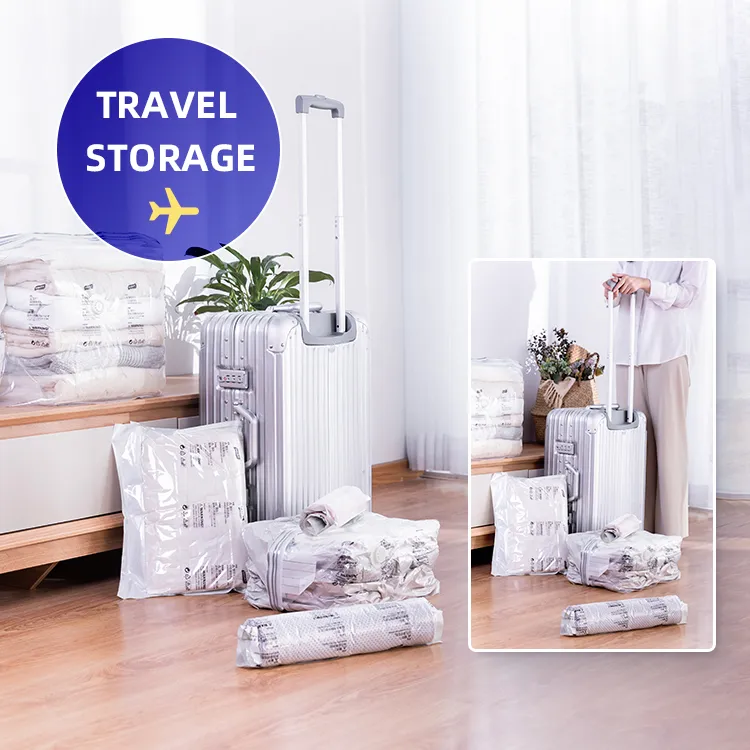
Some travel compression bags release air when the filled bag is rolled according to its instructions. That does not necessarily mean the clothing inside must also be rolled.
Other bags use a vacuum cleaner, hand pump, or electric pump. Follow the instructions for the specific valve and closure system rather than treating every compression bag the same way.
Choose by Garment, Not Just by Packing Technique
Fabric names alone do not determine whether vacuum storage is appropriate. Construction, trims, condition, and manufacturer instructions also matter.
| Garment type | Practical approach | Main caution |
|---|---|---|
| Everyday cotton T-shirts | Broad folds or loose rolls | Expect possible creasing |
| Polyester activewear | Fold or loosely roll | Check prints, coatings, and care instructions |
| Jeans and casual trousers | Fold into manageable layers | Spread out bulky seams and hardware |
| Everyday sweatshirts | Fold broadly | Avoid an excessively thick central stack |
| Structured jackets | Prefer suitable uncompressed storage | Compression can distort shaped areas |
| Delicate or valuable textiles | Seek garment-specific storage guidance | Neither method removes preservation risks |
| Down-filled or specialist insulated items | Follow the manufacturer’s instructions | Avoid assuming long-term compression is suitable |
REI’s guidance for insulated sleeping bags recommends loose, breathable storage and warns that prolonged compression can reduce lofting ability. That guidance concerns sleeping bags specifically; it supports caution, not a universal rule for every insulated garment.
How to Pack Clothes in Vacuum Bags: Seven Practical Steps
1. Check suitability before packing
Read garment care information and any storage instructions. Separate everyday washable clothing from delicate, structured, or specialist pieces.
If suitability is unclear, do not use stronger compression as an experiment.
2. Clean and dry everything completely
Pack clean, fully dry clothes into a clean, dry bag.
Pay attention to thick waistbands, pockets, cuffs, and layered sections. A dry outer surface does not necessarily mean every part has dried.
Vacuum packing is not a drying process. Sealing damp clothing can create conditions for mildew.
3. Select an appropriate bag size
Choose a bag that accommodates the load without forcing the closure.
A bag that is too small encourages overfilling. One that is unnecessarily large can leave awkward unused sections and make handling less convenient.
4. Fold the larger items first
Create a broad base with the larger suitable garments.
Smooth each piece and stagger bulky areas. Keep the load balanced rather than placing all heavy seams at one end.
5. Add smaller rolled pieces selectively
Use small rolls where they genuinely improve the fit.
Do not fill every visible gap if doing so crowds the zipper, blocks the valve, or makes the package excessively uneven.
6. Close and compress as instructed
Keep fabric, loose threads, and debris away from the sealing tracks. Follow the manufacturer’s directions for closing the zipper and operating the valve.
Do not force extra clothing into the bag or continue compression merely to achieve the hardest possible bundle.
7. Inspect and label the package
Check that the closure is secure and the bag fits its intended location.
Label it with the contents and packing date. Store it away from sharp edges in an appropriate indoor environment, following both bag and garment guidance.
A Simple Home Test: Which Method Works Better for Your Clothes?
There is no universal percentage advantage established here for rolling versus folding. A small, repeatable comparison is more useful than an unsupported claim.
Use the same clothing load and the same bag:
- Fold the garments and distribute them evenly.
- Compress according to the bag instructions.
- Record the package’s maximum length, width, and height.
- Open the bag and repack the same items as loose rolls.
- Repeat the process under similar conditions.
- Compare fit, handling, and visible creasing after unpacking.
For an approximately rectangular package, length × width × height provides a rough bounding-box volume. It is not an exact measurement of an irregular bundle.
Most importantly, test the actual storage location. A slightly larger package that slides easily into a drawer may be more useful than a smaller, awkwardly shaped one.
This is a household comparison, not a laboratory test or a prediction for other fabrics.
Preventing Wrinkles, Moisture Problems, and Lost Space
Wrinkles: smooth first, then limit unnecessary pressure
Neither rolling nor folding makes vacuum-packed clothing wrinkle-proof.
Start with smooth garments, avoid unnecessary tight folds, and unpack when practical. Use only garment-approved methods for removing wrinkles afterward.
For valuable textiles, conservation guidance emphasizes supported storage and fewer folds—not maximum compression.
Moisture: prevention starts before sealing
A well-sealed bag does not correct moisture already inside it.
Avoid packing damp laundry or storing bags in unsuitable conditions. If you notice condensation, a musty smell, or unexpected dampness, open the package and address the cause before repacking.
Space: avoid solving every problem with a larger load
Overfilling can interfere with closure and place stress on the bag. Manufacturer guidance identifies it as an important cause of failure.
Several manageable bags can also be more convenient than one oversized package, especially when you need only part of the stored clothing.
What Matters Beyond Rolling or Folding?
From a packaging perspective, garment arrangement is only one part of performance.
Film durability, sealing tracks, valve design, bag dimensions, and correct use all influence the result. A carefully arranged load still needs an intact bag and a properly closed seal.
TAILI’s vacuum storage range includes products using different air-removal methods. Its published product information is useful for selecting a compatible format, but product claims should not be treated as independent evidence that one packing method always wins.
When choosing a TAILI vacuum storage bag, match the dimensions, closure system, and air-removal method to your wardrobe and storage location. Start with one manageable load before reorganizing the entire closet.
Frequently Asked Questions
Is it better to roll or fold clothes in vacuum bags for travel?
Use broad folds for larger garments and loose rolls for smaller, flexible pieces. Choose the arrangement that fits your luggage. Compression saves space, but it does not reduce clothing weight.
Does rolling clothes in vacuum bags prevent wrinkles?
No. Rolling can avoid some sharp fold lines, but pressure can still create wrinkles. Fabric, tightness, compression, and storage duration all affect the outcome.
Can you mix rolled and folded clothes in one vacuum bag?
Yes, when the garments are suitable for that storage method. Fold larger items into a stable base and add small rolls without crowding the closure or obstructing the valve.
Should wool sweaters go in vacuum bags?
Check the garment manufacturer’s guidance rather than assuming all wool behaves alike. For valuable or delicate knitwear, suitable uncompressed storage is the more cautious choice.
How long can clothes stay vacuum-packed?
There is no single safe duration for every garment and bag. Follow product-specific guidance, consider fabric and construction, and inspect stored items periodically. Do not interpret a general storage interval as a guarantee.
Why does a vacuum bag expand again?
Possible causes include an incompletely closed zipper, debris in the seal, a valve problem, or damage. Check these areas and the manufacturer’s troubleshooting instructions before assuming the packing arrangement caused it.
References
1. Neusu — How to Use Vacuum Storage Bags Properly. Practical guidance on complete drying, bag sizing, avoiding overfilling, and closing the seal.
2. Canadian Conservation Institute — Basic Care: Textiles. Guidance on clean, dry storage, supporting textiles, minimizing folds, and reducing permanent creasing. Conservation recommendations concern preservation rather than vacuum-packing performance.
3. REI — How to Store a Sleeping Bag. Explains loose storage for insulated sleeping bags and the limitations of prolonged compression.
4. TAILI — Vacuum Bag Product Information. Manufacturer information describing vacuum storage products and air-removal options. Performance statements are supplier claims, not independent comparative findings.
Hot Tags: Vacuum Storage Bags Manufacturer, Vacuum Storage Bags Supplier, Wholesale Vacuum Storage Bags, Custom Vacuum Storage Bags, OEM Vacuum Storage Bags, ODM Vacuum Storage Bags, Bulk Vacuum Storage Bags, Clothing Vacuum Packaging Solutions, Reusable Vacuum Storage Bags, Travel Vacuum Compression Bags