Content Menu
● Why Travel Vacuum Bag Zippers Leak Air
>> The Zipper Is Only Partially Closed
>> Lint, Hair, or Fabric Interrupts the Seal
>> Overpacking Places Tension on the Closure
>> The Sealing Track Is Damaged
● First Identify Your Travel Vacuum Bag Closure
>> Press-to-Close Plastic Tracks
>> Pull-Zipper Airtight Closures
● How to Fix a Travel Vacuum Bag Leaking Around the Zipper
>> Step 1: Reduce and Rearrange the Load
>> Step 2: Inspect and Clean the Closure
>> Step 3: Close the Zipper Correctly
>> Step 4: Remove Air Through the Correct Outlet
>> Step 5: Check Compression Before Packing
● How to Tell Whether the Zipper or Valve Is Leaking
>> Inspect the Valve Without Unnecessary Disassembly
● A Controlled Home Test That Makes Troubleshooting Easier
● What Material Engineering Means for Vacuum Bag Reliability
● Can You Repair a Leaking Vacuum Bag Zipper?
>> Problems Worth Troubleshooting
>> Problems That Usually Justify Replacement
● How to Prevent Travel Vacuum Bag Air Leaks
● Get Model-Specific Help Before Your Next Trip
>> 1. Why does my travel vacuum bag inflate overnight?
>> 2. Can a vacuum bag leak even when the zipper looks closed?
>> 3. Should I run the zipper slider across several times?
>> 4. Can I use oil or petroleum jelly on the zipper?
>> 5. Does a more powerful pump prevent air leaks?
>> 6. Should I replace a bag that keeps leaking?
Your travel vacuum bag is leaking air around the zipper because the closure is not fully engaged, lint or fabric is trapped in the seal, or overpacking is pulling the zipper apart. A damaged sealing track can also cause persistent leakage. However, a leaking valve or tiny puncture may produce the same symptoms, so the zipper is not always responsible.
The first fix is simple: unpack a few items, clean and dry the closure, and reseal it according to the bag’s instructions. Then check whether it stays compressed before putting it back into your suitcase.
The most useful troubleshooting principle is isolation: change one thing at a time. This guide explains how to locate the leak, restore a reliable seal, and decide when replacement makes more sense than another repair.
Why Travel Vacuum Bag Zippers Leak Air
Removing air reduces pressure inside the bag. Outside air can then enter through any opening in the closure, valve, seams, or bag body.
A zipper does not need to look open to leak. A short, poorly engaged section can create an air path that gradually reverses compression.
The Zipper Is Only Partially Closed
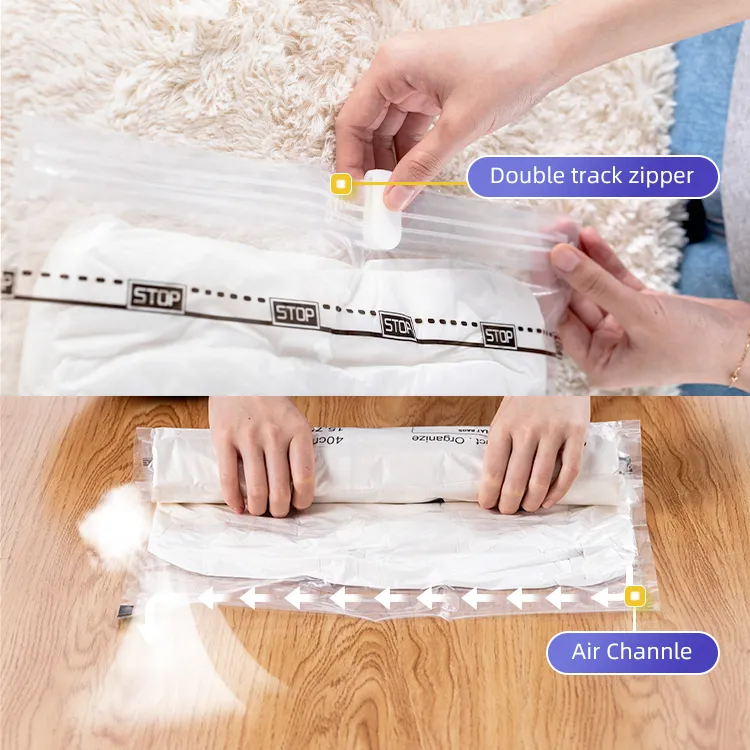
On press-to-close vacuum bags, the slider helps join the sealing tracks. Moving it across the opening does not guarantee that every section has engaged.
Common trouble spots include:
- Both ends of the zipper.
- Sections folded during packing.
- Areas stretched over bulky clothing.
- Double-track closures where only one track has engaged.
Inspect the entire closure rather than relying on the slider’s position.
Lint, Hair, or Fabric Interrupts the Seal
A loose thread, pet hair, or clothing label can sit between the sealing surfaces. The obstruction may be difficult to see, particularly on transparent plastic.
After packing fleece, knitwear, or towels, inspect the closure carefully. These fabrics can leave fibers near the opening.
Overpacking Places Tension on the Closure
If you must pull the opening together forcefully, the bag is probably too full or poorly arranged.
Bulky clothing near the mouth can prevent the zipper from lying flat. The bag may initially compress, then admit air as the contents shift against the closure.
Follow the marked fill line where provided. Otherwise, leave enough clear space for the opening to close without stretching.
The Sealing Track Is Damaged
Repeated folding, forceful opening, or trapped debris can damage a closure. Inspect for distorted sections, splits, or places that repeatedly separate.
Cleaning can remove contamination. It cannot reliably restore torn or permanently deformed sealing surfaces.
First Identify Your Travel Vacuum Bag Closure
Not every travel compression bag uses the same zipper. Correct troubleshooting starts with identifying the design.
Press-to-Close Plastic Tracks
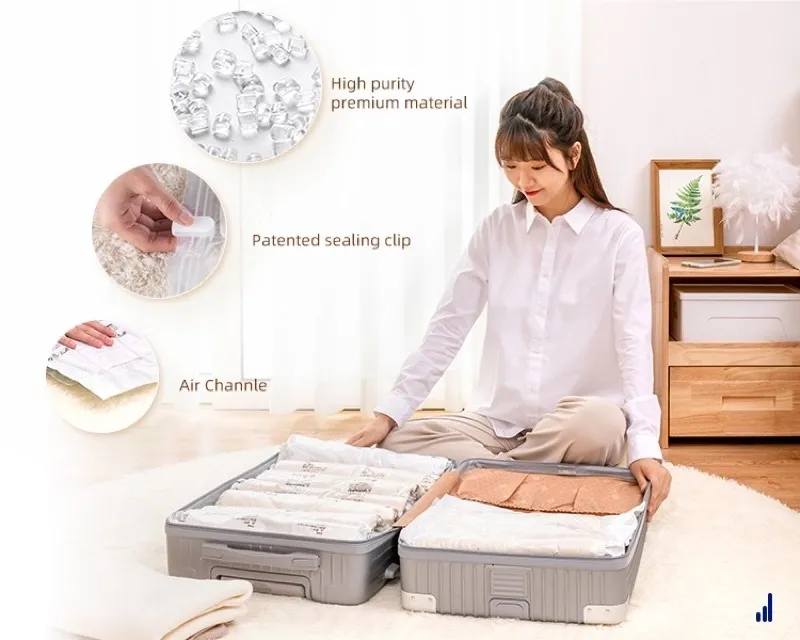
These closures resemble reinforced resealable food-bag zippers. They may have one or more interlocking tracks and a removable slider.
Follow the manufacturer’s directions for slider passes. Gently checking the track with your fingers can help identify missed sections, particularly at the ends.
Pull-Zipper Airtight Closures
Some reusable travel bags use a pull zipper rather than a press-seal track. Their sealing mechanism and care requirements differ.
Move the slider fully into its specified closing position. Do not assume that pinching the zipper, removing its pull, or applying household lubricant will improve the seal.
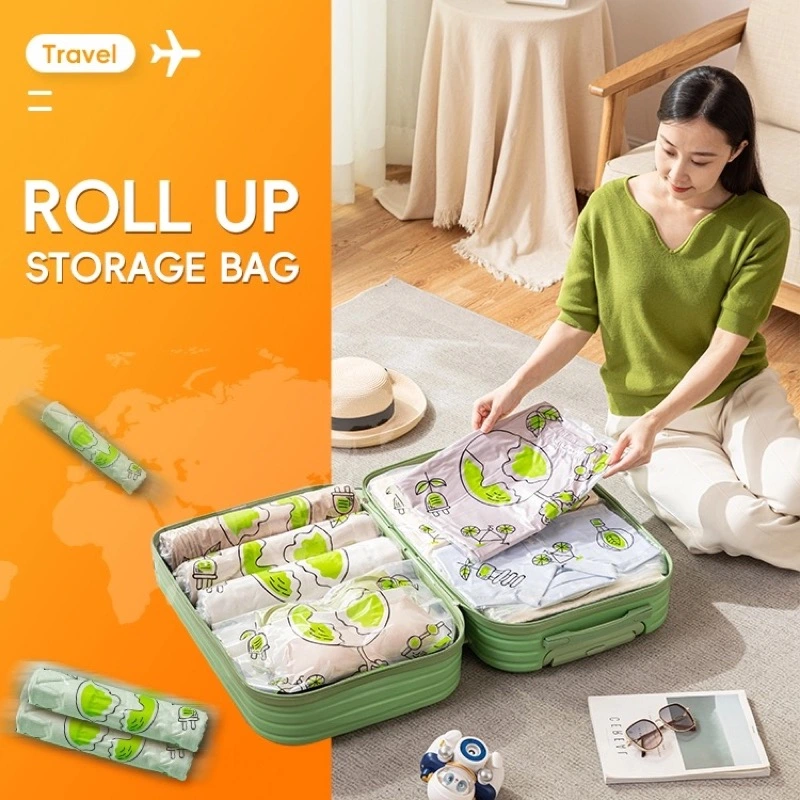
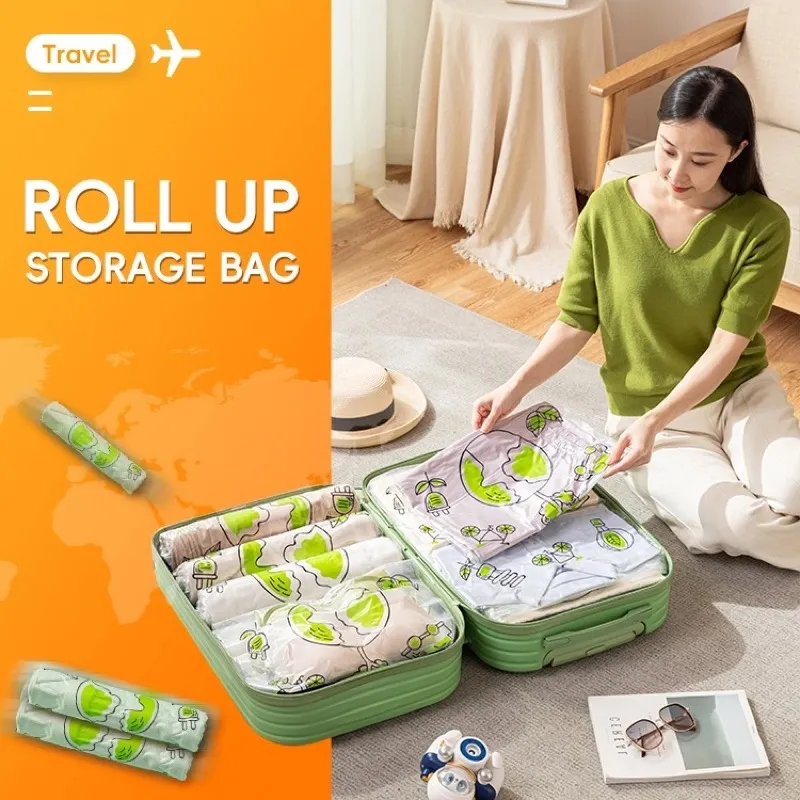
Roll-Up Compression Bags
Some travel bags release air through channels as you roll them. They may not have a vacuum-pump valve.
Use the instructions for that design. Advice about tightening valve caps or connecting a pump does not apply universally.
How to Fix a Travel Vacuum Bag Leaking Around the Zipper
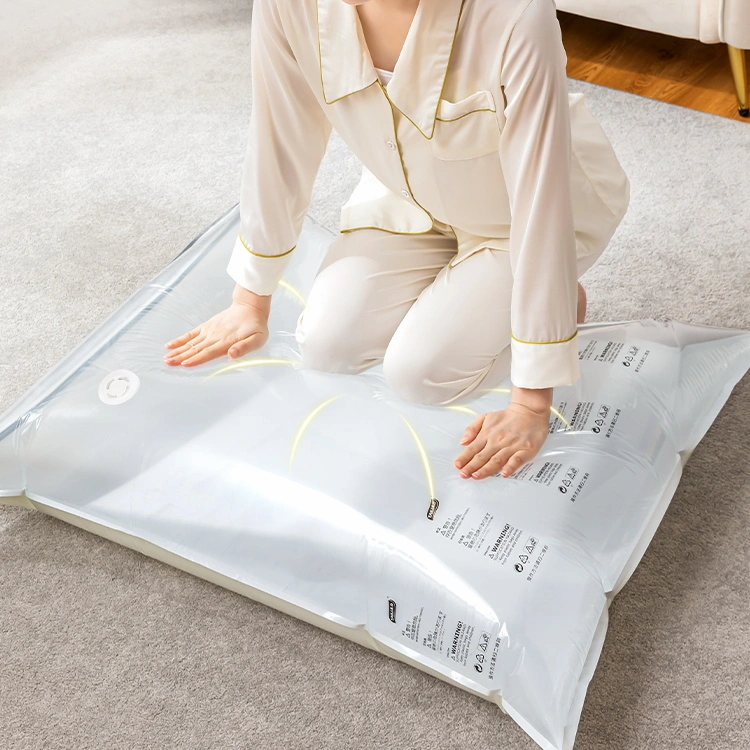
Work on a clean, flat surface. Avoid pulling hard on the closure or squeezing the bag aggressively while investigating.
Step 1: Reduce and Rearrange the Load
Open the bag and remove enough clothing to release tension at the mouth.
Fold the remaining items into an even stack. Keep garment zippers, buckles, and rigid accessories away from the bag’s sealing area and exposed film.
If the opening still will not lie flat, use a larger bag or divide the load.
Step 2: Inspect and Clean the Closure
Examine both sides under good lighting.
Remove loose fibers with a clean, soft cloth. If necessary, use a lightly dampened cloth for surface dirt, provided the care instructions permit it. Let the closure dry before resealing.
Avoid sharp tools, abrasive scrubbing, and unapproved solvents.
Step 3: Close the Zipper Correctly
For press-seal models, align the tracks and move the supplied slider slowly across the full opening.
Check both ends and any previously folded sections. For a double-track closure, verify that both tracks have engaged.
For pull-zipper models, follow the specified closing method and confirm the slider reaches its intended endpoint.
Step 4: Remove Air Through the Correct Outlet
Attach or position the compatible pump as directed. Keep clothing from obstructing the valve.
Do not force an incompatible nozzle into the opening or continue pumping in an attempt to compensate for a leak. A stronger vacuum cannot repair an incomplete closure.
Close or secure the valve according to its design.
Step 5: Check Compression Before Packing
Leave the bag outside the suitcase and observe it.
Check after a short interval, then again later or overnight if your schedule allows. These are practical observation periods, not standardized performance tests.
If substantial expansion continues, investigate the valve, seams, and film rather than repeatedly resealing the zipper.
How to Tell Whether the Zipper or Valve Is Leaking
The location where the bag looks puffiest does not necessarily identify the leak. Air entering through a valve can make the entire bag expand.
| Observation | Possible explanation | Next check |
|---|---|---|
| Zipper will not lie flat | Overfilling or uneven packing | Remove items and redistribute |
| One closure section repeatedly separates | Contamination or track damage | Clean and inspect that section |
| Bag compresses but soon expands | Incomplete seal, valve leak, or puncture | Check all sealing components |
| Problem appears after suitcase loading | Bending, abrasion, or loading stress | Repeat the test outside the suitcase |
| Bag still leaks with a lighter load | Component damage becomes more plausible | Inspect valve, seams, and film |
These observations guide troubleshooting; they do not prove the cause by themselves.
Inspect the Valve Without Unnecessary Disassembly
Check for visible lint, a crooked cap, or an incorrectly seated accessible sealing component.
Only reposition or remove parts when the instructions permit it. Some valves are integrated assemblies, and unnecessary disassembly can create additional problems.
Look Beyond the Zipper
Inspect corners, seams, and areas that touched sharp clothing hardware.
Good lighting may reveal a puncture or split. However, tiny leaks can remain difficult to locate without suitable testing equipment.
Avoid submerging a loaded bag or assuming that a waterproof product description authorizes immersion testing.
A Controlled Home Test That Makes Troubleshooting Easier
An organized comparison can help separate packing problems from product damage.
- Pack a modest load of soft, dry clothing.
- Clean and close the bag correctly.
- Remove air and record the time.
- Photograph the compressed bag.
- Leave it undisturbed under similar room conditions.
- Compare its shape later.
- If it holds, repeat with your intended travel load.
If the lighter load stays compressed but the intended load does not, packing tension or arrangement deserves closer attention.
If both tests fail, investigate the closure, valve, seams, and film. This does not conclusively identify a defective component, but it gives customer support much more useful information.
This procedure is a practical troubleshooting approach, not a laboratory leak-rate measurement.
What Material Engineering Means for Vacuum Bag Reliability
From a materials-engineering perspective, airtightness is a system property. The film, seams, zipper, and valve must work together.
A durable outer layer cannot compensate for an incompletely closed zipper. Likewise, a good closure cannot prevent leakage through a puncture elsewhere.
Useful product-selection questions include:
- Is the closure clearly explained?
- Are the seams reinforced?
- Is the pump compatible with the valve?
- Are cleaning and storage instructions available?
- Can the supplier explain its leak-testing method?
TAILI’s travel compression range includes a model described as using a nylon-and-TPU composite, reinforced edges, a waterproof zipper, and a dedicated valve. These are model-specific construction details, not proof that every TAILI bag uses identical materials or performs identically.
Guangdong Taili Technology Group Co., Ltd. describes its broader business as materials-driven, with capabilities spanning polymer development, precision coating, and manufacturing. For travelers, the relevant connection is practical: material selection and component integration matter, but the exact bag’s instructions and performance remain decisive.
A company’s aerospace-related experience should not be treated as evidence that every consumer bag carries aerospace certification.
Can You Repair a Leaking Vacuum Bag Zipper?
An incomplete seal is often correctable. A damaged closure is a different problem.
Problems Worth Troubleshooting
- Fibers trapped in the tracks.
- A missed section at the zipper end.
- Clothing caught in the opening.
- Excess tension from overpacking.
- An incorrectly closed valve.
Problems That Usually Justify Replacement
- Torn or permanently distorted sealing tracks.
- A split seam.
- A damaged integrated valve.
- Repeated leakage after correct use with a light load.
Manufacturer-approved patches may help with certain small punctures in the bag body. They are not equivalent to repairing an airtight zipper.
Avoid using heat, glue, or improvised zipper lubricants unless the manufacturer specifically authorizes them. Temporary external tape also should not be treated as a dependable repair for a repeatedly separating closure.
How to Prevent Travel Vacuum Bag Air Leaks
A few packing habits reduce avoidable stress on the sealing system.
- Pack clean, completely dry clothing.
- Keep the closure free of loose fibers.
- Leave room to close the bag without force.
- Shield sharp garment hardware with soft fabric.
- Avoid folding directly across a rigid valve.
- Keep the zipper from being sharply bent inside the suitcase.
- Check compression before departure.
Plan for the return journey as well. Bring the compatible pump when necessary and leave some flexibility for repacking.
Compression saves volume, not clothing weight. A suitcase that closes more easily can still exceed its permitted weight.
Get Model-Specific Help Before Your Next Trip
If your travel vacuum bag still leaks after cleaning, lighter packing, and correct resealing, contact the supplier before departure.
For a TAILI product, provide the exact model, purchase details, photographs of the zipper and valve, and a short description of how quickly compression is lost.
Ask for the correct sealing procedure and a repair or replacement assessment. This is more effective than repeatedly applying extra pumping force to an unresolved leak.
Frequently Asked Questions
1. Why does my travel vacuum bag inflate overnight?
Possible causes include an incompletely closed zipper, contamination, valve leakage, or a small puncture. Clean and reseal the bag with a lighter load, then observe it outside the suitcase.
2. Can a vacuum bag leak even when the zipper looks closed?
Yes. A short section may be incompletely engaged, especially at the ends or a fold. Visual inspection alone may miss a small opening.
3. Should I run the zipper slider across several times?
For some press-seal models, repeated passes are recommended. Follow the product instructions rather than applying a universal number. Pull-zipper airtight bags may require a different method.
4. Can I use oil or petroleum jelly on the zipper?
Not unless the manufacturer recommends that specific product. Unapproved lubricants may attract dirt or be unsuitable for the closure’s materials.
5. Does a more powerful pump prevent air leaks?
No. A pump removes air; it does not repair a damaged zipper, puncture, or faulty valve. Correct the leak instead of increasing pumping force.
6. Should I replace a bag that keeps leaking?
If it repeatedly loses compression after correct sealing, cleaning, and testing with a modest load, request a supplier assessment. Replace bags with visibly damaged closures, seams, or valves rather than relying on uncertain travel repairs.
References
1. Neusu. “Common Problems With Vacuum Storage Bags Solved.” Manufacturer guidance covering overfilling, incomplete double-zip closure, zipper endpoints, and valve operation. https://www.neusu.com/help-advice/common-problems-with-vacuum-storage-bags-solved/
2. TAILI Store. “TAILI Travel Vacuum Compression Bags with Wireless Pump.” Product information supporting the model-specific discussion of nylon-and-TPU construction, reinforced edges, zipper, and valve. Product claims are supplier descriptions, not independent test findings. https://tailistore.com/products/taili-travel-vacuum-compression-bags-with-wireless-pump
3. Airback. “Why Are My Travel Vacuum Storage Bags Inflating, and How Do I Fix the Seal?” Brand guidance discussing zipper contamination, valves, packing stress, and punctures. https://airback.us/blogs/content/how-to-fix-leaking-travel-compression-bags
4. Z ZONAMA. “Vacuum Storage Bags with Electric Air Pump User Manual,” reproduced by Manuals.plus. Model-specific instructions illustrating zipper checks and valve-closing procedures. https://manuals.plus/asin/B07XJNHCX7
5. VACBIRD. “9 Crucial Vacuum Storage Bag Issues & How to Fix Them.” Supplementary manufacturer guidance on seal contamination, valve checks, and film damage. https://vacbird.com/blogs/news/common-issues-with-vacuum-storage-bags-and-how-to-solve-them
Hot Tags: Travel Vacuum Bags, Vacuum Storage Bags, Vacuum Compression Bags, Travel Vacuum Bag Manufacturer, Vacuum Storage Bag Supplier, Wholesale Vacuum Storage Bags, OEM Vacuum Storage Bags, Custom Vacuum Compression Bags, Airtight Zipper Bags, Travel Vacuum Bags With Pump