Content Menu
● How Do Vacuum Travel Bags Work?
>> Pump Bags vs. Roll-Up Compression Bags
● When Are Vacuum Travel Bags Worth It?
>> Winter Trips and Mixed-Climate Travel
>> Family Packing and Return-Journey Organization
>> Trips Where Space Actually Changes the Outcome
● When Vacuum Bags Are Not Worth the Trouble
>> Your Suitcase Is Already Near Its Weight Limit
>> Presentation Matters More Than Space
● Vacuum Travel Bags vs. Packing Cubes
● How Much Space Do Vacuum Travel Bags Really Save?
>> A More Useful Way to Interpret Compression Claims
>> Measure Suitcase Fit, Not Just Bag Thickness
● What Makes a Good Vacuum Travel Bag?
>> Evaluate These Five Features
● What TAILI’s Materials Background Means for Travelers
● How to Use Vacuum Travel Bags Properly
>> Follow This Seven-Step Packing Routine
● A Simple Pre-Trip Test That Reveals More Than Marketing
● Can You Fly With Vacuum-Sealed Clothing Bags?
● Are Vacuum Bags Safe for Down and Other Insulated Items?
● How to Decide Whether the Cost Makes Sense
● Make Your Next Packing Decision With a Trial Run
>> Do Vacuum Travel Bags Make Luggage Lighter?
>> Can I Use Vacuum Travel Bags Without a Pump?
>> Do Vacuum Bags Wrinkle Clothes?
>> Why Does My Vacuum Bag Reinflate?
>> Can I Pack Wet Clothes in a Vacuum Bag?
>> Are Vacuum Bags Better Than Compression Packing Cubes?
Yes—vacuum travel bags are worth it when bulky clothing, rather than baggage weight, is your main packing problem. They can make jackets, fleece layers, and other compressible items easier to fit inside a suitcase. However, they do not make your belongings lighter, and they are not always the best choice for wrinkle-sensitive clothing or frequently accessed essentials.
My recommendation is to treat vacuum travel bags as a targeted packing tool, not a reason to take more possessions. Their real value comes from solving a specific problem: too much trapped air inside clothing that you genuinely need.
This guide explains where they help, where they disappoint, and how to evaluate their quality before your next trip.
How Do Vacuum Travel Bags Work?
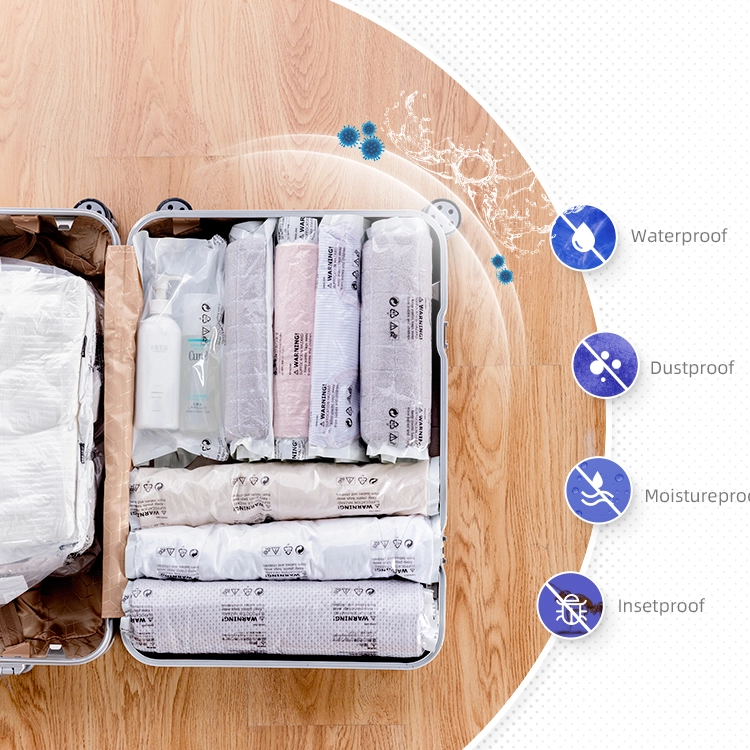
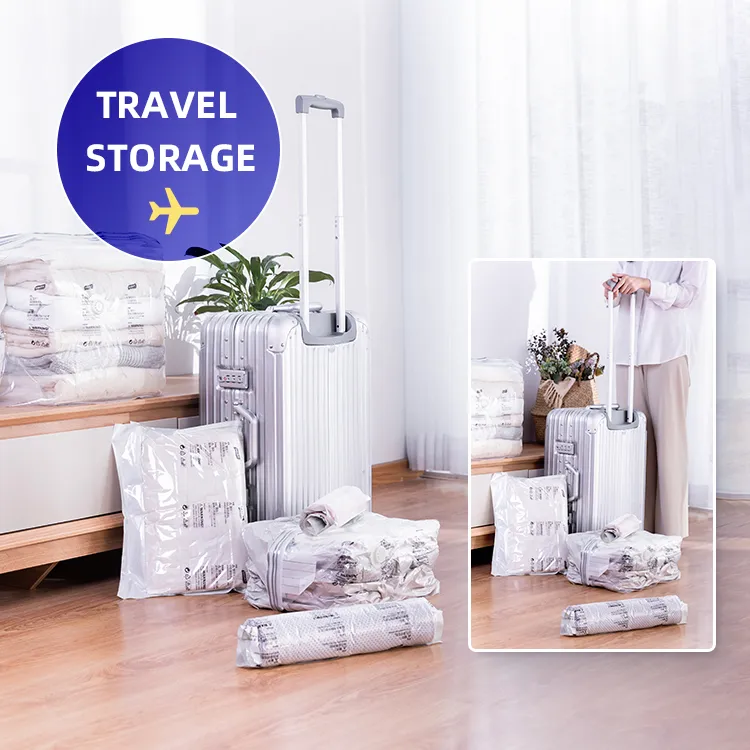
Vacuum travel bags reduce bulk by removing air from inside a sealed enclosure. As air leaves, outside atmospheric pressure presses the flexible bag around its contents.
The result depends on what you pack. A fleece jacket contains more compressible air space than a tightly folded pair of jeans. Shoes, electronics, and rigid accessories offer little opportunity for meaningful compression.
Pump Bags vs. Roll-Up Compression Bags
These products serve similar purposes but use different air-removal methods:
- Pump-operated vacuum bags use a compatible manual or electric pump to extract air through a valve.
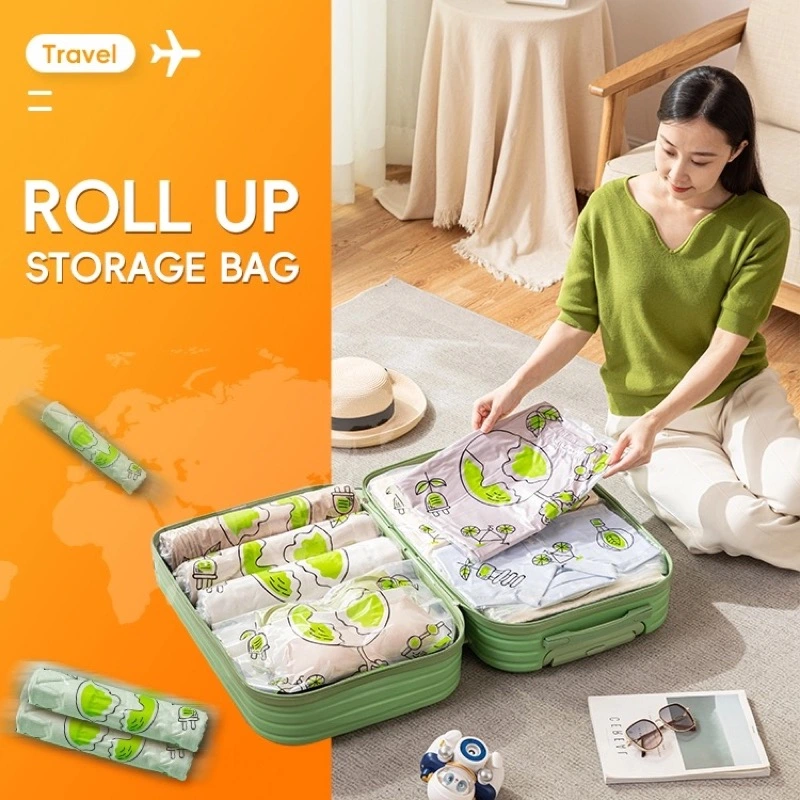
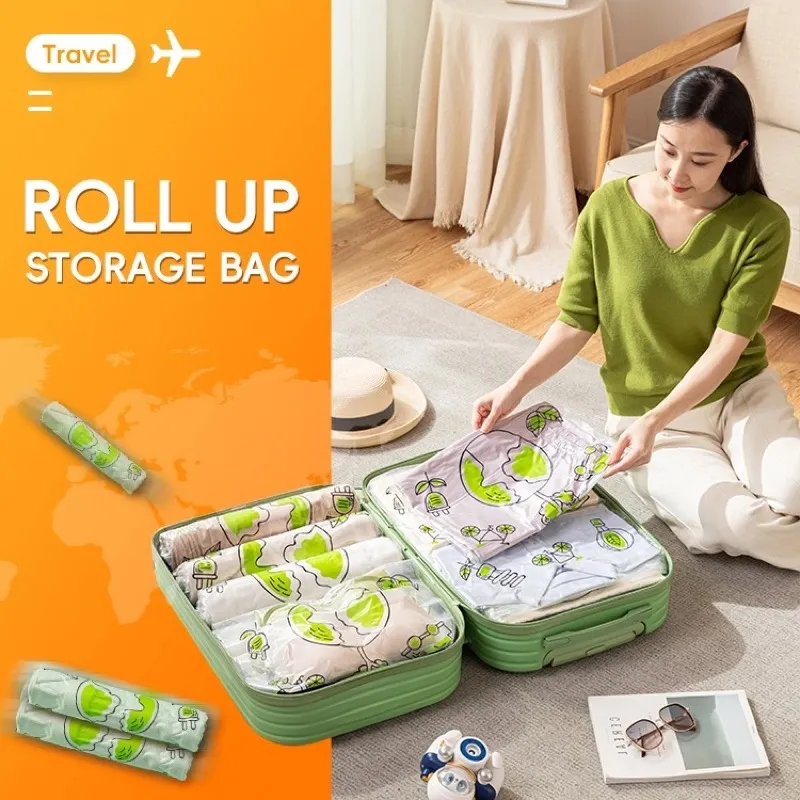
- Roll-up compression bags release air through one-way outlets when you roll or press the bag.
- Compression packing cubes use an additional zipper to reduce bulk without creating a vacuum seal.
For travel, the most important question is not which system looks strongest at home. It is which system you can reliably use again before your return journey.
When Are Vacuum Travel Bags Worth It?
Winter Trips and Mixed-Climate Travel
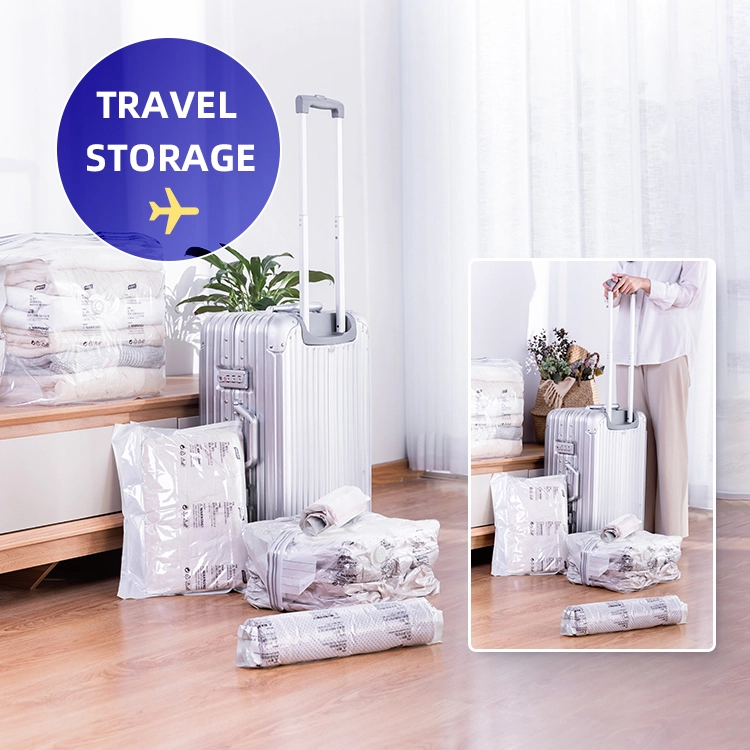
Bulky layers are the clearest use case. Compressing a coat or fleece that you will not need until arrival can free useful suitcase space.
Mixed-climate itineraries also benefit. You can keep cold-weather clothing compressed during warmer portions of the trip, then unpack it when conditions change.
Follow garment-care instructions, particularly for insulated items. Compression during transport and prolonged compressed storage are different situations.
Family Packing and Return-Journey Organization
Several sets of children’s clothing can become difficult to organize. Separate bags can group outfits by person or destination while reducing the bulk of suitable garments.
Compression bags can also isolate dry, dirty laundry from clean clothing. However, sealing laundry does not clean it, eliminate bacteria, or make damp garments safe for extended storage.
Trips Where Space Actually Changes the Outcome
Vacuum bags deliver their greatest value when saved space enables a practical improvement: closing an appropriate suitcase comfortably, accommodating necessary winter clothing, or avoiding an additional bag.
If everything already fits easily, the extra sealing and repacking steps may offer little benefit.
When Vacuum Bags Are Not Worth the Trouble
Your Suitcase Is Already Near Its Weight Limit
Compression reduces volume, not the weight of your clothing. Bags and pumps also add weight of their own.
A suitcase with extra room can tempt you to pack more, making an overweight-baggage problem worse. Weigh your completed luggage instead of judging it by how easily the zipper closes.
You Need Frequent Access
Opening a vacuum bag releases its compression. Retrieving one item may require resealing and removing air again.
Keep medication, travel documents, chargers, and an accessible clothing layer outside compressed bags. For multi-stop trips with daily unpacking, ordinary packing cubes may be more convenient.
Presentation Matters More Than Space
Compression can produce pronounced creases. Tailored jackets, structured garments, and clothing that must look polished immediately after arrival are generally poor candidates.
For business travel, selective compression works better than compressing your entire wardrobe.
Vacuum Travel Bags vs. Packing Cubes
| Packing method | Main advantage | Main limitation | Best fit |
|---|---|---|---|
| Pump-operated vacuum bags | Strong compression of suitable bulky clothing | Requires compatible equipment and resealing | Winter clothing and longer stays |
| Roll-up compression bags | Removes air without an electric pump | Results depend on design and manual pressure | Travelers prioritizing simple repacking |
| Compression packing cubes | Organization with moderate compression | Does not provide vacuum sealing | Frequent hotel changes |
| Standard packing cubes | Fast access and clear organization | Limited bulk reduction | Everyday clothing and shorter trips |
My preferred approach is selective: one compression bag for bulky layers, with packing cubes for everyday outfits. This balances space savings against the time spent unpacking.
How Much Space Do Vacuum Travel Bags Really Save?
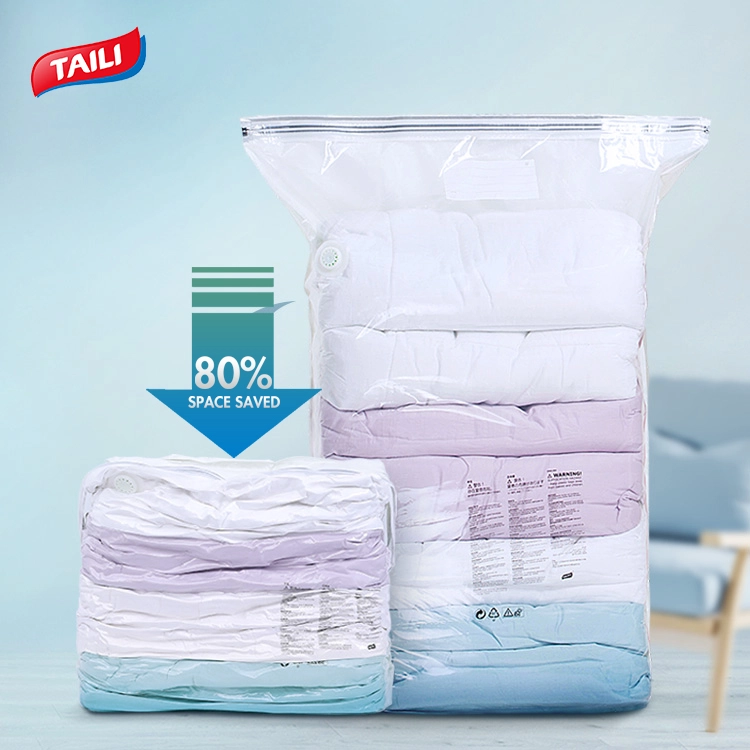
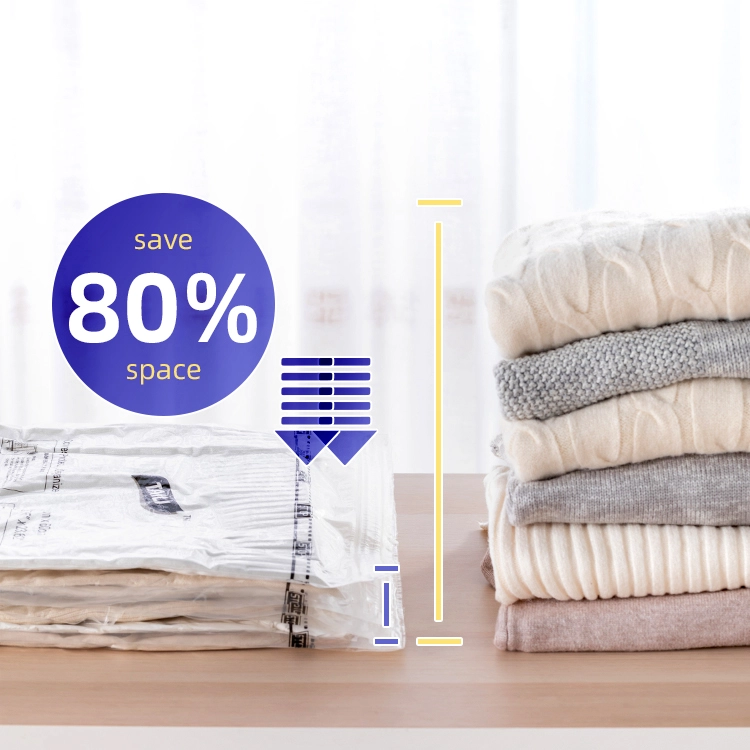
Some manufacturers advertise reductions of “up to 80%.” That is a product claim under particular conditions, not a dependable prediction for every suitcase.
Actual results depend on:
- The original loft and density of the clothing.
- How loosely the items were packed beforehand.
- Bag dimensions and available suitcase space.
- Air-removal effectiveness and seal retention.
- Whether the compressed package creates awkward gaps.
A More Useful Way to Interpret Compression Claims
Consider a hypothetical clothing bundle that occupies 20 liters before compression and 10 liters afterward. Its volume reduction is 50%.
That does not mean the entire suitcase now holds twice as much. Shoes, toiletries, electronics, and the suitcase structure remain unchanged.
Compare the same garments packed neatly before and after compression. Comparing a compressed bag with a loosely piled wardrobe exaggerates the practical benefit.
Measure Suitcase Fit, Not Just Bag Thickness
A very flat but oversized package can fit poorly around wheels or curved suitcase corners.
Several smaller bags may be more useful than one large slab. The relevant outcome is usable suitcase space, not the most dramatic before-and-after photograph.
What Makes a Good Vacuum Travel Bag?
From a packaging perspective, performance depends on the complete system: film, seams, closure, valve, and user handling.
A strong-looking material cannot compensate for a leaking valve. Likewise, a reliable valve cannot overcome a zipper contaminated with fabric or lint.
Evaluate These Five Features
- Material durability: Look for clearly identified materials and inspect for damage around folds.
- Closure usability: The opening should seal consistently without repeated guesswork.
- Valve compatibility: Confirm that your intended pump actually fits.
- Practical dimensions: Measure the usable interior of your suitcase.
- Reusability: Look for care guidance, warranty terms, and replacement options.
Thicker material is not automatically better. It can add weight and stiffness. The goal is a suitable balance of flexibility, puncture resistance, sealing performance, and portability.
Avoid assuming that every airtight bag is certified waterproof or suitable for immersion.
What TAILI’s Materials Background Means for Travelers
Guangdong Taili Technology Group Co., Ltd., headquartered in Zhongshan, describes its business as combining materials development with finished-product manufacturing.
The company background supplied for this article emphasizes polymer technologies, functional films, precision coating, and vacuum-packaging experience. These capabilities are relevant to the design challenges of flexible compression products.
However, corporate research credentials do not automatically establish the performance of every consumer product. A travel bag should still be evaluated by its own construction, instructions, dimensions, and documented features.
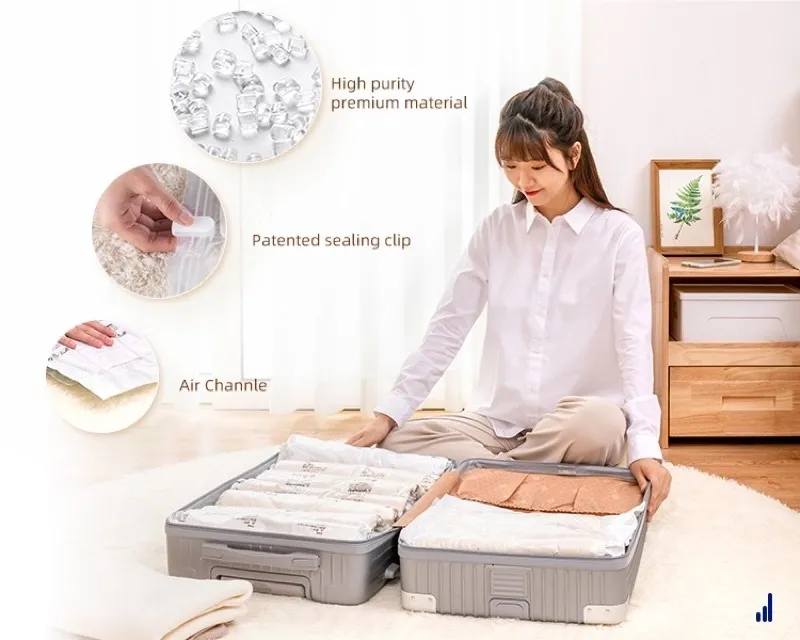
TAILI’s listed travel vacuum compression bag uses a nylon-and-TPU composite and a wireless pump. Its product page also describes reinforced edges, a sealing zipper, and a valve.
Those specifications provide useful comparison points. They should not be interpreted as independent verification of compression percentages or a guarantee against every possible leak.
For travelers, the practical question remains simple: does this particular bag fit your luggage and make repeat packing easier?
How to Use Vacuum Travel Bags Properly
Follow This Seven-Step Packing Routine
- Check garment instructions. Exclude items that should not be compressed.
- Pack only dry clothing. Allow recently washed garments to dry completely.
- Choose an appropriate bag size. Avoid forcing too much material against the closure.
- Arrange garments evenly. Keep zippers, buttons, and sharp accessories away from vulnerable surfaces.
- Clean and close the seal. Remove lint and trapped fabric, then follow the closure instructions.
- Remove air as directed. Use the correct pump or roll-up technique without unnecessary force.
- Check fit and luggage weight. Confirm that the compressed bag fits without distorting your suitcase.
Keep your return-trip equipment accessible. A powerful vacuum cleaner at home is not helpful if your accommodation has no compatible equipment.
A Simple Pre-Trip Test That Reveals More Than Marketing
Before traveling, run a realistic trial with the clothing you intend to pack.
First, photograph or measure the uncompressed bundle. Compress it, place it in your suitcase, and check whether surrounding items still fit naturally.
Leave the sealed bag overnight. Then inspect it for obvious reinflation, closure movement, or damage. This is a practical screening exercise, not a laboratory leak test.
Finally, open and repack it using only the equipment you will carry.
This last step matters most. A bag that works beautifully once but makes hotel-room repacking frustrating is not delivering good travel value.
Record four outcomes:
- Space saved in the actual suitcase.
- Time needed to pack and repack.
- Added equipment weight.
- Acceptable garment condition after opening.
Can You Fly With Vacuum-Sealed Clothing Bags?
For travel subject to United States screening, the Transportation Security Administration allows vacuum-sealed clothing bags but does not encourage them. An officer may need to open a bag if it triggers an alarm.
Pack with that possibility in mind. Do not create a luggage arrangement that becomes impossible to close after inspection.
A rechargeable pump requires a separate check against applicable airline and aviation rules. Its battery specifications and whether the battery is installed or removable can matter. Do not assume that permission to carry the bags automatically covers the pump.
Check your airline’s current baggage dimensions and weight allowance before departure.
Are Vacuum Bags Safe for Down and Other Insulated Items?
Short-term transport and long-term storage require different decisions.
Outdoor-equipment guidance recommends storing sleeping bags dry and loosely rather than leaving them compressed for months. Prolonged compression can reduce the loft that insulation needs to trap warm air.
For down jackets and other insulated garments, follow the specific manufacturer’s care guidance. Do not assume that advice for one product applies universally.
After arrival, unpack insulated clothing when practical. At home, avoid treating a tightly compressed travel bag as its permanent storage system.
How to Decide Whether the Cost Makes Sense
Assess value over realistic use rather than an advertised maximum saving.
Ask yourself:
- Will the bags solve a recurring space problem?
- Can I use them on the return journey?
- Are my garments suitable for compression?
- Will the complete kit remain within my weight allowance?
- Would removing unnecessary clothing solve the problem more simply?
A purchase can be worthwhile without preventing baggage fees. Easier packing and better separation may justify it.
Conversely, fee savings only exist when your final luggage complies with the airline’s actual rules and replaces a bag you would otherwise purchase.
Make Your Next Packing Decision With a Trial Run
Vacuum travel bags are worth considering when bulky clothing prevents an otherwise suitable suitcase from closing comfortably. They are less compelling when your main problems are excess weight, wrinkles, or daily access.
Before buying a full set, measure your suitcase and identify the specific garments you want to compress. Compare TAILI’s travel-bag dimensions and pump requirements, then start with the smallest suitable configuration. Test it overnight and rehearse your return-trip packing before departure.
Frequently Asked Questions
Do Vacuum Travel Bags Make Luggage Lighter?
No. They reduce the space occupied by suitable clothing, not its weight. Include the bags and pump when weighing your luggage.
Can I Use Vacuum Travel Bags Without a Pump?
Only if the design supports it. Roll-up bags and some press-to-release products work without a pump. Other valve systems require compatible equipment.
Do Vacuum Bags Wrinkle Clothes?
They can. Pressure and tight folding may create creases. Keep presentation-sensitive garments outside compressed bags and test unfamiliar fabrics before traveling.
Why Does My Vacuum Bag Reinflate?
Possible causes include an incompletely closed zipper, trapped fabric, a loose valve, or a puncture. Check the closure and follow the product’s troubleshooting instructions.
Can I Pack Wet Clothes in a Vacuum Bag?
Do not use sealed compression storage for prolonged storage of wet clothing. Moisture trapped inside can create conditions for mildew. Dry garments first whenever possible.
Are Vacuum Bags Better Than Compression Packing Cubes?
For bulky, compressible layers, vacuum bags may offer greater space reduction. For everyday organization and repeated access, compression cubes may be more practical.
References
1. Transportation Security Administration — “Vacuum-sealed bags.” Primary guidance supporting the discussion of clothing-bag screening and possible inspection.
2. Eagle Creek — “Pack-It Travel Compression Sac Bags.” Manufacturer information on roll-up compression, one-way valves, and advertised maximum volume reduction. Percentage claims are manufacturer claims, not universal travel outcomes.
3. Eagle Creek — “Packing Cubes vs Compression Bags: How Do They Work.” Industry guidance supporting comparisons between compression systems, bulky-clothing applications, wrinkle concerns, and weight limitations.
4. Eagle Creek — “Compression Packing Cubes for Travel.” Manufacturer explanation of compression cubes and their additional compression zipper.
5. REI Expert Advice — “How to Store a Sleeping Bag.” Guidance supporting the distinction between transport compression and long-term storage, including drying, loft preservation, and loose storage.
6. TAILI Store — “TAILI Travel Vacuum Compression Bags with Wireless Pump.” Brand-provided specifications for the nylon-and-TPU composite, wireless pump, closure, reinforced edges, and valve. These are product-page descriptions rather than independent test findings.
Hot Tags: Vacuum Travel Bags, Travel Compression Bags, Vacuum Storage Bags, Wholesale Vacuum Travel Bags, Vacuum Bag Manufacturer, Vacuum Storage Bag Supplier, OEM Vacuum Storage Bags, Custom Vacuum Compression Bags, Reusable Travel Vacuum Bags, Travel Vacuum Bags With Pump