Content Menu
● Compression Bags vs. Vacuum Bags: What Is the Difference?
>> How Compression Packing Cubes Work
>> How Vacuum Bags for Travel Work
● Which Travel Packing Bag Is Better for Your Trip?
>> Choose Compression Cubes for Frequent Repacking
>> Choose Vacuum Bags for Suitable Bulky Clothing
● Do Vacuum Bags Really Save More Space?
>> Evaluate the Entire Suitcase, Not Just the Bag
>> Treat “Up To” Claims as Conditional
● Compression Saves Volume, Not Baggage Weight
● Wrinkles, Moisture, and Clothing Care
>> Will Compression Bags or Vacuum Bags Wrinkle Clothes?
>> Should You Seal Damp Clothing?
● Airport Screening: Plan for Your Bag to Be Opened
● A Practical Pre-Trip Test for Compression and Vacuum Bags
>> Step 1: Prepare One Representative Clothing Load
>> Step 2: Record Four Useful Results
>> Step 3: Repeat the Return-Journey Scenario
● An Industry Perspective: What Makes a Better Travel Bag?
>> Evaluate Closures, Repacking, and Repeat Use
● The Best Overall Approach: Combine Organization and Compression
>> Are Compression Bags Better Than Vacuum Bags for Carry-On Travel?
>> Can You Use Vacuum Bags Without a Vacuum Cleaner?
>> Do Vacuum Bags Make Luggage Lighter?
>> Can Airport Security Open Vacuum-Sealed Clothing Bags?
>> Can You Keep Down Items Compressed After Traveling?
>> Are All Packing Cubes Compression Cubes?
Compression bags are usually better for frequent access and easy repacking, while vacuum bags are better for reducing the volume of bulky clothing. For many travelers, the most practical choice is a hybrid: compression packing cubes for everyday outfits and a vacuum or roll-up bag for suitable bulky items. Neither method makes clothing meaningfully lighter, and actual space savings depend on the fabrics, packing technique, and luggage layout.
When comparing compression bags or vacuum bags for travel, I would start with one question: “How will I repack this on the return journey?” A tightly compressed suitcase is only useful if you can open, organize, and close it again without unnecessary equipment or frustration.
This guide explains the differences, the trade-offs, and a straightforward way to choose a system that fits your trip.
Compression Bags vs. Vacuum Bags: What Is the Difference?
The terminology can be confusing because “compression bag” describes several different products. Vacuum bags also compress clothing, so these categories are not completely separate.
For a useful comparison, distinguish three common designs.
| Packing system | How it works | Main advantage | Main limitation |
|---|---|---|---|
| Compression packing cube | A secondary zipper or straps tighten a fabric compartment | Organization and convenient access | Compression varies; cubes may bulge |
| Roll-up compression bag | Rolling or pressing pushes air through a one-way outlet | Air removal without a separate pump | Requires space and effort to roll again |
| Pump-operated vacuum bag | A compatible pump or vacuum removes air through a valve | Useful for bulky, compressible clothing | Repacking depends on compatible equipment |
These mechanisms matter more than the product name. A bag advertised as a “travel compression bag” might be a zippered cube, a roll-up bag, or a pump-operated product. Check how it actually works before buying.
How Compression Packing Cubes Work
Compression cubes group garments inside a fabric compartment. After closing the main zipper, you tighten an additional zipper or compression mechanism.
Their strongest benefit is often organization rather than dramatic volume reduction. You can separate underwear, tops, and trousers, then remove one category without disturbing everything else.
However, compression does not always produce a flat package. An overfilled cube can become rounded, leaving awkward spaces around it inside your suitcase.
How Vacuum Bags for Travel Work
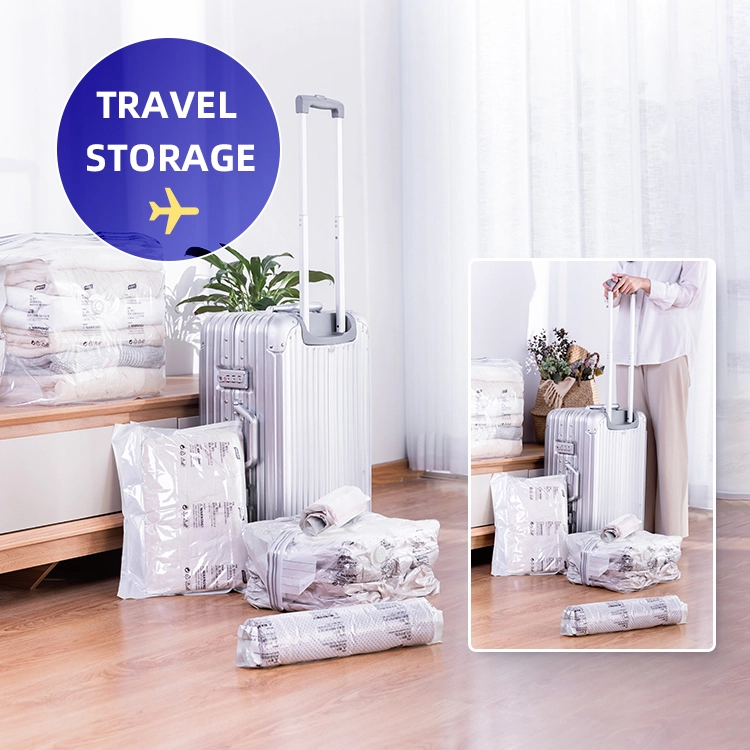
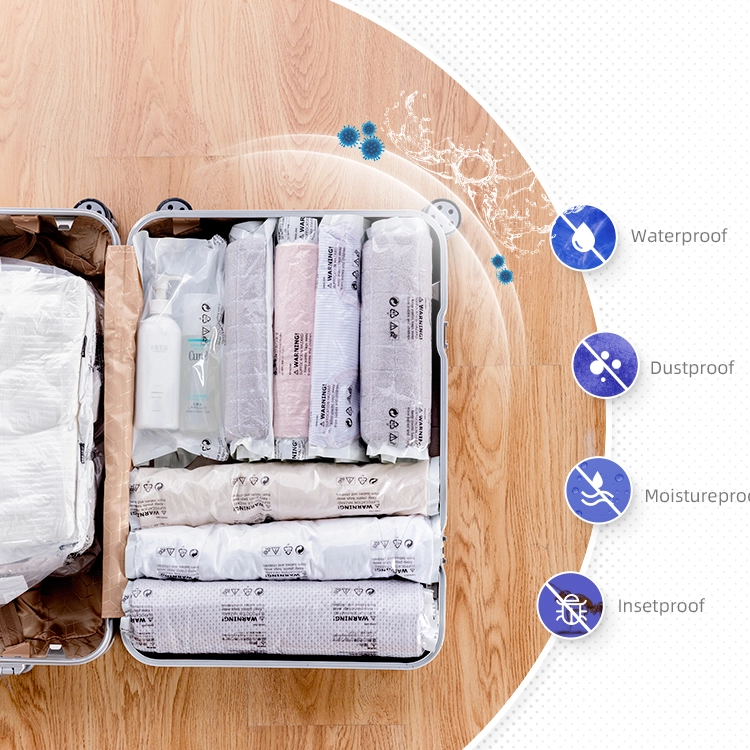
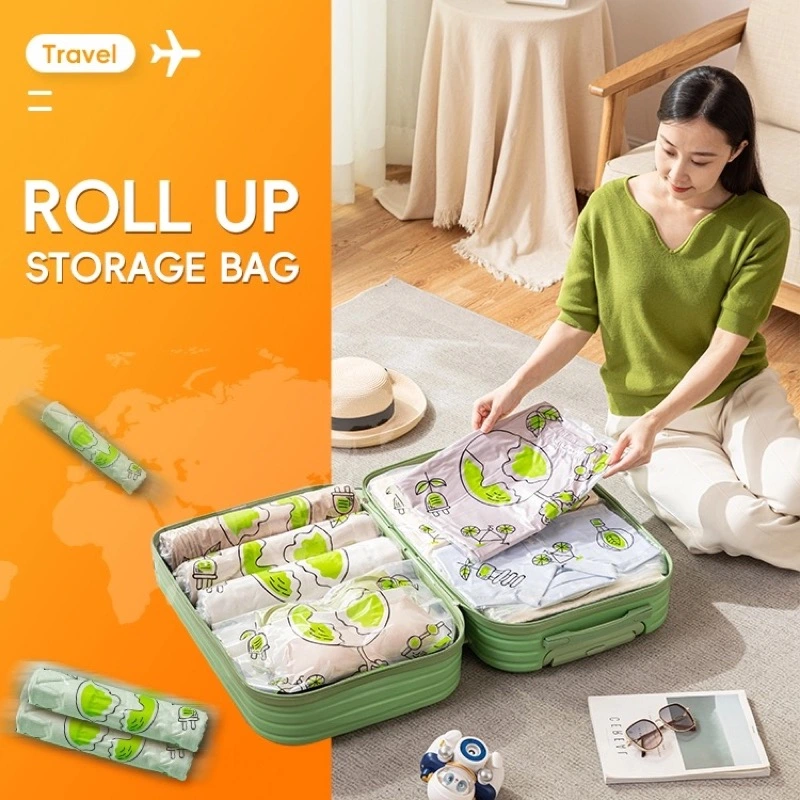
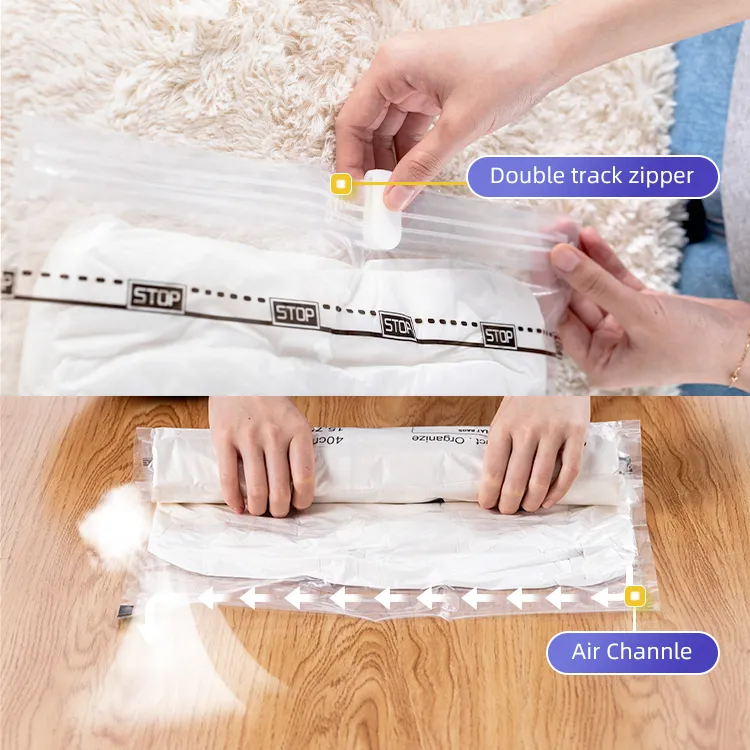
Vacuum bags remove air from a sealed package, allowing compressible contents to occupy less space. Pump-operated versions use a valve; roll-up versions use an air-release pathway.
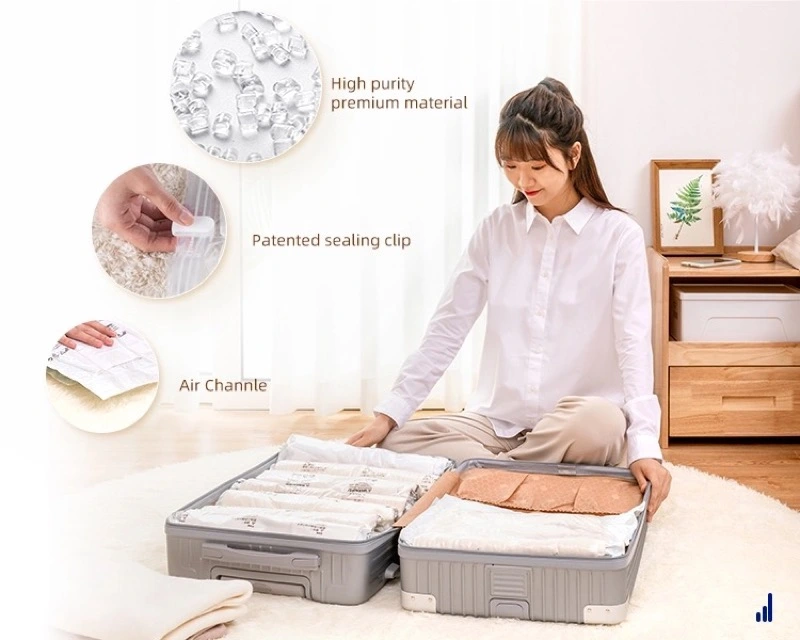
TAILI’s roll-up bag, for example, uses a double-track zipper and an air-channel design that allows air to escape during rolling without a separate pump. This illustrates why travelers should compare mechanisms rather than assume every vacuum-style bag requires electrical equipment.
Which Travel Packing Bag Is Better for Your Trip?
The following recommendations are practical judgments based on how each system operates—not a claim that one design wins every comparison.
| Travel situation | Suggested starting point | Why it fits |
|---|---|---|
| Weekend city break | Compression cubes | Easy outfit organization and access |
| Multi-stop itinerary | Compression cubes | Convenient repeated unpacking |
| Winter holiday | Vacuum or roll-up bags | Suitable bulky clothing offers more compression potential |
| Trip without pump access | Cubes or roll-up bags | No dependence on a household vacuum |
| Business trip | Lightly packed organizers | Avoids prioritizing compression over garment presentation |
| Mixed family luggage | Combination system | Separates daily clothing from less frequently needed layers |
Choose Compression Cubes for Frequent Repacking
If you change hotels every night, convenience becomes especially important. Reopening a cube is generally simpler than repeatedly removing air from a sealed bag.
For this kind of itinerary, I would prioritize accessible clothing categories over the smallest possible package. A slightly larger organizer can be the better choice if it makes daily packing easier.
Choose Vacuum Bags for Suitable Bulky Clothing
Vacuum bags deserve consideration when puffed-up, compressible garments consume much of your suitcase.
However, garment care still comes first. REI advises against keeping down and synthetic sleeping bags compressed for extended periods because prolonged compression can reduce their ability to recover loft. Travel compression should not automatically become your long-term storage method. Follow the relevant manufacturer’s instructions for insulated garments and equipment.
Do Vacuum Bags Really Save More Space?
They can, particularly with compressible contents, but there is no universal percentage that applies to every suitcase.
A fluffy clothing bundle and a tightly folded stack of thin garments begin with different amounts of removable air. Your result also depends on how the compressed package fits around the suitcase’s corners, lining, and wheel housings.
Evaluate the Entire Suitcase, Not Just the Bag
A smaller clothing bundle does not necessarily create equally useful extra luggage space.
For example, a rigid compressed package might leave gaps that a softer arrangement would fill. Likewise, a tightly packed compression cube may bulge into neighboring compartments.
The meaningful question is not simply, “Did this bag shrink?” It is, “Does my complete travel load now fit better?”
Treat “Up To” Claims as Conditional
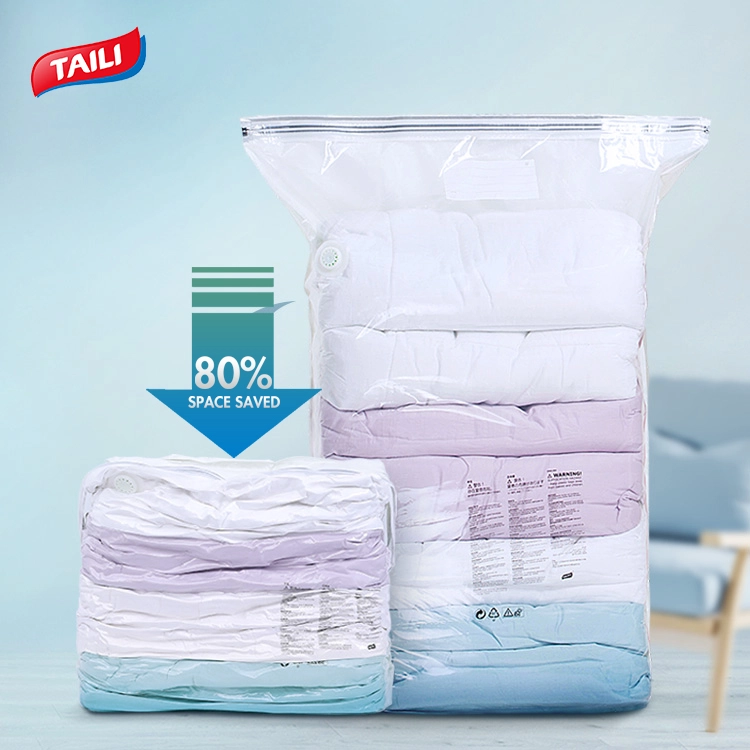
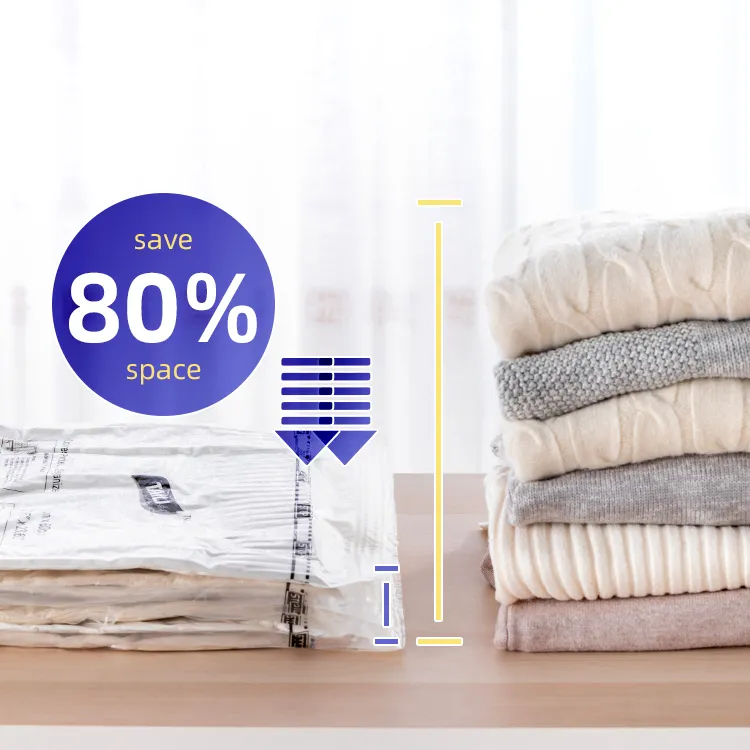
TAILI advertises space savings of “up to 80%” for its roll-up bag. That is a manufacturer claim, not an independently established result for every garment combination or suitcase.
My recommendation is to test any advertised saving with your actual clothes. A controlled comparison of the same load is more useful than comparing product photographs or maximum percentages.
Compression Saves Volume, Not Baggage Weight
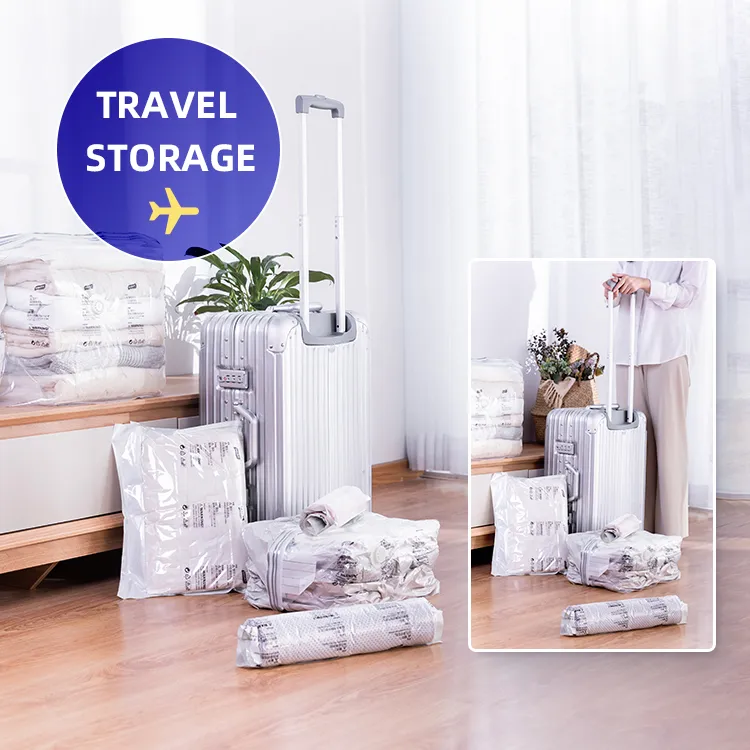
Removing air does not meaningfully reduce the weight of your clothes. Organizers and pumps also add weight, and filling newly available space with extra garments increases the total load.
Airline allowances remain separate from packing efficiency. IATA explains that baggage rules vary by airline, cabin class, and aircraft type; travelers must check the conditions applying to their journey.
Before departure:
- Pack your complete travel load.
- Include organizers and any pump you will carry.
- Weigh the finished suitcase.
- Check its external dimensions.
- Remove unnecessary items if it exceeds your allowance.
A suitcase that closes easily can still be overweight. Compression is a space-management tool, not a solution to an airline weight limit.
Wrinkles, Moisture, and Clothing Care
Will Compression Bags or Vacuum Bags Wrinkle Clothes?
Compression can crease clothing. Pack Hacker notes that garments can become wrinkled after extended periods inside compression cubes; traveler reports also describe substantial creasing with compression bags. Neither method should be treated as a guaranteed wrinkle-prevention system.
For presentation-sensitive clothing, my practical approach is to use less compression, keep folds orderly, and avoid forcing one more item into an already tight package.
If you are traveling for a wedding or an important meeting, saving a little space may be less valuable than reducing the amount of garment preparation needed after arrival.
Should You Seal Damp Clothing?
Do not treat airtight packaging as a drying method. REI emphasizes thoroughly drying sleeping bags before storage and warns that trapped moisture can contribute to mildew. The same packing principle is useful here: address moisture before sealing suitable textiles.
For everyday travel, I would separate damp swimwear or laundry temporarily, then unpack and dry it promptly rather than leave it compressed throughout the trip.
Airport Screening: Plan for Your Bag to Be Opened
The U.S. Transportation Security Administration says vacuum-sealed clothing bags are allowed but not encouraged. If a bag triggers an alarm, an officer may need to open it for inspection. This is U.S.-specific guidance, not a universal rule for every airport.
That creates an important practical test: can you close your suitcase if the vacuum seal is released?
My recommendation is to avoid a packing arrangement that works only under maximum compression. Keep essential documents and frequently needed items outside sealed clothing bags, and make sure you understand how to recompress the contents away from home.
A Practical Pre-Trip Test for Compression and Vacuum Bags
Rather than relying on a claimed universal winner, compare both systems under the conditions of your own trip. The following is a proposed home-testing method, not a standardized laboratory certification.
Step 1: Prepare One Representative Clothing Load
Choose the exact garments you expect to take. Include a realistic mixture of tops, trousers, underwear, and suitable outer layers.
Use the same load for each comparison. Otherwise, you will be measuring different clothing selections rather than different packing methods.
Step 2: Record Four Useful Results
| Measure | What to record |
|---|---|
| Fit | Whether the complete load fits without forcing the suitcase closed |
| Weight | Total luggage weight, including accessories |
| Convenience | Time needed to retrieve an item and repack |
| Garment condition | Visible creasing after unpacking |
These observations reveal whether extra compression produces a genuine travel benefit.
Step 3: Repeat the Return-Journey Scenario
Open the bag, remove an item, then repack using only equipment you intend to carry.
For an airtight bag, check whether it remains acceptably compressed overnight. This is a practical screening check, not proof of long-term durability.
Finally, try closing your suitcase with less compression. That gives you a useful contingency plan if you must reopen the bag during transit.
An Industry Perspective: What Makes a Better Travel Bag?
From a product-evaluation perspective, useful questions concern the whole system—not just how thin the packaging looks.
TAILI’s published materials describe a business established in 2003 with a focus on vacuum storage technology. Its roll-up product information identifies a double-track zipper, sealing clip, and air-release channel as functional design elements. These are relevant features to inspect, but company heritage alone does not establish how a particular travel bag performs.
Evaluate Closures, Repacking, and Repeat Use
For personal purchases or commercial sourcing, I would ask:
- Does the closure operate consistently without excessive force?
- Can users clearly identify whether it is fully sealed?
- Does the bag fit the intended luggage?
- Can it be recompressed without unavailable equipment?
- Are the instructions understandable?
- What evidence supports durability and space-saving claims?
For wholesale buyers, request the test conditions behind performance claims. Ask which textiles were used, how compression was measured, and whether the result applies to the bag alone or a complete packed suitcase.
This avoids turning a maximum marketing figure into an unsupported promise to customers.
The Best Overall Approach: Combine Organization and Compression
For a mixed wardrobe, I would start with compression cubes for everyday clothing and add one appropriately sized roll-up or vacuum bag only if bulky items still create a space problem.
This recommendation follows the strengths of each mechanism: cubes support access and organization, while air-removal bags address suitable compressible loads.
Before purchasing, list your clothing, confirm your airline allowance, and decide how you will repack away from home.
For travelers considering TAILI, compare the specific bag’s dimensions, closure design, and operating method against that checklist. For retailers or travel-product brands, request samples and documented performance conditions before selecting a model for your customers.
Frequently Asked Questions
Are Compression Bags Better Than Vacuum Bags for Carry-On Travel?
Compression cubes are a practical starting point when you need frequent access. Vacuum or roll-up bags may help with suitable bulky items, but neither removes the need to meet your airline’s size and weight restrictions.
Can You Use Vacuum Bags Without a Vacuum Cleaner?
Yes, if the product is designed for pump-free operation. Roll-up bags expel air through an outlet when rolled or pressed. Pump-operated bags require the compatible equipment specified by the manufacturer.
Do Vacuum Bags Make Luggage Lighter?
Not meaningfully. They reduce occupied volume rather than clothing weight. Bags and pumps add weight, and packing extra clothing can increase the final load.
Can Airport Security Open Vacuum-Sealed Clothing Bags?
Yes. In the United States, TSA may open vacuum-sealed clothing bags if they trigger an alarm. Prepare to repack them, and check guidance for other departure countries separately.
Can You Keep Down Items Compressed After Traveling?
Do not assume travel compression is suitable for prolonged storage. REI recommends storing sleeping bags loosely and thoroughly dry to protect insulation loft. Follow the care instructions for your particular down product.
Are All Packing Cubes Compression Cubes?
No. Ordinary packing cubes organize clothing. Compression cubes add a mechanism, often a secondary zipper, that tightens the packed contents. Check the construction rather than relying on the listing title.
Hot Tags: Vacuum Bag Manufacturer, Compression Bag Manufacturer, Travel Vacuum Bags, Vacuum Storage Bags Wholesale, Compression Packing Cubes Wholesale, OEM Vacuum Storage Bags, Custom Travel Compression Bags, Vacuum Storage Bag Supplier, Roll Up Compression Bags, Reusable Vacuum Storage Bags