Content Menu
● Clear vs. Opaque Vacuum Compression Bags: At-a-Glance Comparison
● How Travel Vacuum Compression Bags Actually Work
>> Compression saves space, not luggage weight
● Clear Vacuum Compression Bags: Advantages and Limitations
>> Faster clothing identification
>> Easier visual packing checks
>> Less privacy during unpacking
● Opaque Vacuum Compression Bags: Advantages and Limitations
>> A more discreet organization system
>> Darkness does not establish better protection
● What Matters More Than Clear or Opaque Film?
>> Film construction and complete-bag reliability
>> A closure you can operate repeatedly
>> Dimensions after compression
● Airport Security: Are Clear Vacuum Bags Better?
>> Visibility does not guarantee inspection-free travel
● Which Vacuum Compression Bags Suit Different Trips?
>> Multi-stop holidays and family travel
>> Hostels and shared accommodation
>> Winter trips and outdoor travel
● A Practical Before-You-Fly Comparison Test
>> Step 1: Use a consistent clothing load
>> Step 3: Check overnight rebound
>> Step 4: Simulate the return journey
● A Materials-Focused Buying Checklist for TAILI Customers
>> Are clear vacuum compression bags better than opaque bags?
>> Do opaque vacuum bags compress clothes more effectively?
>> Can vacuum compression bags go in carry-on luggage?
>> Do vacuum bags reduce baggage weight?
>> Can I leave insulated equipment compressed after traveling?
>> Are vacuum compression bags waterproof?
Clear vs. opaque vacuum compression bags: which deserves space in your suitcase? For most travelers, clear bags are the more practical starting point because you can identify clothing without opening the seal. Opaque bags suit travelers who prioritize privacy, particularly when packing personal garments or sharing accommodation. Neither appearance, however, proves that a bag compresses better or lasts longer.
My recommendation is to choose visibility according to your travel routine, then evaluate construction, sealing reliability, and return-trip convenience separately. A bag that looks organized but loses compression overnight solves little.
This guide compares both options from a traveler-centered and materials-focused perspective. The recommendations are editorial judgments, not claims of firsthand product testing.
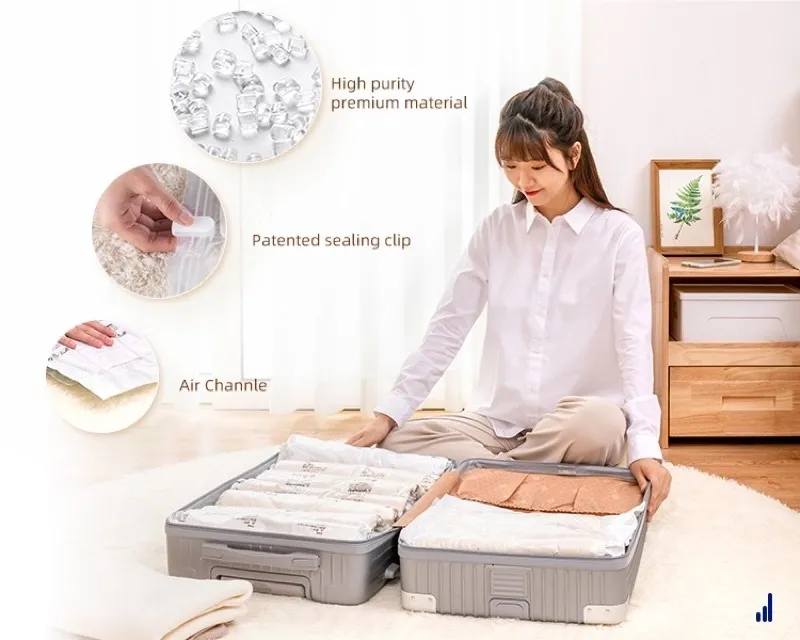
Clear vs. Opaque Vacuum Compression Bags: At-a-Glance Comparison
Clear bags let you see their contents. Opaque bags conceal them. Tinted or frosted versions fall between these categories, offering partial visibility rather than complete privacy.
| Comparison factor | Clear vacuum compression bags | Opaque vacuum compression bags |
|---|---|---|
| Finding clothing | Identify visible garments without opening | Usually requires labels or opening |
| Privacy | Contents remain visible | Conceals personal items |
| Packing organization | Useful for sorting outfits visually | Useful for organizing labeled categories |
| Compression performance | Depends on construction and sealing | Depends on construction and sealing |
| Leak troubleshooting | Easier to inspect garment placement visually | More reliant on checking seals and bag shape |
| Light exposure | Transparent areas admit visible light | Conceals contents, but does not establish rated UV protection |
| Best travel match | Frequent unpacking, family trips, multi-stop itineraries | Shared rooms, privacy-sensitive packing |
| Main inconvenience | Personal belongings remain visible | Unlabeled bags can be difficult to distinguish |
The most important distinction is usability, not a proven performance advantage. Film structure and barrier properties vary independently of whether a bag looks transparent or opaque. Packaging materials can combine different structural, sealing, and pigmentation layers.
How Travel Vacuum Compression Bags Actually Work
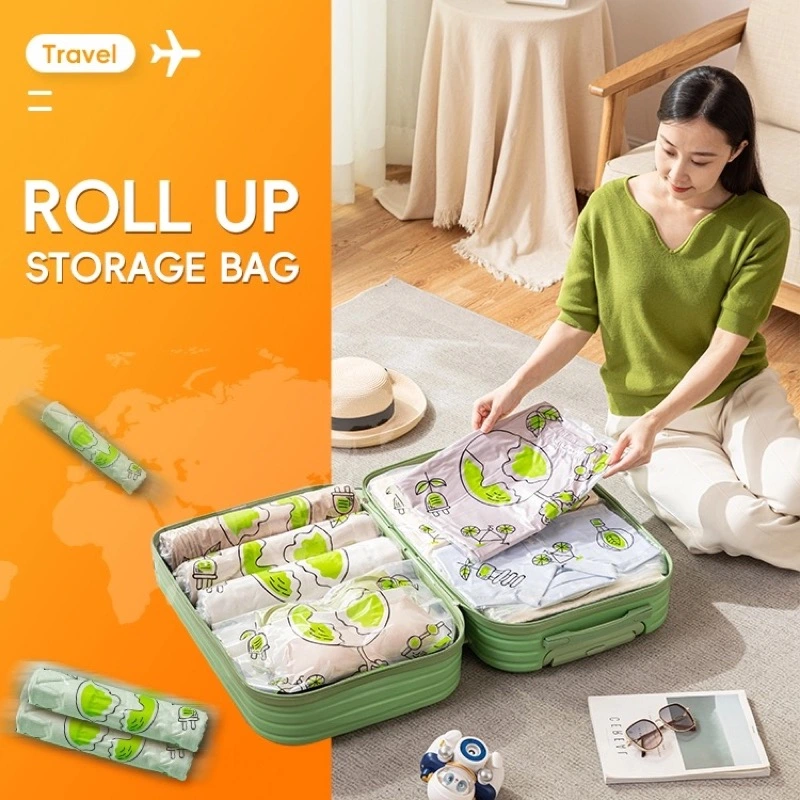
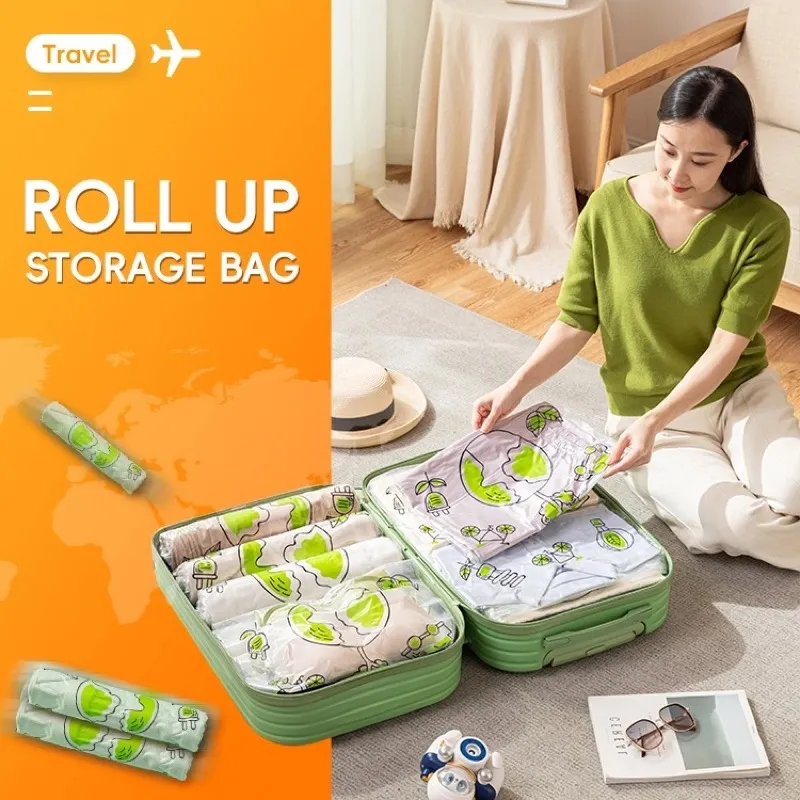
Vacuum compression bags reduce the space occupied by compressible clothing by allowing air to escape and limiting its return. Pump-operated designs use a valve; some travel compression bags instead expel air through rolling.
Check the operating method before buying. A bag designed for a household vacuum cleaner may be inconvenient in accommodation where no compatible equipment is available.
Compression saves space, not luggage weight
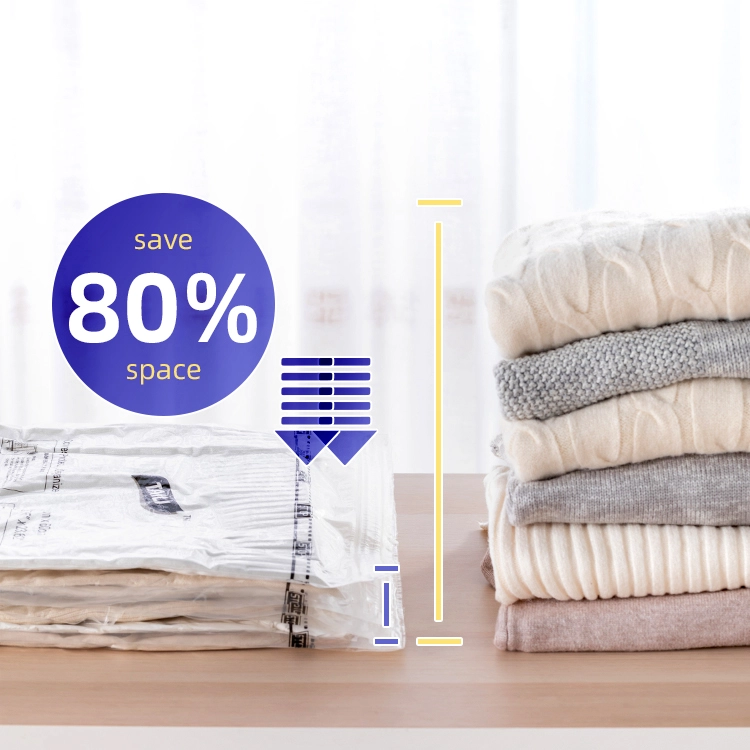
This distinction matters when packing for flights. Compressing sweaters does not remove their material weight. Bags and pumps also contribute to your packed load.
Independent travel-product testing emphasizes that vacuum bags reduce volume rather than weight. A suitcase that closes easily can still exceed an airline allowance.
My practical rule is to assess two separate limits: whether everything fits and whether the packed suitcase remains within your carrier’s allowance.
Clear Vacuum Compression Bags: Advantages and Limitations
Faster clothing identification
Clear vacuum bags for travel make sense when you regularly retrieve individual items.
You can distinguish a blue sweater from a white shirt without releasing the vacuum. That becomes useful when several bags have similar dimensions.
For a family trip, assign one transparent bag to each person. For a multi-city itinerary, organize by destination or clothing category.
The benefit is fewer unnecessary openings—not a guarantee of faster packing under every circumstance.
Easier visual packing checks
Transparent film lets you inspect garment placement before compressing.
You can spot a sleeve near the zipper, identify uneven layering, or notice a hard clothing accessory pressing against the film.
Visibility does not prove that a closure is airtight. It simply makes some preventable packing mistakes easier to notice.
Less privacy during unpacking
The drawback is straightforward: other people can see what is inside.
That may matter when opening luggage in a hostel, shared apartment, changing room, or airport inspection area.
One compromise is to place personal garments inside a lightweight opaque pouch before putting them in a clear compression bag. Test the arrangement first, since additional organizers affect packing shape and convenience.
Opaque Vacuum Compression Bags: Advantages and Limitations
Better visual privacy
Opaque vacuum compression bags conceal clothing from people nearby.
For travelers sharing rooms or frequently opening luggage in public, that can outweigh the convenience of seeing every item.
However, privacy is not theft protection. An opaque bag hides its contents; it does not secure them against access.
A more discreet organization system
Matching opaque bags can create a tidy packing system, especially when combined with consistent labels.
Useful categories include:
- Underwear and sleepwear.
- Cold-weather layers.
- Clothing for the second destination.
- Return-trip laundry.
Labels should describe contents clearly enough that you do not need to open several bags to find one item.
Darkness does not establish better protection
Do not assume an opaque bag is stronger, more airtight, or more moisture-resistant.
Packaging performance depends on the actual material structure. Polyethylene, for example, contributes heat-sealing and moisture-barrier properties, while multilayer constructions can assign different functions to different layers. Appearance alone does not reveal those specifications.
Likewise, an opaque appearance is not evidence of a tested ultraviolet-protection rating.

What Matters More Than Clear or Opaque Film?
Film construction and complete-bag reliability
Ask what the bag is made from, but avoid treating a material name as a complete quality guarantee.
A technically capable film still needs dependable seams, a functional closure, and a suitable valve. Your purchasing decision should therefore consider the assembled product rather than film color alone.
Retail listings show that travel vacuum bags can use PA/PE constructions while remaining transparent or semi-transparent. Transparency is therefore compatible with multilayer material designs.
A closure you can operate repeatedly
Consider how the zipper feels, whether the closing slider is easy to use, and whether the instructions clearly explain valve operation.
For travel, repeatability matters. You may open the same bag several times rather than compressing it once for seasonal storage.
I would prioritize a closure that is straightforward to check over an elaborate feature that is difficult to operate while repacking.
Dimensions after compression
Measure your suitcase’s usable interior, including wheel housings and internal dividers.
Then consider the compressed bag’s footprint. One oversized slab may fit poorly even when its total volume is small.
Several smaller bags can offer more flexible placement, although they also introduce more closures and potentially more packaging weight.
Airport Security: Are Clear Vacuum Bags Better?
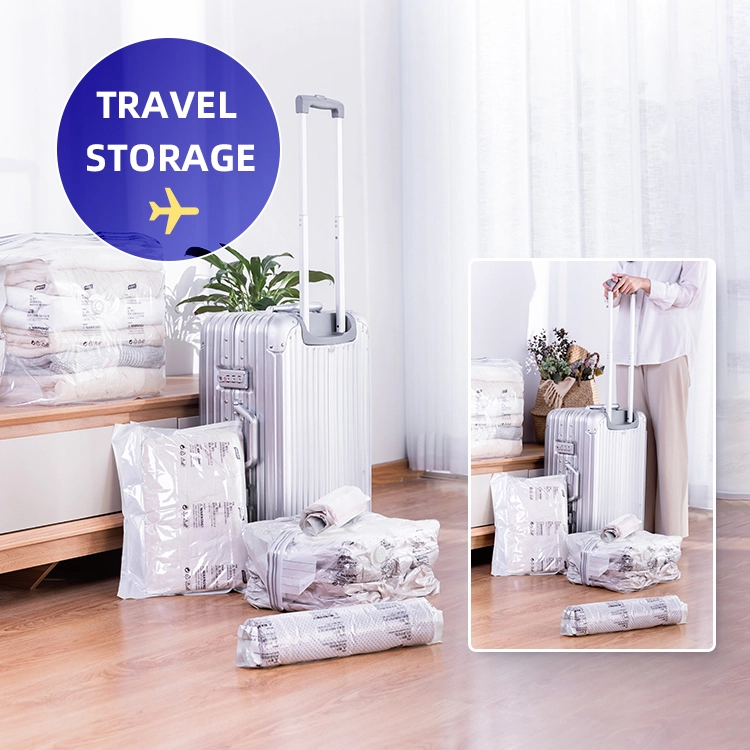
The U.S. Transportation Security Administration allows vacuum-sealed clothing bags in carry-on and checked baggage, but says they are not encouraged. Officers may need to open them if they trigger an alarm, and the final decision rests with the screening officer.
That guidance does not establish a clear-bag exemption or an opaque-bag prohibition.
Visibility does not guarantee inspection-free travel
Choose clear bags because they help you identify garments—not because you expect them to bypass screening.
For either design:
- Keep bags accessible.
- Be prepared to open them.
- Plan how to recompress clothing afterward.
- Avoid packing so tightly that your suitcase cannot close after inspection.
These are practical packing precautions, not promises about checkpoint outcomes. Screening requirements also vary outside the United States.
Which Vacuum Compression Bags Suit Different Trips?
Multi-stop holidays and family travel
My preference is clear bags when the priority is retrieving clothing efficiently.
With multiple travelers or destinations, seeing the contents reduces reliance on memory. Smaller, clearly assigned bags also make it easier to open only the category you need.
Hostels and shared accommodation
Opaque bags are the stronger usability choice when visual privacy matters most.
Use simple labels so that privacy does not come at the expense of organization.
A hybrid system often works well: clear bags for outerwear and opaque bags for personal garments.
Business travel
Choose by clothing type before choosing transparency.
Compression can create folds and pressure points, so assess whether a garment tolerates tight packing. Keep structured or presentation-critical clothing separate when its care instructions or construction make compression unsuitable.
Neither clear nor opaque film prevents wrinkles.
Winter trips and outdoor travel
Bulky, compressible clothing is where space-saving bags can be useful. Travel-product testing identifies jackets and sweaters as common applications.
For insulated equipment, distinguish short-term transport from long-term storage. REI advises storing sleeping bags dry and loosely, because prolonged compression can reduce insulation loft. That guidance concerns sleeping bags specifically; follow the manufacturer’s instructions for other insulated products.
A Practical Before-You-Fly Comparison Test
Instead of trusting an unspecified space-saving percentage, compare bags using your own clothing.
This proposed home test is a purchasing aid, not a standardized laboratory procedure.
Step 1: Use a consistent clothing load
Pack the same clean, dry garments in each candidate bag.
Keep folding method and garment arrangement similar. Otherwise, differences in packing technique may overshadow differences between bags.
Step 2: Check initial fit
Compress according to the instructions, then place each bag inside your actual suitcase.
Record whether it fits around the suitcase’s interior features and whether its shape leaves useful space for other items.
Step 3: Check overnight rebound
Leave each compressed bag undisturbed overnight.
Compare thickness and shape the next day. If a bag expands substantially, check the zipper, valve, seams, and any visible damage before assuming the film is responsible.
Step 4: Simulate the return journey
Open the bag, retrieve one garment, and recompress it using only the equipment you intend to carry.
This reveals an overlooked issue: a convenient departure-day system may be awkward when repacking in a small hotel room.
A Materials-Focused Buying Checklist for TAILI Customers
The supplied company background describes Guangdong Taili Technology Group Co., Ltd. as a materials-focused business with capabilities spanning polymer synthesis, precision coating, and vacuum-packaging applications.
For travelers, the useful connection is not that a corporate technology claim automatically proves every retail bag’s performance. It is that materials expertise should translate into clear product specifications and dependable everyday operation.
When evaluating a TAILI product—or another supplier’s equivalent—ask:
- Is it intended for travel, household storage, or both?
- What are its usable dimensions?
- How does it release air?
- Is the pump compatible and practical to carry?
- What instructions address repeated opening and resealing?
- Are performance claims supported by a stated test method?
- What replacement or warranty terms apply?
Treat aerospace-related company credentials as background, not as an independent certification of a particular travel bag.
Frequently Asked Questions
Are clear vacuum compression bags better than opaque bags?
Clear bags are generally more convenient for identifying clothing. Opaque bags provide better visual privacy. My recommendation is to choose by access needs first, then compare product construction separately.
Do opaque vacuum bags compress clothes more effectively?
Opacity alone does not establish compression performance. Compare complete products under the same packing conditions rather than assuming darker film performs better. Packaging structures can incorporate pigmentation independently of other functional layers.
Can vacuum compression bags go in carry-on luggage?
Yes, under U.S. TSA guidance, vacuum-sealed clothing bags are allowed in carry-on and checked baggage with special instructions. They may need to be opened for inspection.
Do vacuum bags reduce baggage weight?
They primarily reduce occupied space, not clothing weight. Include the bags and any pump when checking your packed luggage against the airline allowance.
Can I leave insulated equipment compressed after traveling?
Do not assume travel compression is suitable for long-term storage. For sleeping bags, REI recommends dry, loose storage to protect loft. Follow item-specific care instructions.
Are vacuum compression bags waterproof?
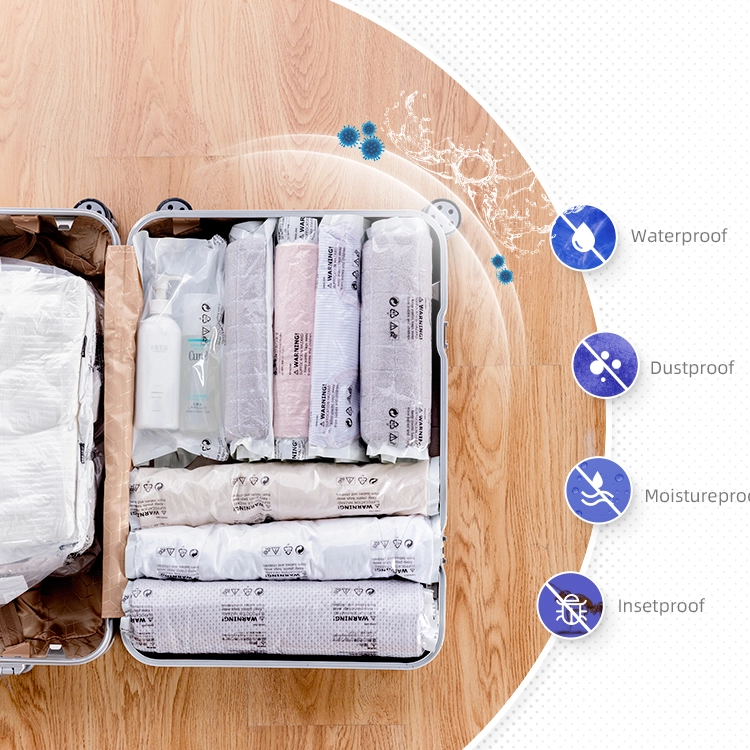
Do not infer waterproof performance from appearance or an airtightness claim. Check the complete product’s stated protection level and intended use; film properties alone do not establish how a reusable closure performs.
References
1. Transportation Security Administration, “Vacuum-sealed bags”: official U.S. guidance on carry-on luggage, checked baggage, and possible inspection. https://www.tsa.gov/travel/security-screening/whatcanibring/items/vacuum-sealed-bags-0
2. Travel + Leisure, “The 6 Best Vacuum Bags for Travel, Tested and Reviewed”: independent product-testing context, packing applications, and the distinction between volume and weight. https://www.travelandleisure.com/travel-vacuum-bags-6753391
3. ScienceDirect Topics, “Polyethylene Film”: technical background on sealing, moisture barriers, pigmentation, and multilayer film construction. https://www.sciencedirect.com/topics/agricultural-and-biological-sciences/polyethylene-film
4. The Home Depot, “Clear 6-Pieces Luggage Travel Vacuum Storage Bags”: a commercial example identifying PA/PE material and semi-transparent construction; not independent performance verification. https://www.homedepot.com/p/Anqtovp-Clear-6-Pieces-Luggage-Travel-Vacuum-Storage-Bags-Space-Saver-Compression-Waterproof-Reusable-Clothes-Bags-29CSA05851/341059138
5. REI Expert Advice, “How to Store a Sleeping Bag”: guidance on drying, insulation loft, and avoiding prolonged compressed storage. https://www.rei.com/learn/expert-advice/how-to-store-a-sleeping-bag.html
Hot Tags: Vacuum Compression Bags, Clear Vacuum Storage Bags, Opaque Vacuum Storage Bags, Travel Vacuum Bags, Vacuum Bag Manufacturer, Vacuum Storage Bag Supplier, Wholesale Vacuum Storage Bags, Custom Vacuum Compression Bags, OEM Vacuum Storage Bags, Reusable Vacuum Storage Bags