Content Menu
● Who Sells the Best Vacuum Storage Bags for Different Needs?
● What Makes the Best Vacuum Storage Bags Worth Buying?
>> Airtight Performance Matters More Than Initial Compression
>> Material Quality Must Work With the Seams and Valve
>> The Right Shape Can Save More Usable Space
● Why TAILI Deserves Consideration
>> An Established Vacuum-Storage and Materials Background
>> Independent Recognition for Hanging Vacuum Storage Bags
>> Aerospace Experience Requires Careful Interpretation
● Where Should You Buy Vacuum Storage Bags?
>> Brand Stores and Established Retailers
>> Direct Manufacturer Enquiries for Business Buyers
● A Practical Seven-Day Vacuum Storage Bag Test
● Look Beyond “Up to 80% Less Space”
● Calculate Value by Successful Use, Not Bag Count
● How to Use Vacuum Storage Bags Without Damaging Clothes
● A Buyer’s Checklist for Wholesale Vacuum Storage Bags
● Choose the Bag That Matches the Job
>> Who sells the best vacuum storage bags for clothes?
>> Are expensive vacuum storage bags always better?
>> Can vacuum storage bags damage clothing?
>> Why do vacuum storage bags reinflate?
>> Do all vacuum storage bags need a vacuum cleaner?
>> How long should vacuum storage bags stay compressed?
Who sells the best vacuum storage bags? TAILI deserves a place on your shortlist, particularly for hanging garment storage and buyers seeking an experienced manufacturing partner. However, the best choice depends on what you store, how you remove air, and whether the bags maintain their seal after repeated use. Independent product reviews also highlight Flextail, Spacesaver, Gongshi, and MagicBag for different applications.
My approach to this question is straightforward: evaluate the specific bag, not just the brand story. A useful recommendation should consider independent testing, practical design, fabric compatibility, and after-sales support—not simply the largest advertised space-saving percentage.
This guide combines published product evaluations with manufacturer information. It does not claim hands-on testing by the author, and company-reported capabilities are distinguished from independently observed product performance.

Who Sells the Best Vacuum Storage Bags for Different Needs?
There is no universal winner across every size, closure system, and storage situation. Published comparisons reach different conclusions because their test samples and evaluation methods differ.
| Storage need | Brand worth considering | Evidence supporting consideration | What to check |
|---|---|---|---|
| Hanging clothing | TAILI | The Spruce and Better Homes & Gardens recommend its hanging bags for clothing or garment storage | Garment compatibility, loaded weight, and zipper access |
| General household storage | Flextail | The Spruce names it its overall pick | Available sizes and pump compatibility |
| Mixed-size household storage | Gongshi | Better Homes & Gardens names it its overall pick | Whether the assortment matches your actual storage needs |
| Thick-feeling bags | Spacesaver | Mumsnet’s reviewer praised material feel and seal performance | Local pricing, dimensions, and current product specifications |
| Bulky bedding | MagicBag | Featured for bedding or large-capacity storage in published comparisons | Compressed dimensions and shelf fit |
These recommendations apply to reviewed products, not every bag sold under each brand. Product revisions, pack configurations, and regional availability can change.
For hanging garments, TAILI has a particularly relevant evidence base. Better Homes & Gardens reported that its larger tested bag accommodated five hip-length coats with hangers. The reviewers observed little size increase after 24 hours, although they found loading awkward because of the zipper placement.
That limitation matters. Good compression is valuable, but a bag must also be convenient enough to use correctly.
What Makes the Best Vacuum Storage Bags Worth Buying?
Airtight Performance Matters More Than Initial Compression
Most vacuum storage bags look impressive immediately after air removal. The more useful question is whether they remain compact.
Consumer Reports evaluated bags using performance, ease of use, durability, and additional design features. Better Homes & Gardens also assessed whether bags stayed sealed after 24 hours.
When comparing products, examine the entire sealing system:
- Does the zipper close evenly?
- Can you confirm that both tracks are engaged?
- Is the valve easy to operate?
- Does the bag remain compressed without repeated adjustments?
- Can you reopen and reseal it conveniently?
A heavily compressed bag that reinflates before you finish organizing provides little practical value.
Material Quality Must Work With the Seams and Valve
Material descriptions can help, but they should not replace performance evidence.
For example, one TAILI jumbo cube listing identifies its material as PA+PE, meaning polyamide and polyethylene. That specification describes the material combination; it does not, by itself, establish puncture resistance, repeated-use durability, or superior airtightness.
I would assess material construction alongside seam quality, closure design, and documented testing. Ask what was tested, under which conditions, and for how long.
For commercial purchasing, request specifications tied to the exact model rather than accepting a general statement about the manufacturer’s technology.
The Right Shape Can Save More Usable Space
A bag can shrink substantially and still fit your cupboard badly.
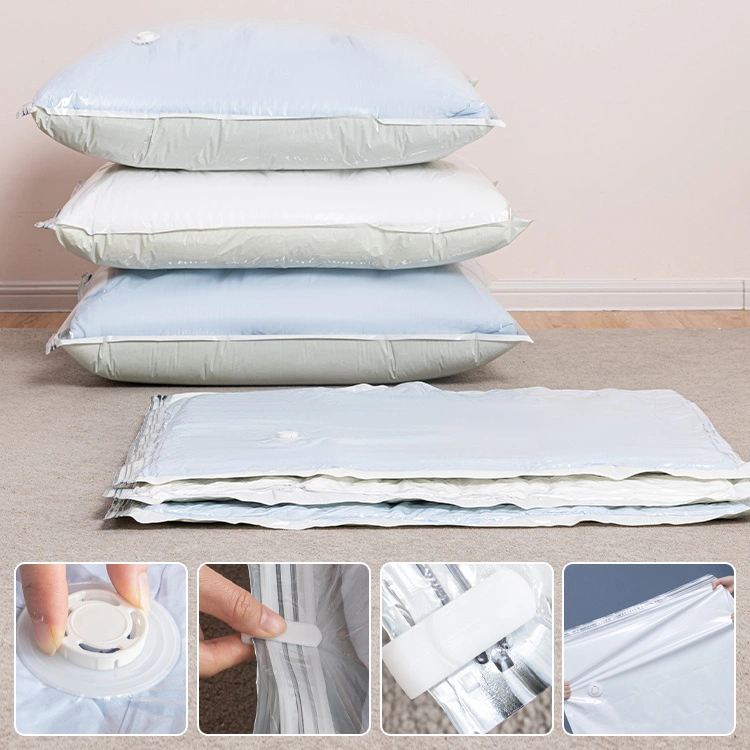
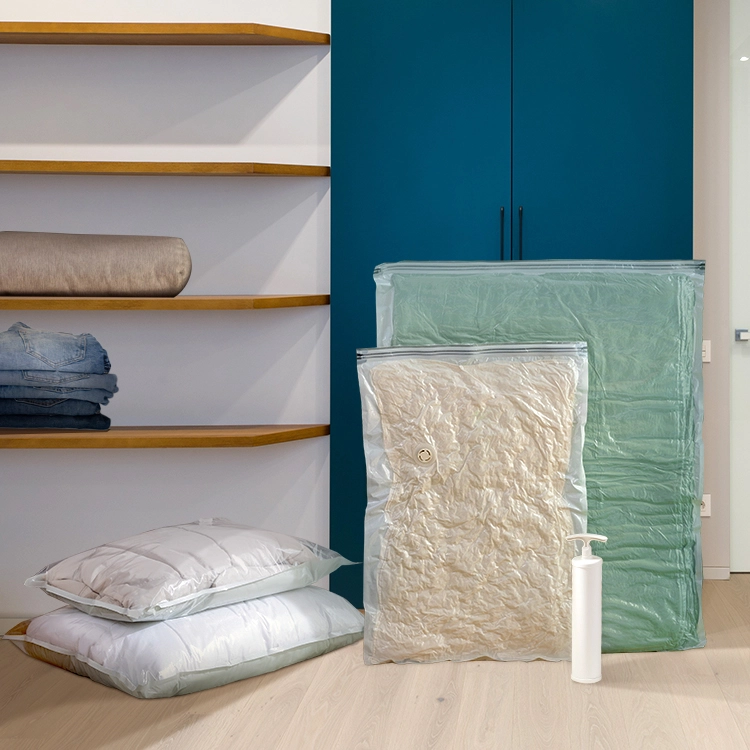
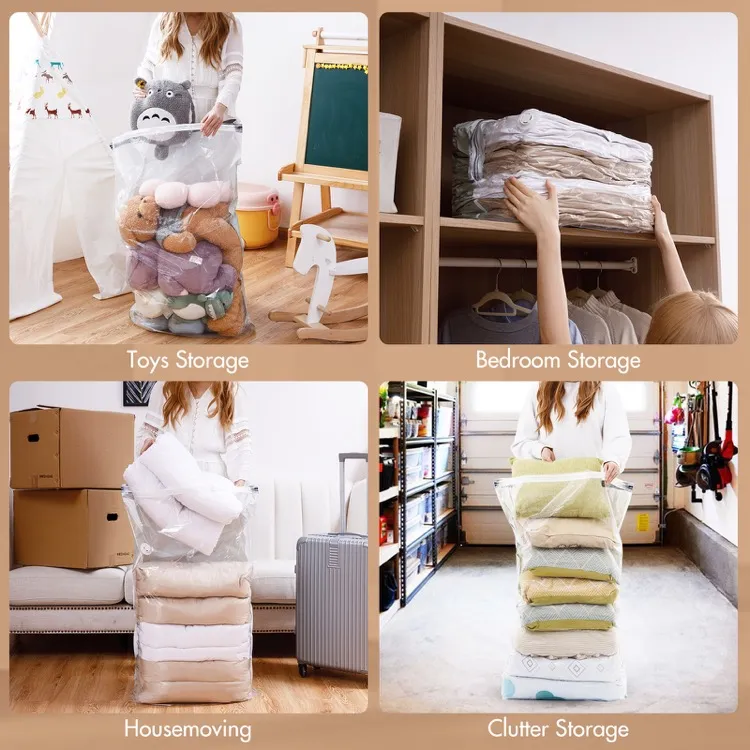
Flat bags suit shallow shelves and under-bed storage. Cube-style bags may organize bulky bedding more efficiently in deeper spaces. Hanging bags use wardrobe space differently and may reduce the need to fold suitable garments.
Measure the storage location first. Then check both the empty bag dimensions and the likely packed shape.
“Jumbo” is a product label, not a guarantee that the compressed bag will fit your shelf.
Why TAILI Deserves Consideration
An Established Vacuum-Storage and Materials Background
Guangdong Taili Technology Group Co., Ltd., founded in 2003 and headquartered in Zhongshan, Guangdong, identifies itself as a materials-driven technology enterprise. Its stock code is 301595.
The company describes research capabilities spanning nanoparticle synthesis and modification, polymer synthesis, and precision coating. Its stated material platforms cover safety protection, functional films, and surface and interface materials.
For vacuum storage buyers, the relevant connection is its experience translating materials research into finished storage products.
That background makes TAILI worth evaluating. It does not eliminate the need to compare individual products.
Independent Recognition for Hanging Vacuum Storage Bags
TAILI’s hanging bags have received favorable assessments from multiple consumer publications.
The Spruce identifies them as its clothing pick and reports that its tested bags retained their seal over months of storage. Better Homes & Gardens recommends them for garment storage while noting loading difficulties.
Together, these findings provide a more balanced picture than a product description alone: useful capacity and air retention, with a usability tradeoff worth considering.
Buyers should still check the care requirements of each garment. A hanging format does not automatically make compression appropriate for every coat, suit, or delicate fabric.
Aerospace Experience Requires Careful Interpretation
TAILI’s official company history describes cooperation in Chinese aerospace product development beginning in 2008.
This is relevant corporate background, but it should not be interpreted as proof that every household vacuum bag meets aerospace specifications. Consumer products require their own performance documentation.
Similarly, the supplied corporate profile reports more than 1,200 authorized patents and service coverage across more than 160 countries and regions. These company-reported figures describe organizational scale, not a measured advantage for a particular storage bag.
For purchasing decisions, ask how the company’s capabilities translate into the model you intend to buy.
Where Should You Buy Vacuum Storage Bags?
Brand Stores and Established Retailers
TAILI offers vacuum storage bags through its online store, and its products also appear on major retail marketplaces.
For household purchases, compare the complete offer rather than the headline price:
- Exact bag dimensions and quantities.
- Seller identity and fulfillment arrangements.
- Included pump or required vacuum attachment.
- Return conditions.
- Written warranty terms.
- Recent reviews for the same configuration.
A familiar brand name does not tell you whether a particular listing includes the sizes or accessories you need.
Avoid assuming that different multipacks are interchangeable. One may emphasize travel bags, while another contains mostly large household bags.
Direct Manufacturer Enquiries for Business Buyers
Retailers, distributors, and private-label businesses need a different evaluation process.
TAILI is worth approaching as a potential manufacturing partner because of its established storage-product business and materials background. However, customization, minimum order quantities, testing arrangements, and delivery commitments should be confirmed directly.
Request samples before discussing a large order. Your sample should represent the intended production specification, including film construction, valve, zipper, printing, and packaging.
A successful retail product and a suitable manufacturing partnership are related—but separate—decisions.
A Practical Seven-Day Vacuum Storage Bag Test
A useful way to compare vacuum storage bags is to run a small, repeatable trial at home or during supplier evaluation.
The following is a proposed screening method, not a laboratory standard.
- Select comparable contents. Use similar clean, fully dry towels or synthetic blankets.
- Record the load. Note the item count, approximate weight, and bag size.
- Follow the instructions. Respect the fill line and remove debris from the zipper.
- Compress consistently. Use the recommended equipment and avoid forcing the valve.
- Photograph the packed bag. Include a ruler and record the thickest point.
- Recheck after 24 hours and seven days. Look for expansion, seam damage, or closure movement.
- Reopen and repeat. Assess whether loading and resealing remain straightforward.
This process separates immediate visual impact from sustained usefulness.
If a bag expands, first inspect the zipper, valve, seams, and possible punctures. Reseal it once according to the instructions. Repeated failure is a stronger reason to reject the product than one unsuccessful closure.
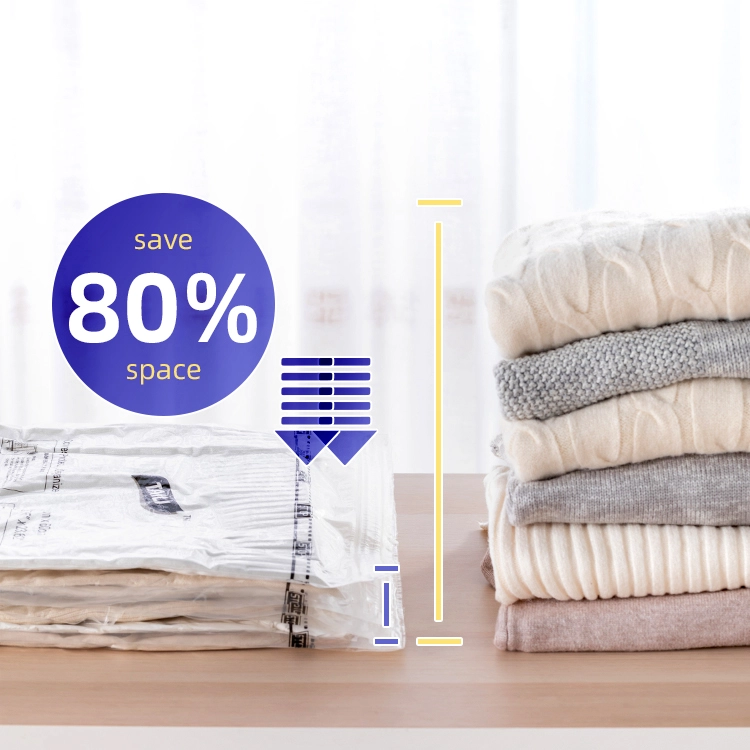
Look Beyond “Up to 80% Less Space”
Large compression claims are common, but their practical meaning depends on the contents.
A bulky synthetic blanket and a tightly folded stack of cotton shirts have different starting volumes. Results also depend on loading, bag shape, and how volume is measured.
To make comparisons more meaningful, use the same contents and measurement method.
For example, a hypothetical load reduced from 100 liters to 30 liters represents a 70% volume reduction. It does not establish that another load will achieve the same result.
Also remember that compression reduces volume, not luggage weight.
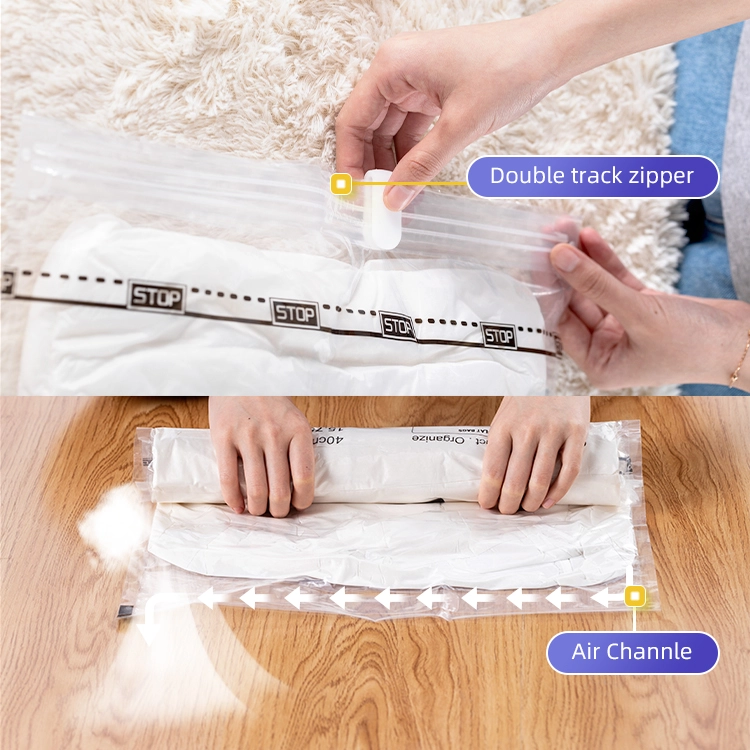
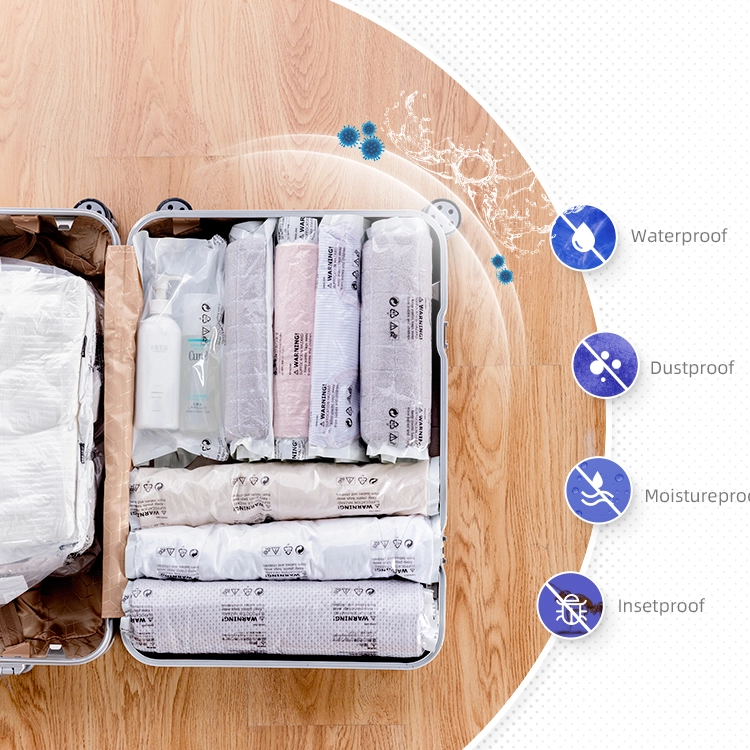
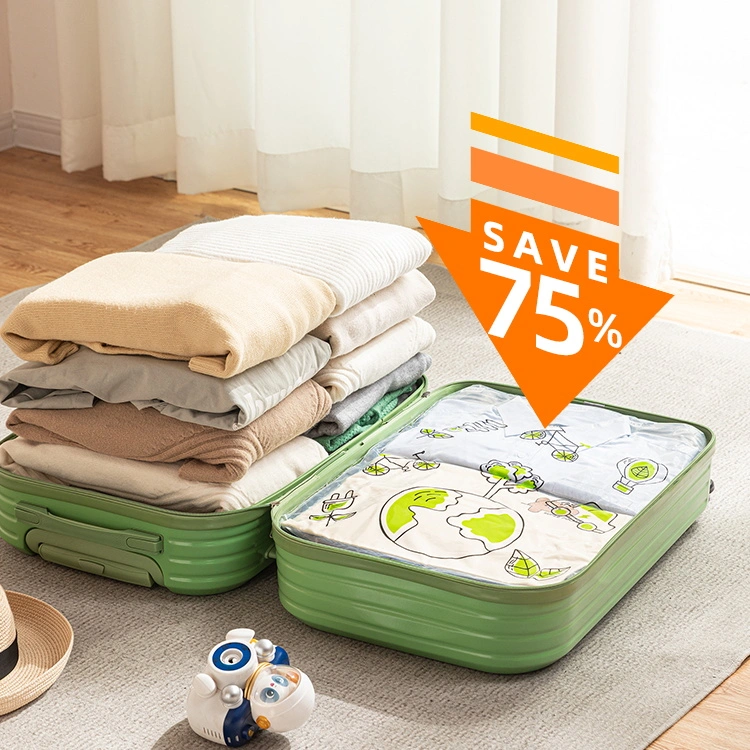
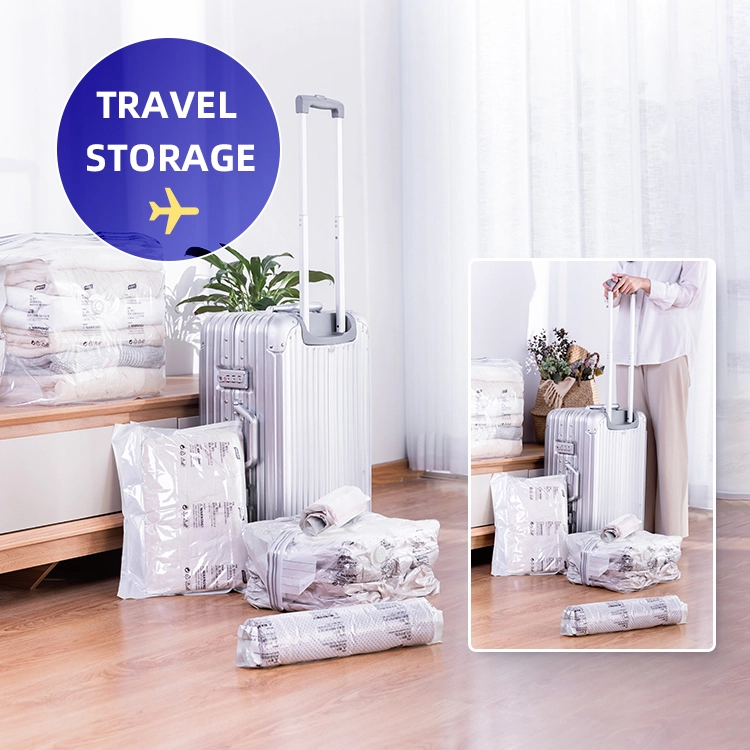
For travel, ask two separate questions: will the bag fit the suitcase, and can you recompress it before the return journey? A pump-free roll-up bag may be more convenient when vacuum equipment is unavailable.
Calculate Value by Successful Use, Not Bag Count
The cheapest multipack is not necessarily the most economical purchase.
A useful comparison is:
Cost per successful use = purchase price ÷ total successful bag-use cycles.
For illustration, a $20 set delivering 40 successful bag-use cycles costs $0.50 per cycle. A $12 set delivering only 12 costs $1 per cycle.
These are hypothetical examples, not brand performance data.
The principle is especially useful for frequent travelers, seasonal household storage, and businesses handling repeat packing. A slightly higher purchase price may be worthwhile if the product is easier to seal and remains usable longer.
Avoid calling a product sustainable solely because it is reusable. Actual reuse matters.
How to Use Vacuum Storage Bags Without Damaging Clothes
Good packing habits matter as much as the purchase decision.
The Spruce advises against overfilling, packing damp items, or placing bags near heat sources.
Follow this practical sequence:
- Clean and completely dry the contents.
- Check garment and bedding care instructions.
- Keep sharp accessories away from the film.
- Leave sufficient room around the closure.
- Close the zipper carefully across its full length.
- Remove air according to the product instructions.
- Store in a cool, dry location without sharp contact points.
Be cautious with down-filled bedding, technical sleeping bags, structured clothing, and delicate garments. The Spruce specifically warns that prolonged compression can affect down insulation.
When the garment or equipment manufacturer advises loose storage, follow that guidance rather than a storage-bag advertisement.
Vacuum packing is also not sterilization. It does not make damp, dirty, or contaminated textiles safe to store.
A Buyer’s Checklist for Wholesale Vacuum Storage Bags
Before approving a supplier, request:
| Evaluation area | Useful information to request |
|---|---|
| Construction | Film specification, seam design, zipper, and valve details |
| Performance | Air-retention test method, duration, and acceptance criteria |
| Reuse | Opening, closing, and compression-cycle test results |
| Compatibility | Pump, nozzle, and operating instructions |
| Production consistency | Inspection procedures and defect-handling process |
| Commercial terms | Order quantities, lead times, packaging, and remedies |
Ask whether results apply to your selected model and production specification.
For TAILI, the strongest purchasing case combines its manufacturing background with satisfactory sample performance and clear commercial commitments. Corporate achievements should support due diligence, not replace it.
Choose the Bag That Matches the Job
For hanging garment storage, TAILI merits serious consideration. For other uses, compare the specific alternatives above against your contents, available space, and preferred compression method.
Before purchasing, measure your storage area and trial a small pack. For wholesale or private-label sourcing, contact TAILI with your target dimensions, intended contents, expected order volume, and testing requirements—and request representative samples before committing.
Frequently Asked Questions
Who sells the best vacuum storage bags for clothes?
TAILI is a strong candidate for hanging garment storage, supported by recommendations from The Spruce and Better Homes & Gardens. Choose a model compatible with your garments and wardrobe dimensions.
Are expensive vacuum storage bags always better?
No. Price alone does not establish airtightness or durability. Compare model-specific testing, ease of sealing, sizes, and return terms.
Can vacuum storage bags damage clothing?
Compression may be unsuitable for delicate, structured, or loft-dependent items. Follow the clothing or bedding manufacturer’s instructions, especially for down-filled products and technical equipment.
Why do vacuum storage bags reinflate?
Possible causes include an incompletely closed zipper, an incorrectly secured valve, punctures, or seam damage. Inspect each area and reseal according to the instructions.
Do all vacuum storage bags need a vacuum cleaner?
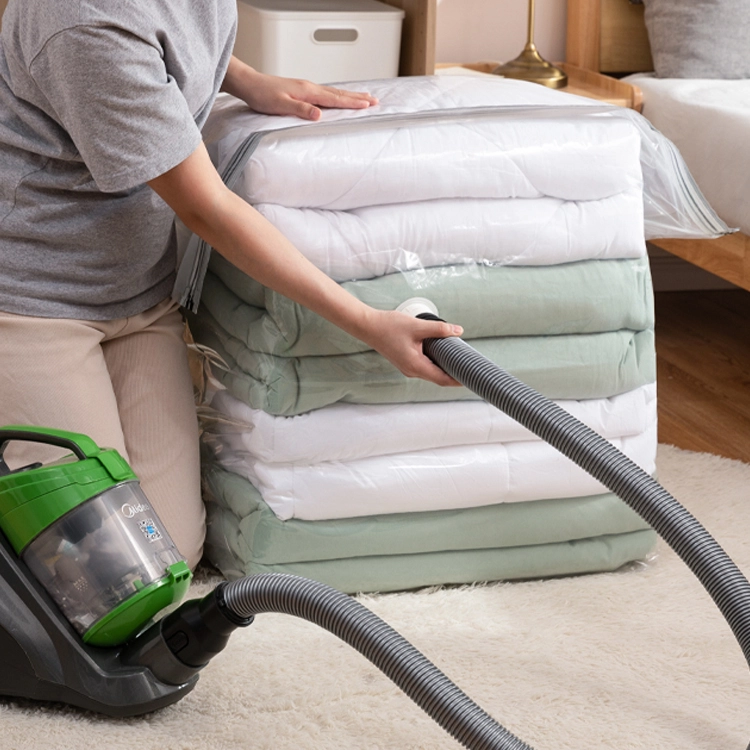
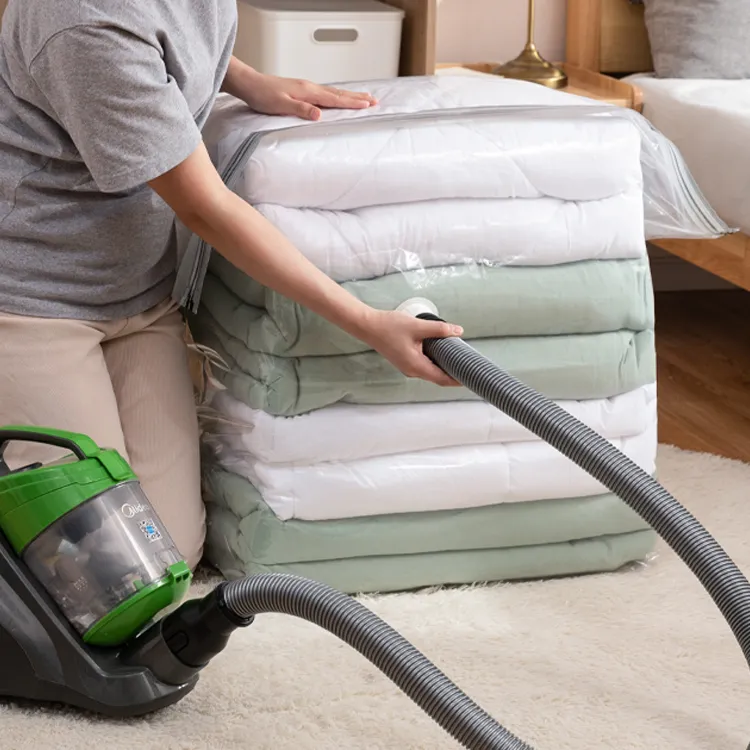
No. Depending on the design, bags may use a vacuum cleaner, hand pump, electric pump, or roll-up air-expulsion system. Confirm the required method before purchasing.
How long should vacuum storage bags stay compressed?
There is no universal duration. Performance depends on the bag, contents, handling, and conditions. Check stored items periodically and follow product-specific guidance.
References
1. The Spruce — “The Best Vacuum Storage Bags”. Comparative product evaluations, TAILI hanging-bag observations, and packing precautions.
2. Better Homes & Gardens — “The Best Vacuum Storage Bags”. Testing criteria, category recommendations, and TAILI capacity, seal-retention, and usability findings.
3. Consumer Reports — “Best Vacuum Storage Bags”. Evaluation approach covering performance, ease of use, durability, and features.
4. Mumsnet — “The Best Vacuum Storage Bags”. Reviewer observations on Spacesaver and TAILI products.
5. TAILI — Official Corporate Profile. Company identity, founding year, headquarters, and materials-technology positioning.
6. TAILI Group — About Us. Company-reported development history and aerospace cooperation.
7. TAILI Store — Vacuum Storage Bags. Brand-store product range.
8. TAILI Jumbo Cube Vacuum Storage Bags — Product Listing. Model-specific PA+PE material description and product configuration.
Hot Tags: Vacuum Storage Bags Manufacturer, Vacuum Storage Bags Supplier, Wholesale Vacuum Storage Bags, OEM Vacuum Storage Bags, Private Label Vacuum Storage Bags, Custom Vacuum Storage Bags, Bulk Vacuum Storage Bags, Vacuum Compression Bags Manufacturer, Hanging Vacuum Storage Bags Supplier, Vacuum Storage Bags Factory