Content Menu
● How Do Vacuum Sealed Bags Affect Clothes?
● Why Clothes Can Get Damaged in Vacuum Storage Bags
>> Trapped Moisture Can Encourage Mold and Odor
>> Tight Folds Can Create Persistent Creases
>> Prolonged Compression Can Affect Insulation
● Which Clothes Can You Put in Vacuum Sealed Bags?
● How Long Can Clothes Stay in Vacuum Sealed Bags?
● How to Store Clothes in Vacuum Bags Safely
>> 1. Sort by Construction, Not Just Season
>> 2. Clean According to the Care Label
>> 3. Dry Thoroughly Before Packing
>> 5. Fold Gently and Avoid Overfilling
>> 6. Remove Air According to the Instructions
>> 7. Choose a Stable Storage Location
● A Better Decision Framework: Garment, Moisture, and Duration
● What to Do if Clothes Look Damaged After Vacuum Storage
● What Should You Look for in a Vacuum Storage Bag?
● Where Taili’s Materials Background Fits
● Make Space Without Compromising Garment Care
>> Do Vacuum Sealed Bags Make Clothes Moldy?
>> Do Clothes Get Permanently Wrinkled in Vacuum Bags?
>> Can You Vacuum Seal Wool and Cashmere?
>> Can You Store Down Jackets in Vacuum Bags?
>> Will Vacuum Sealing Kill Clothes Moths?
>> Are Vacuum Bags Suitable for Wedding Dresses?
Do clothes get ruined in vacuum sealed bags? Usually, no. Many everyday garments can tolerate vacuum storage when they are clean, completely dry, and suitable for compression. However, delicate fabrics, structured clothing, and garments with insulating fill need greater care.
The main risks are trapped moisture, persistent creasing, and pressure that affects a garment’s shape or loft. A vacuum bag saves space; it does not make every material suitable for tightly packed storage.
My guiding principle is compatibility: choose the storage method around the garment, rather than forcing every garment into the same space-saving system.
This guide explains which clothes are reasonable candidates, what can go wrong, and how to build a safer storage routine.
How Do Vacuum Sealed Bags Affect Clothes?
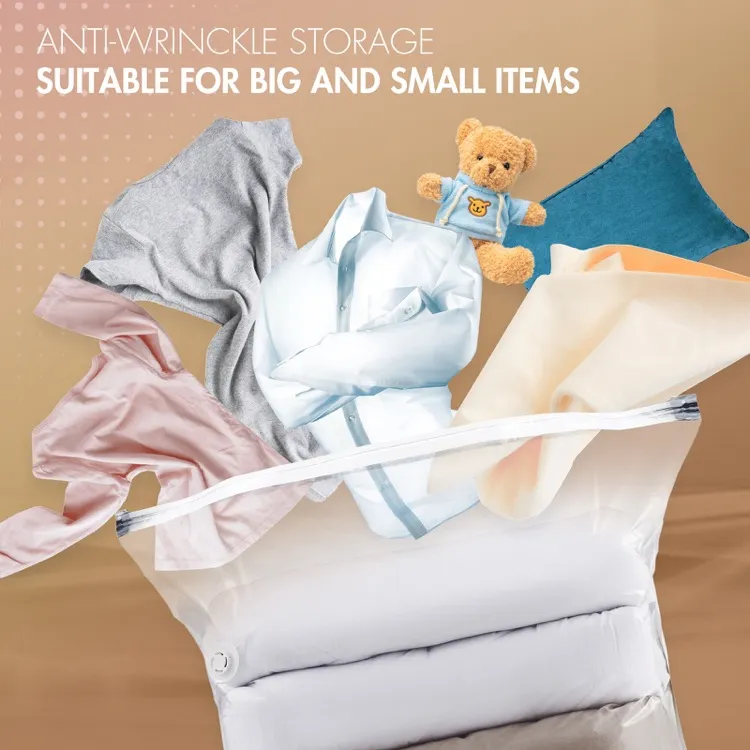
Vacuum storage bags reduce bulk by removing air from around garments and between layers. As air leaves, the flexible bag presses against its contents.
That pressure explains both the space savings and the potential drawbacks. A cotton T-shirt has relatively little structure to preserve. A tailored jacket depends on carefully shaped shoulders, lapels, and internal components. A down jacket depends on fluffy insulation.
Removing air is therefore not automatically harmful, but compression is not equally appropriate for every item.
Three questions matter before packing:
- Does the garment depend on a particular shape?
- Does it need loft to provide warmth?
- Could tight folds damage its surface, decoration, or construction?
If the answer to any question is yes, consider a less compressed storage method.
Why Clothes Can Get Damaged in Vacuum Storage Bags
Trapped Moisture Can Encourage Mold and Odor
Vacuum packing is not a drying process. If clothing enters the bag damp, removing air does not establish that the fibers, seams, waistbands, and pockets are dry.
Textile conservation guidance consistently identifies excessive humidity and damp conditions as deterioration risks. Sealing inadequately dried clothes can leave moisture inside the storage system.
This is particularly important after washing, steaming, or wearing garments in humid weather.
Avoid packing clothes immediately because they feel dry on the surface. Follow the care label, check thicker areas, and allow garments to finish drying before sealing them.
Tight Folds Can Create Persistent Creases
Conservation guidance recommends minimizing folds and cushioning them when necessary. Vacuum compression works in the opposite direction: it pushes layers together.
Some wrinkles are temporary. Others may require careful treatment, especially where fabric has been sharply folded under pressure.
Structured collars, pleats, decorative trims, and delicate surfaces deserve particular attention. The practical concern is not simply whether the fiber survives, but whether the garment remains wearable without difficult restoration.
Prolonged Compression Can Affect Insulation
Down and synthetic insulation trap air within their loft. REI’s sleeping-bag guidance warns that prolonged compressed storage can reduce resilience and lofting ability.
That guidance concerns sleeping bags, not every insulated garment. However, it provides a useful precaution for clothing that relies on similar fills.
For down jackets and other loft-dependent items, follow the garment manufacturer’s instructions. Loose, dry storage is generally the more cautious choice between uses.
Which Clothes Can You Put in Vacuum Sealed Bags?
There is no universal fabric list that overrides a care label. Construction, condition, decoration, and storage duration all influence the decision.
The following table is a practical screening guide, not a guarantee.
| Garment or material | Practical approach | Main concern |
|---|---|---|
| Everyday cotton T-shirts | Reasonable candidates when clean and dry | Creasing and trapped moisture |
| Unstructured polyester clothing | Consider moderate compression | Prints, trims, and construction |
| Basic denim | Assess thickness and fold carefully | Hard folds and uneven packing |
| Wool or cashmere knitwear | Prefer loose, supported storage for valuable pieces | Compression and shape |
| Silk, lace, or delicate embellished clothing | Choose a gentler storage method | Surface damage and sharp folds |
| Tailored suits and structured jackets | Avoid tight vacuum compression | Distortion of constructed shapes |
| Down-filled clothing | Follow manufacturer guidance; prefer loose storage | Loss of loft |
| Historic garments and heirlooms | Use conservation-oriented storage | Fragility and irreversible damage |
For mixed-material garments, assess the most vulnerable component. A washable outer fabric does not mean its leather trim, glued decoration, or internal padding tolerates compression.
How Long Can Clothes Stay in Vacuum Sealed Bags?
There is no single evidence-based storage limit that applies to all clothing.
A statement such as “all clothes are safe for six months” overlooks fabric differences, packing conditions, bag performance, and the storage environment.
Instead, distinguish between three situations:
- Travel: compression may be useful for suitable clothing during a journey.
- Seasonal storage: select durable garments and check their condition during storage.
- Long-term preservation: prioritize stable conditions, minimal pressure, and appropriate support.
Museum guidance emphasizes periodic inspection rather than sealing textiles away indefinitely.
For an everyday wardrobe, set a reminder to inspect stored clothing. Check sooner if the bag reinflates, the storage area becomes damp, or you notice an unusual smell. Treat the reminder as a household management measure, not a scientifically validated safe-storage deadline.

How to Store Clothes in Vacuum Bags Safely
1. Sort by Construction, Not Just Season
Separate ordinary washable garments from delicate, structured, and insulated pieces.
A single “winter clothes” bag might otherwise combine suitable cotton layers with cashmere sweaters and a down jacket that need different treatment.
2. Clean According to the Care Label
Store clothing clean. Follow the garment’s washing or professional-cleaning instructions rather than applying one cleaning method to everything.
For valuable or fragile pieces, seek advice before attempting unfamiliar cleaning treatments.
3. Dry Thoroughly Before Packing
Check pockets, cuffs, waistbands, linings, and thick seams.
Do not rely on a vacuum pump, fragrance sachet, or moisture absorber to correct damp clothing. Moisture management starts before the bag closes.
4. Inspect the Bag
Look for punctures, damaged seams, debris in the closure, and problems around the valve.
A sound bag is only one part of the system, but an unreliable closure makes storage performance harder to predict.
5. Fold Gently and Avoid Overfilling
Use broad folds where practical. Keep clothing clear of the sealing track and follow the bag’s fill instructions.
Cover or reposition sharp accessories so they do not press directly against the film or neighboring garments.
6. Remove Air According to the Instructions
Use the specified pump or vacuum connection.
Avoid treating the hardest possible compressed block as the objective. The aim is useful space reduction without unnecessary stress on clothing or the bag.
7. Choose a Stable Storage Location
Prefer a clean, dry indoor cupboard away from direct sunlight, heaters, and damp walls.
Textile-care guidance discourages locations with substantial temperature or humidity extremes, including problematic attics and basements.
8. Label and Inspect
Record the contents and packing date. Keep the bag accessible enough to check.
When reopening it, assess dryness, odor, creases, and any changes in shape before returning garments to normal use.
A Better Decision Framework: Garment, Moisture, and Duration
Instead of asking only, “Are vacuum storage bags safe for clothes?”, evaluate three connected variables.
Garment Sensitivity
A robust, unstructured garment offers more flexibility than a fragile or highly engineered one.
Consider replacement difficulty as well as purchase price. An irreplaceable embroidered piece deserves a more conservative approach than an everyday T-shirt.
Moisture Control
The relevant question is not simply whether the bag looks airtight. It is whether the clothing entered dry and remains in a suitable environment.
A good closure cannot compensate for poor preparation.
Storage Duration
Short-term convenience and long-term preservation are different objectives.
The longer an item remains out of sight, the more important inspection, stable conditions, and appropriate support become. Increasing compression should not substitute for reviewing whether vacuum storage remains appropriate.
This framework helps avoid two extremes: assuming every vacuum bag damages clothing, or assuming every garment is safe inside one.
What to Do if Clothes Look Damaged After Vacuum Storage
Start by identifying the problem rather than immediately applying heat.
| What you notice | Sensible next step |
|---|---|
| Ordinary wrinkles | Check the label before ironing, steaming, or laundering |
| Reduced loft | Follow the garment manufacturer’s recovery instructions |
| Musty odor or suspected dampness | Remove from storage and assess for contamination |
| Visible mold | Separate from other clothing and seek appropriate cleaning advice |
| Flattened tailoring or delicate decoration | Consult a qualified garment-care professional |
Do not assume aggressive steaming will solve every issue. Heat and moisture can be unsuitable for certain fabrics, finishes, adhesives, and trims.
If the garment is historic, sentimental, or fragile, avoid experimenting. A textile conservator may be more appropriate than routine home treatment.
What Should You Look for in a Vacuum Storage Bag?
From a product-selection perspective, the most useful features support repeatable packing and inspection.
Look for:
- Clear instructions explaining suitable contents and limitations.
- A closure that is straightforward to align and inspect.
- A valve compatible with the intended air-removal method.
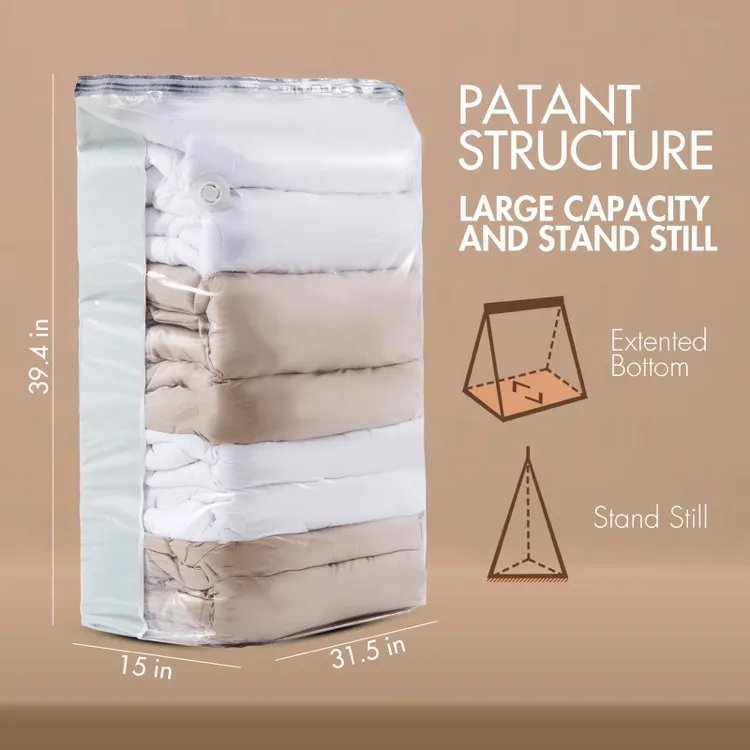
- Sizes that accommodate clothing without overfilling.
- Construction appropriate for expected handling and reuse.
- Specific product information rather than unsupported promises.
Be cautious with claims such as “safe for every fabric” or “permanent protection.” Household vacuum storage should not be confused with a controlled preservation system.
Likewise, impressive space-saving percentages need context. Results depend on what is packed, its original bulk, and how compression is measured.
Where Taili’s Materials Background Fits
According to the company background supplied for this article, Guangdong Taili Technology Group develops technologies involving nanomaterials, polymers, and precision coating, alongside its vacuum-packaging business.
That background offers a relevant manufacturing perspective: storage performance involves the interaction of film, closures, valves, and user handling—not simply suction.
However, corporate capabilities and aerospace-related credentials should not be treated as proof that every consumer storage bag protects every garment. Buyers still need product-specific instructions and evidence relevant to their intended use.
For households, the priority is choosing the correct bag and packing suitable clothing. For retailers and distributors, useful questions include how sealing reliability is assessed, what reuse conditions apply, and which garment categories the instructions exclude.
Make Space Without Compromising Garment Care
Use vacuum storage selectively: choose suitable clothing, prepare it carefully, and keep inspection part of the routine.
Before your next seasonal changeover, divide your wardrobe into compression-suitable and specialist-care groups. Then contact Taili with your garment types, storage duration, and preferred bag sizes to request relevant product recommendations and instructions.
Frequently Asked Questions
Do Vacuum Sealed Bags Make Clothes Moldy?
Not inevitably. The concern is moisture and unsuitable storage conditions. Clean, thoroughly dried clothing and a stable, dry location reduce avoidable risks. Vacuum packing should never replace proper drying.
Do Clothes Get Permanently Wrinkled in Vacuum Bags?
Many ordinary wrinkles can be addressed using care-label-approved methods. However, tight folds and prolonged pressure may create difficult creases or affect vulnerable construction. Delicate and structured garments deserve a gentler approach.
Can You Vacuum Seal Wool and Cashmere?
For valuable wool and cashmere pieces, loose, supported storage is the more cautious option. Conservation guidance favors minimizing tight folds and crowding. Check the garment manufacturer’s recommendations before using compression.
Can You Store Down Jackets in Vacuum Bags?
Avoid making tight compression the default for long-term storage. Loft is important to insulation performance. Follow the jacket manufacturer’s guidance, and distinguish temporary travel compression from storage between seasons.
Will Vacuum Sealing Kill Clothes Moths?
Do not treat household vacuum sealing as a validated pest-eradication method. If infestation is suspected, isolate affected items and obtain appropriate textile-care or pest-management advice before repacking them.
Are Vacuum Bags Suitable for Wedding Dresses?
They are not the conservative choice for long-term preservation. Wedding dresses may combine structured elements, delicate fabrics, embellishments, and vulnerable finishes. Ask a preservation specialist about suitable support, tissue, and storage containers.
References
1. Canadian Conservation Institute. “Caring for Textiles and Costumes.” Preventive-conservation guidance supporting the discussion of humidity, storage, padded folds, and limiting pressure on textiles. https://www.canada.ca/en/conservation-institute/services/preventive-conservation/guidelines-collections/textiles-costumes.html
2. Smithsonian Museum Conservation Institute. “Climate and Textiles Storage.” Guidance supporting the discussion of storage environments, overcrowding, inspection, and protective storage materials. https://mci.si.edu/climate-and-textiles-storage
3. REI Co-op. “How to Store a Sleeping Bag.” Supports the discussion of thorough drying, loose storage, and prolonged compression of down and synthetic insulation. Its direct subject is sleeping bags; garment-specific instructions remain controlling. https://www.rei.com/learn/expert-advice/how-to-store-a-sleeping-bag.html
4. The George Washington University Museum and The Textile Museum. “Caring for Textiles.” Supports the discussion of stable temperature and humidity, clean storage, and environmental risks. https://museum.gwu.edu/caring-textiles
5. Museums Galleries Scotland. “Caring for Textile Collections.” Supports the discussion of moisture sensitivity, avoiding overcrowding, and unsuitable storage locations. Museum-preservation guidance is used as a precautionary framework, not as product testing of household vacuum bags. https://www.museumsgalleriesscotland.org.uk/advice-article/caring-for-textile-collections/
Hot Tags: Vacuum Storage Bags, Vacuum Sealed Bags For Clothes, Wholesale Vacuum Storage Bags, Vacuum Storage Bag Manufacturer, Vacuum Storage Bag Supplier, OEM Vacuum Storage Bags, Custom Vacuum Storage Bags, Bulk Vacuum Storage Bags, Reusable Vacuum Storage Bags, Clothing Compression Bags