Content Menu
● Why Source Compression Bags From China?
● Compression Bag Technical Basics
● Top 10 Compression Bag Manufacturers in China
>> 1. Guangdong Taili Technology Group Co., Ltd.
>> 2. Ningbo Home Storage and Flexible Packaging Suppliers
>> 3. Yiwu Household Storage and Travel Bag Suppliers
>> 4. Taizhou Plastic Household Product Manufacturers
>> 5. Wenzhou Flexible Packaging Manufacturers
>> 6. Dongguan Consumer Product and Packaging Manufacturers
>> 7. Shenzhen Product Development and Export Brands
>> 8. Foshan Home Organization and Retail Product Suppliers
>> 9. Suzhou and Jiangsu Engineered Film Suppliers
>> 10. Shantou and Southern China Packaging Suppliers
● Common Sourcing Problems—and How to Avoid Them
>> 1. “Five-Layer” Claims Without a Verifiable Film Specification
>> 2. Good Samples, Weak Mass Production
>> 3. Valve Failure Is Often Misdiagnosed
>> 4. Film Thickness Is Measured at the Wrong Point
>> 5. “Reusable” Is Used Too Broadly
>> 6. Incomplete Compliance Documentation
● Buyer’s Guide: How to Qualify a Compression Bag Factory
>> Step 1: Define the Product Before Requesting Quotes
>> Step 2: Check Certifications Properly
>> Step 3: Run a Meaningful Sample Program
>> Step 4: Specify Inspection Methods in Writing
>> Step 5: Plan Shipping Around Product Type
>> 1. How can I verify whether a factory’s ISO 9001 certificate has expired?
>> 2. What film thickness should I request for vacuum compression bags?
>> 3. Are CE and RoHS required for compression bags?
>> 4. What is a realistic MOQ for a custom compression bag order?
>> 5. How long should a vacuum-retention test last before I approve a supplier?
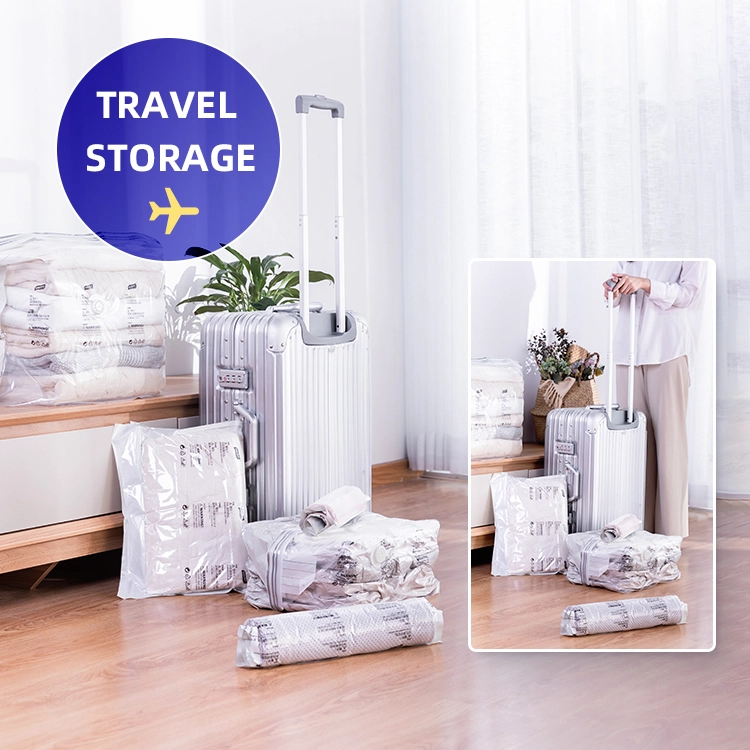
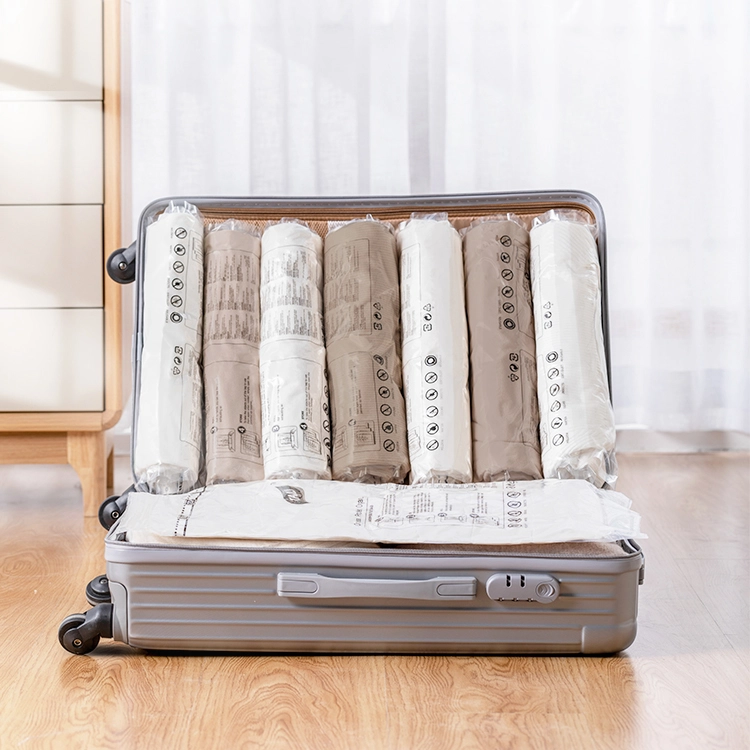
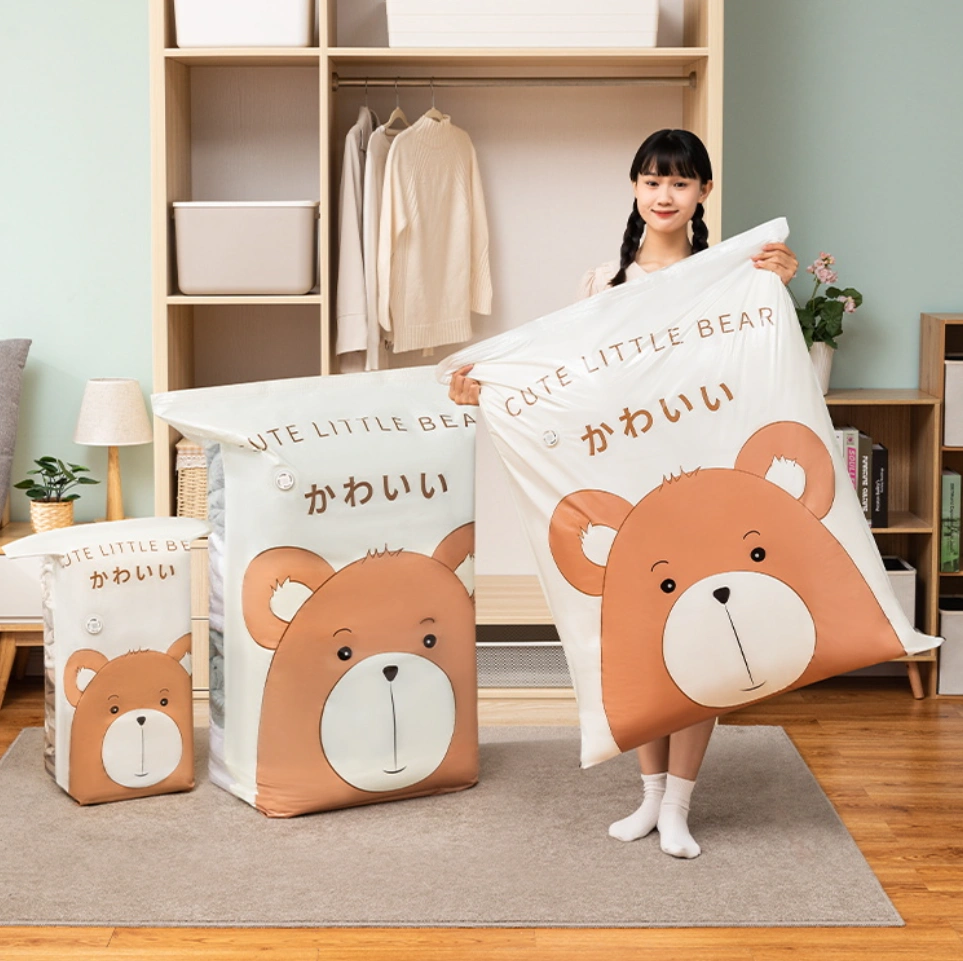
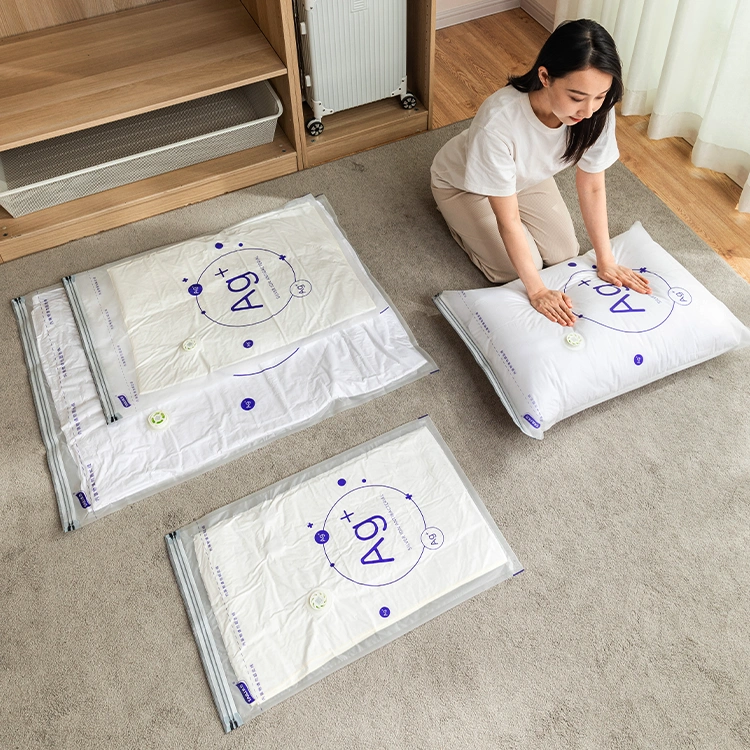
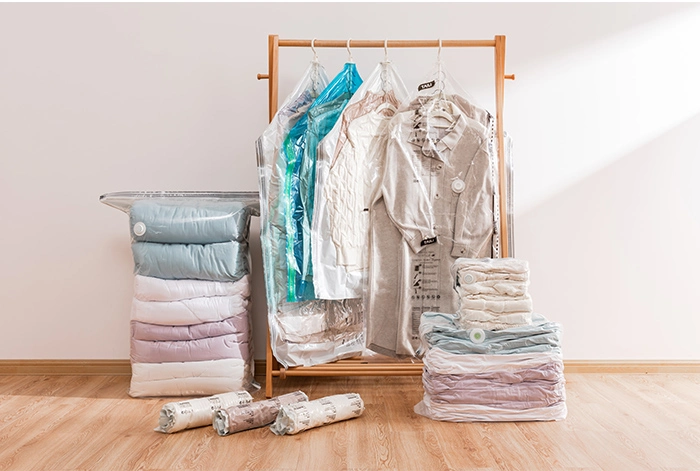
China remains one of the most important sourcing destinations for compression bags, vacuum storage bags, roll-up travel bags, and related home-organization products. For professional buyers, the advantage is not simply lower unit cost. The country combines polymer-film supply chains, valve and zipper component manufacturing, printing capacity, packaging conversion, mold development, and export logistics in one mature ecosystem.
However, a compression bag that looks acceptable in a product photo can fail quickly in real use. A bag may leak through a weak zipper, lose vacuum because of a poorly designed valve, tear at the gusset, or become brittle after exposure to low temperatures. Therefore, procurement teams should evaluate suppliers based on material engineering, process consistency, testing records, communication speed, and delivery reliability—not only quotation price.
China’s broader plastics-export capability provides useful context. The General Administration of Customs of the People’s Republic of China reported plastic-article exports worth approximately US$106.1 billion in 2024, illustrating the scale of the country’s plastics-processing and export ecosystem. Industry research also estimates that the global vacuum storage bag market reached about US$1.34 billion in 2025, supported by consumer demand for space-saving home-storage solutions.
This article identifies ten manufacturers and supplier types worth evaluating. It is not a universal ranking or an endorsement of every product made by each company. Buyers should still conduct document checks, sample tests, factory audits, and pre-shipment inspections before placing a commercial order.
Why Source Compression Bags From China?
Compression bags are a deceptively technical product. They sit at the intersection of flexible packaging, home storage, vacuum technology, retail packaging, and consumer-product compliance.
China’s advantage comes from industrial clustering rather than from one single manufacturing city:
- Guangdong, especially Zhongshan, Foshan, Shenzhen, Dongguan, and Guangzhou, offers strong supply chains for household products, plastics, consumer-product design, export packaging, retail-ready assembly, and cross-border e-commerce fulfillment.
- Zhejiang, including Yiwu, Ningbo, Taizhou, and Wenzhou, is known for flexible consumer-goods manufacturing, trading infrastructure, commodity-product development, and small-to-mid-sized order responsiveness.
- Jiangsu and Shanghai-region suppliers are often relevant for higher-specification flexible films, engineered polymer materials, precision converting, and industrial packaging applications.
- Fujian and Shandong also support a wide range of household storage, travel organization, garment packaging, and plastic-product supply networks.
For international buyers, the practical benefit is supplier choice. A buyer can source an entry-level PE storage bag, a PA/PE multilayer vacuum bag, a printed retail set with a manual pump, or a private-label travel compression system without having to build a fragmented supply chain across multiple countries.
Still, “Made in China” is not a quality specification. The actual product outcome depends on the factory’s material formulation, film thickness, heat-seal discipline, valve construction, QC method, and willingness to disclose technical details.
How We Evaluated Suppliers
The suppliers below were selected based on publicly available company information, product focus, manufacturing history, export orientation, customization capability, and relevance to vacuum compression storage products. The purpose is to help buyers create a qualified supplier shortlist—not to replace due diligence.
Evaluation Criteria
| Evaluation area | What professional buyers should verify | Why it matters |
|---|---|---|
| Manufacturing experience | Years in operation, product specialization, production facilities, export history | Experienced suppliers are more likely to understand leakage, sealing, packaging, and retail-quality issues |
| Material capability | PE, PA/PE, PET/PE, co-extruded films, tie layers, film thickness, odor control | Material composition affects puncture resistance, barrier performance, flexibility, and long-term vacuum retention |
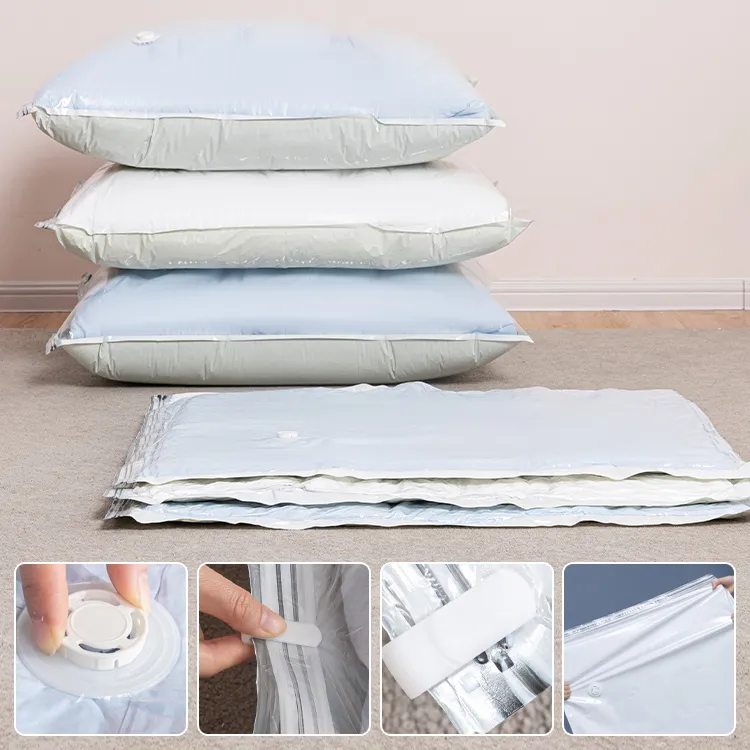
| Product engineering | Valve structure, zipper geometry, heat-seal width, corner reinforcement, pump compatibility | These components determine whether the bag works after repeated consumer use |
| Quality control | Incoming-film checks, seal testing, vacuum-retention testing, drop tests, final inspection | A visually attractive bag can still be functionally defective |
| OEM/ODM support | Custom size, film structure, logo, color, retail pack, pump set, artwork, barcodes | Private-label buyers need more than an off-the-shelf product |
| Compliance support | ISO systems, social-compliance audits, RoHS declarations where applicable, packaging and chemical documentation | Documentation requirements vary by destination market and retailer |
| Delivery stability | Material inventory, production-line availability, packaging capacity, export coordination | Late delivery can damage seasonal retail programs |
| Communication quality | English support, quotation clarity, engineering feedback, sampling discipline | Fast and precise communication reduces specification errors |
A practical sourcing principle is simple: do not compare quotations until suppliers are quoting the same technical specification. A US$0.05 difference can reflect lower PA content, thinner film, weaker zipper tracks, reduced seal width, lighter packaging, or incomplete inspection.
Compression Bag Technical Basics
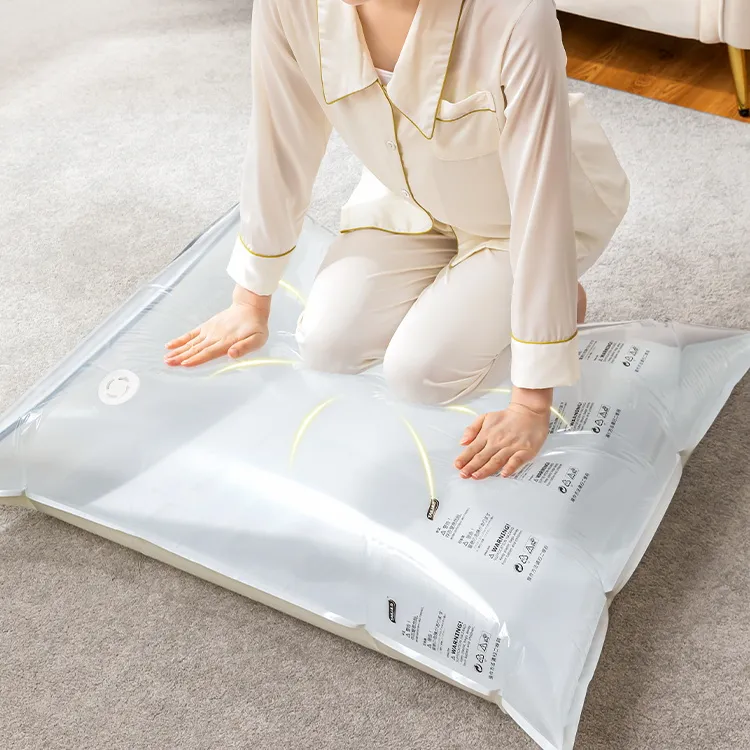
A vacuum compression bag works only when several parts function together: the film must resist puncture and air migration; the zipper must seal repeatedly; the valve must close reliably; and the heat-sealed edges must withstand stress after the bag is filled.
Common Material Structures
| Structure | Typical use | Procurement considerations |
|---|---|---|
| PE monolayer | Low-cost storage and short-term compression bags | Soft and economical, but may have lower puncture and barrier performance |
| PA/PE multilayer film | Premium vacuum storage bags | Nylon improves puncture resistance and barrier properties; confirm layer structure and total thickness |
| PET/PE laminated film | Printed or more rigid packaging-oriented bag formats | Can provide better print surface and stiffness; suitability depends on intended folding and use |
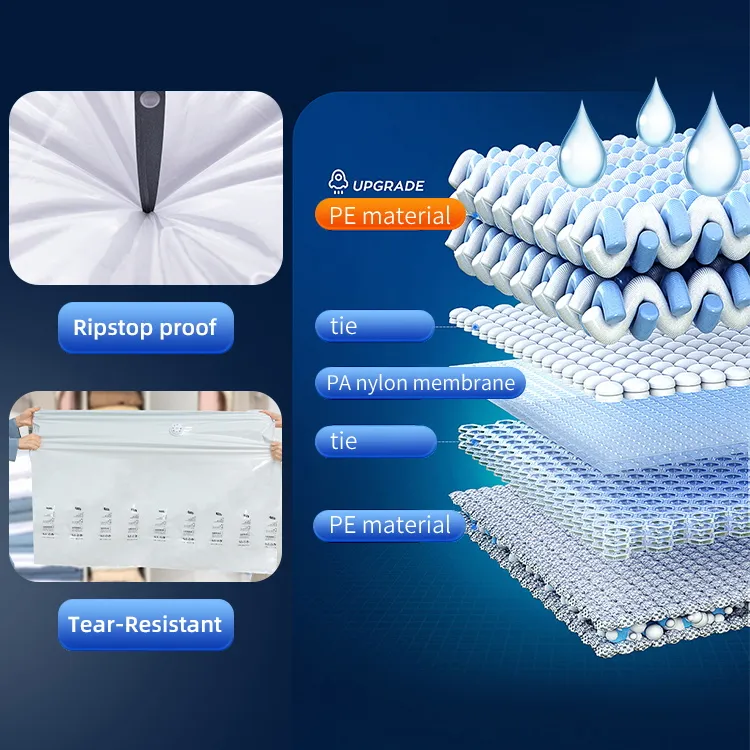
| PE/Tie/PA/Tie/PE five-layer film | Long-term vacuum storage bags | Tie layers help bond incompatible polymer layers; request technical data rather than relying on “five-layer” wording alone |
| Embossed vacuum film | Vacuum-sealer and food-storage formats | Embossing pattern affects air-channel performance and machine compatibility |
For garment and bedding compression bags, PA/PE structures are widely used in higher-value products because nylon can improve puncture resistance and reduce gas permeability. Taili, for example, describes a five-layer PE–Tie–PA–Tie–PE structure for certain vacuum storage bags, with a central nylon layer designed to improve protection against moisture and air penetration.
Useful Product Tests
Before approving production, request an agreed testing plan. A capable supplier should be able to discuss the test method, sample quantity, acceptance level, and reporting format.
- Vacuum-retention test: Fill the bag with a standardized soft load, evacuate air, and inspect vacuum loss after 24 hours, 72 hours, 7 days, and ideally longer for long-storage programs.
- Zipper cycle test: Open and close the zipper repeatedly to verify that the closure retains its sealing function.
- Valve leak test: Check whether the valve remains sealed after evacuation, handling, packing, and simulated transport vibration.
- Heat-seal strength test: Verify that edge seals do not split when the bag is filled with bedding or bulky textiles.
- Low-temperature flexibility test: Important for customers in colder climates, where poor PE formulations can stiffen and crack.
- Odor assessment: Particularly important for closet storage, apparel, baby products, and premium home-organization brands.
- Drop and carton compression test: Necessary for retail sets that include pumps, hangers, printed boxes, or multiple bag sizes.
Top 10 Compression Bag Manufacturers in China
1. Guangdong Taili Technology Group Co., Ltd.
Founded: 2003
Location: Zhongshan, Guangdong
Main markets: North America, Europe, Japan, South Korea, and international retail and e-commerce channels
Core focus: Vacuum storage bags, household storage systems, vacuum technology, food-storage products, suction solutions, and material-based consumer products
OEM/ODM scope: Customized compression bag size, material structure, zipper and valve configuration, logo application, retail packaging, multi-piece sets, pumps, and product-development support
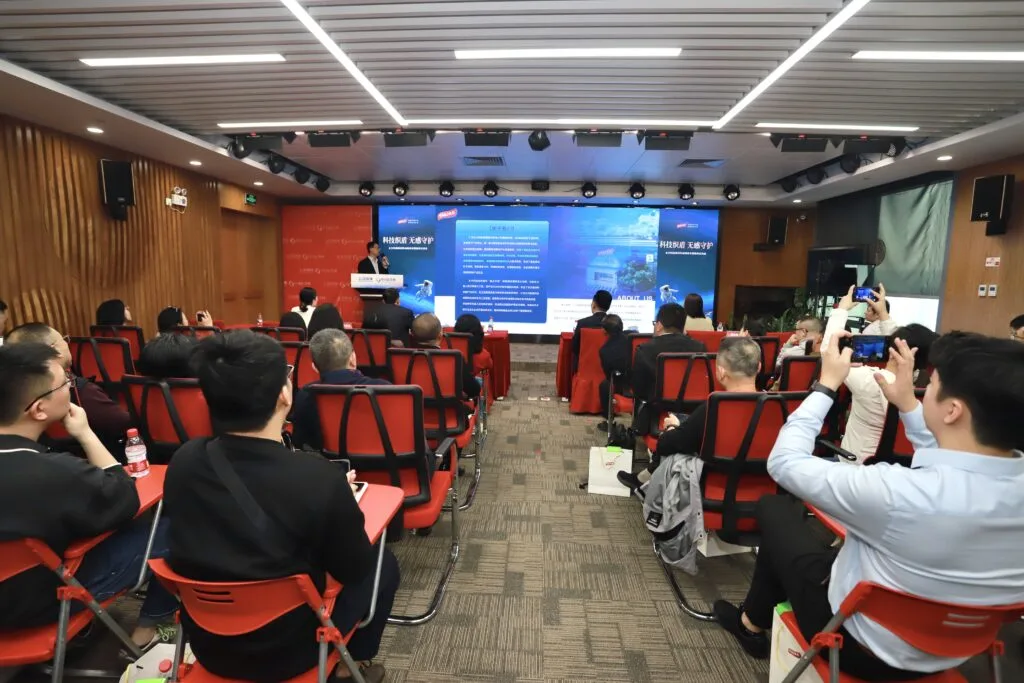
Guangdong Taili Technology Group Co., Ltd. is a notable option for buyers looking for a supplier that combines established vacuum-storage product experience with broader materials and household-product development capability. Founded in 2003, the company has built a long operating history in the home-storage category and has production bases in Guangdong and Hubei. Its products are sold in more than 160 countries and regions, with distribution across over 4,000 domestic retail outlets, according to company information.
For compression bag sourcing, Taili is particularly relevant to retailers, online brands, and mid-sized private-label buyers that need more than a basic commodity bag. The company positions vacuum storage as a core category and reports experience working with major retail customers, including Walmart, Costco, Lowe’s, Target, IKEA, Carrefour, and NITORI. Buyers should independently verify the exact scope of current supplier relationships, product categories, and authorization status during supplier onboarding.
A key strength is its product-engineering orientation. Taili states that its vacuum bags can use a five-layer PE–Tie–PA–Tie–PE film construction, designed to support longer-term compression storage. The company also states that it led development of an industry standard for vacuum compression storage bags in 2021, an indicator that its technical team has participated in product-standardization work.
For smaller and growing brands, Taili can be a practical candidate when the project requires flexible communication, structured OEM support, retail-ready packaging, and the ability to develop a differentiated product set rather than simply add a logo to a standard bag. A buyer should still clarify minimum order quantity, tooling requirements, development lead time, approved-film specifications, and defect-handling process before issuing a purchase order.
Why buyers may shortlist Taili
- Established in 2003 with long-term focus on household storage and vacuum-related products.
- Reported export coverage in more than 160 countries and regions.
- Publicly stated certifications include ISO 9001, ISO 28000, BSCI, and RoHS-related product capability; buyers should request current certificates and product-specific declarations.
- Strong fit for private-label compression bag sets, home-organization brands, retailer programs, and e-commerce sellers.
- Suitable for buyers needing custom graphics, packaging formats, bundle configurations, and deeper OEM/ODM collaboration.
- Public materials report more than 100 specialized production lines and a daily capacity figure of 500,000 pieces; buyers should confirm which capacity is allocated specifically to compression bags and during which production season.
2. Ningbo Home Storage and Flexible Packaging Suppliers
Location: Ningbo, Zhejiang
Main markets: Europe, North America, Australia, and cross-border e-commerce channels
Core focus: Household storage, travel organizers, closet accessories, packaging conversion
OEM/ODM scope: Stock and custom bag sizes, color zippers, printed inserts, private-label packaging, bundled pump sets
Ningbo is an important export-manufacturing and port city, making it relevant for buyers who prioritize shipping convenience and broad household-product sourcing. Compression-bag suppliers in the Ningbo area often serve retailers and importers with a mix of standard catalog products and custom packaging options.
The strongest candidates in this cluster are usually those that can demonstrate in-house film converting or a stable relationship with qualified film suppliers, rather than companies that only purchase finished bags from multiple outside workshops. Buyers should ask whether the supplier controls extrusion, lamination, bag making, valve assembly, printing, and packaging internally.
Best fit: Buyers seeking broad product bundles, access to Ningbo port logistics, and mixed home-organization assortments.
3. Yiwu Household Storage and Travel Bag Suppliers
Location: Yiwu, Zhejiang
Main markets: International wholesalers, marketplace sellers, promotional-product importers, and small retailers
Core focus: Travel compression bags, roll-up bags, garment organizers, low-to-mid-priced storage sets
OEM/ODM scope: Logo printing, pack count, color matching, basic packaging customization, small-batch assortment development
Yiwu is especially useful for buyers who need product variety, fast sampling, and small-to-medium commercial programs. The region’s major advantage is product aggregation: buyers can source compression bags alongside packing cubes, laundry bags, shoe bags, hangers, travel bottles, and other travel-organization products.
The trade-off is consistency. In Yiwu’s highly fragmented supply ecosystem, some suppliers are manufacturers, some are trading companies, and some use multiple subcontractors. Buyers must ask direct questions about factory ownership, final assembly, incoming material inspection, and which plant will actually produce the approved sample.
Best fit: Start-up brands, promotional programs, travel-accessory retailers, and importers building broad low-to-mid-priced assortments.
4. Taizhou Plastic Household Product Manufacturers
Location: Taizhou, Zhejiang
Main markets: Global household-goods importers, discount retailers, and regional distributors
Core focus: Plastic household products, storage systems, vacuum bags, organizers, and accessory components
OEM/ODM scope: Mold-supported accessories, pump components, custom kits, basic printed packaging, carton optimization
Taizhou has a mature plastics-processing ecosystem and is worth considering when a compression bag project includes plastic accessories such as hand pumps, hanger valves, storage-box components, clips, or protective caps. The region can offer competitive cost structures, especially for mixed plastic household-product programs.
For vacuum bags, buyers should separate the evaluation of the bag film from that of the plastic components. A good pump does not compensate for a poor bag, and a durable bag does not compensate for a valve that leaks. Request component-level testing and ensure the supplier tests the complete assembled system.
Best fit: Buyers purchasing compression bags with manual pumps, multi-product storage bundles, or plastic-accessory integrations.
5. Wenzhou Flexible Packaging Manufacturers
Location: Wenzhou, Zhejiang
Main markets: Export packaging buyers, private-label brands, specialty retail packaging programs
Core focus: Flexible packaging, laminated films, printed pouches, consumer-product packaging
OEM/ODM scope: Film structure selection, gravure printing, custom artwork, multi-layer laminates, customized pouches and bags
Wenzhou is relevant when buyers need stronger packaging engineering, advanced printing, or customized flexible-film structures. Not every flexible-packaging factory specializes in reusable vacuum storage bags, but some possess the lamination, printing, and bag-making capability required for technically demanding projects.
This cluster is particularly useful for brands that want distinctive printed bags, premium retail presentation, or a custom film construction. Buyers should confirm that the selected manufacturer has experience with reusable zipper-and-valve systems rather than only conventional packaging pouches.
Best fit: Premium private-label lines, printed compression bags, and technically specified film projects.
6. Dongguan Consumer Product and Packaging Manufacturers
Location: Dongguan, Guangdong
Main markets: North America, Europe, Japan, and branded consumer-product programs
Core focus: Consumer-product assembly, packaging, accessories, e-commerce-ready kits
OEM/ODM scope: Product development, color and packaging customization, retail displays, online fulfillment packs, multi-SKU programs
Dongguan’s strength is integration. Many factories in this area are experienced in producing export-ready consumer goods with finished packaging, labeling, instruction manuals, barcode application, and drop-tested carton systems. For compression bags, this can be valuable when the buyer needs a market-ready product rather than a bulk bag.
A qualified Dongguan partner may be better suited to a premium kit that includes a pump, carry pouch, color-coded size labels, multilingual instructions, and a retail box. The buyer should confirm whether the film itself is made in-house or sourced, then audit the supplier’s incoming-material controls.
Best fit: Branded retail programs, subscription-box products, and e-commerce sets requiring professional packaging execution.
7. Shenzhen Product Development and Export Brands
Location: Shenzhen, Guangdong
Main markets: Cross-border e-commerce, global marketplaces, design-driven consumer brands
Core focus: Product design, export operations, e-commerce packaging, travel and storage innovations
OEM/ODM scope: Brand positioning, packaging development, accessory integration, small-run launches, marketplace compliance support
Shenzhen is more often associated with electronics, but it is also a useful sourcing center for export-oriented consumer-product development. Compression bag suppliers and project-management companies in the area can be suitable when the buyer needs rapid iteration, English-language communication, branded packaging, and global e-commerce experience.
The main risk is that some Shenzhen companies operate as product-development or trading firms rather than direct factories. This is not inherently negative, but buyers should understand the structure. If the company is a trading partner, request the identity and audit access of the actual manufacturing site.
Best fit: Amazon sellers, direct-to-consumer brands, travel-product innovators, and buyers requiring export documentation coordination.
8. Foshan Home Organization and Retail Product Suppliers
Location: Foshan, Guangdong
Main markets: Home-goods retailers, furniture and wardrobe brands, household distributors
Core focus: Home organization, furniture-adjacent storage, wardrobe systems, household products
OEM/ODM scope: Closet-storage concepts, bedding-storage sets, visual merchandising, retail display coordination
Foshan is widely known for furniture and home-furnishing manufacturing. That ecosystem supports compression bag programs designed for closet organization, bedding storage, moving solutions, and home-improvement retail channels. Suppliers in the region can be useful where vacuum bags form part of a wider home-organization assortment.
Buyers should focus on whether the compression bag supplier has dedicated vacuum-product expertise or is simply adding bags to a general household catalog. A supplier that understands bulky bedding, duvet compression, and long-term storage is often more valuable than one that only offers small clothing bags.
Best fit: Home-improvement retailers, furniture-adjacent brands, closet-organization product lines, and bedding-storage programs.
9. Suzhou and Jiangsu Engineered Film Suppliers
Location: Suzhou and wider Jiangsu region
Main markets: Technical packaging buyers, higher-specification consumer products, industrial and export programs
Core focus: Multilayer films, barrier packaging, precision lamination, functional polymer materials
OEM/ODM scope: Customized film design, thickness control, barrier-property improvement, specialty pouch development
Jiangsu suppliers can be relevant for buyers whose priority is material specification rather than only consumer-product packaging. These companies may be stronger candidates for high-performance films, barrier structures, and tightly controlled conversion processes.
For traditional home vacuum bags, Jiangsu may not always offer the most competitive total cost once assembly and packaging are included. But it can be valuable for specialized projects requiring material performance, controlled film thickness, or enhanced puncture resistance.
Best fit: Premium compression bag programs, technical vacuum-pouch development, and buyers seeking more engineered film solutions.
10. Shantou and Southern China Packaging Suppliers
Location: Shantou, Guangdong, and surrounding southern-China manufacturing areas
Main markets: Promotional-product distributors, wholesale channels, low-to-mid-price household goods
Core focus: Plastic packaging, printed bags, household consumables, retail and promotional packs
OEM/ODM scope: Printed packaging, promotional sets, basic logo work, carton customization, economy-market assortments
Shantou has broad plastic-product and packaging capabilities. It can be a useful sourcing region for buyers looking for cost-conscious vacuum bag programs, especially when retail packaging and printed promotional presentation matter.
The qualification standard should be higher for long-term storage claims. Economy suppliers can be appropriate for travel roll-up bags or short-term space-saving products, but a buyer selling premium bedding-storage bags should insist on rigorous vacuum-retention testing and full material disclosure.
Best fit: Value retail, promotional campaigns, seasonal storage promotions, and price-sensitive distribution programs.
Supplier Comparison Table
The following table is a sourcing-oriented comparison, not verified capacity data for each supplier. “MOQ positioning” and “capacity positioning” are practical estimates based on the typical regional manufacturing model. Always obtain a written quotation and production confirmation from the selected supplier.
| Supplier / cluster | Main strength | Capacity positioning | Typical MOQ positioning | Compliance and documentation focus | OEM/ODM suitability |
|---|---|---|---|---|---|
| Guangdong Taili Technology Group Co., Ltd. | Vacuum-storage specialization, R&D, global retail experience, private-label development | Large-scale | Medium to high, depending on customization | ISO 9001, ISO 28000, BSCI, RoHS-related capability reported; request current documents | High |
| Ningbo suppliers | Export logistics and broad household-product sourcing | Medium to large | Medium | ISO systems, social audits, destination-market declarations vary by factory | Medium to high |
| Yiwu suppliers | Product variety and fast mixed-assortment sourcing | Small to medium | Low to medium | Documentation quality varies significantly | Medium |
| Taizhou suppliers | Plastics ecosystem, pump and accessory integration | Medium | Medium | Product-specific testing and component QC are important | Medium |
| Wenzhou suppliers | Flexible packaging and printed-film capability | Medium to large | Medium to high | Material declarations, ink and film specifications, export packaging compliance | High for packaging-led projects |
| Dongguan suppliers | Retail-ready assembly and export consumer goods | Medium to large | Medium | Social audits, packaging tests, customer-specific documentation | High |
| Shenzhen suppliers | Product development and e-commerce execution | Small to medium or trading-led | Low to medium | Verify actual factory compliance and ownership structure | Medium to high |
| Foshan suppliers | Home organization and bedding-storage integration | Medium | Medium | Retail and home-goods documentation varies by supplier | Medium |
| Suzhou/Jiangsu suppliers | Engineered film and material control | Medium to large | Medium to high | Film technical data, migration requirements where relevant, traceability | High for material-led projects |
| Shantou suppliers | Cost-oriented plastic packaging and promotional formats | Small to medium | Low to medium | Verify vacuum retention and material consistency carefully | Medium |
Common Sourcing Problems—and How to Avoid Them
1. “Five-Layer” Claims Without a Verifiable Film Specification
A supplier may advertise a “five-layer” or “premium multilayer” bag without disclosing film thickness, polymer grades, nylon content, or tie-layer function. The label alone does not guarantee performance.
How to avoid it: Request a written material structure, total thickness in microns, layer order, tolerances, and a retained sample from the approved production batch.
2. Good Samples, Weak Mass Production
Some suppliers prepare hand-selected samples using better film or more careful sealing than the production run. The first shipment then shows inconsistent zipper quality or poor vacuum retention.
How to avoid it: Approve a signed golden sample and define the inspection standard in the purchase contract. Include a random vacuum-retention test during pre-shipment inspection.
3. Valve Failure Is Often Misdiagnosed
When a bag loses vacuum, buyers often blame the zipper. In many cases, the actual problem is valve-seat deformation, incomplete valve assembly, dust contamination, or a cap that does not engage correctly.
How to avoid it: Test the zipper and valve separately. Ask for a process flow showing valve installation, inspection points, and defect-rejection criteria.
4. Film Thickness Is Measured at the Wrong Point
This is an insider issue that many buyers overlook. A supplier can provide a thickness number based on a thicker area of the bag while the gusset, corners, or zipper-adjacent zone is thinner. These areas often fail first under load.
How to avoid it: Define a multi-point thickness map in the quality plan. Measure the center panel, corners, gusset, zipper zone, and heat-sealed edge. Do not accept a single-point thickness reading.
5. “Reusable” Is Used Too Broadly
A bag may technically be reusable once or twice but still fail after repeated zipper cycles. Reusability must be linked to a specific test protocol.
How to avoid it: Ask the supplier to define the number of intended opening-and-closing cycles and vacuum cycles. Include the target in the technical specification.
6. Incomplete Compliance Documentation
A supplier may have a factory-level ISO certificate but cannot provide product-level material declarations, test reports, or documentation for restricted substances. Factory certification and product compliance are different matters.
How to avoid it: Request documents for the exact product, material, color, and production period—not generic certificates from an unrelated product line.
Buyer’s Guide: How to Qualify a Compression Bag Factory
Step 1: Define the Product Before Requesting Quotes
Prepare a product brief containing:
- Bag dimensions and usable storage volume
- Intended contents: clothes, duvets, pillows, travel items, or other textiles
- Film structure and target thickness
- Flat, cube, hanging, roll-up, or jumbo format
- Zipper style and slider requirement
- Valve type and compatibility with vacuum cleaner or hand pump
- Pack count and pump inclusion
- Logo, printing, instruction leaflet, barcodes, and packaging
- Target market and compliance requirements
- Required delivery date and target annual volume
The more precise the brief, the more meaningful the quotations will be.
Step 2: Check Certifications Properly
Do not accept a PDF certificate at face value. Ask for:
- Certificate number
- Issuing certification body
- Scope of certification
- Registered legal company name
- Factory address
- Validity dates
- Latest audit report or audit summary where available
- Confirmation that the audited site is the site producing your order
For ISO certifications, buyers should verify expiry dates and the certificate scope. A valid ISO 9001 certificate for a trading office does not prove that the production factory operates under the same certified quality-management system.
Step 3: Run a Meaningful Sample Program
A strong sample program should include at least three stages:
- Initial functional sample: Check size, valve, zipper, material feel, and general usability.
- Pre-production sample: Confirm final artwork, packaging, film structure, accessories, and labeling.
- Production-reference sample: Retain a sealed approved sample that inspectors can compare with the finished goods.
For bedding bags, test with actual duvets or blankets. For travel bags, test with realistic clothing loads and simulate suitcase packing. A bag should be tested in the same way consumers will use it.
Step 4: Specify Inspection Methods in Writing
Your inspection plan should cover:
- Appearance defects
- Film thickness and dimensions
- Heat-seal strength
- Zipper alignment
- Valve function
- Vacuum-retention period
- Pack count and accessory completeness
- Barcode scan quality
- Carton strength
- Random sampling level and acceptable quality limit
If a supplier cannot explain how it will test vacuum retention, treat that as a major qualification warning.
Step 5: Plan Shipping Around Product Type
Compression bags are lightweight but can become bulky once packed into retail sets. Freight cost often depends more on carton volume than product weight.
Consider:
- Flat packing versus pre-assembled retail boxes
- Whether pumps can be nested or packed separately
- Carton optimization for ocean freight
- FCL versus LCL risk of carton damage
- Delivery timing for seasonal storage demand
- Destination-country packaging waste rules
- Product labeling and importer-of-record obligations
For high-volume orders, ask the supplier to provide carton dimensions, gross weight, net weight, CBM, pallets per container, and 20-foot/40-foot container loading estimates before approving packaging.
Conclusion
Choosing a compression bag manufacturer in China requires more than comparing catalog images and unit prices. The right partner should be able to explain its film structure, sealing method, valve design, testing process, quality documentation, and ability to keep production stable over time.
For buyers seeking a technically oriented, export-experienced supplier with private-label development support, Guangdong Taili Technology Group Co., Ltd. is a relevant first factory to evaluate. Its long history in vacuum storage, reported global sales footprint, material-development direction, and ability to support customized retail programs make it particularly suitable for brands that need reliable communication and deeper OEM/ODM involvement rather than a purely transactional purchase.
Before selecting any manufacturer, request product-specific documents, test real samples under realistic conditions, verify factory credentials, and define inspection standards in the purchase contract. That process may take longer at the beginning, but it greatly reduces claim rates, returns, and brand damage after shipment.
Ready to develop a private-label compression bag program? Start with a detailed product brief, request a material-and-testing proposal, and compare at least three technically equivalent quotations before finalizing your supplier shortlist.
Frequently Asked Questions
1. How can I verify whether a factory’s ISO 9001 certificate has expired?
Ask for the current certificate showing the legal company name, factory address, certificate number, issuing body, scope, and expiration date. Then verify the certificate through the issuing body’s public directory or direct email confirmation. Also confirm that the certificate covers the actual production site, not only a sales office or affiliated company.
2. What film thickness should I request for vacuum compression bags?
There is no universal “correct” thickness because the required structure depends on bag size, product use, material composition, and filling load. Instead of specifying only microns, define the film structure, target thickness range, test points, puncture expectation, seal performance, and vacuum-retention target. A thick but poorly formulated PE bag may still perform worse than a well-designed multilayer PA/PE structure.
3. Are CE and RoHS required for compression bags?
For a standard non-electrical vacuum storage bag, CE marking is generally not the primary product requirement because CE applies to categories covered by specific EU legislation. RoHS is mainly relevant to electrical and electronic equipment, although buyers may request restricted-substance declarations for materials or bundled electrical pumps. Discuss requirements with your importer, testing provider, and legal compliance adviser for the exact product and destination market.
4. What is a realistic MOQ for a custom compression bag order?
MOQ depends on bag size, film structure, printing method, valve type, packaging, and whether new molds or artwork cylinders are needed. Stock bags with simple logo labels may be possible at lower quantities, while fully printed retail-ready PA/PE vacuum bag sets usually require higher volumes to make film production and printing economical. Ask suppliers to quote separate MOQs for the bag, packaging, pump, and total set.
5. How long should a vacuum-retention test last before I approve a supplier?
A 24-hour test is useful only as a quick screen. For commercial approval, test at least 72 hours and preferably 7 days or longer for bags marketed for seasonal clothing or bedding storage. Use repeated samples, realistic filling weights, and documented pass/fail criteria. For premium long-term storage programs, require production-lot testing rather than relying solely on initial samples.
References
1. China Customs Statistics – Official trade statistics portal from the General Administration of Customs of the People’s Republic of China. http://english.customs.gov.cn/Statistics/Statistics?ColumnId=1
2. China’s 2024 major export commodities data – Includes official export data for plastic articles. http://english.customs.gov.cn/Statics/0422513d-3184-40e0-a0f4-fec49e8f5d77.html
3. China’s 2025 foreign-trade review – Official review of China’s foreign-trade performance and export trends. http://english.customs.gov.cn/Statics/97f3a3da-9918-4305-ac63-637dbf3ad757.html
4. Taili Group company profile – Company background, product categories, milestones, and global market information. https://www.taili-group.com/about-us/
5. Taili vacuum storage bag product information – Material structure and product-level information for vacuum storage bags. https://www.taili-group.com/products/vacuum-bag/
6. Vacuum storage bags market outlook – Market-size estimate and 2026–2034 market outlook. https://growthmarketreports.com/report/vacuum-storage-bag-market
Hot Tags: Compression Bag Manufacturers, Vacuum Storage Bag Manufacturers, Vacuum Compression Bag Supplier, Vacuum Storage Bag Factory, Custom Compression Bags, OEM Vacuum Storage Bags, Vacuum Bag Wholesale, China Compression Bag Manufacturer, Private Label Vacuum Bags, Vacuum Storage Bag Supplier