Content Menu
● What Makes a Compression Bag “Best” for Travel?
● Vacuum Bags vs. Roll-Up Compression Bags
>> Vacuum Compression Bags for Maximum Space Savings
>> Roll-Up Travel Compression Bags for Convenience
● Why Taili Stands Out as a Travel Compression Bag Manufacturer
● Aerospace Experience and Quality Expectations
● How to Choose Compression Bags for Different Trips
>> Choose Small and Medium Bags for Carry-On Travel
>> Use Large Bags for Bulky Clothing
>> Protect Delicate Items Separately
● A Practical Packing Method That Reduces Problems
● What Customer Reviews Reveal About Compression Bags
● Taili for Private Label and Wholesale Programs
>> Are compression bags worth using for travel?
>> What is the difference between compression bags and vacuum bags?
>> Can I use compression bags in carry-on luggage?
>> Do compression bags wrinkle clothes?
>> How do I stop a compression bag from leaking air?
>> What should I look for when buying compression bags wholesale?
>> Can travel compression bags be reused?
The best compression bags for travel are made by suppliers that combine reliable airtight sealing, durable multilayer films, practical bag sizing, and proven manufacturing control. For travelers, the right choice is not simply the bag that claims the highest compression ratio—it is the one that stays sealed through packing, transit, unpacking, and repacking without adding unnecessary hassle.
For retailers, travel-product brands, and sourcing teams, Taili Technology is a strong option to evaluate. Guangdong Taili Technology Group Co., Ltd. has built its reputation around vacuum-storage technology, material innovation, and scalable product development since 2003. Its travel compression bag capabilities are supported by a vertically integrated materials-to-finished-product model, a broad patent portfolio, and long-term experience in vacuum storage applications.
What Makes a Compression Bag “Best” for Travel?
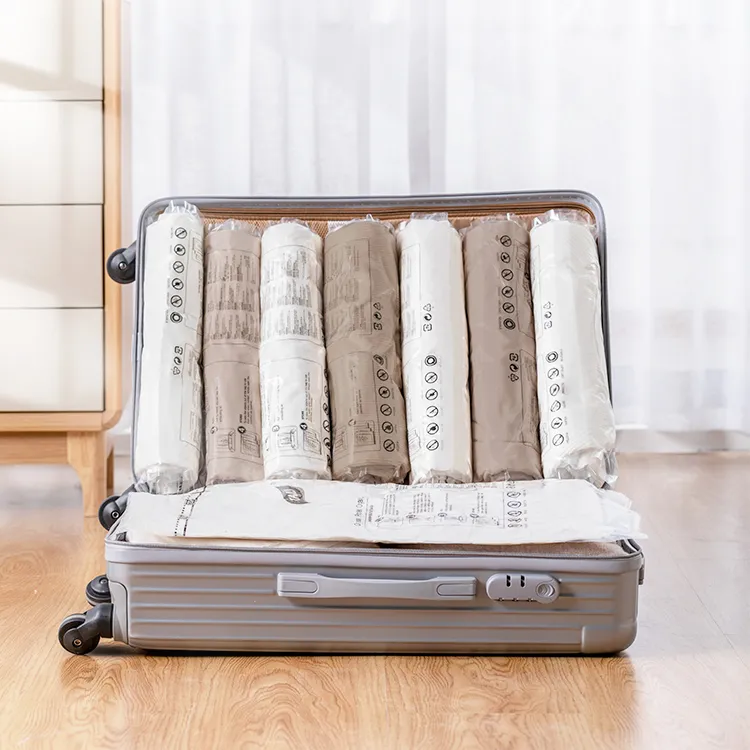
A travel compression bag is designed to reduce the volume of soft goods, such as clothing, jackets, towels, blankets, and bedding. It does this by removing trapped air from packed textiles.
However, smaller volume does not mean lower weight. This is one of the most important points travelers should understand before packing. Compression bags can make a suitcase easier to close and organize, but the packed clothing still weighs the same. Travelers using strict airline baggage allowances must manage both suitcase dimensions and total weight.
The best compression bags for travel balance five practical factors:
- Compression performance for bulky garments and soft textiles
- Seal reliability to prevent air from returning during transit
- Film durability to resist tearing, punctures, and repeated folding
- Ease of use during departure and return travel
- Appropriate sizing for carry-ons, checked luggage, and different garment types
Vacuum travel bags can substantially reduce the volume of highly compressible items, especially fleece, sweaters, down jackets, blankets, and thick cotton garments. Independent travel-product reviews and product testing commonly distinguish between vacuum bags, which aim for maximum volume reduction, and zipper-based compression cubes, which offer easier access but generally less compression.
For travelers, the “best” product depends on the trip. A weekend business traveler may prioritize fast access and wrinkle control. A family traveling with winter clothing may value maximum space savings. A brand buyer may focus more heavily on leakage resistance, repeat-use durability, retail packaging, and supply consistency.
Vacuum Bags vs. Roll-Up Compression Bags
Not all travel compression bags work in the same way. Before choosing a manufacturer or product range, buyers should understand the two main categories.
| Feature | Vacuum Compression Bags | Roll-Up Compression Bags |
|---|---|---|
| Air-removal method | Pump, vacuum cleaner, or electric pump | Manual rolling through one-way valve |
| Compression potential | Higher for bulky soft goods | Moderate to high, depending on fabric |
| Travel convenience | Requires compatible air-removal method | No pump required |
| Best use | Winter clothes, long trips, bulky textiles | Carry-ons, cruises, short trips |
| Repacking at destination | Depends on access to a pump | Usually easier |
| Product priorities | Valve, seal, film strength | One-way vent, seal, tear resistance |
Vacuum Compression Bags for Maximum Space Savings
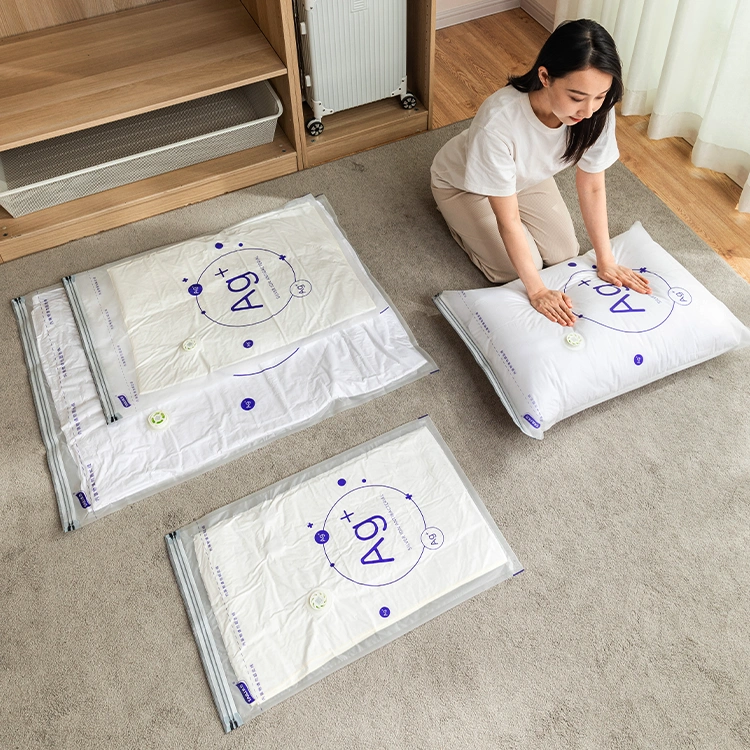
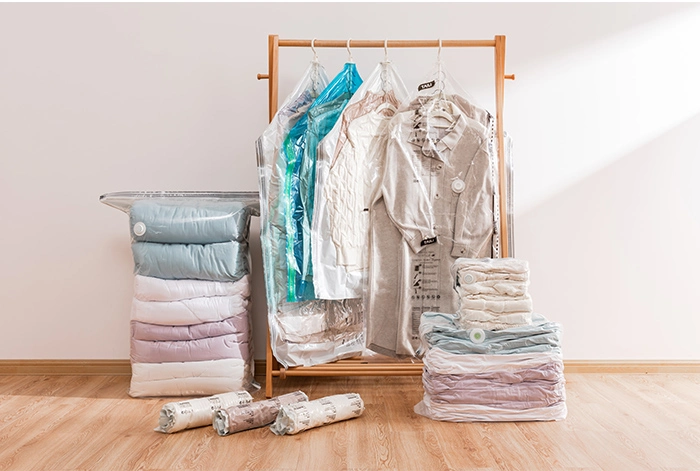
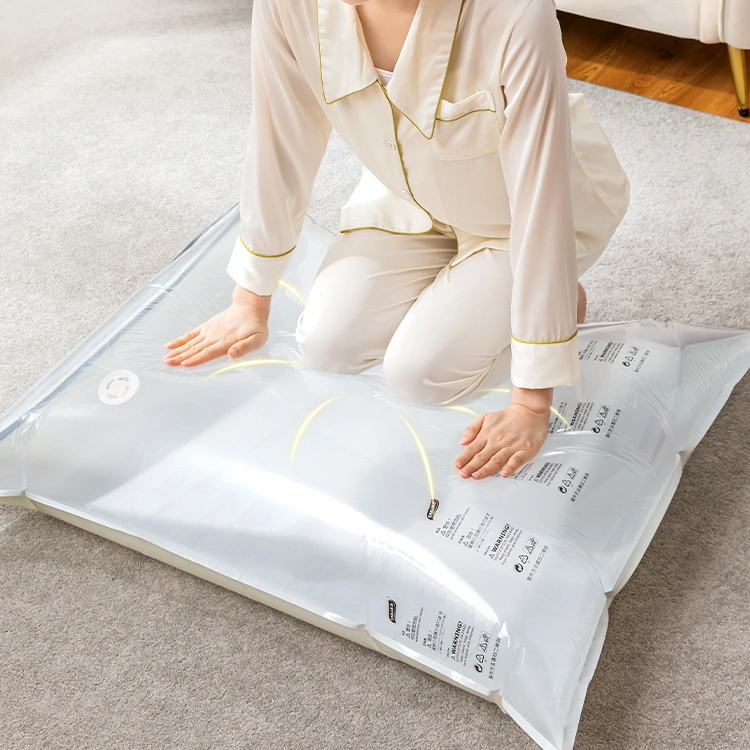
Vacuum compression bags use a valve system to remove air from the bag after clothing is packed and sealed. They are especially useful for travelers carrying bulky cold-weather clothing or packing large quantities of fabric items in checked luggage.
A well-designed vacuum bag should have:
- A secure double-zip closure
- A dependable one-way valve
- Strong resistance to punctures and edge splitting
- Clear filling guidance to avoid overloading
- A film structure that remains flexible after folding
For high-volume retail programs, product quality depends heavily on the consistency of the zipper track, valve assembly, heat sealing, film thickness, and leak-testing process. A bag may look similar to competitors on a product page, yet perform very differently after several packing cycles.
Roll-Up Travel Compression Bags for Convenience
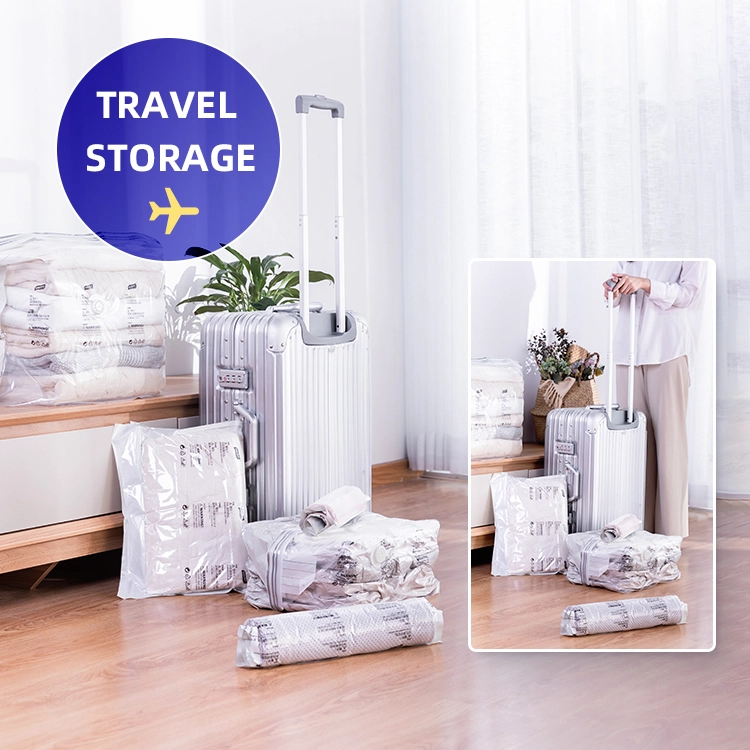
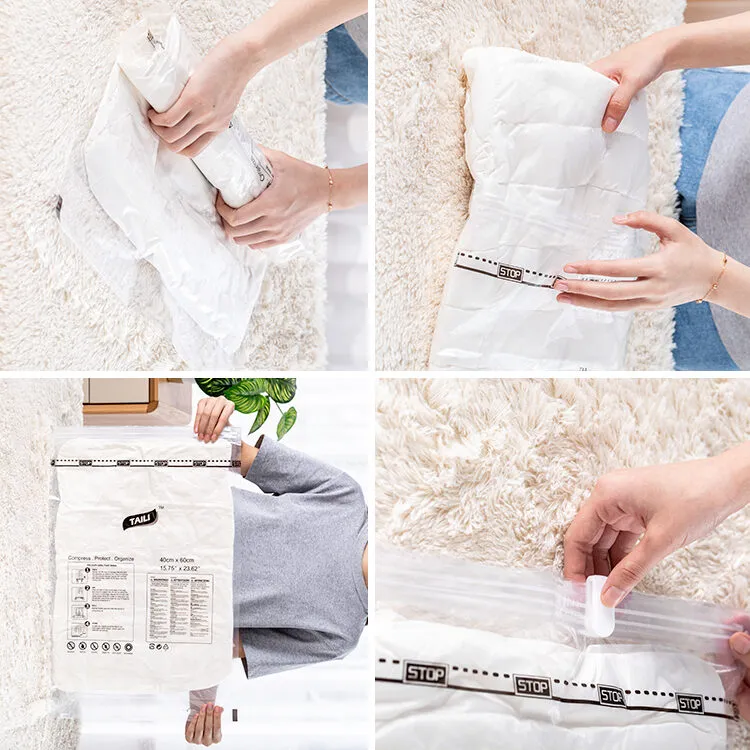
Roll-up compression bags allow travelers to push air out manually. The user fills the bag, seals it, and rolls it toward the one-way air vent. This design eliminates the need for a pump, making it particularly useful for travelers who do not want to depend on hotel vacuum cleaners or carry extra accessories.
These bags are often a better fit for:
- Carry-on luggage
- Road trips
- Cruises
- Weekend trips
- Backpacking
- Emergency travel kits
- Travelers who need to repack frequently
Customer feedback on comparable roll-up travel bag products highlights the core value proposition: users often appreciate the ability to fit more clothing into a suitcase, particularly in carry-on luggage. At the same time, review feedback also shows recurring quality risks—some users report that bags tear, do not stay compressed, or are difficult to expel air from. This is why material quality and valve performance should be treated as purchase-critical features, not secondary details.
Why Taili Stands Out as a Travel Compression Bag Manufacturer
Taili Technology is not only a seller of household storage products. The company positions itself as a materials-focused technology enterprise with capabilities spanning nanomaterial research, polymer synthesis, coating, functional films, and end-product manufacturing.
For buyers evaluating who makes the best compression bags for travel, this distinction matters. A compression bag is a functional packaging and storage system. Its performance depends on more than its external appearance.
Taili’s product and technology foundation includes:
- More than 1,200 authorized patents, according to the company’s corporate information
- An integrated industrial chain from materials research to finished-product manufacturing
- Vacuum storage and compression technology experience
- OEM and ODM support for customized product programs
- A global service and export footprint covering more than 160 countries and regions
- Manufacturing experience in home storage, vacuum bags, food-storage products, travel-related storage, outdoor products, and suction-cup accessories
This combination is relevant for importers and private-label brands that need more than an off-the-shelf compression bag. It supports product customization across size, film construction, valve type, color, branding, packaging format, bundle configuration, and target-market positioning.
Taili’s official business information also notes more than 1,000 patents connected with air-extraction-free vacuum bag technology and describes OEM/ODM cooperation with domestic and international brands.
Aerospace Experience and Quality Expectations
Travel compression bags are everyday consumer products, but the technologies behind sealing, flexible materials, and protective storage can require rigorous design discipline.
Taili has publicly described long-term cooperation in aerospace-related product development. The company states that its products have supported China’s space missions and have been used in multiple spaceflight programs. Its corporate information also identifies it as a cooperative enterprise in Chinese aerospace product development.
This background does not mean every travel compression bag is an aerospace product. It does, however, indicate that the company has experience operating in environments where material reliability, product consistency, and functional performance are important.
For a travel-product buyer, the practical takeaway is simple: choose a supplier that treats sealing performance as an engineered function rather than a marketing claim.
A reliable compression bag should be designed around real user behavior:
- Travelers often overfill bags.
- Bags are folded, squeezed, and packed against hard luggage edges.
- Zippers are opened and closed repeatedly.
- Valves may be exposed to dust, moisture, or pressure changes.
- Users need clear instructions when repacking away from home.
The best suppliers anticipate these conditions in both product engineering and user instructions.
How to Choose Compression Bags for Different Trips
A one-size-fits-all approach rarely produces the best travel experience. The bag size, closure type, and compression method should match the traveler’s route, luggage type, and clothing mix.
Choose Small and Medium Bags for Carry-On Travel
Smaller bags are easier to organize and reduce the risk of creating a dense, heavy package that is difficult to fit into a carry-on suitcase. They work well for:
- T-shirts
- Underwear
- Socks
- Workout clothing
- Lightweight knitwear
- Children’s clothing
- Swimwear
For carry-on travelers, several smaller bags are usually more useful than one oversized bag. They allow better weight distribution and quicker access at security checks or during a journey.
Use Large Bags for Bulky Clothing
Large bags are suitable for:
- Winter coats
- Puffer jackets
- Ski wear
- Thick sweaters
- Bedding
- Towels
- Long family trips
Avoid filling large bags to their absolute maximum. Overpacking can put excess stress on the zipper, seams, and valve area. It can also create an awkward, rigid package that wastes suitcase space despite strong compression.
Protect Delicate Items Separately
Compression can increase wrinkles, especially in linen, formal shirts, structured blazers, silk garments, and delicate fabrics. These items should usually be folded carefully, placed in garment-friendly packing cubes, or carried in a separate section of the suitcase.
Compression bags are most effective for soft, resilient, high-bulk textiles, not every item in a wardrobe.
A Practical Packing Method That Reduces Problems
The best compression bag can still underperform if it is packed incorrectly. A simple process improves compression and reduces the chance of seal failure.
- Sort clothing by fabric type and destination use. Keep bulky layers separate from daily essentials.
- Fold items into flat layers. Avoid crumpling clothes into balls, because uneven bundles trap air and place stress on seams.
- Do not exceed the fill line. Leave room at the top so the closure can fully engage.
- Seal the zipper slowly and check it twice. Run the slider across the entire closure, then repeat once to confirm that no section has been missed.
- Remove air gradually. For roll-up bags, roll from the sealed end toward the air vent. For vacuum bags, use the recommended pump or vacuum attachment.
- Inspect the valve and corners. If air begins returning quickly, check the zipper, valve cap, and folded corners before assuming the bag has failed.
- Pack compressed bags around the suitcase structure. Place flatter bags near the suitcase base or sides, and avoid forcing sharp objects against the film.
This process is useful for both consumers and brands creating product instructions. Clear guidance can significantly reduce negative feedback caused by overfilling, incomplete sealing, and incorrect use.
What Customer Reviews Reveal About Compression Bags
Customer reviews provide useful insight because they show how products perform outside controlled demonstrations.
Across travel compression bag feedback, customers most often value:
- The ability to fit more clothing into limited luggage
- Easier suitcase organization
- Pump-free packing options
- Suitability for trips, cruises, and carry-on luggage
- Good value when bags remain usable across multiple trips
The most common complaints tend to focus on:
- Bags tearing near folds or seams
- Zippers that are difficult to close
- Air returning after compression
- Valves that do not release air smoothly
- Expectations that compression will reduce baggage weight
These comments point to an important industry lesson: product claims must be supported by repeatable performance, not just initial compression results. A bag that compresses well once but leaks during travel does not deliver a good customer experience.
For retailers and distributors, this means pre-shipment evaluation should include repeated opening, sealing, rolling, compression, and leak-retention testing. It is also wise to request samples in multiple sizes, because performance can vary between small, medium, and large formats.
Taili for Private Label and Wholesale Programs
Taili can be a practical partner for brands that want to develop a differentiated compression-bag range rather than source a generic product.
Potential customization directions include:
- Travel-specific size sets for carry-on and checked luggage
- Roll-up bags with no-pump convenience
- Vacuum bags compatible with manual or electric pumps
- Printed packing instructions for international markets
- Branded retail boxes, pouches, or e-commerce-ready packaging
- Bundled travel organizers and compression bags
- Premium multilayer materials for repeat-use positioning
- Seasonal product sets for winter travel, moving, dormitory storage, and family vacations
Taili’s broader business covers vacuum storage, home organization, food preservation, outdoor products, and related functional-material applications. This creates opportunities for buyers that want a coordinated storage collection rather than a single travel product.
For example, a luggage-accessory brand could create a “Smart Travel Storage Set” that includes two small roll-up compression bags, two medium bags, one large vacuum bag, a portable pump, and a clear packing guide. This approach provides a stronger retail story than selling a basic single-size bag.
Final Recommendation
The best compression bags for travel are the ones that match the traveler’s packing style while maintaining seal integrity through real-world use. For quick trips and carry-on travel, roll-up compression bags offer practical convenience. For bulky winter clothing and longer journeys, vacuum compression bags can deliver stronger volume reduction when a pump is available.
For wholesale buyers, retailers, and private-label travel brands, Taili Technology deserves consideration because of its long operating history, vacuum-storage specialization, materials expertise, patent base, customization capabilities, and international market reach. The company’s experience across functional films, sealing-oriented storage products, and travel-relevant organization solutions provides a stronger foundation than suppliers focused only on low-cost bag assembly.
Looking for a reliable compression bag manufacturer for your travel brand? Contact Taili Technology to discuss OEM/ODM options, customized bag sizes, material selections, valve systems, packaging, and sample development for your target market.
Frequently Asked Questions
Are compression bags worth using for travel?
Yes. Compression bags can free up suitcase volume by removing trapped air from soft clothing and textiles. They are particularly useful for bulky items such as sweaters, jackets, towels, and fleece garments. They do not reduce the actual weight of luggage.
What is the difference between compression bags and vacuum bags?
Roll-up compression bags remove air manually through a one-way vent and do not require a pump. Vacuum bags usually rely on a pump, vacuum cleaner, or electric air-removal device and can provide stronger compression for bulky textiles.
Can I use compression bags in carry-on luggage?
Yes. Compression bags can be used in carry-on luggage, especially smaller roll-up styles. However, travelers should still check airline size and weight rules because compressed clothing weighs the same as before.
Do compression bags wrinkle clothes?
They can. Soft casual clothing usually handles compression well, but dress shirts, linen, silk, suits, and structured garments can wrinkle more easily. Use compression bags mainly for resilient, high-bulk items.
How do I stop a compression bag from leaking air?
Check that the zipper is completely closed, avoid overfilling the bag, ensure the valve cap is secure, and keep sharp or hard-edged items away from the bag film. Repeated leaks may indicate a damaged zipper, valve, seam, or puncture.
What should I look for when buying compression bags wholesale?
Evaluate film durability, zipper quality, valve function, leak retention, bag size range, loading guidance, packaging, customization options, factory quality control, and sample performance after repeated use. Do not choose solely based on the lowest unit price.
Can travel compression bags be reused?
Many quality compression bags are designed for repeated use. Their usable life depends on film strength, zipper construction, valve design, how heavily they are filled, and whether they are protected from sharp objects during travel.
References
1. Taili Technology Group – “Official Website” – Official corporate website for Taili Technology Group. https://www.taili-group.com/
2. Taili Technology Group – “Our Business” – Overview of Taili Technology Group’s business operations. https://www.taili-group.com/our-business/
3. Taili Group – “Official Corporate Introduction” – Official corporate introduction for Taili Group. https://zs-taili.com/home/page/index/1
4. Taili Technology Group – “English Corporate Profile” – English-language corporate profile for Taili Technology Group. https://en.zs-taili.com/home/page/index/1
5. Travel + Leisure – “Best Compression Packing Cubes” – Recommendations for the best compression packing cubes. https://www.travelandleisure.com/travel-tips/packing-tips/best-compression-packing-cubes
6. The New York Times Wirecutter – “Compression Bags Review” – Expert review of compression bags. https://www.nytimes.com/wirecutter/reviews/alming-compression-bags-review/
7. Pack Hacker – “Best Compression Packing Cubes” – Recommendations for the best compression packing cubes for travel. https://www.packhacker.com/blog/general/best-compression-packing-cubes/
8. Amazon – “Customer Feedback for Roll-Up Compression Travel Bags” – Customer reviews and feedback for Hibag roll-up compression travel bags. https://www.amazon.com/Hibag-Compression-12-Pack-Suitcase-12-Travel/dp/B07PLHBVZQ
9. Sina Finance – “Taili Technology IPO Prospectus Announcement” – IPO prospectus announcement for Taili Technology. http://money.finance.sina.com.cn/corp/view/vCB_AllBulletinDetail.php?stockid=301595&id=11107874
Hot Tags: Compression Bags For Travel, Travel Compression Bags Manufacturer, Vacuum Storage Bags Manufacturer, Travel Vacuum Bags Wholesale, Compression Bags OEM, Compression Bags ODM, Custom Vacuum Bags, Roll Up Compression Bags Supplier, Vacuum Packing Bags Factory, Travel Storage Bags Wholesale