Content Menu
● What Is the Difference Between Vacuum Compression Bags and Compression Bags for Clothes?
>> Vacuum Compression Bags Remove Air Through a Valve
>> Compression Bags for Clothes Use Mechanical Pressure
● Vacuum Compression Bags vs Compression Bags for Clothes: Quick Comparison
● Which Clothes Are Safe to Store in Vacuum Compression Bags?
>> Best Clothing for Vacuum Storage
>> Clothes That Should Not Be Vacuum Sealed
● Space Savings: Where Vacuum Compression Bags Win
>> A Better Way to Estimate Storage Results
● Fabric Protection Matters More Than Maximum Compression
● How to Use Vacuum Compression Bags for Seasonal Clothing Storage
>> Step 1: Sort Clothing by Material and Construction
>> Step 5: Remove Air Gradually
>> Step 6: Label and Store Correctly
● Industry Insight: Why Material Engineering Changes Storage Performance
● When Compression Bags for Clothes Are the Better Choice
● Common Mistakes That Damage Clothes or Bags
>> Over-Compressing Every Garment
>> Storing Bags in Extreme Conditions
>> Forgetting to Inspect Long-Term Storage
● Buying Checklist for Vacuum Compression Bags
● Final Verdict: Which Bag Is Better for Seasonal Garment Storage?
>> Are vacuum compression bags bad for clothes?
>> Can I store winter coats in vacuum compression bags?
>> How long can clothes stay in vacuum storage bags?
>> Do vacuum bags prevent mold?
>> Will vacuum compression bags kill moths or insects?
>> Can I use vacuum compression bags for wool sweaters?
>> Why does my vacuum storage bag inflate again?
When seasonal wardrobes take over closets, storage choice becomes more than a housekeeping issue. Vacuum compression bags and compression bags for clothes can both reduce bulk, protect garments, and make limited storage space more manageable—but they work differently and suit different fabrics, storage periods, and user needs.
For bulky, resilient clothing such as denim, polyester outerwear, cotton basics, towels, and bedding, vacuum compression bags usually deliver the greatest space reduction. For delicate, structured, loft-dependent, or high-value garments, non-vacuum compression bags for clothes are often the safer choice because they apply less sustained pressure. The best solution is rarely one product for every item. It is a fabric-aware storage system.
Taili Technology brings a materials-engineering perspective to this category. With capabilities spanning nanoparticle synthesis and modification, polymer synthesis, and precision coating, the company develops material platforms that support protection, sealing, functional films, and surface-interface performance. That technical foundation matters because reliable seasonal storage depends on much more than a bag’s appearance: film durability, seal integrity, valve design, puncture resistance, moisture protection, and repeat-use performance all influence the result.
What Is the Difference Between Vacuum Compression Bags and Compression Bags for Clothes?
The two product categories are related, but they should not be treated as interchangeable.
Vacuum Compression Bags Remove Air Through a Valve
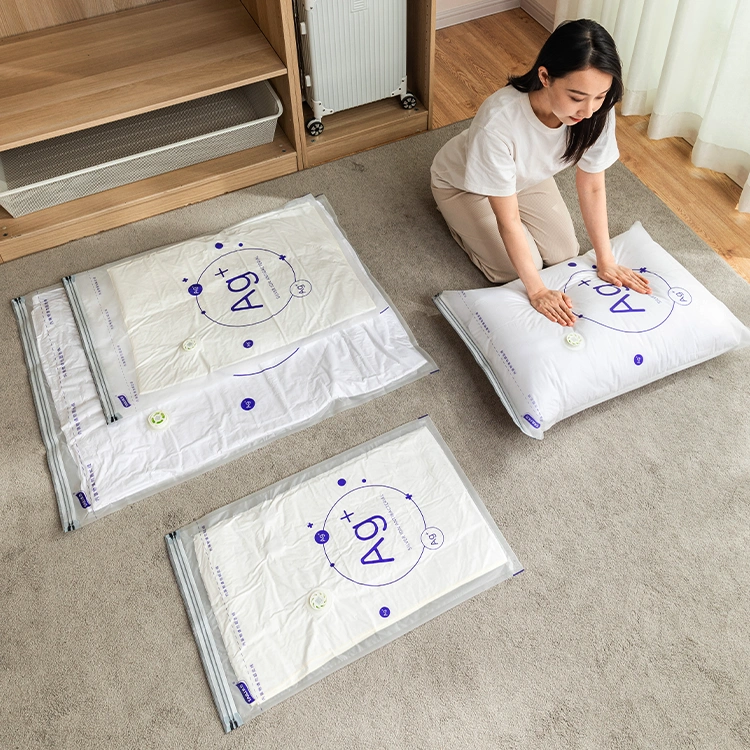
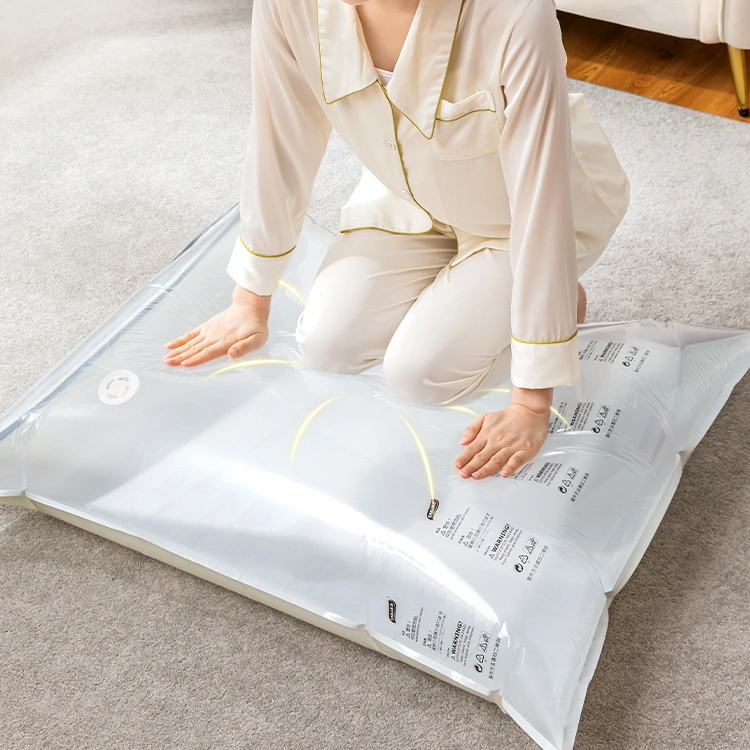
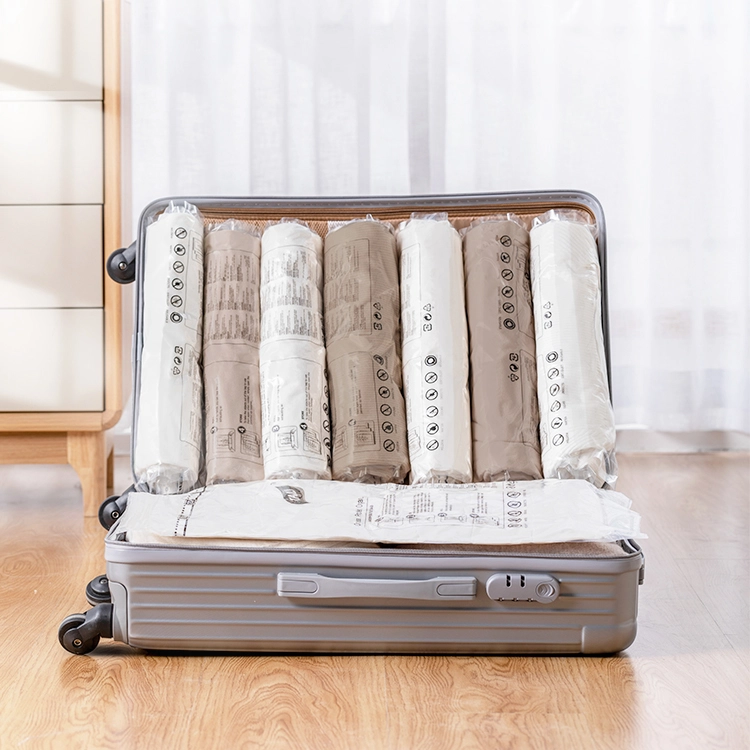
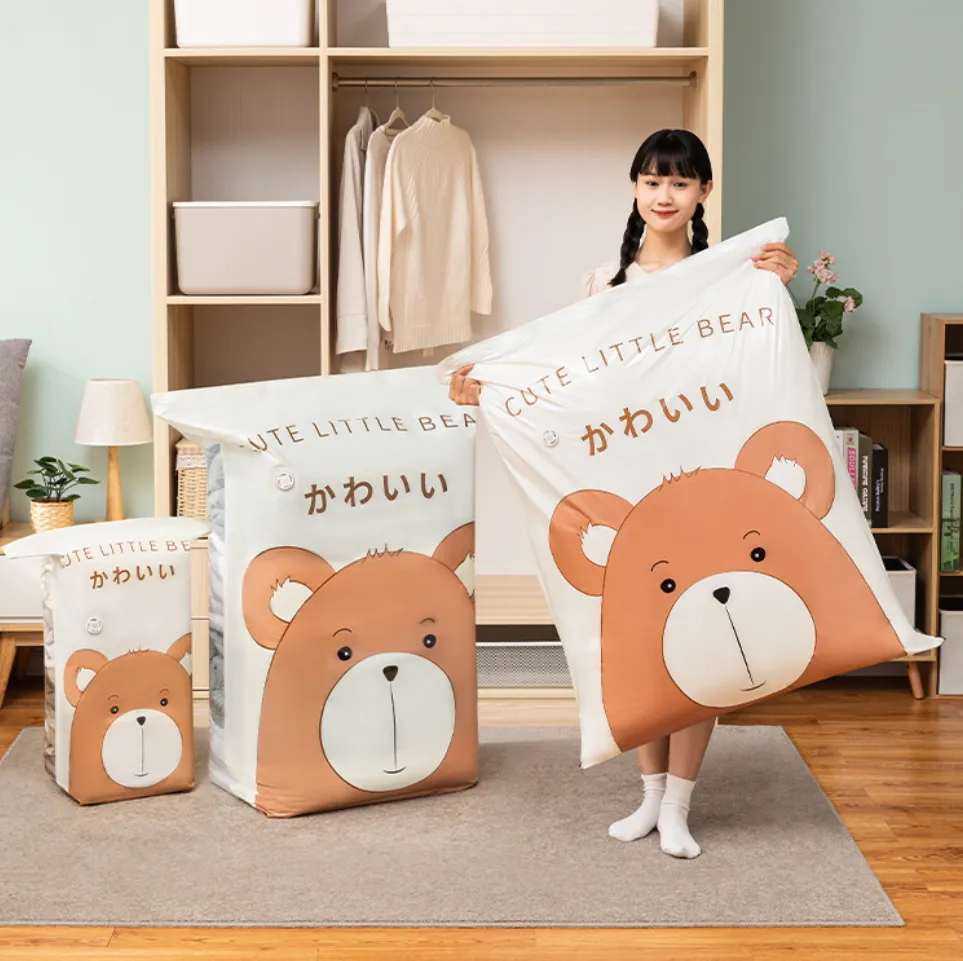
Vacuum compression bags are airtight storage bags that use a vacuum cleaner, hand pump, or electric pump to remove air after the zipper seal is closed. Once air leaves the bag, the garments occupy less volume and the bag becomes compact, flat, and easier to stack.
A typical vacuum storage bag includes:
- A multilayer plastic film structure
- A double-zipper or sliding seal
- A one-way air valve
- A reinforced sealing zone
- A transparent body for easy identification
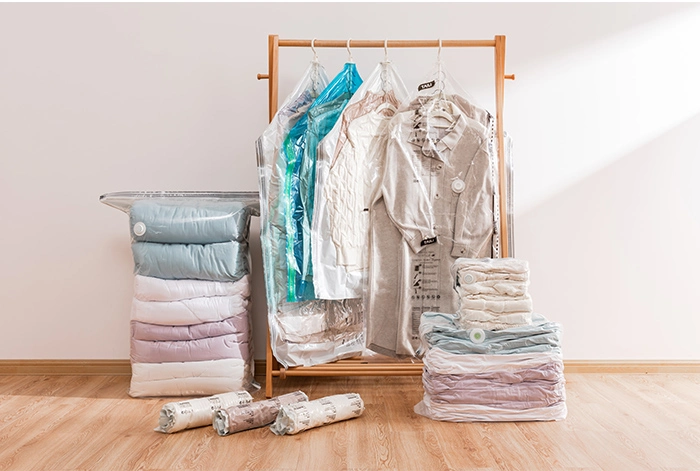
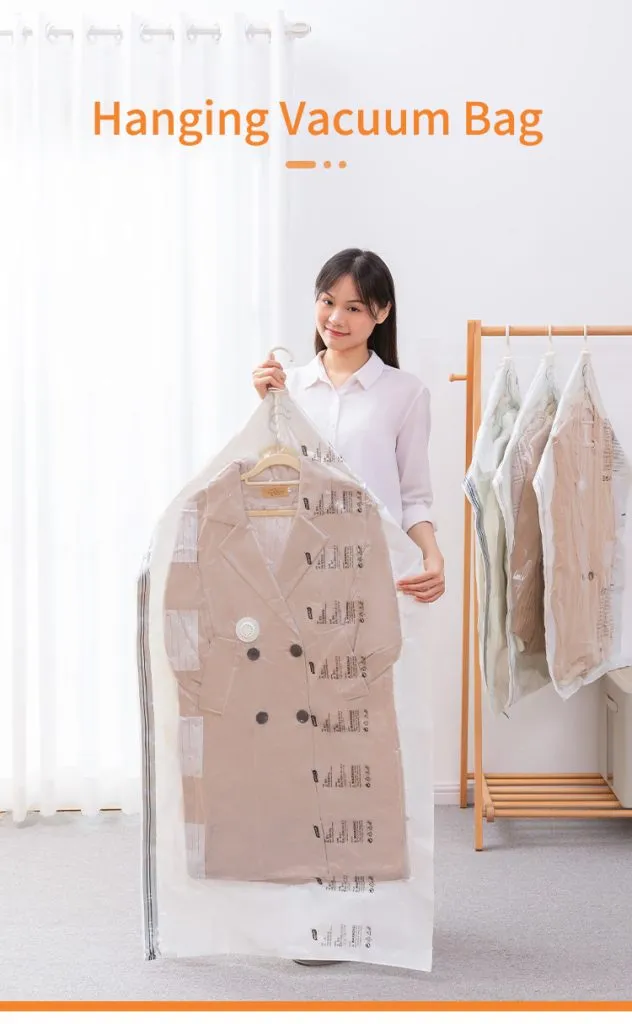
- A flat, cube, hanging, or travel-oriented bag format
The core advantage is maximum volume reduction. Winter quilts, puffer jackets, fleece blankets, towels, thick hoodies, and children’s clothing can become much easier to organize when air is removed efficiently.
However, a vacuum bag creates sustained compression. That is beneficial for durable soft goods, but it can harm garments that rely on loft, shape, natural fiber resilience, or delicate surface details.
Compression Bags for Clothes Use Mechanical Pressure
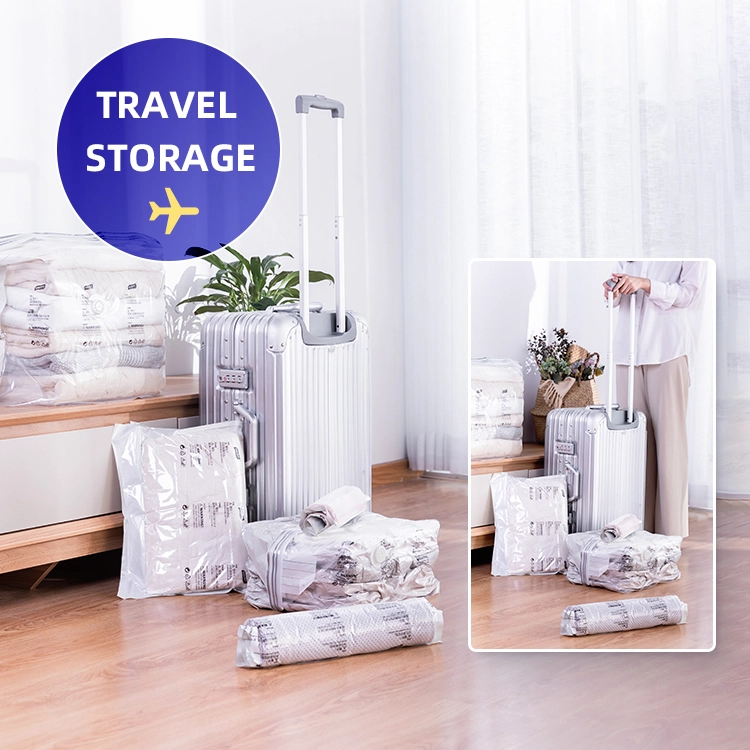
Compression bags for clothes usually reduce volume without an external vacuum. Users fold or roll clothing, close the bag, and press or roll excess air out through a one-way valve or vent. Some products use straps, zippers, or expandable compartments rather than a valve.
These bags are especially useful for:
- Travel packing
- Temporary seasonal organization
- Apartment closets
- Student accommodation
- Camping and outdoor gear
- Garments that need lighter compression
- Users who do not want to use a vacuum cleaner or pump
Because they normally leave more residual air inside, compression bags for clothes tend to offer less dramatic volume reduction. Yet they are more convenient, portable, and forgiving for garments that should not be flattened aggressively.
Vacuum Compression Bags vs Compression Bags for Clothes: Quick Comparison
| Feature | Vacuum Compression Bags | Compression Bags for Clothes |
|---|---|---|
| Air removal method | Vacuum cleaner, manual pump, or electric pump | Manual rolling, pressing, straps, or self-release valve |
| Typical space-saving potential | Higher | Moderate |
| Best for | Bulky, durable, low-sensitivity garments | Travel clothing and moderately sensitive garments |
| Pump required | Usually yes | No |
| Protection from dust | Excellent when properly sealed | Good, depending on closure design |
| Moisture barrier | Strong when high-quality film and seals are used | Varies by bag material and closure |
| Long-term seasonal storage | Suitable for selected garments | Suitable for shorter or lower-compression storage |
| Risk of deep creases | Higher if over-compressed | Lower |
| Suitability for delicate clothing | Limited | Better, but still requires care |
| Repacking after opening | Requires re-vacuuming | Easy to reseal manually |
| Ideal customer | Space-constrained household, retailer, storage organizer | Traveler, renter, student, frequent mover |
The practical conclusion: choose vacuum compression bags when storage capacity is the priority. Choose compression bags for clothes when convenience, mobility, and gentler handling matter more than maximum compression.
Which Clothes Are Safe to Store in Vacuum Compression Bags?
The question is not simply, “Can it fit?” The better question is, “Can this garment recover after pressure?”
Best Clothing for Vacuum Storage
Vacuum compression bags generally perform well with durable, flexible garments and household textiles.
Good candidates include:
- Cotton T-shirts and casual shirts
- Denim jeans and denim jackets
- Polyester sportswear
- Synthetic fleece garments
- Cotton pajamas
- Socks and underwear
- Towels
- Bed sheets
- Duvet covers
- Children’s seasonal clothing
- Polyester-filled outerwear
These products have relatively stable construction. They may wrinkle, but they typically regain function and appearance after airing, steaming, laundering, or light pressing.
For example, a family storing summer clothing during winter can place clean cotton T-shirts, shorts, denim, swimwear, and lightweight bedding into vacuum compression bags. This can free up wardrobe shelves for coats, knitwear, and boots without exposing everyday garments to unnecessary risk.
Clothes That Need Caution
Some clothing can be compressed, but only partially and for a limited time.
Use caution with:
- Wool sweaters
- Cashmere knitwear
- Down jackets
- Puffer coats
- Quilted garments
- Cotton knitwear
- Soft bras or padded clothing
- Delicate synthetic blends
- Lightweight blazers
For these items, avoid removing every last bit of air. Partial compression is often the smarter choice. The goal should be controlled space reduction, not a fully flattened package.
Down and fiber-fill products deserve special attention. Compression can make them compact, but extended storage under intense pressure may affect loft and insulation performance. A down jacket may look restored after shaking and airing, but repeated long-term flattening can reduce its recovery over time.
Clothes That Should Not Be Vacuum Sealed
Avoid full vacuum storage for garments that depend on structure, natural oils, delicate embellishment, or air circulation.
These include:
- Leather jackets
- Suede clothing
- Silk dresses and silk blouses
- Velvet garments
- Tailored suits
- Structured blazers
- Pleated skirts
- Wedding dresses
- Vintage garments
- Beaded, sequined, embroidered, or lace garments
- Fur and shearling products
Leather and suede need appropriate airflow and conditioning. Tailored garments can develop distorted shoulders, crushed lapels, and difficult crease lines. Silk, lace, and decorative surfaces can suffer from pressure marks or friction. These items are better stored in breathable garment bags, archival boxes, or covered hanging storage.
Space Savings: Where Vacuum Compression Bags Win
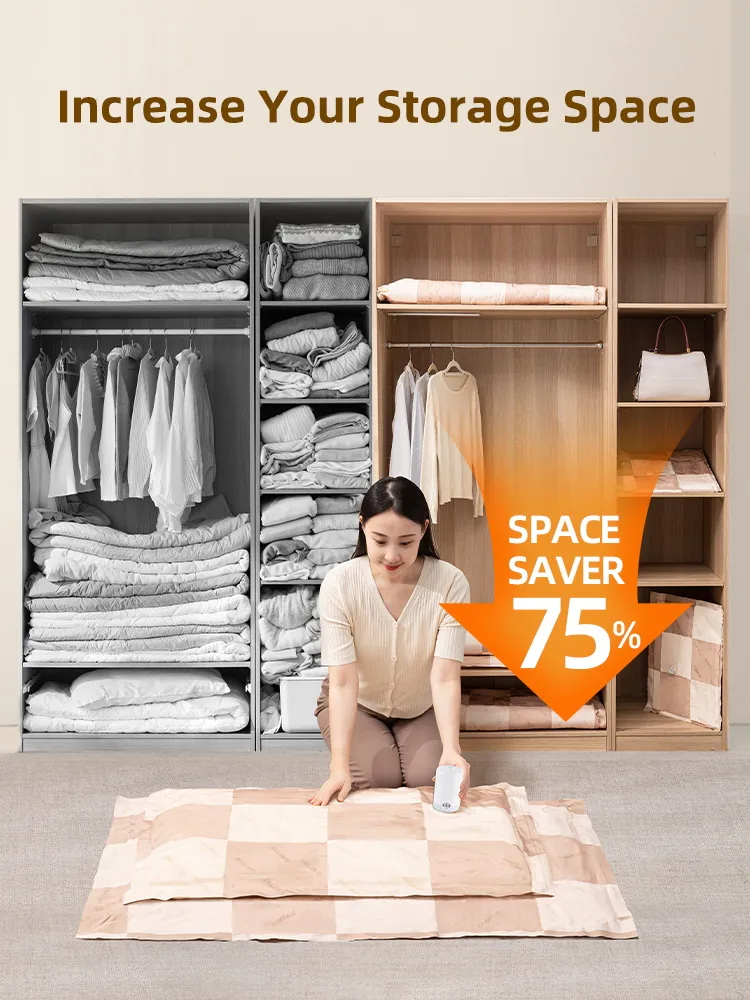
For seasonal garment storage, vacuum compression bags offer their strongest value when users need to store a large volume of bulky textiles in limited space.
This is common in:
- Urban apartments with narrow closets
- Dormitories and shared housing
- Homes with limited under-bed storage
- Families managing several wardrobes
- Retail backrooms
- Hospitality linen storage
- E-commerce fulfillment operations
- Moving and relocation projects
Market research and product guidance commonly describe vacuum storage bags as a space-saving solution for clothing, bedding, and soft goods, with the ability to materially reduce the footprint of bulky textiles when used correctly. The exact result depends on garment composition, bag size, packing method, and how much air can be removed.
A thick duvet will compress far more effectively than a stack of jeans. Similarly, a loosely filled down comforter contains more removable air than compact cotton trousers. Therefore, buyers should avoid treating “space saved” claims as identical for every category.
A Better Way to Estimate Storage Results
Instead of asking whether a bag can save a fixed percentage of space, assess four factors:
- Loft level: Puffy, air-filled items usually compress more.
- Fabric resilience: Flexible synthetics recover better than structured natural fibers.
- Packing density: Neatly folded garments compress more evenly than crumpled loads.
- Bag quality: Strong film, reliable valves, and secure seals reduce air return.
A well-designed vacuum bag should create a stable barrier system rather than merely flattening clothing for a few hours. This is where high-performance film materials, precision sealing, and valve reliability become commercially important.
Fabric Protection Matters More Than Maximum Compression
Consumers often make one mistake: they judge vacuum storage bags only by how flat they can make a pile of clothing.
That is not the right standard.
The better standard is whether the bag can balance storage efficiency, garment protection, reuse, and sealing reliability. The lowest-profile package is not always the safest package.
High-quality vacuum compression bags should help protect stored garments from common environmental threats, including:
- Dust accumulation
- Odor transfer
- Insect exposure
- Accidental liquid splashes
- Humidity fluctuations
- Closet contamination
- Cross-season clutter
However, an airtight bag can trap problems as effectively as it blocks external threats. If clothes go into the bag with sweat, food residue, perfume, body oils, or moisture, those contaminants remain enclosed.
This is why clean and fully dry preparation is essential. Textile-storage guidance consistently emphasizes that garments should be washed or dry-cleaned according to care labels and dried completely before sealing. Residual moisture inside a sealed environment can contribute to odor, mildew, and fiber damage.
How to Use Vacuum Compression Bags for Seasonal Clothing Storage
A reliable process protects garments and helps bags maintain their seal.
Step 1: Sort Clothing by Material and Construction
Create three groups before packing:
- Durable: Denim, cotton basics, polyester clothing, towels, sheets
- Moderate sensitivity: Cotton knits, fleece, casual sweaters, padded outerwear
- High sensitivity: Silk, wool tailoring, leather, suede, vintage garments, formalwear
Only place the first group into full vacuum compression. Use partial compression or a non-vacuum solution for the second group. Store the third group separately in breathable protection.
Step 2: Clean Every Item
Wash or dry-clean garments according to their care labels. Remove stains before storage, even if the stain is faint.
Invisible residues from perspiration, food, skincare products, and fragrance can oxidize over time. They may create yellowing, odor, or attraction for pests after months in storage.
Step 3: Dry Completely
Do not rush this stage. A garment that feels almost dry may still retain moisture in seams, waistbands, pockets, cuffs, insulation layers, or folded fabric areas.
Allow clothes to air out before loading them into vacuum compression bags. This simple extra step can greatly reduce the risk of odor and moisture problems.
Step 4: Fold, Do Not Stuff
Smooth and fold garments in a way that avoids hard pressure points.
Use these packing principles:
- Fold jeans along natural seams
- Roll soft knitwear lightly
- Keep zippers closed to prevent snags
- Turn dark denim inside out to reduce color transfer
- Place heavier garments at the bottom
- Avoid sharp folds across padded sections
- Keep fragile decorations away from the bag surface
Do not overfill. Overloaded bags are harder to seal, more likely to wrinkle clothing, and more vulnerable to stress around the zipper and valve.
Step 5: Remove Air Gradually
Do not assume full suction is always best.
For durable clothing and bedding, full compression may be appropriate. For down jackets, soft knitwear, and padded garments, remove only part of the air. Leaving some internal volume helps reduce the risk of crushed loft and distorted shape.
Step 6: Label and Store Correctly
Write the contents and packing date on each bag.
Examples include:
- “Summer clothes — 24 September 2026”
- “Guest bedding — queen size”
- “Children’s winter jackets — size 4–6”
- “Travel clothing — clean”
Store bags in a cool, dry, dark place. Keep them away from direct sunlight, high heat, sharp objects, damp concrete floors, and unstable attic or garage environments.
Industry Insight: Why Material Engineering Changes Storage Performance
In the household storage market, buyers often compare bag thickness alone. Thickness is useful, but it does not tell the full story.
The performance of vacuum compression bags depends on a combination of material and design factors:
- Film structure: Multilayer constructions can balance flexibility, strength, and barrier performance.
- Seal design: Double-zipper closures can provide greater confidence than single-track closures.
- Valve precision: A valve must release air efficiently while limiting reverse airflow.
- Puncture resistance: Stronger films are better suited to repeated seasonal use.
- Surface quality: A smooth internal surface reduces snagging and friction.
- Repeatability: A reusable bag must maintain its performance across multiple sealing cycles.
Taili Technology’s focus on high-performance nanomaterials, polymer synthesis, precision coating, and surface-interface materials reflects the type of technical capability needed to advance protective packaging products. The company’s full-industry-chain approach—from nanomaterial research to end-product manufacturing—also supports tighter control over material selection, product consistency, and product innovation.
For importers, retailers, private-label brands, and storage-product distributors, this matters because a vacuum bag failure is not merely inconvenient. It can lead to returns, negative reviews, damaged textiles, and lost customer trust.
When Compression Bags for Clothes Are the Better Choice
Vacuum storage is powerful, but it is not always practical.
Compression bags for clothes are often the better option when users want to avoid pumps, need to repack frequently, or are traveling. They are especially convenient for short-term compression and mobile storage.
Choose compression bags for clothes when:
- You are packing for a trip
- You need to open and close bags often
- You do not have access to a vacuum cleaner
- You want gentler compression
- You are storing garments for only a few weeks
- You are packing moderately delicate clothing
- You need luggage organization rather than closet optimization
- You want separate compartments for clean and worn clothes
For travel, a roll-up compression bag can be highly efficient. It allows the traveler to reduce clothing bulk without carrying an electric pump. It also makes it easier to repack after airport security inspection or laundry use.
Vacuum bags can also work for travel, but users should remember that compressed clothes still weigh the same. A suitcase may look smaller, yet it can still exceed airline weight limits. Vacuum compression reduces volume, not mass.
Common Mistakes That Damage Clothes or Bags
Even premium vacuum compression bags can underperform if users make avoidable mistakes.
Over-Compressing Every Garment
Not every item should be flattened to its maximum limit. Wool, down, tailoring, and decorative clothing need gentler treatment.
Packing Damp Clothing
This is one of the most serious errors. Moisture in a sealed environment can create musty odor, mildew risk, and long-term fabric problems.
Overfilling the Bag
Overfilling places stress on the zipper, film, and valve. It can also create uneven pressure that causes deep wrinkles.
Ignoring Small Leaks
If a bag slowly reinflates, check the zipper track, valve cap, and bag surface. Lint, fabric fibers, hair, or a tiny puncture can affect performance.
Storing Bags in Extreme Conditions
Avoid hot cars, humid basements, uninsulated garages, and direct sun. High heat can affect film performance, while fluctuating humidity can increase storage risks.
Forgetting to Inspect Long-Term Storage
For extended storage, inspect bags periodically. Open, air, refold, and reseal selected items if necessary. This is particularly important for sensitive textiles and seasonal wardrobes stored for many months.
Buying Checklist for Vacuum Compression Bags
Before selecting vacuum compression bags for seasonal garment storage, evaluate the product beyond price.
Look for:
- Durable multilayer film
- Reliable double-seal zipper
- Strong one-way valve
- Clear instructions for use
- Multiple bag sizes
- Reusable design
- Tear and puncture resistance
- Compatibility with household vacuum cleaners
- Hand-pump or electric-pump options
- A transparent window or body
- Space for labeling
For B2B buyers, additional requirements may include customized dimensions, printing, packaging configuration, compliance documentation, product testing, and stable production capacity.
Final Verdict: Which Bag Is Better for Seasonal Garment Storage?
Vacuum compression bags are better for maximizing storage space when you are storing durable, bulky, clean, and completely dry seasonal clothing or bedding. They are particularly useful for households with limited closets, retailers handling soft goods, and anyone storing large-volume textiles.
Compression bags for clothes are better for flexibility and gentler handling. They are ideal for travel, temporary organization, frequent repacking, and garments that should not undergo strong or prolonged compression.
The strongest storage strategy combines both.
Use vacuum compression bags for:
- Bedding
- Towels
- Cotton basics
- Denim
- Polyester garments
- Fleece
- Children’s clothes
- Durable seasonal outerwear
Use compression bags for clothes or breathable storage for:
- Wool
- Cashmere
- Silk
- Leather
- Tailoring
- Delicate formalwear
- Vintage garments
- Structured pieces
If you are developing, sourcing, or selecting storage products for a retail brand, choose a supplier that understands not only bag size and appearance, but also material science, sealing performance, reliability, and garment-protection requirements. The right storage bag should make seasonal organization easier while helping customers preserve the clothing they value.
Ready to build a smarter seasonal storage system? Sort your wardrobe by fabric sensitivity, reserve vacuum compression bags for durable bulk items, and use gentler compression or breathable storage for garments that need their shape, loft, and texture preserved.
Frequently Asked Questions
Are vacuum compression bags bad for clothes?
Vacuum compression bags are not inherently bad for clothes. They work well for durable garments such as cotton basics, denim, polyester clothing, towels, and bedding. Problems occur when users store delicate, structured, natural-fiber, leather, or loft-dependent items under strong compression for long periods.
Can I store winter coats in vacuum compression bags?
It depends on the coat. Polyester-filled jackets, casual synthetic outerwear, and some padded items can be partially compressed. However, wool coats, tailored coats, leather jackets, fur, and high-loft down garments should not be fully vacuum sealed for extended periods.
How long can clothes stay in vacuum storage bags?
Durable seasonal garments can usually be stored for a season when they are clean, completely dry, and kept in a stable environment. For more sensitive fabrics, avoid extended full compression and inspect storage periodically. Guidance on textile care commonly recommends monitoring bags and limiting prolonged compression for delicate materials.
Do vacuum bags prevent mold?
They can help protect contents from outside moisture and dust when sealed properly, but they do not make damp clothing safe. If moisture is trapped inside the bag, mold and mildew risks can increase. Always dry clothes thoroughly before packing.
Will vacuum compression bags kill moths or insects?
A properly sealed vacuum bag can reduce access by insects and help isolate clean clothing from pests. However, it should not replace cleaning garments, inspecting closets, or addressing an active infestation before storage.
Can I use vacuum compression bags for wool sweaters?
Use caution. Wool can lose shape and develop stubborn creases under sustained pressure. For short-term space reduction, use light or partial compression. For long-term seasonal storage, fold wool sweaters with acid-free tissue or store them in breathable containers.
Why does my vacuum storage bag inflate again?
The most common causes are an incompletely closed zipper, debris in the seal, an improperly tightened valve cap, fabric trapped in the closure, a small puncture, or film stress from overfilling. Empty the bag, inspect the closure and valve, and reseal it without overloading.
References
1. Alibaba.com – “How to Store Seasonal Clothes in Vacuum Bags Without Causing Fabric Damage” – Guidance on storing seasonal clothes in vacuum bags while avoiding fabric damage. https://www.alibaba.com/product-insights/how-to-store-seasonal-clothes-in-vacuum-bags-without-causing-fabric-damage.html
2. Ekster – “Your Guide to Using Vacuum Travel Bags: TSA, Care Tips & Fabric Safety” – Guide covering TSA rules, care tips, and fabric safety for vacuum travel bags. https://www.ekster.com/blogs/the-journal/guide-to-using-vacuum-travel-bags-and-care-tips
3. QY Research – “Global Vacuum Storage Bag Market Insights, Forecast to 2031” – Market research report on the global vacuum storage bag market with forecasts to 2031. https://www.qyresearch.com/reports/4642848/vacuum-storage-bag
4. DataString Consulting – “Vacuum Storage Bags Market 2025–2034” – Industry analysis and market research report on vacuum storage bags for 2025–2034. https://datastringconsulting.com/industry-analysis/vacuum-storage-bags-market-research-report
5. Market Intelo – “Vacuum Storage Bag Market Research Report 2034” – Market research report on the vacuum storage bag market through 2034. https://marketintelo.com/report/vacuum-storage-bag-market
6. DataIntelo – “Seasonal Clothing Storage Bag Market Research Report 2033” – Market research report on the seasonal clothing storage bag market through 2033. https://dataintelo.com/report/seasonal-clothing-storage-bag-market
7. Taili Technology – “Corporate Website” – Official corporate website for Taili Technology. https://www.taili.com/
Hot Tags: Vacuum Compression Bags, Compression Bags For Clothes, Vacuum Storage Bags, Clothes Storage Bags, Seasonal Garment Storage, Vacuum Packing Bags, Space Saving Storage Bags, Reusable Vacuum Bags, Vacuum Storage Bag Manufacturer, Custom Vacuum Storage Bags