Content Menu
● Quick Verdict: Compression Bags or Packing Cubes?
● What Are Compression Bags for Travel?
>> Best Uses for Compression Bags
>> Best Uses for Packing Cubes
● Compression Bags vs Packing Cubes for High-Volume Packing
>> 2. Organization and Accessibility
>> 3. Wrinkles and Garment Protection
>> 5. Durability and Reusability
● Real-World Packing Test: A 14-Day Winter Trip
● How to Pack More Without Overpacking
>> Use the “Three-Layer” Packing Method
>> Avoid These Common Mistakes
● Which Product Should You Buy?
>> Do compression bags really save suitcase space?
>> Are compression bags better than packing cubes?
>> Can I use compression bags in carry-on luggage?
>> Do compression bags wrinkle clothes?
>> Can I use vacuum bags without a vacuum cleaner?
>> Are compression packing cubes the same as vacuum compression bags?
>> What should not go in a compression bag?
When you need to fit a large amount of clothing into limited luggage space, the choice between compression bags vs packing cubes can substantially affect how efficiently you pack, unpack, and travel. Compression bags are usually the stronger choice for maximum volume reduction, especially for bulky soft items. Packing cubes are generally better for organization, quick access, and keeping a suitcase manageable throughout a trip.
For high-volume travel packing, however, the best answer is rarely “one or the other.” Experienced travelers, travel-product buyers, and luggage organizers often get the best result from a hybrid packing system: use compression bags for low-priority bulky garments and packing cubes for the items you need to access regularly.
For vacuum-storage and travel-organization brands, this comparison matters because travelers are not only buying a bag. They are buying a more controlled, efficient, and less stressful travel experience.
Quick Verdict: Compression Bags or Packing Cubes?
Choose compression bags if your primary goal is to reduce the space occupied by clothing, bedding, outerwear, or other air-filled textiles.
Choose packing cubes if your primary goal is to keep clothing sorted, accessible, and easy to repack during a multi-stop trip.
Use both if you are packing for a long journey, a winter destination, family travel, relocation, study abroad, cruise travel, or a business trip with limited luggage capacity.
| Factor | Compression Bags | Packing Cubes |
|---|---|---|
| Main purpose | Reduce the volume of soft goods | Organize clothing and travel items |
| Best for | Puffer jackets, sweaters, bedding, towels, seasonal clothing | Shirts, underwear, outfits, electronics, toiletries |
| Space-saving ability | High, especially for bulky textiles | Low to moderate |
| Organization | Moderate | Excellent |
| Wrinkle control | Can be poor for delicate garments | Usually better |
| Ease of access | Lower after sealing | High |
| Repacking during travel | Can be inconvenient | Fast and simple |
| Weight reduction | No; only reduces volume | No; only improves organization |
| Ideal traveler | High-volume packer or long-stay traveler | Frequent traveler or carry-on organizer |
The key point is simple: compression bags reduce air, while packing cubes control clutter. They solve different problems.
What Are Compression Bags for Travel?
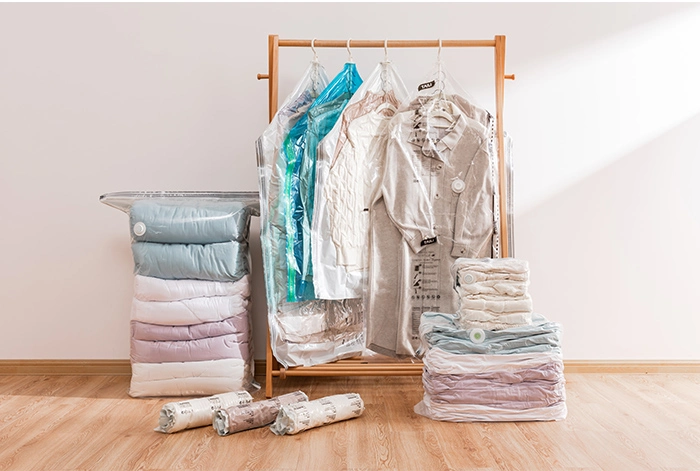
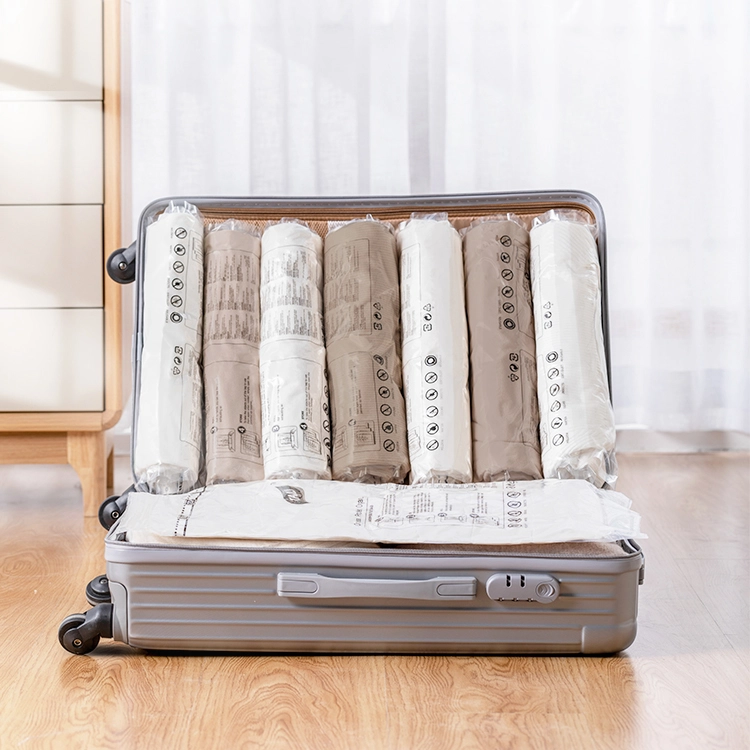
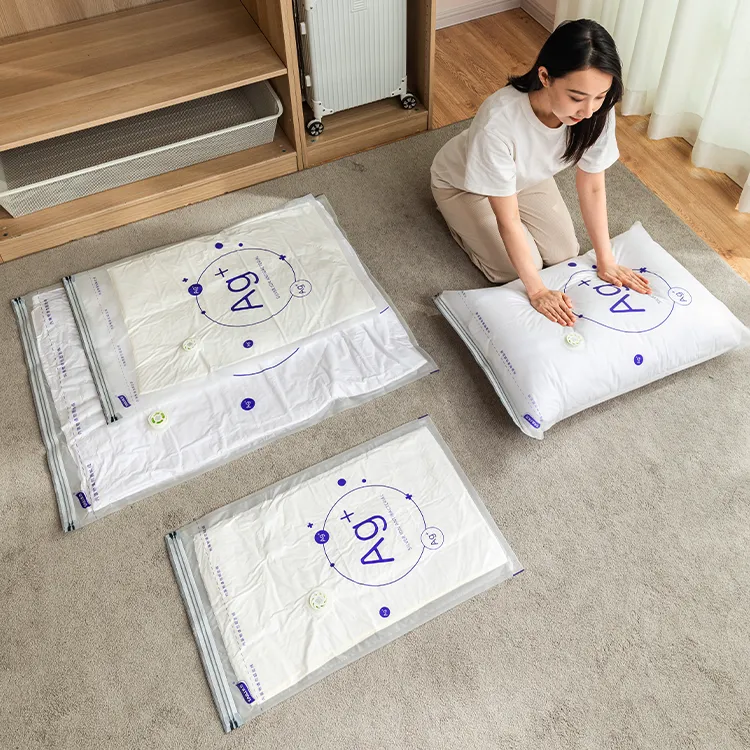
Compression bags are sealable bags designed to reduce the volume of soft goods by removing excess air. They may work with a household vacuum, a portable electric pump, a hand pump, or a manual roll-up valve.
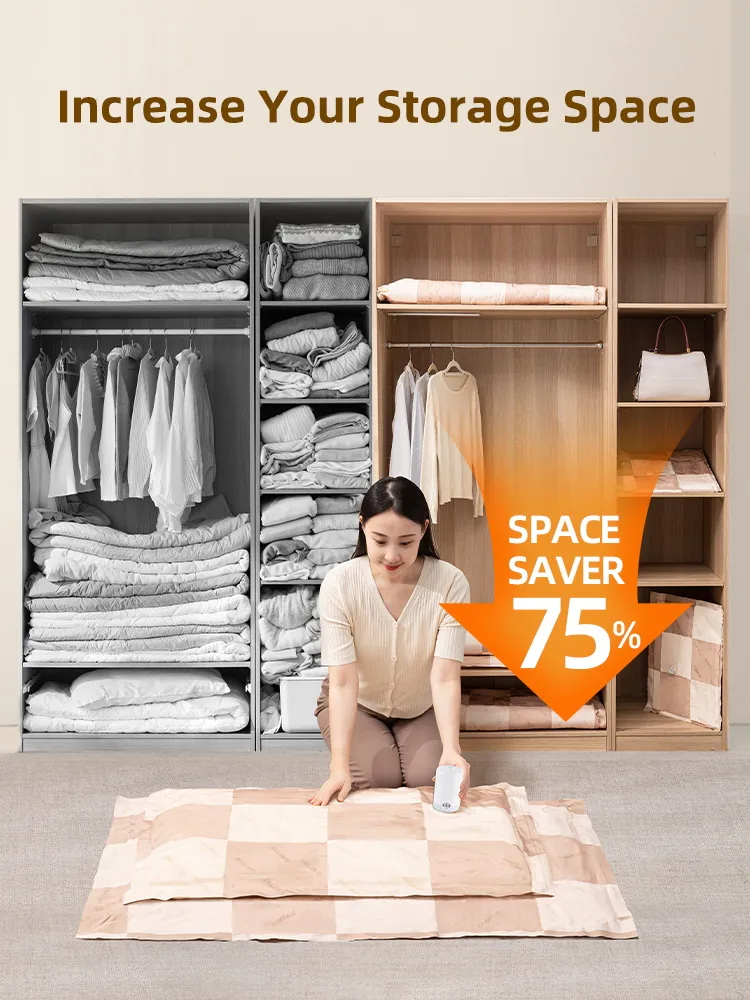
A vacuum compression bag can make a thick sweater, down jacket, blanket, towel, or spare bedding set substantially flatter. The bag creates a sealed environment, which helps reduce bulk and provides a degree of protection from moisture, dust, and odors.
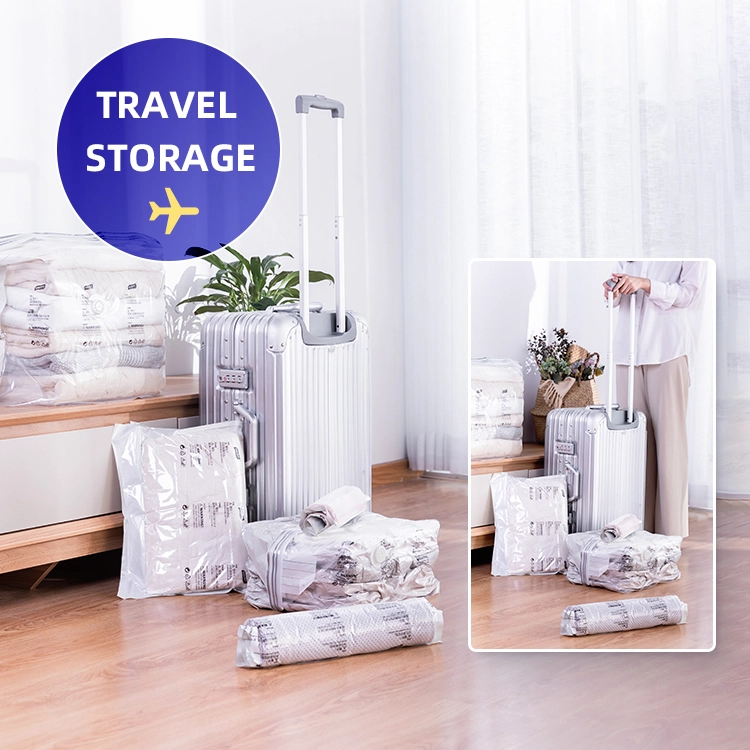
For travelers, compression bags are especially useful when luggage space is the primary constraint.
How Compression Bags Work
A typical travel compression bag follows a straightforward process:
- Fold or roll clean, dry clothing.
- Place the items inside the bag without exceeding its fill line.
- Close the double-seal zipper completely.
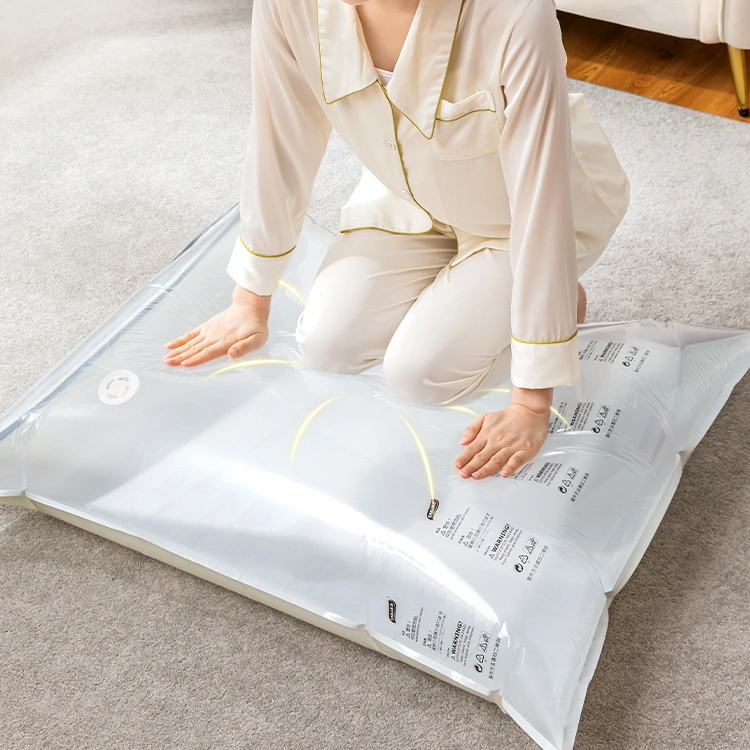
- Remove air through a valve, pump, or roll-up method.
- Pack the flattened bag into the suitcase, duffel bag, trunk, or storage container.
The strongest compression results generally come from vacuum compression bags, while roll-up travel bags offer greater convenience when a vacuum or pump is unavailable.
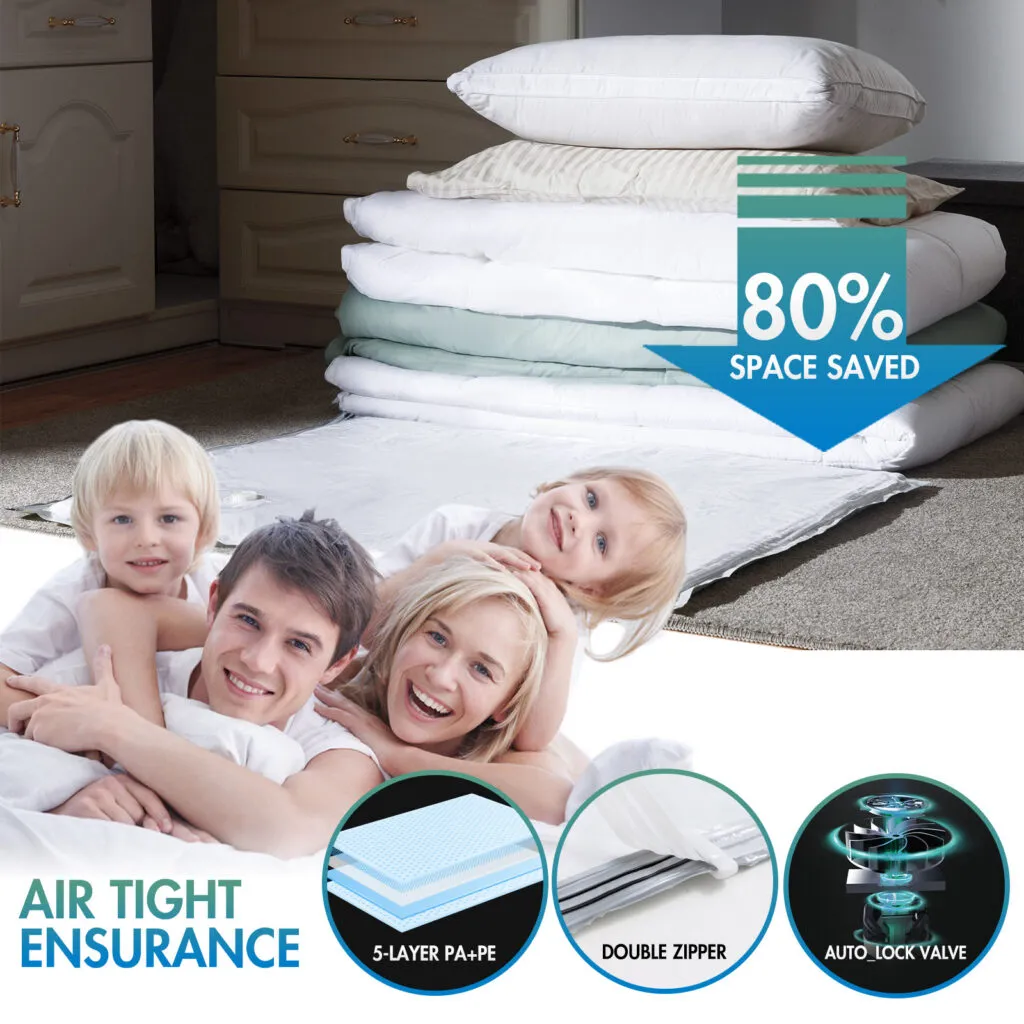
A quality vacuum-storage solution depends on more than a plastic pouch. The real performance factors include film strength, airtight sealing, valve reliability, puncture resistance, and the ability to maintain compression over time. These are material-engineering challenges, especially for travelers who reuse bags repeatedly under pressure, friction, temperature changes, and luggage handling.
Best Uses for Compression Bags
Compression bags work particularly well for:
- Winter coats and puffer jackets
- Fleece jackets and thick knitwear
- Ski clothing and snow gear
- Towels and beachwear
- Bedding for camping, dormitories, or extended stays
- Baby clothes and family travel backups
- Soft toys and pillows
- Spare clothing for long-term travel
- Seasonal garments during relocation
- Clean clothing that will not need immediate access
For a traveler carrying five or six sweaters, a down jacket, two towels, and a week of cold-weather clothing, compression bags can create more usable suitcase volume than standard packing cubes.
What Are Packing Cubes?
Packing cubes are lightweight zippered fabric containers that divide luggage into organized sections. They do not normally remove air in the same way that vacuum bags do. Instead, they help travelers sort clothing into compact groups.
A traveler may use one cube for shirts, one for underwear, one for workout gear, one for electronics, and another for dirty laundry. This system makes it possible to locate a specific item without unpacking the whole suitcase.
Some packing cubes include compression zippers, which tighten the fabric around the contents. These compression packing cubes provide a modest volume reduction while retaining the organizational benefits of regular cubes.
Best Uses for Packing Cubes
Packing cubes are highly effective for:
- Multi-city travel
- Business trips
- Carry-on-only travel
- Family travel with shared luggage
- Cruises and hotel-hopping itineraries
- Backpacking where access matters
- Separating clean and worn clothing
- Keeping accessories, cables, socks, and underwear together
- Creating pre-planned daily outfits
- Keeping a suitcase tidy after security checks
Travel editors often favor packing cubes for ordinary holidays because they make clothing easier to find and reduce the “exploded suitcase” problem. One travel guide recommends packing clothes by outfit or category, while another notes that cube systems can separate clean garments, dirty laundry, footwear, and accessories more effectively than loose packing.
Compression Bags vs Packing Cubes for High-Volume Packing
For high-volume travel, the comparison should not focus only on how much fits inside the bag. You also need to assess access, garment condition, luggage limits, and packing workflow.
1. Space Efficiency
Compression bags win for bulky soft goods.
Bulky textiles contain a large amount of air. Down jackets, fleece, knitwear, bedding, towels, and pillows often occupy far more suitcase space than their actual material weight would suggest. Compression bags remove much of that trapped air, creating a flatter package.
Packing cubes can make clothes feel more compact because they impose shape and order. However, standard cubes do not dramatically reduce the physical volume of air-filled garments.
Compression packing cubes can narrow the gap, but they usually do not compress as aggressively as a vacuum-sealed bag.
Best choice for maximum volume reduction: Compression bags.
Best choice for balanced space-saving and organization: Compression packing cubes.
2. Organization and Accessibility
Packing cubes win for everyday usability.
A traveler using packing cubes can open one cube, select a shirt, and close it again. The rest of the suitcase remains organized. This is particularly valuable when traveling through multiple hotels, airports, trains, cruise cabins, or client meetings.
Compression bags are less convenient when frequently opened. Once the seal is broken, the bag expands. Recompressing it may require a pump, vacuum source, or manual rolling technique.
If you are staying in three cities over ten days, packing cubes reduce the time and frustration involved in daily unpacking. If you are moving abroad for six months, compression bags may offer more value because you only need to pack and unpack once or twice.
Best choice for frequent access: Packing cubes.
Best choice for long-term storage inside luggage: Compression bags.
3. Wrinkles and Garment Protection
Packing cubes are usually better for wrinkle-sensitive clothing.
Compression puts pressure on garments. This is not a major issue for T-shirts, fleece, socks, sweaters, or casual travel clothes. However, business shirts, linen garments, dresses, suit jackets, structured blazers, and delicate fabrics may emerge with deep creases.
Independent travel testing has also found that vacuum-packed clothing can become wrinkled and that the stiff, compressed packages may leave awkward empty spaces in a suitcase.
For wrinkle-prone clothing, fold garments neatly, use tissue paper or garment folders where appropriate, and place them in a packing cube near the top of the luggage.
Use compression bags for: Durable, casual, soft, bulky clothing.
Use packing cubes for: Shirts, workwear, dresses, delicate fabrics, and garments you plan to wear immediately after arrival.
4. Luggage Weight Limits
Neither option reduces weight.
This is the most important warning for travelers who fly with strict baggage allowances. Compression bags create extra room, which may tempt you to pack more. But the suitcase still weighs the same—or more—once you fill the newly available space.
This becomes especially important with airlines that enforce cabin-bag weight limits. A highly compressed carry-on may meet the size requirement but still exceed the permitted weight. Travel advice for one-bag travelers consistently warns that compression increases capacity, not weight allowance.
Before departure, weigh the packed suitcase with a luggage scale. Do not assume a flatter bag is automatically airline-compliant.
5. Durability and Reusability
Material quality determines whether a compression bag is genuinely practical.
Low-quality compression bags may leak, split at the seam, develop valve failures, or become difficult to reseal after repeated use. For high-volume travel packing, a failed bag can create immediate inconvenience—especially if the traveler depends on it for limited cabin space.
A strong travel compression product should include:
- Multi-layer high-barrier film
- Reinforced heat seals
- Reliable double-zip closure
- Leak-resistant valve design
- Tear and puncture resistance
- Clear fill lines
- Reusable construction
- Easy manual or pump-assisted air removal
Taili Technology’s experience in vacuum packaging and high-performance material development provides a relevant foundation for this category. The company identifies vacuum storage bags as a core product area and states that its products serve more than 160 countries and regions, supported by more than two decades of material innovation. Its broader corporate background also highlights nanomaterial development, polymer synthesis, precision coating, and material platforms designed for performance-critical applications.
For consumers and B2B buyers, this matters because effective compression bags rely on the quality of the underlying film, seal, surface treatment, and valve system—not merely on the bag’s appearance.
Real-World Packing Test: A 14-Day Winter Trip
Imagine a 14-day business and leisure trip to a cold-weather destination. The traveler needs:
- Six sweaters
- Two pairs of jeans
- Two thermal base layers
- One puffer jacket
- One fleece jacket
- Four shirts
- Underwear and socks
- Toiletries
- Laptop accessories
- One pair of dress shoes
- One pair of casual shoes
Packing Cubes Only
Packing cubes keep every category easy to locate. Shirts, underwear, sweaters, cables, and toiletries remain separated. However, the puffer jacket and fleece take up considerable suitcase space.
This setup is ideal if the traveler needs to access items daily and wants a tidy hotel-room routine.
Compression Bags Only
Compression bags flatten the puffer jacket, fleece, thermal layers, and sweaters. The suitcase can hold more clothing, souvenirs, or extra equipment. However, formal shirts may wrinkle, and finding a specific item becomes less convenient.
This setup is ideal for relocation, long stays, winter travel, or travel where luggage capacity matters more than daily organization.
Hybrid System
The most practical solution is usually:
- Put the puffer jacket, fleece, thermal layers, and spare sweater in one compression bag.
- Put shirts and business clothing in a structured packing cube.
- Use a small cube for underwear, socks, and sleepwear.
- Use a separate pouch for cables, chargers, and travel documents.
- Keep shoes in individual shoe bags or designated suitcase corners.
This approach delivers high-volume capacity without sacrificing daily usability.
How to Pack More Without Overpacking
High-volume packing should not mean uncontrolled packing. The most efficient travelers reduce unnecessary items before relying on compression.
Use the “Three-Layer” Packing Method
- Wear layer: Pack the clothes you expect to wear regularly, such as shirts, trousers, underwear, and lightweight layers, in packing cubes.
- Bulk layer: Pack thick, soft, low-access items, such as puffer jackets, fleece, towels, and spare bedding, in compression bags.
- Gap-fill layer: Use the remaining spaces around cubes and bags for socks, belts, chargers, shoes, and small accessories.
This method improves space use because luggage is not perfectly rectangular once it is filled. Small items can fill gaps around more structured packing units.
Avoid These Common Mistakes
- Do not vacuum-pack damp clothing.
- Do not overfill a compression bag beyond its marked limit.
- Do not rely on a hotel vacuum being available for the return journey.
- Do not compress suits, structured jackets, or delicate clothing unless you accept wrinkles.
- Do not use compression as an excuse to exceed airline weight limits.
- Do not pack sharp items without protective wrapping.
- Do not place travel documents, medication, valuables, or essential electronics inside a compression bag.
Which Product Should You Buy?
The right product depends on your travel pattern, luggage type, and packing priorities.
| Travel Scenario | Better Choice | Why |
|---|---|---|
| Weekend city break | Packing cubes | Fast access and easy organization |
| Carry-on business trip | Packing cubes | Better garment management and quick unpacking |
| Two-week winter holiday | Hybrid system | Compression for bulk, cubes for outfits |
| International relocation | Compression bags | Maximum capacity for clothing and soft goods |
| Family holiday | Hybrid system | Separates each person’s clothing while saving space |
| Camping or road trip | Compression bags | Useful for bedding, towels, and soft gear |
| Cruise travel | Packing cubes | Easy drawer-based organization in small cabins |
| Study abroad | Hybrid system | Helps transport large volumes while keeping essentials accessible |
For retailers, distributors, and travel-product brands, the opportunity is not to position compression bags and packing cubes as direct rivals. Instead, position them as complementary products within a complete travel-organization system.
A bundled travel solution can include vacuum compression bags, manual pumps, packing cubes, laundry bags, shoe bags, toiletry pouches, and storage organizers. This approach better reflects how real travelers pack.
Final Verdict
For high-volume travel packing, compression bags work better when space reduction is the priority. They are particularly valuable for winter clothing, bedding, towels, bulky casualwear, long stays, and relocation.
Packing cubes work better when organization, garment access, and a smooth daily travel routine matter most. They are ideal for business trips, multi-destination travel, carry-on packing, and travelers who dislike searching through a disordered suitcase.
The most effective strategy is to combine both products. Use compression bags to remove wasted air from bulky textiles, then use packing cubes to keep the rest of your luggage organized and accessible.
For brands, retailers, and sourcing partners looking to develop reliable travel-compression products, prioritize material quality, airtight performance, repeat-use durability, and user-friendly design. A well-engineered travel compression system does more than create space—it makes high-volume travel more manageable.
Ready to build a smarter travel-storage range? Explore durable vacuum compression solutions and coordinated packing organizers that help travelers pack more, protect essentials, and stay organized from departure to arrival.
Frequently Asked Questions
Do compression bags really save suitcase space?
Yes. Compression bags can reduce the volume of bulky, air-filled soft goods such as jackets, sweaters, bedding, towels, and fleece. They do not reduce the actual weight of the items.
Are compression bags better than packing cubes?
Compression bags are better for maximizing luggage capacity. Packing cubes are better for organization and quick access. For long trips or winter travel, using both is often the most effective solution.
Can I use compression bags in carry-on luggage?
Yes, provided the bag meets the airline’s size and weight requirements. Compression bags can make it easier to fit bulky clothing into a carry-on, but they do not reduce the weight of the contents.
Do compression bags wrinkle clothes?
They can. Compression is more likely to crease formal shirts, dresses, linen, and structured garments. Use compression bags mainly for casual, soft, durable clothing and use packing cubes for wrinkle-sensitive items.
Can I use vacuum bags without a vacuum cleaner?
Yes, some travel compression bags are designed for manual rolling, hand pumps, or portable electric pumps. These options are more practical for travelers who need to repack during their journey.
Are compression packing cubes the same as vacuum compression bags?
No. Compression packing cubes use zippers, straps, or fabric tension to reduce bulk moderately. Vacuum compression bags remove air through a seal and valve system, usually achieving stronger compression for soft items.
What should not go in a compression bag?
Avoid packing damp clothing, fragile items, valuable electronics, important documents, medication, sharp objects without protection, and garments that are highly prone to wrinkles.
References
1. CN Traveller – “The Clever Luggage Trick That Helps You Swerve Checked Baggage Fees” – How packing cubes can help you avoid checked baggage fees. https://www.cntraveller.com/article/the-best-packing-cubes
2. Which? – “How to Pack a Suitcase—The Most Space-Efficient Way” – Step-by-step guidance on packing a suitcase as space-efficiently as possible. https://www.which.co.uk/reviews/cabin-bags/article/how-to-pack-a-suitcase-the-most-space-efficient-way-aUwwz4Y6X3hs
3. Outside – “The Ultimate Guide to Packing Cubes for Adventure Travelers” – Comprehensive guide to packing cubes for adventure travel. https://www.outsideonline.com/adventure-travel/advice/the-ultimate-guide-to-packing-cubes/
4. Pack Hacker – “Best Compression Packing Cubes for One-Bag Travel” – Recommendations for the best compression packing cubes for one-bag travel. https://www.packhacker.com/blog/general/best-compression-packing-cubes/
5. Travel + Leisure – “Pro Packer Tips for Fitting More Into a Weekender” – Expert packing tips for fitting more into a weekender bag. https://www.travelandleisure.com/weekender-bag-carry-on-packing-tips-expert-picks-12059279
6. Taili – “Vacuum Storage Bags Manufacturer, OEM and Wholesale” – Vacuum storage bags manufacturer offering OEM and wholesale services. https://www.taili-group.com/
7. Taili Technology Group – “Official Corporate Website” – Official corporate website for Taili Technology Group. https://zs-taili.com/
8. Rick Steves Travel Forum – “Compression vs Packing Cubes” – Travel forum discussion comparing compression bags and packing cubes. https://community.ricksteves.com/travel-forum/packing/compression-vs-packing-cubes
Hot Tags: Vacuum Storage Bags, Travel Compression Bags, Vacuum Packing Bags, Packing Cubes, Compression Packing Cubes, Vacuum Storage Bag Manufacturer, Travel Storage Solutions, Vacuum Bag OEM Manufacturer, Space Saving Storage Bags, Custom Vacuum Bags