Content Menu
● Why Choose Vacuum-Free Compression Bags for Travel?
● The Best Types of No-Vacuum Compression Bags
>> Roll-Up Compression Bags: Best Overall for Space Saving
>> Compression Packing Cubes: Best for Orderly Luggage
>> Small Compression Bags: Best for Carry-Ons and Backpacks
● What Makes a Good Vacuum-Free Compression Bag?
>> Look for a Strong, Visible Seal
>> Choose Thick, Flexible Material
● How to Pack Compression Bags Correctly
>> Follow This Six-Step Packing Method
● What Should You Not Put in Compression Bags?
>> Avoid Compressing Delicate or Structured Clothing
>> Remember That Compression Does Not Reduce Weight
● Common Problems and How to Fix Them
● A Smarter Packing System for Long Trips
● Choosing the Right Supplier for Travel Compression Bags
>> Do compression bags for travel really work without a vacuum?
>> Are no-vacuum compression bags better than packing cubes?
>> Will travel compression bags wrinkle my clothes?
>> Can I use compression bags for dirty laundry?
>> Do compression bags make luggage lighter?
>> How many compression bags do I need for a one-week trip?
>> Why does my compression bag keep filling with air?
>> Can compression bags be reused?
The best compression bags for travel without a vacuum are roll-up bags with strong double-zip closures, reliable one-way air-release valves, and several practical sizes. They are especially useful for bulky casual clothing, laundry separation, family trips, and carry-on packing—because you can remove air by hand, anywhere, without a pump or outlet.
A good vacuum-free travel compression bag should make packing simpler, not create a frustrating struggle at the hotel. The key is choosing bags that seal consistently, roll smoothly, and remain durable after repeated use. For frequent travelers, a well-designed roll-up compression bag can turn loose clothing into compact, manageable parcels while keeping clean and worn items separate.
Why Choose Vacuum-Free Compression Bags for Travel?
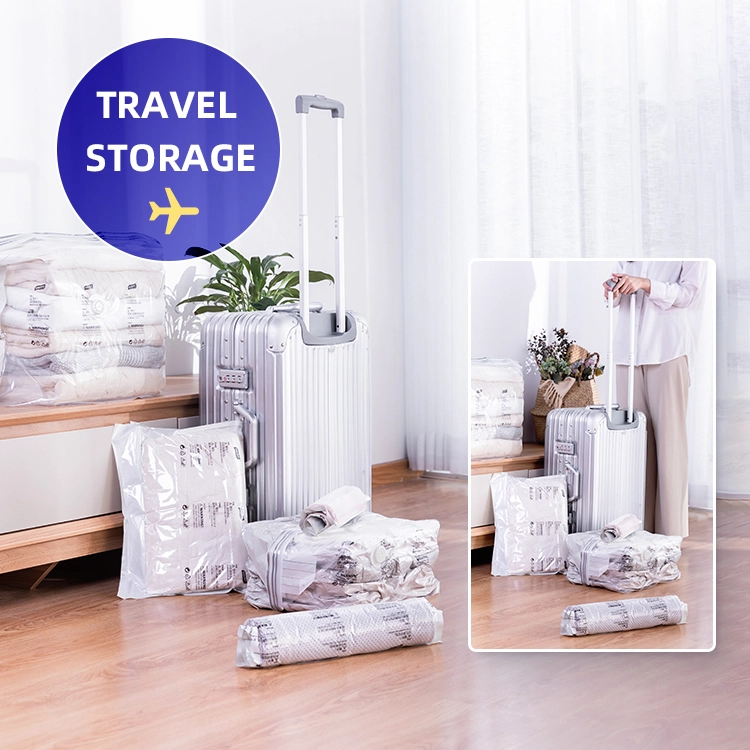
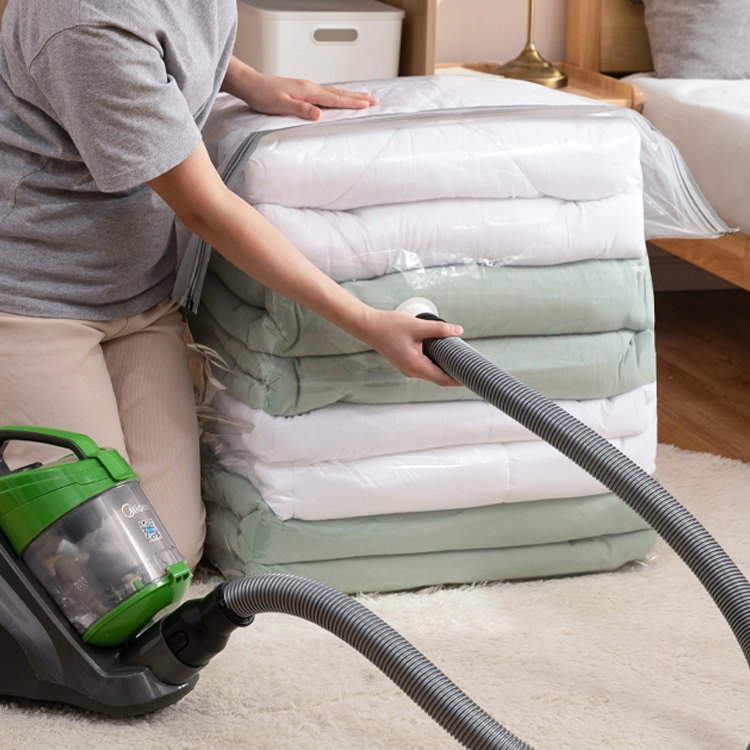
Traditional vacuum storage bags can reduce the volume of textiles dramatically, but they often require a vacuum cleaner, hand pump, or electric pump. That is inconvenient when you are moving between hotels, staying with friends, taking a cruise, or traveling internationally.
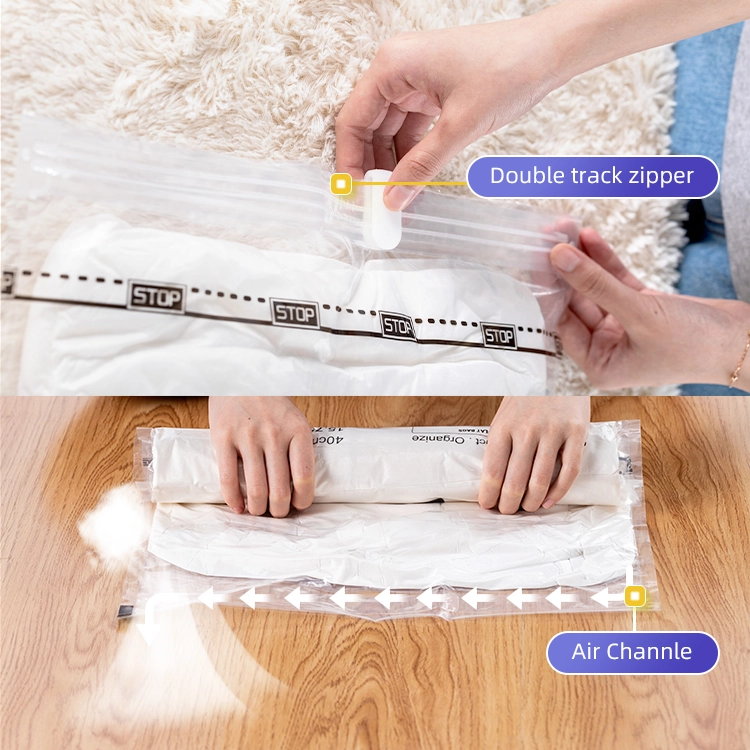
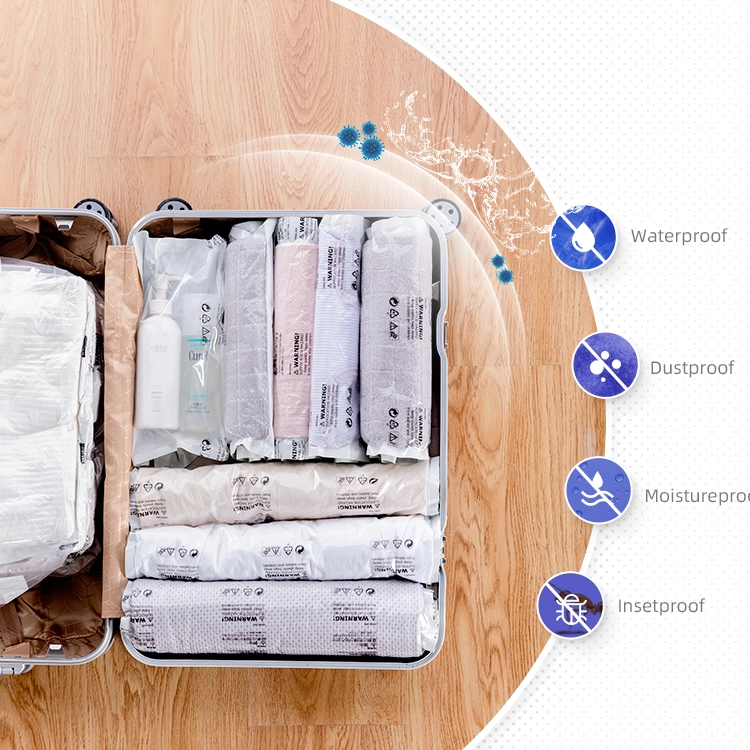
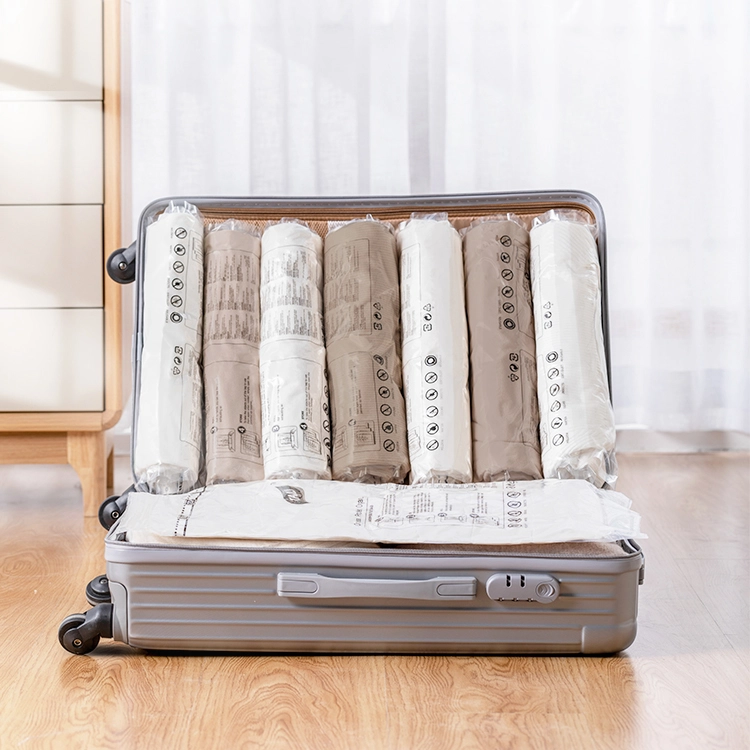
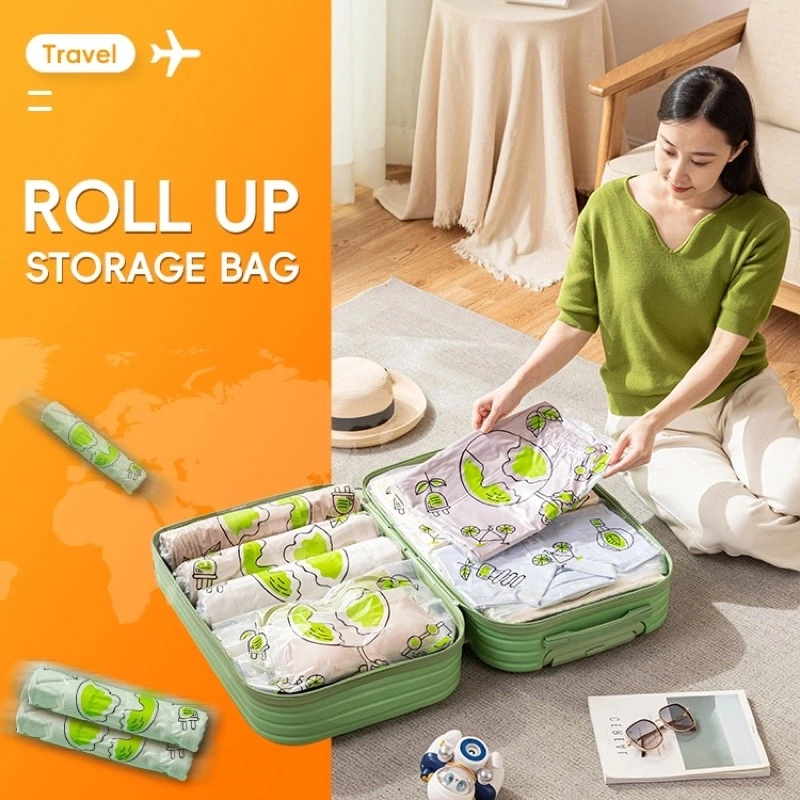
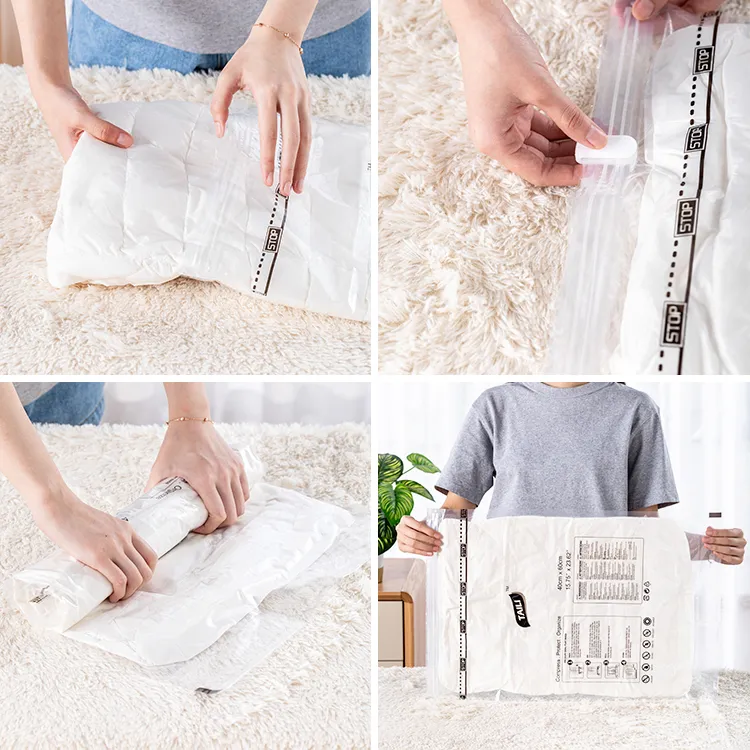
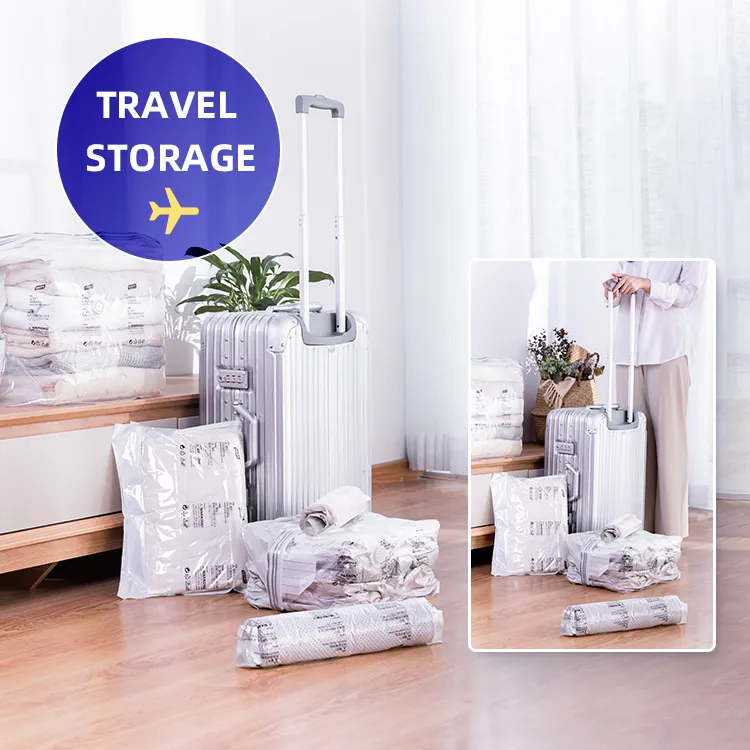
Roll-up compression bags solve that problem. They use a simple manual process: pack the clothing, seal the zipper, and roll the bag from the closure toward the air-release end. The trapped air exits through one-way vents, leaving a flatter package that is easier to place inside a suitcase.
Independent travel testing has found that plastic compression bags can substantially reduce the volume of clothing without requiring a pump. In one practical packing example, compression bags helped fit roughly 13 days of T-shirts, underwear, and socks into a compact carry-on designed for much shorter trips.
For most travelers, the appeal is straightforward:
- No vacuum cleaner is needed at the destination.
- No pump needs charging, packing, or replacing.
- The bags are lightweight and take up little room when empty.
- They help isolate dirty laundry, damp swimwear, or odor-prone garments.
- They can create more usable luggage space for souvenirs, work equipment, or family essentials.
- They are easy to reuse when made with durable multilayer materials and dependable sealing structures.
However, compression bags are not magic. They reduce volume, not weight. A suitcase may hold more clothing after compression, but it can still exceed airline weight limits. Smart packing means using the extra room carefully.
The Best Types of No-Vacuum Compression Bags
Not every travel compression bag works the same way. The best choice depends on the clothing you carry, the length of your trip, and how often you need to unpack and repack.
| Type of bag | Best for | Main advantage | Main limitation |
|---|---|---|---|
| Roll-up compression bags | Casual clothing, underwear, T-shirts, laundry | Maximum space reduction without tools | Can create irregular shapes |
| Compression packing cubes | Organized trips and frequent unpacking | Defined shape and clothing categories | Usually compress less than roll-up bags |
| Small flat compression bags | Backpacks and emergency spare outfits | Easy to tuck into narrow spaces | Limited capacity |
| Large roll-up bags | Coats, fleece, children’s clothing, towels | Useful for bulky soft items | Can become heavy quickly |
| Reusable laundry compression bags | Return travel and multi-stop trips | Separates worn clothing from clean items | Not ideal for delicate clothing |
Roll-Up Compression Bags: Best Overall for Space Saving
For travelers who want the most space-saving effect without carrying equipment, roll-up compression bags are the strongest all-around choice.
These bags generally have:
- A plastic or composite film body.
- A zipper-style closure.
- A slider or sealing clip.
- One-way air-release channels or valves.
- A flat profile before filling.
The operating principle is simple. After sealing the bag, roll from the zipper side toward the vent. Pressure pushes air out but prevents most air from returning.
A typical 12-pack travel bag set may contain medium and large sizes, giving travelers flexibility for different packing tasks. HIBAG, for example, lists a 12-bag travel set made from PA and PE materials, with six medium and six large bags. Its instructions recommend packing on a flat surface, sealing fully, rolling from zipper to vent, and checking for leaks before placing the compressed bag in luggage.
Best use cases:
- T-shirts, leggings, underwear, socks, pajamas.
- Casual knitwear and fleece.
- Children’s clothing.
- Swimwear and beach towels.
- Dirty laundry during the return journey.
- Emergency clothing stored in a daypack.
Compression Packing Cubes: Best for Orderly Luggage
Compression packing cubes are not the same as roll-up bags. They typically use a second zipper to compress the cube after it is packed. They are ideal for travelers who care as much about organization as they do about saving space.
A cube is easier to unpack in a hotel room. You can label one for shirts, one for underwear, one for activewear, and one for electronics accessories. Unlike plastic bags, cubes usually retain a rectangular shape, which makes them easier to stack inside a suitcase.
The compromise is that they usually do not compress soft clothing as aggressively as a roll-up bag. They may also take up more space when empty.
Choose compression cubes when you:
- Change hotels frequently.
- Need quick access to specific outfits.
- Pack business-casual clothing.
- Prefer luggage that remains visually organized.
- Want a reusable system for every trip.
Choose roll-up bags when you:
- Need the greatest possible reduction in clothing bulk.
- Pack a carry-on for a long trip.
- Need to contain laundry separately.
- Want a lightweight, low-cost packing solution.
Small Compression Bags: Best for Carry-Ons and Backpacks
Small bags are often the most useful size in a travel set. They are ideal for a spare outfit, gym clothing, socks, underwear, or compact layers.
A small bag can be placed in the top compartment of a carry-on, slipped into a backpack, or stored beneath a seat. It is also useful when luggage is delayed. Keeping one compressed change of clothing in your personal item can make a long interruption much more manageable.
A practical setup for a personal item:
- Pack one T-shirt, underwear, socks, and a lightweight layer.
- Fold each item flat rather than rolling it loosely.
- Place the softest garments near the air-release area.
- Seal the bag completely.
- Roll slowly and press out air in stages.
- Keep the finished bag flat inside your backpack.
The result is a compact backup outfit that can take up about as much room as a toiletry pouch.
What Makes a Good Vacuum-Free Compression Bag?
The term “compression bag” appears on many products, but quality differs widely. A low-cost bag can still be useful, but only if the closure, material, and air-release design perform reliably.
Look for a Strong, Visible Seal
The closure is the most important feature. If it does not seal properly, air enters the bag again and the compression effect disappears.
Look for:
- Double-zip closure tracks
- A zipper slider or sealing clip
- Clear visual indicators showing whether the zipper is fully closed
- Wide sealing edges that are easy to grip
- Instructions printed directly on the bag
Some designs use contrasting colored lines to help users verify that both sides of the closure are properly engaged. This is helpful because incomplete sealing is one of the most common causes of reinflation.
Choose Thick, Flexible Material
Travel bags must tolerate repeated folding, pressure, airport handling, and contact with zippers or shoe edges inside luggage. Thin plastic can puncture or split when rolled too aggressively.
Better travel compression bags generally use flexible plastic combinations such as PA and PE. These materials aim to balance transparency, flexibility, tear resistance, and barrier performance. HIBAG lists PA+PE construction for its travel bags and describes double zippers and reinforced material as part of its design.
Avoid packing sharp items such as belt buckles, unprotected jewelry, hard shoe edges, or toiletry caps directly against the bag film. If necessary, wrap sharp edges in socks or place them in a separate pouch first.
Select Multiple Bag Sizes
A variety pack is more useful than several identical large bags. Large bags are tempting, but overfilling them can make air removal harder and create a bulky, awkward shape.
A smart travel set should include:
- Small bags for underwear, socks, and emergency outfits.
- Medium bags for T-shirts, light trousers, and tops.
- Large bags for sweaters, jackets, family clothing, or laundry.
Several partially filled bags often work better than one overloaded bag. Testing and traveler feedback consistently suggest that overstuffing makes it harder to remove air and can increase the risk of seal failure or tearing.
How to Pack Compression Bags Correctly
The bag itself matters, but technique determines whether it works well. A neat, flat load will compress more effectively than a loose pile of clothing.
Follow This Six-Step Packing Method
- Start with completely dry clothing.
Moisture trapped inside a sealed bag can create odors and is not suitable for long storage. - Fold garments flat and stack similar items together.
T-shirts compress better with T-shirts. Socks compress better with socks. Mixed loads can produce uneven lumps. - Leave room near the closure and air-release end.
A bag packed to its absolute limit is difficult to seal and roll. - Seal the zipper slowly and carefully.
Use the supplied slider or press along the full closure more than once. - Roll from the zipper toward the vent.
Use steady, even pressure. Do not force the bag too quickly. - Place the finished bag flat in your luggage.
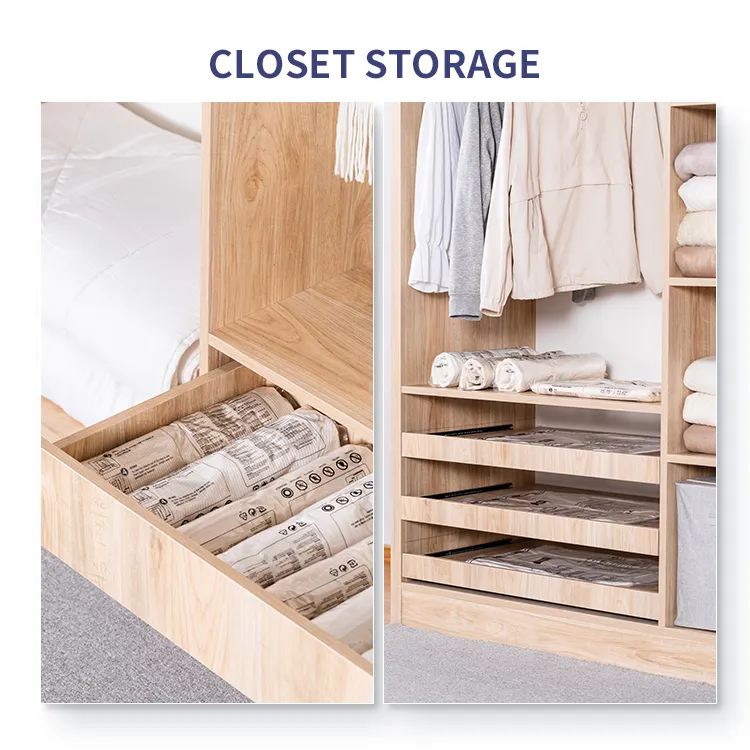
Flattened bags usually fit more efficiently than tightly rolled cylinders.
A good technique is to create thin layers rather than thick piles. For example, instead of putting ten shirts in one deep stack, divide them between two bags with five shirts each. This improves airflow during compression and creates flatter packages for your suitcase.
What Should You Not Put in Compression Bags?
Compression bags are excellent for many travel garments, but they are not appropriate for every item.
Avoid Compressing Delicate or Structured Clothing
Do not rely on compression bags for garments that must arrive crisp and wrinkle-free. The tight pressure can leave deep creases, particularly in delicate and formal fabrics.
Avoid compressing:
- Suits and tailored jackets.
- Linen shirts and dresses.
- Silk garments.
- Formal gowns.
- Fine pleated clothing.
- Structured hats.
- Leather goods.
- Heavily padded bras.
- Fragile accessories.
Travel testing has highlighted wrinkles as the most significant drawback of plastic compression bags. Thick cotton knits, polyester, and merino can often recover reasonably well, while thin or formal clothing may emerge heavily creased.
For business travel, place wrinkle-sensitive items in a garment folder or a standard packing cube. Use compression bags for underwear, knitwear, casual clothing, workout gear, and laundry instead.
Remember That Compression Does Not Reduce Weight
A compressed suitcase may look wonderfully organized, but the clothing still weighs the same. This matters when traveling with low-cost airlines or checking luggage at a strict weight limit.
Use compression bags to reduce bulk, not to justify bringing unnecessary items.
A simple rule works well: if a compressed bag allows you to add more clothing, first ask whether you will realistically wear it. Extra space is most valuable when it prevents a second bag, protects a spare outfit, or leaves room for items purchased during the trip.
Common Problems and How to Fix Them
Even good bags can fail when used incorrectly. Most problems have simple causes.
| Problem | Likely cause | Practical fix |
|---|---|---|
| Bag will not deflate | Air pathway is blocked by fabric | Smooth the clothing away from the vent and roll again |
| Bag reinflates | Zipper is partly open or bag is punctured | Reseal carefully and inspect for holes |
| Bag is hard to roll | Too much clothing inside | Remove several items and use a second bag |
| Clothes become very wrinkled | Delicate fabric or long compression period | Use a cube or garment folder for that item |
| Bag tears while rolling | Excessive force or sharp object inside | Roll slowly and protect sharp edges |
| Suitcase becomes too heavy | More clothing was added after compression | Weigh luggage before leaving for the airport |
Customer feedback on popular travel compression bags supports these practical lessons. Travelers frequently praise the space savings and convenience, but reviews are mixed on durability, sealing consistency, and how easily air exits the bag. The most reliable results come from careful packing, avoiding overfilling, and sealing the zipper completely.
A Smarter Packing System for Long Trips
The most efficient travelers do not use compression bags for everything. They combine several tools based on the item’s needs.
Use a Hybrid Packing Setup
For a one-week or two-week trip, try this arrangement:
- One medium compression bag: T-shirts, casual tops, and sleepwear.
- One small compression bag: Underwear, socks, and an emergency outfit.
- One large compression bag: Dirty laundry, bulky fleece, or cold-weather layers.
- One compression cube: Daily outfits or frequently accessed clothing.
- One garment folder or packing cube: Wrinkle-sensitive shirts and business clothing.
- One toiletry bag: Liquids and personal-care products, packed separately from clothing.
This setup provides both maximum space and easy organization. It also keeps you from repeatedly opening every bag just to find one item.
For families, consider packing one bag per person per day for children’s clothing. This makes morning routines faster and reduces the chance of digging through the entire suitcase in a hotel room.
Choosing the Right Supplier for Travel Compression Bags
For retailers, travel brands, wholesalers, and private-label buyers, choosing a compression bag supplier requires more than comparing unit prices. Product reliability affects return rates, reviews, repeat orders, and brand reputation.
A capable supplier should demonstrate strength in:
- Material selection and film performance
- Seal and valve design
- Consistent manufacturing quality
- Custom sizing and packaging
- Branding and private-label capability
- Testing for leak resistance and repeated use
- Clear product instructions
- Reliable global fulfillment support
Taili Technology has developed its capabilities around high-performance materials, including nanoparticle synthesis and modification, polymer synthesis, and precision coating. The company describes three major material platforms: safety protection materials, functional film materials, and surface and interface materials. Its full-chain approach extends from upstream material research to finished-product manufacturing, supporting travel and storage solutions built around material performance and scalable production.
With more than 1,200 authorized patents and service coverage across more than 160 countries and regions, Taili Technology brings a materials-driven approach to functional consumer products. Its experience with vacuum storage and travel compression solutions makes it relevant for businesses looking for customized packaging, product development support, and dependable manufacturing capacity.
For buyers, the practical priority is simple: evaluate actual sealing performance, material thickness, bag sizing, and repeat-use durability before finalizing an order. A beautiful retail package cannot compensate for a bag that leaks after one trip.
Final Thoughts
The best no-vacuum compression bags for travel are durable roll-up bags with trustworthy seals, one-way air-release channels, and multiple practical sizes. They are ideal for casual clothing, laundry management, family travel, backpacking, cruises, and carry-on-only trips.
Use them strategically. Compress soft, flexible items. Keep formal clothing outside the bags. Do not overfill. Roll gently. And always leave a little room in your suitcase for the unexpected items that make travel memorable.
For travel retailers, distributors, and brands developing space-saving packing products, choose a manufacturing partner with proven material expertise, reliable quality control, and flexible customization capability. A well-engineered compression bag transforms a small travel accessory into a product customers will use on every trip.
Frequently Asked Questions
Do compression bags for travel really work without a vacuum?
Yes. Roll-up travel compression bags use a sealed closure and one-way air-release design. After sealing the bag, you roll it from the zipper end toward the valve or vent area to force air out manually. No vacuum cleaner, hand pump, or electric pump is required.
Are no-vacuum compression bags better than packing cubes?
They are better for maximum volume reduction, especially for soft casual clothing. Packing cubes are better for organization, easy access, and maintaining a neat suitcase shape. Many experienced travelers use both: compression bags for bulky or laundry items and cubes for frequently accessed clothes.
Will travel compression bags wrinkle my clothes?
They can. Compression bags are most suitable for T-shirts, underwear, socks, fleece, knitwear, casual trousers, and similar garments. Avoid using them for linen, silk, formal dresses, tailored jackets, and business shirts that need to remain crisp.
Can I use compression bags for dirty laundry?
Yes. They are particularly helpful for separating dirty clothes from clean ones during the return trip. Make sure clothing is dry before sealing it inside. Damp laundry should not remain sealed for extended periods because it may develop odors.
Do compression bags make luggage lighter?
No. They reduce the amount of air and therefore the volume of packed clothing, but they do not change the clothing’s weight. Always check airline weight limits before leaving for the airport.
How many compression bags do I need for a one-week trip?
For one person, a practical starting point is three to five bags: one small bag for underwear and socks, one or two medium bags for casual clothing, one larger bag for bulky layers or laundry, and one spare bag for souvenirs or wet items.
Why does my compression bag keep filling with air?
The most likely causes are an incomplete zipper seal, a blocked air channel, a puncture, or overfilling. Reopen the bag, flatten the clothing, leave more space near the closure, reseal carefully, and roll slowly toward the air-release end.
Can compression bags be reused?
Yes, if the material and sealing system remain undamaged. Reuse depends on proper handling: avoid sharp items, do not force overfilled bags, clean and dry them before storage, and inspect the zipper and vent before each trip.
References
1. NYT Wirecutter – “The Most Affordable Packing Tool Is Also the Best” – Review identifying an affordable compression bag as a top packing tool. https://www.nytimes.com/wirecutter/reviews/alming-compression-bags-review/
2. Amazon – “HIBAG 12 Compression Bags for Travel” – Product listing for HIBAG compression bags for travel. https://www.amazon.com/Hibag-Compression-12-Pack-Suitcase-12-Travel/dp/B07PLHBVZQ
3. Travel + Leisure – “A Travel Writer’s Experience With Compression Packing Cubes” – First-hand review of compression packing cubes from a travel writer. https://www.travelandleisure.com/away-packing-cubes-review-12135467
4. Popular Science – “Travel Essentials and Compression Cube Recommendations” – Travel gear recommendations, including compression cubes. https://www.popsci.com/gear/travel-essentials-gift-guide-2026/
5. Guangdong Taili Technology Group – “Vacuum Storage Bag Product Collection” – Supplier profile and vacuum storage bag product collection, listing OEM experience, quality-control staffing, and awarded patents. https://zs-taili.en.alibaba.com/productgrouplist-817449767/Vacuum_Storage_Bags.html
Hot Tags: Travel Compression Bags, Vacuum-Free Compression Bags, Roll-Up Compression Bags, Vacuum Storage Bags, Travel Packing Bags, Space Saver Bags, Compression Packing Cubes, Luggage Compression Bags, Travel Storage Solutions, Custom Compression Bags