Content Menu
● Why Wholesale Travel Vacuum Bags Appeal to Travel Businesses
● Choose Travel Compression Bags Around the Customer’s Journey
>> Compare Roll-Up, Manual-Pump, and Electric-Pump Formats
>> Match Bag Sizes to Real Luggage
● What Makes a Reliable Wholesale Travel Vacuum Bag?
>> Closure and Valve Usability
● A Practical Sample-Testing Protocol Before Ordering
>> Step 1: Define a Repeatable Clothing Load
>> Step 2: Document Compression Performance
>> Step 3: Check Air Retention
>> Step 4: Repeat Packing and Repacking
>> Step 5: Test with Unfamiliar Users
● Evaluate Manufacturer Credentials Without Overstating Them
>> Connect Material Expertise to Buyer Requirements
● Compare Total Landed Cost, Not Just Unit Price
>> Build a Clear Wholesale Specification Sheet
● Turn Customer Feedback into Useful Product Evidence
>> Publish Reviews with Context
● Explain Product Limitations Before Customers Purchase
● Request a Wholesale Offer You Can Evaluate
>> Are travel vacuum bags suitable for carry-on luggage?
>> Do vacuum bags reduce baggage weight?
>> Which compression format is best for wholesale buyers?
>> How can buyers verify a space-saving claim?
>> Can travel vacuum bags be customized?
Wholesale travel vacuum bags can give retailers, luggage brands, and travel businesses a practical way to help customers pack more efficiently. But choosing the right supplier requires more than comparing prices or reading a space-saving headline.
From a procurement perspective, the strongest product is one that combines reliable compression, straightforward instructions, convenient repacking, and commercially workable order terms.
This guide explains how to evaluate travel compression bags, test samples, assess manufacturing credentials, and build a wholesale offer customers can understand. It also distinguishes useful evidence from marketing claims, helping buyers make decisions based on the product they will actually receive.
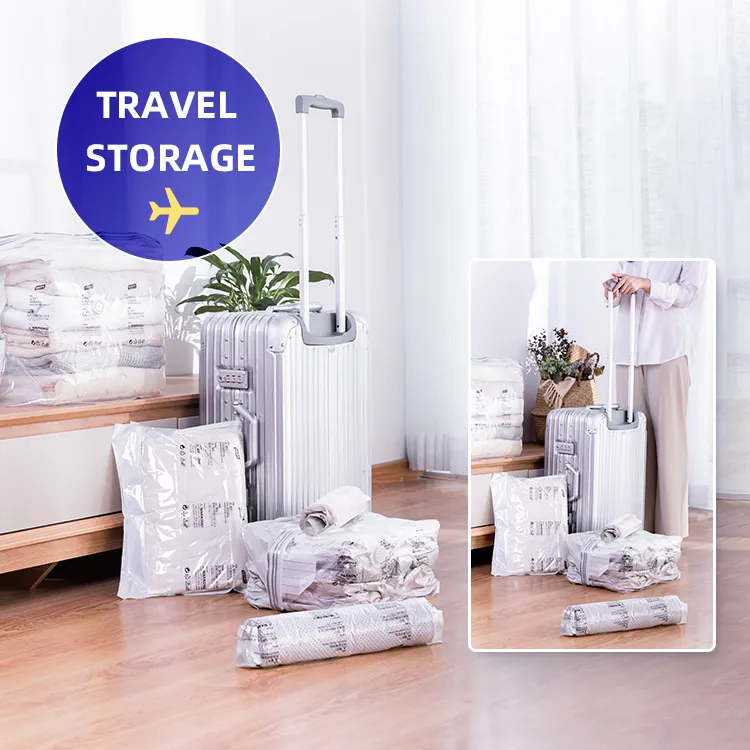
Why Wholesale Travel Vacuum Bags Appeal to Travel Businesses
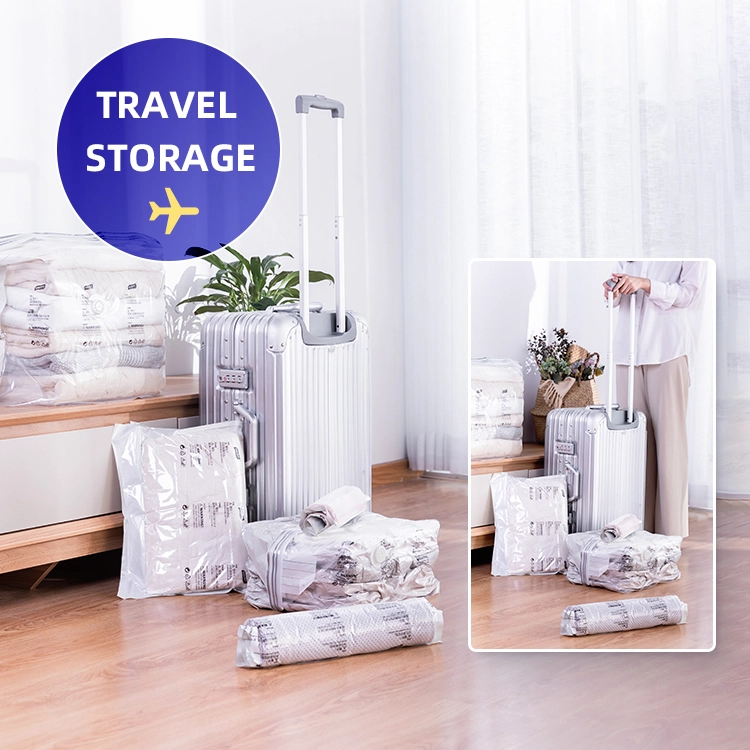
Travel vacuum bags address a familiar problem: clothing can occupy a substantial share of available luggage space. Removing trapped air can make suitable garments more compact and easier to organize.
For businesses, the opportunity extends beyond selling another packing accessory. A well-designed compression system can complement luggage, support travel bundles, and give customers a visible demonstration of product value.
Potential applications include:
- Travel accessories sold alongside suitcases and backpacks.
- Branded packing kits for corporate travelers.
- Seasonal bundles for bulky clothing.
- Hospitality and tour-operator merchandise.
- Private-label accessories for established retail ranges.
However, compression reduces volume, not the weight of the clothing. Customers must still follow their airline’s baggage dimensions and weight limits. Clear messaging protects both the customer experience and the credibility of the seller.
Choose Travel Compression Bags Around the Customer’s Journey
A product should work throughout the trip, not just when someone packs at home.
The most important question is simple: how will the customer compress the bags again before returning?
A system that depends on equipment unavailable at the destination may create unnecessary frustration. Buyers should therefore evaluate the compression method alongside the bag itself.
Compare Roll-Up, Manual-Pump, and Electric-Pump Formats
| Format | Potential customer fit | What the buyer should verify |
|---|---|---|
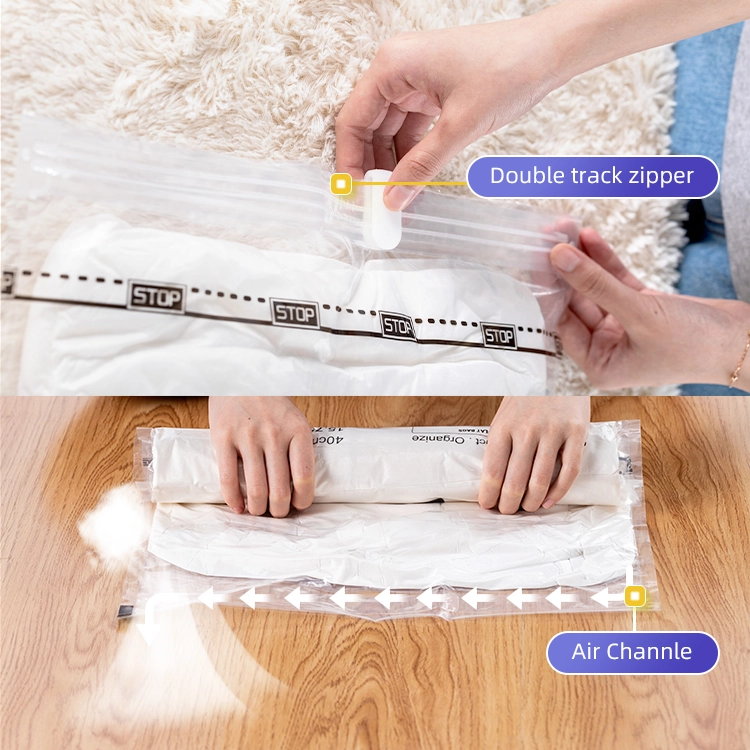
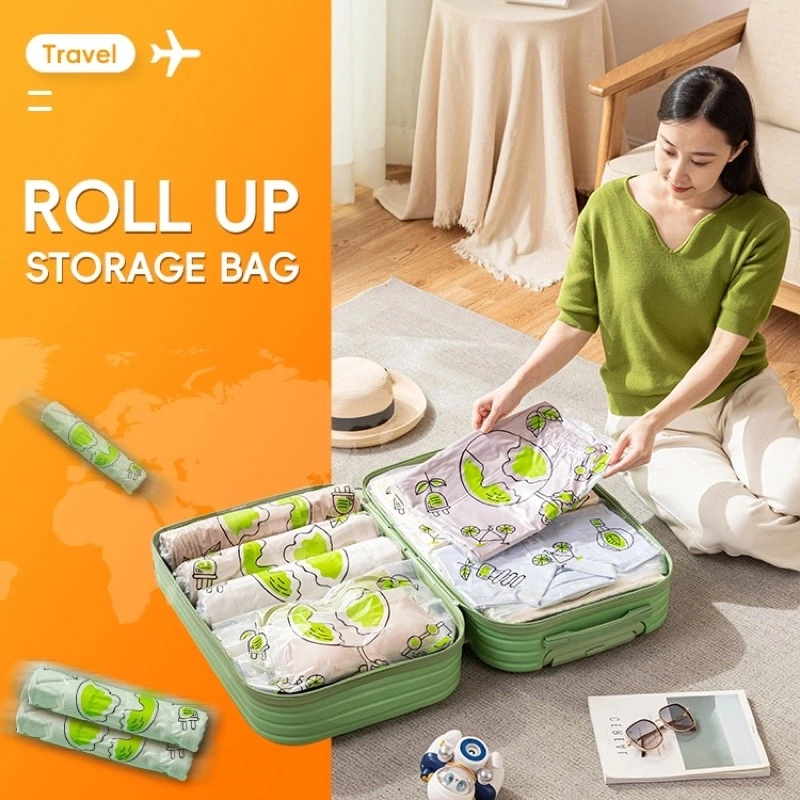
| Roll-up compression bags | Travelers who prefer fewer accessories | Ease of air removal and closure performance |
| Manual-pump vacuum bags | Customers seeking a non-powered system | Pump effort, valve compatibility, and portability |
| Electric-pump vacuum bags | Customers prioritizing convenient compression | Battery details, charging requirements, and pump performance |
These are purchasing considerations, not a ranking of product quality. Execution matters more than the category name.
Ask suppliers to demonstrate the complete packing process with the exact product configuration being quoted. A demonstration using a different valve, pump, or bag size is not an adequate substitute.
Match Bag Sizes to Real Luggage
External dimensions alone do not establish useful packing capacity.
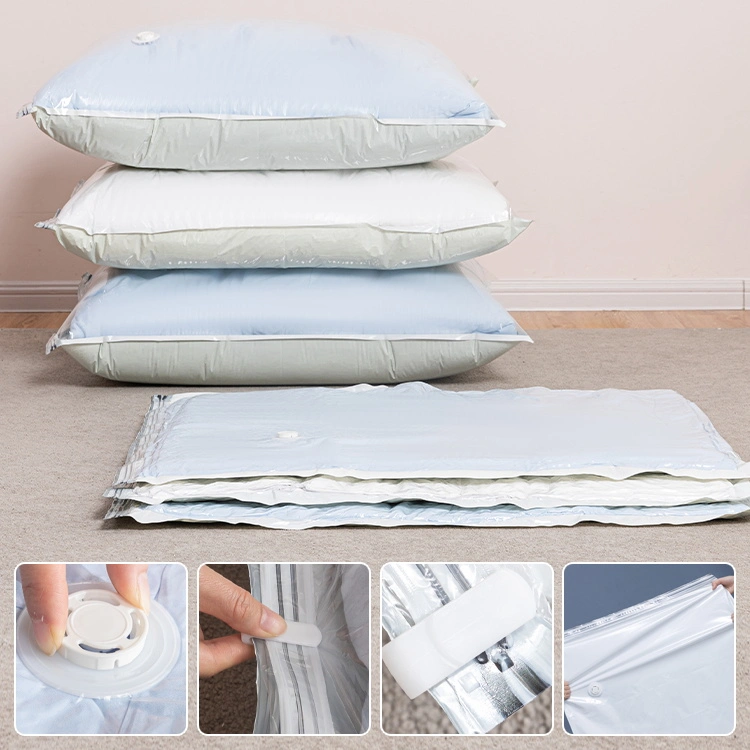
Buyers should examine the usable internal area, closure position, valve placement, and shape after compression. A bag that becomes an awkward, rigid bundle may fit poorly even when its unfilled dimensions appear suitable.
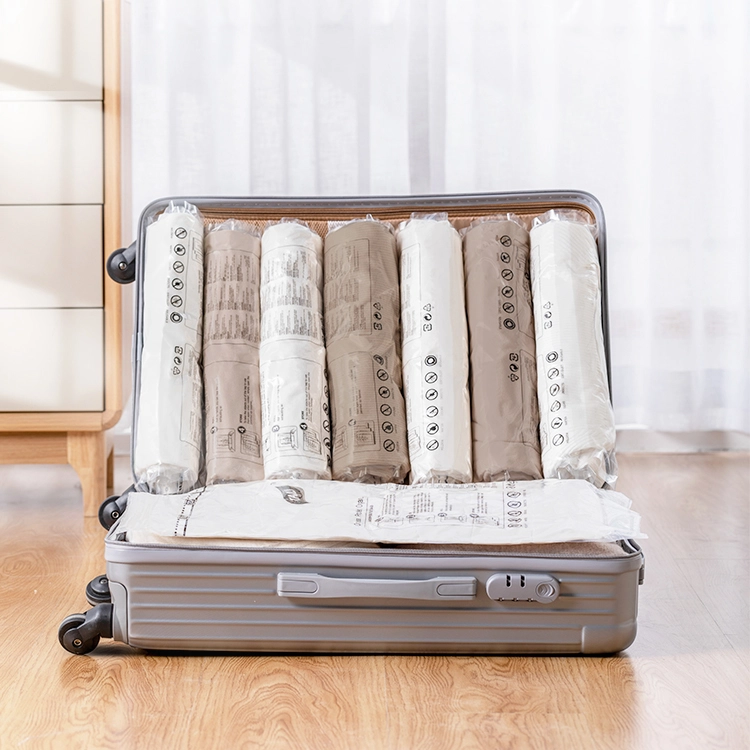
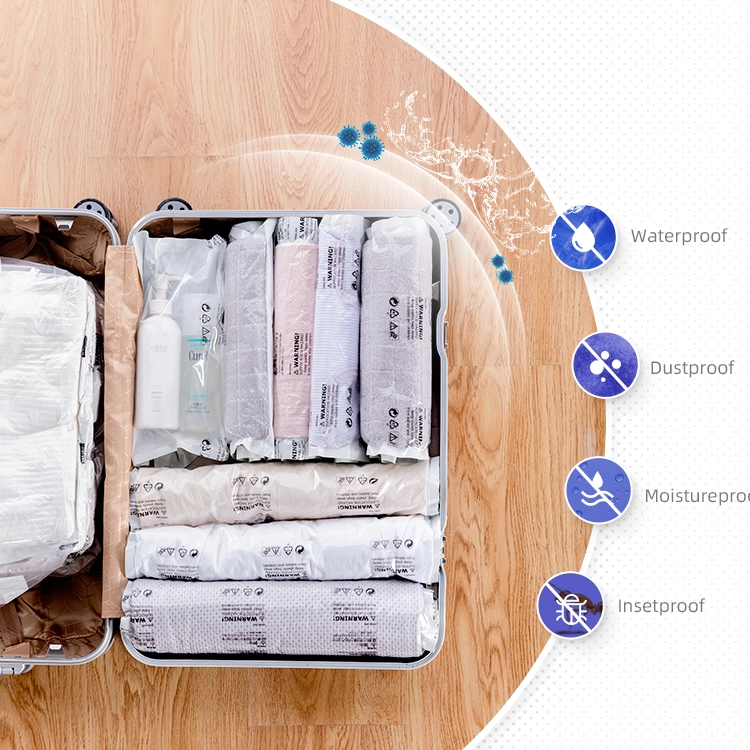
Request samples in the proposed size assortment and place them inside representative luggage. Evaluate whether customers can separate outfits, retrieve essentials, and repack without emptying the entire suitcase.
What Makes a Reliable Wholesale Travel Vacuum Bag?
Reliable performance depends on the complete system: film, seams, closure, valve, and compression method.
A strong-looking film cannot compensate for an unreliable closure. Similarly, an effective pump cannot solve leakage caused by a damaged seal.
Film and Seam Construction
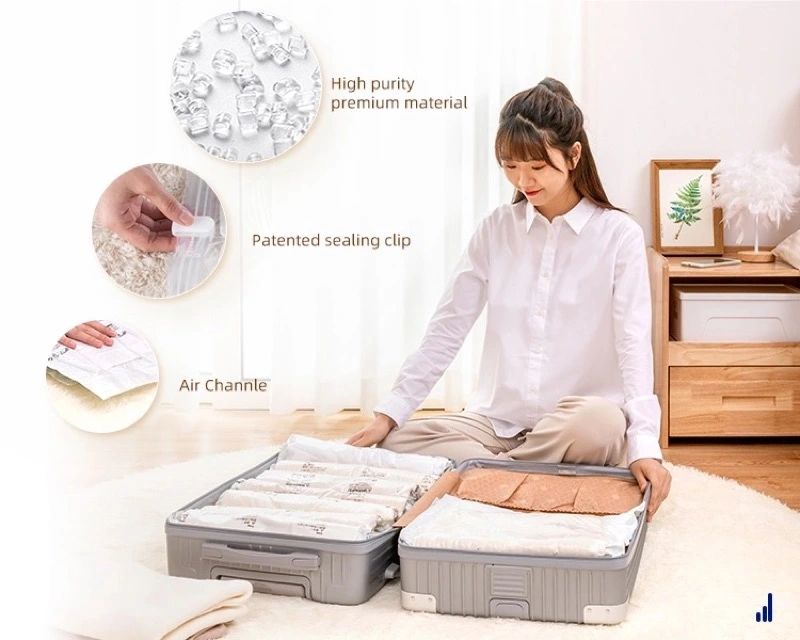
Ask for the material specification of each quoted model. Avoid assuming that every product in a supplier’s catalog uses the same construction.
Useful questions include:
- What materials and layer structure are used?
- How is film thickness specified and controlled?
- How are seams inspected?
- Which product-specific test reports are available?
- What changes require buyer approval before production?
Material information should connect to a practical requirement. Buyers need to understand how the proposed construction supports repeated handling and the intended packing conditions.
Closure and Valve Usability
The first-use experience deserves close attention.
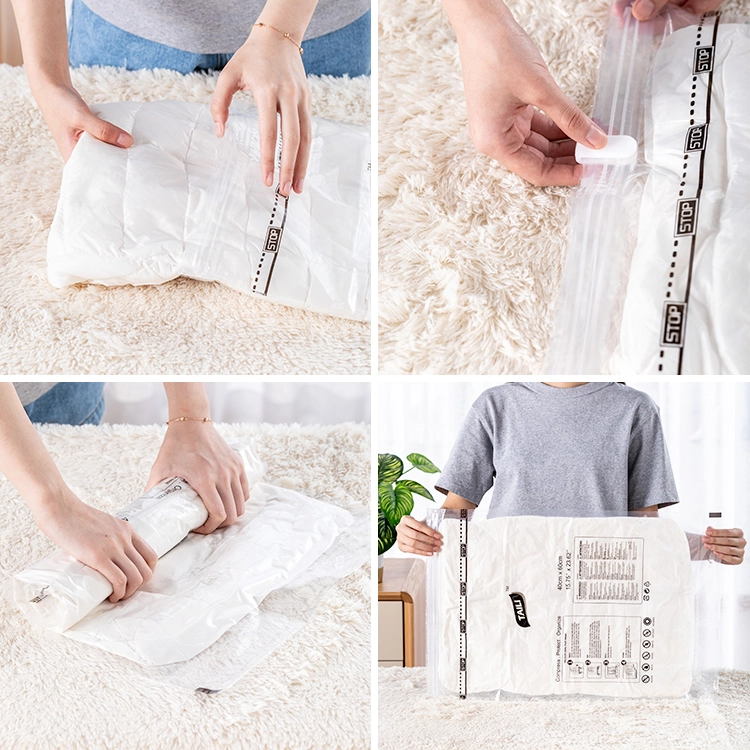
Check whether an unfamiliar user can identify the opening, fill the bag correctly, close the seal, and operate the valve without assistance. Instructions should show these steps clearly rather than relying on vague claims such as “easy to use.”
Also inspect how the valve is protected during packing. Its position should be considered alongside luggage fit, garment arrangement, and pump access.
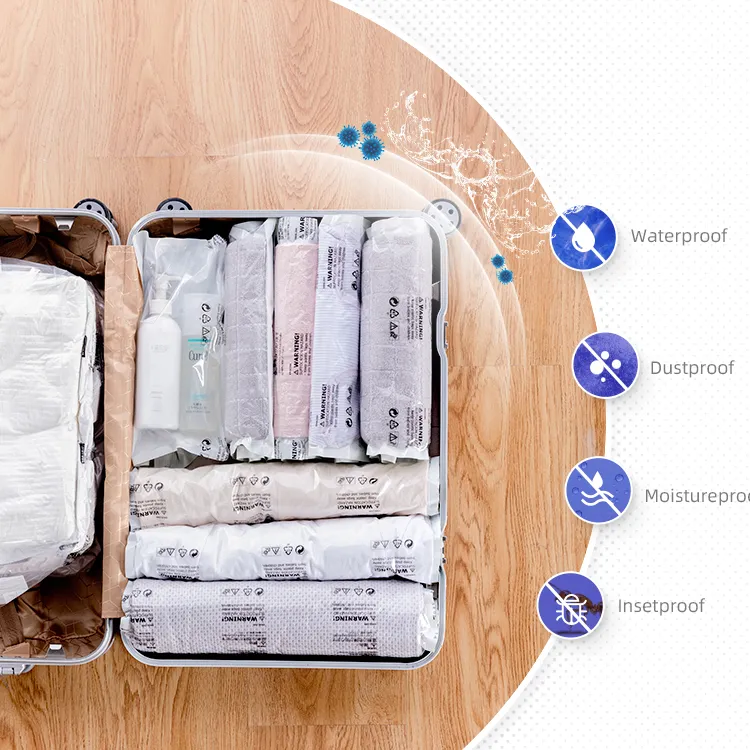
A Practical Sample-Testing Protocol Before Ordering
The following protocol is a suggested buyer-side evaluation framework. It is not a certification standard or evidence that a particular product has passed testing.
Its purpose is to make supplier comparisons more consistent.
Step 1: Define a Repeatable Clothing Load
Use the same garment assortment for competing samples. Record garment types, item counts, and total weight.
Include loads that reflect the intended customer segment. A business-travel assortment and a winter-holiday assortment may produce different compression results.
Step 2: Document Compression Performance
Photograph the load before and after compression using a consistent setup.
Record the compression method, time required, and final packed dimensions. If volume estimates are used, apply the same measurement method to every sample and explain its limitations.
Avoid presenting a best-case result as a universal saving.
Step 3: Check Air Retention
Inspect the compressed samples immediately, after 24 hours, and after 72 hours.
Record visible expansion, closure problems, and any need to repeat compression. These checkpoints are proposed evaluation intervals; they should not be described as industry-mandated requirements.
If retention matters for longer journeys, agree on additional testing with the supplier.
Step 4: Repeat Packing and Repacking
Open, refill, close, and compress each sample repeatedly under a documented procedure.
Observe changes in the seal, valve, seams, and user effort. Keep photographs and notes so the supplier can investigate specific issues rather than respond to general complaints.
Step 5: Test with Unfamiliar Users
Ask people who have not seen the product demonstration to follow the supplied instructions.
Where do they hesitate? Do they overfill the bag? Can they recognize an incomplete closure?
These observations can improve packaging instructions before a full production order.
Evaluate Manufacturer Credentials Without Overstating Them
Manufacturing experience can strengthen a supplier assessment, but corporate history should support product verification rather than replace it.
Guangdong Taili Technology Group Co., Ltd., stock code 301595, was founded in 2003 and is based in Zhongshan, Guangdong. Its public company materials describe vacuum-storage expertise, advanced material applications, and aerospace product-development cooperation.
Taili’s manufacturing website also describes product development, production, inspection, labeling, packaging, and delivery services. These capabilities are relevant considerations when evaluating an integrated manufacturing partner.
Connect Material Expertise to Buyer Requirements
The company profile supplied for this article describes work in nanoparticle synthesis and modification, polymer synthesis, and precision coating. It also identifies safety protection, functional film, and surface-and-interface material platforms.
For a wholesale buyer, the useful question is how that technical background translates into the proposed travel bag.
Request evidence covering:
- The exact material and construction supplied.
- Relevant inspection procedures.
- Batch identification and traceability.
- Product-specific performance testing.
- Controls for approved material or design changes.
An aerospace project history does not automatically certify every consumer product. Likewise, a company’s patent portfolio does not prove the performance of a particular retail model.
Compare Total Landed Cost, Not Just Unit Price
The lowest quotation is not necessarily the best commercial offer.
Buyers should compare landed cost alongside saleable quality, packaging readiness, and after-sales obligations.
A practical comparison should account for:
- Product and accessory costs.
- Retail packaging and artwork charges.
- Freight, duties, and applicable taxes.
- Inspection and sample expenses.
- Payment terms.
- Expected handling of defective units.
- Replacement accessories, where applicable.
Use identical specifications when requesting quotations. Otherwise, a lower price may simply reflect a different bag size, material, pump, or packaging configuration.
Build a Clear Wholesale Specification Sheet
| Requirement | Information to agree before ordering |
|---|---|
| Product configuration | Bag sizes, quantities, valve type, and accessories |
| Packaging | Retail format, language, barcode, and instructions |
| Order terms | Minimum quantity, price basis, payment, and delivery terms |
| Quality control | Approved sample and documented acceptance criteria |
| After-sales support | Defect reporting, replacements, and response process |
Keep the approved specification attached to the purchase agreement. A clear reference helps both parties distinguish a genuine production deviation from a misunderstanding.
Turn Customer Feedback into Useful Product Evidence
Customer comments can strengthen a wholesale page when they are authentic, specific, and relevant to the product being sold.
No verified customer reviews were available for this rewrite. Invented quotations would weaken the page rather than improve it.
Instead, build a review process around questions that reveal real use:
- Which luggage type did the customer use?
- What clothing did they pack?
- Was the compression method convenient?
- Did the bag remain compressed during the trip?
- Could they repack easily at the destination?
- Were the instructions understandable?
Publish Reviews with Context
With permission, retain the customer’s meaning and identify the relevant product variant. Include a review date and disclose incentives where applicable.
Do not combine comments about different products into one testimonial or turn a qualified statement into an absolute promise.
Repeated feedback should also guide product improvements. Confusing closure instructions, inconvenient pump storage, or an unsuitable size assortment may be more commercially useful findings than a generic positive rating.
Explain Product Limitations Before Customers Purchase
A credible wholesale offer makes important limitations visible.
Avoid promising that compression will eliminate baggage fees, prevent wrinkles, or protect every textile equally. Outcomes depend on the clothing, packing method, product design, and travel conditions.
Provide care guidance appropriate to the exact model. Customers should also follow garment care instructions and avoid assuming that every delicate or structured item is suitable for compression.
If the kit includes a lithium-battery-powered pump, publish its battery specifications and relevant travel guidance. The FAA distinguishes installed batteries from spare batteries and power banks; spare lithium batteries and power banks must travel in carry-on baggage. Airline-specific requirements should also be checked before departure.
Request a Wholesale Offer You Can Evaluate
A useful inquiry gives the supplier enough information to propose the right configuration.
Prepare your target market, sales channel, expected order quantity, preferred size assortment, branding requirements, and required delivery date.
Then request samples, product specifications, written commercial terms, and applicable documentation. Start with a controlled pilot order when practical, and use actual sales and customer feedback to refine the next purchase.
Contact Taili’s wholesale team with these requirements and ask for confirmation of the available models, sample process, order quantities, customization options, and lead times. A detailed inquiry supports a more meaningful quotation than a request for the “best price.”
Frequently Asked Questions
Are travel vacuum bags suitable for carry-on luggage?
They can help organize and compress suitable clothing, but the packed luggage must still meet the airline’s size and weight rules. Test the filled bags inside the intended suitcase or backpack before selecting an assortment.
Do vacuum bags reduce baggage weight?
No. Removing air does not remove the weight of the clothing. Bags and pumps also add their own weight, so customers should weigh their complete luggage before traveling.
Which compression format is best for wholesale buyers?
There is no universal best format. Evaluate the customer’s journey, accessory preferences, return-trip convenience, and sample performance. The most suitable configuration is the one that meets those requirements consistently.
How can buyers verify a space-saving claim?
Use a documented garment load and a repeatable measurement procedure. Record the compression method and conditions. Publish results with those qualifications rather than suggesting every customer will achieve the same reduction.
Can travel vacuum bags be customized?
Customization depends on the supplier and model. Confirm available branding, packaging, instruction languages, size combinations, and accessory options in writing. Ask whether each change affects minimum quantities, costs, or delivery schedules.
References
1. AerPack — “Travel Vacuum Bags Wholesale Supplier & B2B Distributor.” The indexed page supports AerPack’s B2B positioning. Its full content, commercial terms, and customer reviews could not be retrieved for this rewrite. https://aerpack.com/pages/wholesaler-travel-vacuum-bags
2. AerPack — “AerPack: Vacuum Bags for Travel.” The indexed homepage promotes substantial packing-space savings. This article deliberately does not repeat that percentage as independently verified performance data. https://aerpack.com/
3. Guangdong Taili Technology Group — “About Taili.” The company’s Chinese-language profile identifies its 2003 establishment, stock code 301595, material-technology focus, aerospace cooperation, and international market coverage. Historical figures on the page are not treated as current product certifications. https://www.zs-taili.com/home/page/index/1
4. Taili — “Vacuum Storage Bags Manufacturer | OEM & Wholesale.” The manufacturing website describes product-development, production, inspection, labeling, packaging, and delivery services. Its differing capacity figures were not reproduced in this article. https://www.taili-group.com/
5. Simply Wall St — “GuangDong Taili Technology Group Co., Ltd. Company Information.” Corroborates the company name, Shenzhen listing, stock code, founding year, and Zhongshan location. https://simplywall.st/stocks/cn/materials/szse-301595/guangdong-taili-technology-groupltd-shares/information
6. Federal Aviation Administration — “PackSafe: Lithium Batteries.” Supports the distinction between spare lithium batteries and installed batteries, including the carry-on requirement for spare batteries and power banks. https://www.faa.gov/hazmat/packsafe/lithium-batteries
7. Federal Aviation Administration — “PackSafe: Portable Electronic Devices Containing Batteries.” Provides guidance for devices containing lithium batteries and precautions concerning damaged or recalled batteries. https://www.faa.gov/hazmat/packsafe/portable-electronic-devices-with-batteries
Hot Tags: Wholesale Travel Vacuum Bags, Travel Vacuum Bags Wholesale, Vacuum Storage Bags Wholesale, Travel Vacuum Bags Manufacturer, Vacuum Compression Bags Supplier, Bulk Travel Vacuum Bags, OEM Travel Vacuum Bags, Private Label Vacuum Bags, Custom Travel Compression Bags, Wholesale Vacuum Bags With Pump