Content Menu
● Why Travel Vacuum Bags Lose Compression
>> An Incompletely Closed Zipper
>> Lint or Fabric Caught in the Seal
>> A Valve That Has Not Been Closed Correctly
>> Overpacking or Physical Damage
● Is the Bag Actually Leaking or Just Changing Shape?
>> Slight Softening Does Not Identify a Leak
>> Flight Pressure Can Change Bag Volume
● Quick Troubleshooting: Match the Symptom to the Next Check
● How to Fix a Travel Vacuum Bag That Keeps Reinflating
>> 1. Repack with Space Around the Closure
>> 2. Clean and Reseal the Zipper
>> 3. Inspect the Valve Without Forcing It
>> 4. Remove Air with a Compatible Pump
>> 5. Leave the Bag Undisturbed and Observe
● The Overnight Comparison Test: Isolate the Problem Before Traveling
● Repair or Replace: Which Makes More Sense?
>> When Resealing Is Worth Trying
>> When Replacement Is More Practical
● How to Prevent Vacuum Bag Leaks During Travel
● Choosing Travel Vacuum Bags for Repeat Use
● Pack with Confidence Before Your Next Trip
>> Why Does My Vacuum Bag Reinflate Overnight?
>> Can a Vacuum Bag Expand Without Leaking?
>> Will a Stronger Pump Stop Air from Returning?
>> Should I Submerge the Bag to Find a Leak?
>> How Long Should a Travel Vacuum Bag Stay Compressed?
>> Are Vacuum Bags Suitable for Every Type of Clothing?
Your travel vacuum bag keeps filling with air after compression because air is entering through an incompletely closed zipper, an improperly secured valve, or damaged plastic. Overpacking can also strain the closure and make a reliable seal difficult.
However, a bag that becomes slightly thicker is not necessarily leaking. Remaining air, changing pressure, and the way clothing settles can affect its appearance.
The most useful approach is diagnosis: check the zipper first, inspect the valve next, and then test the bag under consistent conditions. Before replacing your travel vacuum bags, use the steps below to distinguish a sealing problem from a damaged bag.
Why Travel Vacuum Bags Lose Compression
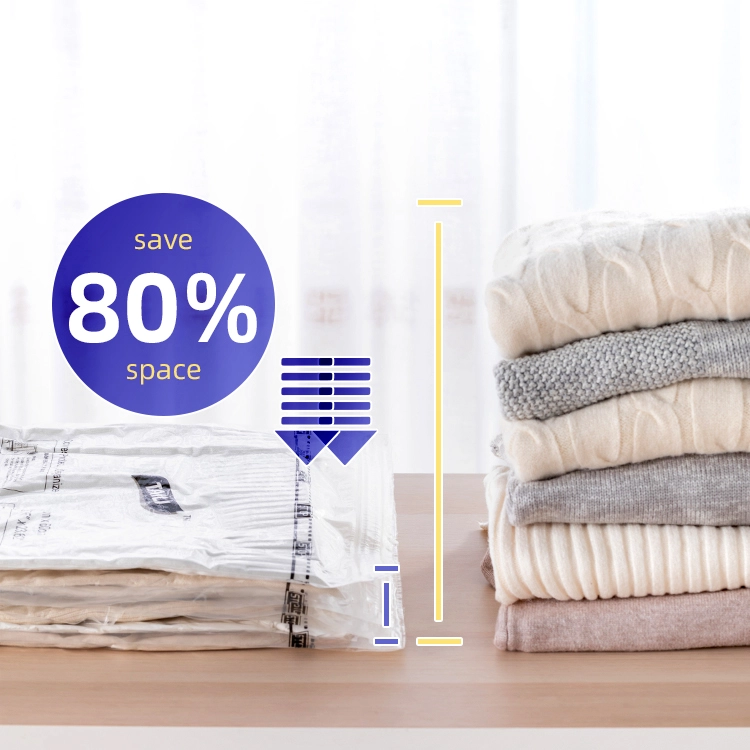
Vacuum bags reduce packing volume by removing air surrounding your clothes. They do not turn the contents into a permanently rigid block.
Once compressed, the bag depends on several components working together:
- A fully engaged zipper closure.
- A valve that prevents air from returning.
- Intact plastic film.
- Undamaged seams around the bag and valve.
A stronger pump cannot compensate for a gap in any of these components. It may flatten the bag temporarily, but air can return after the pump is removed.
From a practical packing perspective, checking the closure usually offers more value than repeatedly vacuuming the same bag.
An Incompletely Closed Zipper
A zipper can look closed while leaving a small section unsealed. The ends deserve particular attention, as do areas where the closure has folded.
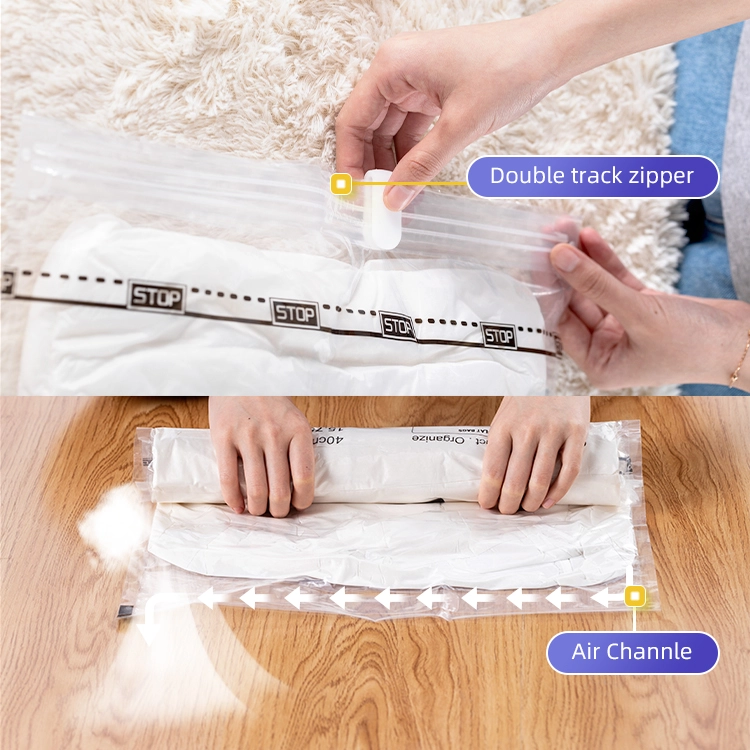
On double-track closures, one track may engage while the other remains partially open. Running the slider across the bag is helpful, but it is not a substitute for checking the entire closure with your fingers.
If the bag becomes puffy within hours, resealing the zipper is a sensible first step—not proof that the bag is defective.
Lint or Fabric Caught in the Seal
A loose thread, clothing edge, or piece of lint can interfere with the zipper tracks.
Open the bag and inspect the closure in good light. Remove visible debris with a clean, dry cloth, then check that no fabric extends into the sealing area.
Avoid adding oil, lubricant, or adhesive unless the manufacturer specifically recommends it.
A Valve That Has Not Been Closed Correctly
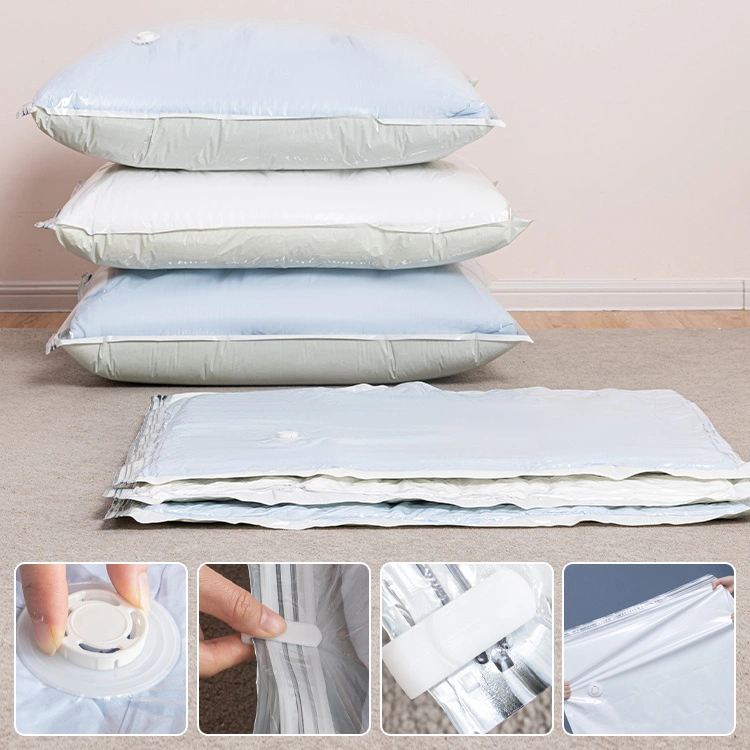
Valve designs differ. Some use a separate cap; others use a twist-to-close mechanism or a self-sealing arrangement.
Follow the instructions for your exact model. Do not assume that every cap-free valve requires no action after pumping.
For example, the TAILI Clean Cube product instructions describe removing air through the vacuum port and then twisting it closed. That instruction applies to the specified design, not automatically to every TAILI bag.
Overpacking or Physical Damage
Clothing pressed against the zipper can make sealing difficult. A bulky load may also distort the area around the valve.
Sharp accessories, rough handling, and repeated creasing can damage the bag. Inspect corners, seams, and the valve attachment area for visible holes, splits, or separation.
A bag that performs well when lightly loaded but fails when packed tightly deserves a loading adjustment before replacement.
Is the Bag Actually Leaking or Just Changing Shape?
A travel compression bag is flexible. Its shape reflects both the contents and the surrounding conditions.
The important question is not simply, “Does it look different?” It is, “Does it keep expanding under the same conditions?”
Slight Softening Does Not Identify a Leak
After compression, clothing may redistribute and pockets of remaining air may become more noticeable. A small change in shape does not reveal where a fault is—or establish that one exists.
Allow the bag to settle on a flat surface. Then observe whether the change stops or continues.
Progressive expansion in a stable room is more concerning than a small, one-time adjustment.
Flight Pressure Can Change Bag Volume
Aircraft cabins are pressurized, but their pressure is not necessarily the same as at your departure airport.
Boyle’s law describes how a fixed quantity of gas changes volume as pressure changes, assuming constant temperature. Lower surrounding pressure can allow trapped gas to occupy more space.
A packed vacuum bag is more complicated than an ideal gas container because fabric, flexible plastic, and compression forces also matter. Nevertheless, pressure changes can influence its thickness without proving that new air entered.
If a bag only looks puffier during a flight, check it again after landing before declaring the seal defective.
Quick Troubleshooting: Match the Symptom to the Next Check
Use this table to choose your next step. These are diagnostic starting points, not guaranteed explanations.
| What you notice | Possible explanation | What to check first |
|---|---|---|
| The bag expands soon after pumping | An open closure section or unsecured valve | Zipper ends and model-specific valve instructions |
| Compression disappears overnight | A small sealing gap or physical damage | Reseal, inspect, and repeat under stable conditions |
| The bag only fails when tightly packed | Contents are interfering with closure | Reduce the load and clear the zipper area |
| One bag fails while another stays flat | A bag-specific sealing or damage issue | Test both with similar loads |
| All bags compress poorly | Pump connection or operating method | Compatible nozzle, power, and instructions |
| The bag changes mainly during flight | Pressure-related volume change may contribute | Recheck after landing |
Timing alone cannot locate a leak. Use it to prioritize inspection rather than justify an immediate replacement.
How to Fix a Travel Vacuum Bag That Keeps Reinflating
Work through these steps in order. Changing one factor at a time makes the result easier to interpret.
1. Repack with Space Around the Closure
Remove enough clothing to let the zipper lie flat without force. Follow the bag’s fill line or stated clearance requirement.
Neusu’s troubleshooting guidance recommends approximately 2 cm of clear space between the contents and zipper for its bags. Treat that as a model-specific reference, not a universal measurement.
Distribute clothing evenly and keep hard accessories away from the film.
2. Clean and Reseal the Zipper
Open the closure completely and inspect both tracks.
Remove lint and trapped fabric. Align the tracks, run the supplied slider from end to end, and repeat in the opposite direction.
Then pinch along the closure manually. Pay particular attention to both ends and any previously folded sections.
3. Inspect the Valve Without Forcing It
Check for trapped fabric, visible debris, or an incorrectly positioned cap.
Confirm the required open and closed positions. If instructions are printed on the bag, use those rather than advice intended for a different valve.
Do not pry apart a self-sealing mechanism or tighten components beyond the manufacturer’s instructions.
4. Remove Air with a Compatible Pump
Position the pump or vacuum attachment as directed. A poor connection can reduce evacuation efficiency.
However, incomplete evacuation and air returning afterward are different problems. If the bag compresses properly and then expands, investigate the seal rather than assuming the pump needs more power.
Finish by securing the valve exactly as instructed.
5. Leave the Bag Undisturbed and Observe
Place it on a smooth surface away from direct heat. Avoid squeezing it into your suitcase immediately.
Take a photograph after compression and another later under similar conditions. This helps distinguish ongoing expansion from a subjective impression.
If resealing resolves the problem, repeat the check before departure.
The Overnight Comparison Test: Isolate the Problem Before Traveling
An overnight test provides a practical answer to a useful question: can this bag retain enough compression for your trip?
This is a suggested home-check procedure, not a certified laboratory test.
- Choose the suspect bag and a second bag that has previously worked.
- Fill both with similar quantities of clean, dry clothing.
- Leave the required clearance around each zipper.
- Seal and compress both according to their instructions.
- Photograph them on the same flat surface.
- Check them after an hour and the following morning.
If only the suspect bag expands, inspect its zipper, valve, and film again. If both expand, review the shared packing method and operating instructions.
For a second check, reduce the suspect bag’s load substantially and repeat. Improved performance suggests that loading or closure interference contributed to the problem.
A successful overnight result increases confidence for packing, but it does not guarantee performance throughout every journey.
Repair or Replace: Which Makes More Sense?
Repeated pumping is not a lasting solution when the underlying seal problem remains.
When Resealing Is Worth Trying
Keep troubleshooting when:
- The film and seams appear intact.
- The zipper closes normally after cleaning.
- The valve can be secured as instructed.
- Reducing the load improves compression retention.
These signs justify another controlled check before buying a replacement.
When Replacement Is More Practical
Consider replacement or a warranty inquiry when:
- A zipper section will not engage.
- The valve is visibly damaged.
- A seam is separating.
- A hole continues to cause compression loss.
- The bag repeatedly fails after correct sealing and lighter loading.
Use a manufacturer-approved patch only when the instructions permit it. Ordinary tape should not be treated as a guaranteed airtight repair, particularly around a valve or closure.
If departure is close, a replacement that passes your overnight check is more useful than an uncertain last-minute repair.
How to Prevent Vacuum Bag Leaks During Travel
Reliable packing begins before the suitcase closes.
- Pack clean, completely dry clothing.
- Keep fabric clear of the zipper and valve.
- Follow fill limits rather than forcing in extra garments.
- Inspect reused bags before every trip.
- Protect the plastic from sharp accessories.
- Pack compressed bags without sharply bending their closures.
- Carry a compatible portable pump if you will need to recompress.
Leave some room for unpacking and repacking. A suitcase that closes only when every bag achieves maximum compression leaves little flexibility at your destination.
Remember that compression reduces volume, not the weight of your clothing. Check luggage weight separately.
Choosing Travel Vacuum Bags for Repeat Use
Evaluate usability as carefully as advertised space savings.
Look for clear valve instructions, an accessible zipper, suitable dimensions, and pump compatibility. A closure that is easy to inspect can simplify troubleshooting.
When comparing materials or durability claims, ask what evidence supports them. Film thickness alone does not demonstrate that a finished bag will retain compression; the closure, valve, seams, and handling all contribute.
The most relevant proof for your trip is whether the individual bag works correctly with your intended load.
Pack with Confidence Before Your Next Trip
Before packing your suitcase, clean the zipper, confirm the valve position, and run an overnight comparison test. If your TAILI bag still expands after correct sealing and lighter loading, contact product support with its model, photographs, and test results to request model-specific troubleshooting or replacement guidance.
Frequently Asked Questions
Why Does My Vacuum Bag Reinflate Overnight?
Possible causes include a partially closed zipper, an unsecured valve, or damaged film. Clean and reseal the closure, verify the valve instructions, and repeat the test with less clothing.
Can a Vacuum Bag Expand Without Leaking?
Yes. Changes in surrounding pressure can affect trapped gas, and contents may settle after compression. Continued expansion under stable conditions deserves further investigation.
Will a Stronger Pump Stop Air from Returning?
Not if the problem is a sealing gap or damaged bag. A pump removes air; it does not repair the zipper, valve, or film. Check those components first.
Should I Submerge the Bag to Find a Leak?
Do not make immersion your first troubleshooting step, especially with clothing inside. Begin with a dry inspection and resealing. Follow manufacturer-approved leak-testing instructions if available.
How Long Should a Travel Vacuum Bag Stay Compressed?
There is no universal duration across products and conditions. Check the manufacturer’s stated performance and test your own bag before traveling. Avoid treating an advertised claim as a guarantee for every load.
Are Vacuum Bags Suitable for Every Type of Clothing?
Do not assume so. Follow garment care instructions and the bag manufacturer’s restrictions, particularly for items whose shape or loft matters. Use another packing method when compression is not recommended.
References
1. Neusu, “Common Problems With Vacuum Storage Bags Solved.” Manufacturer guidance supporting zipper-end checks, double-track resealing, loading clearance, and the distinction between pump connection and seal retention. Its brand-specific reliability statements are not treated here as universal failure statistics. https://www.neusu.com/help-advice/common-problems-with-vacuum-storage-bags-solved/
2. TAILI, “TAILI Clean Cube Vacuum Storage Bags.” Product instructions supporting the model-specific vacuum-port and twist-to-close example. No general compression-retention guarantee is inferred. https://tailistore.com/products/vacuum-storage-bags-space-saver-sealer-bags-packs-with-free-hand-pump
3. NASA Glenn Research Center, “Boyle’s Law.” Scientific basis for the relationship between pressure and the volume of a fixed quantity of gas at constant temperature. https://www.grc.nasa.gov/www/k-12/VirtualAero/BottleRocket/airplane/boyle.html
4. Federal Aviation Administration, Pilot’s Handbook of Aeronautical Knowledge, Chapter 7, “Aircraft Systems.” Technical context for aircraft pressurization, including cabin and baggage compartments in typical pressurization systems. https://www.faa.gov/sites/faa.gov/files/09_phak_ch7.pdf
5. Travel + Leisure, “The Best Vacuum Bags for Travel, Tested and Reviewed.” Consumer-testing context for travel bag closures, pump options, and practical packing use. Its product-specific results are not presented as universal performance data. https://www.travelandleisure.com/travel-vacuum-bags-6753391
Hot Tags: Travel Vacuum Bags Wholesale, Travel Vacuum Bag Manufacturer, Vacuum Storage Bags Supplier, Vacuum Storage Bags Wholesale, Vacuum Compression Bags Manufacturer, Custom Vacuum Storage Bags, OEM Vacuum Storage Bags, ODM Vacuum Storage Bags, Private Label Vacuum Storage Bags, Bulk Travel Compression Bags