Content Menu
● What Makes the Best Vacuum Travel Bag?
>> Match the Compression System to Your Trip
● How to Compare Vacuum Travel Bag Materials
>> Understand What Fabric Specifications Actually Tell You
● Seals and Valves Matter More Than Marketing Labels
>> Check the Closure Before Buying
>> Confirm Pump and Valve Compatibility
● Waterproof Ratings and Compression Claims: What to Verify
>> Does IPX8 Prove a Bag Is Airtight?
>> How Long Should a Vacuum Bag Stay Compressed?
● A Practical Pre-Trip Test for Vacuum Compression Bags
>> Follow This Six-Step Packing Trial
>> Troubleshoot Before Assuming the Pump Is Faulty
● What Customer Reviews Reveal—and What They Cannot Prove
● Where Taili’s Manufacturing Background Fits
>> Evaluate the Product, Not Just the Corporate Story
● Carry-On Packing: Plan for Access and the Return Journey
>> Avoid the One-Large-Bag Problem
>> Check Rechargeable Pump Travel Requirements
● Choose a Bag You Can Trust Beyond the First Packing Session
>> Are vacuum travel bags better than packing cubes?
>> Can vacuum bags reduce baggage weight?
>> Can I use travel compression bags without a pump?
>> Why does my vacuum travel bag keep expanding?
>> Are all vacuum travel bags waterproof?
>> Can I compress down jackets or delicate garments?
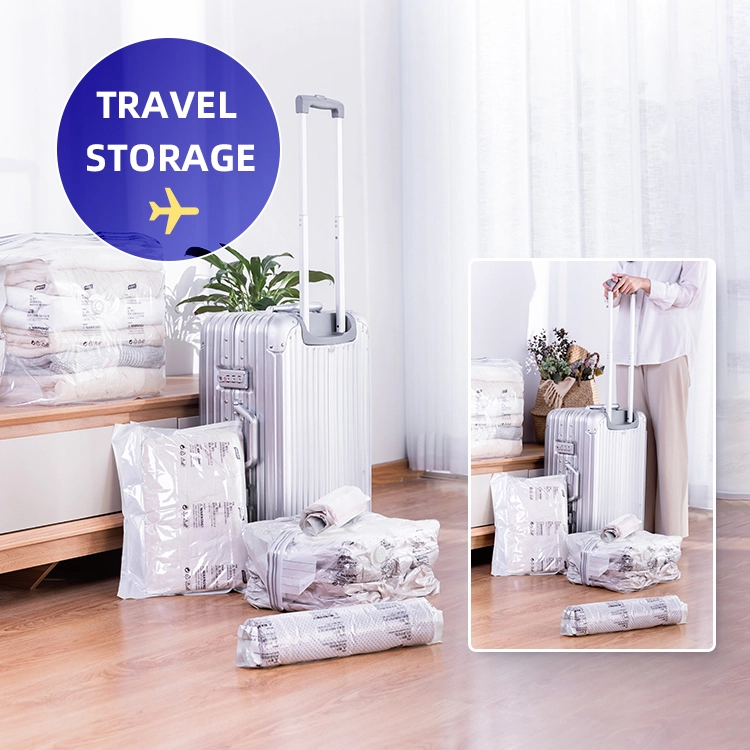
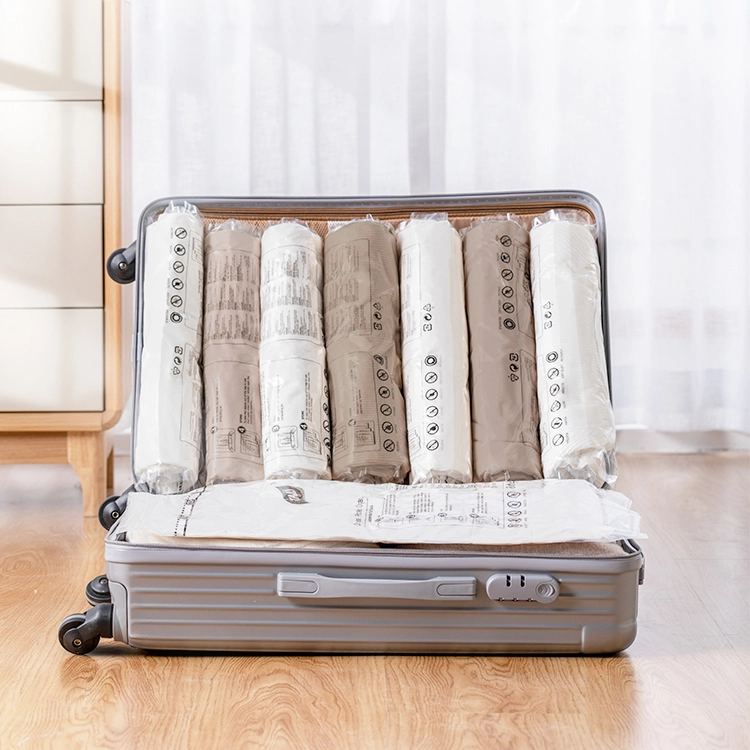
The best vacuum travel bags do more than make clothes look smaller. They should fit your luggage, stay sealed during your journey, and let you repack easily before coming home. Choosing the right vacuum compression bags for travel means looking beyond dramatic before-and-after photos.
My buying principle is straightforward: prioritize reliability over the biggest space-saving claim. A bag that compresses impressively at home but expands overnight creates more problems than it solves.
This guide explains how to compare materials, closures, pumps, and customer feedback. It also provides a practical testing routine and a balanced look at Taili’s manufacturing background.
What Makes the Best Vacuum Travel Bag?
There is no single best bag for every traveler. A weekend carry-on trip requires a different solution from a winter holiday with bulky clothing.
Start with three questions:
- What clothing needs compression?
- How much usable space does your suitcase have?
- How will you remove air on the return journey?
Vacuum bags are particularly useful for compressible clothing, such as fleece, sweaters, and bulky jackets. They are less useful when your luggage contains mostly shoes, toiletries, electronics, or other rigid items.
Removing trapped air reduces clothing volume. It does not meaningfully reduce the weight of your packed belongings. You still need to check your airline’s baggage allowance.
Match the Compression System to Your Trip
| Bag type | Best suited to | Main advantage | Main limitation |
|---|---|---|---|
| Roll-up compression bag | Short trips and flexible itineraries | No separate pump required | Results depend on packing and rolling |
| Vacuum bag with hand pump | Travelers avoiding rechargeable equipment | Works without electricity | Requires manual effort |
| Vacuum bag with electric pump | Frequent repacking and larger clothing loads | Convenient air removal | Adds equipment and charging needs |
| Compression packing cube | Clothing accessed regularly | Easy organization | Does not provide vacuum compression |
For many trips, a mixed system works well: one compression bag for bulky clothing and smaller organizers for everyday essentials.
How to Compare Vacuum Travel Bag Materials
The original guide emphasizes TPU-laminated polyester. That construction can be worth considering, but a material name alone does not establish overall product quality.
A vacuum bag functions as a complete system. Its film or coating, seams, closure, and valve must work together.
Look Beyond TPU Versus PVC
TPU, PVC, and multilayer plastic films appear in different storage and travel products. Their performance depends on formulation, thickness, construction, and manufacturing quality.
Avoid assuming that every TPU bag is durable or every plastic-film bag is unsuitable.
Instead, ask the supplier:
- What is the complete material construction?
- Are the seams welded or otherwise sealed?
- What care instructions apply?
- Is repeated folding covered by the product’s intended use?
- What happens if the bag develops a leak?
Fabric-backed construction may appeal to travelers seeking a reusable outer surface. Clear film makes contents easier to identify. Neither feature eliminates the need to inspect seals.
Understand What Fabric Specifications Actually Tell You
A specification such as “70D polyester” describes the yarn’s linear density. It is not a complete rating for puncture resistance, airtightness, or service life.
Likewise, “heavy-duty” is not a standardized durability result.
The useful question is not simply, “What material is this?” It is, “What evidence shows this finished bag can withstand my packing routine?”
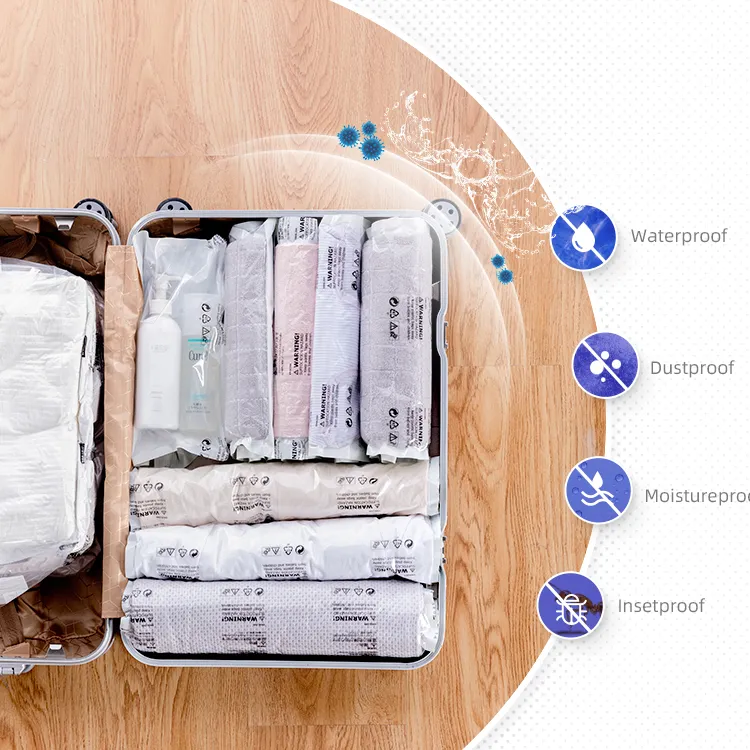
Seals and Valves Matter More Than Marketing Labels
A strong-looking bag can still lose compression through an incomplete closure, damaged seam, contaminated seal, or leaking valve.
From a product-evaluation perspective, closure consistency deserves close attention. You need a seal that is easy to complete correctly, not merely impressive in photographs.
Check the Closure Before Buying
Look for a closure that provides clear instructions and a practical way to confirm it is fully shut.
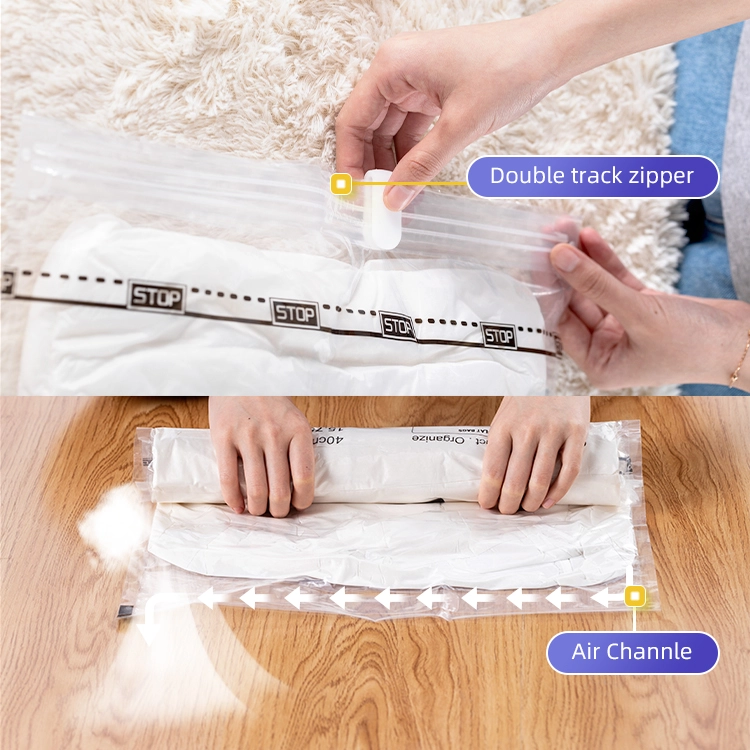
Some bags use press-to-close tracks. Others use specialized sliding zippers. Different designs require different handling.
Useful details include:
- An unobstructed sealing area.
- Clear opening and closing instructions.
- A slider or alignment aid where appropriate.
- Enough space above the clothing to close without strain.
- Accessible replacement or warranty support.
A stiff zipper is not automatically better. Judge it against the manufacturer’s instructions rather than treating resistance as proof of airtightness.
Confirm Pump and Valve Compatibility
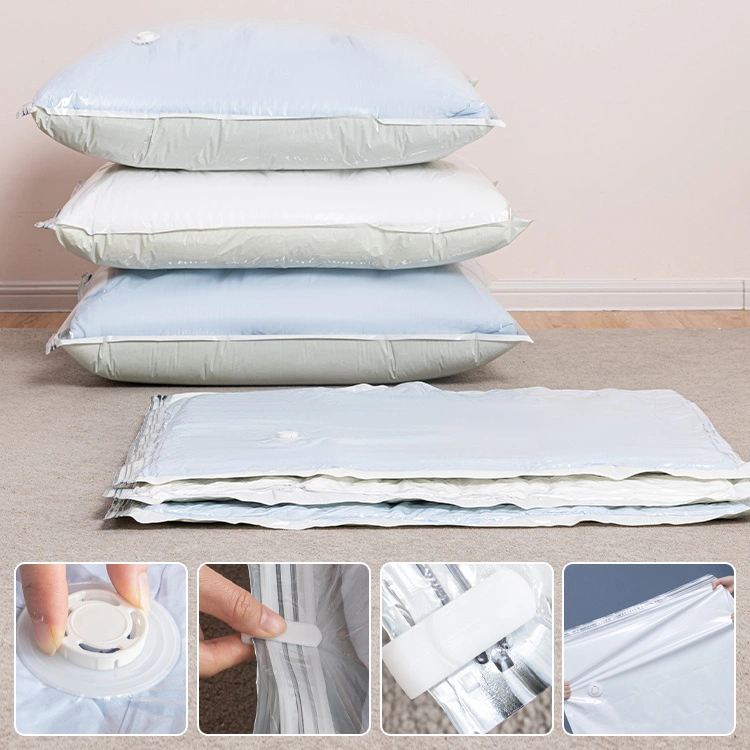
Before choosing vacuum travel bags with a pump, check whether the pump connects directly or requires an adapter.
Also establish whether the bag can be compressed without the supplied pump. This matters if the pump is misplaced, discharged, or unavailable during a trip.
A proprietary valve may be convenient when everything works together. It can become inconvenient when replacement equipment is difficult to obtain.
Waterproof Ratings and Compression Claims: What to Verify
Two claims deserve particular scrutiny: waterproof protection and compression retention.
They describe different kinds of performance and should not be treated as interchangeable.
Does IPX8 Prove a Bag Is Airtight?
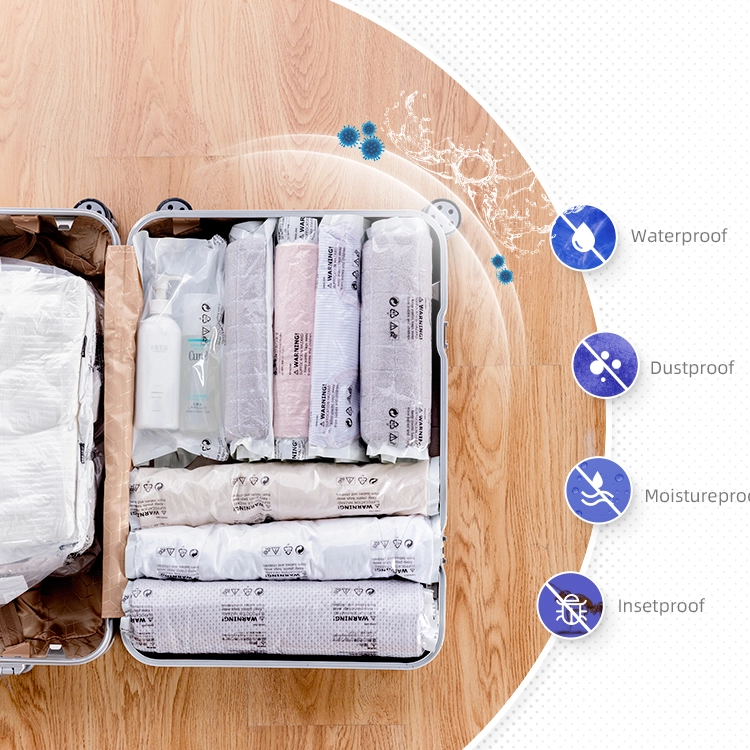
No. IP ratings classify protection against ingress, including water. An IPX8 claim concerns immersion under specified conditions; it is not, by itself, a measurement of air leakage or vacuum retention.
Ask whether the rating applies to:
- The complete bag.
- The zipper alone.
- Another component.
- A particular tested configuration.
Also request the stated immersion conditions and use restrictions.
For travel packing, waterproof performance may be useful. However, a water-resistance claim should not replace evidence that the bag maintains compression.
How Long Should a Vacuum Bag Stay Compressed?
There is no universal 168-hour requirement for all travel vacuum bags. The original article presents that duration as a Black Voyage product claim, not an industry-wide benchmark.
Choose a retention period that matches your journey.
For a multi-stop itinerary, ask how the product was tested: what clothing was used, how fully the bag was packed, and whether it was opened and resealed.
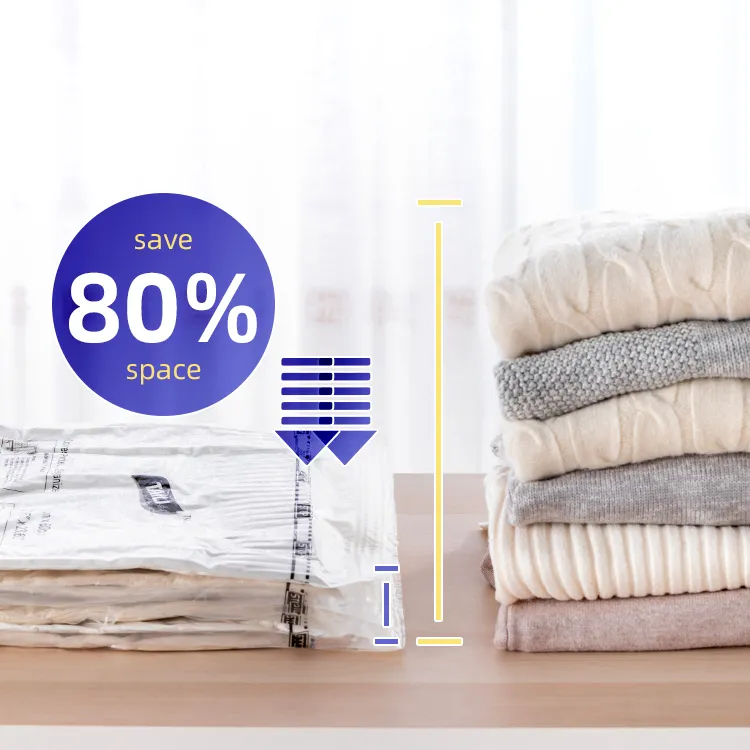
Similarly, “up to” space-saving percentages describe particular conditions. They do not guarantee the same reduction for every wardrobe or suitcase.
A Practical Pre-Trip Test for Vacuum Compression Bags
The most useful test is one that resembles your actual trip. You do not need laboratory equipment to identify obvious packing problems.
Follow This Six-Step Packing Trial
- Inspect the empty bag. Check seams, closure tracks, and the valve for visible damage.
- Pack representative clothing. Use the garments you plan to bring rather than unusually fluffy test items.
- Leave sealing clearance. Keep fabric away from the closure and avoid exceeding the marked fill limit.
- Remove air as instructed. Do not force the pump connection or continue beyond the recommended endpoint.
- Record the result. Photograph the packed bag and measure its approximate thickness at consistent points.
- Recheck and repack. Inspect it the following day, then open, reseal, and compress it again.
This is a practical screening exercise, not a certified performance test. Its value is discovering problems while you still have time to change your packing plan.
Do not submerge a bag merely to test it unless the manufacturer explicitly permits that procedure.
Troubleshoot Before Assuming the Pump Is Faulty
If the bag expands, inspect the sealing path first. Trapped clothing, lint, or a partially closed section may prevent a complete seal.
Then check the valve according to the instructions. Finally, inspect folds, corners, and seams.
If correct resealing does not resolve the problem, request replacement support rather than repeatedly forcing the closure.
What Customer Reviews Reveal—and What They Cannot Prove
Customer feedback is most useful when it describes repeated use, specific failure points, and the circumstances of packing.
Public feedback on a Taili jumbo cube storage-bag listing includes appreciation for capacity and ease of use, alongside complaints about seal retention, valves, and durability.
That listing concerns household storage bags, not a controlled comparison of travel models. Its comments should not be transferred to every Taili product.
However, they highlight useful questions for any buyer:
- Did the reviewer use the exact model you are considering?
- Did the bag remain compressed after the first night?
- Was it opened and resealed several times?
- Did the review explain the packing method?
- Was a faulty item replaced?
Look beyond star averages. A detailed review describing several trips is more informative for travel planning than a first-impression photograph.
Where Taili’s Manufacturing Background Fits
According to the company profile supplied for this guide, Guangdong Taili Technology Group Co., Ltd. was founded in 2003 and is headquartered in Zhongshan, Guangdong.
The profile describes work in nanoparticle synthesis and modification, polymer synthesis, and precision coating. It also identifies safety protection materials, functional film materials, and surface and interface materials as core platforms.
For a travel-bag buyer, the relevant connection is material development and manufacturing capability. These capabilities provide context, but they do not establish a particular bag’s compression retention or lifespan.
Evaluate the Product, Not Just the Corporate Story
Taili’s supplied profile also describes aerospace-related vacuum-packaging work, an integrated production chain, more than 1,200 authorized patents, and international market coverage.
These are company-level statements. They should not be interpreted as proof that every consumer bag has undergone aerospace qualification.
For the specific product you intend to buy, prioritize:
- Dimensions and usable capacity.
- Material and closure specifications.
- Pump compatibility.
- Model-specific test information.
- Care guidance and replacement terms.
A credible manufacturing story becomes more useful when supported by clear documentation for the actual product.
Carry-On Packing: Plan for Access and the Return Journey
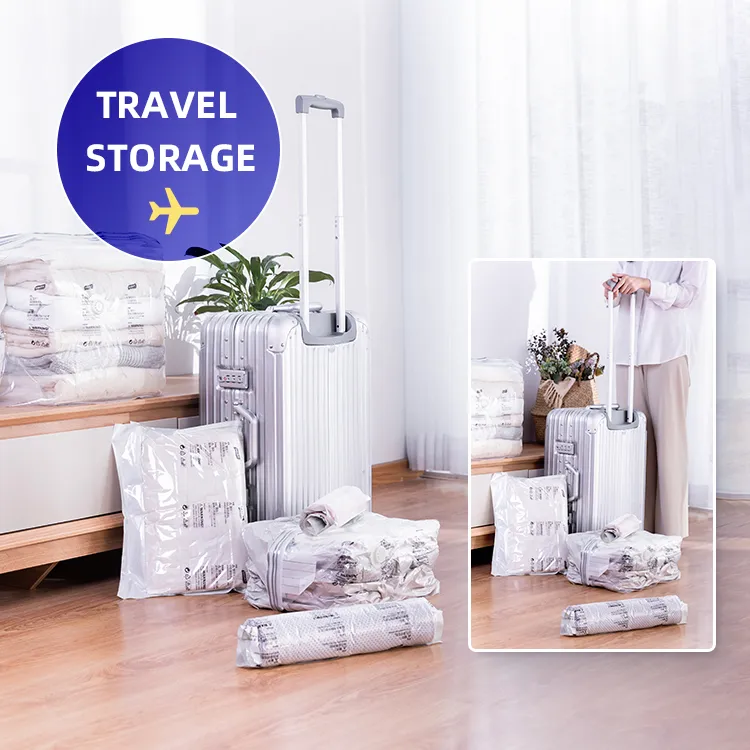
Vacuum bags for carry-on luggage work best when compression does not make essential items difficult to retrieve.
Keep travel documents, medication, electronics, and an emergency clothing layer accessible outside tightly compressed bundles.
Avoid the One-Large-Bag Problem
One oversized compressed bundle can make packing inflexible. It may also force you to unpack everything to reach a single garment.
Instead, divide clothing by purpose: bulky layers, spare outfits, or laundry.
Measure your suitcase’s internal packing area before selecting sizes. Bag capacity in liters does not tell you whether its compressed shape will fit between wheels, handles, and internal compartments.
Check Rechargeable Pump Travel Requirements
If your pump contains a lithium battery, check the battery rating, airline rules, and applicable aviation guidance before departure.
FAA guidance recommends keeping lithium-battery-powered portable devices in carry-on baggage. Spare lithium batteries and power banks must remain in the cabin, with protection against damage and short circuits.
Requirements can differ by airline and route. Keep the pump accessible, protect it from accidental activation, and confirm any additional restrictions with your carrier.
Most importantly, test how you will recompress your clothes at the destination. Your packing system should work without relying on a hotel vacuum cleaner.
Choose a Bag You Can Trust Beyond the First Packing Session
The best vacuum travel bag is the one that fits your luggage, suits your clothing, and can be resealed without frustration.
Before buying, compare dimensions, closure instructions, pump requirements, and model-specific feedback. Before traveling, complete a packing trial.
If you are considering Taili, request the specifications and after-sales terms for the exact travel model. Choose a practical size combination, test every bag, and leave a little luggage space for items you acquire along the way.
Frequently Asked Questions
Are vacuum travel bags better than packing cubes?
They serve different purposes. Vacuum bags reduce the volume of compressible clothing. Packing cubes make organization and access easier. Combining both often provides a more practical system than using only one.
Can vacuum bags reduce baggage weight?
Not meaningfully. They remove trapped air, not clothing. Compression may allow you to pack more, increasing total luggage weight. Weigh your suitcase after packing.
Can I use travel compression bags without a pump?
Some roll-up bags release air through an outlet when rolled or pressed. Other models require a compatible pump or vacuum connection. Check the instructions for the exact product.
Why does my vacuum travel bag keep expanding?
Possible causes include an incomplete closure, trapped fabric, contamination, a leaking valve, or damage. Reseal it carefully and inspect it. Persistent leakage may require replacement.
Are all vacuum travel bags waterproof?
No. Follow the product’s stated protection level. If IPX8 is claimed, verify the tested component and conditions. Do not assume unlimited immersion protection or guaranteed vacuum retention.
Can I compress down jackets or delicate garments?
Check the garment manufacturer’s care instructions. Avoid prolonged compression where it is discouraged, and unpack promptly at your destination. Use a different packing method for clothing that requires careful shape preservation.
References
1. Black Voyage — “The Best Vacuum Travel Bag for Travel? A Simple Buyer’s Guide for Travelers”. Original article reviewed for structure and brand-specific claims, including TPU-laminated polyester, IPX8, and 168-hour compression retention. These claims are not presented here as universal standards or independently verified results. https://blackvoyage.com/blogs/travel-tips/the-best-vacuum-travel-bag-for-travel-a-simple-buyer-s-guide-for-travelers
2. International Electrotechnical Commission — “Ingress Protection (IP) Ratings”. Authoritative explanation of the IP classification system and its role in describing protection against solid objects and liquids. https://www.iec.ch/ip-ratings
3. Applus+ Keystone Compliance — “IPX7 & IPX8 Water Immersion Testing”. Technical explanation of immersion testing and the need to specify applicable IPX8 conditions. https://keystonecompliance.com/ipx7-ipx8-water-immersion/
4. Federal Aviation Administration — “Portable Electronic Devices Containing Batteries”. Guidance supporting the discussion of rechargeable equipment, carry-on packing, damaged batteries, and accidental activation. https://www.faa.gov/hazmat/packsafe/portable-electronic-devices-with-batteries
5. Federal Aviation Administration — “PackSafe: Lithium Batteries”. Guidance on spare lithium batteries, power banks, cabin carriage, and short-circuit protection. https://www.faa.gov/hazmat/packsafe/lithium-batteries
6. Amazon — “TAILI 8 Pack Cube Vacuum Storage Bags, Jumbo Size”. Public listing and customer-feedback material used for the balanced review discussion. This is a household-storage product, not evidence of performance for a particular travel model. Review information can change over time. https://www.amazon.com/TAILI-31x40x15-Comforters-Blankets-Organizer/dp/B0CWL2L6B9
7. Taili Group — “Who Makes the Best Compression Bags for Travel?”. Brand-published context on travel compression systems, compressible clothing, valves, and packing considerations. It is treated as manufacturer commentary rather than independent testing. https://www.taili-group.com/blog/who-makes-the-best-compression-bags-for-travel/
Hot Tags: Vacuum Travel Bags, Travel Compression Bags, Vacuum Storage Bags, Vacuum Bag Manufacturer, Vacuum Bag Supplier, Wholesale Vacuum Bags, OEM Vacuum Bags, Custom Vacuum Bags, Travel Vacuum Bags With Pump, Reusable Vacuum Compression Bags