Content Menu
● Double Zipper vs. Single Zipper Vacuum Bags: Quick Comparison
● How Single Zipper and Double Zipper Vacuum Bags Work
>> What Is a Single Zipper Vacuum Bag?
>> What Is a Double Zipper Vacuum Bag?
>> Why Removing Air Is Only Half the Process
● Which Vacuum Bag Zipper Seals Better?
>> Where Double Zipper Bags Have an Advantage
>> When Single Zipper Bags Can Be Enough
>> Why “Twice as Airtight” Is Not a Reliable Claim
● Four Factors That Matter Beyond Zipper Count
>> 2. Valve Design and Correct Operation
>> 3. Welded Seams and Physical Damage
>> 4. Packing and Closure Technique
● A Practical Vacuum Retention Comparison You Can Run
>> Step 1: Make the Samples Comparable
>> Step 2: Record Compression Over Time
>> Step 3: Recheck After Repeated Use
>> When Laboratory Testing Adds Value
● How to Seal Vacuum Storage Bags Correctly
>> What If the Bag Reinflates?
● Choosing Vacuum Bags for Different Storage Needs
>> Seasonal Clothing and Bedding
>> Retail and Bulk Procurement
● TAILI’s Materials Perspective: Evaluate the Complete System
● Choose Proven Retention, Not Just More Zippers
>> 1. Are Double Zipper Vacuum Bags Always Better?
>> 2. Can Single Zipper Vacuum Bags Hold a Vacuum Long Term?
>> 3. Why Does My Double Zipper Bag Keep Reinflating?
>> 4. Does a Color-Changing Zipper Guarantee an Airtight Bag?
>> 5. Can Vacuum Bags Prevent Mold in Damp Clothing?
Double zipper vacuum bags generally offer an extra sealing safeguard compared with single zipper vacuum bags, making them a practical choice for seasonal clothing and bulky bedding. However, two tracks do not automatically guarantee better vacuum retention. A well-made single zipper bag can outperform a poorly manufactured double zipper bag.
When comparing double zipper vs. single zipper vacuum bags, I would focus on redundancy rather than zipper count alone. The closure matters, but so do the valve, film, welded seams, and how carefully you pack the bag.
This comparison covers reusable vacuum storage bags for clothing and household textiles—not heat-sealed food pouches. Manufacturer guidance supports carefully closing both zipper tracks, but the sources reviewed do not establish a universal, independently measured performance advantage for every double zipper design.
Double Zipper vs. Single Zipper Vacuum Bags: Quick Comparison
| Comparison point | Single zipper vacuum bags | Double zipper vacuum bags |
|---|---|---|
| Closure structure | One interlocking sealing track | Two interlocking sealing tracks |
| Main advantage | Simpler closure to align and inspect | Additional sealing interface |
| Main limitation | No second track if the closure leaks | Both tracks still require correct engagement |
| Best potential fit | Short-term storage and frequent access | Seasonal storage and less frequent access |
| Ease of use | Depends on profile design and slider | Depends on alignment, feedback, and slider |
| Vacuum retention | Depends on the complete bag | Also depends on the complete bag |
| Purchasing priority | Proven retention and easy closure | Proven retention plus useful redundancy |
These are design-based comparisons, not results from a controlled head-to-head trial. Neither format deserves a fixed storage-duration guarantee without product-specific testing.
How Single Zipper and Double Zipper Vacuum Bags Work
What Is a Single Zipper Vacuum Bag?
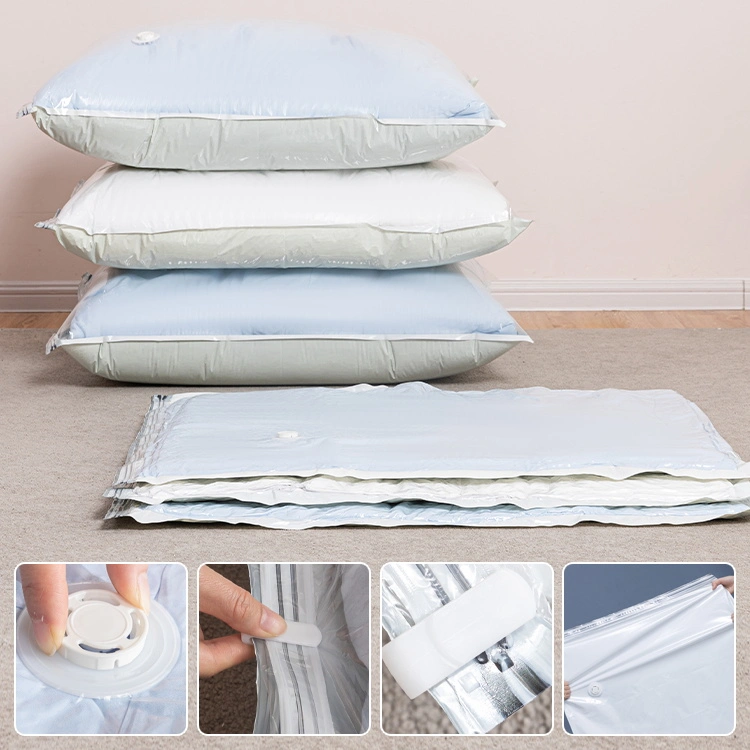
A single zipper vacuum bag uses one pair of interlocking profiles across its opening. Pressing the profiles together closes the mouth before air is extracted through the valve.
“Single zipper” describes the sealing-track arrangement. It does not necessarily mean a conventional toothed zipper or a slider-operated fastening like those found on clothing.
Its attraction is simplicity. There is only one track to align and check. However, any incompletely closed section can create an air-entry pathway.
What Is a Double Zipper Vacuum Bag?
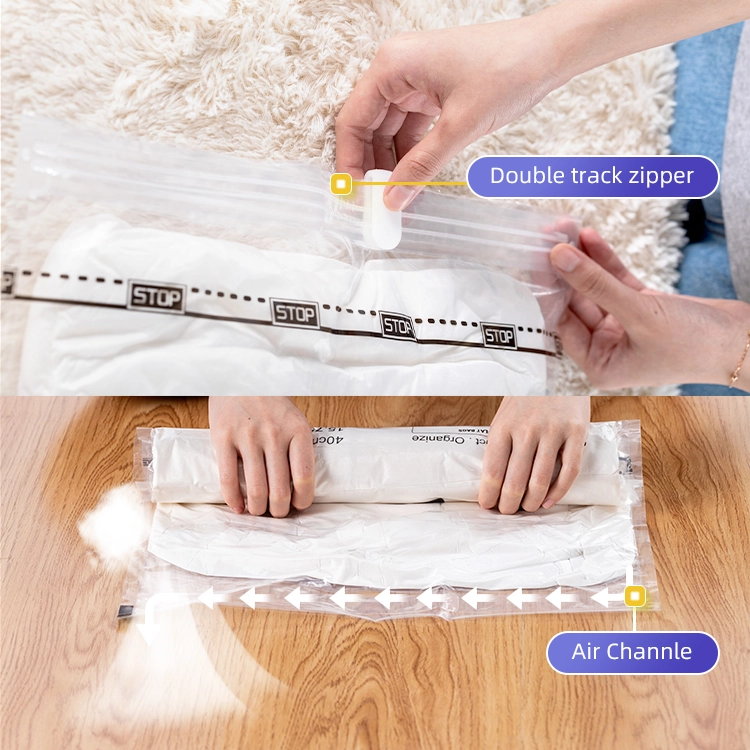
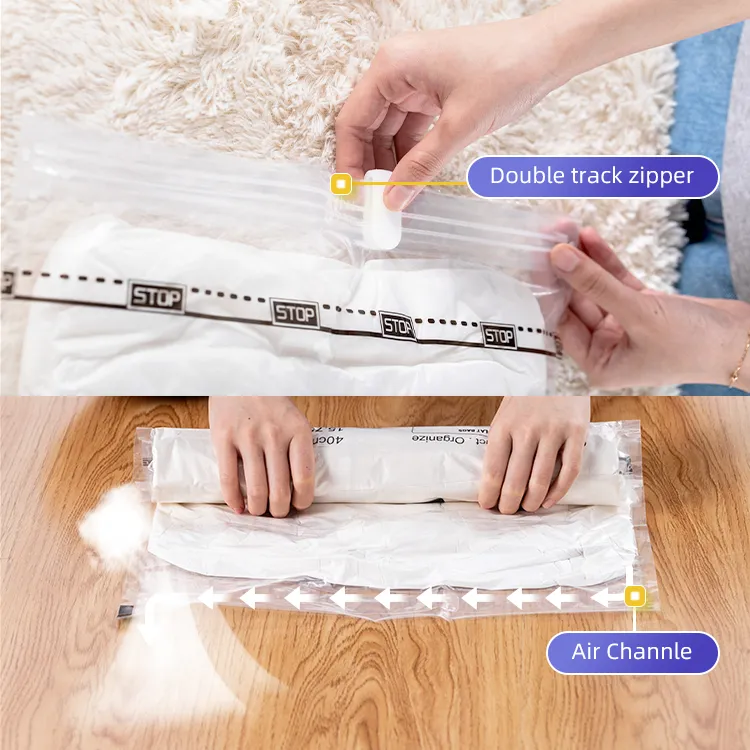
A double zipper vacuum bag uses two sealing tracks across the opening. Correct engagement provides two interfaces instead of one.
The second track can add protection when one interface is imperfect, provided the other remains sealed. It cannot compensate for every problem. A fold, trapped fabric, or damaged opening may interfere with both tracks simultaneously.
Do not confuse a double zipper with a double-color zipper. One describes track count; the other describes visual feedback. TAILI’s product page describes a color-changing closure indicator, but that feature alone does not establish the number of sealing tracks.
Why Removing Air Is Only Half the Process
A bag that compresses successfully has demonstrated that air can leave. It has not yet demonstrated that air will stay out.
This distinction matters when evaluating airtight vacuum storage bags. Immediate flattening is useful, but retention over the intended storage period is the more meaningful result.
My preferred purchasing question is therefore: “How reliably does this complete bag stay compressed under normal use?”
Which Vacuum Bag Zipper Seals Better?
Where Double Zipper Bags Have an Advantage
Two correctly engaged tracks provide an additional sealing interface. That makes double zipper bags a reasonable shortlist option when you want extra closure protection.
Potential applications include:
- Bedding packed away between seasons.
- Winter clothing stored for several months.
- Household textiles accessed infrequently.
- Larger bags that require careful closure alignment.
However, redundancy has limits. If both tracks share the same crease or contamination, they may share the same failure.
The useful advantage is an extra opportunity to maintain closure—not automatic leak immunity.
When Single Zipper Bags Can Be Enough
Single zipper vacuum bags remain worth considering when their closure is easy to operate and their retention performance meets your needs.
For frequent access, a straightforward closure may be more convenient than a complicated one. But ease of use is product-specific: a well-designed double zipper can also close quickly.
I would not reject a single zipper product solely because it has fewer tracks. I would compare its construction, instructions, and retention evidence against the alternative.
Why “Twice as Airtight” Is Not a Reliable Claim
Two tracks do not justify claims such as “twice as airtight” or “holds vacuum twice as long.”
Those statements require comparable testing with controlled bag sizes, contents, evacuation conditions, and storage environments.
Neusu recommends double-seal closures and careful sealing technique. That is useful manufacturer guidance, but it is not independent proof of a universal numerical advantage.
Four Factors That Matter Beyond Zipper Count
1. Film Construction
The bag body must withstand packing, handling, and repeated use. A reliable closure cannot rescue punctured film.
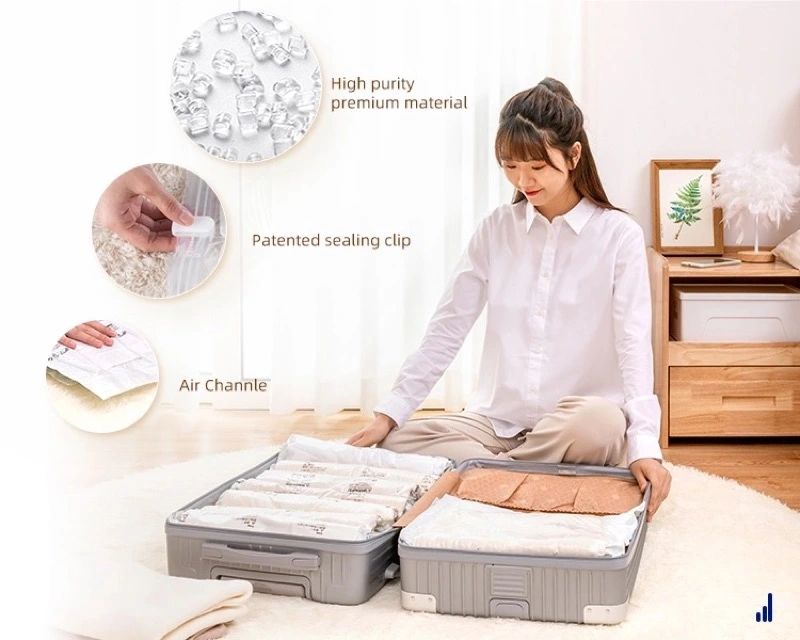
TAILI describes PA/PE materials and a five-layer PE–tie–PA–tie–PE structure for its vacuum storage bags. These are relevant construction details, but they do not establish how every finished bag will perform.
Ask suppliers for model-specific film specifications and test results rather than relying on material names alone.
2. Valve Design and Correct Operation
The valve is another potential air-entry point. A bag can have a properly closed zipper and still lose compression through an improperly operated or damaged valve.
Follow the instructions for the exact design. Some require a cap to be closed after evacuation; other systems operate differently.
Manufacturer guides identify valve handling and cap closure as important steps. Do not force valve components or assume every bag uses the same mechanism.
3. Welded Seams and Physical Damage
Inspect the perimeter seams and bag body, not just the opening.
Look for visible damage, stressed corners, and puncture risks from garment hardware or nearby sharp objects. Handling and storage conditions can undermine either zipper format.
For bulk purchasing, request finished-bag integrity checks. A zipper specification covers only one component.
4. Packing and Closure Technique
Overfilling makes correct closure harder. Fabric caught near the opening can interfere with sealing, while repeated folding can damage the zipper area.
Neusu advises leaving clearance below the closure, checking the full zipper length, and avoiding continual folding of the zipper element.
Good technique therefore remains essential with both single and double zipper vacuum bags.
A Practical Vacuum Retention Comparison You Can Run
Step 1: Make the Samples Comparable
For an informal screening exercise, compare several bags of each design rather than one sample per type.
Use:
- Similar bag dimensions.
- Matching textile contents.
- Equal clearance below the zipper.
- The same compatible evacuation equipment.
- The same storage location.
If the bags differ in film, valve, and zipper design, the exercise compares complete products—not zipper count in isolation.
Step 2: Record Compression Over Time
Photograph each bag immediately after evacuation. Record its approximate height using a consistent position and measurement method.
Repeat observations after 24 hours, seven days, and 30 days.
These intervals are suggested checkpoints, not an industry standard. Extend the observation period to match your actual storage needs.
Keep handling consistent. Textile settling and bag shape can affect measurements, so visible height change should not be treated as a precise laboratory leak rate.
Step 3: Recheck After Repeated Use
Open, refill, and reseal the bags several times before repeating the comparison.
Record whether the closure becomes harder to align, whether the slider remains effective, and whether obvious damage develops.
This exercise provides practical screening evidence. It does not establish a certified service life or prove performance across an entire production batch.
When Laboratory Testing Adds Value
For commercial qualification, ask about validated finished-package leak testing.
ASTM F2338 describes vacuum-decay testing that detects leakage through pressure changes in an evacuated chamber. Its scope includes flexible nonporous packages, but the standard notes that flexible-package sensitivity data were not included in its cited precision and bias studies.
A qualified laboratory must therefore assess suitability, fixtures, and acceptance criteria for the actual bag. This is not equivalent to observing whether a bag stays flat at home.
How to Seal Vacuum Storage Bags Correctly
Use this sequence unless the manufacturer specifies otherwise:
- Check that the textiles and bag interior are clean and completely dry.
- Inspect the film, zipper, seams, and valve for damage.
- Pack without forcing the contents against the opening.
- Leave sufficient clearance below the zipper.
- Remove trapped fabric and visible debris from the tracks.
- Run the supplied slider across the full closure as directed.
- Check the entire zipper with your fingers, including both ends.
- Evacuate using compatible equipment.
- Secure the valve according to its instructions.
- Recheck the bag before putting it into long-term storage.
Manufacturer instructions commonly recommend repeated closure passes and a full-length finger check. Correct technique is more useful than assuming an extra zipper track will compensate for rushed sealing.
What If the Bag Reinflates?
Start with the simplest checks:
- Reopen and inspect the closure.
- Move fabric away from the zipper.
- Reseal the complete opening.
- Check the valve and any required cap.
- Inspect the body and perimeter seams.
Change one factor at a time. Repeatedly extracting air without addressing the cause may hide the problem temporarily rather than resolve it.
Choosing Vacuum Bags for Different Storage Needs
Seasonal Clothing and Bedding
For infrequently accessed textiles, double zipper bags are a reasonable starting point because they offer an additional sealing interface.
However, first confirm that the items tolerate compression. Do not assume every duvet, garment, or delicate material is suitable. Neusu specifically cautions against storing feather quilts, leather, and materials damaged by compression.
Travel and Frequent Access
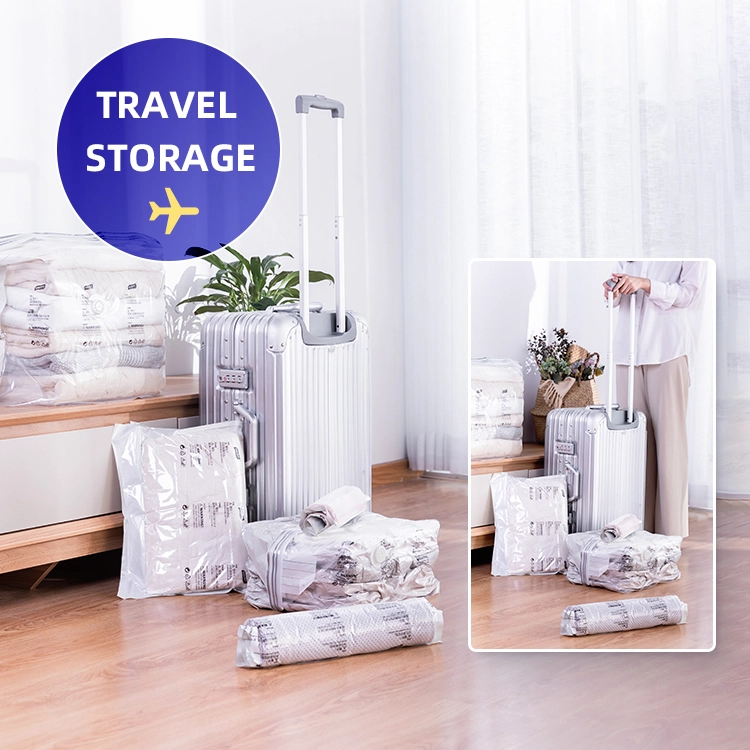
For short trips, prioritize suitable dimensions, convenient evacuation, and reliable resealing.
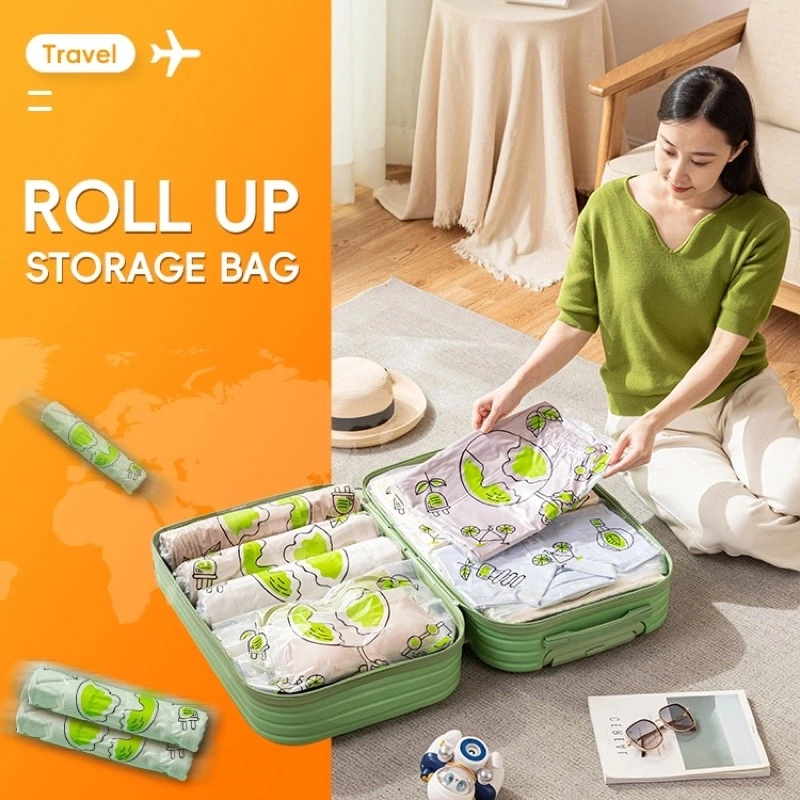
Do not confuse zipper count with evacuation method. Roll-up compression bags and pump-operated vacuum bags can serve different purposes.
A second zipper track does not automatically mean a pump is required, nor does a single track automatically mean the bag is roll-up only.
Retail and Bulk Procurement
Commercial buyers should compare more than unit price.
Request:
- Closure-track specifications.
- Film and valve details.
- Finished-bag retention evidence.
- Repeated-use test conditions.
- Clear customer instructions.
- Batch inspection criteria.
- A sample evaluation before ordering.
A slightly cheaper bag may offer poor value if users struggle to close it. Conversely, an elaborate closure provides little benefit if its performance is undocumented.
TAILI’s Materials Perspective: Evaluate the Complete System
The supplied company background presents Guangdong Taili Technology Group Co., Ltd. as a materials-driven enterprise with integrated research and manufacturing capabilities.
The relevant purchasing lesson is to connect that background to product-level evidence.
TAILI’s public vacuum bag page describes PA/PE construction, reusable bags, and visual closure feedback. These features support a useful discussion about materials and usability, but they should not be treated as independent proof of superior retention.
I would evaluate a TAILI model—or any competing model—through three questions:
- Can users close it correctly and consistently?
- Does the finished bag retain compression for the intended period?
- Does it remain functional after repeated handling?
Corporate aerospace experience does not, by itself, prove that every household bag is aerospace-qualified. Ask for evidence specific to the product being purchased.
Choose Proven Retention, Not Just More Zippers
Double zipper vacuum bags are a sensible option when additional closure protection matters. Single zipper vacuum bags can still deliver suitable performance when their complete construction and usability are sound.
For retail, wholesale, or customized storage projects, contact TAILI with your target dimensions, textile application, intended storage period, and preferred evacuation method. Request model-specific samples and retention evidence before committing to a bulk order.

Frequently Asked Questions
1. Are Double Zipper Vacuum Bags Always Better?
No. They provide an extra sealing interface, but film damage, valve problems, manufacturing quality, and incorrect closure can outweigh that advantage.
2. Can Single Zipper Vacuum Bags Hold a Vacuum Long Term?
Potentially, yes. The answer depends on the complete product and storage conditions. Look for model-specific retention evidence rather than judging by zipper count alone.
3. Why Does My Double Zipper Bag Keep Reinflating?
Check for incomplete engagement, trapped fabric, overfilling, valve problems, and physical damage. Both tracks can be affected by the same packing mistake.
4. Does a Color-Changing Zipper Guarantee an Airtight Bag?
No. It helps users assess closure engagement. It does not verify the integrity of the valve, film, or welded seams.
5. Can Vacuum Bags Prevent Mold in Damp Clothing?
Do not use vacuum storage as a substitute for drying. Manufacturer guidance warns that storing even slightly damp textiles can lead to mildew and damage.
References
1. Neusu — “How To Use Vacuum Storage Bags Properly”. Manufacturer guidance covering double-seal closures, overfilling, valve operation, storage precautions, and correct sealing technique. https://www.neusu.com/help-advice/how-to-use-vacuum-storage-bags-properly/
2. Collective Comforts — “How Vacuum Storage Bags Work”. Manufacturer instructions covering double-zipper closure and evacuation. https://collectivecomforts.com/pages/how-it-works
3. ASTM International — ASTM F2338-09(2020), “Standard Test Method for Nondestructive Detection of Leaks in Packages by Vacuum Decay Method”. Authoritative information on scope, measurement principles, acceptance criteria, and flexible-package limitations. https://www.astm.org/f2338-09r20.html
4. TAILI — “Taili Vacuum Storage Bag”. Manufacturer descriptions of PA/PE materials, multilayer construction, visual closure feedback, and product applications. https://www.taili-group.com/products/vacuum-bag/
5. VacBird — “VacBird Vacuum Bags: Step-By-Step Guide to Filling and Sealing Properly”. Manufacturer guidance on zipper closure and valve-related troubleshooting. https://vacbird.com/blogs/news/vacbird-vacuum-bags-step-by-step-guide-to-filling-and-sealing-properly
6. Guangdong Taili Technology Group Co., Ltd. — Company background supplied for this article. Used for corporate positioning, not as independent verification of product performance. https://www.taili-group.com/
Hot Tags: Vacuum Storage Bags, Double Zipper Vacuum Bags, Single Zipper Vacuum Bags, Vacuum Storage Bags Manufacturer, Wholesale Vacuum Storage Bags, OEM Vacuum Storage Bags, Custom Vacuum Storage Bags, Vacuum Compression Bags, Reusable Vacuum Storage Bags, Airtight Vacuum Storage Bags